


Generic engagement is failing in 2025. You cannot build pipeline by leaving vague, high-level commentary on random posts. The goal of LinkedIn commenting is not visibility; it is direct lead generation and conversation initiation.
Most sales teams understand they need to engage, but they waste critical time on the wrong profiles and deploy comments that fail to demonstrate genuine expertise. This guide breaks down the strategic framework we use internally to prioritize targets (the Strategic WHO) and deploy repeatable, high-conversion comment structures (the Tactical HOW).
Key Takeaways for High-Conversion Commenting
- Prioritize ICP Activity: Focus 60% of effort exclusively on Tier 1 (Ideal Client Profiles) and Tier 2 (Authority Multiplier) accounts.
- The Comment Formula: Every high-conversion comment must include three components: Validation + Unique Insight + Conversational Bridge.
- Conversion Bridge Rule: Never pitch in the comments. The objective is to move the conversation to a direct message only after 2–3 meaningful, high-value exchanges.
- Consistency Over Volume: A focused, 15-minute daily routine targeting 5 strategic profiles generates better results than random, high-volume scrolling.
1. Optimize Your Profile: The Conversion Prerequisite
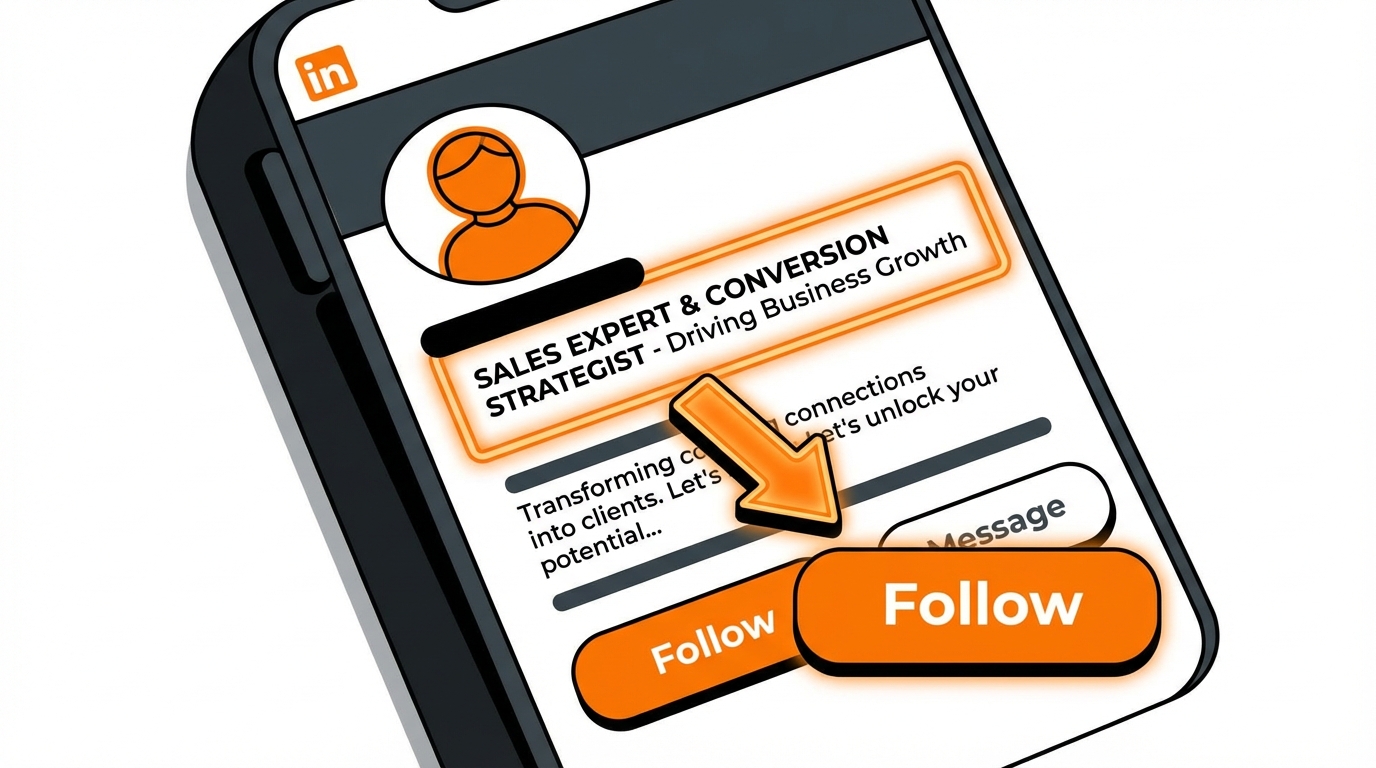
Before deploying any strategic comment, you must ensure your profile functions as a high-converting landing page. When a targeted prospect sees your insightful contribution, they will click your name. If your profile is generic or service-focused, you immediately lose the lead. We define this critical moment as the “3-Second Filter.”
Your profile must instantly mirror the specific pain points of your Ideal Client Profile (ICP). This necessitates a strategic shift: stop describing your service features and start detailing the exact transformation and financial outcome you deliver.
The 3-Second Filter Checklist
- Headline Specificity: Eliminate vague titles (e.g., “Scaling Expert,” “Business Strategist”). Use the specific dialect your ICP uses to define their problem. For instance, if you sell AI lead generation software, your headline must articulate the outcome: “We help Founders scale outbound revenue by finding 50+ clients’ personal emails per week using AI.”
- About Section Focus: The first 150 characters of your About section must directly address your ICP’s most critical challenge or fear. Use their precise terminology,not marketing jargon,to validate their pain points immediately.
- Clear Call-to-Action (CTA): Utilize the Featured section to guide the prospect immediately. Link directly to a booking page (Calendly/HubSpot) or a high-impact case study. The pathway to the next conversion step must be undeniable.
We tracked profile visits resulting from strategic commenting. When a profile clearly articulated the client’s problem in the headline, the conversion rate from profile view to connection request increased by 45%. You are using your comments to drive targeted traffic to a pre-qualified landing page. We have detailed the full strategy for maximizing LinkedIn profile views from your commenting strategy here.
2. The Strategic WHO: Prioritizing Your Comment Targets
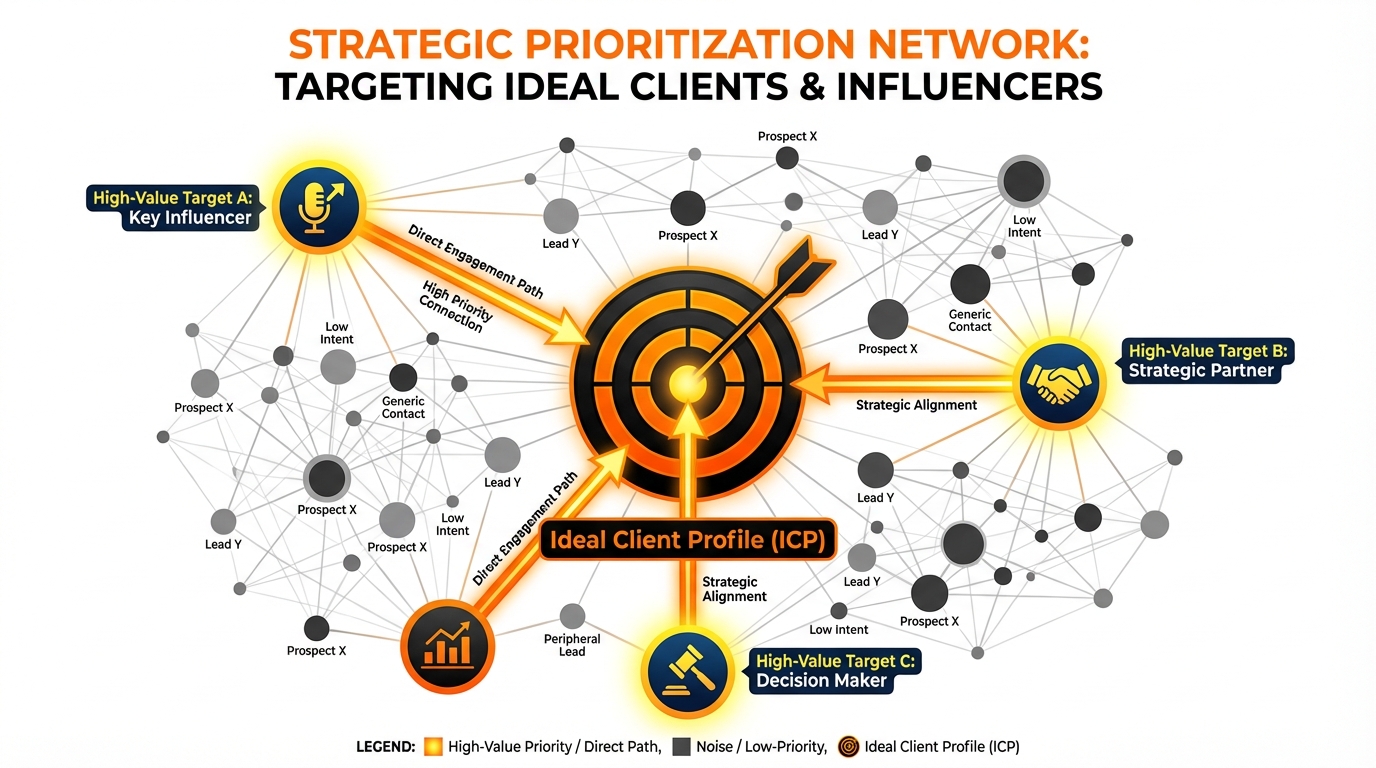
Random commenting is the fastest way to waste your lead generation time. We require a structured, tiered approach to engagement. This framework ensures your limited daily capacity is allocated only where the conversion probability is highest.
Tiered Engagement Framework
Focus 80% of your daily commenting effort strictly on Tiers 1 and 2. Tiers 3 and 4 are high-volume, lower-intent pools used primarily for sustained visibility and strategic networking.
| Tier | Target Profile | Primary Conversion Objective | Strategic Value |
|---|---|---|---|
| Tier 1 | Direct ICP Activity (Specific Prospects) | High intent, Low volume. Objective: Initiate 1:1 DM conversation based on shared context. | Highest conversion probability. These prospects are actively signaling their pain points or engagement with a relevant topic. |
| Tier 2 | The Authority Multiplier (Niche Influencers/Leaders) | High visibility, Medium intent. Objective: Drive profile views from their specific, pre-filtered audience. | Exposure to large, targeted audiences containing dozens of your Ideal Client Profiles (ICPs). You strategically borrow their existing trust and reach. |
| Tier 3 | The Warmest Leads (Competitor Engagers/Solution Seekers) | Medium intent, High volume. Objective: Identify users actively seeking solutions to the problem you solve. | These users have raised their hand by engaging with content directly related to your solution or your competitor’s offering. They are never cold. |
| Tier 4 | Complementary Providers (Referral Network) | Networking, Future referrals. Objective: Build reciprocal relationships and credibility within adjacent industries. | These are non-competitive professionals who serve your ICP (e.g., a fractional CMO for an AI lead generation provider). |
How to Identify Tier 2 Profiles (The Authority Multiplier)
Tier 2 profiles are the primary mechanism for scaling visibility without content creation. We call this the Authority Multiplier effect. A single insightful comment that garners 10 likes on a high-traffic post often generates more qualified profile views than 10 of your own original posts combined.
- Identify Niche Leaders: Map out the 5-10 leaders your actual clients mention or cite. Look for leaders posting specifically about the high-value challenges your ICP faces (e.g., ‘Series A funding challenges,’ ‘scaling SDR teams,’ or ‘implementing RevOps’).
- Filter for Engagement Quality: Ignore posts dominated by vanity metrics (500 likes, zero substantive comments). Focus exclusively on posts that generate high-quality, professional dialogue where your expert insight can legitimately stand out.
- Consistency Check: Prioritize profiles that post reliable, high-engagement content daily or multiple times per week. Sporadic posters do not provide the consistent engagement opportunities required for scalable lead generation.
3. The Tactical HOW: The 3-Part Conversion Comment Formula
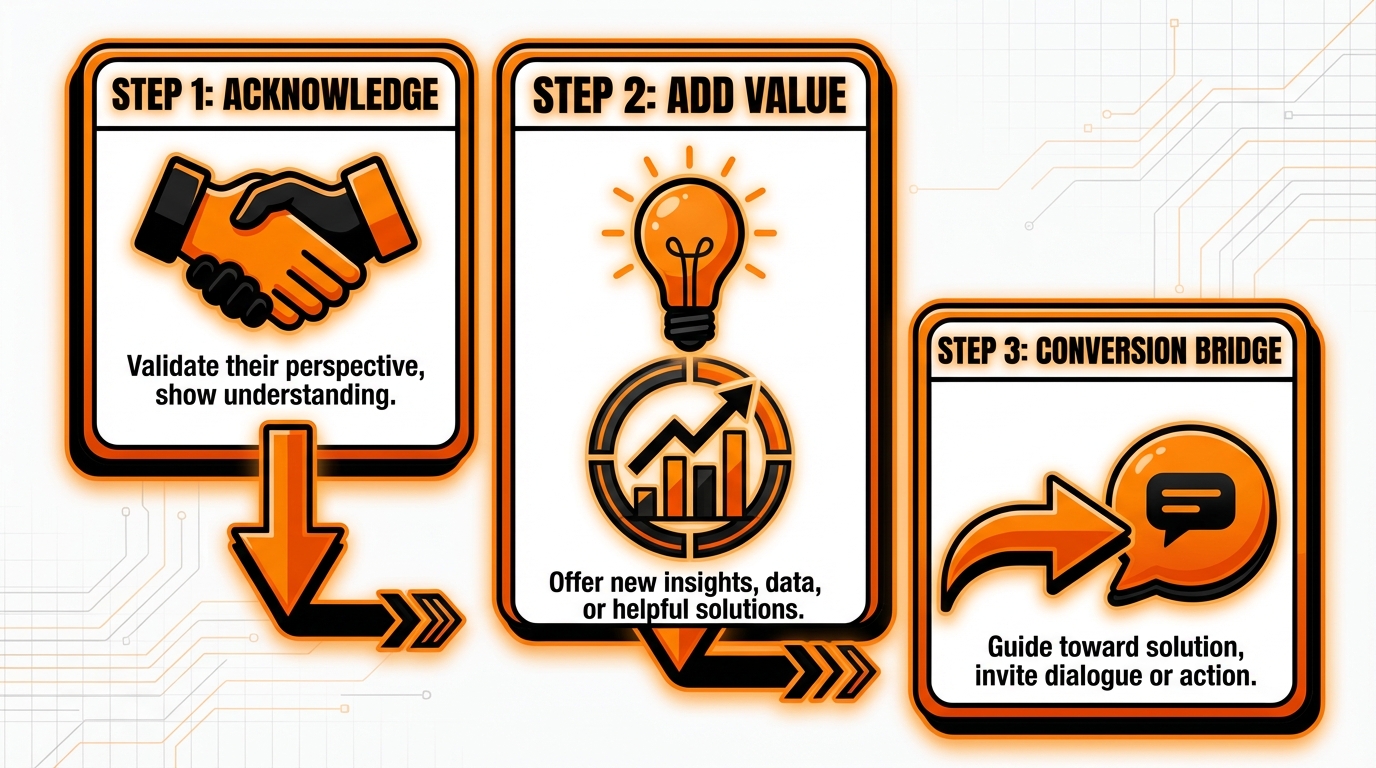
Generic advice like “be insightful” is useless,insight is subjective and unrepeatable. We mandate a clear, repeatable formula designed to ensure every comment demonstrates undeniable expertise and forces a reply. This structure immediately shifts the interaction from passive agreement to a strategic conversation starter.
Use the V-I-C formula (Validation, Insight, Conversational Bridge) for every targeted comment you deploy.
Part 1: Validation / The Hook
Start by validating the author’s main premise. This confirms you processed the core message and instantly earns goodwill with the author and their network. Limit this to a single, concise sentence.
- Purpose: Establish relevance, signal agreement, and secure initial attention.
- Example: “You hit the nail squarely on the head regarding the critical need for better data hygiene in 2026.”
- Example: “This analysis perfectly mirrors the shifting landscape we are actively tracking across our enterprise clients this quarter.”
Part 2: The Unique Insight (Expertise Demonstration)
This is the core value proposition of your engagement. You must introduce niche-specific depth that only an expert operating in the field would possess. Do not simply restate the author’s point; expand on it, offer a strategic counter-perspective, or cite specific, internal success metrics.
- Purpose: Demonstrate immediate authority and naturally filter out prospects who are not ready for advanced solutions.
- Actionable Insight: Introduce a concept or operational challenge the author missed. If the original post discusses the need for better outreach, your insight must pivot to the specific, technical shift from relying on public data scraping to prioritizing manual, personal email discovery that has defined success in late 2025.
- Internal Data: Reference a proprietary metric or a recent, anonymized client success story. Example: “We found that shifting our lead source priority from outdated public databases to dedicated personal email retrieval boosted our Tier 1 response rates by 2.3x in Q4.”
Part 3: The Conversational Bridge
End the comment with an open-ended question. The question must be engineered to elicit a direct response from the original author while simultaneously prompting other target prospects reading the thread to engage with their own opinions. This maximizes thread visibility and drives dialogue back toward your area of expertise.
- Purpose: Spark dialogue, increase comment visibility via replies, and strategically move the thread toward a discussion of solutions you offer.
- Strong Bridge Examples:
- “Do you see that specific trend holding true for mid-market founders, or is this implementation challenge still primarily constrained to the enterprise level right now?”
- “What’s the single biggest operational bottleneck your team faces when attempting to transition to this new data strategy?”
- “If you had to choose one metric to prioritize in 2026,given the current market volatility,would it be reply rate or overall volume?”
For more specific structures leveraging this V-I-C framework, we have outlined 7 LinkedIn Comment Formulas That Convert Clients.
4. The Conversion Bridge: Moving from Comment to Client
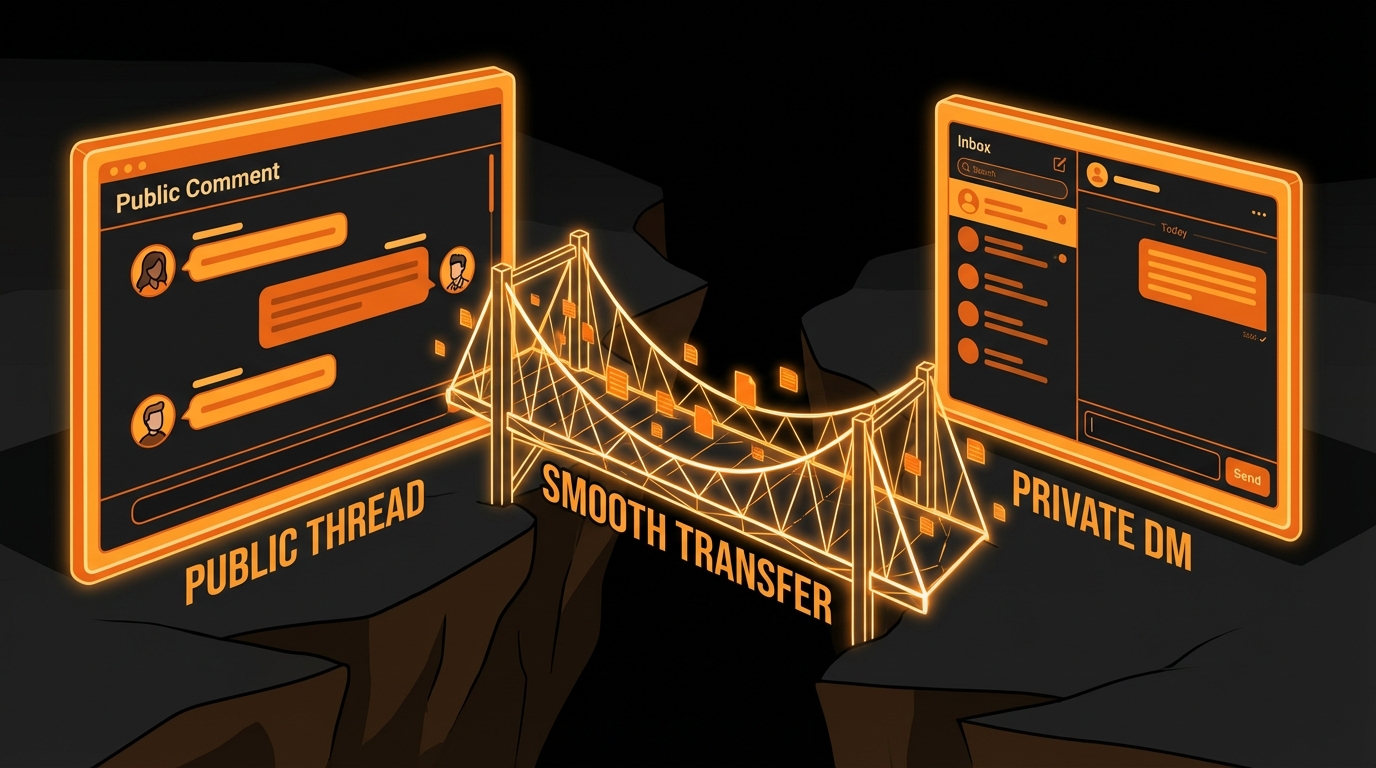
The comment thread is the warm-up, not the sale. Your objective is not visibility; it is conversion. We must transition the interaction off the public feed and into a private DM using the context established in the V-I-C comment. This transition must be strategic, not aggressive.
The Non-Negotiable 3-Touch Rule
We mandate a minimum of three quality interactions before initiating the private message. This threshold is critical for establishing trust and signaling high-value intent. Sliding into the DMs after one comment is aggressive, breaks trust, and signals low-value intent.
Qualifying interactions include:
- Prospect likes your V-I-C comment.
- Prospect replies to your V-I-C comment.
- You reply to their follow-up.
- The prospect likes one of your subsequent comments in the thread.
Step 1: The DM Opener (Contextual Relevance)
The DM Opener must leverage the context built in the public thread. Do not ask for time or a meeting immediately. The goal is to offer continued, undeniable value that justifies the private intrusion.
Action Mandate: Reference the specific insight or challenge you discussed. Offer a proprietary asset (e.g., a playbook, a checklist, a 1-page guide) that solves the exact problem cited.
Script Example (Leveraging Insight):
"Hey [Name], I really enjoyed our brief exchange on [Author's] post about lead volume. You mentioned your team is struggling with [specific challenge they cited]. I actually have a 1-page playbook detailing how we helped a similar Series B company overcome that exact bottleneck this year. Mind if I send it over? No pitch, just value."Step 2: The Follow-Up (Pivoting to Process)
If the prospect accepts the initial value (e.g., confirms they want the playbook), immediately pivot the conversation toward their current operational pain points. Use the original post’s topic (e.g., lead quality, volume) to bridge the gap toward your solution.
Action Mandate: Confirm their method for handling the problem your product solves. Focus on inefficiencies they already recognize.
Script Example (Pivoting):
"Glad that playbook was helpful. Since we were discussing lead quality on the thread, I'm curious: What is your current process for verifying client emails once you pull them from LinkedIn? We found that manual verification is the biggest drag on SDR efficiency."Step 3: The Call-to-Action (The Discovery Bridge)
Once the pain point is confirmed,specifically, a quantifiable inefficiency (time or money),propose a hyper-specific, value-driven discussion. Frame this as a solution demonstration, not a generic sales meeting.
Action Mandate: Tie the confirmed pain directly to the specific feature that solves it. Propose a short, defined time commitment.
Script Example (Direct but Soft CTA):
"Based on our discussion, it sounds like [Specific Problem] is costing your team about 10 hours a week in wasted effort. We specialize in automating that exact step using Pyrsonalize AI. Would you be open to a quick 15-minute chat next week? I can show you the one feature that solves this immediately. If it doesn't fit your workflow, no hard feelings."Mastering this three-step transition is the difference between being an expert commenter and a closed-loop lead generator. Start Your Free Trial and implement this strategy today.
5. The 15-Minute Power Commenting Routine
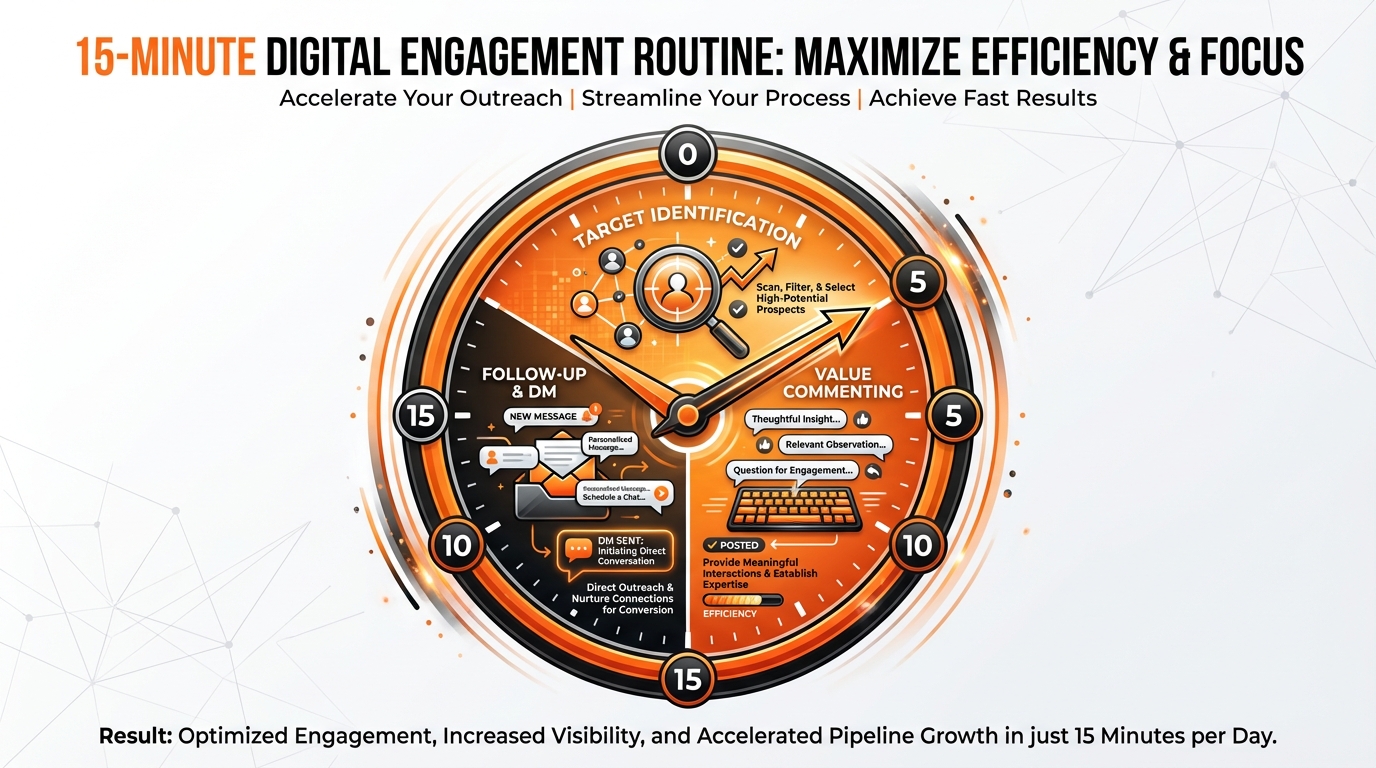
Consistency dictates conversion velocity. We have proven you do not require hours to generate quality leads,you require a highly focused, time-blocked routine. This manual workflow eliminates the time-sink of endless scrolling and guarantees you hit your prioritized targets daily.
The Daily Engagement Block (15 Minutes)
Mandate this block for the first 90 minutes of your workday. This ensures maximum visibility while posts are fresh and prevents other tasks from derailing your lead generation pipeline.
- Minute 1: Access Your Prioritized Targets. Open the curated list of 5-7 Tier 1 (Ideal Client Profile) and Tier 2 (Authority Multiplier) profiles. Zero deviation from this list is permitted.
- Minutes 2-7: Execute Tier 1 Engagement. Review the latest content from your direct prospects (ICP). Draft and deploy 2-3 high-impact V-I-C comments (referencing Section 3). This is your highest conversion priority.
- Minutes 8-12: Deploy Tier 2 Visibility. Comment strategically on 2 posts from high-visibility influencers/authority figures. Your objective here is not the influencer; it is attracting their qualified audience by demonstrating superior expertise.
- Minute 13: Manage Active Threads. Scan notifications strictly for replies to yesterday’s strategic comments. Respond immediately and concisely. Thread momentum is critical for maintaining visibility and establishing rapport.
- Minutes 14-15: Capture and Segment Warm Leads. Identify any new profiles that replied to your comments (Tier 3 leads) or engaged extensively with your V-I-C content. Immediately save and tag these profiles to a “Warm Lead” list. They are primed for the DM follow-up later in the day, completing the conversion bridge.
Adhering to this rigid, 15-minute structure eliminates the temptation to open the main feed,the single most notorious time-sink in LinkedIn lead generation. Your focus must remain surgical: conversion-ready engagement only.
Frequently Asked Questions
As you implement this tactical framework, several operational questions often arise. We address the most critical implementation queries here to ensure zero friction in your daily routine.
- How many comments should I leave daily to see results?
- Quality dictates success velocity, not volume. We mandate 5-7 high-quality, V-I-C structured comments daily. These must be focused strictly on your prioritized Tier 1 and Tier 2 targets. Our internal metrics confirm that one strategic comment that drives 10 profile views is exponentially more valuable than 20 generic comments that generate zero profile views. Focus the output.
- Is it acceptable to disagree with the author in a comment?
- Yes, provided the disagreement is strategic and authoritative. Disagreement is a high-leverage tool that sparks dialogue and dramatically increases visibility. However, you must maintain professionalism and leverage proprietary knowledge. Use this structure:
- Acknowledge the premise: “I agree with your assessment that X is the current industry challenge…”
- Introduce the counterpoint with data: “…but based on our Q4 2025 data, we are seeing the solution shift decisively toward Y, not Z.”
- Pose an authoritative question: “Are you encountering similar resistance to that operational shift in your specific sector?”
- How quickly should I follow up in the DMs after a successful comment exchange?
- Timing is critical. Do not interrupt the public conversation. Wait until the thread has naturally paused or reached a logical conclusion. Ideally, initiate the DM follow-up within 4-8 hours of the last meaningful exchange while the topic and your profile are still top-of-mind. Your opener must immediately reference the public context to maintain continuity and relevance.
Scale Your Outreach: Eliminate Manual Prospecting
Manual commenting identifies the target. Our AI software automates the next step,finding their verified personal emails and scaling your outreach campaigns. Stop guessing. Start converting.
Start Your Free TrialReferences
- How to Attract Your Ideal Client on LinkedIn | Helena Langdon …
- 7 ways I get LinkedIn post ideas that attract my ideal clients. | Shoaib …
- Attract High-Paying Clients On LinkedIn With 5 Simple Language Edits
- How to write LinkedIn posts that attract clients
- Social Media Comment Strategy: 7 Easy Steps to Attract More Clients