


The average SDR ramp time is still 3.2 months. That is unacceptable in 2025.
Every day a new hire sits idle or underperforms, your pipeline suffers. That failure costs you thousands in wasted salary and unacceptable opportunity cost.
We built this 90-Day Dual Checklist Blueprint to solve that fundamental failure point. This isn’t just an SDR checklist: It is an accountability framework for the manager.
If the SDR fails, the manager failed first.
Our system accelerates time-to-quota by forcing proactive coaching and rigorous certification at every stage. We focus on measurable outcomes, not just task completion.
This is precisely how we turn new hires into pipeline generators in 12 weeks flat.
Key Takeaways: Why You Need This Dual Checklist
- The Ramp Time Crisis: We aim to cut the average 3.2-month ramp time by 25% or more,turning hires into quota-hitting assets in 90 days flat.
- Manager Accountability First: This blueprint forces managers to coach proactively. The checklist is their accountability framework, not just the SDR’s homework.
- Certification Over Completion: We measure performance,call quality, email personalization rate, discovery competency,not just whether they attended a meeting.
- Focus on Organic Pipeline: Training prioritizes manual lead generation mastery (finding personal emails, crafting trust-based outreach) from Day 1.
The Dual Checklist Strategy: Non-Negotiable Mandates

- Dual Accountability is Mandatory. Every SDR task must be paired with a corresponding Manager accountability item. This framework eliminates reactive management and drives predictable results.
- Compliance Precedes Access. Mandatory Data Privacy certification (GDPR/CCPA) is required during pre-boarding. No outreach tools are provisioned until compliance is confirmed. Zero exceptions.
- KPI Phasing: Shift the Focus. Transition KPIs aggressively: Weeks 1-4 focus strictly on activity metrics (volume). Weeks 5-12 pivot entirely to conversion metrics (SQLs and Pipeline Value). We measure results, not effort.
- Formalize AE Partnership. Define the SDR-to-AE relationship immediately. Mutual expectations for meeting quality and strict handoff criteria must be signed off on by both parties. This prevents pipeline leaks.
- The Promotion Blueprint. Define the full SDR-to-AE transition path *before* the 90-day mark. Clear milestones reduce churn and provide a tangible promotion ladder (See: The 12-Month Promotion Blueprint).
Phase 1: Pre-Boarding & Culture Foundation (Days 1–5)

Phase 1 is not about quota attainment. It is about speed, alignment, and flawless logistical execution.
If your SDR is waiting for CRM access on Day 3, the ramp process has already failed. You have introduced administrative debt.
We prioritize cultural immersion and immediate system access. This removes administrative drag. It builds confidence (and accelerates time-to-revenue).
SDR Checklist: Days 1–5
- HR & Logistics Mandate: All HR paperwork and benefits enrollment MUST be completed by 10 AM on Day 1. Zero exceptions.
- Tech Stack Validation: Confirm validated login and basic proficiency across the core stack: CRM, Sales Engagement Platform, and our AI Lead Generation Software.
- Deep Company Mission Immersion: Mandatory training on history, values, and structure. They must internalize the “why” before learning the “how.”
- Mandatory Compliance Sign-Off: Pass the Data Privacy certification (GDPR/CCPA). Access to prospect lists is locked until this step is validated.
- Formal Team Integration: Meet the assigned peer mentor and the Account Executive(s) they will directly support.
- Product Mastery Foundation: Complete a high-level product demo (delivered by PMM). Focus strictly on the problems we solve and the client ROI,not features.
Manager Accountability Checklist: Days 1–5
- Pre-Day 1 Workstation Audit: Manager confirms all licenses, hardware, and necessary credentials are tested, active, and accessible 24 hours before the SDR starts.
- Dedicated Mentor Pairing: Assign a high-performing peer (non-AE) strictly for cultural guidance. Schedule mandatory 3x daily 15-minute check-ins to manage friction points.
- Data Access Gatekeeper: Manager personally verifies the SDR achieved 90%+ on the Data Privacy quiz. No prospect data access until sign-off.
- AE Partnership Mandate: Conduct a mandatory 60-minute session defining the precise handoff protocol, MQL standards, and communication cadence.
- Input Goal Setting: Establish Week 1 learning metrics (e.g., 50 discovery calls listened to, 20 personalized emails drafted, 5 internal role-plays completed).
Chaotic onboarding produces unpredictable results. We eliminate administrative friction on Day 1. This ensures the SDR focuses 100% on learning our business,a requirement for scaling trust-based, non-automated lead generation systems.
Phase 2: Product & Process Foundation (Weeks 2–4)
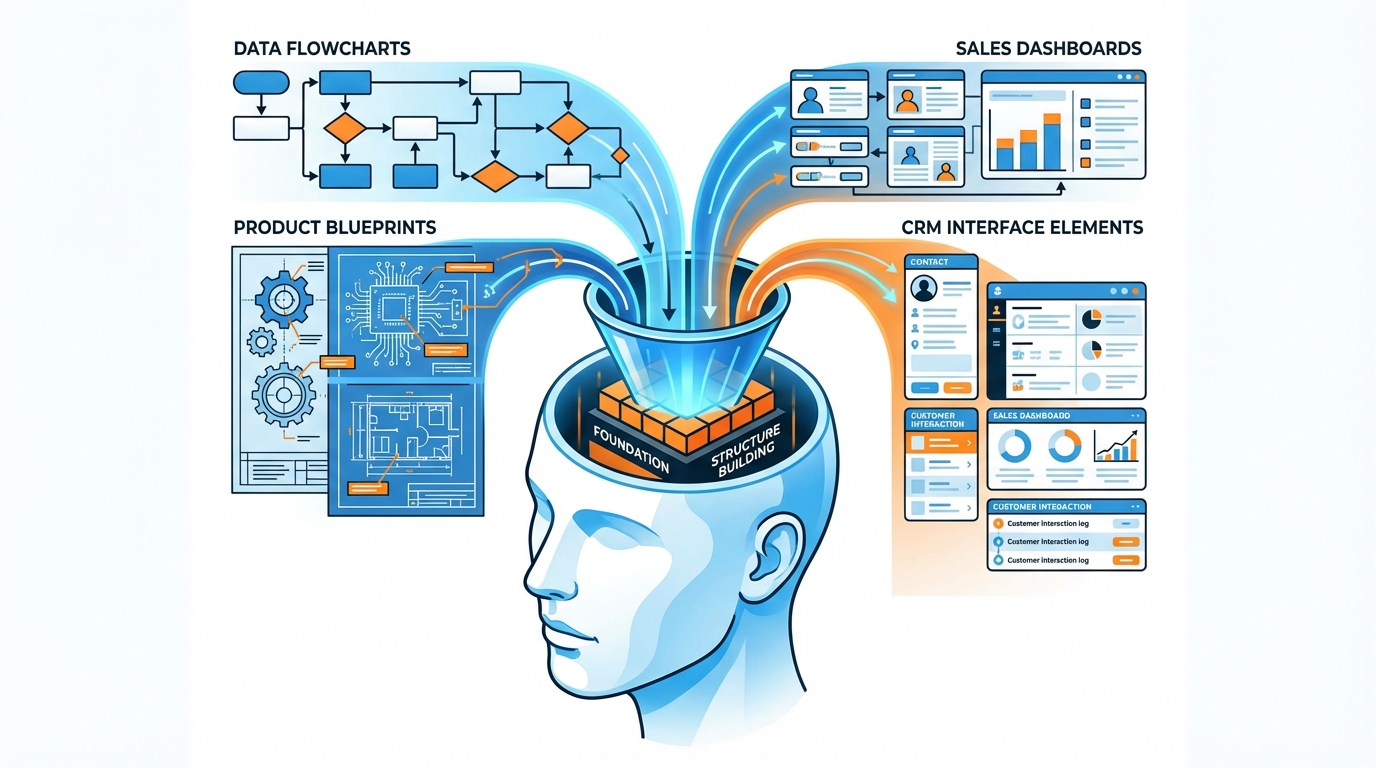
Phase 2 is not about theory. It’s about functional expertise.
We shift from the administrative “what” (Phase 1) to the strategic “who” and “how.” The goal is clear: build the technical and strategic foundation required for high-volume, trust-based outreach.
This is where we secure the knowledge that drives scalable revenue.
SDR Checklist: Weeks 2–4
- ICP Mastery: Deep dive into Ideal Customer Profiles (ICPs). Define the top 3 personas, their measurable pain points, and their typical tech stack. This ensures targeting precision.
- Competitive Analysis: Complete a structured review of the top 3 competitors. Articulate our 3 core differentiators and identify precisely where we strategically win (and where we must avoid competing).
- Discovery Call Shadowing: Shadow a minimum of 10 live discovery calls led by top AEs. Log and categorize key questions asked and common objections raised. This is critical sales intelligence.
- Tech Stack Certification: Master the core Sales Engagement Platform and the CRM. Prove proficiency in logging activities, updating lead status, and running basic territory reports. We require 100% data integrity from Day 1. (Reference: The Essential SDR Sales Tech Stack Blueprint for 2025).
- Messaging Framework Development: Draft and receive formal approval for 5 distinct cold email sequences and 3 core call scripts tailored to specific personas. Messaging must align with value, not features.
- Qualification Framework: Learn and apply the chosen framework (e.g., BANT, MEDDIC, GPCT). Pass a scenario-based certification quiz demonstrating immediate, accurate application of the framework.
- Database Hygiene Practice: Dedicate 2 hours daily to cleaning, enriching, and validating target accounts in the CRM. Data integrity is the engine of our manual outreach success.
Manager Accountability Checklist: Weeks 2–4
- Product Pitch Certification: The manager must receive a live, 5-minute product pitch from the SDR. Provide actionable feedback focused exclusively on value alignment and customer impact, strictly prohibiting feature dumping.
- Target Account Assignment: Assign a specific, clean territory and target account list (100–200 accounts). We eliminate “bad data drag” immediately.
- Role-Play Quota: Conduct 5 structured role-play sessions. Focus 80% of the session time on mastering the opening 30 seconds of a cold call and handling the “Not Interested” objection.
- Feedback Loop Implementation: Implement a mandatory weekly 1:1 using a standardized scorecard. The focus must be on process adherence and knowledge absorption metrics, not merely activity volume.
- System Integration Test: Manager must personally verify that data flows seamlessly,and correctly,from the Sales Engagement Platform back into the CRM for the SDR’s assigned territory. Zero technical debt allowed.
Phase 3: Skill Application & Volume (Weeks 5–8)

Phase 3 is the execution phase. The training wheels are off. We shift aggressively from learning theory to measurable output.
We demand high activity volume, but strictly within the structured, approved frameworks established in Phase 2. The core objective is simple: Generate pipeline. Measure conversion rates obsessively. Refine messaging based on real-world feedback loops.
SDR Checklist: Weeks 5–8
- Cold Call Certification & Volume. Execute 20 live cold calls daily,minimum. Record every call for immediate review. Zero tolerance for deviation from approved opening scripts.
- Sequence Activation. Launch the first 3 targeted outbound sequences (multi-channel cadences are mandatory). Track reply rates and open rates obsessively. These metrics define scalability.
- Objection Handling Mastery. Master the 5 critical objections in your vertical (“Send me info,” “No budget,” “Use a competitor,” “Busy”). Practice counter-responses until they are instinctive reflexes. (See: Our guide on Best Cold Calling Openers).
- First Meeting Qualification. Successfully conduct 3 initial discovery calls. Document BANT/MEDDIC criteria accurately in the CRM. Accuracy here prevents wasted AE time.
- AE Handoff Certification. Execute 5 internal, mock AE handoffs. The Account Executive must formally sign off on the discovery notes and prospect readiness. If the AE rejects it, the meeting doesn’t count.
- Hyper-Personalization Scale. Utilize AI tools (like ours) to identify high-intent triggers (recent funding, hiring spikes, tech stack shifts) for 50 target accounts. This is how we build non-automated trust at scale.
Manager Accountability Checklist: Weeks 5–8
- Mandatory Call Review Quota. Manager must listen to and score 10 recorded SDR calls weekly. Feedback must focus on tone, pacing, and strict adherence to qualification criteria.
- Pipeline Quality Audit. Review the SDR’s first 5 booked meetings immediately. Do they meet the AE handoff criteria? Reject any low-quality meeting instantly. We enforce high standards early.
- Conversion Rate Benchmarking. Establish baseline conversion rates (Call-to-Connect, Connect-to-Meeting). Coaching time must be dedicated specifically to the lowest-performing metric identified by the data.
- Objection Masterclass. Run 2 dedicated, high-intensity role-play sessions per week. Focus these sessions exclusively on the SDR’s current biggest tactical weakness.
- Mid-Ramp Performance Review (60 Days). Conduct the formal 60-day review. Strategic adjustments (territory assignment, required activity volume) must be driven solely by early conversion data.
Phase 4: Mastery & Transition (Weeks 9–12)

This is the final phase. We solidify performance and prepare the SDR for the next critical step: consistent quota attainment and promotion eligibility.
The focus shifts aggressively. It moves from pure activity volume to strategic thinking, pipeline influence, and direct revenue correlation. We demand predictable, repeatable results now. The SDR must operate as a true strategic partner to the Account Executive (AE).
SDR Checklist: Weeks 9–12
- Quota Attainment Certification: Achieve 75% of the ramped meeting quota target. This is non-negotiable for transition eligibility.
- Pipeline Influence (Measured): Directly contribute a measurable amount of qualified pipeline value (This metric must be defined and tracked by leadership). Prove your influence on revenue.
- Self-Coaching Mandate: Analyze your own weekly conversion metrics without prompting. Identify the top 3 areas for improvement and present a mitigation plan to your manager. You own your results now.
- Strategic Account Planning: Develop a detailed, multi-touch engagement strategy for 5 high-value target accounts in the territory. Present this formalized plan directly to the AE for approval.
- Full-Cycle Shadowing: Shadow the AE through an entire sales cycle,from discovery through closed-won/lost. Understand the direct, downstream impact of poor qualification and weak positioning.
- Transition Path Review: Complete a formal review of the SDR to AE Transition Blueprint requirements. Clearly identify and document current skill gaps that prevent immediate promotion.
Manager Accountability Checklist: Weeks 9–12
- Quota Audit & Certification: Certify the SDR has achieved the 90-day ramp quota targets. Document any shortfall immediately and finalize the mitigation plan.
- Strategic Plan Review: Review the SDR’s 5 strategic account plans. Provide direct feedback on account prioritization, resource allocation, and messaging alignment with the AE team.
- AE Feedback Consolidation: Collect formal, written feedback from all AEs the SDR supported during the ramp. Score the SDR rigorously on meeting quality, preparation, and follow-through discipline.
- Performance vs. Potential Assessment: Compare the SDR’s conversion metrics (SQL rate, conversion velocity) against the team average. If they are tracking in the top 20%, initiate the formal promotion discussion immediately.
- Coaching Handoff: Transition the SDR from intensive daily check-ins to bi-weekly, strategic coaching sessions only. Treat them as a fully ramped, self-managed resource.
Ready to equip your SDRs with the tools needed for non-automated, high-trust lead generation? Try AI Lead Generation Today.
KPI Evolution: Shifting Focus from Activity to Revenue
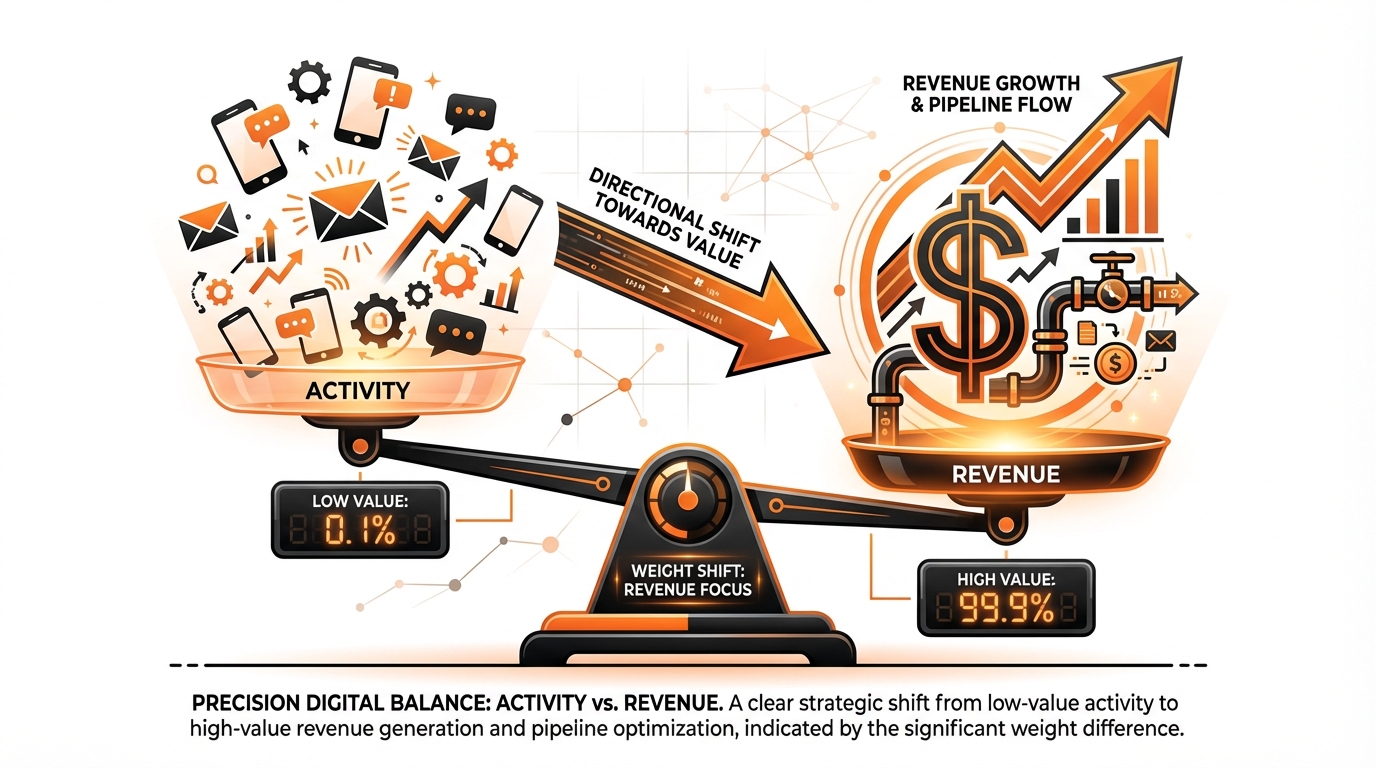
Stop measuring a 90-day SDR like a 12-month veteran. This is the biggest mistake sales leaders make.
Early metrics must focus strictly on inputs and process adherence. We need to verify that they can follow the map. Later metrics must strictly measure output and quality (Are they generating measurable revenue?).
We implement this phased KPI evolution specifically to ensure the SDR builds foundational, high-quality habits first. Volume scaling comes only after quality is proven. This strategy protects our pipeline quality and ensures predictable, non-generic growth.
| KPI Category | Phase 1-2 Focus (Weeks 1-8) | Phase 3-4 Focus (Weeks 9-12+) | Strategic Impact |
|---|---|---|---|
| Core Metric | Activity Volume (Calls, Emails Sent, Connects) | Pipeline Value Influenced, Meeting-to-Opportunity Rate (M2O) | Shifts focus from raw effort to measurable revenue contribution and strategic influence. |
| Quality Metric | Call Scorecard Adherence, CRM Data Accuracy | AE Feedback Score on Meeting Quality, Show Rate % | Ensures booked meetings are actually qualified, attend, and convert into pipeline. |
| Knowledge Metric | Product/ICP Quiz Scores, Compliance Certification | Self-Correction Rate, Strategic Territory Plan Approval | Measures independent strategic thinking. We track their ability to diagnose and fix problems without management intervention. |
| Coaching Focus | Process, Scripting, Tool Usage (Mechanical Skills) | Advanced Objection Strategy, Time/Territory Management, Negotiation Prep | Develops the critical thinking necessary for the Account Executive (AE) role. |
The Manager’s Role: Proactive Coaching, Not Reactive Correction

Your SDR manager is not a babysitter. They are a force multiplier,a strategic asset. Their primary job is problem diagnosis, catching issues long before they impact quota attainment.
We mandate this phased approach (the Dual Checklist) specifically so managers coach the process, not just the outcome. This is how we ensure scalable revenue generation.
The Three Pillars of High-Impact SDR Coaching
1. Immediate Call Review and Feedback
Delaying call feedback by 48 hours is professional negligence. The feedback loop must be immediate. We use conversation intelligence platforms to achieve this speed.
Managers must tag specific moments in the recording: the successful opening, the failed objection handle, the weak qualifying question. The SDR needs to know what worked and what broke right now.
- Mandate: Score a minimum of 5 calls per SDR daily. (Partial reviews are acceptable, but consistent touchpoints are not negotiable.)
- Rule Zero: Never critique performance without immediately providing an actionable alternative script or strategic approach. Critique must lead directly to measurable change.
2. Territory Alignment and Strategy
High-volume SDRs will burn through lists. Fast. The manager’s role is strategic: ensuring the SDR is targeting the correct accounts, with optimized messaging, at the precise moment of maximum leverage.
- Weekly Audit: Review the SDR’s active target accounts weekly against our Ideal Customer Profile (ICP). We eliminate wasted effort on bad fits.
- Strategic Coaching: Coach account-based engagement sequencing. How does the outreach strategy differ when targeting the CEO versus the VP of Operations? Generic messaging kills trust and conversion.
3. Conversion Rate Diagnostics
Activity metrics are noise. Conversion rates are currency. We coach based on diagnostic data.
If an SDR has 100 calls but a 1% Connect-to-Meeting rate, the root issue is messaging or targeting. The effort is high; the output is zero.
If the Connect-to-Meeting rate is 10%, but the Meeting Show Rate drops to 50%, the issue is qualification criteria or the confirmation process. The problem shifts further down the funnel.
The manager must identify the single weakest link in the funnel. We dedicate 100% of coaching resources to fixing that specific bottleneck. We never waste time coaching metrics that are already high-performing.
We eliminate guesswork by instrumenting every step of the sales cycle. If the SDR is struggling, the data tells us precisely why: Is it the opener? The objection handling? The qualification criteria? Stop guessing. Start fixing. This diagnostic approach drives revenue.
Frequently Asked Questions: Execution & Ramp Time

How long should a new SDR training program realistically last?
The core training program must conclude within 90 days. Ninety days is the hard transition point: from structured “training” to aggressive “ramping.”
This period covers foundational knowledge, execution volume, and initial pipeline contribution. However, full quota attainment (100% of target) is different.
- Based on our data, 100% attainment usually requires 4 to 6 months.
- This depends heavily on your specific sales cycle complexity (SaaS vs. High-Ticket Services).
Do not mistake the 90-day mark for full productivity.
What is the most critical element missing from most SDR onboarding plans?
Manager accountability. This is the single biggest failure point.
Most generic checklists focus 90% on the SDR’s learning curve. They completely ignore the manager’s mandate:
- Proactive coaching, not reactive correction.
- Timely feedback loops (daily check-ins).
- Structured, mandatory role-playing sessions.
Our proprietary Dual Checklist approach guarantees the manager is an active, measured participant in the ramp process,not just a passive observer.
Should we prioritize cold calling or email/LinkedIn in the first 30 days?
Prioritize process consistency over raw volume. Always.
In Weeks 1-4, the goal is mastering the structure of high-impact outreach. This means:
- Perfecting the B2B cold call script structure.
- Writing magnetic, non-generic emails.
Volume becomes mandatory starting Week 5. Our internal data confirms this: For complex, high-ticket sales, the phone remains the highest leverage channel. Proficiency in direct connection must be developed early.
Structure determines success. The difference between a scalable sales floor and a revolving door of mediocre SDRs is this exact structure.
This 90-day blueprint guarantees immediate alignment between rep effort and manager coaching. It accelerates your time-to-revenue.
Ready to take the next step in organic lead generation?
Stop wasting time on generic tactics. Try AI Lead Generation Today.
Click HereReferences
- SDR Onboarding Checklist: Tips to Get New Reps Selling Fast – Scribe
- The Ultimate Sales Onboarding Checklist – SmartWinnr, Inc
- The Complete SDR Training Plan to Ramp Your New Hires in 30 Days
- SDR Checklist: 8 Effective SDR Onboarding Steps – Poseidon
- Definitive Sales Onboarding Template and Checklist – Enboarder