

You run a high-ticket service or a scaling SaaS company. You know the brutal truth: the leads that close at 5 figures and above are never sourced by a cheap Chrome extension. They are built on trust, authority, and high-touch interaction.
If you are still banking on automated tools to scrape emails from your Facebook group membership questions, you are committing a catastrophic failure in lead quality. In 2025, the market demands authenticity. This guide is your definitive strategy for manually converting group members into qualified, high-intent sales opportunities.
We are not talking about volume. We are talking about precision. Your Facebook group is a pre-vetted pool of prospects. Your job is to stop treating them like statistics and start engaging them like future clients.
The Brutal Truth About Facebook Group Automation in 2025

Let’s address the noise first. Competitors are obsessed with tools like Group Leads or Group Boss. They promise automated scraping and instant CRM integration. This is a low-leverage tactic for high-value businesses.
Automation focuses on data collection. Manual strategy focuses on intent harvesting. When you sell a $15,000 consulting package, the lead must be warmed by human interaction, not just an email sequence they never asked for.
The core problem with scraping automation is simple: it generates low-quality, cold leads who often forget they ever joined your group. Your cost of acquisition skyrockets due to the necessary high volume of follow-up required to warm them up.
Our approach is mandatory: We use the manual process to qualify, segment, and initiate a personalized conversation. This is the only way to scale trust.
Phase 1: Pre-Conversion Setup & Optimizing for Trust
Before you even think about outreach, you must ensure your ecosystem supports high-intent conversion. Every touchpoint must scream “authority” and “solution.”
The Mandatory 2025 Profile Optimization
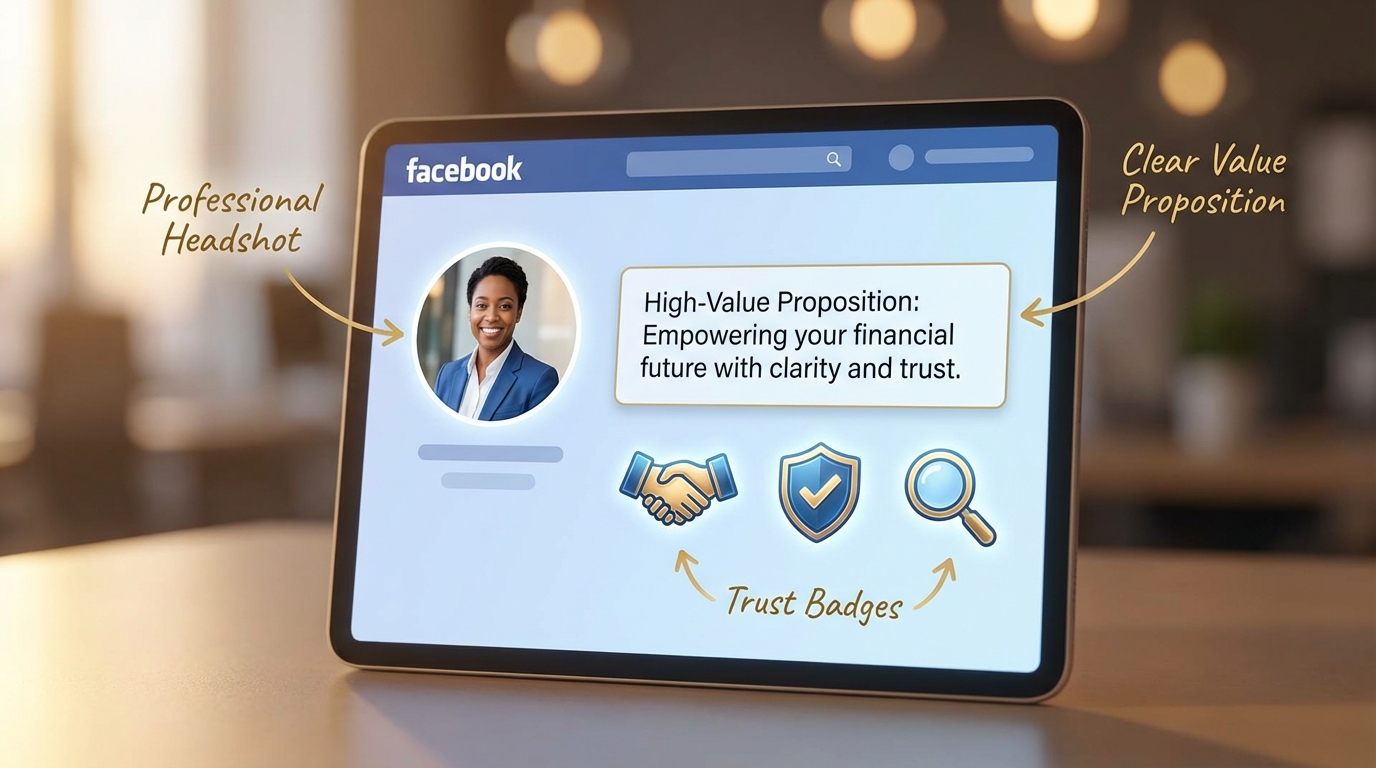
Your personal Facebook profile is your primary landing page for group-sourced leads. If it looks like a generic sales account or, worse, a ghost profile, you forfeit the trust you are trying to build.
Review this immediately:
- Clear Value Proposition: Your bio must state exactly who you help and what result you deliver. No jargon. No ambiguity.
- High-Intent CTA: Your featured link or banner must drive traffic to a specific, high-value offer (e.g., “Download the 7-Figure SaaS Scaling Blueprint”).
- Professional Aesthetics: Ensure your profile picture is professional and your cover photo reinforces your strategic authority.
This is non-negotiable. If you skip this step, every DM you send will be met with skepticism. Ensure your profile is optimized using the principles outlined in our Facebook Profile Optimization Checklist 2025.
Weaponizing the Group Entry Questions
The membership questions are the first, and often the most critical, manual qualification gate. Most founders treat this as a formality. You must treat it as a mandatory discovery call.
You need specific data points to qualify intent and segment your leads manually.
Mandatory Qualification Questions:
- The Intent Question: What is the single biggest roadblock stopping you from hitting $X revenue/month right now? (Forces them to articulate their pain.)
- The Budget/Scale Question: Are you currently spending money on lead generation (ads, VAs, tools), and if so, approximately how much? (Identifies if they have budget and are already investing.)
- The Conversion Trigger: If we could solve [Specific Problem related to your offer] for you in the next 90 days, would you be open to a 15-minute strategy call to discuss the execution blueprint? (A direct, high-intent CTA that segments ready-to-buy leads.)
The Manual Harvesting Process:
When a new member applies, you are not hitting “Approve All.” You are manually reviewing their answers. If they answer Question 3 with a “Yes” or a high-intent “Maybe,” they are immediately flagged as a Tier 1 lead. You approve them, and the manual conversion flow begins instantly.
Phase 2: The Manual Conversion Flow (High-Leverage DM Strategy)
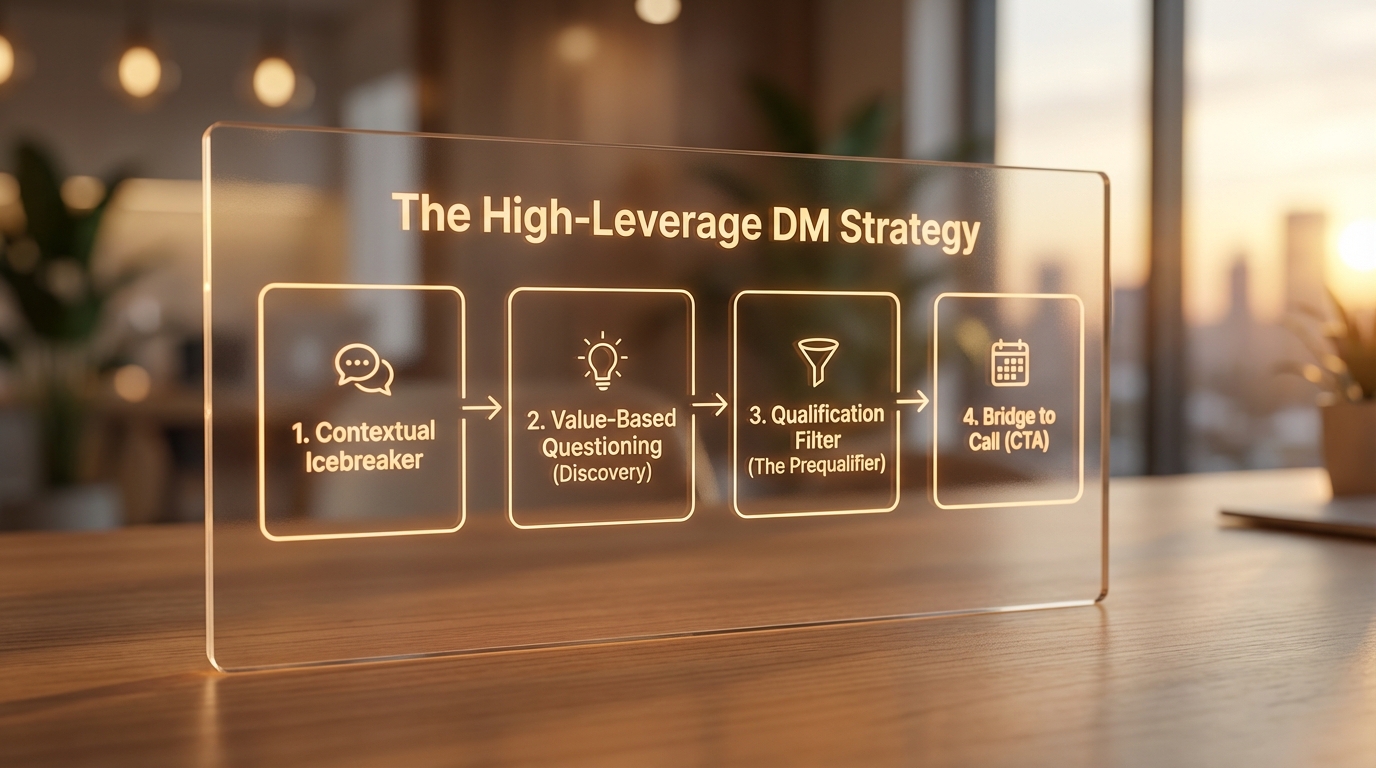
This is where the trust is built, and the conversion happens. The goal is to move the conversation out of the public feed and into the private inbox quickly and authentically.
The Welcome Post Strategy: Tagging for Trigger
The welcome post is not just a formality. It is a strategic engagement trigger. You need a system that forces interaction and gives you a reason to slide into the DMs without being perceived as spammy.
Execution Steps:
- Batch Welcome: Once a day, create a single post tagging all new members.
- The Value Hook: The post must offer something highly specific and valuable tied to your membership questions. Example: “Welcome to the 50 new members! I saw many of you struggling with Q3 (scaling client acquisition). I just finished updating my ‘2025 Scale Framework Checklist.’ Comment ‘FRAMEWORK’ below, and I’ll send it over.”
- Manual DM Initiation: When a member comments “FRAMEWORK,” you do not automate the delivery. You initiate a DM.
The High-Leverage DM Approach: Conversion Scripts
The DM is the bridge between a group member and a qualified appointment. This must be managed with precision and speed. The window of opportunity is short-ideally, within 60 minutes of their engagement.
DM Script Anatomy (The 3-Step Trust Builder):
Step 1: Acknowledge & Deliver (Build Goodwill)
Hey [Name], thanks for joining the group and engaging with the welcome post! Just sent over the 2025 Scale Framework Checklist. Let me know if you run into any questions as you review it.
Step 2: Re-Qualify & Transition (Show You Listened)
I noticed when you joined, you mentioned [Reference their answer to Question 1, e.g., “that lead quality was your biggest roadblock”]. Is that still the primary challenge you’re focused on solving this quarter?
Step 3: Offer the Next Step (The Strategy Session)
I ask because I help service providers like you build non-automated systems that deliver 5-figure leads consistently. Based on your current challenge, I could outline a 10-minute strategy for you right now. Would you be open to a quick 15-minute call sometime this week to map that out? No commitment, just pure strategy.
This approach transitions from delivering value to offering a high-value consultation, leveraging the pain point they already articulated. For detailed scripting and follow-up sequences, refer to our comprehensive guide on Manual Follow Up Strategy For Facebook Lead Generation.
Phase 3: Content-Driven Nurturing (The Strategic Posting Cadence)
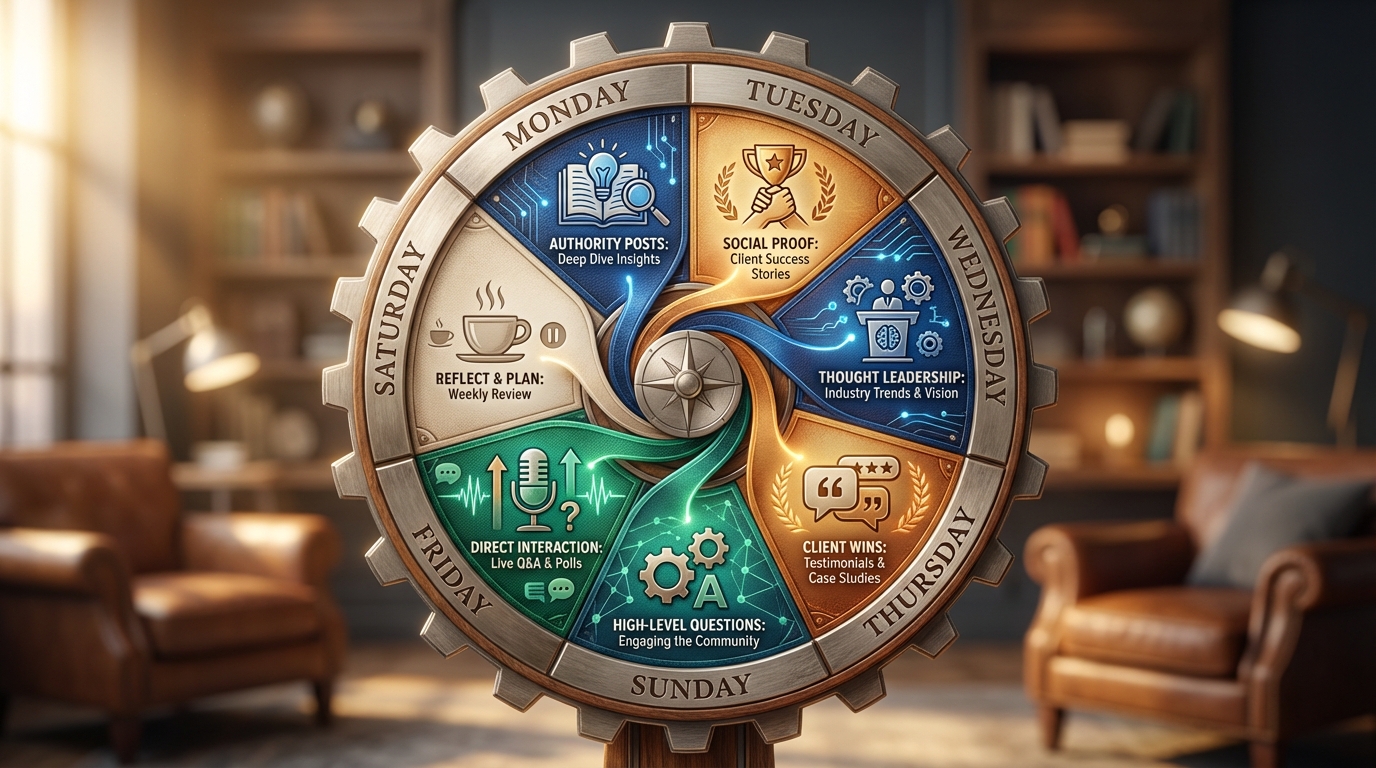
Not every member is Tier 1 ready immediately. The majority of your group members are Tier 2 or Tier 3. They are observing. Your content must systematically move them up the intent ladder.
You need to adopt a strategic content system that forces qualification and conversation.
The High-Intent Content Pillars
Stop posting generic motivational quotes. Every post must serve one of three functions:
- The Authority Post (Problem/Solution): Detailed case studies, client wins, or deep-dive analysis of a current market failure. This establishes you as the definitive expert.
- The Engagement Post (Qualification Filter): Posts that ask members to self-identify their pain points using specific language. Example: “If you’re struggling with lead quality, comment ‘Q’ below. If you’re struggling with lead volume, comment ‘V’.” This gives you new, warm leads to DM.
- The Direct Offer Post (Conversion Trigger): Posts that directly promote a high-value asset or strategy session, requiring a comment or DM to access. This filters for immediate intent.
Text-Based Infographic: The Engagement-to-Conversion Ratio
2025 Group Conversion Metrics (High-Ticket Services)
Tier 1 (Immediate Intent – Group Questions): 7% of new members are qualified and contacted within 24 hours.
Tier 2 (Content Engagement – Comment/DM): 12% conversion rate from high-value content engagement to booked call.
Tier 3 (Observation – Nurturing): Requires 4-6 weeks of consistent strategic content before conversion attempt.
Required DM Speed: 60 minutes max response time for comment triggers.
The Tracking Mandate: Knowing Your Conversion Rate
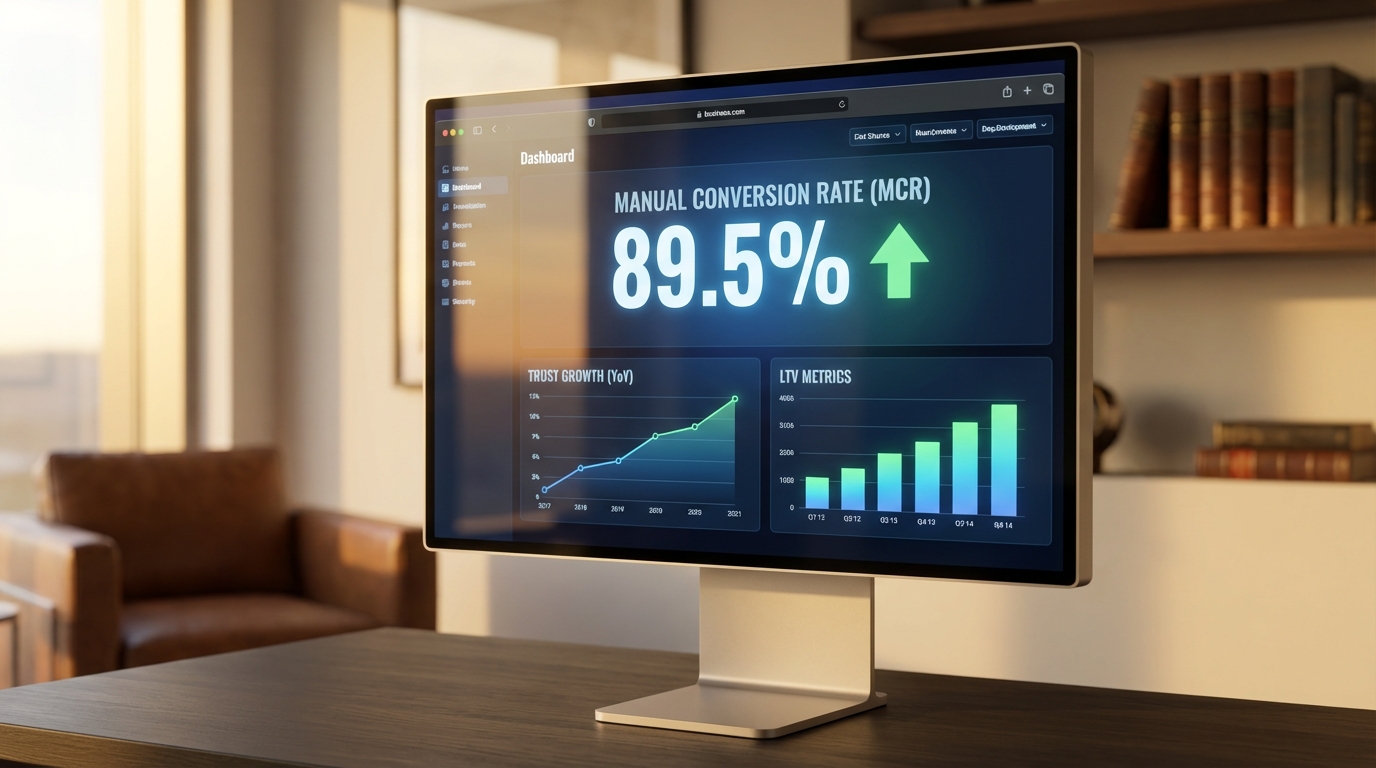
If you are executing a manual, high-touch strategy, you must track every interaction. This is not optional. If you cannot articulate your conversion rate from “Group Entry” to “Booked Call,” you are operating blind.
You need a simple, centralized system (a Google Sheet or a basic CRM like Trello/Airtable works perfectly for manual tracking) to monitor these metrics:
- Source of Lead (Group Question, Welcome Post, Content Comment).
- Date of Entry/Engagement.
- Qualification Tier (1, 2, or 3).
- DM Sent Date.
- Call Booked Date.
- Result (Closed/Lost/Nurturing).
This meticulous manual tracking allows you to iterate and optimize your scripts and content pillars. If you fail to track, you are simply performing random acts of marketing. Master your metrics with our guide: The 2025 Guide to Tracking Manual Facebook Lead Generation Efforts.
Comparison Table: Manual vs. Automated Lead Conversion (2025)
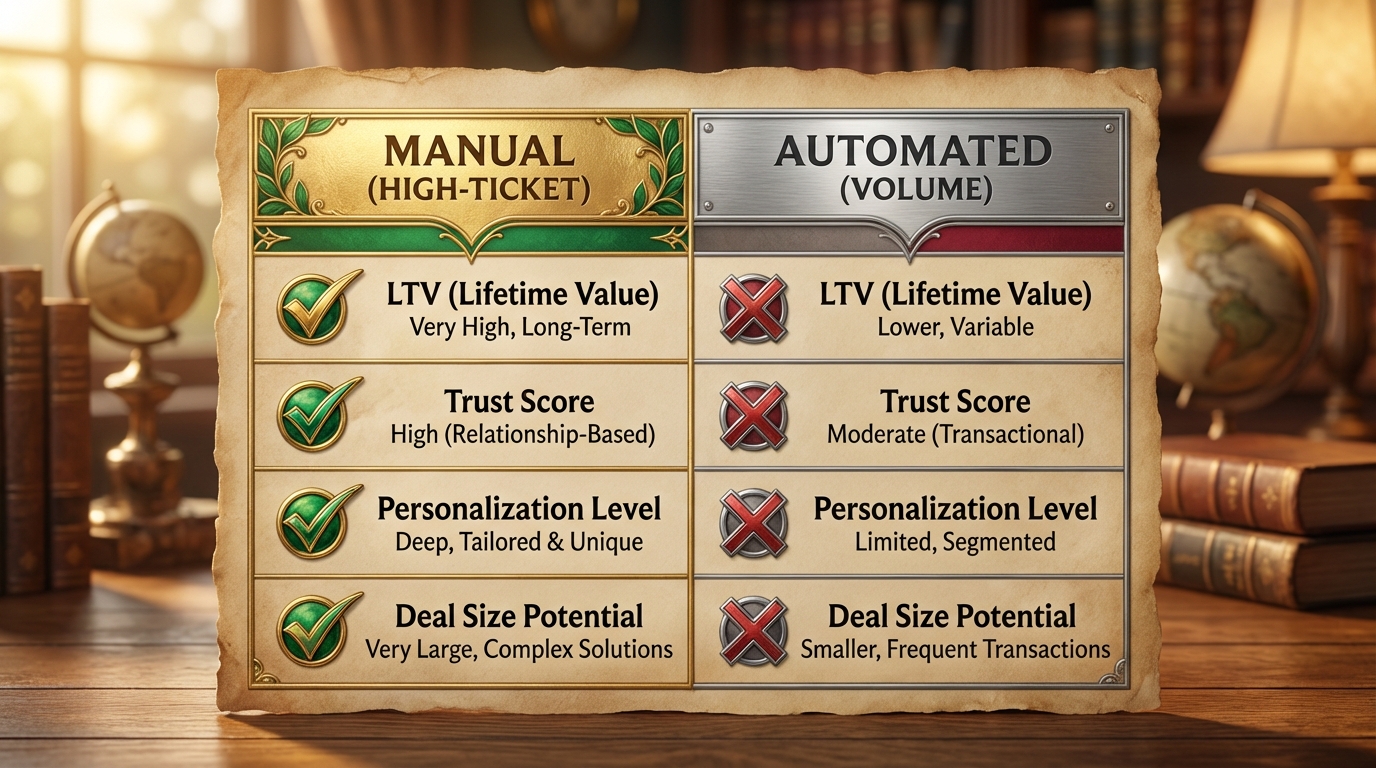
This table cuts through the noise and shows you precisely why the high-touch manual approach is mandatory for high-ticket sales.
| Metric | Manual, High-Touch Strategy (Mandatory) | Automated Scraping (Low-Leverage) |
|---|---|---|
| Lead Quality | Tier 1 Intent. Pre-qualified via custom questions and human interaction. | Low Intent. Cold email addresses, often low engagement. |
| Trust Level | High. Trust established through personalized DMs and value delivery. | Zero/Negative. Immediate perception of being added to a list. |
| Conversion Rate (to Call) | High (10-15%). Focused outreach to warm prospects. | Low (1-3%). Requires heavy, expensive email nurturing. |
| Cost per Acquisition (CPA) | Low. Time investment is high, but conversion value is higher. | High. Wasted time/tools on unqualified volume. |
| Scalability | Scalable via repeatable, documented DM processes and VA training. | Scales volume, but not profitability or quality. |
Pros and Cons of the Manual Group Conversion Strategy
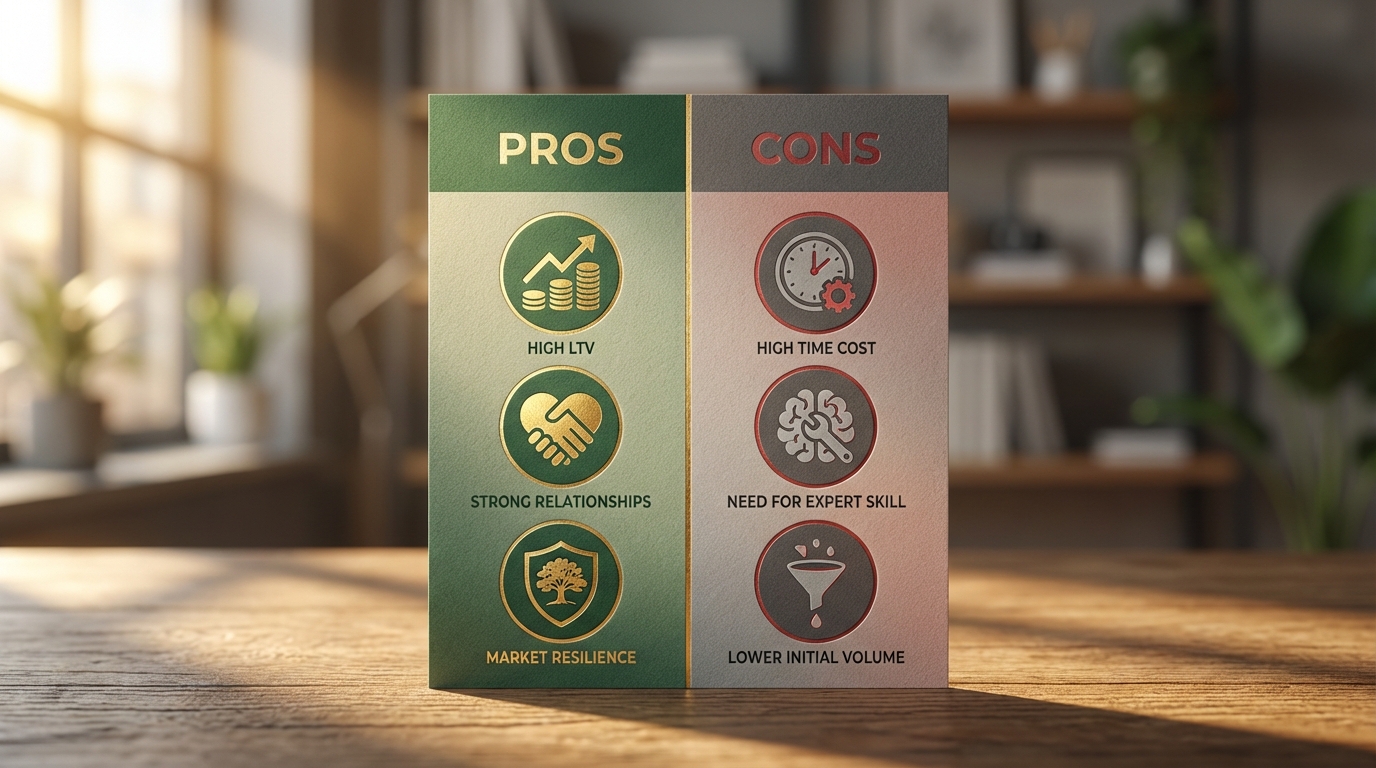
The Advantages (Pros)
- Definitive Qualification: You know exactly why the prospect is raising their hand and what their current budget tolerance is before the call.
- Accelerated Trust: Moving the relationship from public content to private, personalized DM conversation drastically cuts the time to conversion.
- Feedback Loop: Manual interaction provides immediate qualitative feedback on your offers and content, allowing for rapid iteration.
- No Algorithm Risk: This strategy is independent of Facebook’s constant algorithm changes regarding lead ad forms or automation tool bans.
The Disadvantages (Cons)
- High Time Investment: Requires dedicated time daily for manual review and DM engagement. This is not passive.
- Requires Systemization: If you don’t document your scripts and tracking, the process breaks down instantly when you try to delegate it.
Key Highlights: The 2025 Manual Lead Mandate

Your Non-Negotiable Action Items
- Stop Scraping: Automation tools deliver cold, low-intent data, catastrophic for high-ticket sales.
- Optimize Profile First: Your personal profile is the highest-converting landing page you own. Maximize its authority.
- Weaponize Questions: Use group entry questions to force self-qualification (Tier 1 identification).
- DM Within 60 Minutes: Speed is leverage. Engage high-intent leads while their motivation is peaked.
- Track Everything: If you can’t measure the conversion rate from engagement to booked call, you have no system.
The Manual Conversion Checklist for SaaS and High-Ticket Founders
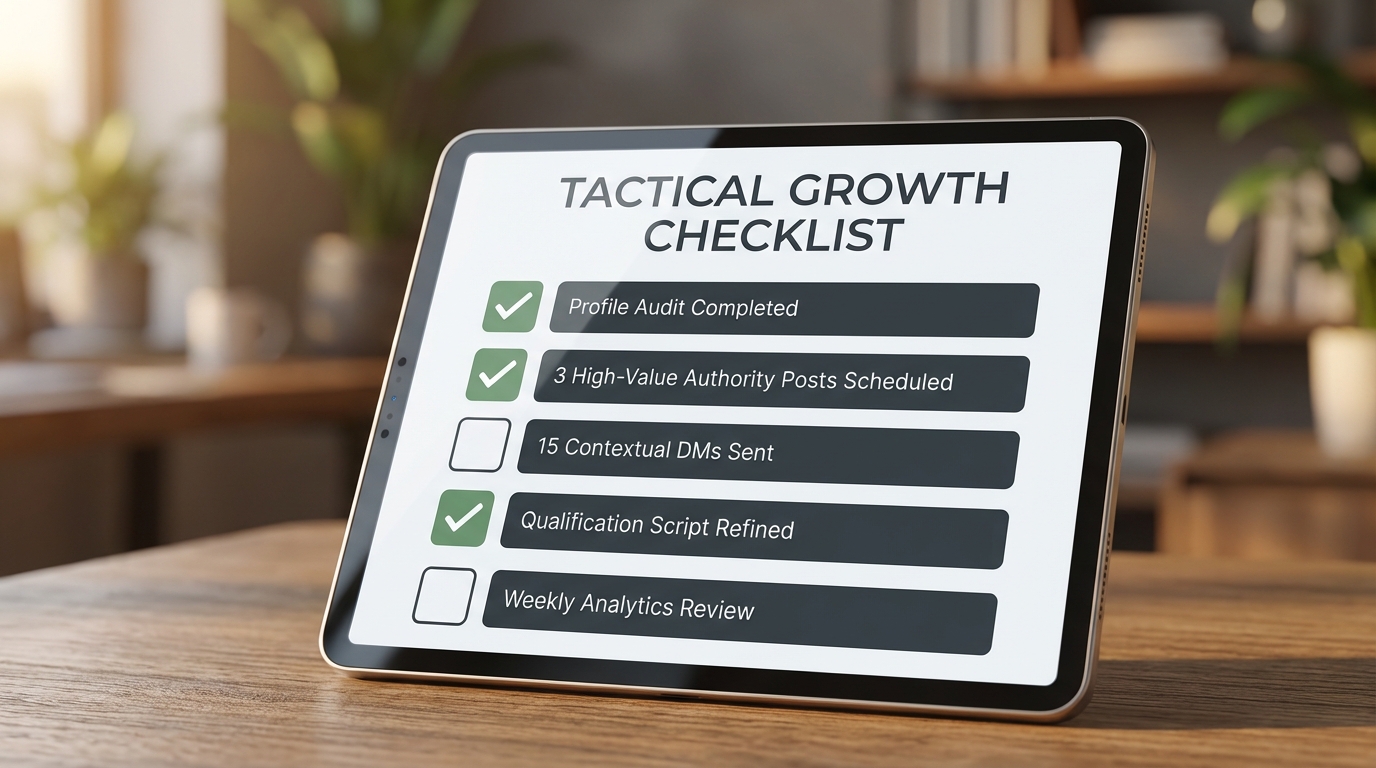
Use this checklist to audit your current group lead generation system. If you cannot check all these boxes, your system is leaking revenue.
- ✅ Have I updated my Facebook Profile to clearly articulate my 2025 value proposition?
- ✅ Are my group membership questions designed to qualify intent and budget, not just collect emails?
- ✅ Do I have a documented, 3-step DM script for warm outreach?
- ✅ Am I batching new member approvals and using a Welcome Post to trigger engagement (comments)?
- ✅ Do I manually review every comment on my Authority and Engagement posts to identify new warm leads?
- ✅ Is there a defined, dedicated time slot in my calendar for daily manual lead engagement?
- ✅ Are all leads tracked in a centralized system that records the source and conversion status?
- ✅ Do I have a clear, irresistible offer (e.g., a 15-minute Strategy Blueprint) ready for the DM conversation?
Frequently Asked Questions

Is this strategy too slow for high-volume lead generation?
Answer: The brutal truth is that you are confusing volume with value. If you are selling a high-ticket service ($10k+), you need 5-10 highly qualified, high-intent leads per week, not 500 cold contacts. This manual strategy is designed for high-conversion efficiency, meaning you spend less time filtering trash and more time closing deals. It is the mandatory approach for optimizing profit, not just traffic.
What if members don’t answer the group questions honestly?
Answer: The goal is not 100% honesty, but intent identification. If they take the time to answer a detailed question about their biggest roadblock, they are signaling higher intent than someone who just clicks ‘Yes’ to the terms. If they provide a low-effort answer, they are automatically segmented as a Tier 3 (Nurturing) lead, meaning you invest minimal time in them until they engage with content.
How do I avoid getting banned by Facebook for too many DMs?
Answer: The manual, trust-based approach inherently reduces risk. You are initiating DMs based on pre-existing engagement (they commented on your post, or they answered your question). This is not cold outreach. Maintain conversation quality, keep messages short, and ensure you are always delivering the promised value (the checklist, the guide) before pivoting to the sales call. Focus on quality, not mass blasting.
Should I use my personal profile or my business page for this outreach?
Answer: Mandatory use of your personal profile. High-ticket sales are based on personal authority and trust, especially in a group setting. People buy from people, not logos. Your profile must be the face of the solution. The business page can be used for broad content distribution, but all direct, manual lead conversion must be anchored to your personal brand.
Conclusion: The Future of Facebook Lead Generation is Manual

The era of cheap, automated lead scraping is dead for high-ticket service providers. The 2025 lead generation landscape demands trust, precision, and human connection. Your Facebook group is not a data mine; it is a community where you establish definitive authority.
By implementing this manual blueprint-weaponizing your entry questions, deploying surgical DM scripts, and tracking every conversion point-you move from chasing low-quality volume to harvesting high-intent, pre-qualified sales opportunities. This is the only scalable path to consistent 5-figure client acquisition.
Ready to take the next step?
Implement the Framework/Download the Blueprint/Book a Strategy Session (Focus on high-value conversion).
Click Here