


Growth is the goal. But unchecked scaling introduces chaos: inconsistent client results, duplicated effort, and crippling bottlenecks that actively kill your profit margins.
We consistently see small agencies stall immediately after hitting $50k MRR. The reason is simple: Their operations are reliant entirely on tribal knowledge.
If your rockstar Account Manager leaves, your delivery system collapses—and your entire client roster suffers.
Standard Operating Procedures (SOPs) are not bureaucratic overhead. They are the strategic foundation for scalability. SOPs are the mechanism that transforms messy, high-touch services into repeatable, profitable products.
In 2025, if your agency doesn’t run on documented, optimized SOPs, you are actively sacrificing margin, capacity, and future revenue.
The SOP Imperative: Building Your Scalable Machine
This blueprint provides the exact framework required for 7-figure scale. We will show you how to:
- Systematize client onboarding to cut setup time and reduce scope creep.
- Eliminate delivery errors and stabilize client retention metrics above 90%.
- Decouple profit from specific personnel, making your valuation sellable.
- Turn a collection of talented individuals into a predictable, repeatable agency machine.
Key Takeaways: SOPs as Revenue Multipliers

This guide is engineered exclusively for agency owners focused on high-ticket client acquisition. We cut the documentation fluff: Our focus is strictly on Standard Operating Procedures (SOPs) that directly translate into increased profitability and scale.
Download the Visual Guide
Get the slide-by-slide visual summary of this article (PDF) for free.
- SOPs Are Strategic Assets: They are not mere documentation. SOPs are the strategic infrastructure that allows your agency to charge premium rates and deliver services faster than the competition.
- Prioritize the Money Flow: Implement SOPs first in Client Qualification, Pricing, and Reporting. Standardizing these processes delivers the fastest, most measurable ROI.
- The AI Imperative: Maintaining a competitive edge requires documenting processes for integrating AI tools (like our proprietary lead generation software) to guarantee efficiency and consistent output quality.
- Mandate Compliance: An SOP is worthless if it is not followed. Leverage project management tools to enforce adherence and measure the impact of standardization on client retention and delivery speed.
Why Your Agency’s Chaos is Costing You Millions

Look closely at your current operations. How much time does your senior team waste answering the same low-level questions every week? How often are you scrambling for last-minute, emergency fixes because a critical delivery step was missed?
These operational gaps are not minor annoyances; they are quantifiable reductions in your annual profit margin.
The Hidden Cost of Variance: Agencies operating without defined, enforced SOPs experience a measurable 15% to 25% variance in service quality across their account managers and project teams. This inconsistency is the primary driver of client dissatisfaction, eroded trust, and ultimately, high churn rates.
SOPs eliminate this variable. They establish one single, proven path to predictable, high-level success for every client.
“When we structured our content workflow using SOPs in Q3, our average time-to-delivery dropped by 35%. That time is now actively spent on prospecting and closing high-ticket deals, not managing internal confusion.”
When you standardize your core processes, you instantly achieve two critical strategic advantages that multiply revenue potential:
- Reduced Training Overhead: New hires reach full productivity in weeks, not months. The SOP is the training manual, reducing reliance on expensive senior staff time.
- Scalable Quality Control: Every client receives the same high standard of work, regardless of which team member handles the task. Quality becomes a systemic guarantee, not a human effort.
The 5 Non-Negotiable SOPs for High-Ticket Scale

Stop wasting energy documenting peripheral tasks. We focus solely on the processes that directly impact revenue, retention, and scalability.
If your goal is rapid, high-ticket growth—not just surviving—these five Standard Operating Procedures are mandatory starting points for 2025.
Step #1: High-Value Client Qualification SOP
Your team’s time is your most expensive, finite resource. Wasting it on low-fit prospects is a strategic failure that costs you real profit.
This SOP dictates exactly which leads move past the initial discovery call. It must be rigid. It must protect your resources from time-wasters.
Key components of this strategic gatekeeping SOP include:
- Minimum Budget Threshold: Document the absolute minimum retainer or project value required to engage your agency.
- ICP Alignment Checklist: A concise 5-point checklist confirming the client fits your Ideal Client Profile (ICP) based on industry, size, and need.
- Defined Red Flags: Specific behavioral or financial criteria that immediately disqualify a prospect (e.g., demanding hourly rates, history of firing multiple agencies, refusing to grant necessary access).
- Mandatory Pre-Call Homework: The exact data, insight, or information the prospect must submit before you invest time in a meeting.
By rigidly enforcing this SOP, you ensure your sales team only invests time in leads with high conversion potential and aligned profitability. This is the critical first step in optimizing your Strategic Lead Generation efforts.
Step #2: Value-Based Pricing and Scoping SOP
Pricing should never be a guess or an emotional negotiation. It must be a standardized, documented calculation based on perceived value and quantified outcomes, not hours spent.
This SOP ensures every proposal delivered by your agency follows the same framework, eliminating scope creep before it starts and maximizing margin.
How we structure this framework:
- Discovery Documentation: Mandate the exact questions needed to quantify the client’s pain and potential gain (e.g., “What is the lifetime value of one customer?” or “How much does a missed lead cost?”).
- Value-Metric Calculation: A standardized internal formula that ties your fee directly to the client’s expected outcome (e.g., $X fee for $Y projected return on investment).
- Tiered Proposal Template: Use a standardized three-tier proposal structure (Good, Better, Best) for every pitch to anchor the highest price point.
- Scope Definition Protocol: Clear, templated documentation defining what constitutes an “in-scope” task versus an “out-of-scope” addition, preventing margin erosion.
Standardizing this process allows your team to confidently negotiate higher retainers and eliminates the common agency trap of pricing based on fear. We detail the mechanics of this in our guide on Value-Based Pricing.
Step #3: Client Retention and Reporting SOP
Retention is always cheaper than acquisition. Your reporting process is the single biggest operational factor in long-term client retention.
This SOP mandates consistency in how results are presented, ensuring data is always framed in terms of the client’s ultimate business objectives, not just vanity metrics.
This SOP requires strict adherence to:
- Mandatory Narrative Structure: Every monthly report must start with an executive summary, highlight three key wins, and propose three actionable next steps.
- Tool Integration Protocol: Define which data sources are used (e.g., GA4, HubSpot, our proprietary tools) and how data is unified for a single source of truth.
- Frequency and Format: Specify the exact day reports are due (e.g., 5th business day) and the mandated presentation format (e.g., the agency-approved Google Slide template).
- Proactive Recommendation Rule: Require that a minimum of 20% of the report content must be forward-looking strategy and proactive recommendations, not merely backward-looking data review.
Consistent, strategic reporting minimizes client anxiety, reinforces your value, and makes contract renewal a formality. See our deep dive on Client Retention strategies through reporting.
Step #4: Project Handoff and Quality Assurance (QA) SOP
The transition between departments (Sales to Fulfillment, Strategy to Creative) is where most agencies hemorrhage time, quality, and margin. Your Handoff SOP must eliminate ambiguity and define accountability.
This SOP covers the critical internal handoff and the final quality gate before client delivery.
Example: The Sales Handoff Checklist
- Client signs contract and setup fee is processed.
- Sales Lead schedules the Internal Kickoff Meeting (IKM).
- Sales Lead transfers all discovery notes, recorded calls, and the final Statement of Work (SOW) into the Project Management Tool (e.g., Asana/ClickUp).
- Account Manager confirms all required documents are present and complete before accepting the project.
- IKM is held, focusing 80% on client goals and 20% on internal resource allocation and potential risks.
The Quality Assurance (QA) SOP then ensures every final deliverable meets the agency’s documented standard before it ever reaches the client—preventing embarrassing errors and costly revisions.
Step #5: AI Tool Integration SOP
It is 2025. Efficiency demands leveraging AI. Your agency’s competitive advantage relies on integrating new technology without compromising quality or ethics.
This SOP documents precisely how your team integrates new technologies—like AI-powered research or content generation tools—into client workflows.
Key requirements for the AI Integration SOP:
- Mandatory Human Validation: Every piece of content, data analysis, or strategy generated by AI must pass a human expert review before client delivery. AI is a co-pilot, not the final authority.
- Prompt Engineering Guidelines: Standardized, agency-approved prompts used for specific tasks to ensure consistent output quality (e.g., “Generate 5 subject lines based on these 3 USP points, using a formal B2B tone”).
- Tool Stack Documentation: A centralized, audited list of approved, agency-wide AI tools (e.g., Pyrsonalize for prospecting, Midjourney for concept visuals).
- Security and Confidentiality Protocol: Strict guidelines on what client-specific data or sensitive information can and cannot be entered into third-party AI platforms.
This SOP is not optional—it is critical for future-proofing your business and maintaining a competitive edge in service delivery.
Strategic SOP Creation: The 4-Step Implementation Protocol
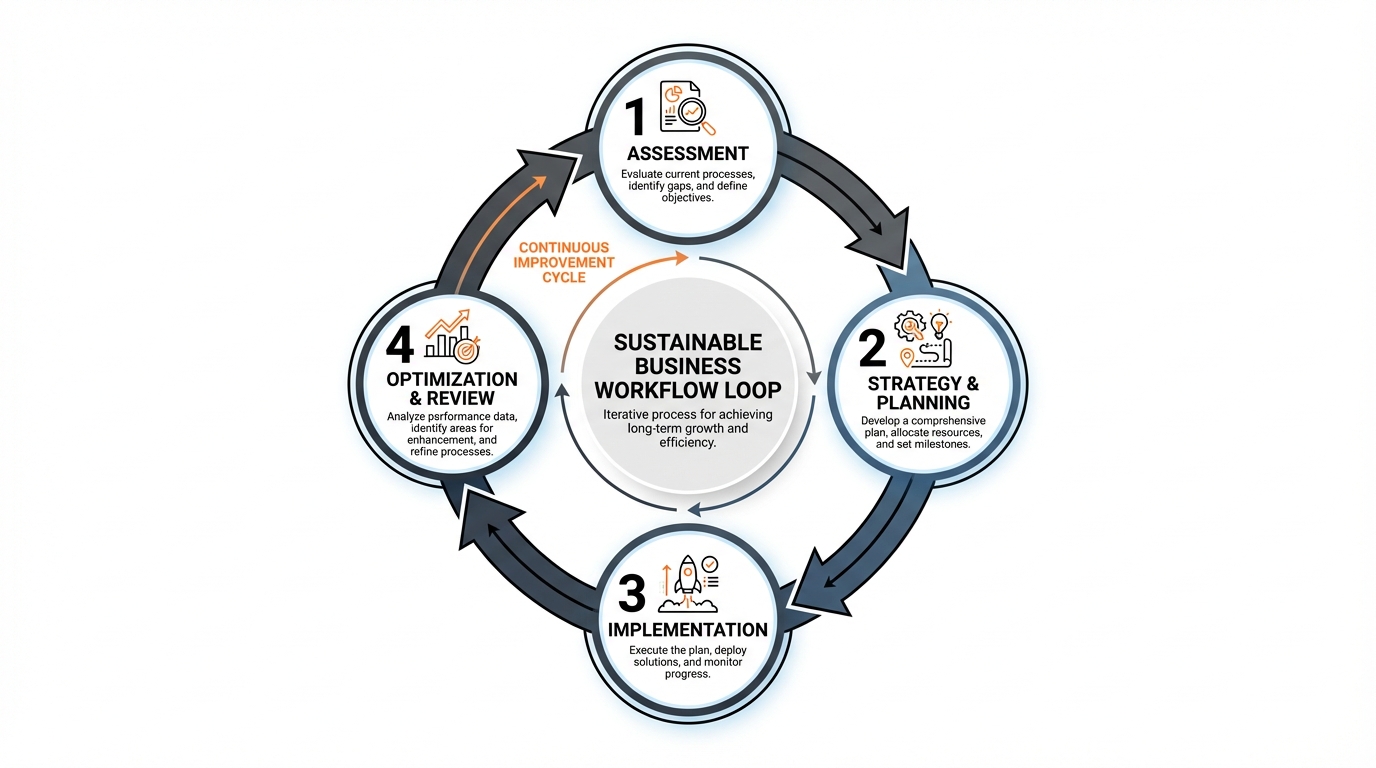
Implementing an SOP framework is not a passive documentation exercise—it is a mission-critical project. Treat it with the rigor it demands.
Do not attempt to document everything at once. That leads to scope creep and burnout. We focus ruthlessly on the 80/20 principle: Document the 20% of tasks that generate 80% of your operational friction, errors, and time waste.
Step #1: Audit the Bottlenecks
The first step is diagnosis. Where exactly is your agency losing time and margin? We require objective data, not just anecdotes.
- Analyze PM Data: Identify tasks that consistently exceed their estimated completion time in Asana, ClickUp, or Trello.
- Track Communication Friction: Monitor recurring questions in Slack or email. If the same question is asked three times, it requires an SOP.
Pinpoint the pain points with precision: Is the friction in the “Client Feedback Loop”? Is it the “Initial SEO Research Phase”? Naming the bottleneck allows us to solve it.
Once identified, assign an SOP Owner. This must be the team expert—the individual who currently performs the task most efficiently and reliably. They are responsible for leading the documentation process.
Step #2: Document the 80/20 Process
The assigned SOP Owner now captures their expertise. Documentation must be clear, concise, and immediately actionable for a new hire. Eliminate all internal jargon and tribal knowledge.
Structure the SOP rigorously:
- Break the task into 5 to 15 sequential, numbered steps. (If a step requires more than 15 granular actions, it must be split into a separate, linked sub-SOP.)
- Clarity Requirement: Use screenshots, GIFs, or short, embedded video clips for any complex software usage or decision points.
- Required Tools: Include a dedicated section listing necessary software, templates, and required login credentials or access paths.
- Definition of Done: End every SOP with a clear, non-negotiable checklist confirming the task’s completion criteria.
Step #3: Mandate Compliance and Centralize
A decentralized SOP is a dead SOP. If your team cannot find it in three clicks, they will not use it. All documentation must reside in a single, easily searchable knowledge base (e.g., Notion, Confluence, or a dedicated section within your PM Suite).
Compliance is non-negotiable. An SOP is worthless if it requires manual enforcement. You must bake standardization directly into the workflow structure.
Actionable Compliance: Link the relevant SOP directly to the required task within your Project Management software. If the “Content Publishing SOP” requires checking off Step 7 (SEO Audit), that SOP link should be mandatory in the task description.
Crucially: The SOP Owner must sell the team on the efficiency gains, not just the rules. Compliance is driven by demonstrating how the SOP saves them time, reduces errors, and prevents rework—not merely by mandating adherence.
We quantify the impact of this standardization immediately. Review the measurable differences between unstructured agencies and those operating with enforced SOPs:
| Metric | Unstructured Agency (No SOPs) | Structured Agency (SOPs Enforced) |
|---|---|---|
| Client Onboarding Time (Days) | 14 – 21 Days (Variable) | 4 – 7 Days (Consistent) |
| Project Error Rate (Quarterly) | 12% – 18% | Less than 5% |
| Average Profit Margin | 15% – 25% | 30% – 45% |
| New Hire Time to Productivity | 90+ Days | 30 – 45 Days |
The data is definitive. SOPs are not administrative overhead; they are the mechanism for margin protection and accelerated scalability.
Step #4: Quarterly Review and Optimization
An SOP is a living document, not a static binder. The marketing landscape changes constantly. Your software evolves. If your SOPs are not updated, they become immediate liabilities.
Mandate a Quarterly SOP Audit cycle. The responsibility falls back to the SOP Owner.
During the audit, the Owner must:
- Test the steps end-to-end to confirm relevance.
- Identify bottlenecks or efficiency gains discovered since the last review.
- Update the document immediately if any step is outdated or a tool has changed.
We strongly recommend involving a team member who is not the SOP Owner in the review process. Their fresh perspective identifies tribal knowledge—steps the expert performs automatically but failed to document explicitly.
Failure to implement this quarterly audit guarantees process decay. Outdated SOPs create more operational friction and confusion than having zero documentation in the first place.
Frequently Asked Questions

Are SOPs required for a one-person agency?
Yes. Absolutely. This is non-negotiable. If you are operating solo, SOPs are your personal knowledge base and efficiency engine. They force standardization, maximizing your output per hour. Crucially, they serve as the immediate, scalable onboarding system for your first hire. Without documented processes, you cannot move from freelancer to agency owner.
How detailed should a marketing SOP be?
The benchmark is the New Hire Standard: An average employee must be able to complete the task without asking for primary clarification. Focus on actionable steps, not narrative. Use visual aids, screenshots, and flowcharts religiously. Complexity dictates length:
- Complex Tasks (e.g., Setting up a Facebook Lead Ad Funnel): 10–15 steps.
- Simple Tasks (e.g., Submitting a Support Ticket): 3–5 steps.
If an SOP exceeds 20 steps, break it down into multiple, modular procedures.
What is the best tool for storing agency SOPs?
A centralized, cloud-based system that offers robust search and seamless integration with your existing project management stack is mandatory. We strongly recommend dedicated platforms over generic file storage. Standard industry tools include:
- Notion (Flexible knowledge base)
- Confluence (Enterprise documentation)
- Trainual (Dedicated training and SOP management)
The critical factor is accessibility and adoption. If your team cannot quickly find the SOP, it does not exist. Do not use scattered Google Docs or local drives.
Ready to take the next step?
Try AI Lead Generation Today
Click Here