


You are scaling a high-ticket business. You need a lead generation system that works, not just activity reports.
The question of whether a digital marketing agency should charge a setup fee is fundamentally flawed. It implies the fee is optional. It is not.
A setup fee is the mandatory investment required to build a foundational, measurable, high-conversion system. We call this the “System Build Tax.”
If an agency offers “free setup” in 2025, they are doing one of two things:
- They are automating the process using generic, templated software—which guarantees mediocre results.
- They are burying the setup cost into inflated monthly retainers or high ad spend percentages.
Neither approach serves high-value clients. Our methodology demands precision. Precision requires significant upfront strategic work, and that work costs money.
We are not selling clicks. We are building scalable, measurable assets designed for predictable revenue growth.
Key Takeaways: The Setup Fee Imperative
- The Setup Fee is Mandatory: High-performance lead generation requires a significant, one-time investment in strategic planning and infrastructure build-out.
- Avoid ‘Free’ Setup: Agencies waiving setup fees typically use generic templates or bury the cost in retainers, leading to misaligned incentives and poor performance.
- Core Deliverables: The fee must cover deep strategic audits, conversion tracking implementation, CRM integration, and custom creative asset creation.
- Pricing Benchmark: Setup fees for complex B2B or high-ticket SaaS clients typically range from $3,000 to $15,000+, depending on integration complexity and scope.
- Justification is Transparency: A quality agency provides an itemized breakdown justifying the investment required to establish a scalable system.
The Strategic Mandate: Why Setup Fees Are Non-Negotiable
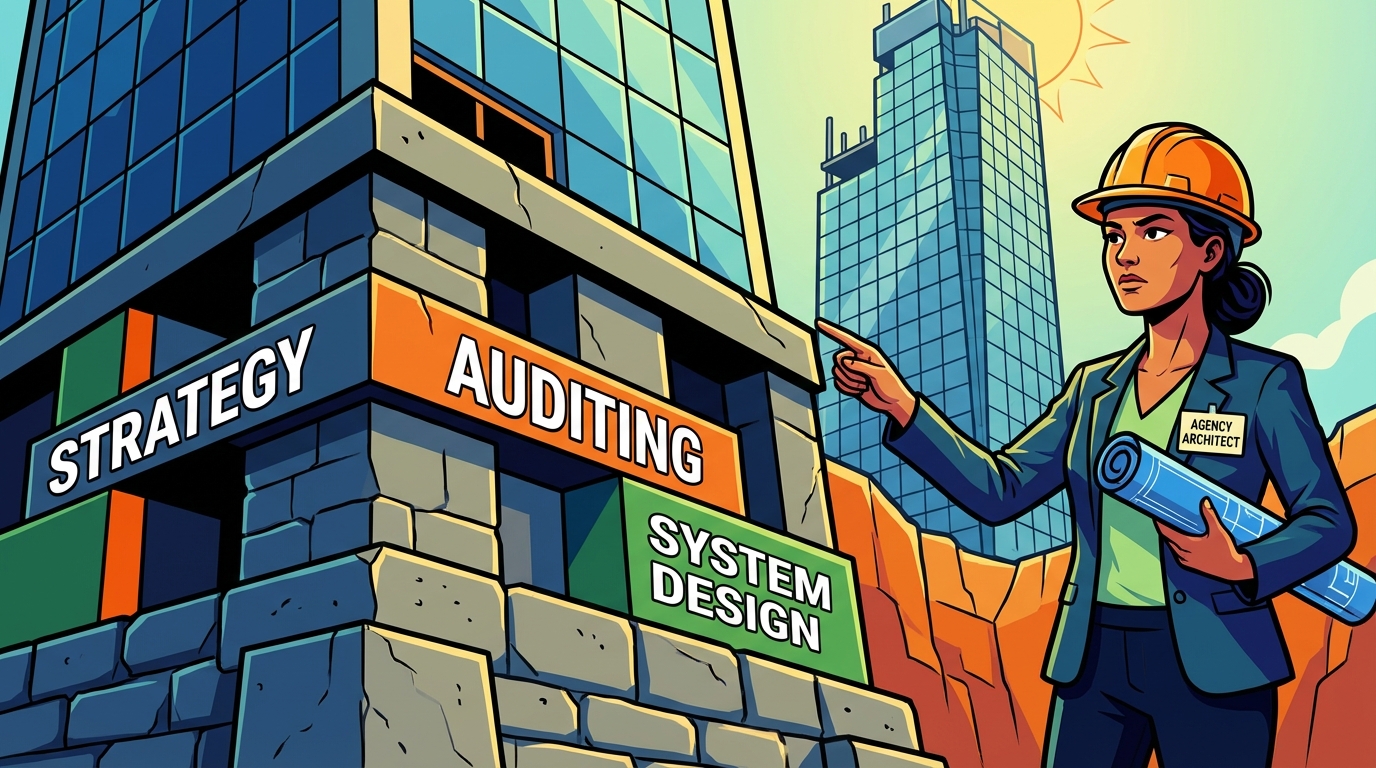
To understand the setup fee, consider the process of building a custom, high-end asset—like a home or a complex piece of software. You don’t pay only for the materials and the monthly maintenance. Before a single nail is hammered or a line of code is written, you pay the architect or the lead engineer upfront for the blueprints, the specifications, and the foundational strategy.
The setup fee is the cost of the blueprint.
For SaaS founders and high-ticket service providers, the initial 30 to 60 days of a marketing partnership are the most critical phase. This is the period dedicated to deep-dive research, audience segmentation, defining the unique mechanism, and architecting the entire conversion infrastructure.
This phase cannot be rushed, automated, or treated as a free add-on to a future retainer. When the strategic foundation is weak, the entire campaign fails, resulting inevitably in wasted ad spend and a flood of low-quality leads. We charge a setup fee because high-level, bespoke strategy is a dedicated, mandatory service, not a complimentary pre-sale activity.
Dissecting the Agency Fee Structure (2025 Benchmarks)
While the setup fee is a one-time investment, it exists alongside the ongoing pricing models that cover execution and optimization. Understanding where the setup fee fits illuminates its necessity as the gateway to operational readiness.
Most high-performance agencies utilize a combination of these ongoing models:
| Pricing Model | Description | Typical Range (Excluding Setup) | Strategic View |
|---|---|---|---|
| Flat Monthly Retainer | A fixed fee for a defined scope of work (e.g., SEO, Content, PPC Management). | $2,000 – $15,000+ per month | Predictable. Ideal for ongoing management once the core system is built. Requires extreme scope clarity to prevent scope creep. |
| Percentage of Ad Spend | Agency charges 10% to 20% of the client’s media budget for management. | 10% – 20% of Ad Spend | Creates potential incentive misalignment (focus on spending, not ROAS). Only healthy when tied strictly to measurable KPI targets. |
| Performance-Based (KPI) | Fee is tied directly to achieving measurable results (e.g., cost per qualified lead, booked sales calls). Often includes a low base retainer. | Base Fee + % of KPI Achieved | The best alignment for high-ticket services. Significantly reduces client risk. Requires robust Strategic GA4 ROI Tracking for High-Ticket Leads. |
| Project-Based | One-time fee for a defined deliverable (e.g., website audit, funnel map, initial creative assets). | $5,000 – $50,000+ per project | The setup fee is fundamentally a project-based investment focused exclusively on launch readiness and strategic infrastructure build-out. |
Crucially, the setup fee is entirely independent of these ongoing models. It is the necessary, one-time investment required to move the client from zero market presence to full operational readiness and launch capacity.
What the Setup Fee Actually Funds: Our 4-Step System
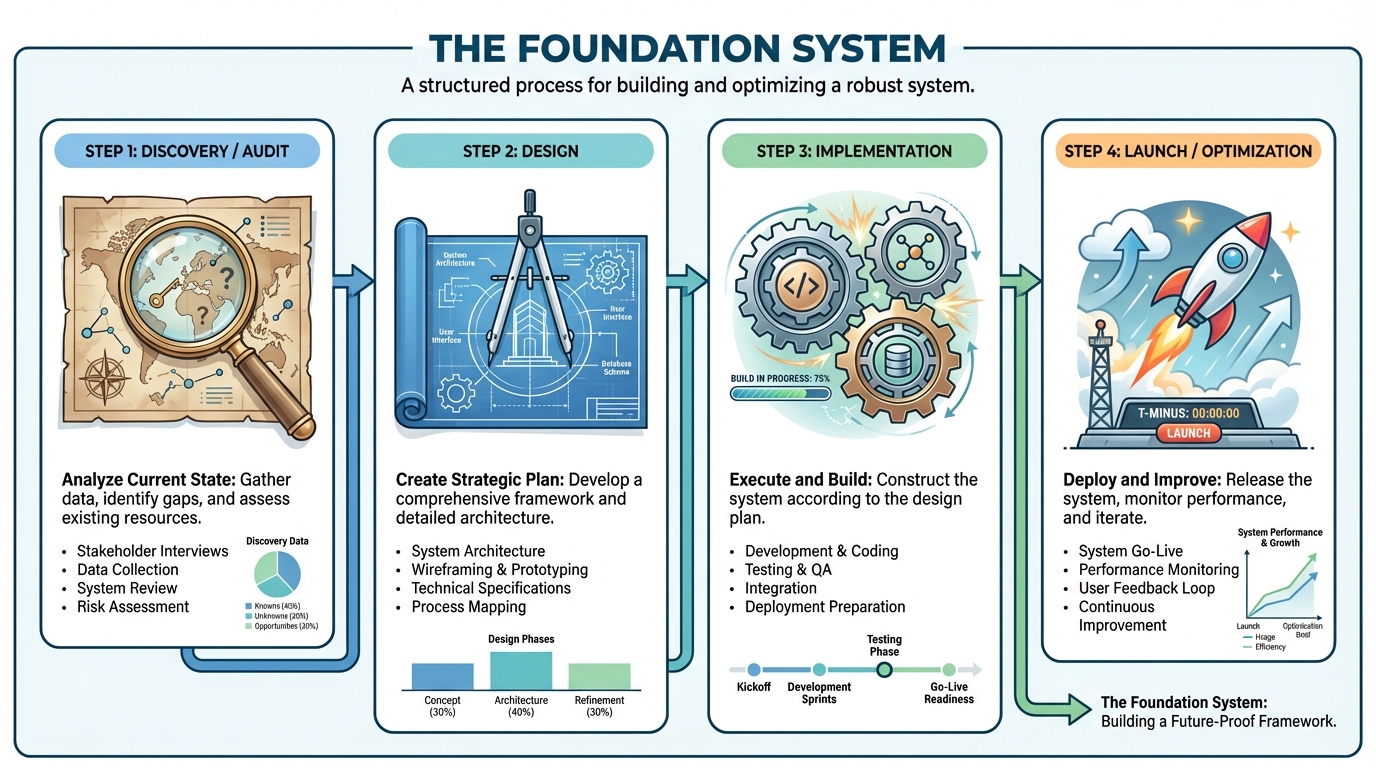
If you are investing $5,000, $10,000, or more upfront, accountability is paramount. You deserve to know exactly where that capital is deployed. The setup fee funds the strategic depth and foundational stability that generic, volume-based agencies consistently skip.
This is the required investment to move from ‘activity’ to measurable, predictable results. Here is the breakdown of the critical infrastructure covered by a high-value setup fee:
Step #1: Deep Strategic Audit and Persona Mapping
We refuse to launch campaigns based on assumptions. That is a path to hemorrhaging cash and burning through valuable testing budgets.
The first step requires intensive, high-level analysis performed by senior strategists:
- Competitive Intelligence: Full audit of the top 10 relevant competitors. What are their winning angles? Where are their structural weaknesses?
- Offer Refinement: We stress-test your existing high-ticket offer against current market demand. If the offer is weak, no amount of traffic or optimization will save it.
- Ideal Client Profile (ICP) V2.0: This goes beyond basic demographics. We map psychological triggers, buying cycles, trust requirements, and specific pain points unique to high-ticket B2B sales.
- Channel Validation: Determining the precise platforms (e.g., LinkedIn, specific newsletters, industry forums) where trust-based, high-intent outreach is most effective.
This phase is pure, high-level strategy. It requires the time and attention of senior expertise—not junior ad buyers or templated checklists. This strategic depth is the core justification for the setup fee.
Step #2: Conversion Tracking and Attribution Implementation
You cannot scale what you cannot measure. This is a fundamental law of business growth, yet many clients come to us with broken or incomplete tracking, relying solely on vanity metrics.
The setup fee funds the installation and rigorous testing of multi-touch attribution systems necessary for long, high-ticket sales cycles:
- GA4 Conversion Setup: Defining and testing primary and secondary conversion events (e.g., form submissions, demo requests, high-intent page views) within the new analytics standard.
- CRM Integration: Establishing clean, two-way data flow between lead capture forms and your sales pipeline (HubSpot, Salesforce, etc.). This often includes specialized work like ensuring Strategic Lead Form Integration with HubSpot CRM is flawless.
- Offline Conversion Uploads (OCL): Critical for high-ticket sales. We ensure that when a lead converts into a paying customer 90 days later, the original marketing campaign receives accurate credit, allowing for true ROI calculation.
This process is technical, time-consuming, and utterly non-negotiable for accurate ROI calculation. Without it, you are guessing, not scaling.
Step #3: Creative & Infrastructure Build-Out
The system needs assets built specifically for the validated strategy. These are not generic stock images and templated copy; they are high-value tools designed to capture qualified leads.
The setup fee covers the initial production cycle that allows us to test hypotheses immediately upon launch:
- Landing Page Development: Building 2-3 high-conversion landing pages optimized for specific offers and audience segments, focusing on clear value articulation.
- Initial Ad Copy Matrix: Developing 15-30 variations of ad copy and creative hooks based on the Step #1 audit and competitive analysis.
- Lead Magnet Production: Creating the initial high-value asset (e.g., strategic blueprint, definitive guide, custom calculator) required to capture qualified contact information from your target audience.
This is the physical manifestation of the strategy—the initial assets required to launch and test effectively. It requires specialized designers, copywriters, and developers, whose time must be compensated upfront.
Step #4: Account Structure and Compliance Review
We build accounts to scale efficiently. This means structuring campaigns, ad groups, and targeting layers for maximum data efficiency, future expansion, and algorithmic stability.
This phase also ensures you are not running afoul of platform policies, mitigating risk:
- Technical Setup: Comprehensive ad platform configuration (e.g., Business Manager verification, billing setup, domain verification) to ensure immediate stability.
- Audience Seeding: Initial audience research, list uploads, and lookalike creation to prime the algorithms with high-quality data.
- Compliance and Risk Review: Detailed compliance checklist review, essential for navigating platform restrictions and maintaining account health in competitive or regulated industries (e.g., finance, healthcare, SaaS).
The setup fee guarantees this complex, foundational work is executed flawlessly and securely before a single dollar of media spend is activated, ensuring maximum data efficiency and minimizing the risk of costly account suspension.
The Risk of ‘Free’ Setup: Misaligned Incentives

When an agency tells you the setup is free, ask yourself: How are they paying the senior strategists and data scientists required to engineer a high-performance lead system?
The answer is usually twofold, and both outcomes fundamentally compromise your results:
1. Template Dependency: The “Set It And Forget It” Lie
If an agency claims zero setup cost, they are signaling that they are unwilling or unable to invest senior-level strategic time into your account. They must compensate for this lack of labor by relying on scale.
This means they depend heavily on automation tools, generic templates, and pre-existing campaign blueprints. They plug your business name into a standardized structure and launch. While this guarantees immediate activity, it guarantees zero strategic alignment with your high-ticket sales cycle.
The B2B Nuance Gap: High-value clients require custom targeting, specific messaging, deep funnel integration, and manual outreach components—elements that generic templates simply cannot replicate. Templated accounts guarantee immediate traffic but fail the moment true qualification and strategic depth are needed.
2. Prioritizing Spend Over Profit
When the setup labor is “free,” the agency must recoup that cost immediately. They are financially pressured to structure their compensation model around driving volume, not efficiency.
This typically manifests in recommending high ad spend budgets coupled with a percentage-of-spend management fee (e.g., 15% of media spend). This creates a fundamental, dangerous conflict of interest:
- The Agency’s Incentive: Maximize your ad spend budget to maximize their revenue.
- Your Business Goal: Maximize profit, optimize Return on Ad Spend (ROAS), and improve lead quality.
The agency is incentivized to push your budget higher, even if the ROAS dips or lead quality suffers. A transparent, mandatory setup fee eliminates this pressure, allowing the agency to focus solely on efficiency, measurable results, and quality control from Day One, rather than desperately trying to inflate the media budget to cover their initial labor costs.
Pricing the System: How to Calculate Your Setup Investment

Since a legitimate, high-performance setup is mandatory for achieving measurable scale, the next question is clear: How much should you budget for this foundational investment?
Critically, a legitimate setup fee is calculated based on project complexity and the senior time commitment required, not as a percentage of your future ad spend. Agencies that tie setup fees to ad spend are misaligning incentives from the start.
What Drives the Setup Investment Cost?
The complexity of the initial build dictates the required investment. High-performance setup involves engineering, not just clicking buttons. Key factors that increase the necessary setup investment include:
- Integration Requirements: Connecting bespoke CRM systems, utilizing custom APIs, or advanced funnel mapping that requires complex nurture sequences and custom tracking across platforms.
- Compliance Overhead: Highly regulated industries (e.g., finance, legal, healthcare) demand extensive legal review and mandatory compliance checks for all creatives, landing pages, and data collection protocols.
- Audience Segmentation Depth: If the project requires deep market research and the creation of 5+ distinct, niche buyer personas across multiple platforms, demanding customized messaging architecture.
- Pre-Existing Damage Remediation: If the agency must first fix a severely broken account structure, clean up poor historical data, or rebuild an attribution system damaged by a previous vendor.
The Industry Benchmark: For a standard, high-ticket B2B or complex e-commerce account, expect the setup fee to represent 1 to 3 months of the ongoing monthly retainer cost. This range ensures the agency is compensated appropriately for the intensive strategic lift required before campaigns are launched.
The Strategic Rationale: Why Upfront Fees Benefit Both Parties
The implementation of a mandatory setup fee isn’t just about agency compensation; it is a critical mechanism for filtering client quality and ensuring strategic commitment from day one. Below is a breakdown of the mutual benefits and inherent risks of this pricing structure:
| Benefit (Pro) | Drawback (Con) |
|---|---|
| Filters High-Quality Clients: Only serious clients willing to invest in foundational strategy and long-term success move forward. | Higher Barrier to Entry: May deter price-sensitive clients who are only focused on acquiring the lowest possible monthly cost. |
| Ensures Strategic Depth: Guarantees the agency is paid for the critical, non-automated planning, engineering, and data analysis phase. | Requires High Transparency: Agencies must meticulously justify the fee with itemized deliverables, timelines, and personnel allocation. |
| Aligns Incentives: The agency can focus on long-term Return on Ad Spend (ROAS) and strategic architecture, rather than immediate ad spend inflation to cover costs. | Client Perception Risk: Some businesses still view setup fees as an unnecessary “extra” charge if not properly educated on the value of foundational engineering. |
| Reduces Agency Risk: Covers the substantial labor cost of the initial 30–60 days, which is often the most time-intensive and resource-heavy period of the engagement. | Requires Strong Case Studies: Agencies must prove their setup process leads to superior, measurable results to justify the investment cost. |
We strongly advocate for the setup fee because it forces both the agency and the client to commit to a strategic foundation, signaling a long-term partnership focused on measurable ROI, not short-term activity.
If your agency is struggling to land high-value clients, remember that a strong, transparent pricing structure—including a strategic setup fee—is often the differentiator that signals expertise and confidence. To refine your acquisition methods and secure clients who value strategic foundation, review our Strategic Blueprint: Land Your First 10 Agency Clients in 30 Days.
Addressing The Essentials: Setup Fee FAQs

What is a reasonable setup fee range for B2B SaaS or High-Ticket Services?
Answer: For specialized, high-ticket businesses like B2B SaaS, the required setup involves significant complexity: deep persona mapping, comprehensive tracking architecture, and robust CRM/MarTech integration. Expect the foundational setup investment to range between $3,000 and $15,000.
If the project requires the creation of custom lead scoring models, advanced funnel logic, or significant creative production (e.g., custom video assets or high-fidelity landing pages), the fee can exceed $20,000.
If I pay a setup fee, does that guarantee specific revenue results?
Answer: No legitimate agency can guarantee specific revenue results, as market response and offer strength are variables outside their control. The setup fee guarantees something far more critical: system integrity and risk minimization.
The investment ensures the system is built correctly—optimized, tracked, integrated, and strategically sound for launch. It eliminates foundational errors that doom 90% of campaigns. Revenue results depend on the ongoing optimization and strategic execution during the subsequent retainer phase.
Should the setup fee be negotiable?
Answer: The fee itself is rarely negotiable, as it represents the fixed cost of senior strategic labor, platform licensing, and complex integration time. It is a cost of production, not a margin buffer.
However, the scope of the setup can be adjusted. If your internal team has already completed a high-quality technical audit, developed and tested creative assets, or provided validated market research, the agency may reduce the fee by removing those specific deliverables from the scope. Always negotiate the scope of work, not the necessary price of that work.
How long does the setup phase typically last?
Answer: A high-quality setup phase is a strategic undertaking that cannot be rushed. It involves five critical stages: audit, tracking architecture, integration testing, strategic planning, and initial creative build.
The duration should take between 3 to 6 weeks. Any agency promising a full, complex system launch in less than 10 days is either relying solely on template automation or, more likely, skipping critical strategic steps necessary for long-term scalability and accurate measurement.
Conclusion: Invest in the Foundation, or Pay Later
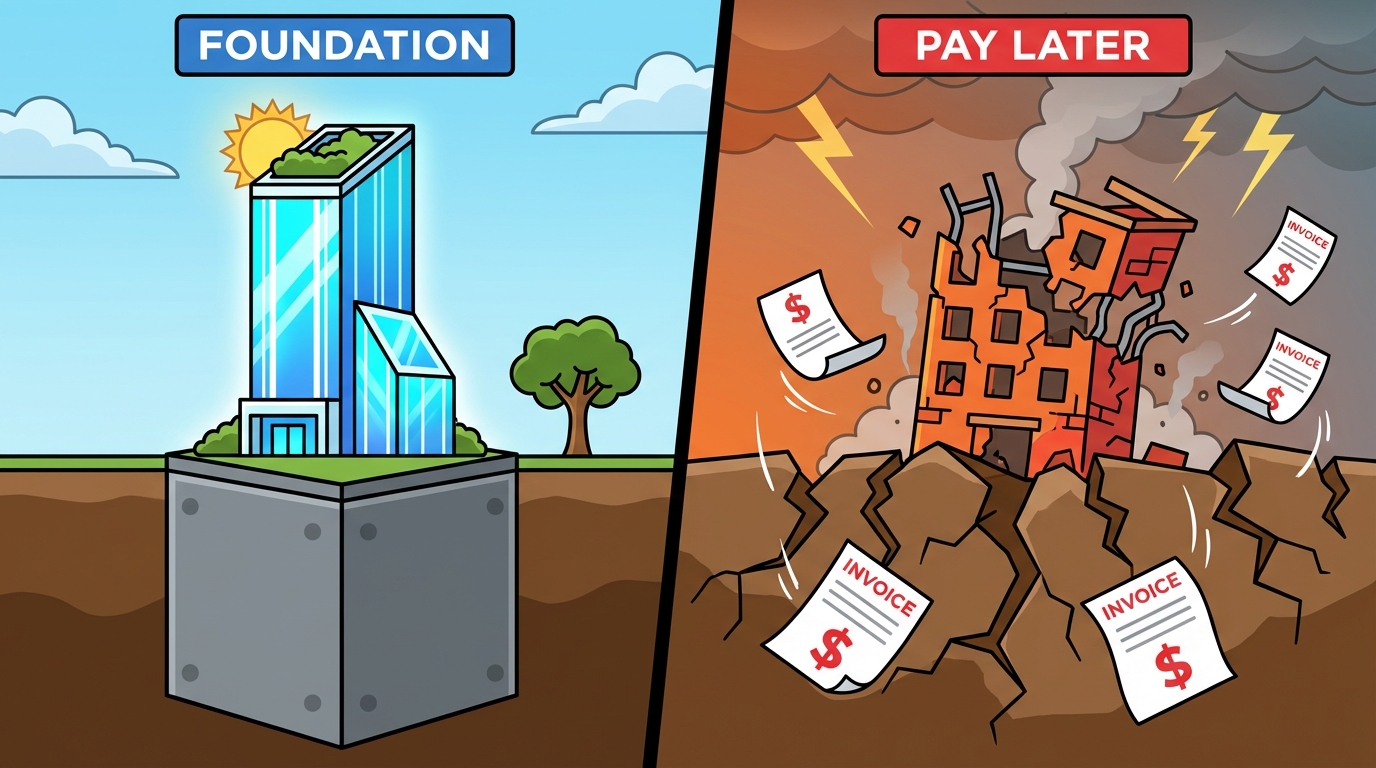
For high-ticket business owners, the choice in 2025 is starkly simple: invest in the foundational infrastructure or guarantee short-term failure.
You can choose the strategic path:
- Partner with an agency that charges a mandatory, strategic setup fee to build a measurable, scalable system.
- Acquire trust-based, high-quality leads through robust, custom-built architecture.
Alternatively, you can chase the illusion of savings promised by the “free setup.” That path bypasses the critical foundational work and leads directly to costly inefficiencies:
- Templated, non-customized campaigns that fail to resonate with high-value buyers.
- Broken tracking and reporting, making ROI impossible to calculate.
- High agency churn and wasted media spend.
By saving $5,000 to $10,000 upfront, businesses frequently lose $50,000 to $100,000 in wasted ad spend and lost opportunity cost over the subsequent six months. The setup fee is not a profit center for the agency; it is the non-negotiable cost of building a machine that actually works.
We prioritize the foundation. We demand the investment required for success. As a client, your responsibility is to demand transparency and strategic depth. Pay the setup fee, but ensure that investment funds the foundational infrastructure that delivers high-quality, non-automated leads—not just activity reports.
Ready to take the next step?
Try AI Lead Generation Today
Click HereReferences
- What Should a Marketing Agency Charge It’s Clients in % to their …
- Marketing Agency Pricing: How Much They Charge + What to Spend
- Digital Marketing Service Charges: Top 5 Proven 2025 Secrets
- Why Do Digital Agencies Have Setup Fees for Online Ads?
- Digital Marketing Agency Pricing: Are You Charging Enough for …