


Generic templates are dead. We know this for a fact.
The market is saturated with basic to-do lists and simple habit trackers. Selling a one-off $5 Notion template is not a business model. It is a hobby.
Founders need systems that generate predictable Monthly Recurring Revenue (MRR). They need leverage.
This guide is not about how to publish a template on Gumroad. This is about building a scalable digital asset. This asset must capture high-value client data,and justify immediate recurring subscription fees.
We focus strictly on the strategy required to transition from one-time sales to a sustainable, high-leverage digital product business in 2026.
Key Takeaways for Founders
- Recurring Revenue is Mandatory: One-time sales are unreliable. Your template must justify a subscription model through continuous updates and system support.
- Own Your Platform: The Notion Marketplace charges 10% and limits data access. Use a proprietary platform (Shopify, specialized courseware) to capture 100% of customer data. This data fuels future upsells.
- Template-to-Service Funnel: Use high-complexity templates (e.g., advanced CRM, Agency Operating Systems) as a low-cost entry point. The true profit is generated by upselling custom consulting retainers.
- Data is the Asset: Leverage the template download as a manual lead generation mechanism. Every download must yield an email address. This triggers targeted follow-up sequences.
Step #1: Niche Down to a Measurable Pain Point
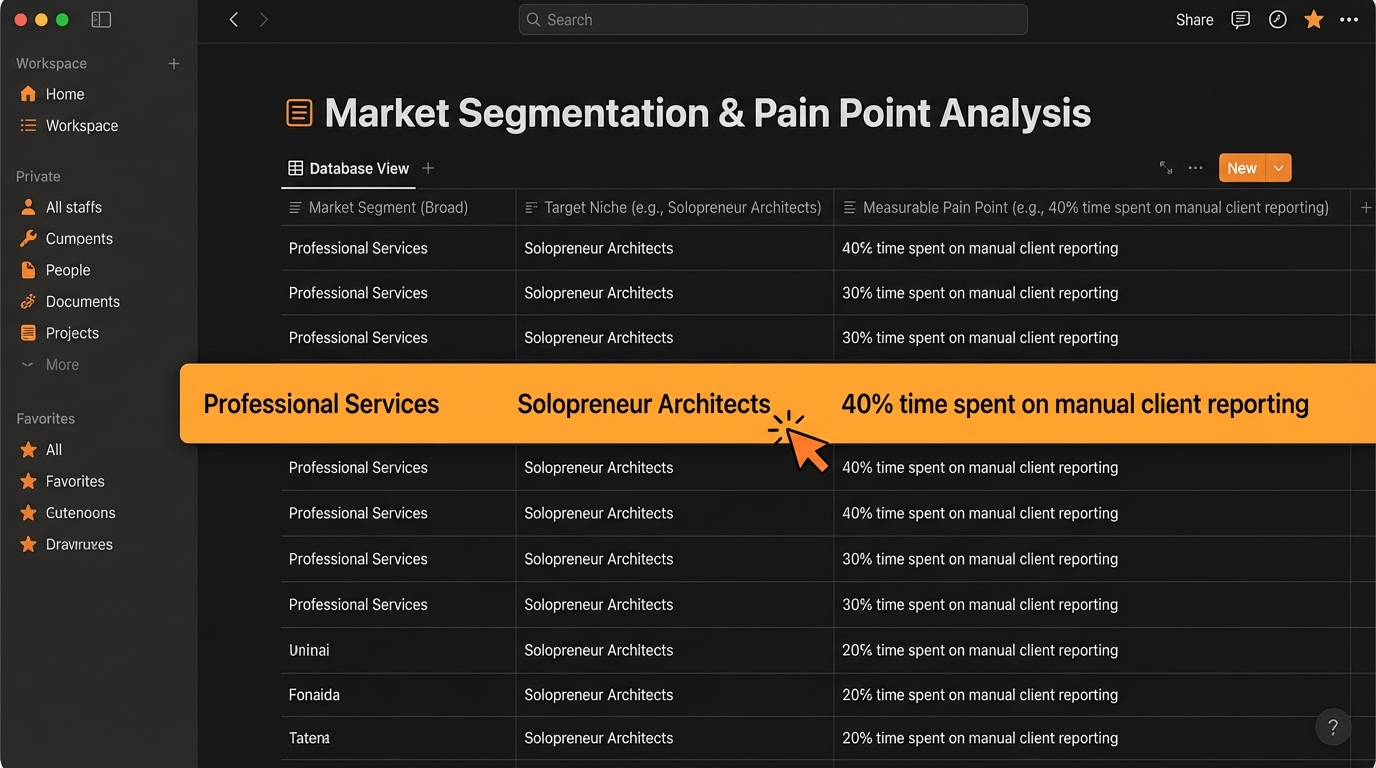
“Productivity for Everyone” is a saturated graveyard. Your template cannot live there. We demand hyper-specificity.
Successful templates solve quantifiable problems. They target specific, high-value professional groups. Focus ruthlessly on the measurable outcome: revenue increase, cost reduction, or massive time savings,not just the tool itself.
We target users whose time is highly valuable. This means founders, specialized agencies, or high-ticket SDR teams. These are the decision-makers who approve necessary business expenses.
- Bad Niche: General Student Planner.
- Strategic Niche: B2B SDR Team Pipeline Visibility and Forecasting Dashboard.
- Bad Niche: Simple Content Calendar.
- Strategic Niche: AI Agency Project Management OS integrated with client reporting dashboards.
This level of hyper-focus unlocks premium pricing. It transforms your template from an optional purchase into a necessary business expense. High ROI justifies high cost.
If you try to serve everyone, you serve no one. Our highest-converting assets are always designed for a single, well-defined vertical. Stop selling tools. Start selling quantifiable results.
Step #2: Design for Scalability and Integration
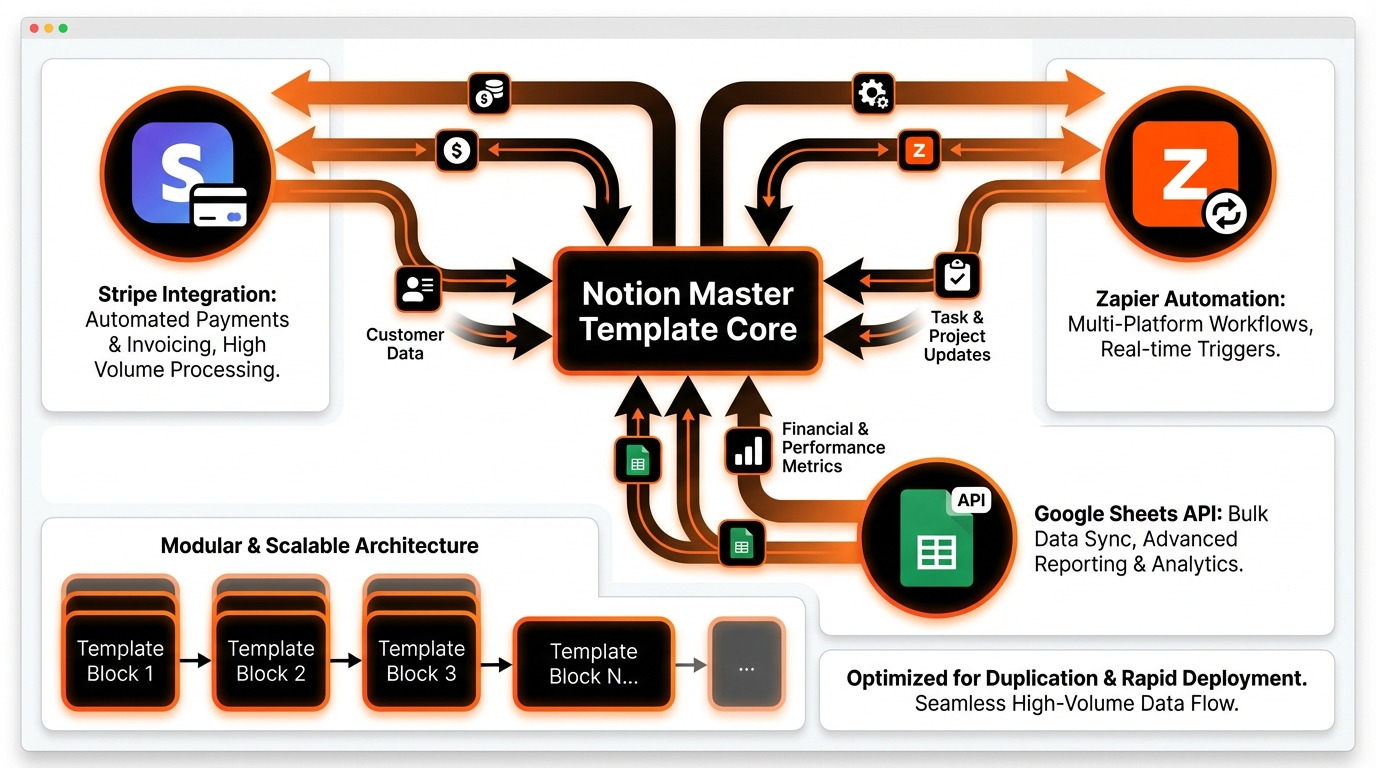
Specificity (Step #1) justifies the price. Scalability justifies the purchase.
Founders do not invest in aesthetics. They invest in systems engineered for rapid scaling and seamless system integration.
If your template breaks when the user adds 100 new entries,or needs to connect external data,it is worthless. We demand robust, scalable engineering.
The Core Template Requirements for Enterprise Adoption:
- Zero-Friction Onboarding & Documentation: Include a mandatory “Read Me First” sub-page. Video walkthroughs are non-negotiable; they justify the price point. Result: A drastic reduction in support requests.
- External Data Integration: The template cannot be a data silo. Design it to accept live embeds or syncs from external sources (e.g., Google Sheets, proprietary lead generation dashboards, or CRM tools). High-value users need data centralization.
- Modular, Anti-Fragile Structure: Break the system into distinct, self-contained databases and pages. This allows the user to customize or remove entire sections without destroying core functionality. Scalability relies entirely on this modularity.
- Built-in Lead Capture Mechanism (Critical): If you offer a free version, the template must include a clear, undeniable Call To Action. Direct users to your private site to unlock “V2” or an advanced resource. This mechanism must capture their email address immediately. This is how we convert free adoption into qualified leads.
We leverage AI tools extensively in 2025. We use them to rapidly prototype, test complexity, and ensure anti-fragile architecture. This cuts our development time by 60%.
Your creation process must be accelerated. You cannot afford manual iteration.
Start here: Use The 2025 Blueprint for AI Passive Income & Tools to achieve that speed.
Step #3: Engineering the Recurring Revenue Engine
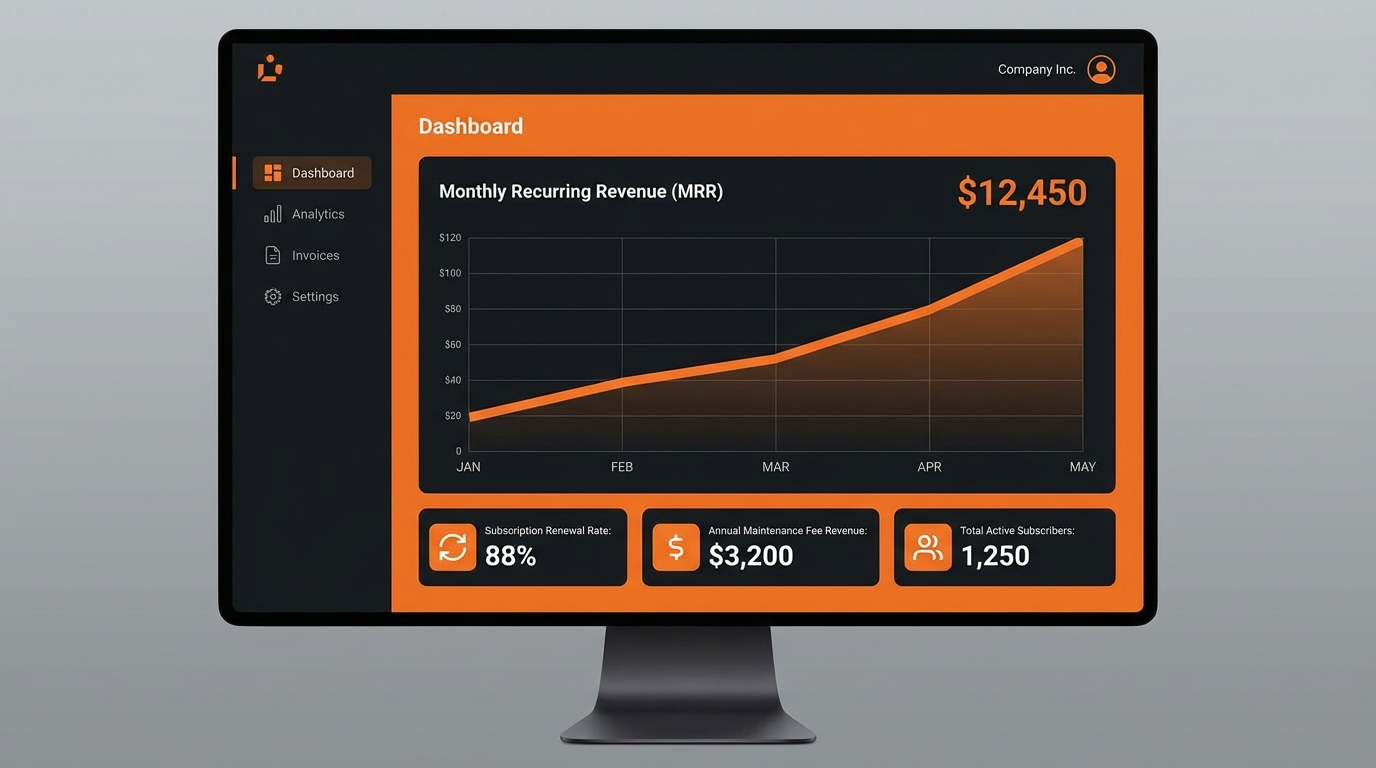
3.1. Model A: The Subscription Library (MRR Focus)
- The Value Proposition: Users are buying continuous maintenance, guaranteed support, and immediate access to new system releases.
- Justifying the Fee: Commit to high-leverage updates (1-2 major additions per quarter). If your niche is volatile (e.g., AI workflow, sales compliance), these updates are mandatory. Document every change: Transparency drives retention.
3.2. Model B: The Template-to-Service Funnel (High-Ticket Focus)
- The Low-Cost Entry: Offer a highly complex, critical system (e.g., “The Full B2B Sales Ops OS”) for $99. This filters prospects instantly.
- Identify the Pain Point: The system must be intentionally complex. Founders will struggle with setup, customization, or integration into their existing proprietary tech stack. This friction is by design.
- The High-Ticket Upsell: Introduce the “Customization and Implementation Retainer.” This is where the measurable revenue lives. We target $1,500 to $5,000+ per month to fully integrate and manage the system for the client’s specific operational needs.
3.3. Model C: Bundled Membership (Community Leverage)
- Private Channels: Establish a private Slack or Discord for paying members. This provides immediate peer support and direct access to you (the system expert) for critical troubleshooting.
- Strategic Workshops: Host monthly live strategy sessions or deep-dive workshops focused on maximizing system ROI. This value cannot be copied or resold.
- Exclusive Assets: Distribute supplementary guides, video SOPs (Standard Operating Procedures), or bonus scripts only within the membership portal. Maintain scarcity.
Step #4: Platform Strategy: Control Your Data and Fees
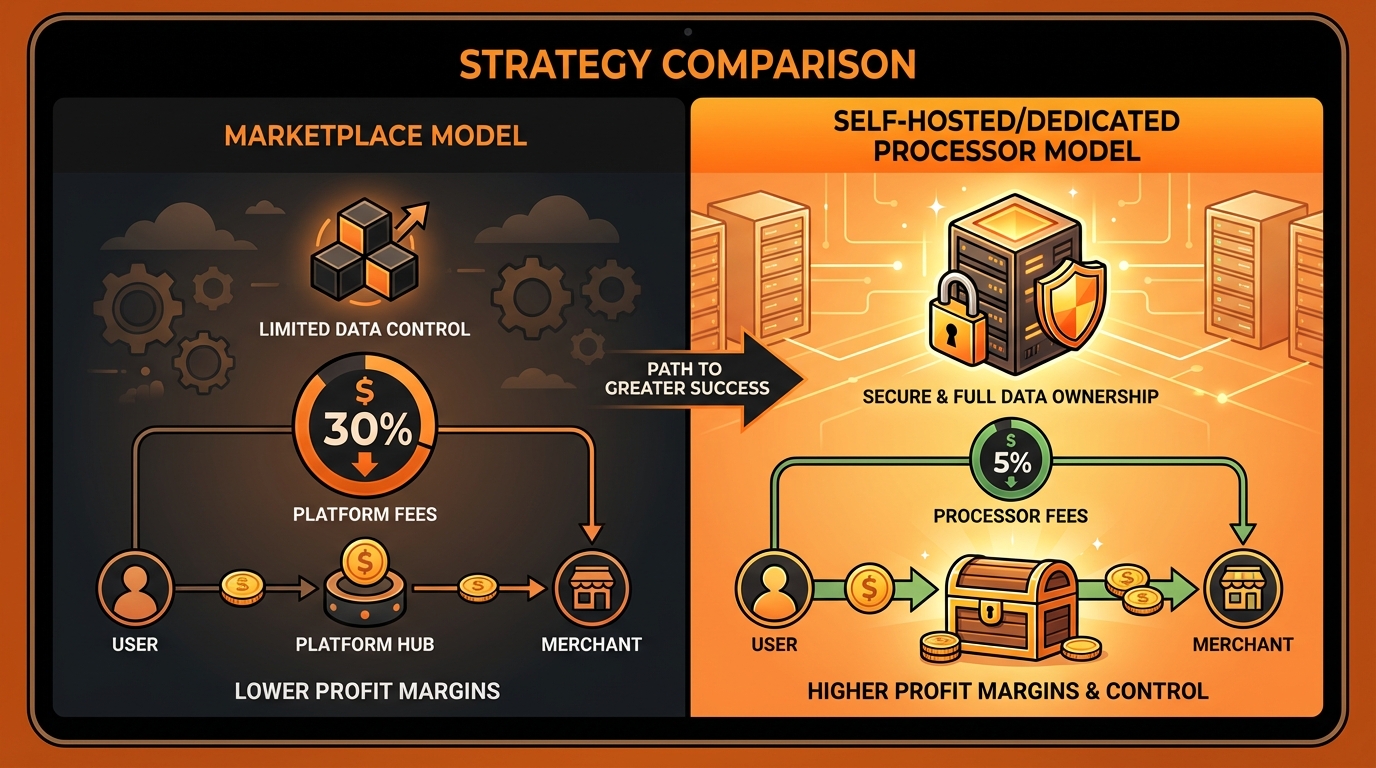
- Direct marketing access (zero-cost client communication).
- Strategic follow-up sequences for churn reduction.
- High-ticket upsells (e.g., agency services, consulting, or integrating our AI lead generation tools).
Platform Comparison for Recurring Revenue (2025 Data)
| Platform | Recurring Billing Support | Transaction Fees (Base) | Customer Data Ownership | Strategic Use Case |
|---|---|---|---|---|
| Notion Marketplace | Yes (Through Stripe) | 10% + Fees ($0.40) | Limited (Opt-in only) | Visibility and initial social proof. Not for scaling MRR. |
| Gumroad / Payhip | Yes (Basic) | ~9% (Gumroad, tiered) / ~5% (Payhip) | Good | Simple testing and initial product launch. |
| Shopify + Member App | Excellent | ~2.9% + $0.30 | Complete Control | High-volume sellers needing full brand control and integration with sophisticated marketing stacks. |
| Kajabi / EzyCourse | Excellent (Built-in) | 0% (Platform subscription required) | Excellent | Best for combining templates, courses, and community access (Model C). |
Step #5: IP Defense Strategy: Locking Down Your MRR Machine

Your templates are not just files; they are Intellectual Property (IP). Unauthorized redistribution is a direct attack on your recurring revenue model.
Piracy kills MRR before it even scales. We must build defense layers now.
5.1. The Notion Native Defense (The Weak Layer)
Notion offers a core, native defense mechanism: Access Locking. Do not rely on it for serious scale.
- Mechanism: If you sell directly through the Notion Marketplace (or link a Notion Site page), you can select “Restricted” access locking.
- The Result: The buyer can duplicate the template for personal use. However, they cannot use the critical “Move to” function or copy specific blocks to paste into another workspace.
- The Limitation: This only applies if you sacrifice control and sell *directly* through Notion. Since we established that we must own the data and the checkout process (Step #4), this feature is largely unusable for scalable MRR operations.
If you follow our strategy (using Stripe/Gumroad for data control), you must rely exclusively on external deterrents: legal frameworks and continuous value delivery.
5.2. Legal Frameworks: Making Piracy Illegal and Useless
When we own the checkout process, the Terms of Use (ToU) become the primary defense line. Every purchase must be tied to a strict, non-negotiable legal agreement.
- License Definition: Clearly define the purchase as a non-transferable, single-user license. Redistribution is strictly prohibited. State the penalties explicitly (e.g., immediate termination of access, legal action).
- MRR Justification: The recurring fee is not for the file itself. It must explicitly state that the subscription covers continuous template updates, access to the private community, and dedicated support.
- The Actionable Takeaway: We make the static, pirated file obsolete within 90 days.
The ultimate protection is value: Create a product so complex and continuously updated that a pirated version quickly becomes obsolete and unusable.
The subscription covers the service, not the asset. Make the service indispensable.
Step #6: Templates as High-Leverage Lead Magnets (The Conversion Engine)
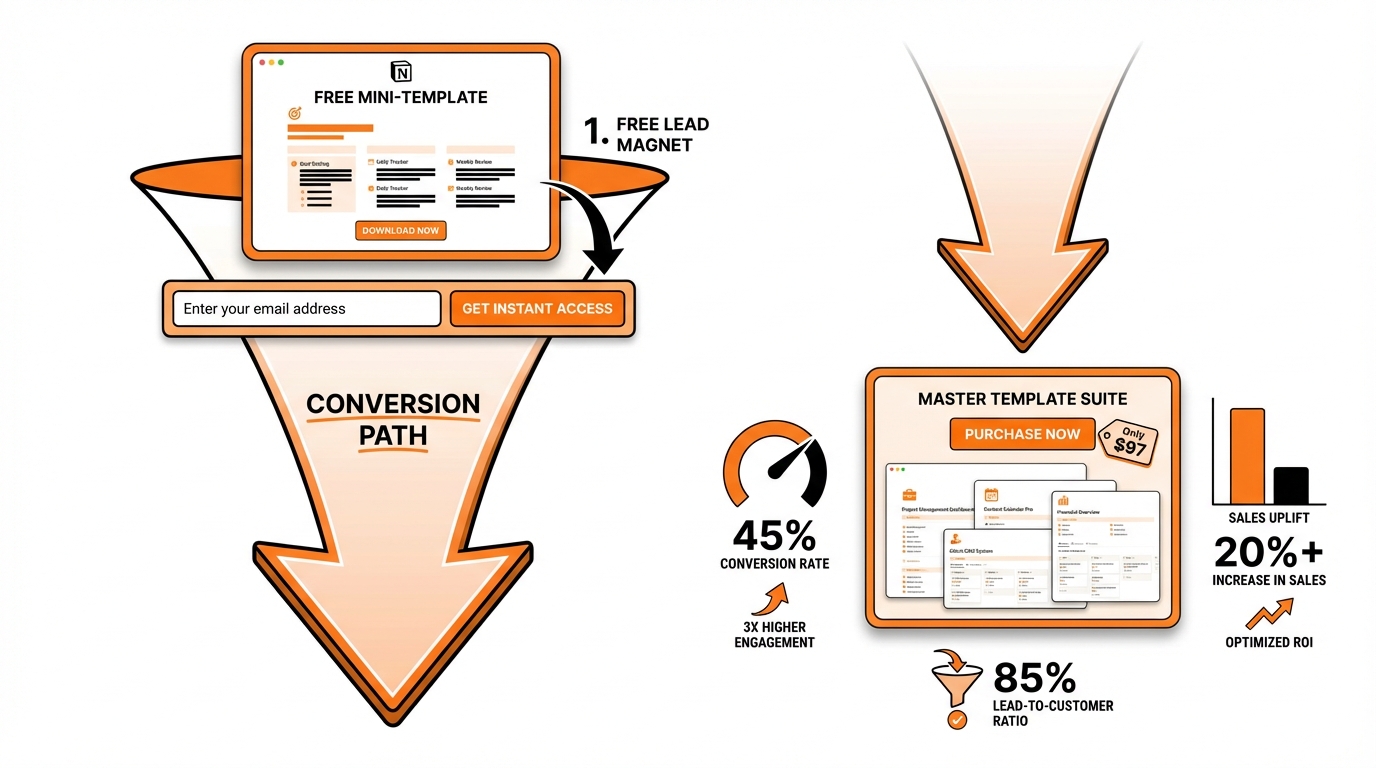
The Template-to-Client Funnel:
- #1. Define the High-Value Persona. Focus exclusively on your target buyer (e.g., SDR Managers who desperately need pipeline visibility).
- #2. Deploy the Magnet. Build a “Lite SDR Pipeline Tracker” or similar specialized tool. Demand only an email address for instant access.
- #3. Initiate the Hyper-Personalized Follow-Up. The email capture is only the starting line. Immediately leverage that data. This is where our AI Lead Generation system (Pyrsonalize) takes over: We use the captured name and company details to find their verified personal email address. This bypasses generic inboxes and initiates a direct, high-value conversation with the decision-maker.
- #4. Execute the Strategic Pivot. The follow-up sequence must pivot rapidly from the free template to your high-ticket service (Model B). Offer a mandatory next step: A demo, a free consultation, or an audit focused on “optimizing their existing sales stack.”
Frequently Asked Questions
We leverage templates to scale our lead generation systems. Here are the core strategic questions our clients often ask about implementing this model.
Is selling Notion templates a sustainable, long-term business model?
Selling templates alone is a low-ceiling, high-churn strategy. It generates side income, not scale. True sustainability is achieved when templates function as a sophisticated lead generation mechanism.
They are the entry point (the ‘tripwire’) for your high-ticket service or software (like our AI lead generation platform).
We are not selling templates; we are acquiring high-intent B2B leads who have already proven they value organization and efficiency. That is the long-term play.
How do these templates convert into high-ticket clients for our software?
Conversion is systematic: it happens on two fronts.
- The immediate post-download email sequence drives the lead toward the free trial (the core CTA).
- The template itself acts as a productized demo. It solves a small pain point (e.g., pipeline tracking) while demonstrating your strategic authority.
This authority is the mechanism that convinces a Founder or SDR team to commit to a larger, recurring solution,the one that solves their biggest pain point (finding clients). The template validates our expertise before they even speak to a sales rep.
Should we charge for the templates or offer them for free?
If your goal is maximizing lead volume and feeding your high-ticket funnel, they must be free.
Charging introduces friction and drastically reduces conversion rates at the top of the funnel. We use high-value templates as zero-cost lead magnets.
The cost of development is amortized by the lifetime value (LTV) of the high-quality B2B leads we capture. Focus on capturing the data (email/role), not the $19 template fee.
Ready to turn systemization into scalable revenue? Start Your Free Trial of Pyrsonalize today.
Frequently Asked Questions
- Is the Notion template market oversaturated in 2026?
- The generic template market is saturated. Period. Success requires specialization: highly complex, continuously updated systems solving niche professional problems.
- Your template must achieve one of two things for the client: Generate Revenue or Save Money. Time savings are a weak differentiator; measurable results are not.
- How do I justify charging a recurring subscription fee for a digital template?
- You sell the ongoing service, not the static file download. The fee pays for system maintenance and strategic support. You are selling a living system, not a document.
- Justify the recurring cost by guaranteeing:
- Quarterly updates (essential for maintaining compatibility and feature parity).
- Access to a private, expert support community.
- Monthly exclusive content (new supplementary guides or template additions).
- Should I sell on the Notion Marketplace or my own website?
- Always prioritize selling on your own platform (Shopify, Kajabi, dedicated landing page). Control is leverage.
- When you own the transaction, you control:
- Branding and pricing structure.
- Fee reduction (no 10-15% marketplace cut).
- Crucially: 100% of customer data (essential for upsells and lead nurturing).
- Use the Notion Marketplace only for initial social proof and visibility. Then immediately drive that traffic to your proprietary site for conversion.
- What is the typical profit margin for selling Notion templates?
- Margins are exceptionally high leverage in this model.
- If you utilize a third-party marketplace (Gumroad, Notion): Expect a 10%–15% reduction due to platform and processing fees.
- If you use your own infrastructure (the recommended Pyrsonalize approach): Margins consistently exceed 90% (pre-marketing spend). This is why we prioritize owning the transaction,it maximizes profitability immediately.
Ready to scale your lead generation system?
Stop wasting time on manual outreach. Start finding your high-value clients’ personal emails today using AI-powered systems.
Start Your Free Trial