


The agency landscape shifted permanently in 2024. Founders realized that scaling requires two non-negotiable elements: predictable client acquisition and flawless service delivery.
White labeling addresses the latter directly. It allows rapid expansion of your service catalog—without hiring a single new employee. This is how you unlock growth capacity instantly.
But this strategy is a double-edged sword. You gain speed; you lose control. You boost top-line revenue; you inherently risk margin erosion.
We leverage white label partners exclusively for highly specialized, non-core services. This targeted strategy has drastically increased our client retention rates and average contract value (ACV) while keeping fulfillment risk minimal.
You need a blueprint before you dive in. This guide provides the framework we use to analyze the risk versus the reward of white labeling your agency’s fulfillment.
Key Takeaways: The Strategic Imperative
- White Labeling is Not Outsourcing: You own the final product and the client relationship. The partner operates completely under your brand identity, making quality control paramount.
- Profit Margin Risk: The primary danger is relying on a partner who demands high fees, compressing your Agency Profit Margins below acceptable levels. Price is secondary to performance.
- Control vs. Speed: White labeling is the fastest way to scale service offerings, but it requires iron-clad Standard Operating Procedures (SOPs) and reporting mechanisms to mitigate quality control risks.
- Vetting is Critical: Never choose a partner based solely on price. Vetting must focus on their proven internal project management capabilities and their communication protocols—they must be an extension of your team.
Step #1: Defining White Labeling in the 2025 Agency Context
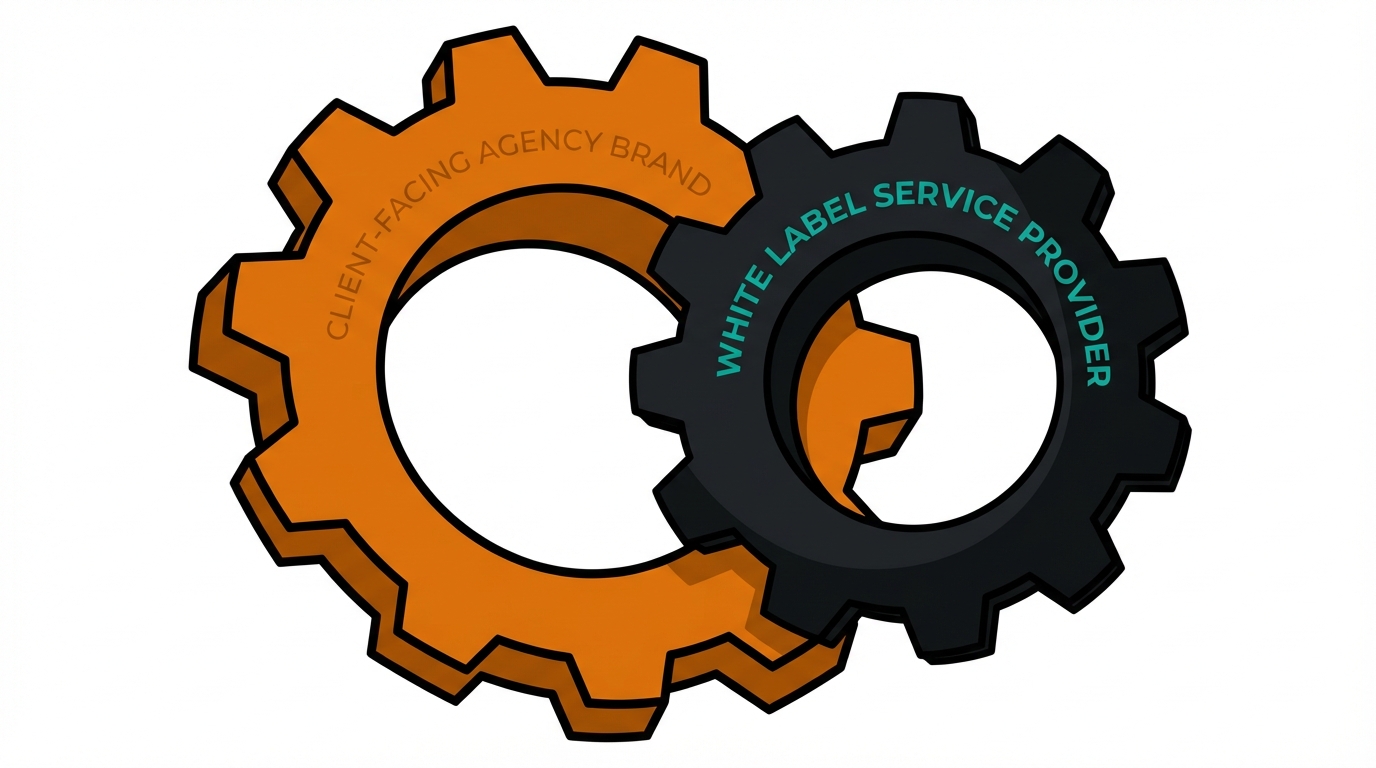
Before we delve into the pros and cons, we must establish the core definition. White labeling is frequently, and dangerously, confused with simple outsourcing or subcontracting. Understanding this distinction is critical for maintaining brand integrity and mitigating legal liability.
The difference is rooted in ownership and client perception:
- Outsourcing: A transactional relationship where you hire a third-party vendor (a freelancer or firm) for a defined task. Crucially, they operate under their own identity. They use their systems; they might interact with the client; they are not invisible.
- White Labeling: This is a strategic partnership. A third-party provider creates the service (the product), which you purchase, fully rebrand, and sell as 100% proprietary work. The original creator remains completely invisible. The client sees only your brand.
In the modern, highly specialized 2025 landscape, white labeling is not just a cost-saving measure—it is a critical tool for rapid scaling. We use it to instantly plug expertise gaps and maximize client retention.
Consider this scenario: You are a high-level strategic consultant specializing in acquisition strategy. You secure a major client, but their project requires complex technical SEO auditing or deep programmatic ad implementation. These are areas where you lack internal expertise.
Instead of turning away high-value revenue, you white label the fulfillment. You maintain the strategic oversight and client relationship; your trusted partner handles the flawless execution. This keeps your margins high and your service offering comprehensive.
Step #2: The Strategic Advantages of White Label Partnership (The Pros)

The decision to white label is always strategic. It is never a quick fix for poor in-house execution or management failures. When executed correctly, white labeling provides leverage that fundamentally changes the agency’s operational ceiling.
Here are the measurable ways a white label partnership accelerates agency growth and stabilizes profitability:
1. Immediate Service Expansion and Increased ACV
Building a new service line—like high-end video production or specialized technical SEO—takes months. You must hire talent, train them, and develop internal Standard Operating Procedures (SOPs). This time lag costs revenue.
White labeling removes this bottleneck instantly.
- Zero Development Time: You gain a fully operational, expert service line overnight. The partner has already absorbed the R&D costs and training time.
- Higher ACV (Average Client Value): You can immediately bundle high-value services. Instead of selling only PPC management, you now sell PPC + Conversion Rate Optimization (CRO) + Advanced Analytics. This boosts your average client contract value immediately.
- Competitive Edge: You can compete directly with larger, full-service agencies without taking on the corresponding massive overhead structure.
In our experience, we saw an average 15% jump in deal size when we were able to offer specialized services that previously required us to refer the client elsewhere, losing that revenue opportunity.
2. Scalability Without Overhead Risk
Hiring is inherently risky. A single bad hire costs time, money, and, critically, damages client relationships. Furthermore, maintaining a large, specialized team means high fixed labor costs, regardless of client volume.
White label partners act as elastic capacity. You can ramp up or down based on client volume and market seasonality without the financial commitment of full-time employees.
“Scaling a service agency demands flexibility. White labeling converts fixed labor costs (salaries, benefits, office space) into variable costs (project fees). This protects your profitability during slow periods and maximizes margins during peak seasons.”
This flexibility is essential for rapid scaling. You can handle 10 clients or 50 clients with minimal disruption to your core team structure, ensuring your growth trajectory is sustainable and risk-mitigated.
3. Predictable Fulfillment Quality
A specialized white label firm focuses 100% on one thing: their core service delivery. They have refined their processes, tools, and expertise far beyond what a generalist in-house team could ever achieve.
By leveraging this specialized focus, your agency gains:
- Expertise Leverage: You are buying proven results and specialized knowledge honed over hundreds of projects, ensuring higher quality output and better client results.
- Risk Mitigation: If a white label partner underperforms or fails to meet deliverables, you can swap them out quickly. This avoids the internal hassle, expense, and morale damage of firing an employee or reorganizing an internal department.
- Focus on Core Competency: Your internal team is freed up to focus exclusively on high-value activities: sales, strategy development, and proactive client relationship management. This is where your brand value truly lies.
Step #3: The Critical Cons: Margin Erosion and Control Collapse

While the strategic advantages are compelling, the risks associated with white labeling are structural. They threaten the foundation of your agency: profit and client trust. Ignoring these threats turns leverage into liability.
1. Margin Compression and Pricing Pressure
White labeling introduces an immediate layer of cost. Since both the fulfillment partner and your agency must profit, margin compression is the most immediate financial threat. If pricing is incorrect, profitability vanishes instantly.
The Trap: Thinking Fulfillment is Your Value
Many agencies attempt to price the white-labeled service only slightly above the partner’s cost, fearing the client will discover the lower fulfillment rate. This is flawed thinking. Your value is not the fulfillment; your value is the strategic oversight, risk mitigation, reporting infrastructure, and accountability you provide.
We operate on a strict rule: If you cannot achieve a minimum 2.5x multiplier on the fulfillment cost, the engagement is a time sink, not a profit center. For example:
- If your partner charges $2,000/month for SEO fulfillment, you must charge the client $5,000–$6,000/month.
This difference covers your agency’s operational risk, strategic input, and client-facing time. Falling below this threshold guarantees margin collapse.
2. Loss of Direct Control and Quality Variance
You cannot manage what you cannot see. Outsourcing fulfillment means relinquishing granular control over daily execution, tool stacks, and personnel assignments. This distance inherently creates two major vulnerabilities:
- Scope Creep & Financial Leakage: Client requests often bypass your internal team and go directly to the fulfillment partner. Without tight oversight, this results in unbilled work, turning a profit center into a financial leak.
- Inconsistent Quality & Brand Risk: Quality control becomes dependent on the partner’s internal staffing and capacity. A sudden dip in quality—perhaps due to high peak-season volume or assigning a less experienced team member—is immediately attributed to your brand. The client holds you accountable for these failures. Your reputation takes the hit.
3. The Communication Barrier and SOP Dependency
The single biggest failure point is communication—specifically, the lack of standardized communication (SOPs). The timelines clash: the fulfillment partner operates on their internal schedule, but the client demands responsiveness on your schedule.
Your agency becomes the operational bottleneck. We spend critical hours translating client needs into partner instructions, then translating raw partner reports into client-facing updates. This back-and-forth drains internal resources.
This process requires airtight, end-to-end process documentation. If your agency’s internal systems are currently weak, white labeling will not mask that weakness—it will immediately expose and amplify it. You must have an SOP Blueprint finalized before onboarding your first white label client.
Step #4: Strategic Decision Matrix: WL vs. In-House vs. Subcontracting
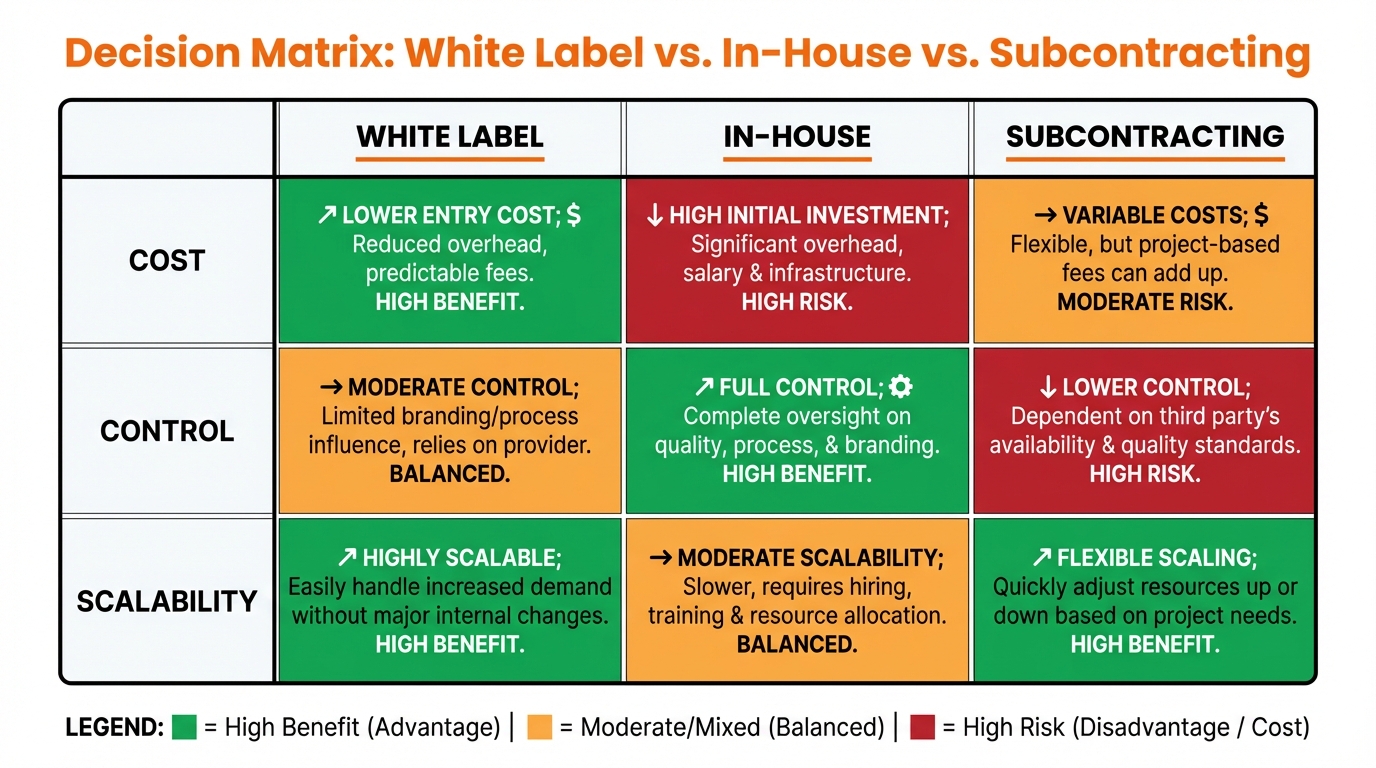
You understand the risks of margin erosion and control loss (Step 3). Now, the crucial step is quantifying those risks against the potential speed and efficiency gains. Do not guess. Before committing capital or client success to a fulfillment method, you must analytically determine which model—white label (WL), in-house, or subcontracting—fits your specific service need. We rely on this matrix to guide our decision-making for every new service line launch.
| Metric | In-House Team | White Label Partner | Subcontractor/Freelancer |
|---|---|---|---|
| Startup Time (Speed to Market) | Slow (3-6 Months for hiring/training) | Fast (1-2 Weeks) | Medium (Vetting and onboarding time) |
| Control Over Process | Maximum (Full ownership of SOPs) | Low to Medium (Dependent on partner SOPs) | Medium (Direct, often burdensome management required) |
| Cost Structure | Fixed (Salary + Overhead) | Variable (Per Project/Retainer) | Variable (Hourly/Project Rate, highly inconsistent) |
| Brand Loyalty/Credibility Risk | Low (Full Ownership) | High (If quality fails, your brand suffers immediately) | Medium (Often disclosed internally, but still tied to your delivery) |
| Best For… | Core, high-volume, proprietary services that define your agency. | Specialized, complex, or low-volume services needed for market expansion. | Temporary needs, overflow, or highly unique, short-term tasks. |
Interpreting the Data: Where White Label Offers Leverage
The matrix clarifies the trade-offs. White labeling is not a perfect solution, but it is the undisputed champion of speed and variable cost control. We use this principle:
- WL for Speed and Complexity: If you need to launch a specialized service line (e.g., advanced programmatic SEO, complex conversion rate optimization) within two weeks, white labeling is the only viable path. It allows immediate revenue generation without headcount risk.
- In-House for Core Competency: If the methodology is your competitive advantage—the unique service that drives your brand equity—you must accept the high fixed costs and slow ramp-up time necessary to control the process fully.
- Subcontracting as a Stop-Gap: Subcontractors and freelancers are useful for overflow or temporary expertise gaps. However, they lack the scalability and consistent standard operating procedures (SOPs) of a dedicated white label partner, making them difficult to integrate into a long-term service portfolio.
Your strategic choice must prioritize either speed-to-market (WL) or maximum control (In-House). There is no middle ground that achieves both simultaneously.
Step #5: The Vetting Protocol: Finding a High-Performance White Label Partner
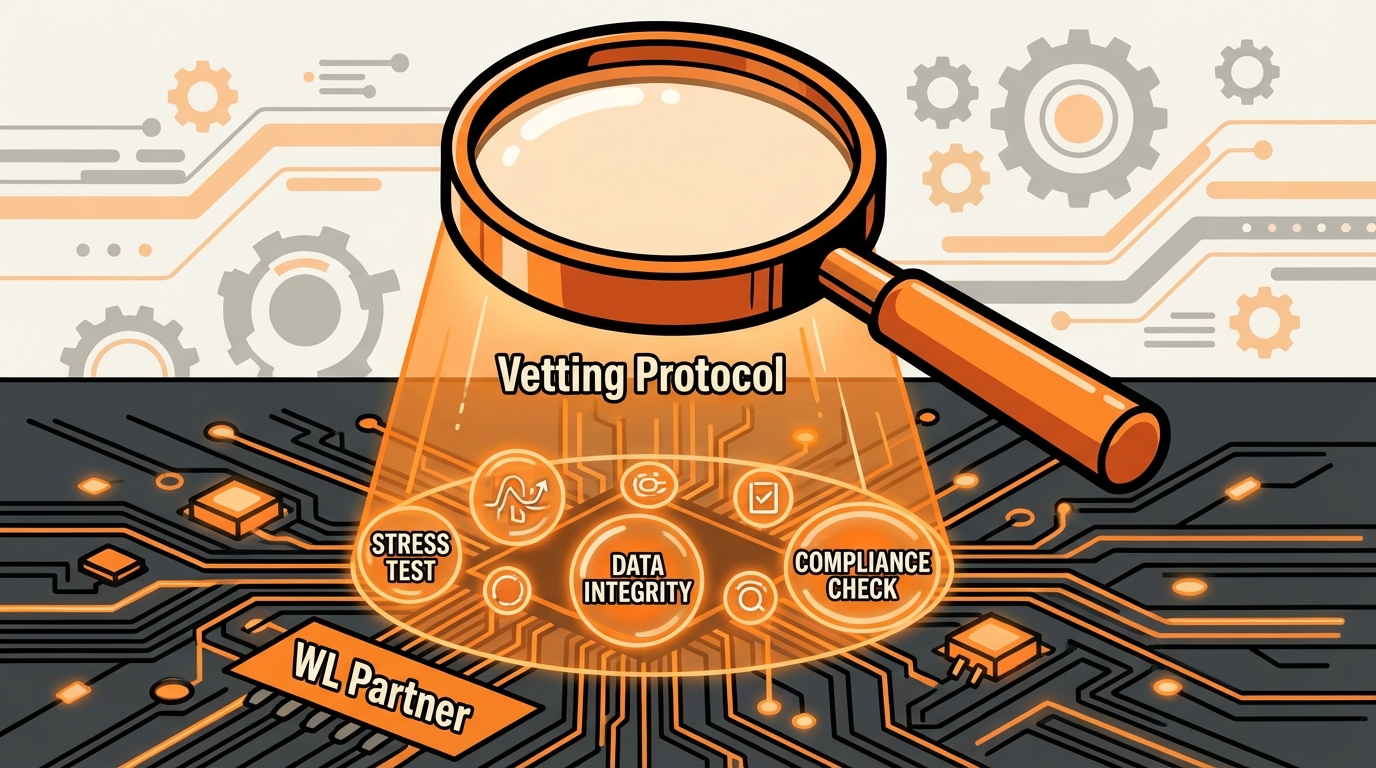
If your strategic matrix (Step #4) pointed toward white labeling, Step #5 is the critical execution phase. Your WL partner is not a vendor; they are an extension of your brand. Treat this vetting process with the same rigor you apply to hiring C-level staff.
We never rely on online reviews alone. Demand proof of process and documented systems before committing client success to an external team.
1. Audit Their Internal Systems
We must audit their internal systems before signing a contract. Ask about their Project Management (PM) infrastructure. Are they standardized on tools like ClickUp or Asana, or are they relying on a chaotic mix of spreadsheets and email threads? A mature partner must provide documented Standard Operating Procedures (SOPs) for every service delivery step.
- Demand an SOP Walkthrough: Review the exact, measurable steps they take from client brief intake to final delivery. If the process is not documented, it doesn’t exist.
- Reporting Transparency: How frequently do they report to your PM team? Ensure the deliverables are pre-packaged, actionable insights—not raw data requiring interpretation.
- Client Volume Audit: Quantify their current bandwidth. How many active clients do they service per fulfillment specialist? Over-extended partners lead directly to rushed, inconsistent work and margin loss for your agency.
2. Analyze Their Communication Structure
Communication failure is the margin killer. Every minute your internal team spends chasing updates is a minute of profit lost. We require streamlined, immediate access to information.
Demand a dedicated Project Manager (PM) for your account. Dealing with individual fulfillment specialists (e.g., the SEO analyst, the copywriter, the designer) is non-negotiable—it kills efficiency and control.
- Dedicated PM Requirement: This individual is your sole point of contact. They must understand your agency’s brand requirements and your clients’ specific expectations.
- Response Time SLAs: Formalize a Service Level Agreement (SLA) for response times. We enforce a maximum 4-hour response time during business hours for critical issues, backed by penalties.
- Reporting Format: Ensure their reports are immediately brandable and easily digestible. Your team should spend zero time reformatting data or correcting typos before presenting the results to your client.
If the partner cannot demonstrate this structural rigidity—if they rely on chaos or ad-hoc processes—walk away immediately. Any perceived initial cost savings will be swiftly devoured by your internal management overhead and inevitable client churn.
Step #6: Mitigating Risk: The Legal and Financial Safeguards

Your white label strategy is only as strong as your legal and financial framework. We must proactively protect the agency from two primary threats inherent in outsourcing: intellectual property (IP) theft and uncontrolled financial liability.
1. Legal Necessity: Non-Disclosure and Non-Compete Agreements
The white label partner gains intimate, actionable knowledge of your clients, proprietary pricing models, and internal processes. A robust legal contract is not optional—it is an absolute necessity.
- IP Ownership (Work-For-Hire): Ensure all work product (code, copy, designs, reports) is legally owned by your agency the moment it is created. The contract must explicitly state that the partner is functioning under a strict “work-for-hire” standard.
- Non-Solicitation: The contract must explicitly forbid the white label partner from contacting or soliciting your clients, or their competitors, for a minimum of 24 months after the partnership ends. This protects your core asset: your client relationships.
- Confidentiality (NDA): Define exactly what constitutes proprietary information, including pricing matrices, internal SOPs, and client strategies.
2. Pricing Structures That Guarantee Margin and Stability
We strongly advise against utilizing hourly pricing for white label services. Hourly billing incentivizes inefficiency and makes your profit unpredictable and difficult to scale.
Use fixed-fee retainers or defined project-based pricing. This transfers the risk of scope creep and inefficiency back to the fulfillment partner.
To ensure profitability, if the white label partner charges you $X, you must define the client rate as $X multiplied by your strategic margin (typically 2.5x to 3x). This multiplier is essential. It covers administrative costs, strategic consulting, account management, and the necessary risk premium associated with client guarantees.
“If you are simply passing through the fulfillment cost with minimal markup, you are operating a high-risk referral service, not a profitable agency. Your primary value is the strategy layer and client relationship management, and you must charge aggressively for it.”
3. Client-Facing Trust Management and Brand Control
This is the most sensitive area: maintaining client perception and protecting the brand narrative. Transparency is paramount in high-trust, high-ticket services, but control over how that transparency is delivered is non-negotiable.
- Avoid Direct Exposure: Ensure all partner staff utilize your agency’s dedicated email domains and client-facing project management platforms. They operate under your brand umbrella, always.
- Control Reporting Bottleneck: Never allow the white label partner to send reports, communication, or data directly to the end client. All information must flow through your dedicated Project Manager (PM) or Account Lead first. This eliminates confusion and maintains a single point of authority.
- Strategic Framing: If a client asks about capacity or staffing, frame the partner as an “integrated, specialized division,” a “strategic fulfillment team,” or “dedicated offshore specialists” operating strictly under your agency’s proprietary brand standards and direct supervision.
The operational goal is singular: deliver results so exceptional and client experience so seamless that the client focuses entirely on the outcome, not the source of the labor.
Step #7: The Pivot to White Label as a Service (WLAAS)

If our agency has achieved mastery in a core service (e.g., paid media, SEO, or content strategy), the ultimate strategic move is often pivoting to become the provider—White Label as a Service (WLAAS). This transition requires a complete shift in operational focus: moving from B2C/B2B direct client acquisition to high-volume B2B agency sales.
The operational advantages of becoming the provider are critical for scaling:
- High Revenue Stability: Agencies are low-churn partners. Securing a WLAAS contract locks in highly stable, recurring monthly revenue far beyond typical client retention rates.
- Accelerated Sales Velocity: Agencies already understand the value proposition of the service. This existing knowledge base makes the sales cycle dramatically shorter than closing an end-client.
- Maximized Delivery ROI: We eliminate the massive upfront cost of acquisition (CAC) inherent in direct sales, allowing the agency to focus 100% of resources and capital on delivery excellence and scalability.
To succeed as a WLAAS provider, the agency structure must rest on two non-negotiable foundations:
- Industrialized SOPs: Our processes must be flawless and standardized. We require streamlined Standard Operating Procedures (SOPs) capable of handling massive volume and diverse requirements from multiple agency partners simultaneously without degradation of quality.
- Turnkey, Brandable Reporting: Agencies need clean, actionable data they can immediately white label and present to their end-clients. Reporting must be automated, easily customized for partner branding, and ready for immediate deployment.
This WLAAS model is the mechanism by which numerous organizations have scaled past the eight-figure threshold in the last decade. Success demands a fundamental shift: we must move from a traditional client-service mentality to a production and process-driven fulfillment mindset.
Frequently Asked Questions (FAQ)

- Q: How do I ensure quality control when I don’t manage the white label team directly?
- A: Quality control is non-negotiable. We rely on two critical mechanisms: **Standard Operating Procedure (SOP) Alignment** and **Strict Output Metrics**. First, provide the partner with your exact, detailed SOPs for every client deliverable. Second, measure their output against strict, quantifiable KPIs (Key Performance Indicators). If the data indicates a slip in performance—even a minor one—the partnership requires immediate review. Never rely on subjective client feedback; rely exclusively on measurable data.
- Q: Is white labeling cheaper than hiring an in-house expert?
- A: Yes, for *highly specialized* or *occasional* services, white labeling is significantly cheaper. You bypass the enormous overhead of salary, benefits, training costs, and software licensing. However, this equation reverses when a service scales. If it becomes a high-volume core offering (e.g., managing SEO for all clients), the cumulative cost of the white label markup will almost certainly exceed the cost of hiring and managing a dedicated in-house expert. Treat white labeling as a scaling tool, not a permanent cost-saving measure for core business functions.
- Q: What is the biggest mistake agencies make when starting white label partnerships?
- A: The single biggest strategic error is choosing a partner based solely on the lowest price point. We see this mistake destroy agency momentum consistently. Low price directly translates to low quality control and poor communication flow. This immediately damages your brand credibility, leading directly to high client churn rates. A premium white label partner requires a higher upfront investment, but they guarantee consistency and protect the long-term viability and reputation of your agency. Price shopping is a false economy.
Ready to take the next step?
Try AI Lead Generation Today
Click HereReferences
- What are your thoughts about White-Labelling Services? The Pros …
- The pros and cons of leveraging white label branding … – Trax Retail
- White Label Marketing: Pros, Cons, and Key Considerations – Mavlers
- Pros & Cons of White Label Social Media Content | MixBloom
- What is White Labeling? Pros and Cons of White Labeling Software