
You’ve invested heavily in Facebook Lead Ads. The leads are pouring in. That’s the easy part.
Now, let’s talk conversion. Most businesses dedicate 90% of their budget and effort to creative and targeting. They allocate the remaining 10% to a generic, automated follow-up sequence.
This approach is a catastrophic failure for high-ticket services and complex B2B sales.
Why? Because speed, while mandatory, is only half the battle. Pure automation cannot replace the human touch required to qualify genuine buyers, build critical trust, and dismantle high-level objections.
In 2025, successful lead generation is a hybrid mandate. Automation handles the speed-to-lead. A strategic manual system handles the conversion of high-value prospects.
This guide breaks down the mandatory, high-leverage manual follow-up system you must implement right now to stop leaking revenue and start closing more deals from your Facebook campaigns.
The Fatal Flaw of Pure Automation in B2B Lead Follow-Up

We operate in a world where speed is paramount, but personalized quality is the ultimate metric. Your competitors are likely relying on basic CRM integrations that send a canned email and a generic text. That is the bare minimum-and it is insufficient.
We are not discussing low-cost e-commerce sales. We are talking about consulting, SaaS demos, large service contracts, and complex B2B offerings. These leads require strategic, personalized human intervention to justify their high lifetime value (LTV).
The manual follow-up strategy outlined here is designed to immediately identify the true intent of the lead and apply the appropriate, professional human pressure required to move them directly to a booked strategy session or commitment.
The 5-Minute Rule: Automation’s Non-Negotiable Role
Competitor analysis confirms the absolute necessity of a rapid response. If you wait more than five minutes, your qualification rate plummets dramatically. This initial response phase must be automated.
Manual intervention cannot beat the clock for the initial “Thank You.”
However, the automated response must be a bridge, not the final destination. It must confirm receipt, set clear expectations, and immediately initiate the first human action for high-intent leads.
Speed-to-Lead: The Financial Impact of Delay
- 0-5 Minutes: The Conversion Zone. Leads contacted within this window are 100X more likely to convert than those contacted after 30 minutes.
- 10-60 Minutes: The Decline Zone. Lead interest drops sharply. You are now competing directly against other distractions and competitors.
- 24+ Hours: The Nurture Zone. The lead is now cold. You must re-engage them through long-term nurturing sequences, which requires significantly more resources and time.
Automation handles the instant confirmation email and text message. Your manual process starts immediately after that, focusing on the channels that maximize human connection and rapport.
Defining Your High-Intent Manual Follow-Up Strategy
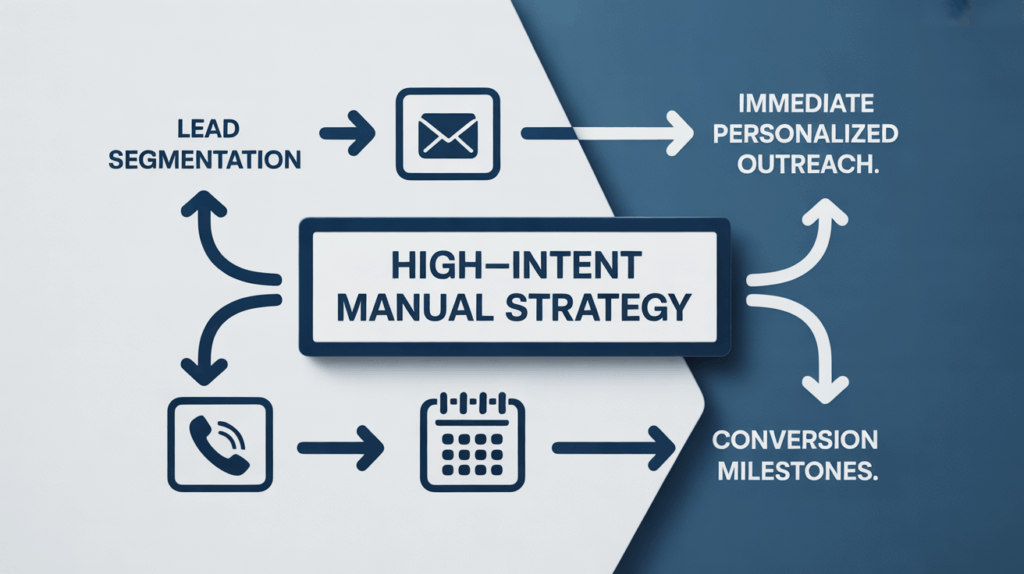
The primary flaw in most follow-up systems is treating every lead equally. A lead who downloaded a simple checklist is fundamentally different from a prospect who requested a custom quote for a $50,000 engagement.
Manual resources are expensive. You must reserve them exclusively for the leads most likely to generate high LTV. Focus is profitability.
Segmenting Leads for Human Intervention
Before any manual outreach begins, qualify the lead based on their submission data. Use advanced qualification questions in your Facebook Lead Forms or integrate a quick pre-qualification survey. This allows for aggressive, efficient segmentation.
We recommend classifying leads into three tiers based on intent and fit:
| Lead Tier | Qualification Criteria | Manual Action Required | Response Timeline Goal |
|---|---|---|---|
| Tier 1 (Hot) | Requested Demo/Quote, High Budget/Revenue specified, Ideal ICP Match, Explicit Pain Point Defined. | **Immediate Phone Call** + Personalized Messenger/Email. | < 5 Minutes (Automated start, human finish) |
| Tier 2 (Warm) | Downloaded deep content (e.g., Whitepaper), Good ICP Match, but no immediate quote requested. | Manual Connection via LinkedIn or Messenger + Value-driven Email 2. | 1 Hour – 4 Hours |
| Tier 3 (Cold/Nurture) | Low-friction content download (e.g., Checklist), Poor ICP fit or missing critical data. | Pure Automation (Drip campaign). Revisit manually only after specific behavioral triggers are met. | 24 Hours |
Focus your high-touch manual efforts exclusively on Tier 1 and Tier 2 leads. Do not permit your sales team to waste time chasing low-intent, low-LTV checklist downloads.
The Essential Manual Follow-Up Channel Stack
Effective manual follow-up requires a multi-channel approach because people filter their inboxes and screen unknown phone numbers. You need to hit them where they are most likely to drop their guard and respond personally.
The priority stack for manual outreach is defined by urgency and personalization:
- Phone Call: Highest urgency, highest conversion potential for qualification. Must be rapid (Tier 1 focus).
- Facebook Messenger/WhatsApp: High open rates, immediate, and less formal than email. Excellent for quick qualification questions or confirming receipt.
- Email (Personalized): Used strategically to deliver the promised value and structure the next steps. Must explicitly reference the ad they clicked.
- LinkedIn Connection: The strategic B2B approach. Used for Tier 1 and 2 leads to establish professional credibility and long-term connection.
Phase 1: The Immediate Manual Response (0-60 Minutes)

Once the automated “Thank You” message is sent, the human team takes over. This is where your personalization efforts start to deliver ROI. The goal is to maximize the lead’s still-hot intent.
Crafting the Perfect First Call Script (Manual Step 1)
The goal of the first call is not to close the sale. The goal is rapid qualification and booking the next, deeper meeting. Since the lead just submitted a form, they are expecting contact. Do not sound surprised they answered, sound professional and prepared.
Key Elements of the 2025 First Call Script:
- Immediate Context & Validation: Start by referencing the exact offer they requested. “Hi [Lead Name], this is [Your Name] from [Company]. I saw you just requested our guide on [Specific Offer/Ad Title]. Did you get a chance to look at the PDF we sent?”
- Acknowledge Speed: Address the rapid call directly. “We prioritize calling all our new high-priority leads quickly to ensure the information we sent was exactly what you needed and to answer any immediate questions.”
- The Core Qualification Hook: Shift the conversation from the free resource to their immediate, high-level pain point. “I’m curious, what specifically about [Topic] are you hoping to solve in your business right now?”
- Set the Next Step (The Close): If they qualify, immediately propose a 15-minute discovery session. Do not delay. “Based on what you’ve shared, I think a brief 15-minute strategy session next Tuesday would be highly beneficial. I can show you exactly how we helped [Similar Client] solve this problem. Does 2 PM or 4 PM work better?”
If the lead does not answer, proceed immediately to the next manual step: the personalized text.
Personalized Messenger Outreach (Manual Step 2)
If the phone call goes unanswered, the next mandatory step is a personalized message via Facebook Messenger or WhatsApp. This is a low-friction channel that often bypasses email inbox clutter.
The tone must be casual, helpful, and non-threatening-designed to elicit a fast reply.
Messenger Script Example:
“Hey [Name], tried giving you a quick ring about the [Ad Offer] guide-no worries if you missed it. Just wanted to make sure it landed okay in your inbox. Let me know if you have any immediate questions about getting [Desired Result]. I’m here to help.”
This message serves three purposes:
- It confirms you are a real human, not just an automated system.
- It provides a low-friction reply mechanism.
- It keeps your company top-of-mind while they check their email.
Need help scripting these conversations for scale? We have broken down the best approaches. Check out our guide on AI Facebook Messenger Scripts for Cold Outreach 2025.
Phase 2: The Strategic 7-Day Follow-Up Sequence
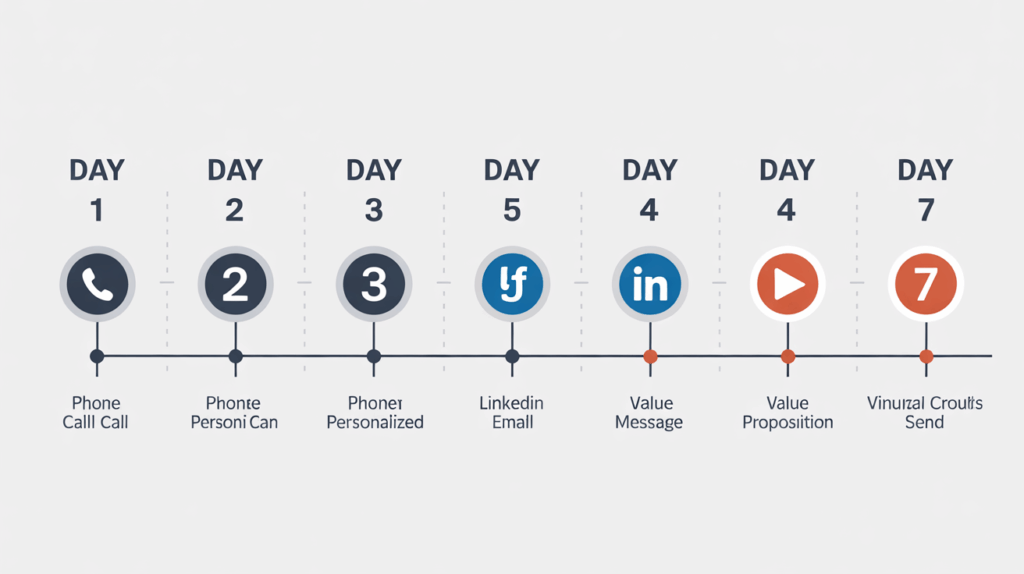
Most sales reps give up after two attempts. This is catastrophic and expensive. Statistics confirm that the majority of B2B sales close between the 5th and 12th touchpoint. Your manual strategy must be persistent, channel-agnostic, and value-driven.
The 7-day manual sequence is designed to provide increasing value while testing different channels for responsiveness.
Manual vs. Automated Nurturing: Why the Investment Pays Off
It is crucial to distinguish between generic, broad nurturing (Tier 3) and targeted, manual follow-up (Tier 1/2). The manual investment is justified by the expected LTV.
Manual Follow-Up (Tier 1/2) – ROI Drivers
- Deep personalization based on lead submission data.
- Ability to handle complex, high-level objections instantly.
- Builds immediate trust and rapport with decision-makers.
- Higher conversion rates for high-LTV deals.
Automation-Only (Tier 3) – Limitations
- Cannot handle complex qualification or unique objections.
- Perceived as low-effort/low-value by high-level buyers.
- Fails to establish human connection necessary for trust.
- Results in a high volume of unclosed, warm leads.
The Mandatory Manual Multi-Touch Cadence Checklist
This cadence assumes the lead did not answer the initial call or message. Use this exact sequence for your Tier 1 and Tier 2 leads.
- ✅ Day 1 (0-1 Hour): Initial Phone Call (Unanswered).
- ✅ Day 1 (1-2 Hours): Personalized Messenger/Text (Reference call attempt).
- ✅ Day 2 (Email #2): Send a personalized email with a relevant case study or specific, high-value content. Subject Line: “Following up on [Ad Topic]-Here’s proof it works for [Similar Industry].” Ask a single, direct question related to their pain point.
- ✅ Day 3 (Phone Call #2): Call again at a different time of day (e.g., if the first call was morning, try afternoon). Leave a brief, professional voicemail referencing the email you sent yesterday.
- ✅ Day 4 (LinkedIn/Social): Send a personalized LinkedIn connection request. Reference the ad or the content they downloaded. Keep it short: “Saw you downloaded our [Guide Name]. Let’s connect and discuss [Pain Point].”
- ✅ Day 5 (Email #3 – Value Add): Send a short email with a specific, actionable tip related to their pain point. Do not ask for a meeting yet. Just provide pure, high-level value.
- ✅ Day 7 (Phone Call #3 – Final Attempt): Final direct phone attempt. This is the last high-pressure touchpoint. If unanswered, proceed to the “Breakup” email.
Consistency is the difference between an abandoned lead and a closed deal. You must track every touchpoint meticulously in your CRM to ensure the sales rep is not repeating messages or skipping crucial channels.
Leveraging Lead Quality Signals
A manual follow-up strategy is only effective if your team is focusing on people who are actively engaging. How do you know if a lead is engaging outside of direct replies?
- Website Activity: Are they visiting your pricing page? Are they reading specific blog posts related to your service?
- Email Opens/Clicks: Are they interacting with the automated emails you sent on Day 1 and Day 2?
- Social Engagement: Are they viewing your company profile or reacting to recent posts?
Use AI tools to surface these behavioral signals in real-time. If a Tier 2 lead suddenly visits your pricing page three times in one hour, they immediately become a Tier 1 priority, triggering an immediate, unscheduled manual call. Do not wait for Day 7.
Understanding the full journey a lead takes from Facebook submission to conversion is critical for maximizing ROI. If you haven’t mapped out your process yet, review Your Step-by-Step Facebook Lead Generation Flow.
Advanced Manual Follow-Up Techniques

When the standard cadence fails, you need advanced manual techniques to re-engage the cold lead or close the loop entirely.
The “Breakup” Email Strategy
After your 7-day sequence is complete with no response, send the “breakup” email. This is a manual, high-leverage tactic that often generates a response, even if the response is “no.”
Purpose: To provoke a definitive answer, leveraging loss aversion, allowing you to either resurrect the lead or move them out of the active sales pipeline.
Breakup Email Example (Sent Day 8 or 10):
Subject: Should I stop sending these?
Hi [Name],
I’ve tried reaching out a few times this week regarding the [Specific Ad Offer] and how we could potentially help you with [Specific Pain Point].
Since I haven’t heard back, I’m assuming one of two things:
- You’ve already solved the problem internally (which is great!).
- The timing isn’t right, or our solution isn’t the right fit.
Either way, I don’t want to clutter your inbox unnecessarily. Could you let me know if I should stop following up?
Best,
[Your Name]
This approach works because it demands a response. Even a “not interested” reply gives you valuable data and cleans your pipeline, preventing wasted effort.
Social Proof and Profile Optimization
Remember, your leads are vetting you. They submitted a form, but they are still checking your credibility. When your sales rep reaches out manually, the lead will search for that person’s name and your company.
Manual follow-up success is highly dependent on the perceived quality of the human contacting them.
- Reputation Check: Do your sales reps have optimized, professional Facebook and LinkedIn profiles that reflect authority?
- Consistency: Does the rep’s social profile align with the company brand and expertise?
- Trust Signals: Are there recent client testimonials or endorsements visible on your company pages that the lead can verify?
If your sales team has poor or unprofessional social profiles, your manual outreach will fail to build the necessary trust required for high-ticket sales.
Ensure your team is representing the brand professionally across all platforms. Start by reviewing our Facebook Profile Optimization Checklist 2025: The Service Provider’s Guide.
How to Scale Manual Follow-Up Without Burnout (The Automation Hybrid)
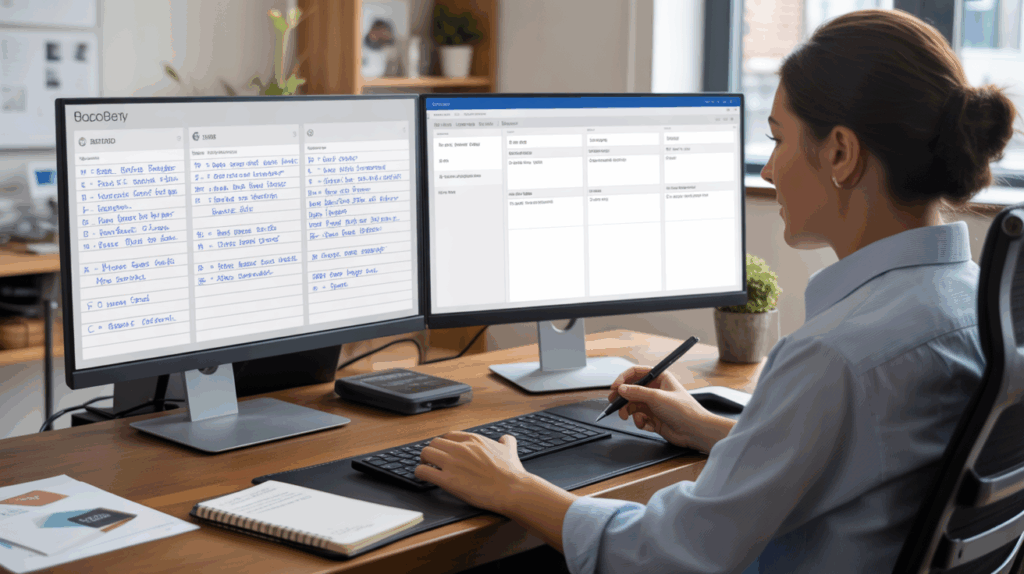
The core challenge of manual follow-up is scalability. You cannot hire an army of sales reps for every Facebook lead that comes in. You must integrate AI and automation to support, not replace, the manual process.
This is the Pyrsonalize approach: Use AI to handle the tedious, time-consuming tasks, freeing up your team for high-leverage manual touches that require empathy and expertise.
Automation’s Role in Supporting Manual Follow-Up:
- Lead Routing and Assignment: Instantly route Tier 1 leads to the appropriate sales rep based on territory or qualification criteria.
- Automated Data Enrichment: Use AI to search for the lead’s company size, industry, and role *before* the sales rep makes the first call. This eliminates manual research time and allows for hyper-personalization.
- Task Scheduling and Reminders: Automatically create the entire 7-day cadence tasks in the CRM (e.g., “Call Lead X at 3 PM,” “Send Email #2”).
- Script Generation: Use AI to generate personalized email and Messenger draft scripts based on the lead’s unique pain points extracted from the lead form data. The rep only needs to review and send, maximizing speed and consistency.
By automating the structure and data preparation, you maximize the impact of every manual touchpoint. Your team spends less time tracking and more time selling.
Key Takeaways for Manual Facebook Lead Follow-Up
- Speed is Automated, Quality is Manual: Use automation for the first 5 minutes. Use human intervention for high-LTV qualification.
- Segment Aggressively: Reserve manual resources for Tier 1 and Tier 2 leads that match your Ideal Customer Profile (ICP).
- Multi-Channel Persistence: Implement a mandatory 7-day, multi-channel cadence (Phone, Messenger, Email, LinkedIn).
- Reference the Ad: Every manual touchpoint must reference the exact ad or offer the lead clicked to maintain context and trust.
- Use the Breakup: Employ the “breakup” email after the standard cadence to elicit a final, definitive response and clean your pipeline.
Frequently Asked Questions
What is the ideal number of manual follow-ups for a Facebook lead?
For high-ticket or B2B leads, the ideal number is between 5 and 12 touchpoints over a 7- to 14-day period. Most sales close after the fifth attempt. Do not stop after the first or second call. Persistence across multiple channels-phone, text, and email-is essential to cut through the noise and establish credibility.
Should I prioritize calling or emailing a new Facebook lead?
Always prioritize the phone call immediately after the automated confirmation. The phone call provides the fastest path to qualification and objection handling. If the call is unanswered, immediately follow up with a personalized text or Facebook Messenger message, which typically has a much higher open rate than email and serves as a low-friction reminder.
How do I handle leads that submit incomplete information on the Facebook form?
If the information is incomplete but the lead still appears to be a good ICP fit (Tier 2), use the manual follow-up to fill the gaps. Your first call or message should gently request the missing information. Example: “I noticed the company size field was left blank-just wanted to quickly confirm that so I can send the most relevant pricing information.” If the lead is Tier 3 (poor ICP fit), move them directly to a long-term, automated nurture list.
Is it acceptable to connect with a lead on LinkedIn after they submit a Facebook Lead Ad?
Yes, absolutely. For B2B lead generation, connecting on LinkedIn is a powerful manual step, typically used around Day 4 of the cadence. It establishes professional credibility and provides another platform for long-term nurturing. Ensure the connection request references the Facebook ad or the resource they downloaded to avoid sounding random and maximize acceptance rates.
How long should I keep a non-responsive lead in my active manual pipeline?
After completing your strategic 7- to 10-day manual cadence (including the breakup email), move the non-responsive lead out of the active sales pipeline. Do not discard them. Instead, transition them into a long-term, automated nurture sequence. This sequence should send low-frequency, high-value content (e.g., monthly newsletters, quarterly case studies) to keep the brand warm until the timing is right for them to re-engage.
Ready to take the next step?
Find Your Next Client With Pyrsonalize.com
Click Here