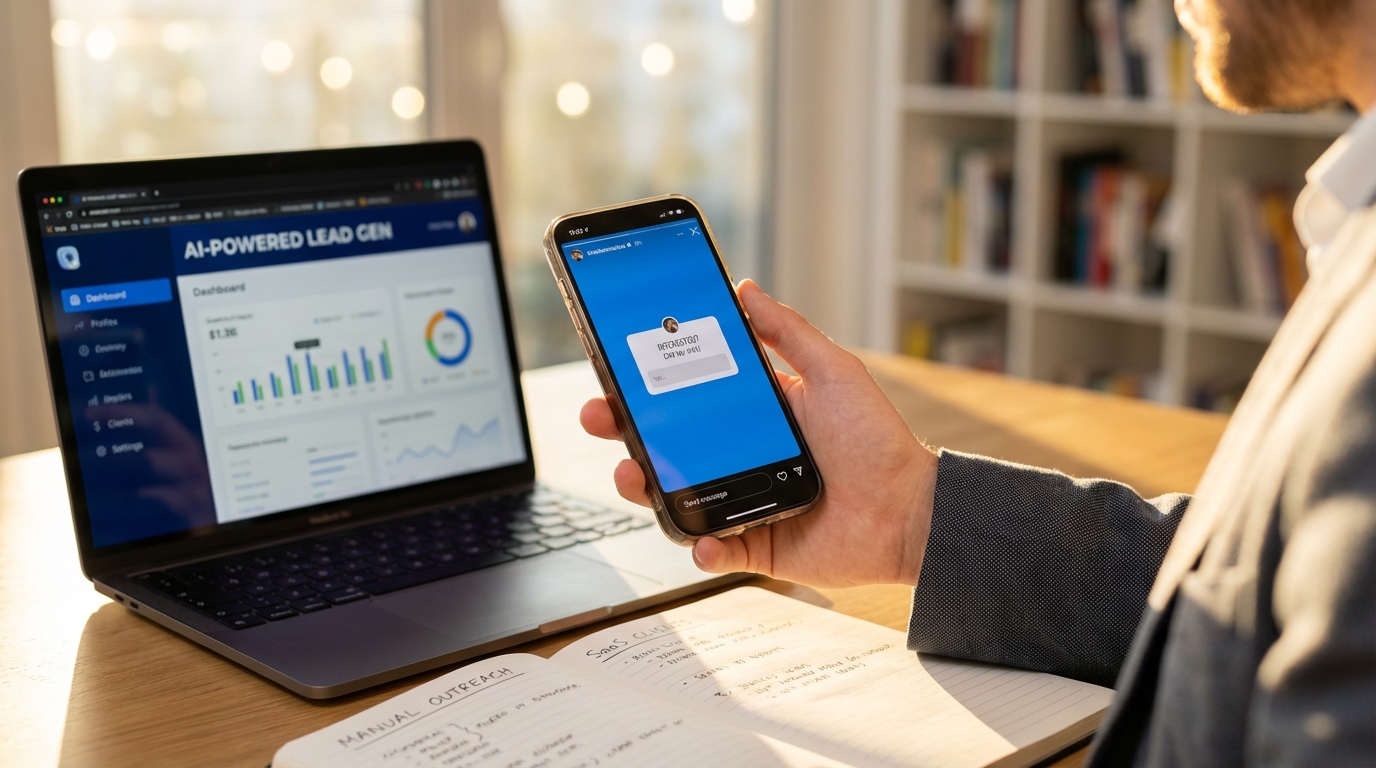

For the modern SaaS founder, service business owner, or sales professional, efficiency is the currency of the 2025 digital landscape. We know you are looking for scalable lead generation methods that do not require an immediate, massive ad spend. This is where Facebook Stories-often overlooked in favor of the main feed-becomes a critical strategic lever for manual, high-intent lead capture.
Stories provide a raw, immediate connection that traditional posts simply cannot replicate. They are the digital equivalent of a water cooler conversation. But how do you convert that ephemeral view into a tangible, qualified lead in your CRM? We are not talking about complex ad campaigns here. We are talking about leveraging organic reach and simple, high-impact workflows.
This comprehensive guide will walk you through the precise steps necessary to turn casual Story viewers into actionable leads using purely manual and organic techniques. We will focus on strategic content, conversion architecture, and the crucial follow-up process.
The 2025 Shift: Why Stories are Prime for Manual Lead Capture
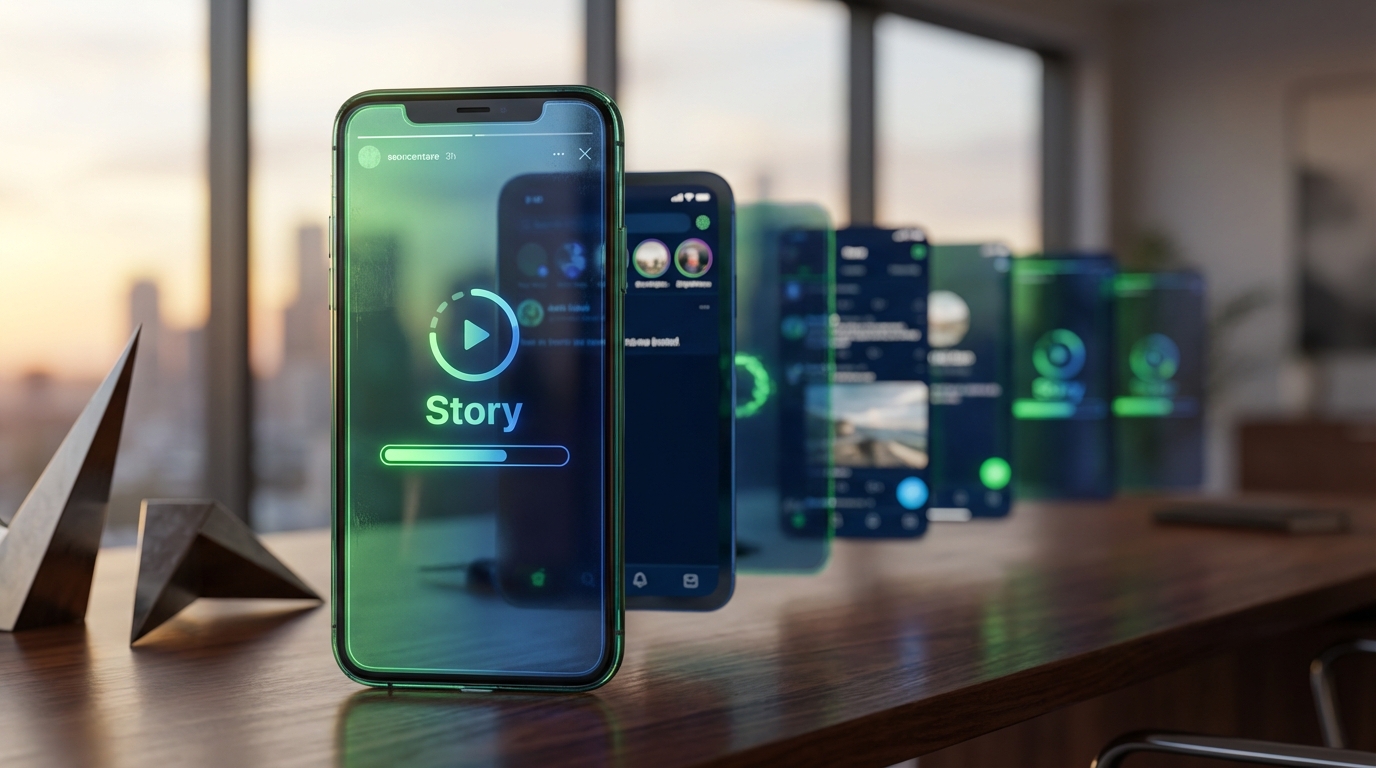
The core Facebook and Instagram feeds are saturated. Algorithms prioritize highly produced, long-form content or paid placements. Stories, however, still reward authenticity and consistency. They sit at the top of the user interface, demanding immediate attention.
For small businesses and entrepreneurs focused on building rapport before the sale, the 24-hour nature of Stories creates scarcity and encourages immediate action-the perfect environment for lead capture.
Text-Based Infographic: The Story Consumption Landscape (2025)
95% of users access Facebook/Instagram via mobile, making the vertical Story format dominant.
75% of Gen Z and Millennials use Stories to connect with brands and discover new products/services.
40% of active Story viewers report sending a direct message (DM) response to a business Story.
1 in 3 users say they have become more interested in a brand/product after seeing it in a Story.
The Opportunity: Stories bypass the crowded feed, offering a direct, personal pathway to the user’s inbox.
When we talk about manual lead generation, we mean two things: using organic content features (like polls, questions, and link stickers) to prompt an action, and then physically managing the resulting engagement (DMs, form submissions) without massive automation infrastructure.
Stage 1: Optimizing Your Foundation for Story Conversion
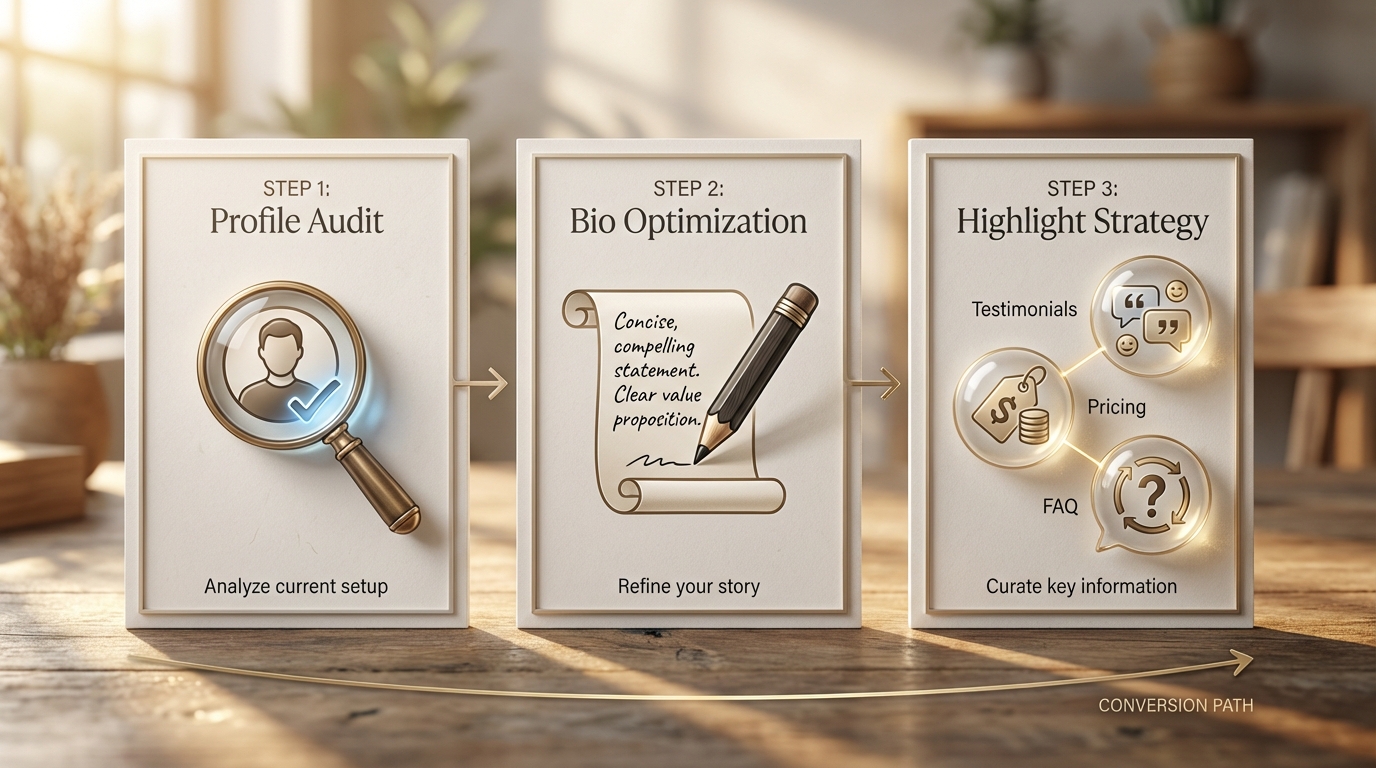
A high-converting Story is useless if the profile it links back to is unoptimized. Your profile is the landing page for your organic outreach efforts.
1. Profile and Bio Optimization
Every Story you post is tied to your main profile. If a user clicks through your profile picture, they need instant clarity on who you are and what you offer. Have you reviewed your Facebook Profile Optimization Checklist 2025 lately? Ensure these elements are locked down:
- Clear Value Proposition: Your bio must state exactly what problem you solve and for whom.
- Consistent Branding: Use your brand colors, fonts, and tone. Stories should feel like an extension of your primary brand identity.
- High-Intent Link: The single link in your bio should route to your highest-value lead magnet or a dedicated landing page designed specifically for Story traffic.
2. The Highlight Reel Strategy: Permanent Lead Capture
While Stories disappear, Highlights are permanent. They act as categorized, evergreen lead generation funnels. Use Highlights to categorize your best-performing lead-capture Stories.
- Case Studies/Testimonials Highlight: Show social proof and link to a booking page or case study download.
- Free Resource Highlight: Dedicate an entire reel to promoting your lead magnet. This is critical for passive lead flow. If you need structure, review our Organic Facebook Lead Magnet Setup guide.
- FAQ Highlight: Address common objections and guide users toward the next conversion step (e.g., a discovery call).
Stage 2: High-Converting Story Content Ideas (Manual Focus)
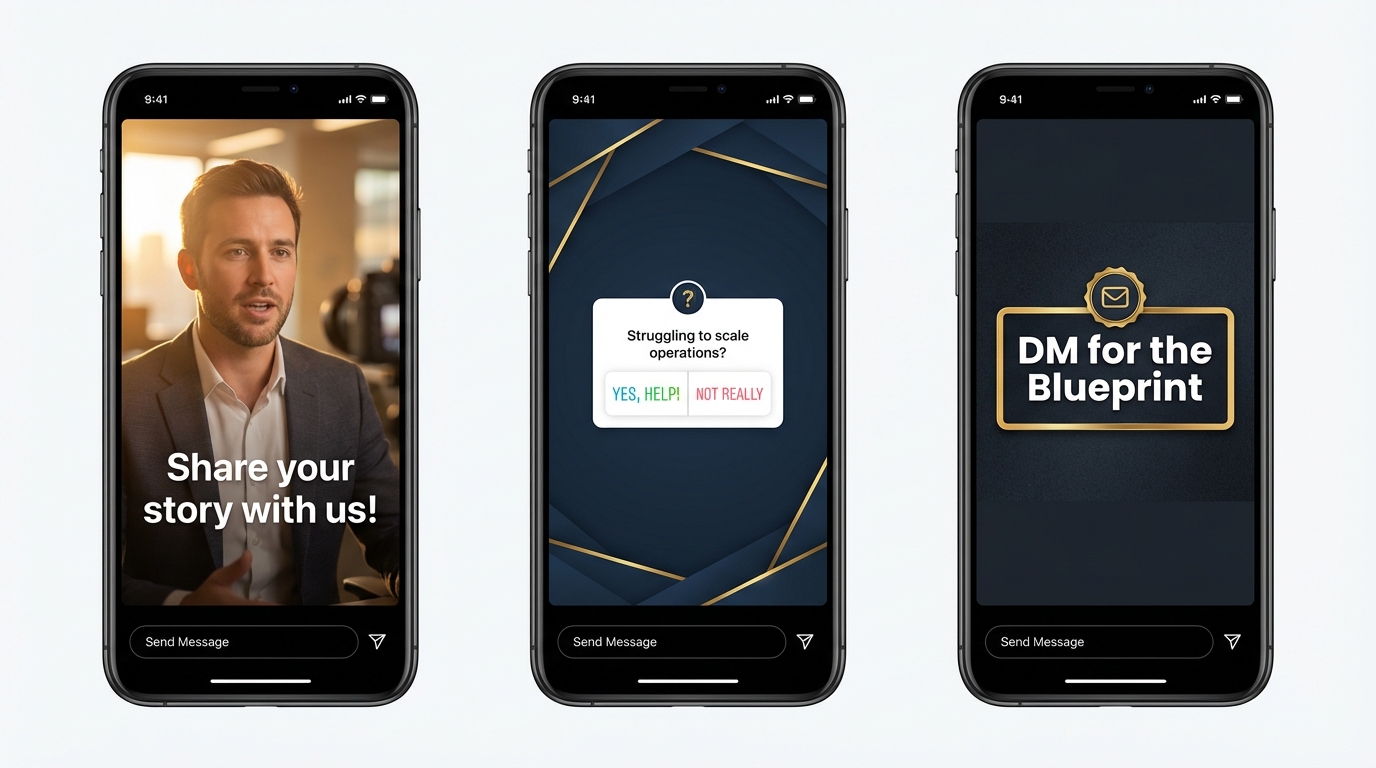
Manual lead capture thrives on personalized interaction. We need content that prompts a direct response or utilizes the link sticker for immediate action. Forget generic product shots. Focus on value and vulnerability.
1. The “Ask Me Anything” (AMA) for DM Capture
The Question Sticker is one of the most powerful organic lead generation tools. Do not use it just for fun. Use it to pre-qualify leads and initiate private conversations.
- Strategic Framing: Instead of “Ask me anything,” try “What is your biggest roadblock with [Specific Topic]? I’ll answer the first 5 in a DM.”
- The Workflow: When users submit a question, you answer them privately via DM. This moves the conversation out of the public eye and allows you to transition the discussion naturally into a solution you offer, leading to a sales conversation.
- Manual Tracking: Log every meaningful question and the user’s profile name in a spreadsheet. This becomes your manual pipeline.
2. Testimonial & Offer Sequence (The Link Sticker Funnel)
This is a 3-part Story sequence designed to leverage social proof and drive traffic to a specific landing page.
- Story 1 (The Problem/Pain): A quick video or text graphic addressing a specific pain point your audience feels.
- Story 2 (The Proof/Testimonial): A screenshot of a strong testimonial or success metric related to solving that pain point. Use arrows or text overlays to emphasize the result.
- Story 3 (The Solution/CTA): A clear call to action using the Link Sticker. The link should go directly to the resource or booking page that capitalizes on the testimonial.
Pro Tip: Always use customized sticker text (e.g., “Grab the Free Template” or “Book Your 15-Min Audit”) instead of generic “Learn More.”
3. The ‘Reply to Claim’ Resource Giveaway
This strategy is purely focused on initiating the DM conversation, which is high-intent manual capture.
- The Content: Offer an extremely valuable, niche resource (eBook, checklist, template).
- The CTA: “Reply to this Story with the word ‘GUIDE’ and I’ll personally send you the link.”
- Why it works: This bypasses the link sticker entirely and forces the user into a one-to-one conversation. Once they reply, you can send the link, but more importantly, you can immediately ask a qualifying question (e.g., “Glad I could help! Just curious, what specifically are you hoping to use this checklist for?”).
4. Behind-the-Scenes Authenticity
Manual lead generation is built on trust. Use Stories to show the human side of your SaaS or service business. This is not about selling; it is about relatability.
- Show your process, not just the result.
- Introduce team members briefly.
- Share a genuine win or loss from your day.
Authenticity drives connection, and connection drives DMs. Every DM is a potential lead.
Stage 3: The Manual Capture Workflow (From Story View to CRM)

The moment a user interacts with your Story, your manual workflow must be seamless. The goal is to move the conversation off the platform or capture their contact information instantly.
The Two Primary Capture Methods Compared
Both the Link Sticker and the DM Capture method are valuable, but they serve different strategic purposes.
| Feature | Link Sticker Strategy | DM Capture Strategy (Reply to Claim) |
|---|---|---|
| Primary Goal | Volume and immediate traffic to a landing page. | High-intent, personalized conversation initiation. |
| Lead Quality | Medium (requires form fill on the landing page). | High (user actively chose to engage). |
| Required Effort | Low daily management (leads handle themselves). | High daily management (requires 1:1 response). |
| Best For | Gated content, free trials, direct sales pages. | Discovery calls, personalized audits, deep qualification. |
Executing the DM Capture Follow-Up
The DM capture is central to manual lead generation. It works because the user expects a personalized response. Your efficiency here determines conversion rate.
- Acknowledge Instantly: Reply within the hour. Even a simple, “Got it! Sending the link now…” works.
- Deliver the Value: Send the link to the resource.
- Qualify and Bridge: This is the crucial step. After delivering the link, immediately pivot to qualification. Do not wait for them to consume the content.
Example Script: “Hey [Name], here’s the guide! I hope it helps you solve [Specific Pain Point]. Just out of curiosity, if you could solve one thing in your lead generation process right now, what would it be?”
- Schedule the Next Step: If their answer indicates a high level of need and they fit your ideal client profile, transition to booking a call. “That sounds like something we specialize in. Would you be open to a quick 10-minute chat next week to see if we can help you accelerate that?”
Success hinges on your Manual Follow Up Strategy For Facebook Lead Generation. Do not let these warm leads go cold.
Essential Features for Organic Story Lead Gen
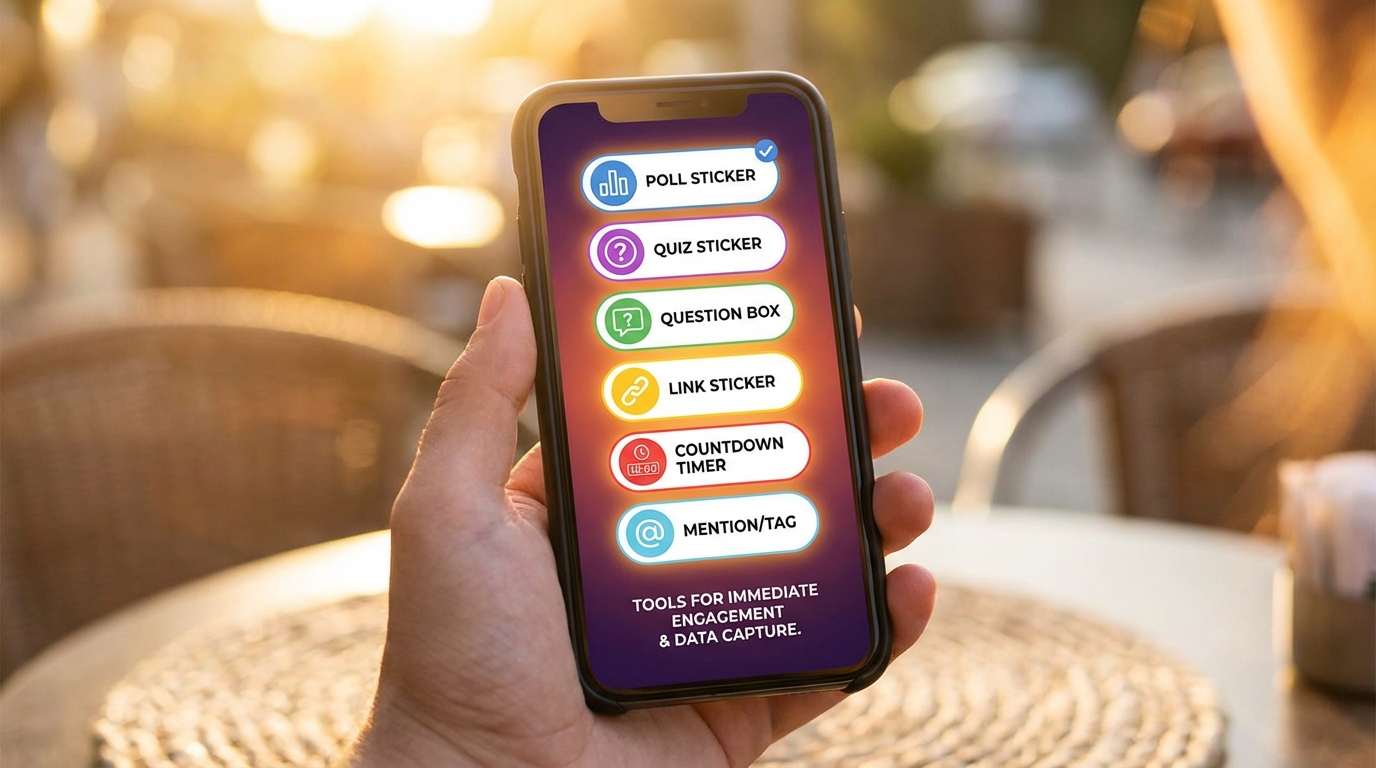
Facebook and Meta are constantly rolling out new interactive features. These are not just for engagement; they are data collection tools for manual qualification.
1. Polls for Segmentation
Use Poll Stickers to segment your audience before they even become a lead. Segmentation allows you to tailor your follow-up message, making your manual process more efficient.
- Example: “Are you currently focused on lead generation for B2B or B2C?” (Option A: B2B SaaS, Option B: B2C Service)
- Action: View who voted for which option. When you later pitch them, reference their choice. “I saw you voted B2B-that’s exactly who this template is designed for.”
2. Quiz Stickers for Commitment
Quizzes require a higher level of user commitment than polls. Use them to test knowledge related to your niche, building authority and signaling high intent.
- Example: Post a quick quiz about a common industry myth. If they answer correctly, congratulate them and offer a deeper dive resource via a Link Sticker.
3. Location and Hashtag Stickers for Visibility
Organic reach is key. Even in 2025, using location tags (if applicable to your service area) and relevant hashtags increases the chance of your Story being seen by non-followers who are actively browsing those tags.
Pros and Cons of Manual Facebook Stories Lead Generation
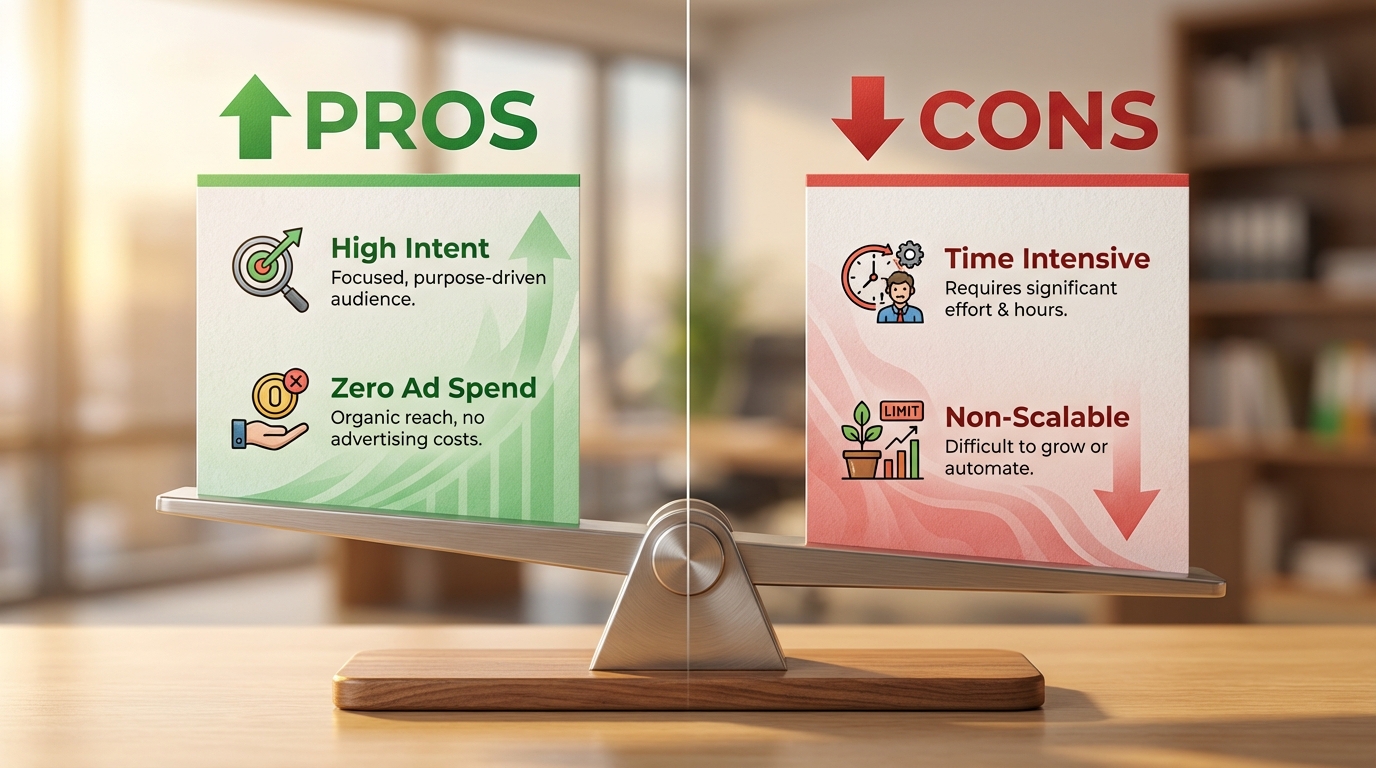
While this strategy is cost-effective, it requires significant time and organizational discipline. Be realistic about the trade-offs.
✅ Pros (High-Value Outcomes)
- Higher Lead Quality: Leads generated through DMs are warmer and more engaged.
- Zero Ad Spend: Eliminates CPA costs, making it highly budget-friendly.
- Rapid Feedback Loop: You learn what content resonates instantly based on DM volume.
- Builds Authenticity: Stories foster genuine 1:1 relationships, accelerating trust.
- Algorithm Friendly: High engagement signals to the algorithm that your content is valuable.
❌ Cons (Operational Challenges)
- Time Intensive: Requires active monitoring and personalized DM replies.
- Limited Scale: Manual follow-up caps how many leads you can handle effectively per day.
- Tracking Complexity: Requires manual logging of interactions into a CRM or spreadsheet.
- Ephemeral Content: Requires daily content creation to maintain visibility.
- Reliance on Profile Authority: Works best if your profile already has a decent following and authority.
Measuring Success Without Paid Ads (Organic Metrics)
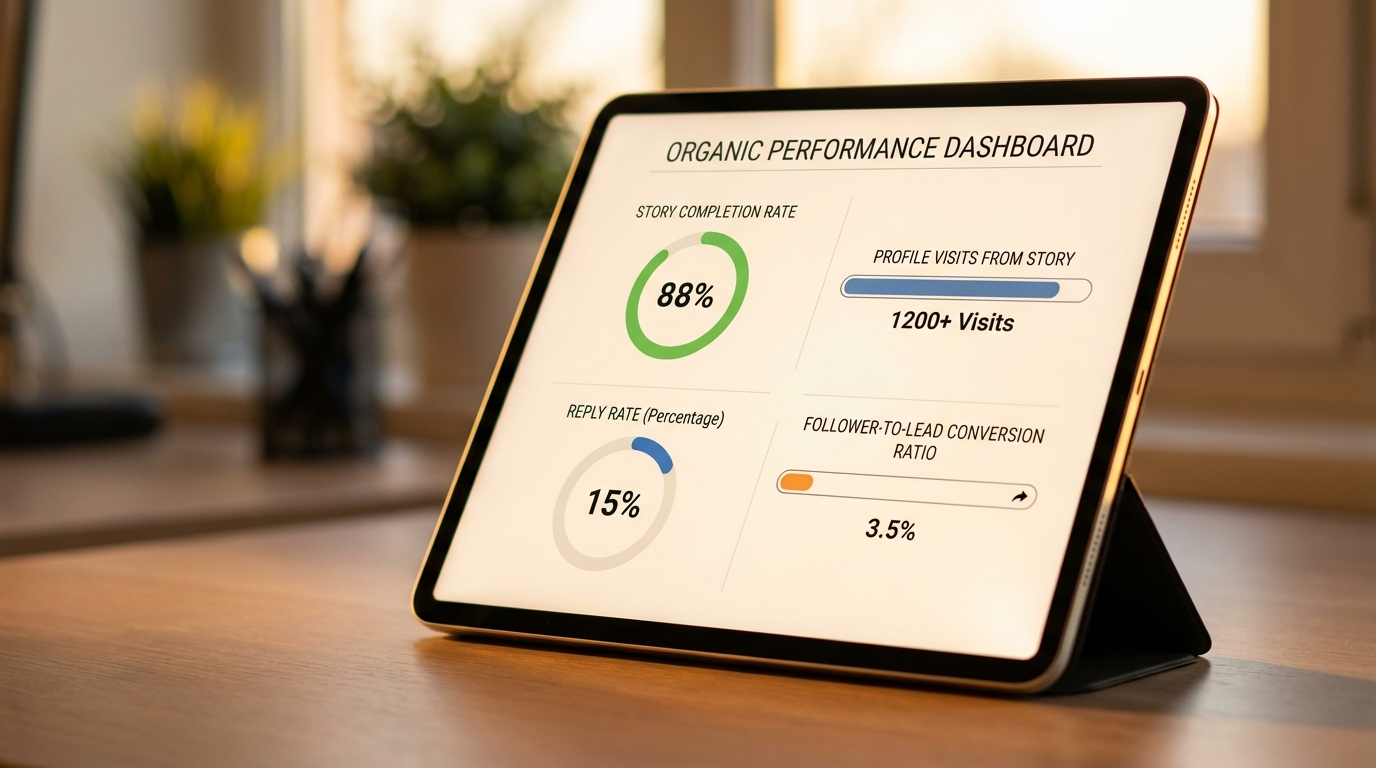
If you are not paying for views, how do you know if your Stories are working? You need to shift your focus from vanity metrics (impressions) to conversion metrics (actions).
- Taps Forward vs. Taps Back: A high ratio of taps back indicates the user is re-reading the content, often looking for the CTA. A high tap forward rate means they are skipping.
- Story Replies (DMs): This is your primary metric. Track the volume of DMs generated by your CTA (e.g., the ‘GUIDE’ replies).
- Profile Visits from Story: How many viewers clicked your profile picture? This shows intent to learn more about your brand.
- Link Sticker CTR: If using the link sticker, track the click-through rate (CTR) to your landing page via Facebook Insights or your landing page analytics.
- Conversion Rate from DM: The ultimate measure. How many DM conversations initiated by a Story result in a booked call or a closed sale?
Checklist: Your Pre-Publish Story Audit
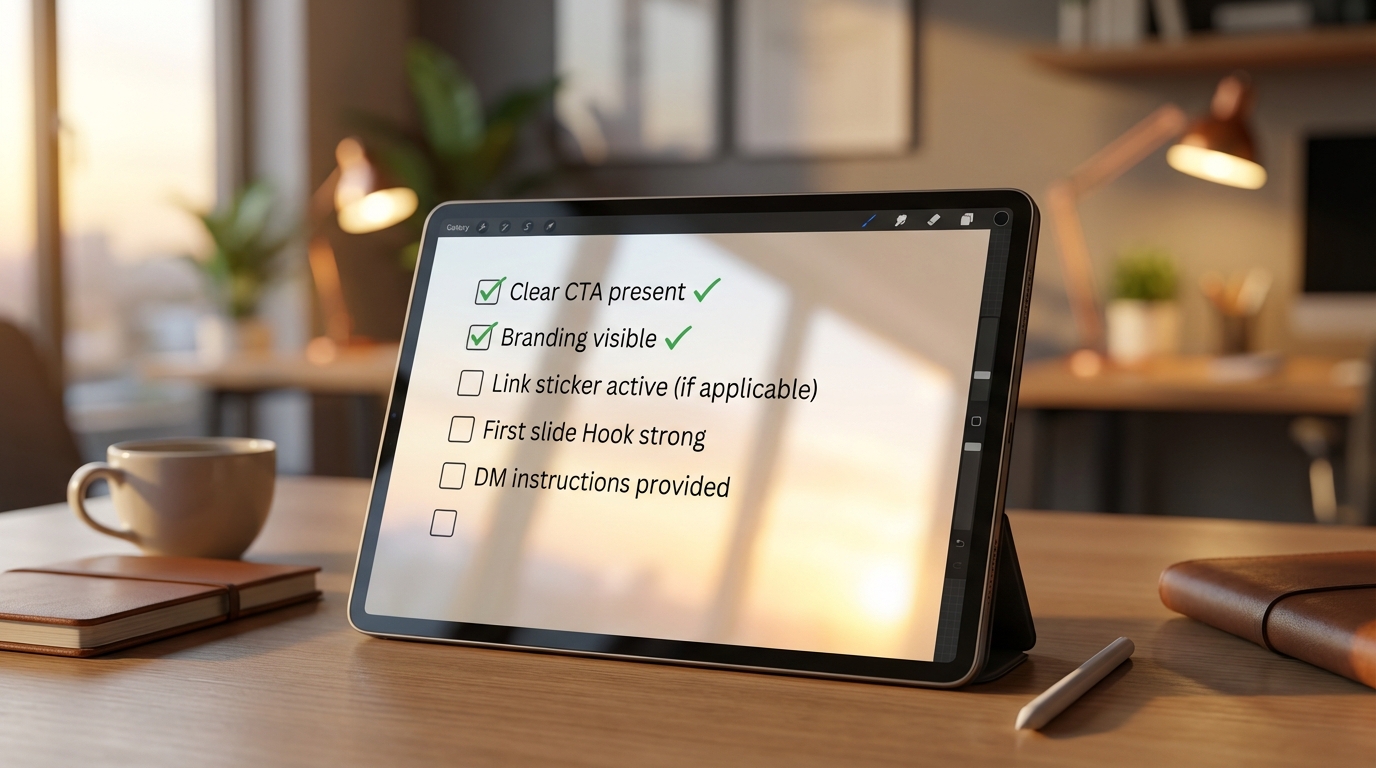
Before you hit publish on any lead-generating Story, run through this quick audit to maximize your manual capture potential.
- ✅ Is the content vertical (9:16 aspect ratio) and high resolution?
- ✅ Is the first frame visually engaging to stop the thumb scroll?
- ✅ Is the Call to Action (CTA) clear, specific, and placed where the user can easily interact?
- ✅ If using a Link Sticker, is the sticker text customized and compelling?
- ✅ If using a DM capture method, have I created a standardized, quick response script?
- ✅ Have I used Polls or Question Stickers to segment or qualify the audience?
- ✅ Does the Story sequence include a strong element of social proof or urgency?
- ✅ Is this Story relevant to one of my permanent Highlight Reels for evergreen visibility?
Key Highlights for Manual Story Lead Generation
1. Prioritize DM Capture: For high-quality, pre-qualified leads, the “Reply to Claim” method is superior to simple link clicks. It forces a conversation.
2. Leverage Interactive Stickers: Polls and Questions are not just for fun; they are segmentation tools that inform your manual follow-up strategy.
3. Use Highlights as Funnels: Categorize your best lead-gen Stories into Highlights to ensure they continue capturing leads long after the 24-hour window closes.
4. Speed is Conversion: The success of manual capture hinges on the speed and quality of your personalized DM response. Have your scripts ready.
5. Authenticity Drives Trust: Use the raw, short-form nature of Stories to build rapport that a polished ad cannot achieve. Trust is the prerequisite for a manual sale.
Frequently Asked Questions

How often should I post Stories for optimal lead generation?
Answer: Consistency is more important than volume. Aim for 3-5 high-value Stories per day, grouped into 1-2 strategic sequences. Posting daily ensures you maintain prime visibility at the top of the feed and capitalize on the 24-hour urgency window.
Is it better to use the Link Sticker or drive users to my bio link from a Story?
Answer: If your account has access to the Link Sticker (which most business profiles do in 2025), use it for direct, high-volume traffic to a specific landing page. Only direct users to your bio link if the Story is general brand building or if you are using the DM capture technique, where the bio link acts as a secondary safety net.
How do I handle the volume of DMs if the Story goes viral?
Answer: This is a great problem to have, but it highlights the limit of manual capture. If volume overwhelms you, implement a triage system. Prioritize replies based on qualifying questions (e.g., leads who mention a budget or immediate need). If the volume remains consistently high, it may be time to transition to a hybrid strategy using AI-powered Messenger scripts or a simple chatbot integration to handle initial qualification.
What kind of lead magnets work best in the Stories format?
Answer: Short, easily digestible, and highly specific content works best. Think checklists, 5-minute video training, 1-page templates, or niche calculators. The perceived value must be high, but the barrier to consumption must be low to match the rapid pace of the Story format.
Should I repurpose my TikToks or Reels as Facebook Stories?
Answer: Yes, absolutely, but ensure you remove any watermarks and, critically, add a new, native CTA (like the Link Sticker or a Question sticker) that is unique to the Story format. Repurposing saves time, but adding a specific lead capture mechanic is essential for conversion.
Manual Facebook Stories lead generation is not a passive activity. It is a strategic, high-touch methodology that rewards authenticity and prompt, personalized follow-up. By treating your Stories as mini-funnels and mastering the DM capture workflow, you can secure high-quality leads without ever touching your advertising budget.
Ready to take the next step?
Find Your Next Client With Pyrsonalize.com
Click Here