

Lead Gen Tools for SaaS Onboarding Funnel Optimization
The SaaS landscape in 2025 is fiercely competitive.
Customer Acquisition Cost (CAC) is soaring. Churn rates remain a constant threat.
You cannot afford a leaky funnel, especially not during the critical onboarding phase.
Why do so many leads drop off right after signing up for a trial?
The problem is often rooted upstream. It’s not just about your product UX; it’s about the quality of the leads entering the funnel and how well you prepare them for success.
This comprehensive guide details the essential lead generation tools for SaaS onboarding funnel optimization. We are moving beyond simple sign-up forms. We are optimizing for activation, retention, and ultimate lifetime value (LTV).
Are you ready to stop attracting users who fail to activate?
The Critical Connection: Lead Quality and Onboarding Success
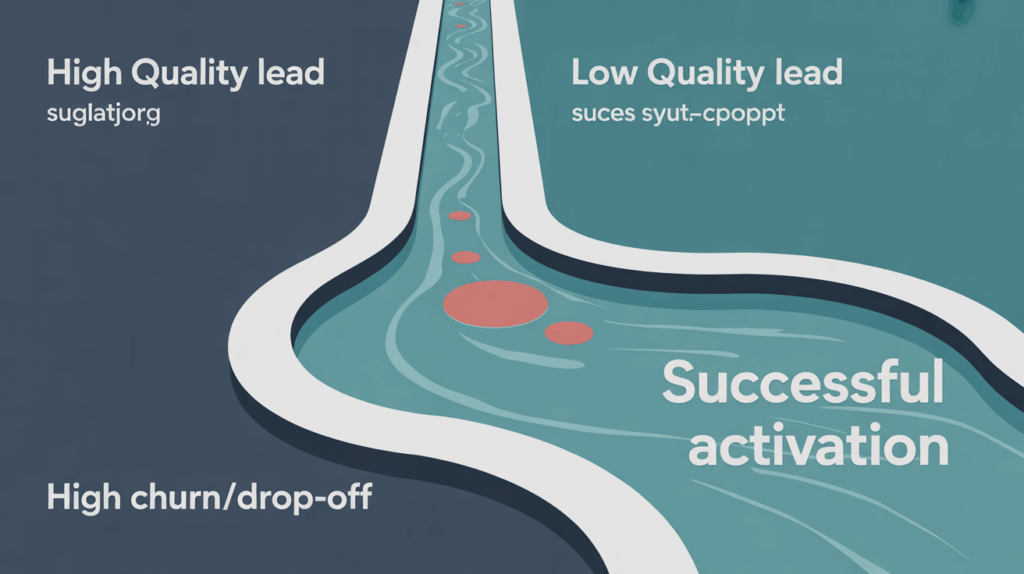
Most marketers focus purely on lead volume.
They track MQLs (Marketing Qualified Leads) religiously. But volume is a vanity metric if those leads never activate or convert.
Onboarding success starts long before the user logs in for the first time. It begins with precise qualification, ensuring fit.
Why MQLs Aren’t Enough: An SQL vs. PQL Refresher
The traditional MQL model is outdated for modern SaaS.
An MQL might download an ebook or attend a webinar. This indicates interest, but not necessarily intent or product fit.
To drive sustainable growth, we must prioritize quality over sheer volume.
For SaaS companies, the focus must shift to highly predictive lead types:
- Sales Qualified Leads (SQLs): These leads align perfectly with your Ideal Customer Profile (ICP). They show strong intent signals, often requesting a demo or pricing information. They are primed for a sales conversation.
- Product Qualified Leads (PQLs): PQLs are the gold standard for product-led growth (PLG) models. They have already experienced your product’s core value, usually through a freemium or trial plan. They hit specific usage milestones that reliably predict conversion.
How do lead generation tools influence PQL creation?
Tools allow you to qualify leads based on firmographics and technographics *before* they even start the trial. This ensures only high-fit prospects enter your valuable trial funnel.
The Cost of a Leaky Onboarding Funnel
A poor onboarding experience is expensive, quantifiable friction.
It wastes sales time and inflates your CAC. Worse, it creates negative brand sentiment that is hard to reverse.
Consider the typical journey of a poorly qualified lead:
- They sign up for a free trial based on vague marketing copy.
- Their company size or existing tech stack is incompatible with your solution.
- They get stuck on the initial setup because they lack the necessary technical sophistication.
- They abandon the trial without completing the core activation steps.
- Your sales team spends valuable time following up on a lead that was never a good fit.
This scenario is entirely preventable. Integrating robust lead generation tools into the very top of your funnel drastically reduces this costly friction.
AI-Powered Lead Generation Tools for Pre-Onboarding Qualification

The goal here is simple: ensure every lead entering the onboarding sequence has the highest possible propensity to convert.
In 2025, this requires sophisticated AI and automation. Manual qualification cannot keep pace with scaling demands or the volume of modern data.
Intent Data and Predictive Scoring
Intent data tells you precisely what prospects are researching right now.
Predictive scoring uses machine learning to assess how likely a lead is to convert based on hundreds of historical data points and real-time behavior.
These tools are fundamental for optimizing the SaaS onboarding funnel because they enforce prioritization.
Key tools and functionalities include:
- Technographic Data Providers: These identify the existing software stack of a prospect’s company (e.g., detecting if they use Salesforce, HubSpot, or Marketo). If your SaaS integrates best with HubSpot, you prioritize leads already using HubSpot.
- Behavioral Scoring Engines: These assign dynamic scores based on website activity. A lead who visited your pricing page three times this week scores significantly higher than one who only read a blog post six weeks ago.
- Third-Party Intent Platforms (e.g., Bombora, G2): These track external research behavior. Are they reading competitor reviews? Are they searching for solutions to the exact problem your SaaS solves?
By leveraging these tools, you segment your leads immediately. High-score leads get a personalized onboarding sequence. Low-score leads are routed to a long-term nurture campaign, saving valuable sales resources.
For more on converting qualified leads, see our guide on Boost MQL to SQL Conversion with AI Strategies.
Hyper-Personalized Outreach and Data Enrichment
Generic outreach kills conversion rates. Period.
SaaS buyers expect personalization based on their specific industry, role, and immediate pain points.
AI-powered lead generation tools enable this hyper-personalization at scale, ensuring your initial contact is relevant and compelling.
How do these tools optimize the funnel?
- Data Enrichment: After a user signs up (even just with an email), enrichment tools pull in crucial firmographic details (company size, revenue, location, title) within milliseconds. This enhanced data informs the subsequent onboarding flow.
- Automated Segmentation: Based on the enriched data, leads are automatically dropped into tailored outreach sequences. A founder of a 10-person startup should not receive the same welcome email as a Director of IT at a 500-person enterprise.
- Dynamic Content Generation: AI tools, like our own Pyrsonalize.com, analyze the lead’s profile and intent data to craft personalized cold outreach sequences. This might involve generating a unique first line referencing their recent activity or a specific pain point relevant to their industry.
This level of personalization drastically increases the likelihood of activation. The lead feels understood, not merely targeted.
To ensure your outreach is hitting the right inboxes, accurate contact data is vital. We often recommend pairing these tools with strong verification services. You can review the top options in our guide on Best B2B Email Finder Tools Review 2025.
Comparison: Traditional vs. AI-Optimized Lead Qualification
The difference in approach directly impacts your onboarding success metrics and long-term viability.
| Feature | Traditional Lead Qualification | AI-Optimized Qualification (2025) |
|---|---|---|
| Data Source | Form fills, basic demographic data. | Intent data, technographics, behavioral scores, real-time enrichment. |
| Qualification Metric | MQL status (did they fill out a form?). | PQL potential (likelihood of activation based on profile fit and intent). |
| Onboarding Experience | One-size-fits-all generic welcome email and product tour. | Segmented, personalized welcome flow referencing specific use cases and roles. |
| Efficiency | High manual review time, high false-positive rate. | Automated scoring, low friction, focus only on high-value, high-intent leads. |
Tactical Tools for In-App Onboarding Funnel Optimization
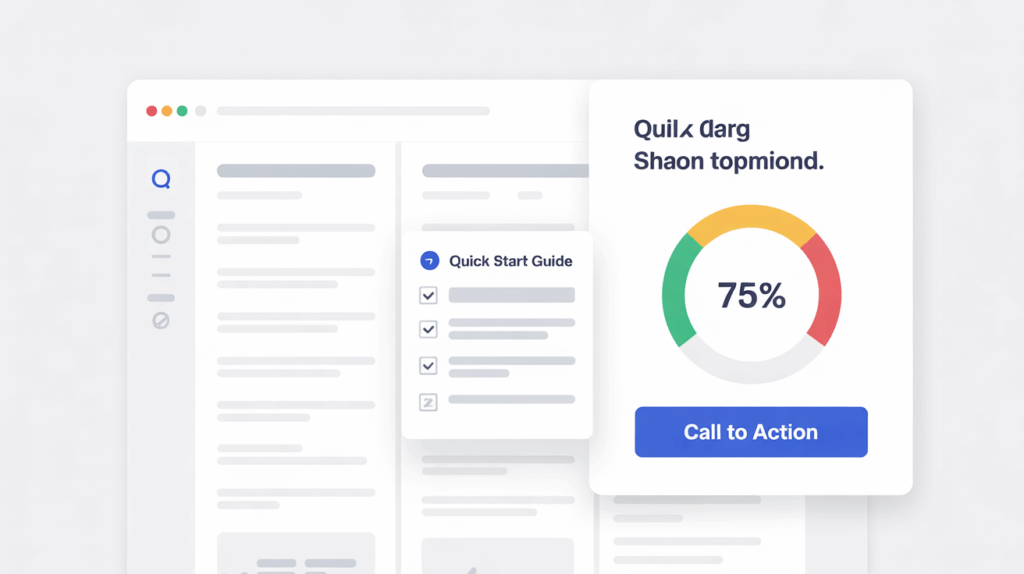
Once the qualified lead is inside your product, the focus shifts entirely.
The goal is no longer acquisition, but *activation* and PQL conversion.
We use a different set of tools here: specifically, tools that generate “internal leads” by proactively prompting users toward their “Aha!” moment.
Behavioral Tracking and Activation Metrics
You cannot optimize what you do not measure. This is foundational.
Robust analytics platforms are essential for tracking user behavior within the trial period. This reveals exactly where users drop off and, crucially, why.
Essential metrics to track during the onboarding phase:
- Time-to-Value (TTV): How quickly does the user achieve their first successful outcome using your product? Shorter TTV correlates directly with higher retention rates.
- Activation Rate: The percentage of users who complete the core setup steps necessary to realize value (e.g., integrating a data source, inviting a team member, running a first report).
- Feature Adoption Depth: Are users only touching surface-level features, or are they engaging with the high-value, sticky elements of your SaaS?
Tools that provide detailed event tracking allow you to visualize the onboarding funnel. You can see, for example, that 40% of users drop off immediately after Step 3: API Key Integration. This points directly to a UX problem that needs fixing immediately.
Proactive Communication and Tooltips
Users hate reading lengthy documentation during a trial.
They want immediate results and contextual guidance. This is where contextual, in-app communication tools optimize the funnel.
These tools act like a personalized guide, nudging users toward the critical activation steps defined by your PQL criteria.
Key in-app communication tools include:
- Product Tour Builders: These allow you to create interactive walkthroughs. Tours should highlight key features based specifically on the user’s pre-qualified role or segment (e.g., showing the ‘Reporting Dashboard’ to a CMO, but the ‘Integration Settings’ to a Developer).
- Contextual Tooltips: Small, targeted prompts that appear only when a user hovers over a potentially confusing element or gets stuck on a setup screen. They offer instant clarification.
- In-App Chatbots and Support Widgets: Instant access to help is crucial for preventing friction. Chatbots can handle common initial setup questions, preventing users from needing to leave the application for support. Implementing a smart chatbot ensures immediate answers and reduces drop-off.
The best systems integrate behavioral tracking with communication. If a user spends five minutes on the integration page without taking action, the system automatically triggers a personalized tooltip or offers a direct chat with a success manager. This prevents drop-off and keeps the lead moving toward conversion.
Integrating Lead Generation Tools Across the Full Funnel
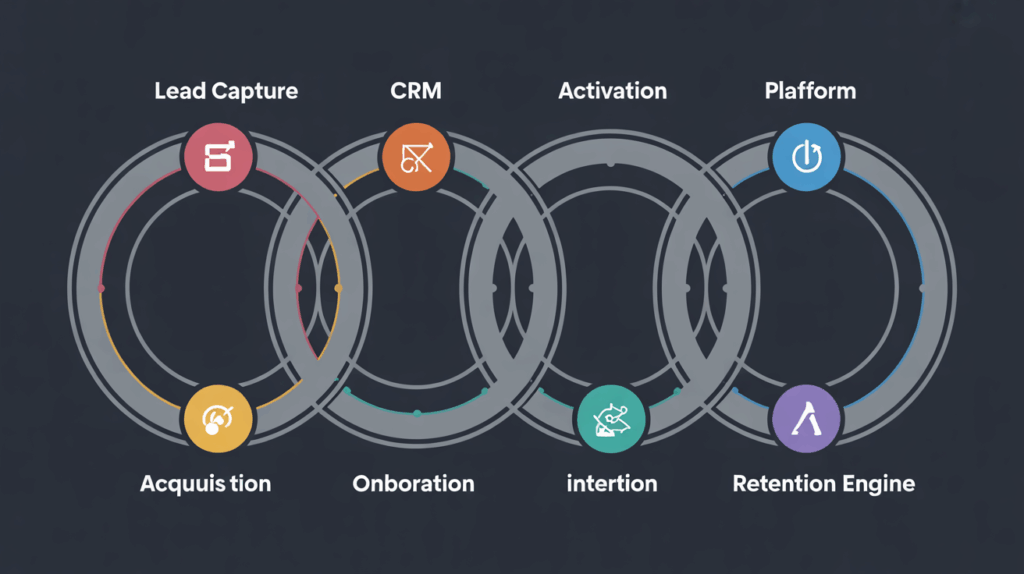
Optimization is not a one-time event or a siloed function.
It requires a closed-loop system where data flows seamlessly from lead capture to customer success and back again.
The most effective lead generation tools for SaaS onboarding funnel optimization must integrate deeply with your CRM and other foundational systems.
The 5-Step Optimization Workflow
Follow this workflow rigorously to ensure your lead generation efforts directly fuel your onboarding success:
- Define the PQL Criteria: Clearly identify the 3-5 core actions users must take in your product to realize core value (e.g., Send 5 Emails, Connect 2 Integrations, Invite 1 Team Member).
- Pre-Qualification & Enrichment: Use AI lead generation tools (like Pyrsonalize.com) to score leads based on ICP fit and intent *before* they sign up. This filters out poor fits immediately, saving marketing budget.
- Segmented Onboarding Flow: Based on the pre-qualification data, route leads into specific in-app paths. A small business owner needs a simple, fast track; an enterprise user needs security documentation and deeper feature walkthroughs.
- Behavioral Monitoring & Nudges: Use in-app tools to monitor PQL criteria completion in real-time. If a user stalls, trigger an automated, personalized nudge (email, tooltip, or chat message) designed to unblock them.
- Sales Handoff Automation: Once a lead meets the PQL criteria, the system automatically notifies the sales team. This ensures sales only engages with high-intent, active users who have already experienced quantifiable value.
Selecting Your Tech Stack Foundation
Choosing the right tools is primarily about integration capability.
Your tech stack should facilitate data exchange, not create silos. Focus on systems that offer open APIs and robust native integrations with major CRMs (HubSpot, Salesforce, Pipedrive).
| Funnel Stage | Lead Gen Tool Category | Primary Benefit |
|---|---|---|
| TOFU (Awareness) | Content/SEO Tools | Attracts a problem-aware, high-fit audience. |
| MOFU (Evaluation) | Intent & Enrichment Tools | Scores leads and filters out non-ICP prospects, improving trial quality. |
| BOFU (Trial/Signup) | AI Outreach/Personalization (Pyrsonalize.com) | Creates hyper-personalized, relevant welcome sequences. |
| Activation (In-App) | Behavioral Analytics & Walkthrough Tools | Identifies drop-off points and guides users directly to the “Aha!” moment. |
| Conversion/Retention | CRM & Success Platforms | Automates PQL notification and manages customer health scores post-conversion. |
Measuring Success: Key KPIs for Optimized SaaS Onboarding
Optimization is useless without stringent measurement.
We must confirm that our investment in sophisticated lead generation tools is actually improving the bottom line and unit economics.
What metrics prove optimization success?
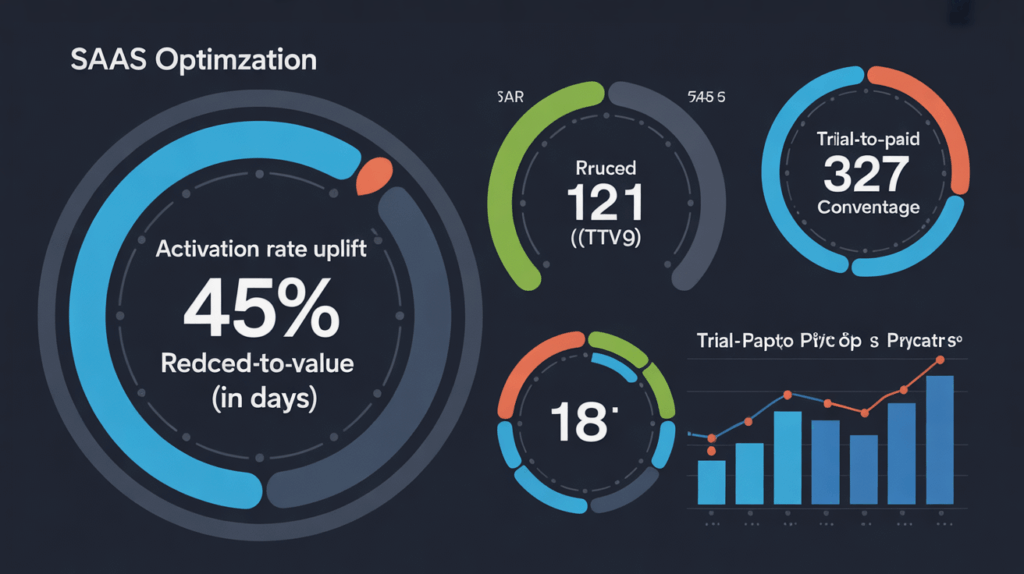
Activation Rate and Time-to-Value (TTV) Improvement
These are the two most direct, immediate indicators of onboarding health.
By implementing advanced pre-qualification, you should see both metrics improve dramatically within the first quarter.
- Expected Activation Rate Increase: When you filter leads based on ICP fit (Step 2), the percentage of trial users who successfully complete activation steps (Step 4) should rise by 15-30% within three months. Why? Because the leads entering the trial were already primed for success and fit the core criteria.
- Expected TTV Reduction: Personalized onboarding paths, driven by lead data, remove unnecessary steps. If you know a user is a small business owner, you skip the enterprise security setup guide. This targeted approach can cut TTV by days, sometimes reducing the friction by 50% depending on your product complexity.
Track these changes rigorously. Use A/B testing on different onboarding paths to confirm which lead segmentation strategies yield the best PQL conversion rates.
LTV:CAC and Churn Reduction
The ultimate proof of concept is financial sustainability.
Optimized onboarding leads directly to healthier unit economics, ensuring long-term growth.
When a user successfully activates, they are far more likely to retain their subscription and become an advocate.
How do these metrics change?
- Reduced CAC: By filtering out poor-fit leads early, your sales and marketing teams waste less time and budget on prospects who would never convert. Your acquisition cost per *paying* customer decreases significantly.
- Increased LTV: Activated users are satisfied users. They are less likely to churn and more likely to expand their usage over time (upsell/cross-sell). This dramatically increases their Lifetime Value.
- Improved LTV:CAC Ratio: When LTV rises and CAC falls, your ratio improves. Aim for a ratio of 3:1 or higher. This ratio is the clearest indicator of your business’s sustainable growth potential and operational efficiency.
Investing in high-quality lead generation tools is not merely a marketing expense. It is a strategic investment in reducing churn and securing long-term revenue.
Stop thinking of lead generation as a separate department. It is the crucial first step in your unified customer success journey.