
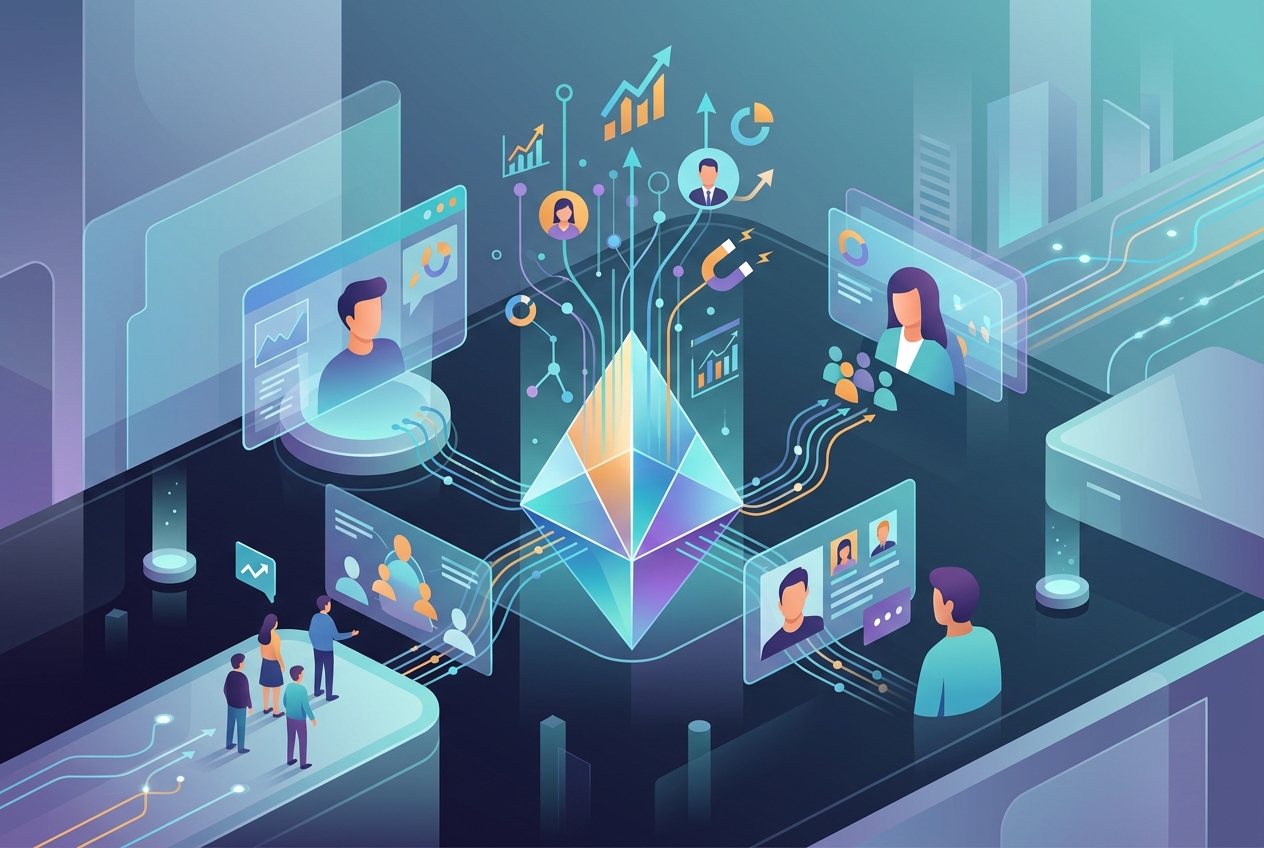

The State of Lead Generation in 2026
Lead generation is changing significantly. Casting a wide net no longer works. In 2026, it’s about precision, relevance, and building real connections. We at pyrsonalize.com understand this and provide solutions for this new environment.
The year 2026 brings both challenges and opportunities for businesses seeking quality leads. Advanced AI, strict data privacy rules, and buyer weariness require a more strategic and personalized approach. Traditional outbound marketing is fading. Instead, businesses must adopt strategies that emphasize customer experience and build trust.
Successful lead generation in 2026 means understanding market changes and adapting. This includes:
- Using AI intelligently: Go beyond basic automation. Use AI for deeper insights and personalized interactions.
- Prioritizing first-party data: Build trust by respecting customer privacy and using data responsibly.
- Aligning sales and marketing: Encourage teamwork to ensure a smooth customer experience and increase conversion rates.
At pyrsonalize.com, we help businesses adapt. Our platform gives you the tools and insights to generate quality leads, build customer relationships, and encourage growth. We provide:
- AI-powered personalization: Deliver experiences tailored to individual customers.
- Data-driven insights: Understand your target audience and their needs.
- Integration: Connect with your current marketing and sales tools for a simpler workflow.
Specific lead generation examples will show how businesses adapt to the realities of 2026. We’ll examine their strategies, technologies, and results. These examples can provide ideas for your own lead generation efforts.
Here are some key areas for successful lead generation in 2026:
| Area | Description | Impact on Lead Generation |
|---|---|---|
| Artificial Intelligence (AI) | AI is used to automate tasks, personalize experiences, and analyze data for better targeting. | Enables hyper-personalization, improved lead scoring, and more efficient outreach. |
| Data Privacy | Increased focus on protecting customer data and complying with regulations like GDPR and CCPA. | Requires a shift towards first-party data collection and transparent data practices. |
| Buyer Fatigue | Customers are overwhelmed with marketing messages and are becoming more selective about what they engage with. | Demands more targeted, relevant, and valuable content that cuts through the noise. |
| Account-Based Marketing (ABM) | Focuses on targeting specific high-value accounts with personalized marketing efforts. | Improves lead quality and conversion rates by focusing on the most promising prospects. |
| Content Marketing | Creating and distributing valuable, relevant, and consistent content to attract and engage a target audience. | Builds trust, establishes thought leadership, and drives qualified leads. |
Understanding these trends and adapting your lead generation strategies will help your business succeed in 2026 and beyond. We at pyrsonalize.com are available to assist.
B2B Lead Generation: Building a Strong Start
Before exploring lead generation strategies for 2026, build a solid base. Your website is often the first interaction potential clients have with you. Consider it your storefront: it should be inviting, informative, and easy to use. A well-built website is more than a brochure; it actively generates leads.
How do you prepare your website for B2B lead generation?
Website Strategies for Lead Generation
- Make Contact Easy: Ensure visitors can easily reach you. Place your “Contact Us” button where it’s easily seen and reached from any page. Don’t hide it. Use a persistent contact button or a well-placed contact form. Offer several ways to get in touch:
- Clearly visible phone number
- Email address
- Live chat
- Links to social media
- Offer Resources: Encourage visitors to share their contact information by offering resources. These can include:
- Ebooks
- Whitepapers
- Case studies
- Templates
- Webinars
- Free trials
Make sure these resources are relevant to your audience and address their problems. Promote them on your website, especially on blog posts and landing pages.
- Simplify Navigation: A confusing website will deter visitors. Help potential customers find what they need by:
- Using a clear menu: Organize your content logically and use descriptive labels.
- Adding a search bar: Allow visitors to find specific topics or keywords.
- Creating an FAQ section: Answer common questions to reduce friction and build trust.
- Linking internally: Connect related content to encourage exploration and improve SEO.
- Use Strategic Calls to Action (CTAs): While easy contact is key, don’t overwhelm visitors with too many CTAs. Each page should have a clear purpose and a focused CTA. Examples include:
- “Download our free ebook”
- “Request a demo”
- “Get a free quote”
- “Contact us”
Make sure your CTAs are visually appealing, well-placed, and clearly explain the value.
- Optimize for Mobile: By 2026, a mobile-friendly website is a must. Ensure your website adapts to different screen sizes. Mobile users should have the same experience as desktop users.
- Improve Website Speed: Page load speed affects user experience and SEO. Improve your website’s speed by:
- Compressing images
- Using browser caching
- Minifying CSS and JavaScript files
- Selecting a reliable hosting provider
Making these changes can be hard, especially if your website is complex. If a complete overhaul isn’t possible right away, focus on improving key landing pages. These pages should have a strong CTA, a clean design, testimonials, and clear value to keep prospects interested and increase conversions.
By focusing on these website strategies, you can build a lead generation engine that attracts and converts potential customers in 2026.
Contact Accessibility for Lead Generation
Potential customers in 2026 expect quick information access and smooth communication. A website difficult to navigate risks losing leads to competitors who emphasize accessibility.
A clear “Contact Us” button is key. It should appear on every page, allowing visitors to reach out from anywhere. Avoid hiding it in the footer or behind multiple clicks. A sticky button that stays visible while scrolling or placement in the main navigation menu maximizes visibility.
Offer various communication methods to suit different preferences beyond a simple form. Some may prefer email, phone, or live chat. Providing options increases the chance that potential customers connect in a way that works for them.
Consider these lead generation options:
- Free Downloads: Offer ebooks, whitepapers, templates, or checklists for contact information. These “lead magnets” give tangible value and encourage sharing details.
- Newsletter Sign-ups: Invite visitors to subscribe for updates, industry insights, and exclusive offers. A good newsletter can nurture leads and keep your brand visible.
- Live Chat: Add live chat to give instant support and answer questions. This can improve customer engagement and lead capture.
- Webinars and Online Events: Host webinars to show your expertise and engage potential customers. These events educate, answer questions, and generate qualified leads.
- Interactive Content: Use quizzes, calculators, or assessments to grab attention and gather data. These tools give personalized insights and recommendations, further engaging potential customers.
The goal is to make connecting and learning about your products easy. By prioritizing accessibility and offering lead generation options, you increase lead capture and business growth in 2026.
Different contact methods offer distinct advantages:
| Contact Method | Benefits | Best Use Cases |
|---|---|---|
| Contact Form | Easy to implement, collects structured data, allows for automated follow-up. | General inquiries, lead qualification, requesting information. |
| Asynchronous communication, allows for detailed responses, suitable for complex inquiries. | Detailed questions, providing documentation, ongoing communication. | |
| Phone Call | Immediate interaction, allows for building rapport, suitable for urgent matters. | Urgent inquiries, complex issues, building relationships. |
| Live Chat | Real-time support, immediate answers, improves customer engagement. | Quick questions, troubleshooting, guiding website visitors. |
Avoid Overloading Visitors with CTAs
Engagement is important. However, bombarding website visitors with too many calls to action (CTAs) can backfire. A cluttered website, full of pop-ups, intrusive chatbots, and too many links, creates a bad user experience. This can deter potential leads. A minimalist, focused approach to CTAs is key for lead generation in 2026.
Imagine landing on a website and being immediately hit with pop-up ads, subscription requests, and chatbot windows. This aggressive approach can be jarring and frustrating. Visitors might just leave. Instead of trying to grab every lead at once, focus on a smooth, user-friendly experience. Guide visitors naturally toward conversion.
Here’s how to avoid CTA overload and create a better lead generation strategy:
- Prioritize Quality Over Quantity: Don’t pepper every page with CTAs. Instead, strategically place a few high-impact CTAs. Make sure they align with the page’s content and purpose.
- Use Clear and Concise Language: Your CTAs should be clear and communicate the value. Avoid vague phrases like “Click Here” or “Learn More.” Use action-oriented language. Tell visitors exactly what they’ll get by clicking.
- Strategically Place CTAs: Put your CTAs in visible spots that aren’t intrusive. Consider within the content, at the end of blog posts, or on landing pages.
- Limit Pop-ups: Pop-ups can work, but overuse hurts. Limit pop-ups and make sure they relate to the user’s browsing. Use exit-intent pop-ups to grab visitors who are about to leave.
- Use Chatbots Carefully: Chatbots can help engage visitors and answer questions. Don’t use chatbots that automatically launch and interrupt browsing. Instead, offer a chat icon visitors can click if they want help.
- Reduce the Number of Links: Too many links distract and confuse. Limit links to key resources. Prioritize internal linking to keep visitors on your site.
The goal is a website that informs and engages. Don’t overwhelm visitors. Prioritize a minimalist, focused approach to CTAs. This creates a better user experience and improves lead generation in 2026.
Consider this table showing how CTA frequency affects user experience:
| CTA Frequency | User Experience | Lead Generation Impact |
|---|---|---|
| Low (1-2 CTAs per page) | Focused, clear, easy to navigate. | Higher conversion rates, improved lead quality. |
| Moderate (3-5 CTAs per page) | Potentially distracting, depending on placement and relevance. | Variable results, may lead to lower conversion rates if not carefully managed. |
| High (6+ CTAs per page) | Overwhelming, cluttered, negative user experience. | Lower conversion rates, higher bounce rates, reduced lead quality. |
Website Navigation for Lead Generation
Attention spans are short. Website navigation is therefore critical. A confusing website frustrates visitors. They may leave for a competitor’s site. In 2026, easy navigation is more than good user experience. It is a key part of lead generation.
Imagine a potential customer on your site. They want to learn about your offerings. But they get lost in confusing menus and disorganized content. They cannot find what they need and leave. This lost opportunity is common. Prioritize website navigation to avoid it.
Here are ways to make your website easy to browse:
- Intuitive Menu Structure: Make your website’s menu clear and logical. Use labels that describe each page’s content. Avoid jargon. Use dropdown menus to organize subcategories.
- Prominent Search Bar: A search bar lets visitors find information quickly. Place it in the header or sidebar. Make it easy to use. Implement autocomplete to help visitors find what they need faster.
- Comprehensive FAQ Section: An FAQ section answers common questions. It reduces friction and improves user experience. Organize it by topic. Use clear answers. Add a search function within the FAQ to help visitors find specific answers.
- Clear Call-to-Action Placement: Place calls to action (CTAs) throughout your website to guide visitors toward conversion. Make your CTAs visually appealing. Communicate the value proposition.
- Internal Linking: Use internal links to connect related content. Encourage visitors to explore your website. Internal linking improves SEO. It helps search engines understand your site’s structure.
- Mobile-Friendly Design: In 2026, a mobile-friendly website is a must. Ensure your website adapts to different screen sizes. Mobile users should have the same experience as desktop users.
- Site Map: Provide a site map that outlines your website’s structure. List all the pages. A site map helps users and search engines.
These strategies create a website that is easy to use. This improves lead generation. It also builds trust with potential customers.
The following table outlines the benefits of various navigation features:
| Navigation Feature | Benefits | Best Use Cases |
|---|---|---|
| Intuitive Menu Structure | Easy to understand, guides visitors to relevant content, improves user experience. | All websites, especially those with a large amount of content. |
| Prominent Search Bar | Allows visitors to quickly find specific information, reduces frustration, improves user satisfaction. | Websites with a large amount of content, complex topics, or diverse product offerings. |
| Comprehensive FAQ Section | Addresses common questions and concerns, reduces support inquiries, builds trust. | Websites with complex products or services, or those that receive a high volume of support inquiries. |
| Internal Linking | Connects related content, encourages exploration, improves SEO. | All websites, especially those with a large amount of interconnected content. |
Agentic AI Dominating Lead Generation’s Top-of-Funnel
The future of lead generation in 2026 is closely tied to the rise of agentic artificial intelligence. The rudimentary AI tools of the past are gone. AI isn’t just helping with lead generation; it’s running significant portions of it behind the scenes. This will change how B2B marketing teams work, freeing human resources for strategy and personalized engagement.
By 2026, expect AI agents to handle tasks that now take countless hours. These agents will be useful for:
- Account Research and List Building: AI agents will research target accounts, find key decision-makers, and gather data about their needs. They’ll then use this data to build targeted lists of potential leads, focusing outreach on the most promising prospects. This goes beyond scraping. AI will analyze company websites, social media, and industry publications to build a picture of each account.
- Contact Data Enrichment: Keeping contact information accurate is a constant challenge. AI agents will automate this by monitoring and enriching contact data, ensuring your CRM always has the latest information. This includes verifying email addresses, phone numbers, and job titles, and adding data points like industry, company size, and revenue.
- Outreach Message Drafting: Crafting outreach messages that resonate with potential leads is time-consuming. AI agents will draft personalized first-touch outreach messages across email, LinkedIn, and even SMS. These messages will be tailored to the needs of each recipient, increasing engagement.
- Content Testing and Optimization: Testing subject lines, CTAs, and landing page copy is important for conversions. AI agents will automate this by running A/B tests and analyzing the results. They’ll then use this data to improve content performance, ensuring you’re using the most effective messaging. This includes understanding language and adapting to different communication styles.
Agentic AI will have a big impact on B2B marketing teams. Instead of spending hours on manual tasks, sales representatives can build relationships with prospects who have already been warmed up by the AI. This will make better use of resources, increase conversion rates, and increase revenue.
AI isn’t a replacement for human interaction. It’s a tool that can augment human capabilities and free up resources for strategy. In 2026, the most successful B2B marketing teams will combine AI with the human touch.
The following table shows the benefits of using AI for top-of-funnel tasks:
| Task | Traditional Approach | AI-Powered Approach | Benefits |
|---|---|---|---|
| Lead Research | Manual research, time-consuming, prone to errors. | Automated research, fast, accurate, comprehensive. | Increased efficiency, improved targeting, higher lead quality. |
| Data Enrichment | Manual data entry, often incomplete and outdated. | Automated data enrichment, always up-to-date and accurate. | Improved data quality, better segmentation, more personalized outreach. |
| Outreach Message Drafting | Manual message creation, time-consuming, inconsistent messaging. | AI-powered message drafting, fast, personalized, consistent messaging. | Increased efficiency, improved engagement, higher conversion rates. |
| Content Testing | Manual A/B testing, slow, limited scope. | Automated A/B testing, fast, comprehensive, data-driven. | Improved content performance, higher conversion rates, better ROI. |
To prepare, experiment with AI-powered tools for lead generation. Start with simple uses, such as using AI to pre-qualify inbound leads, auto-enrich CRM records, or draft outbound sequences that sales representatives can then personalize. By embracing AI now, you can position your business for success in B2B lead generation.
AI and Intent Data: The New Standard for Lead Generation
The days of casting a wide net for leads are ending. By 2026, a shift from volume to precision is clear, with AI and intent data becoming essential for pinpointing high-value prospects. Instead of gathering as many leads as possible and hoping some turn into customers, a more targeted strategy is taking shape, prioritizing quality over quantity.
Forward-thinking B2B marketing teams are adopting this shift, using AI and intent data to:
- Target Based on Intent: Rather than relying on general demographic information, these teams are pinpointing leads who are actively showing interest in buying products or services similar to theirs. This intent data comes from several places, such as:
- Website Activity: Tracking which pages leads visit, how long they stay, and what resources they download.
- Content Engagement: Monitoring which blog posts, articles, and whitepapers leads are reading.
- Technology Analysis: Identifying the technologies leads currently use to see if they align with your solutions.
- Job Changes: Tracking when leads get new jobs or promotions, which can signal a need for your products or services.
- Score Leads with AI: Traditional lead scoring often uses static data and subjective measures. AI-driven lead scoring uses machine learning to assess many data points, adjusting scores in real time. Sales teams can then focus on leads most likely to convert.
- Build Lists That Update Automatically: Static lead lists quickly become old and irrelevant. Lists that update automatically ensure accuracy with the latest intent signals.
Success in 2026 means moving away from measuring lead generation by metrics like “we got 2,000 leads from this ebook.” Instead, focus on metrics like “we got 50 leads who are highly engaged, a good fit for our Ideal Customer Profile, and ready to talk.” This requires a change in thinking and investing in the technologies and processes to apply AI and intent data effectively.
This approach offers major advantages. By concentrating on high-value leads, sales teams can:
- Raise Conversion Rates: By targeting leads actively seeking their products or services, sales teams can greatly improve their conversion rates.
- Shorten Sales Cycles: High-value leads are often further along in the buying process, leading to quicker deals.
- Boost Return on Investment: By focusing on the most promising leads, marketing teams can see a greater return on their spending.
To begin, connect your CRM, website analytics, and marketing automation platforms. Use AI-driven lead scoring to find high-intent prospects and prioritize them for sales outreach. Place the remaining leads into long-term nurture campaigns to keep them interested until they’re ready to purchase. By using AI and intent data, you can reshape your lead generation efforts and significantly grow your business in 2026.
Here’s a table that highlights the differences between lead generation based on volume versus precision:
| Approach | Focus | Metrics | Tools | Results |
|---|---|---|---|---|
| Volume-Based | Quantity of Leads | Number of Leads Generated, Cost Per Lead | Mass Email Marketing, Generic Lead Magnets | Low Conversion Rates, High Waste, Low ROI |
| Precision-Based | Quality of Leads | Conversion Rates, Sales Cycle Length, ROI | AI-Powered Lead Scoring, Intent Data, Dynamic Lists | High Conversion Rates, Shorter Sales Cycles, High ROI |
Privacy-Focused Lead Generation with First-Party Data
The marketing world is changing. Growing privacy concerns and the phasing out of third-party cookies are driving this shift. By 2026, companies that value privacy and use first-party data will likely succeed. The days of relying on third-party data, often of dubious origin, are fading. Instead, businesses should earn customer data through transparency and valuable offerings.
This change requires a revised lead generation strategy. It should emphasize:
- Providing Real Value: Move beyond generic lead magnets that offer little benefit. Instead, create resources that give potential customers true value. Consider these options:
- Calculators: Interactive tools that let users calculate ROI, savings, or other key metrics.
- Benchmark Reports: Industry reports that offer insights into best practices and performance benchmarks.
- ROI Tools: Tools that help users estimate the potential return on investment from your products or services.
- Templates: Customizable templates users can use to simplify their workflows.
- Micro-Courses: Short, focused courses that teach users skills or knowledge.
- Collecting Zero-Party Data: Zero-party data is information customers freely share, like their preferences, interests, and goals. Collect this data through quizzes, onboarding processes, and forms. By directly asking customers about their needs, you gain insights to personalize their experience and improve lead generation.
- Being Transparent About Data Collection: Customers are increasingly worried about how their data is collected and used. Businesses must be open about their data practices. Clearly explain what data you collect, why, and how you use it. Provide privacy policies that are easy to understand.
A privacy-focused, first-party data approach has real advantages. By building trust and respecting privacy, businesses can:
- Increase Engagement: Customers are more likely to engage with businesses they trust and respect.
- Improve Lead Quality: First-party data is more accurate than third-party data. This accuracy helps generate better leads.
- Build Stronger Customer Relationships: By providing value and being transparent, you can foster stronger customer relationships built on trust.
To adopt this approach, review your current lead capture methods. Can you simplify your forms while asking better questions? Instead of requesting many demographic details, ask questions like, “What’s your biggest challenge right now?” or “What’s your timeline to solve this problem?” Use that data for segmentation and follow-up. Prioritizing privacy and using first-party data creates a sustainable lead generation plan that can succeed in 2026.
Consider the differences between third-party and first-party data in the table below:
| Data Type | Source | Accuracy | Privacy | Control |
|---|---|---|---|---|
| Third-Party Data | External Sources, Data Brokers | Often Inaccurate and Outdated | Raises Privacy Concerns | Limited Control |
| First-Party Data | Directly from Customers | Highly Accurate and Reliable | Privacy-Friendly | Full Control |
Revenue Operations (RevOps) Drives Lead Quality
As marketing and sales funnels grow more complex, the traditional separation between marketing, sales, and customer success becomes harmful. By 2026, Revenue Operations (RevOps) is essential for improving lead quality and increasing revenue. RevOps aligns these teams toward revenue generation.
RevOps is important for several reasons:
- Defining Lead Definitions: RevOps establishes definitions for lead stages, including Ideal Customer Profile (ICP), Marketing Qualified Lead (MQL), Sales Accepted Lead (SAL), Sales Qualified Lead (SQL), and Opportunity. Everyone understands what constitutes a qualified lead at each funnel stage. Clear definitions prevent marketing from celebrating MQL volume while sales complains about lead quality.
- Designing and Maintaining Routing Rules and SLAs: RevOps creates the routing rules determining how leads pass from marketing to sales, and the Service Level Agreements (SLAs) governing follow-up timeliness. Leads reach the correct sales representative promptly.
- Providing End-to-End Visibility: RevOps gives leaders end-to-end visibility into the entire lead generation process, from the first touchpoint to closed/won deals and expansion opportunities. Leaders can identify bottlenecks, track performance, and make informed decisions to improve lead generation.
Instead of marketing celebrating MQL volume while sales complains about lead quality, RevOps unites everyone around pipeline and revenue. Marketing, sales, and customer success must collaborate, with RevOps impartially managing the rules and processes.
To implement RevOps well, document and agree on the following:
- What Qualifies as ICP: Define your ideal customer’s characteristics, including industry, company size, revenue, and other factors.
- The Exact Criteria for MQL, SAL, SQL: Set specific criteria for each lead stage, using data from marketing, sales, and customer success.
- Time-Bound SLAs for Follow-Up: Define how quickly sales representatives must follow up with leads at each stage.
Let RevOps manage these rules, not just marketing or sales. Implementing RevOps breaks down silos, improves lead quality, and increases revenue beyond 2026.
Consider the table below, which outlines the advantages of RevOps:
| Area | Without RevOps | With RevOps | Benefits |
|---|---|---|---|
| Alignment | Silos between marketing, sales, and customer success. | Teams aligned around revenue goals. | Improved collaboration, increased efficiency. |
| Lead Quality | Inconsistent lead definitions, low-quality leads. | Clear lead definitions, high-quality leads. | Higher conversion rates, shorter sales cycles. |
| Visibility | Limited visibility into the lead generation process. | End-to-end visibility into the entire funnel. | Data-driven decision-making, improved performance. |
| Efficiency | Inefficient processes, wasted resources. | Streamlined processes, optimized resource allocation. | Reduced costs, increased ROI. |
Content for AI Search
Search habits are changing. By 2026, buyers will pose questions to AI assistants. These tools will then determine which brands are shown. Content creation must adapt to serve algorithms and human readers.
Content that succeeds will prioritize clarity, structure, and detail. AI algorithms must easily understand the core information. The focus shifts from engaging content to content that machines can easily digest.
Winning content in 2026 will:
- Answer Specific Questions: Address questions your audience will likely ask. Provide clear, concise answers. Avoid jargon that might confuse readers or AI.
- Use Strong Structure: Break up content using headings. Keep paragraphs short. Use bullet points and lists. Incorporate FAQ sections.
- Include Supporting Elements: Add value with comparisons, checklists, and schema markup.
- Comparisons: Compare products or services to help readers decide.
- Checklists: Provide checklists to help readers implement advice.
- Templates: Offer templates to help readers work more efficiently.
- Schema Markup: Use schema markup to give search engines details about your content.
The goal isn’t to trick algorithms. It’s to provide the most helpful answer. By creating content that suits both humans and AI, you can improve search visibility and attract leads.
Turn your expertise into Q&A-style content to adapt to this shift:
- FAQ Sections: Create FAQ sections that address common questions.
- “X vs Y” Pages: Compare different products or services.
- “Best Options For…” Lists: Create lists of top options for specific needs.
- “How To…” Guides: Provide instructions on specific topics.
Then, add structured data (FAQ, HowTo, Product, Review schema). This helps AI tools and search engines parse your content. This approach positions your content for success in the AI-powered search of 2026.
The table below highlights the differences between content for human search and content for AI search.
| Feature | Optimized for Human Search | Optimized for AI Search | Benefits |
|---|---|---|---|
| Focus | Engaging and Persuasive Content | Clear, Structured, and Comprehensive Information | Improved Readability and Comprehension |
| Structure | Flexible and Varied | Consistent and Organized | Easier for AI Algorithms to Understand and Extract Information |
| Keywords | Natural Language, Synonyms | Specific and Precise | Improved Accuracy and Relevance |
| Supporting Elements | Images, Videos, Infographics | Comparisons, Checklists, Templates, Schema Markup | Enhanced Value and Context |
Human-First Personalization: Context Beats Generic Outreach
Robotic personalization is losing its appeal. By 2026, prospects will likely ignore generic sequences that begin with formulaic greetings and canned sales pitches. Real personalization will require a solid grasp of a prospect’s role, priorities, and timing. This human-centered method uses AI for research. However, it delivers messages with a real, empathetic tone.
In 2026, effective personalization means:
- Focusing on Role, Priorities, and Timing: Instead of simply knowing a prospect’s name and company, personalization will examine their specific responsibilities, their challenges, and their place in the buying process. This calls for a detailed awareness of the prospect’s situation.
- Using AI for Research, Delivering a Human Voice: AI can gather details about a prospect’s background, interests, and online activity. Use this information to craft an authentic message tailored to the individual’s needs. Avoid relying on AI-generated content, as it can sound impersonal.
- Adding Relevant Content: Generic email sequences are insufficient. Personalization in 2026 means enriching outreach with content relevant to the prospect’s interests. Consider these options:
- Short, Personalized Videos: Create short videos addressing the prospect’s specific issues and demonstrating how your products or services provide solutions.
- Voice Notes: Send personalized voice notes to add a personal touch.
- Custom Loom Demos: Create custom Loom demos that highlight the features and benefits of your products or services most relevant to the prospect.
The goal is to show “we understand your situation,” not just “we know your name.” This demands a commitment to understanding the prospect and tailoring your message. This human-centered approach helps build stronger relationships with potential customers and improves lead generation.
To make this work, build a small library of modular messaging blocks for your top 3-5 segments (e.g., SMB founders, enterprise ops leaders, SaaS heads of CX). Have AI assemble a draft. Then, ask sales representatives to add one or two genuine insights about the prospect before sending. This ensures your messaging feels both personal and real.
The following table outlines the evolution of personalization:
| Personalization Level | Description | Example | Effectiveness |
|---|---|---|---|
| Basic | Using the prospect’s name and company. | “Hi {FirstName}, I hope you’re doing well at {CompanyName}.” | Low. Easily automated and often perceived as impersonal. |
| Intermediate | Referencing a recent activity or piece of content. | “I noticed you recently downloaded our ebook on [Topic].” | Moderate. Shows some awareness but can still feel generic. |
| Advanced | Understanding the prospect’s role, priorities, and timing. | “As a [Prospect’s Role] at [Prospect’s Company], you’re likely facing challenges with [Specific Challenge]. We can help.” | High. Demonstrates a deep understanding of the prospect’s needs and context. |
Communities, Partners, and Dark Social as Lead Engines
The traditional lead generation funnel, which relies on direct advertising and cold outreach, is becoming less effective. By 2026, buyers will likely discover vendors indirectly, through trusted sources like online communities, group chats, and peer recommendations. This shift requires a new approach to lead generation. It should emphasize building relationships, fostering trust, and using social influence.
By 2026, expect to see:
- More Pipeline Coming from Communities: Online communities, such as Slack channels, Discord servers, and industry forums, are becoming important sources of leads. These communities allow potential customers to connect with peers, share information, and ask questions. By actively participating, businesses can build relationships, establish themselves as experts, and generate qualified leads.
- A Heavier Emphasis on Partner-Driven Demand: Partner programs, which involve collaborating with complementary vendors or agencies, are gaining traction. These programs can take various forms, including integrations, co-marketing initiatives, bundled offers, and marketplace listings. By partnering, you can reach a wider audience, generate more leads, and increase brand awareness.
- Widespread Use of “How Did You Hear About Us?” as a Serious Attribution Input: The “How did you hear about us?” question, often a vanity field on lead capture forms, is becoming a critical attribution tool. By tracking the responses, businesses can gain insights into the channels driving the most qualified leads.
Leads from these “invisible” channels tend to be warmer and better qualified. They also move faster through the funnel. Often, they’re referred by trusted sources and pre-qualified by peers.
To use these channels effectively:
- Identify Relevant Communities: Research the online communities where your ideal customers participate. Focus on communities relevant to your industry, target audience, and product or service offerings.
- Participate Actively and Authentically: Don’t just join communities to pitch your products. Instead, focus on providing value by sharing expertise, answering questions, and participating in discussions. Be authentic in your interactions and build relationships with other members.
- Build a Partner Program: Identify complementary vendors or agencies that serve your target audience and develop a mutually beneficial partnership. This could involve co-creating content, hosting joint webinars, or offering bundled solutions.
- Track Attribution Carefully: Implement a system for tracking the source of your leads, including the “How did you hear about us?” question. Use this data to identify the channels driving the most qualified leads and allocate resources accordingly.
By embracing communities, partners, and “dark social” channels, you can tap into a source of leads often overlooked by traditional marketing. This requires a shift from direct selling to relationship building. The rewards, however, can be substantial.
Consider the following table outlining the benefits of indirect lead generation channels:
| Channel | Description | Benefits | Considerations |
|---|---|---|---|
| Communities | Online forums, Slack channels, Discord servers, etc. | Highly engaged audience, peer recommendations, trust-building. | Requires consistent participation, authenticity is key, avoid overt selling. |
| Partner Programs | Collaborations with complementary vendors or agencies. | Expanded reach, increased credibility, bundled solutions. | Requires careful selection of partners, clear agreements, mutual benefit. |
| “Dark Social” | Private messaging apps, email, word-of-mouth. | Warm leads, pre-qualified prospects, faster sales cycles. | Difficult to track, relies on trust and relationships, requires indirect influence. |
Content Syndication for B2B Lead Generation
Content syndication is an effective method for expanding audience reach and producing solid leads. The strategy involves partnering with other websites to host your content. eBooks, white papers, case studies, and reports are examples of content that works well. Distributing content strategically can draw potential customers who might not find your brand otherwise.
The main idea is to use the reach of established websites to promote your content to a specific audience. This provides advantages over traditional methods.
- Expanded Reach: Syndication broadens your audience beyond your website. Partnering with reputable sites exposes your content to new potential customers.
- Targeted Audience: Platforms let you target specific demographics and industries. This ensures your content reaches those most likely to want your services.
- High-Quality Leads: Targeting a relevant audience produces better leads. These leads are more likely to be genuinely interested and become customers.
- Cost-Effective: Syndication uses a cost-per-lead model. You only pay for actual leads, which can be more affordable than pay-per-click advertising.
To succeed, partner with a reputable provider. They should offer details about content placement and lead generation. A trustworthy provider owns the audiences they promote to, ensuring first-party data. Avoid providers who outsource lead generation, as this can lower quality and transparency.
When selecting a platform, consider these points:
- Audience Reach and Relevance: Does the platform reach your target audience? Are the audiences relevant to your industry?
- Transparency and Reporting: Does the platform provide detailed reporting on content placement and lead generation?
- Lead Quality and Qualification: Does the platform offer lead qualification to ensure high-quality leads?
- Pricing Model: Does the platform offer a cost-effective model that fits your budget?
Content syndication varies based on goals and budget. Some platforms offer single-touch campaigns, exposing leads to one piece of content. Others offer nurture tracks or BANT (Budget, Authority, Need, Timeline) lead generation campaigns for more lead information. Choose a campaign that matches your needs.
While written content is common, videos and webinars also work well. The content should be useful and address audience challenges. Providing helpful content attracts customers and generates leads that can help your business.
Content syndication is a cost-effective strategy to broaden your audience and produce quality leads. Partnering with a reputable provider and creating useful content helps you reach your lead generation goals.
Localized Lead Generation for B2B
Adapting to Local Markets
For businesses in the global marketplace of 2026, localized lead generation is essential. It’s no longer sufficient to simply translate existing marketing materials. Effective localization requires a real understanding of cultural nuances, local customs, and the specific needs of your target audience. Adapting campaigns to resonate with local markets builds trust, increases engagement, and attracts more qualified prospects.
Consider these strategies for localized lead generation:
- Language Translation: Accurate translation of marketing materials into the local language is the initial step. Ensure the translated content is culturally appropriate and resonates with the local audience. Use professional translators who are native speakers with experience in your industry.
- Cultural Adaptation: Adapt messaging to reflect the cultural values and norms of your target audience. This builds trust and avoids misunderstandings. Adjust tone, imagery, and even product offerings to align with local preferences.
- Website Localization: Translate your website into the local language and adapt it to reflect local customs. This provides a better user experience. Adjust the layout, navigation, and color scheme to align with local tastes.
- Local Content Creation: Create content tailored to the needs and interests of your local audience. This is an effective way to generate leads. Consider blog posts, articles, and case studies that address local challenges and opportunities.
- Local SEO: Optimize your website and content for local search engines. This ensures potential customers can find you when searching for products or services nearby. Use local keywords, build local citations, and refine your Google My Business listing.
Benefits of a Localized Approach
Localized lead generation offers clear advantages. By adapting campaigns to resonate with specific markets, you can see:
- Increased Engagement: Localized content captures attention and encourages interaction with your brand.
- Greater Trust: Demonstrating an understanding and respect for local customs builds trust with potential customers.
- Improved Lead Quality: Localized efforts often generate better leads, as these individuals are more likely to be genuinely interested in your offerings.
- Higher Conversion Rates: A relevant and personalized experience increases conversion rates and drives more sales.
If you’re unsure where to begin, consider partnering with a specialist in local language lead generation. These experts can translate campaigns, adapt messaging, and refine your website for local search engines. Their expertise ensures your localized efforts are effective and deliver a strong return on investment.
The table below outlines key elements:
| Element | Description | Importance |
|---|---|---|
| Language Translation | Accurately translating marketing materials into the local language. | Essential for communicating effectively with the local audience. |
| Cultural Adaptation | Adjusting messaging to reflect local values and norms. | Crucial for building trust and avoiding misunderstandings. |
| Website Localization | Translating and adapting the website for local customs and preferences. | Provides a positive user experience and increases engagement. |
| Local Content Creation | Creating content specifically tailored to the needs of the local audience. | Generates high-quality leads and establishes thought leadership. |
| Local SEO | Optimizing the website and content for local search engines. | Ensures that potential customers can find the business in their area. |
ABM Lead Generation Campaigns
The B2B market grows more competitive each year. A personalized, strategic approach to finding potential customers is essential. Account-Based Marketing (ABM) provides this focus, shifting efforts from generating many general leads to building relationships with select, high-value target accounts. Not all leads are equal. Concentrating resources on the most promising prospects can produce greater returns.
ABM is a targeted approach. It involves creating marketing campaigns designed for a defined list of target accounts (TAL). Traditional lead generation casts a wide net. ABM focuses on understanding the unique needs of each target account, tailoring messages accordingly. Sales and marketing teams must collaborate closely. They identify lucrative accounts and develop personalized engagement strategies.
Key steps include:
- Identifying Target Accounts: Create a Target Account List (TAL) of companies most likely to become valuable customers. Sales and marketing should work together, using data to find accounts that match your ideal customer profile and have high revenue potential. Consider these factors:
- Company Size and Revenue: Focus on companies large enough to justify ABM investment.
- Industry and Market: Target companies in markets where you have a strong success record.
- Existing Relationships: Prioritize accounts where you have some connection.
- Strategic Alignment: Select accounts that align with your business goals.
- Developing Personalized Messaging: Develop messaging that speaks to the specific needs of your target accounts. Understand each account’s business, industry, and competitive situation. Tailor your messaging to address their pain points. Show how your products can help them reach their goals.
- Creating Targeted Content: Design content specifically for your target accounts. This might include case studies, whitepapers, blog posts, or videos that address their interests. Ensure your content is relevant, informative, and engaging.
- Executing Targeted Campaigns: Run marketing campaigns designed to reach your target accounts. This could include email, social media, or display ads. Ensure your campaigns are targeted and personalized. Deliver the right message to the right people at the right time.
- Measuring and Optimizing Results: Track your ABM campaign performance. Adjust as needed to improve results. Monitor metrics like website traffic, lead generation, and sales conversion rates. Use this data to see what works and what doesn’t. Adjust your campaigns accordingly.
ABM offers notable advantages. By focusing on the most promising accounts and tailoring messages, you can see improvement.
- Improve Lead Quality: ABM generates higher-quality leads more likely to become paying customers.
- Increase Sales Conversion Rates: Personalized messaging can significantly increase sales conversion rates.
- Shorten Sales Cycles: Focusing on interested accounts can shorten sales cycles.
- Improve ROI: ABM can generate a higher return on investment than traditional methods.
ABM is a strong strategy for B2B companies that want to focus resources on the most promising accounts and increase revenue. Sales and marketing teams must collaborate. They develop personalized messaging and run targeted campaigns. This allows them to realize the full benefits of ABM and meet lead generation goals.
The following table highlights differences between traditional lead generation and ABM:
| Feature | Traditional Lead Generation | Account-Based Marketing (ABM) |
|---|---|---|
| Focus | Generating a high volume of leads | Cultivating relationships with a select group of target accounts |
| Targeting | Broad targeting based on demographics | Targeted based on specific account needs |
| Messaging | Generic messaging | Personalized messaging |
| Content | General content | Targeted content |
| Sales and Marketing Alignment | Often siloed | Aligned |
| Metrics | Number of leads, cost per lead | Sales conversion rates, revenue, ROI |
Intent Data: Targeting Active Buyers
Intent Data: Targeting Active Buyers
In 2026, knowing what your potential customers intend to do is vital for successful lead generation. Intent data offers key information about your target audience’s research habits. You can pinpoint leads actively seeking your products or services. By tracking their online research, content consumption, and website visits, you gain insight into their needs and challenges.
Intent data targeting uses this information to connect with leads showing strong buying signals. This concentrates your resources on the most likely prospects, improving conversion rates. Understanding customer searches lets you provide timely, relevant information. This positions your business as a trusted advisor.
Several sources provide useful intent data:
- Website Activity: Track viewed pages, downloaded content, and submitted forms to understand visitor interests.
- Content Consumption: Monitor researched topics, read articles, and attended webinars to uncover audience pain points.
- Social Media Engagement: Analyze conversations, group participation, and shared content to learn about audience priorities.
- Third-Party Data Providers: Partner for access to web-wide intent data, including website visits, content use, and social media activity.
Once collected, intent data helps you:
- Identify High-Potential Leads: Find leads actively researching topics related to your offerings. They are more likely to need your solution.
- Personalize Your Messaging: Adjust your message to address each lead’s specific needs. Direct engagement improves conversion chances.
- Prioritize Your Outreach: Focus on leads showing the strongest buying signals. This maximizes resource efficiency.
- Improve Your Content Strategy: Inform your content creation with audience interest data. This ensures relevance and engagement.
To use intent data well, a strong data management and analytics platform is key. The platform should gather, analyze, and sort intent data from different places. This allows you to find and target valuable leads efficiently.
The table below highlights the advantages of intent data targeting:
| Benefit | Description |
|---|---|
| Improved Lead Quality | Intent data helps you identify leads that are actively in the market for your products or services. |
| Personalized Messaging | Intent data allows you to tailor your messaging to the specific needs and interests of each lead. |
| Prioritized Outreach | Intent data helps you focus your outreach efforts on the most promising prospects. |
| Improved Content Strategy | Intent data informs your content strategy, ensuring that you are creating relevant and engaging content. |
Intent data targeting is a strong B2B lead generation method in 2026. Knowing what customers intend lets you find and engage the best prospects. You can customize your message and improve lead generation results.
Audience Intelligence Strategies for B2B Lead Generation
Attracting visitors to your B2B website isn’t enough to guarantee quality leads. You must know who these visitors are. What do they need? Are they a good fit for your offerings? Audience intelligence strategies provide a method for gathering this information. This allows you to generate relevant leads and improve marketing effectiveness.
These strategies use various methods to collect data about website visitors and potential customers. Gated forms are effective for this. Use these forms to ask profiling and qualifying questions. Gated forms require visitors to provide contact information for access to content like ebooks, whitepapers, or webinars. Strategic design of these forms allows you to gather data about a prospect’s needs, budget, and decision-making power.
Profiling Questions
Profiling questions gather basic prospect information. Job title, industry, company size, and location are examples. This data helps you segment your audience and tailor your messaging. Examples include:
- What is your job title?
- What industry do you work in?
- How many employees are at your company?
- Where is your company located?
Qualifying Questions
Qualifying questions determine if a prospect fits your products or services. These questions focus on needs, budget, and decision-making authority. Asking them helps identify leads likely to convert into paying customers. It also helps prioritize outreach. Examples include:
- What are your biggest challenges in [relevant area]?
- What is your budget for [relevant solution]?
- Are you the decision-maker for [relevant purchase]?
- What is your timeline for implementing a solution?
Using Collected Intelligence
Combining profiling and qualifying questions gives you a picture of prospect needs and priorities. You can then use this information to:
- Segment Your Audience: Segment your audience by job title, industry, company size, needs, and budget. Tailor your messaging and offers to each segment. This increases relevance and marketing effectiveness.
- Personalize Your Messaging: Use collected information to personalize messaging and content. Address prospect pain points. Show how your products or services help them meet goals.
- Prioritize Your Outreach: Focus on leads most likely to become paying customers. Prioritize leads with a clear need, sufficient budget, and decision-making authority.
- Improve Your Lead Scoring: Add audience intelligence data to your lead scoring model. Assign higher scores to leads matching your ideal customer profile. Also, score those demonstrating buying intent.
Besides asking questions on gated forms, exclude people who don’t fit your criteria. If you only target enterprise-level companies, exclude leads from small businesses. This helps generate targeted leads. It also avoids wasting resources on unqualified prospects.
Here’s a table outlining the advantages of using audience intelligence strategies:
| Benefit | Description |
|---|---|
| Improved Lead Quality | Audience intelligence helps you identify leads that are a good fit for your products or services. |
| Personalized Messaging | Audience intelligence allows you to tailor your messaging to the specific needs and interests of each lead. |
| Prioritized Outreach | Audience intelligence helps you focus your outreach efforts on the most promising prospects. |
| Improved Lead Scoring | Audience intelligence data can be incorporated into your lead scoring model. |
Audience intelligence strategies are important for B2B lead generation. Gathering data about prospect needs, budget, and decision-making authority helps generate relevant leads. It also improves marketing effectiveness and business growth.
B2B Lead Generation Idea #6 – Display Campaigns
Using Display Campaigns for B2B Lead Generation
In B2B marketing, consistent brand visibility is key to nurturing potential leads and boosting conversions. Display campaigns offer a strong method for achieving this. They act as a constant reminder of your brand and its value to your target audience. By strategically placing visually engaging ads across online channels, you can capture attention and keep your brand in mind throughout the buying process.
When thoughtfully combined with other lead generation efforts, display advertising amplifies your overall marketing impact. It creates a surround-sound system for your messaging, ensuring your target audience sees your brand across multiple points. This consistent exposure builds brand recognition, establishes credibility, and drives more qualified leads into your sales funnel.
Here’s how display campaigns can improve your B2B lead generation:
- Increased Brand Awareness: Display ads expose your brand to a broader audience. Even if a potential customer doesn’t click immediately, they see your brand name, logo, and messaging. This builds brand recognition over time.
- Targeted Reach: Advertising platforms offer targeting options. Reach your ideal customers based on demographics, interests, behaviors, and website browsing history. This ensures your ads reach people likely interested in your products or services.
- Retargeting Opportunities: Retarget website visitors who’ve shown interest in your offerings. Re-engage these potential customers and keep your brand top-of-mind as they continue researching.
- Cost-Effective: Display advertising can reach a large audience affordably, especially compared to print or TV ads.
- Measurable Results: Advertising platforms report on campaign performance. Track metrics like impressions, clicks, and conversions. Use this data to refine campaigns and improve ROI.
To get the most from your display campaigns, consider these practices:
- Create Visually Appealing Ads: Use high-quality images, compelling headlines, and clear calls to action to grab attention.
- Target Your Audience Precisely: Use platform targeting options to reach the right people with the right message.
- Test and Refine Your Ads: Test different ad creatives, headlines, and calls to action to see what resonates.
- Track Your Results: Monitor campaign performance and adjust as needed to improve ROI.
- Ensure Landing Page Alignment: The landing page should directly relate to the ad’s message. This creates a consistent experience, improving conversion rates.
Strategically combining display campaigns with other lead generation tactics creates a marketing ecosystem. This ecosystem builds brand awareness, generates qualified leads, and increases sales.
Consider how combining display campaigns with other strategies can help:
| Lead Generation Strategy | Display Campaign Integration | Benefits |
|---|---|---|
| Content Marketing | Promote blog posts, ebooks, and other content assets through display ads. | Increased content visibility, higher website traffic, more lead generation opportunities. |
| Email Marketing | Retarget email subscribers with display ads to reinforce messaging and drive conversions. | Improved email engagement, increased click-through rates, higher conversion rates. |
| Social Media Marketing | Promote social media posts and campaigns through display ads to reach a wider audience. | Increased social media engagement, higher follower growth, more lead generation opportunities. |
| Webinar Marketing | Promote upcoming webinars through display ads to drive registrations. | Increased webinar attendance, higher lead generation, more qualified prospects. |
Display campaigns are a useful tool for B2B lead generation in 2026. By capturing attention across multiple channels and creating consistent messaging, you can stand out, build brand awareness, and drive more qualified leads into your sales funnel.
Using the Buyer’s Journey for B2B Lead Generation
Understanding the Buyer’s Journey
Understanding the buyer’s journey is key to creating B2B lead generation and nurturing campaigns that work in 2026. The buyer’s journey is the active research process a potential customer undertakes before making a purchase. Knowing where your prospects are in this journey lets you deliver the right message at the right time. This significantly boosts the chance of engagement and conversion.
By adapting your content and messaging to address their specific needs and concerns at each point, you can build trust and guide them through the sales funnel.
The buyer’s journey usually has three stages:
- Awareness Stage: The potential customer realizes they have a problem or opportunity. They research to understand their challenges and find possible solutions. Your goal here is to educate them about their problem and position your company as a reliable resource.
- Consideration Stage: The potential customer defines their problem or opportunity and starts researching solutions. They evaluate different options and compare vendors. Your goal is to show the unique value of your products or services and how they solve the customer’s specific problem.
- Decision Stage: The potential customer has narrowed their options and is ready to buy. They evaluate the final contenders, comparing pricing, features, and benefits. Your goal is to give them the information to make a confident decision and address any concerns.
Content Tailored to Each Stage
To use the buyer’s journey for lead generation, create content and messaging for each stage. Here are some content examples:
- Awareness Stage:
- Blog posts addressing common industry problems.
- Infographics visually explaining complex ideas.
- Ebooks providing a complete overview of a topic.
- Social media posts sharing insights and tips.
- Consideration Stage:
- Case studies showing how your products or services helped customers.
- Whitepapers with detailed analysis of a solution.
- Webinars demonstrating product features and benefits.
- Product demos showing your products in action.
- Decision Stage:
- Pricing guides with clear pricing information.
- Comparison charts comparing your products to competitors.
- Customer testimonials providing social proof.
- Free trials allowing potential customers to try before buying.
Knowing where potential prospects are on their path to becoming a customer allows you to create content and nurturing campaigns that connect with them and guide them through the sales funnel. This improves lead generation and builds stronger relationships with potential customers, increasing your chances of long-term success.
The following table outlines the key characteristics of each stage:
| Stage | Goal | Content Type | Messaging |
|---|---|---|---|
| Awareness | Educate and inform | Blog posts, infographics, ebooks | Focus on identifying problems and challenges |
| Consideration | Showcase value proposition | Case studies, whitepapers, webinars | Highlight features, benefits, and differentiators |
| Decision | Provide confidence and reassurance | Pricing guides, comparison charts, testimonials | Address concerns, offer incentives, and close the deal |
Using the buyer’s journey is vital for B2B lead generation in 2026. Adapting your content and messaging to address the specific needs and concerns of your prospects at each stage increases engagement, builds trust, and drives conversions.
AI-Powered Personalization for Lead Generation
How Pyrsonalize Uses AI to Improve Lead Generation
Personalized communication is no longer optional for lead generation; it’s vital. Generic messaging fails to resonate with potential customers in 2026. Pyrsonalize recognizes this shift. We’ve developed a platform that uses artificial intelligence to create personalized experiences, boosting engagement and conversions.
Our philosophy centers on the uniqueness of each prospect. Each has specific needs, preferences, and challenges. Effective engagement requires understanding these nuances and tailoring your message. Our platform uses AI algorithms to analyze prospect data, including:
- Demographic Information: Age, location, gender, education.
- Firmographic Information: Industry, company size, revenue.
- Behavioral Data: Website activity, content consumption, social media interaction.
- Contextual Data: Real-time information like location, device, and time.
By examining this data, our AI identifies patterns undetectable by humans. This allows creation of highly personalized messaging that connects with each prospect.
Benefits of Pyrsonalize’s AI-Driven Approach
Here’s how our AI-driven personalization improves lead generation:
- Tailored Messaging: Our platform generates personalized email subject lines, body copy, and calls to action. These are tailored to each prospect’s needs, ensuring relevance.
- Dynamic Content: The platform dynamically inserts personalized content into emails and landing pages. This content can include name, company, industry, or other relevant details.
- Behavioral Segmentation: Our platform automatically segments your audience based on behavior. This allows you to target them with relevant messaging. Target prospects who visited a specific page or downloaded content, for example.
- Predictive Analytics: The platform uses predictive analytics to identify prospects likely to become paying customers. This helps prioritize outreach efforts and focus on high-potential leads.
AI-driven personalization offers substantial benefits. Delivering the right message at the right time helps you:
- Improve Engagement: Personalized messaging captures attention and encourages interaction.
- Drive Higher Conversion Rates: Personalized messaging addresses specific needs, increasing conversion rates.
- Build Stronger Customer Relationships: Showing understanding and care builds trust and strengthens relationships.
- Increase ROI: Generating targeted leads increases return on investment and grows business.
AI-driven personalization is now vital for lead generation. Using AI to analyze prospect data and create tailored messaging improves engagement, conversion rates, and customer relationships.
The following table compares AI-driven personalization with traditional marketing:
| Feature | Traditional Marketing | AI-Driven Personalization | Benefits |
|---|---|---|---|
| Messaging | Generic, One-Size-Fits-All | Personalized, Tailored to Individual Needs | Improved Engagement, Higher Conversion Rates |
| Targeting | Broad, Based on Demographics and Firmographics | Highly Targeted, Based on Behavior and Intent | More Relevant Leads, Increased ROI |
| Data Analysis | Manual, Time-Consuming | Automated, Real-Time | Faster Insights, More Efficient Campaigns |
| Customer Relationships | Transactional, Impersonal | Relationship-Focused, Empathetic | Stronger Customer Loyalty, Increased Lifetime Value |
The Future of Lead Generation
Embracing Changes in Lead Generation
Lead generation in 2026 differs greatly from past methods. A strategic, adaptable approach is essential. This approach should incorporate AI, respect data privacy, and prioritize personalized experiences. Companies that adapt to these changes and build a reliable lead generation system will see consistent revenue increases.
Several key points will define successful lead generation in 2026:
- Use AI Wisely: Don’t automate without a purpose. Instead, use AI to understand your audience better, personalize your communications, and improve your campaigns.
- Protect Data: Earn your audience’s trust by being open about how you collect data and by respecting their privacy. Focus on gathering first-party data and offering genuine value in exchange for information.
- Personalize Content: Generic messages are ineffective now. Customize your content to match each prospect’s specific needs. Use AI for data gathering, but always communicate with a human touch.
- Unite Sales and Marketing: Connect your sales and marketing teams with a shared goal: generating revenue. Use Revenue Operations (RevOps) to simplify processes, improve lead quality, and ensure leads reach the right salesperson at the right time.
- Refine Continuously: Lead generation is always changing. Track your results, analyze your data, and adjust your strategies to stay competitive.
At pyrsonalize.com, we help businesses adapt and reach their lead generation targets. Our platform provides the tools and information needed to generate quality leads, build lasting customer relationships, and ensure steady growth. We provide several options:
- AI-Driven Personalization: Deliver custom experiences that connect with customers, boosting engagement and conversion rates.
- Data-Driven Information: Develop a better understanding of your audience and their needs, enabling you to create more effective marketing.
- Easy Integration: Connect with your current marketing and sales tools for easier workflows and better efficiency.
We believe lead generation’s future involves personalization, data, and AI. By adopting these trends and refining your strategies, you can create a lead generation system that increases revenue and helps you meet your business objectives. Contact us to discover how pyrsonalize.com can help you succeed with lead generation.
The following table outlines key strategies for lead generation success in 2026:
| Strategy | Description | Benefits |
|---|---|---|
| AI-Driven Personalization | Using AI to tailor messaging and experiences to individual prospects. | Improved engagement, higher conversion rates, stronger customer relationships. |
| Privacy-First Data Collection | Prioritizing data privacy and collecting first-party data ethically. | Increased trust, improved lead quality, sustainable lead generation. |
| RevOps Alignment | Aligning sales and marketing teams around revenue goals. | Improved lead quality, shorter sales cycles, increased ROI. |
| Content Optimization for AI Search | Creating content that is both human-friendly and AI-friendly. | Increased visibility in search results, improved lead generation. |
| Community Engagement | Building relationships with potential customers in online communities. | Warm leads, pre-qualified prospects, faster sales cycles. |