


The traditional SDR model is broken. You know this.
Your team is burning out on manual dialing, saturated inboxes, and the soul-crushing effort required to book one qualified meeting per day.
This is not a scalable system. It is a linear, expensive, and fragile process. If you want to double your pipeline, you cannot simply double your headcount and wait six months for ramp time.
The game has changed. We are past simple email automation. The strategic focus is no longer optimizing the human task list. The focus is on automating the conversation itself.
We are talking about AI that functions as a tireless, perfectly calibrated SDR agent. It handles the initial outreach, navigates real-time objections (the ones that stall 90% of manual efforts), and books the meeting directly into your calendar,zero human intervention required.
We are consistently seeing companies implementing this modern playbook achieve a 77% lift in qualified meeting volume within the first quarter.
Stop guessing. This guide is the definitive, step-by-step blueprint for building that predictable, high-volume outbound machine using AI.
Key Takeaways
- AI must be treated as a conversational agent, not just a scheduling tool. It automates conversation, not just tasks.
- The Conversational Map (not a script) must anticipate and handle the three core objections that kill pipeline: “Send an email,” “Not interested,” and “Call me back later.”
- Maximize show rates by implementing predictive analytics to flag likely no-shows and using multi-channel reminders (SMS/Voice).
- Compliance is non-negotiable. Ensure your high-volume automation adheres strictly to GDPR, TCPA, and platform safety limits.
The Foundational Shift: Automating the Conversation
- The repetitive, demoralizing dialing.
- Initial objection handling (e.g., “Send me an email”).
- Voicemail drops, follow-up sequences, and calendar coordination.
The Dual Playbook: Engineering Scalable Booking Volume
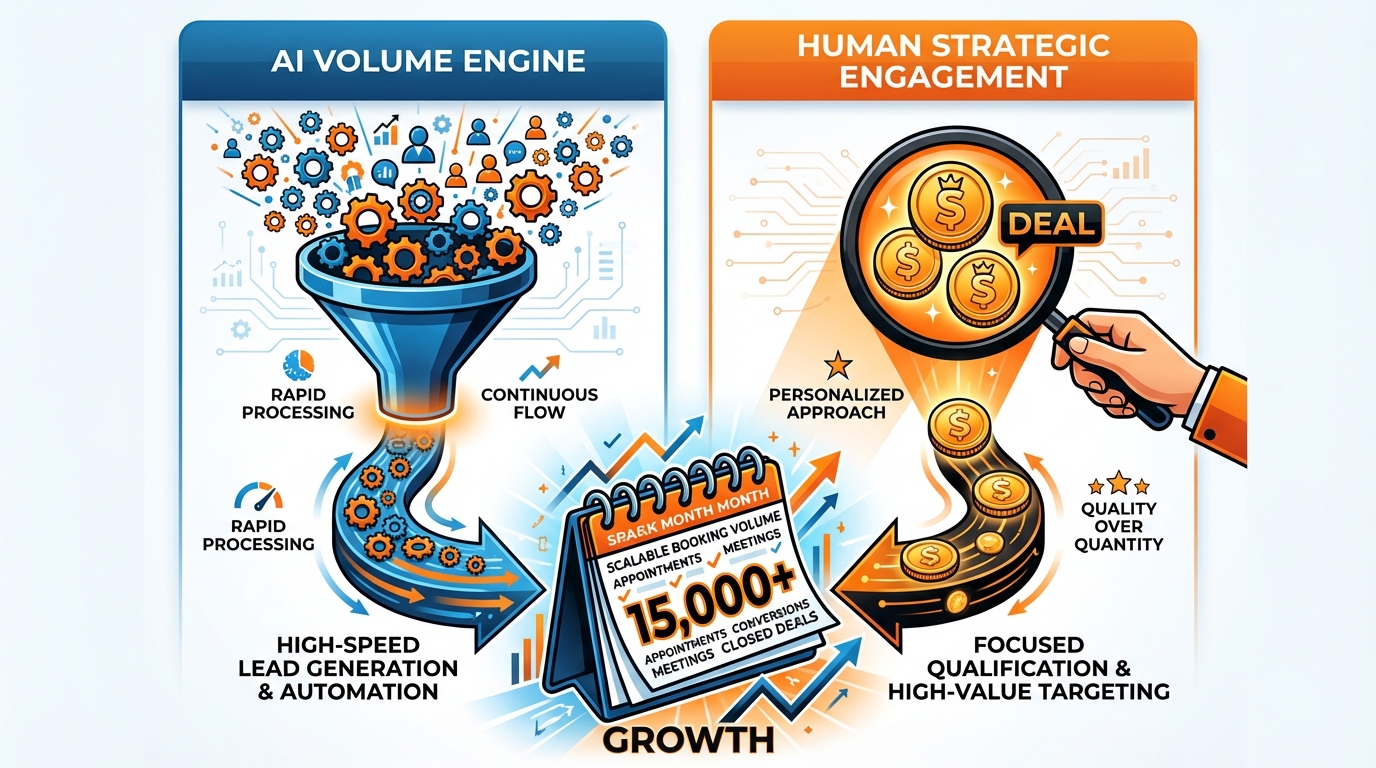
Predictable revenue is not a passive outcome. It is an engineered system.
To maximize your AI’s capacity,and achieve the scaling velocity you require,you need two operational playbooks running simultaneously: aggressive outbound activation and instant inbound qualification.
Playbook #1: Outbound Scaling with Conversational AI
Your AI agent is only as potent as the strategy you embed in it. Garbage in, garbage out is the iron law of automation, especially when dealing with cold outreach.
We are not sending blast emails. We are building a list primed for a highly personalized, conversational approach.
- Get Hyper-Specific on Your ICP and Triggers
Your Ideal Customer Profile (ICP) cannot be generic. You need the definitive “Why Now.”
- Firmographics: Standard industry, size, and revenue data.
- Technographics: What technology are they currently using? (Are they using a competitor? This is crucial for pivot scripts.)
- Triggers: What just happened that makes them need you today? This could be a new Series B funding round, active hiring for SDR roles, or a major product launch by a competitor.
Your AI outreach must reference this trigger immediately to establish relevance. (Need help defining this? Read our guide on Targeted Buyer Persona for AI Lead Gen.)
- Map Your Personas and Acquire Direct Data
You must build different lists for different personas (VP of Sales vs. SDR Manager). They care about different things (ROI vs. ramp time).
Crucially, you must invest in tools that provide direct-dial phone numbers or verified personal emails. Your AI cannot spend its processing power talking to switchboards or generic info@ accounts. That is a costly waste of automation.
- Craft the Conversational Map (Not the Script)
A script is a monologue. A conversational map is a dynamic, branching logic tree. It guides the AI on how to behave in an honest, two-way exchange,the same way your top-performing human SDR operates. You are embedding your best sales training directly into the machine’s core logic.
Your map must include three stages:
- The Opener (The Pattern Interrupt): Skip the disingenuous “How are you today?” Be direct, establishing immediate credibility. “Hi [Prospect Name], this is [AI Name] from [Your Company]. This is a cold call. I know you weren’t expecting it. Can I have 30 seconds to tell you why I called you specifically?” This provides an out and creates a micro-commitment.
- The Value Proposition (The Pain/Proof): Connect the trigger to a solution. “I noticed you’re hiring 10 new SDRs. Most VPs I talk to are worried about ramping that many reps while maintaining pipeline. We provide an AI agent that handles their 100+ daily cold calls, so your new team focuses only on qualified meetings.”
- The Close (The Direct Ask): The AI’s only goal is the next step: the meeting. “Based on what you’ve said, it sounds like it’s worth a 15-minute chat with our specialist. I have access to their calendar. Do you have time this Tuesday afternoon or Thursday morning?” (For strategic guidance on this, review How To Use ChatGPT For B2B Lead Generation Scripts.)
Playbook #1B: Engineering Objection Handling (The Superhuman SDR)
This is the critical failure point for human SDR teams and the competitive advantage of AI agents.
AI has no ego. It does not get flustered. It simply follows the perfect, battle-tested logic you created to navigate resistance and secure the booking.
You must map out every common objection and provide a branch of logic for it. Here are three non-negotiables:
- Objection: “Just send me an email.”
This is the most common brush-off. Do not comply immediately. It kills the conversation.
AI Response: “I can absolutely do that. However, honestly, the email I’d send you would simply request the 15-minute meeting I’m requesting now. How about we cut out that step? Let’s just put a placeholder on the calendar. If you review it and it’s not a good fit, you can cancel. No hard feelings. Is Tuesday at 2 PM good?”
This is a polite, professional challenge that highlights the time-wasting “sales dance” (which prospects hate, too) and forces a commitment via a low-friction calendar placeholder.
- Objection: “I’m not interested.”
Do not apologize. Isolate the objection immediately.
AI Response: “I understand. I caught you completely off guard. Just for my notes, when you say you’re not interested, is it because this topic of outbound prospecting isn’t a priority right now, or is it just that you’re happy with your current solution?”
This forces the prospect to reveal the true reason. If they are happy with a competitor, the AI pivots using your pre-loaded differentiators (e.g., “We actually specialize in the phone outreach where [Competitor] focuses only on email. Would it be worth 15 minutes to see that difference?”).
- Objection: “I’m busy / Call me back later.”
Do not accept vague follow-up requests. They are commitments that die in the CRM void.
AI Response: “I respect your time. I will only call you back if we have a firm time on the calendar. Let’s look at two weeks from now, Tuesday the 19th at 10 AM. If that time is bad, you can easily reschedule using the calendar invite. Does that work?”
Playbook #2: Inbound Speed Optimization (24/7 Qualification)
Outbound creates opportunity. Inbound optimizes conversion.
You are losing money,literally, dollars per minute,every hour a high-intent inbound lead waits for human follow-up. Speed kills the competition, and AI provides instant qualification.
- Instant Conversational Qualification: When a lead submits a form, an AI chatbot or voice agent should trigger within seconds. It performs the full BANT/MEDDIC qualification that your human SDR would eventually do.
- 24/7 Availability: High-intent leads often browse outside of 9-to-5. The AI agent operates 24/7, booking meetings when the prospect is ready, regardless of time zone or weekend hours.
- Seamless Handoff: Once qualified, the AI books the meeting directly into the Account Executive’s calendar and instantly updates the CRM. The AE steps into the conversation armed with the full context gathered by the AI (BANT/MEDDIC data points). No wasted discovery time.
Maximizing Show Rates: The Predictive Edge

Booking the meeting is only half the battle. If your show rate sits below 70%,and many do,you are actively hemorrhaging pipeline capacity. This is an unacceptable leak.
The modern AI stack doesn’t just book meetings; it engineers commitment and predicts no-shows before they become losses.
Predictive Analytics for No-Shows
Your existing CRM and engagement data is a goldmine,if you know how to process it. AI models leverage this data to flag high-risk meetings before they ever happen.
They analyze critical commitment signals, including:
- Lead Engagement Score: Did the prospect open the calendar invitation? Did they consume any pre-meeting content? (Commitment is measurable.)
- Booking Channel Velocity: Meetings booked via a direct, high-friction conversation (phone, personalized video) signal significantly higher intent than passive web form submissions.
- Time Gap Analysis: Meetings scheduled beyond the 7-day mark are statistically toxic. High time gap equals high decay rate.
The AI assigns a precise Commitment Threshold score (e.g., anything below 65% is red-flagged). This system triggers an immediate, personalized human intervention.
This is not automation,it’s precision triage. A quick call or a personalized video message from the Account Executive is deployed instantly to re-confirm value and lock down commitment.
The Multi-Channel Commitment Sequence
Email reminders are obsolete noise. They are the baseline,and the baseline fails.
To truly lock in commitment, you must deploy an aggressive, multi-channel sequence that respects the prospect’s current workflow and eliminates excuses.
- T-72 Hours: Value Confirmation. Automated email confirmation detailing the specific, personalized agenda (no generic bullet points) and linking to highly relevant pre-meeting content (a targeted case study, a 60-second personalized video brief).
- T-24 Hours: Frictionless Re-Confirmation. SMS text reminder. This channel boasts extremely high open rates and low friction. Include a simple, required response mechanism: “Reply Y to Confirm.”
- T-1 Hour: Final Velocity Check. AI-triggered voice message or, ideally, a quick human check-in call. Confirm the connection link is working and ensure the prospect is mentally prepared for the value delivered.
This aggressive, multi-modal methodology ensures the meeting remains top-of-mind and drastically reduces the percentage of avoidable no-shows. You move from hoping they show up to guaranteeing it.
Advanced AI Mechanics: Generative Intelligence
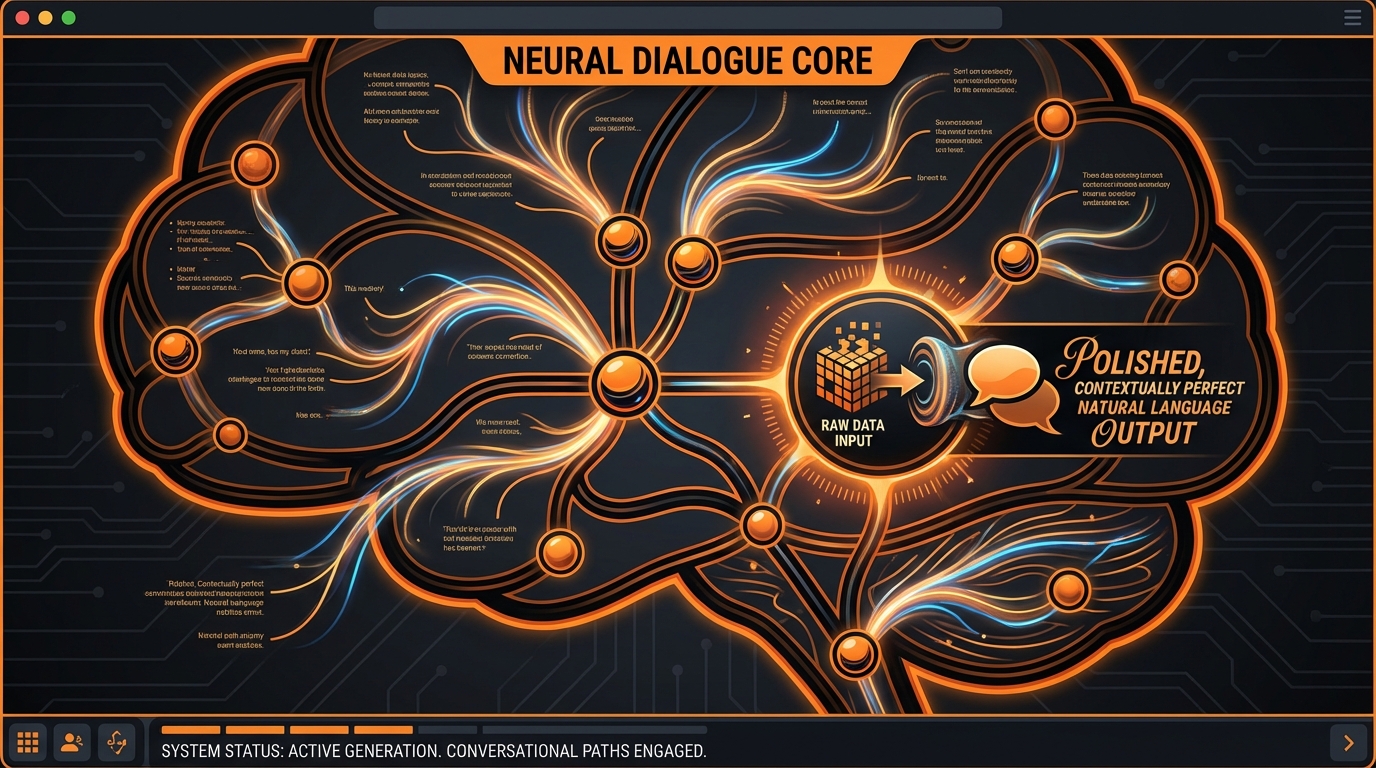
Static scripts are dead. They fail the moment a prospect deviates from the expected path, which is 90% of the time in cold outreach.
The true competitive advantage of modern AI booking agents,the ones actually generating 7-figure pipeline,is their Generative AI backbone. This allows them to execute complex, human-level conversational strategy at scale. They don’t follow the map; they redraw it in real time.
- Real-Time Script Adaptation.
The AI isn’t reading from a rigid flow chart. It adapts its language instantly based on the prospect’s tone, dialect, and specific vocabulary.
Prospect uses highly technical jargon? The AI responds in kind, leveraging the precise terminology needed to establish credibility immediately.
Prospect sounds rushed or impatient? The AI bypasses the pleasantries, shortens the value prop (VPC), and moves directly to the meeting ask. This cuts wasted time and respects the prospect’s bandwidth.
- Sentiment and Emotion Analysis.
Especially critical during live voice outreach, the AI uses advanced sentiment modeling to detect frustration, confusion, or sudden high interest.
If the prospect shows confusion, the AI instantly clarifies the specific benefit they mentioned seconds prior.
If frustration spikes, the system executes an immediate de-escalation script. Instead of pushing the meeting, it pivots, offering a low-friction, high-value resource (a case study or a 3-minute video) to rebuild trust before re-attempting the book.
- Dynamic Persona Matching (The Gatekeeper Protocol).
The system is programmed not to waste time selling to the wrong person. If the AI detects it is interacting with a gatekeeper (based on voice patterns, organizational role inference, or initial screening questions), it immediately switches protocols.
The “Gatekeeper Protocol” is a highly respectful, ultra-brief script. Its sole objective is securing the decision-maker’s direct line or ensuring a clean transfer.
It is not designed to book the meeting itself. It is designed solely for access.
Compliance and Risk Mitigation: The Non-Negotiable Cost of Scale

Scaling your outbound operation from 100 leads to 10,000 requires more than just processing power. It demands bulletproof compliance.
Ignoring this step is the fastest way to get your domains blacklisted, your accounts banned, and your entire pipeline shut down by regulators. High-volume AI booking must be compliant,it’s mandatory.
The Legal Minefield (GDPR and TCPA)
Conversational AI agents operating via phone must strictly adhere to TCPA regulations. If your AI is dialing at scale without explicit consent, you are exposed to massive, existential fines.
Similarly, data acquisition and email outreach must be GDPR compliant. If you target European prospects, compliance is not optional; it’s a hard constraint.
Your AI booking engine must treat legal risk as a preventative measure, not an afterthought. Specifically, it needs built-in mechanisms to execute the following non-negotiables:
- DNC Filtering: Automatic filtering of lists against known Do Not Call (DNC) registries before dial campaigns commence.
- Consent Logging: Ensuring explicit, verifiable consent is logged and auditable before any high-volume automated voice outreach is initiated.
- Clear Opt-Out: Providing immediate, clear, and functional opt-out mechanisms in all digital and voice communications.
If your list building involves international data, compliance is non-negotiable. (For a deep comparison of compliant tools, see our guide: Lead Gen Tools: GDPR Compliance Comparison.)
Platform Safety and Anti-Detection Strategies
You aren’t just trying to book meetings; you are trying to look indistinguishable from a high-performing human SDR. Platforms like LinkedIn, email service providers, and telecom carriers are actively building detection models against mass automation.
If your AI agent is integrated with these platforms (e.g., for outreach or list verification), it must operate within their limits to prevent immediate account flags, bans, and IP blacklisting.
Modern, results-oriented AI tools handle this through two core features:
- Intelligent Pacing: This is not just “slowing down.” It involves dynamic, non-linear drip-feeding of connection requests and messages, mimicking the variable, human behavior of a sales rep taking breaks, answering emails, and prioritizing tasks.
- Synthetic Voice Masking: Ensuring the AI voice used in calls passes carrier-level scrutiny. The goal is to avoid immediate robotic flagging by telecom providers, which often results in calls being dropped or routed directly to spam folders.
ROI Framework: Measuring True Revenue Impact
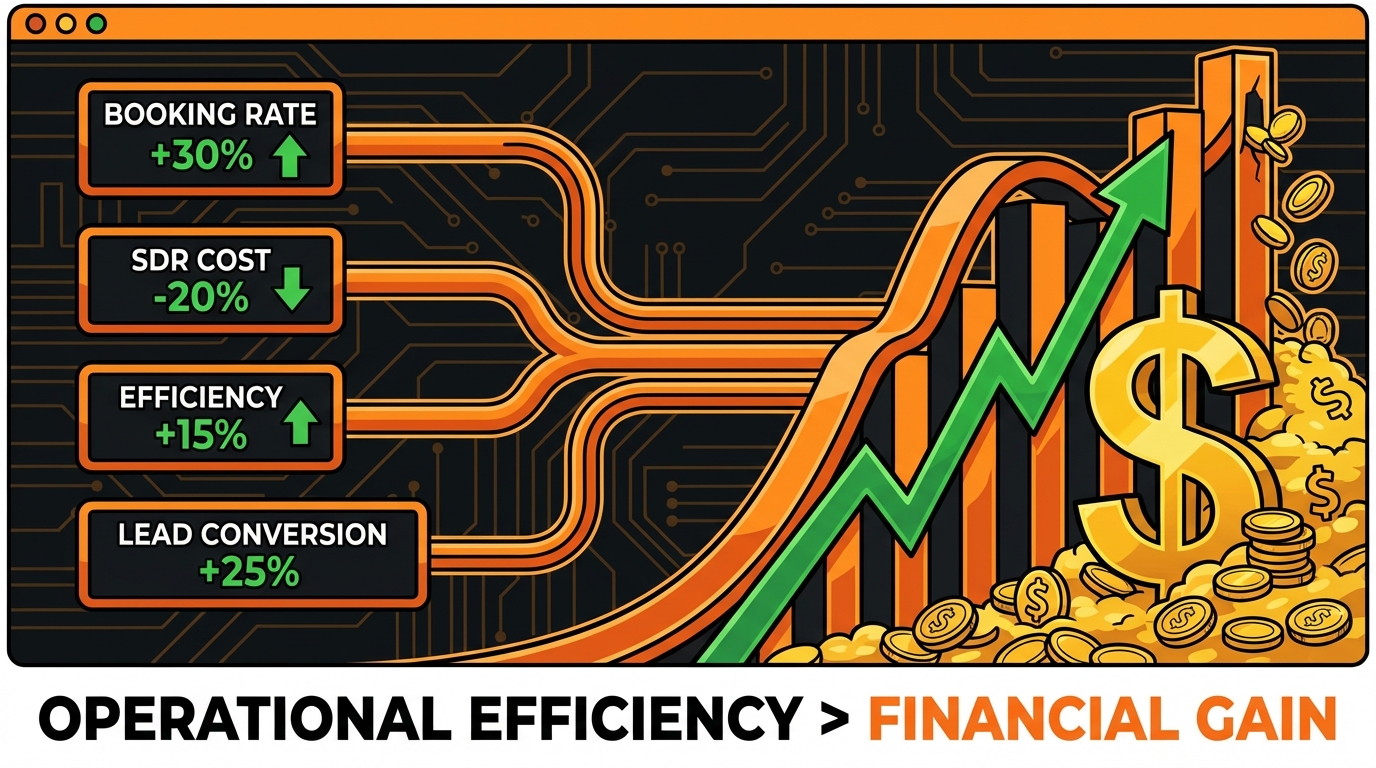
The ROI of AI appointment booking is not measured in “time saved.”
That’s a vanity metric. You’re building a revenue engine, not a glorified calendar cleaner.
True financial impact is measured strictly by pipeline velocity and your Cost Per Verified Lead (CPVL).
To understand the magnitude of this shift,and why the traditional model is now obsolete,you must structurally compare the manual SDR approach against the AI-augmented future.
| Metric | Traditional SDR (Manual) | AI-Augmented SDR (2025) | Impact |
|---|---|---|---|
| Dials/Outreach Touches per Month | ~2,000 (Human Limit) | ~20,000 (AI Capacity) | 10x Volume Increase |
| Time Spent on Prospecting/Dials | 80% of SDR time wasted | 0% (Handled by AI) | SDRs focus on closing, not dialing |
| Meeting Booking Rate (from outreach) | ~1.5% (Average) | ~3.5% (Due to superior targeting/dynamic objection handling) | 2.3x Conversion Boost |
| Cost Per Verified Lead (CPVL) | $150 – $400 (High fixed salary cost) | $50 – $100 (Lower variable cost, optimized spend) | Significantly Reduced Acquisition Cost |
The numbers are non-negotiable. This is not optimization; it is a fundamental, structural change to your sales organization.
When you transition the high-volume, repetitive work,the dialing, the initial qualification, the relentless follow-up,to an AI agent, two things happen immediately:
- Your human SDRs are liberated from the grind. They stop being dialers and start being high-leverage relationship managers.
- Your pipeline velocity accelerates because the AI operates at 10x volume, ensuring no lead is ever dropped, delayed, or forgotten.
This transformation is the engine driving the substantial reduction in CPVL and delivering a scalable, predictable pipeline volume that was previously unattainable through human effort alone.
Frequently Asked Questions
What is the difference between AI scheduling and AI appointment setting?
This is a crucial distinction that most teams miss. They confuse passive logistical tools with an active, autonomous revenue engine.
AI Scheduling (e.g., Calendly): Fundamentally passive. It manages calendar availability, sends automatic reminders, and reduces back-and-forth email hell. It’s a logistical tool for efficiency.
AI Appointment Setting (The Pyrsonalize Model): This is active and conversational. It uses Generative AI to initiate cold outreach (multi-channel), handle real-time prospect objections, execute deep qualification, and then book the verified meeting.
It doesn’t just manage the calendar; it replaces the function of a human SDR in the high-volume, initial contact phase. It is a demand generation system.
How does AI handle complex or technical objections?
The AI is not designed to be a technical expert. It is designed to be a booking expert.
It handles 90% of standard objections using a pre-defined Conversational Map, trained on thousands of successful human objection responses. (We call this the ‘Deflection Matrix’).
For highly technical questions that fall outside its programmed knowledge base,the 10% edge cases,the AI is trained to recognize complexity and execute a strategic handoff.
The script is immediate and authoritative:
“That is a great technical question. I need to bring in our specialist, [AE Name], who can answer that immediately. I will book you a 15-minute slot with them now.”
The AI knows its limits, and it uses that limitation to reinforce the value of the scheduled meeting. It converts technical curiosity into a locked-in slot.
Can AI booking agents replace human SDRs entirely?
No. This is the wrong question entirely. Stop thinking replacement; start thinking optimization.
AI agents automate the repetitive, high-volume, low-leverage work (dialing, initial qualification, relentless follow-up). They are exceptional for scaling TOFU pipeline.
However, the human element remains mission-critical:
- Complex negotiations and deal structuring.
- Building deep, lasting customer trust.
- Conducting nuanced discovery calls that require human empathy and strategic foresight.
The 2025 sales model is a powerful partnership: AI for volume, humans for value. It’s about leveraging both assets efficiently.
What metrics should I track to measure AI booking success beyond volume?
Volume is a vanity metric if the meetings are garbage. We track quality, not just calendar filler.
If you aren’t focused on pipeline integrity, you will burn SDR time on unqualified leads. Focus exclusively on these quality metrics:
- Meeting Show Rate: Are the booked prospects actually showing up? (This validates the AI’s qualification strength).
- Conversion Rate from Meeting to Opportunity (SQL Rate): How often does an AI-booked meeting turn into a viable, forecasted deal?
- Average Deal Size: Is the AI consistently targeting and qualifying leads that result in high-value contracts?
High booking volume combined with a low SQL conversion rate means your AI is targeting the wrong ICP. Adjust the targeting. The goal is predictable, high-quality pipeline,not just a full calendar.
Ready to take the next step?
Start Your Free Trial
Click HereReferences
- How AI Can Book More Sales Meetings Automatically – Valley
- AI Appointment Booking Tools That Maximize Efficiency and Revenue
- The Modern Playbook for Using AI to Book More Outbound Sales …
- How to Schedule Sales Meetings that Convert with Generative AI
- Top AI Appointment Setting Strategies Driving Results in 2025