

- They are active on the platform.
- They are engaged with relevant content.
- They are actively thinking about the exact problem you solve.
Key Takeaways: The Non-Negotiable Strategy
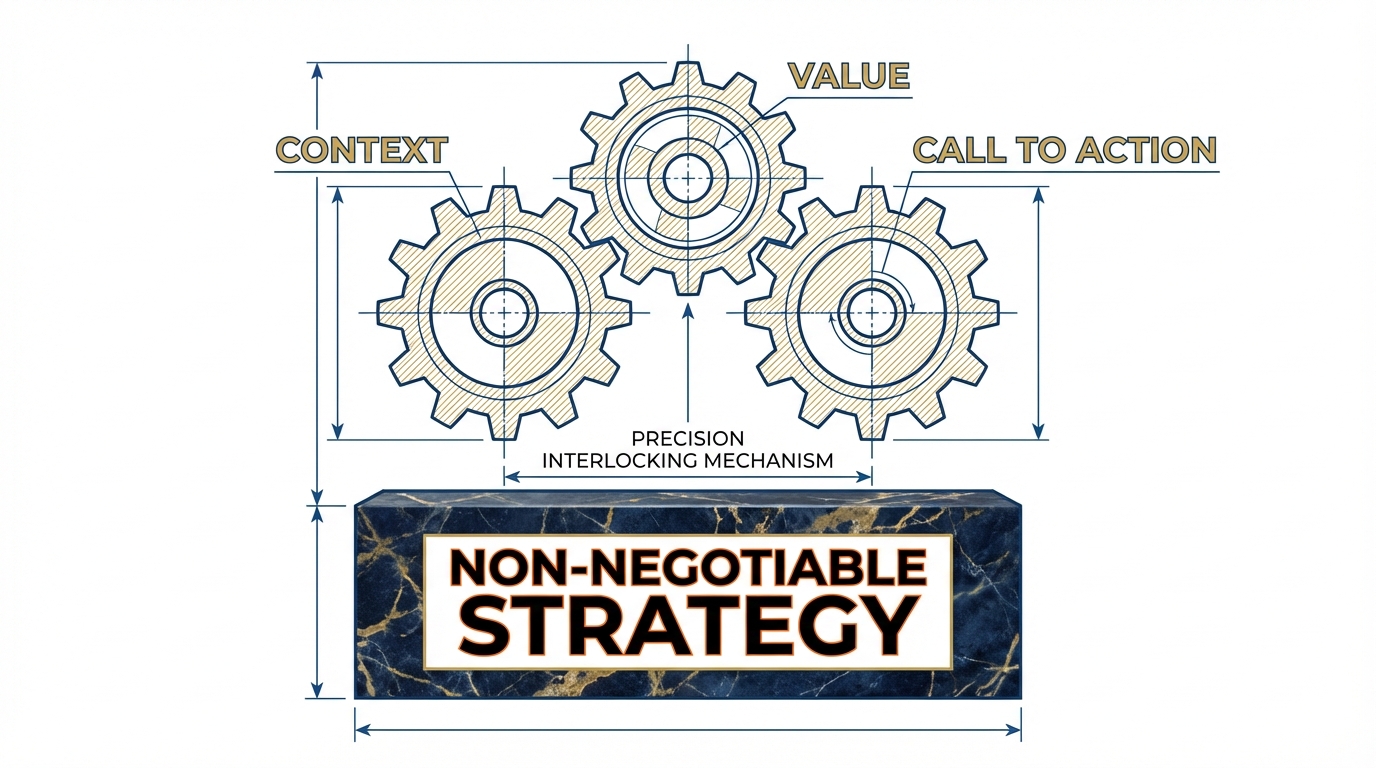
- Ignore Vanity Metrics. Your focus must be exclusively on High-Quality Leads (HQLs),comments that explicitly reveal budget, specific pain points, or strong value validation. If it doesn’t move the revenue needle, ignore it.
- We utilize a non-negotiable 3-Phase Conversion System: Public Validation (building context), The DM Bridge (creating trust), and the Soft CTA (the booking). Skipping Phase 2 is the fastest way to kill the deal and revert to generic cold outreach.
- The transition from public thread to private DM must use the Gratitude Pivot. Reference the specific, insightful point they made to maintain contextual relevance and avoid generic “Hey, I saw your comment” spam.
- Leverage AI Lead Generation Software (like Pyrsonalize) immediately *after* engagement. Our system finds the prospect’s personal email and direct phone number, enabling essential multi-channel follow-up and ensuring you never rely solely on LinkedIn messaging. Start Your Free Trial.
- Discovery calls booked through this method require an Ultra-Prepared Opening. You must leverage the context they gave you publicly to maintain the high trust level established on LinkedIn,generic scripts will destroy the rapport instantly.
I. Strategic Foundation: Identifying High-Quality Leads (HQLs) in the Wild

The 3 Types of Comments Worth Pursuing
it is noise.- Insightful Questions (IQ): The prospect asks a detailed, strategic question that reveals a specific gap in their current knowledge, system, or tech stack.
- Example: “This is helpful, but how do you manage attribution when you use six different AI tools? Our reporting gets messy and we can’t trust the ROI data.”
- Pain-Point Sharing (PPS): The prospect validates the post’s premise by sharing a specific, current struggle they are experiencing that your solution directly addresses.
- Example: “We tried that approach last quarter, but our SDR team couldn’t handle the data cleaning volume. We need a way to automate client email discovery and verification.” (This signals budget and an active need for our core offering.)
- Value Validation (VV): The prospect validates the core solution or value proposition you are discussing, often mentioning a specific competitor or past failure they encountered trying to solve the problem.
- Example: “Totally agree. We moved away from [Competitor X] because their data quality was terrible. Contextual personalization is the only thing that works now for cold outreach.”
| Metric | Low-Quality Engagement (LQE) | High-Quality Comment (HQL) |
|---|---|---|
| Intent Signal | Passive, Social Validation. | Active, Contextual Pain/Interest. Buying Signal. |
| Conversion Rate Potential | < 1% (If you even bother outreach) | 15% – 30% (If the 3-Phase Workflow is executed perfectly) |
| Required Action | None (Maybe a ‘Like’) | Immediate 3-Phase Conversion Workflow. Requires Pyrsonalize for contact data. |
| Example | “Agreed!” or “Great post.” | “We struggle with this exact problem when scaling our ABM framework; the manual effort is killing our margins.” |
II. The 3-Phase Conversion Workflow (The Tactical Core)
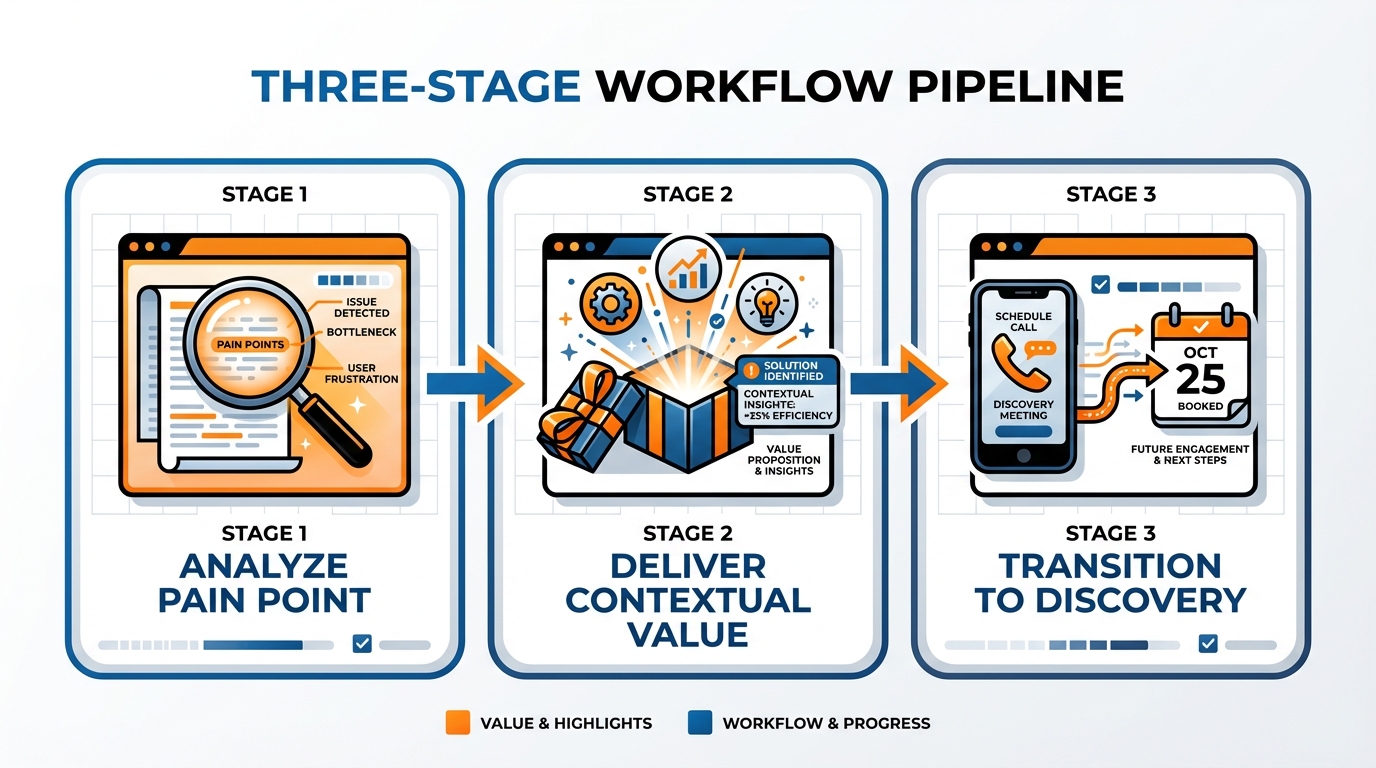
Phase 1: Public Validation (The Authority Signal)
- Prospect Validation: It makes the prospect feel seen, intelligent, and valued by an authority figure (you). This builds immediate social capital.
- Audience Signaling: It signals to the rest of your network (and other watching HQLs) that you are an expert who engages meaningfully, not just generically.
Script 1: Public HQL Response (The Bridge Builder)
Context: Prospect shares Pain-Point Sharing (PPS) comment about data cleaning volume being too high for their SDR team.
Your Reply (Public):
"@ProspectName, that is a critical bottleneck (SDR burnout due to data hygiene is absolutely real). We solved this for our clients by implementing an AI layer that validates and cleans prospect data before it hits the CRM. It saves our reps ~10 hours/week. I'd be happy to share the exact workflow we built for that,it’s too long for a comment thread here."
- It validates their pain point using authoritative, strategic language.
- It introduces your solution (AI data validation/Pyrsonalize offering) without pitching the product.
- It creates a justification for the DM (“too long for a comment thread”). This is your permission slip to pivot private.
Phase 2: The DM Bridge (The Contextual Pivot)
Crucial Rule:Script 2: The Gratitude Pivot (For VV/IQ Comments)
"Hi [ProspectName],

Quick note: I really appreciated your comment on my post about [Topic]. You raised a fantastic point about [Specific Insight they shared].

I was thinking more about your comment regarding [Reiterate their specific pain or question]. Our team recently finished documenting a strategic guide on that exact topic that outlines the 3 steps we use to boost conversion when dealing with that challenge.

Would you like me to send over the PDF? No pitch, just pure strategy."
Script 3: The Insight Offer (For PPS Comments)
"Hi [ProspectName],

Thanks again for the comment on my post earlier,it was spot on regarding SDR data burnout.

Since you mentioned struggling with data cleaning volume, I wanted to jump into your DMs quickly. Our team recently automated that step for a client in the [Prospect's Industry] space and saw a 77% time saving on manual list building.

I'm only sharing this because it directly relates to the issue you raised. If you're open to it, I can send over a 2-minute Loom video walking through the high-level workflow we implemented."
Phase 3: The Soft CTA (The Call Invitation)
Non-Negotiable Rule:Script 4: Objection-Proof Call Invitation
"Hi [ProspectName],

Just following up on the [PDF/Loom] I sent over yesterday related to [Topic]. Did you have a chance to look at it?

If you found that strategy useful, I'd be happy to spend 15 minutes doing a quick diagnostic.

Based on your original comment, it sounds like [Specific Problem] is your biggest challenge right now. I can map out exactly how we integrate AI prospecting into your existing stack to fix that, specifically for [Prospect's Company].

No commitment, just a 15-minute diagnostic to see if our system is even relevant. Are you available Tuesday or Wednesday next week?"
- Respectful of Time: It is short and requests only “15 minutes.”
- Contextual: It ties the call back to their original, self-identified pain point (their comment), reinforcing relevance.
- Outcome-Driven: It offers a specific outcome (a “diagnostic” or “map-out”), not a vague, low-value “demo.”
III. Mastering the Discovery Call Opening

The Ultra-Prepared Opening (Context is King)
- Acknowledge the Context: “Thanks for joining, [ProspectName]. Before we dive in, I want to confirm my understanding of why we booked this call. This started with your insightful comment on my post last week about the difficulty of compliant LinkedIn lead generation.”
- Summarize the Pain Point: “Based on that interaction, it sounds like your main challenge right now is [Reiterate their specific pain point, e.g., ‘your current manual process for scraping personal emails takes 15 hours a week, and the data is often inaccurate’]. Is that still the primary bottleneck?”
- Invite Correction (The Control Check): “I don’t want to assume I have all the answers. What did I get wrong, or what is the single biggest priority related to that specific issue right now?”
Setting Clear Objectives (The Control Factor)
a decision on whether to proceed."My goal for the next 15 minutes is simple: I want to confirm the scope of [The Pain Point from their comment], show you two examples of how our AI software solves that specific problem, and then determine if a deeper conversation (with the rest of your team) makes sense. If not, we part ways immediately. Does that sound fair?"
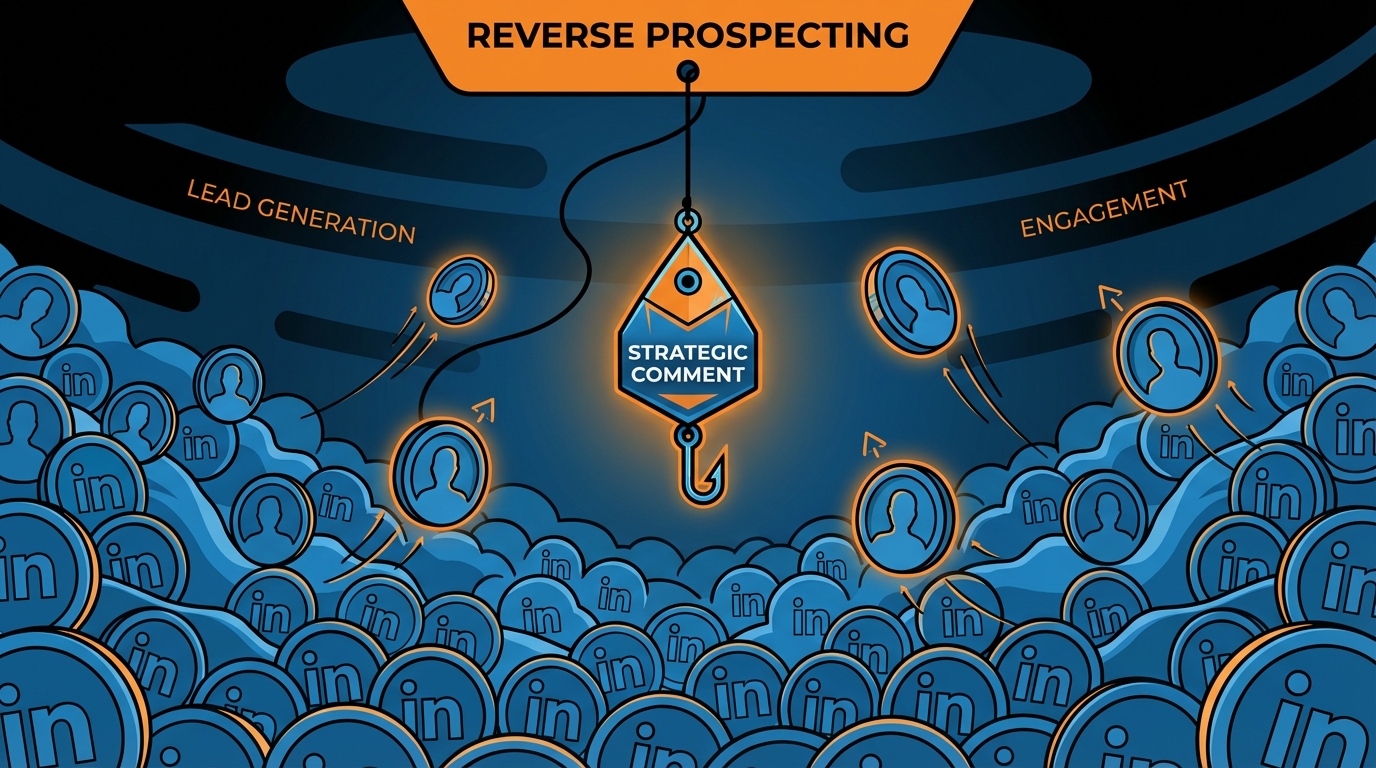
IV. Advanced Tactics: Reverse Prospecting via Contextual Commenting
The 2-Step Reverse Prospecting Playbook
- Identify Their Pain/Intent: Locate a recent post by your target buyer (Founder, VP Sales). We look specifically for posts where they articulate a strategic challenge, discuss a team failure, or outline a recent success tied directly to lead generation or sales efficiency. (This proves they are actively thinking about the problem we solve.)
- Drop the Expert-Level Context: This is not a generic compliment (“Great post!”). Provide a highly specific, actionable piece of advice or ask an insightful, challenging question that immediately establishes you as an authority. The goal is to solve 5% of their problem publicly, proving you can solve the other 95% privately.
Script 5: The Reverse Prospecting Comment
Context: VP of Sales posts about their team struggling to hit pipeline targets despite using a list of 10,000 cold emails.
Your Reply (Public):
"This is a classic volume vs. intent problem. Our team sees that all the time when scaling outbound. The 10k list is functionally meaningless if the data quality is poor or the personalization is non-existent.

We found that running a small segment through an AI tool (to validate personal emails and provide deep contextual insights beyond just job title) can cut list size by 60% but boost reply rates by 3x. Have you tested strict list segmentation based on validated personal data yet? The technical lift is minimal."
The Follow-Up DM (The “Referenced Insight”)
Action Step: Wait precisely 60 minutes. Do not send the DM instantly. This gives them time to see the public validation.
"Hi [ProspectName],

I hope you saw my comment on your recent post about pipeline challenges. I didn't want to elaborate too much in the public thread,it gets noisy fast.

The reason I brought up the AI validation strategy is because we recently implemented that exact process for [Similar Company] and helped them reduce invalid emails to under 4% (which saved their SDRs 15+ hours/week).

I'd love to show you the 3 tools we used in that stack (all under $50/mo) that made the difference. No selling, just sharing the technical setup we deployed. Can I send you the list?"
Once they respond, the barrier is gone. You transition immediately back to the Soft CTA framework (Phase III).
You didn’t cold pitch; you earned the response by injecting value where they needed it most,on their own stage. This highly targeted, contextual approach is the only sustainable path to book high-quality meetings in 2025. We leverage AI tools (like Pyrsonalize) for efficiency and finding personal emails, but the conversion relies 100% on this human intelligence and strategic commenting.
Frequently Asked Questions

- How do we scale comment-to-call conversion efficiently?
- Scaling manual engagement is a massive time sink,if you approach it like everyone else. Our system minimizes time wastage by focusing strictly on High-Quality Leads (HQLs) and maximizing the speed of conversion.
- The critical bottleneck is moving from a public comment thread to a private conversation. Once a prospect engages (or you Reverse Prospect them), you need their contact details *fast*. We leverage our proprietary AI Lead Generation Software to immediately find their verified personal email, cutting out 90% of the manual research pipeline. You move from comment to direct, high-value outreach in minutes, not hours.
- What defines a “High-Quality Lead (HQL) Comment”?
- An HQL comment is never generic (“Great post!” or “I agree.”). It must be strategic, insightful, and engineered to initiate a follow-up conversation.
- It must achieve two things:
- Contextual Insight: It adds tangible value or a unique, strategic perspective to the original post. It proves you understand the subject matter deeply, establishing instant expertise.
- Intent Signal: It subtly introduces a pain point or solution that aligns perfectly with your offering. (Example: “We saw X results when we applied this, but only after optimizing Y process.”) This sets the hook for the discovery call,they already know you solve a problem they recognize.
- Remember: Your comment is your micro-pitch. Make it count.
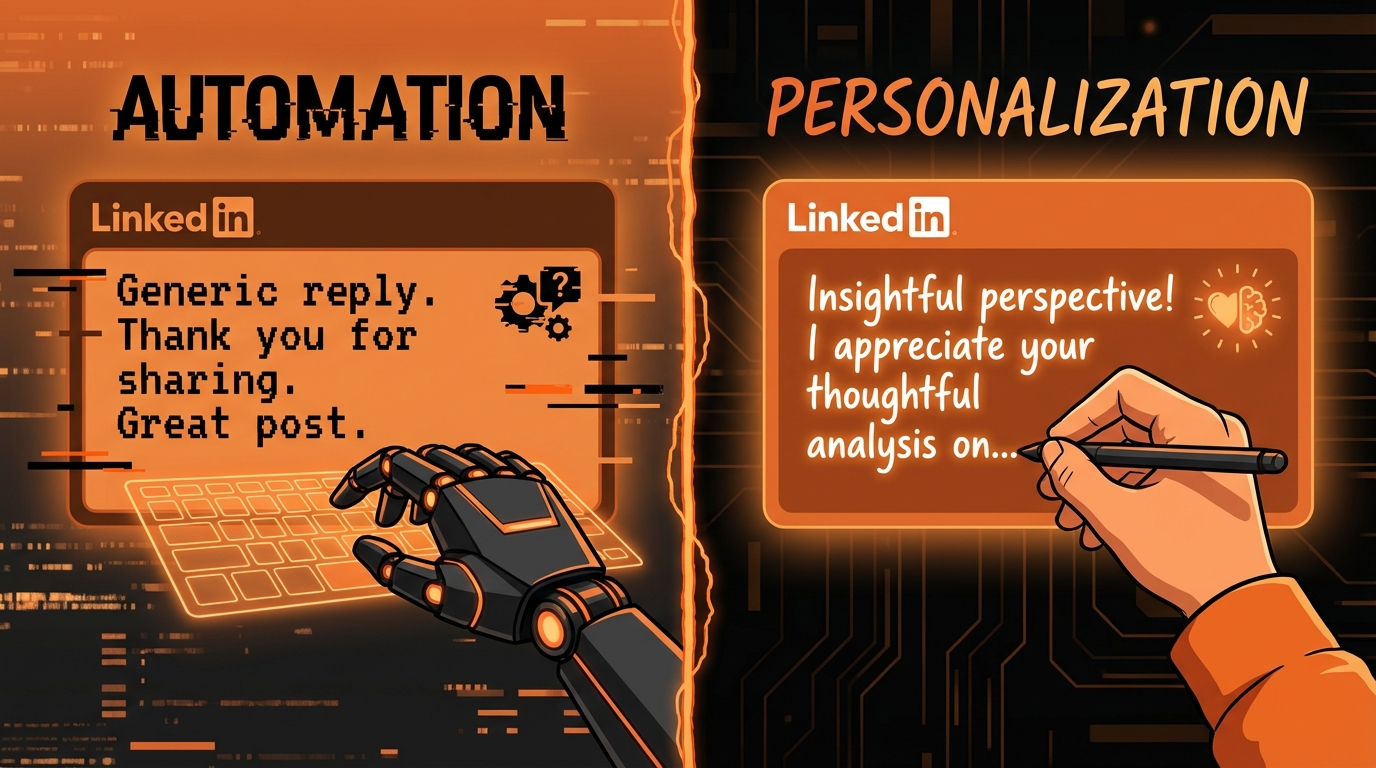
- Can I automate LinkedIn commenting with bots?
- Absolutely not. If you want generic engagement that burns through your credibility, use a bot. If you want revenue, stick to manual, strategic execution.
- The entire premise of this high-conversion system relies on personalization and context,two things generic AI bots cannot deliver consistently. LinkedIn users are adept at spotting automated fluff, and it instantly destroys the trust required for a discovery call.
- We use AI only for speed (like finding verified contact details). We use humans for relationship building and strategic input. That’s the difference between scaling and spamming.
- Avoid the “Thirsty” Look: An instant DM after a public reply screams “automated sequence” or “desperate seller.” We need to appear strategic, thoughtful, and peer-to-peer.
- Establish Context and Validation: This gap allows the prospect time to see your public validation (your insightful comment) and internally categorize you as a valuable expert,not just a random connection request.
- Maximize Open Rate: By establishing value publicly first, the subsequent private message (the DM) lands with built-in context and higher perceived importance.
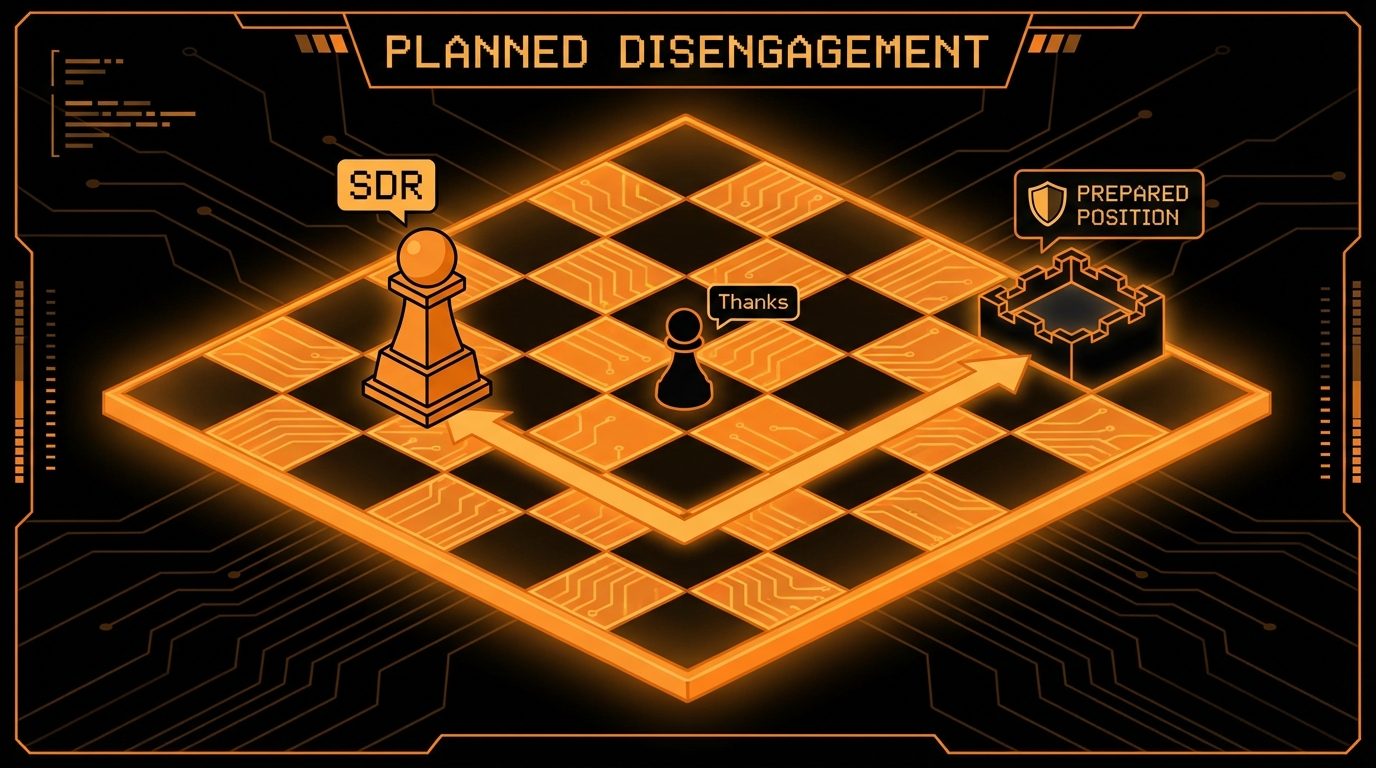
Handling the “Thanks” Reply: Strategic Retreat
Can We Automate the LinkedIn Comment Conversion Process?
Where Automation Does The Heavy Lifting
Lead Identification:Data Enrichment:mustReady to scale your outreach without sacrificing quality?
Stop guessing and start converting. Use AI to find the direct contact information you need to close deals faster.
Start Your Free Trial
Click Here to Get StartedReferences
- How I prepare for outbound discovery calls with a simple trick
- How to Run a Great Discovery Call: A Step-by-Step Guide – LinkedIn
- How I use LinkedIn for discovery calls | Blake Stratton posted on the …
- How to start your discovery calls… I see too many AEs struggle with …
- 3 Ways To Generate More Sales/Discovery Calls Using LinkedIn