


The goal of any strategic acquisition system is to maximize the conversion rate of existing traffic. For high-ticket B2B services and SaaS platforms, this means aggressively preventing high-intent visitors from abandoning the funnel entirely.
Exit-intent popups are not a relic of early 2010s marketing. When executed strategically, they serve as a critical, final line of defense against costly bounce rates. The mechanism is simple yet powerful: when a visitor shows intent to leave—moving the cursor toward the browser tab or address bar—we trigger a highly targeted, value-driven offer.
This systematic intervention is the difference between losing a qualified prospect forever and initiating a trust-based relationship.
We use this systematic approach at Pyrsonalize to ensure that our exit-intent campaigns are perceived as a valuable pattern interrupt, not an annoyance. This comprehensive guide details the precise structure, technology requirements, and strategic offers needed to convert abandoning visitors into qualified leads in 2025.
1. Understanding the B2B Exit-Intent Mechanism
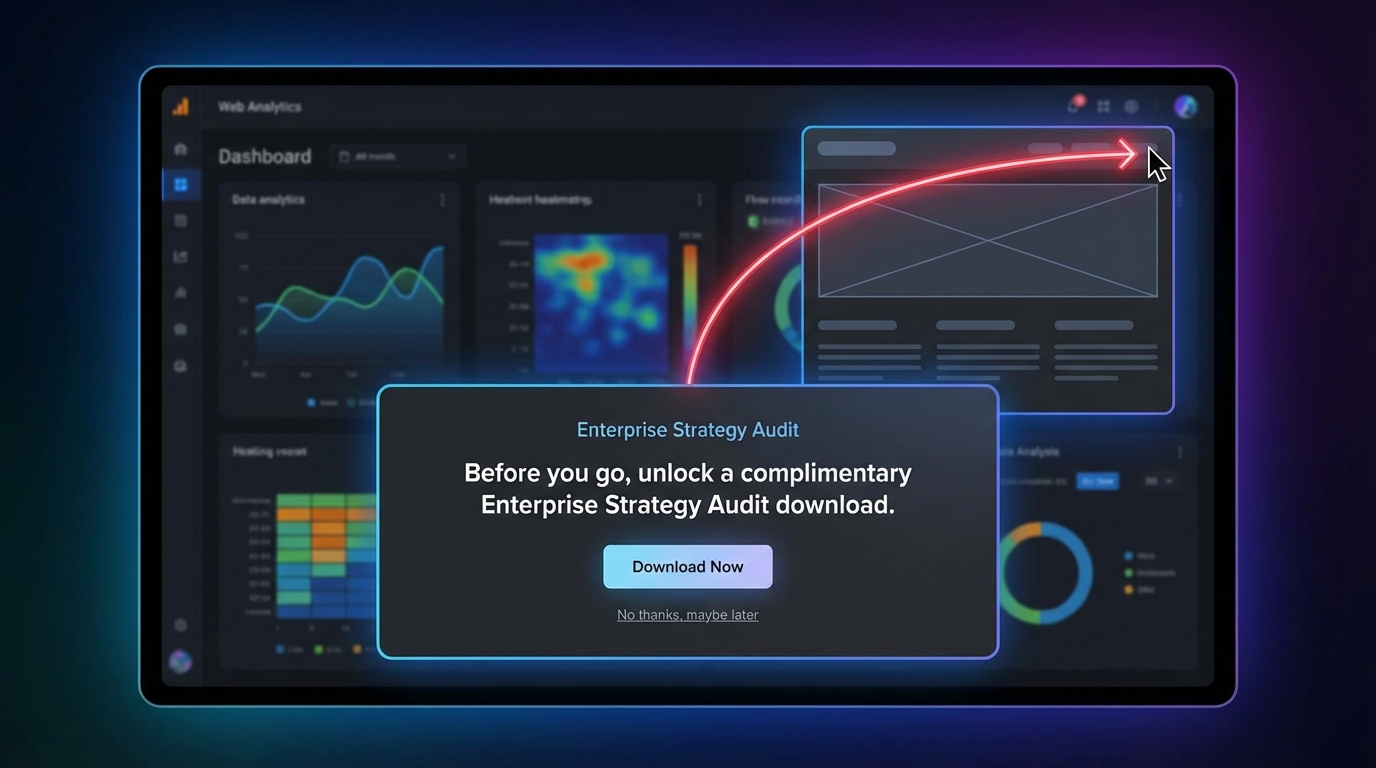
Exit-intent technology is fundamentally distinct from standard timed or scroll-triggered overlays. It is purely behavioral, reacting only when the user explicitly signals an intention to leave the active browser window or tab. This precise, delayed timing is crucial in the B2B context, as it allows for maximum conversion potential without degrading the professional user experience (UX).
The Technology: How Exit Triggers Function
Modern exit-intent software employs sophisticated tracking algorithms to predict imminent abandonment across all device types:
Desktop Triggers
For desktop users, the primary trigger analyzes mouse movement velocity and trajectory toward the upper boundary of the browser window. This mimics the physical action required to close a tab, navigate to the address bar, or use the back button.
Mobile Triggers and Compliance
Detecting exit intent on mobile devices (which often comprise the majority of web traffic) is more complex and relies on distinct signals:
- Back Button Detection: Recognizing the back gesture or explicit back button press within the mobile browser interface.
- Tab Switching: Identifying when the user attempts to switch applications or browser tabs, signaling distraction or intent to leave the current session.
- Rapid Scroll Up: Detecting a sudden, quick upward scroll that often indicates frustration or a search for navigation elements (a common precursor to bounce).
Crucial Note on Mobile: When selecting a platform, ensure it offers reliable, non-intrusive mobile exit detection. Google’s standards are strict regarding mobile interstitials; full-screen popups that block content immediately upon entry or navigation are heavily penalized. Exit intent must trigger only upon the signal of leaving, not upon arrival.
Pattern Interruption: The Psychological Advantage
The effectiveness of exit popups is rooted in behavioral psychology—specifically, the concept of pattern interruption. When a high-intent visitor makes the conscious decision to leave, they are mentally checked out. The sudden, well-timed appearance of a relevant, high-value offer forces a cognitive pause and compels them to re-evaluate their decision.
In the B2B high-ticket environment, this interruption must be tactical. It is not about offering a frivolous discount; it is about providing an immediate, strategic solution to the complex problem the prospect was researching. If a visitor is abandoning your pricing page, their intent is demonstrably high. You must capitalize on that moment by interrupting the exit with an offer that directly addresses their final barrier or objection.
2. The 6-Step Blueprint for High-Value Exit Offers
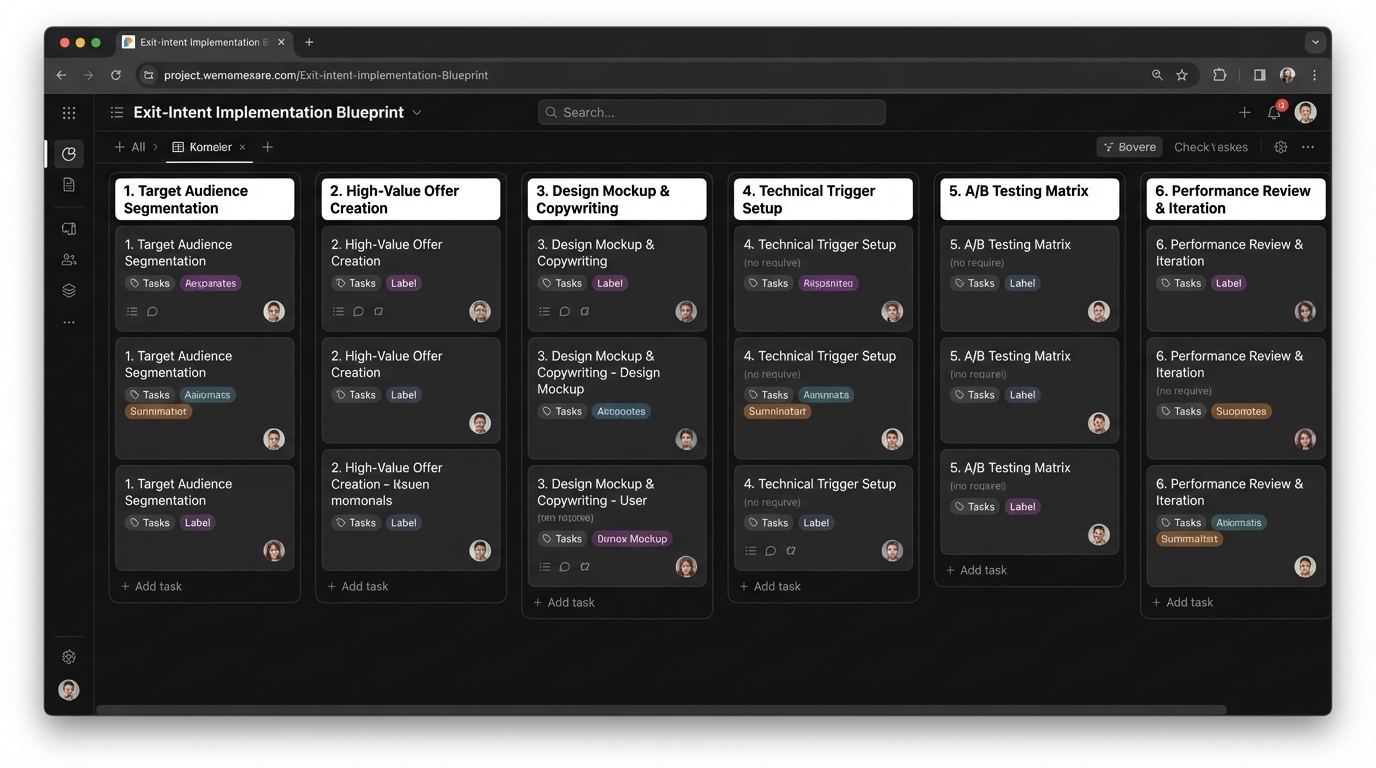
Implementing an exit popup is technically simple. Implementing a strategic exit popup that consistently captures qualified B2B leads, however, requires a systematic, six-step approach designed for maximum conversion impact.
- Define the High-Ticket Asset (Lead Magnet)
- Segment by Page Intent (Targeting)
- Design for Minimal Friction (UX)
- Craft the Authority-Driven Copy
- Implement Technical Triggers
- Integrate and Qualify the Lead
Step 1: Define the High-Ticket Asset
Generic newsletter signups fail in the high-ticket space. Your exit offer must justify both the interruption and the exchange of valuable contact data. The asset must solve a specific, high-level business pain point directly related to your core service or platform.
Effective B2B Exit Assets must be perceived as exclusive, actionable intelligence:
- Proprietary Calculators: “Calculate Your Potential ROI with Our Software in 90 Seconds.”
- Benchmarking Reports: “Download the 2025 Industry Performance Report & Gap Analysis.”
- Strategic Blueprints: “The 5-Step Implementation Plan for X System: Avoid Common Pitfalls.”
- Free Audit/Assessment: “Get a Free 15-Minute System Audit with a Senior Architect.”
The perceived value of the asset must be significantly higher than a standard ebook or whitepaper. Position it as immediate strategic value.
Step 2: Segment by Page Intent (Targeting)
A visitor leaving a generic blog post requires a different offer than a visitor abandoning the pricing page. Effective B2B exit campaigns use URL targeting to match the offer precisely to the visitor’s current journey stage and intent.
We recommend segmenting traffic into three primary intent groups:
Key Highlights: Intent-Based Targeting
- Discovery/Top-of-Funnel (Blog Posts, Resources): Offer content upgrades or related strategic guides designed to nurture. Intent: Informational.
- Evaluation/Middle-of-Funnel (Feature Pages, Case Studies): Offer a direct comparison checklist, a competitive matrix, or a free consultation. Intent: Commercial Research.
- Decision/Bottom-of-Funnel (Pricing, Demo Request Pages): Offer a scarce resource like a limited-time bonus, a customized quote, or a direct chat with a senior sales professional. Intent: Transactional.
Step 3: Design for Minimal Friction (UX)
The design must be clean, authoritative, and require minimal input. Friction kills conversions, especially when the visitor is already signaling an exit.
Form Field Optimization:
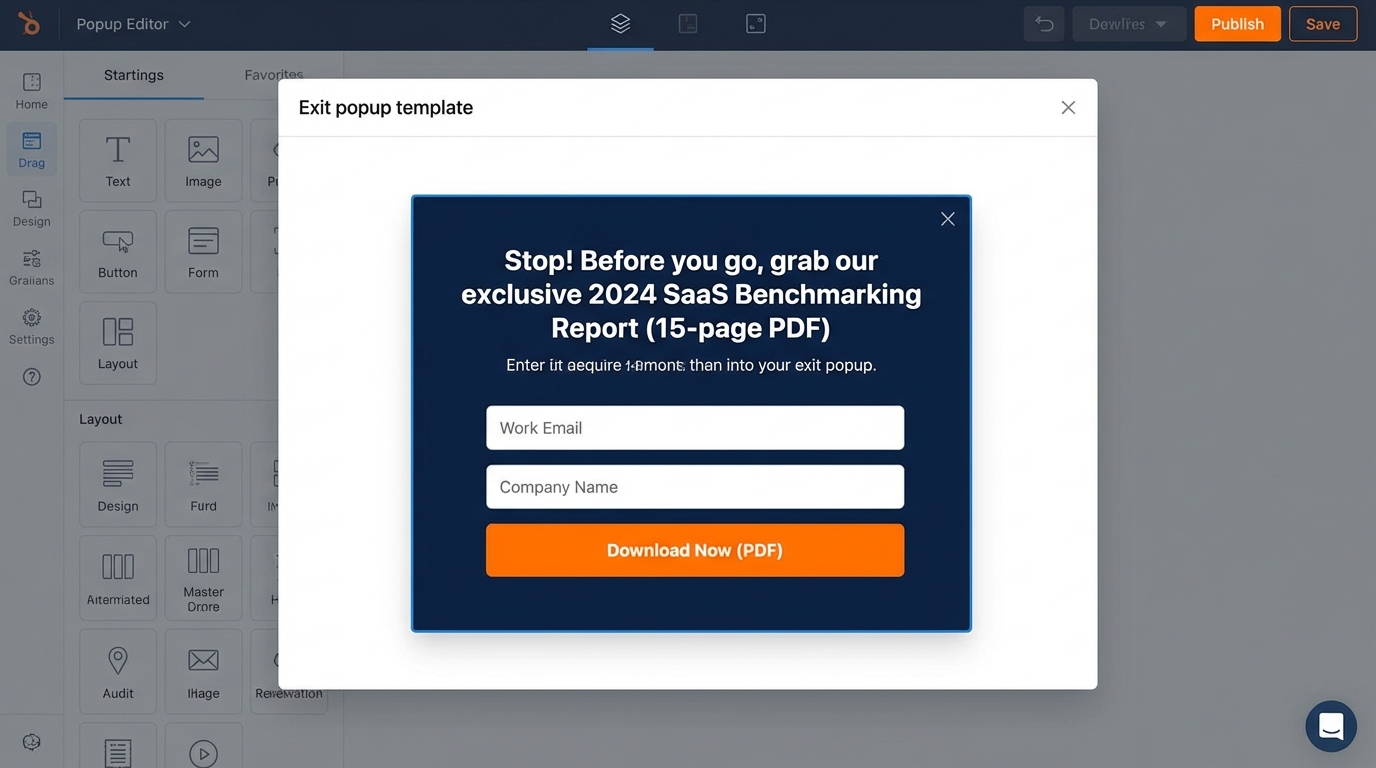
- Use only one field (Email Address) for initial content upgrades on top-of-funnel pages.
- Use a maximum of two fields (Name, Email) for higher-value assets like calculators or comprehensive reports.
- Never ask for a phone number on an exit popup unless the offer is a direct, immediate sales call (e.g., “Get a Call Back in 5 Minutes” or a scheduled demo).
Simplicity and clarity are non-negotiable. Ensure the popup uses your brand’s professional color palette and high-quality imagery to maintain credibility.
Step 4: Craft the Authority-Driven Copy
The copy must be concise and communicate immediate, tangible value. You have three seconds to successfully re-engage the abandoning user.
Headline Strategy:
- Use command verbs to interrupt the exit path: Stop. Wait. Secure.
- Immediately state the benefit and exclusivity: “Wait! Secure Your Custom ROI Projection Now.”
- Create scarcity or urgency tailored for a B2B audience: “Final Chance: 3 Spots Left for the Q4 System Audit.”
Call to Action (CTA) Best Practices:
The CTA button must be the most visually dominant element. It should be written in the first person and clearly reflect the value received, minimizing the perceived risk of clicking.
- Weak CTA: Submit
- Strong CTA: Get My Custom Blueprint
- Strategic CTA: Unlock 2025 Benchmarks
Step 5: Implement Technical Triggers
Once the offer, targeting, and design are finalized, the technical implementation must be precise to ensure the popup fires reliably without annoying legitimate users. The goal is surgical precision in timing.
Technical Configuration Checklist:
- Sensitivity Tuning: Adjust the exit-intent sensitivity settings. On desktop, this measures cursor speed and trajectory toward the browser chrome. Avoid overly sensitive settings that trigger the popup accidentally.
- Frequency Capping: Implement strict rules so that a visitor who dismisses the popup (or completes the conversion) does not see it again for a defined period (e.g., 7–14 days). Over-exposure severely degrades user experience and brand perception.
- Mobile Handling: Exit-intent detection on mobile devices is usually based on scrolling up rapidly or using the back button. Ensure your popup solution supports these mobile-specific triggers, but keep the mobile overlay small and non-invasive to comply with search engine guidelines.
- Exclusion Rules: Exclude existing customers, logged-in users, or visitors coming from specific low-intent referral sources from seeing the exit offer.
Step 6: Integrate and Qualify the Lead
The final step ensures that the captured lead immediately enters your acquisition pipeline correctly. A high-value exit offer should trigger an immediate, high-priority follow-up sequence to capitalize on the moment of intent.
Pipeline Integration Requirements:
- CRM/MAP Synchronization: Instantly sync the lead data (Name, Email, Asset Downloaded, Source URL) to your CRM (e.g., Salesforce, HubSpot) and Marketing Automation Platform (MAP).
- Lead Scoring Adjustment: The conversion event must automatically increase the lead’s score significantly. Downloading a strategic blueprint (a high-intent action) signals readiness for engagement far beyond a standard blog subscription.
- Immediate Delivery and Nurture: The lead should receive the promised asset instantly via email. Simultaneously, they must be enrolled in a short, high-value nurture sequence specific to the asset they downloaded, designed to push them toward the next logical step, such as a consultation or demo request.
3. Strategic Offer Creation for SaaS and Services
The quality of the offer directly dictates the quality of the lead. For high-ticket sales cycles, the priority is intent, not volume. Focus on creating assets that require genuine engagement and solve specific, high-level business problems, ensuring the lead is qualified from the start.
Converting Pricing Page Exits (High Intent)
A visitor exiting the pricing page is highly qualified. Their departure is usually a sign of last-minute hesitation, typically related to cost, feature comparison, or implementation risk. The exit-intent offer must address these friction points directly and immediately.
| Exit Trigger Page | Strategic Offer | Lead Qualification Value |
|---|---|---|
| Pricing Page | Customized Implementation Timeline/Quote | High (Addresses cost/risk friction). |
| Comparison/Alternatives Page | “Unbiased” Feature Comparison Checklist (Your tool vs. Competitors) | High (Addresses evaluation friction). |
| Features Page | Expert 15-Minute Strategy Session (Free) | Very High (Direct sales opportunity). |
Strategic Mandate: Never offer a generic lead magnet on high-intent pages. The offer must be immediate, personalized, and specifically tied to overcoming friction in the final stage of the buying cycle.
Converting Blog Content Exits (Content Upgrades)
Blog readers are usually high in volume but low in immediate purchase intent. We use exit popups here to strategically graduate readers from informational consumers to interested prospects.
The core strategy for content exits is the Content Upgrade: offering a downloadable, actionable asset that serves as a direct companion to the article they just consumed. This ensures maximum relevance and conversion rates:
- Template Asset: If the article is “How to Structure a Sales Pipeline,” the exit offer is the “Printable Sales Pipeline Template.”
- Tool/Dashboard Asset: If the article discusses “GA4 ROI Tracking,” the offer is the “GA4 High-Ticket ROI Dashboard Template.”
This approach leverages the reader’s existing engagement with the topic, making them highly likely to convert for the actionable companion asset.
4. Technical Implementation and Deployment
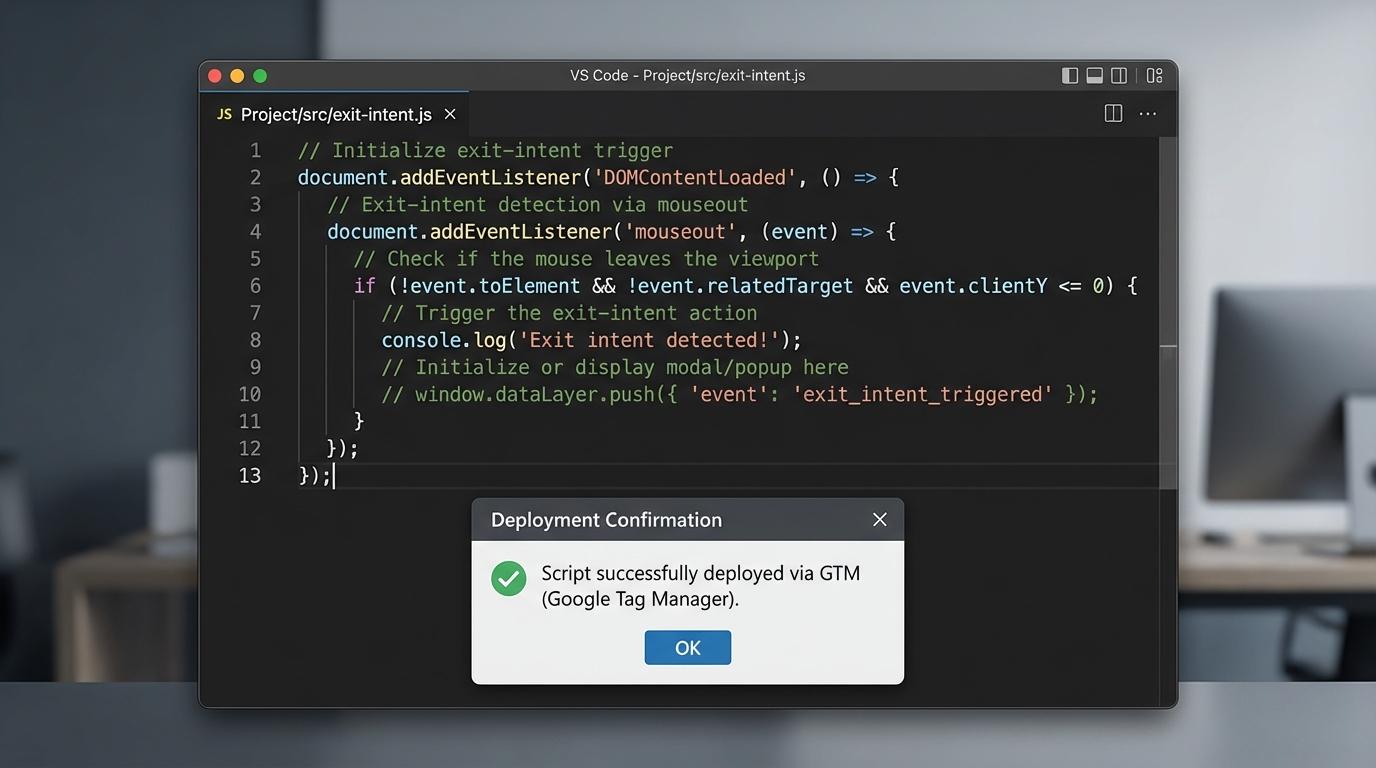
Defining the strategic asset (the offer) is only half the battle. For high-ticket acquisition, the technical deployment must be seamless, precise, and fully integrated with your CRM. Poor implementation—especially overly aggressive or poorly targeted popups—can damage brand perception and lead to inefficient data silos.
Step 1: Selecting the Right Software
The chosen platform must offer robust behavioral and contextual targeting capabilities, far beyond basic mouse-out detection. Key features required for B2B precision strategy:
- URL & Referral Targeting: The ability to display unique, context-specific offers based on the page the user is exiting (e.g., only show the Technical Audit offer on
/pricing/pages or/case-studies/). - Frequency Capping: Strict control over how often a user sees the popup (e.g., once per session, or not again for 30 days if they close it). Strict frequency capping is critical for maintaining B2B trust and preventing brand fatigue.
- A/B Testing Engine: Built-in capability to systematically test headlines, CTAs, creative elements, and offer types to maximize conversion lift.
- CRM/Marketing Automation Integration: Instant, reliable data transfer to systems like HubSpot, Salesforce, or Marketo to ensure immediate follow-up and lead scoring.
Step 2: Configuring Triggers and Frequency
To ensure high-quality lead capture and optimal user experience (UX), we recommend implementing a layered trigger system. This filters out accidental visitors and focuses only on those who have demonstrated genuine engagement:
- Primary Trigger: Exit Intent detected (desktop/mobile).
- Secondary Condition (Intent Qualification): User has spent a minimum of 15 seconds on the page OR scrolled at least 50% down the page.
This layered approach ensures you only interrupt users who have demonstrated real engagement with your content, maximizing the likelihood that they perceive the exit-intent offer as relevant and valuable, not merely an intrusion.
Step 3: Optimizing the Lead Capture Form
The form embedded within the exit popup must adhere to strict conversion principles. Since space is limited, every element must contribute to trust and clarity:
- Visual Hierarchy: Use contrasting button colors that stand out from the popup background and ensure the CTA text is benefit-driven.
- Trust Signals: Clearly state the privacy policy or use a subtle trust badge (e.g., “100% Confidential”) near the submission button.
- Frictionless Delivery: Ensure immediate delivery of the asset upon submission (or redirect to a clear thank-you page explaining the next step and expected delivery time).
- Dynamic Fields: Utilize dynamic form fields if possible (e.g., pre-fill email if they are a known user) to reduce friction for returning visitors.
For high-ticket acquisition, we often utilize forms that not only capture basic contact data but also begin the qualification process (Micro-Qualification). This might include a mandatory drop-down field asking for “Current Revenue Range” or “Team Size.” This ensures sales outreach is highly personalized and prioritized from the first touchpoint. Review our guide on Optimizing Lead Capture Forms for High-Ticket B2B Conversion for deep implementation details.
5. Optimization and Performance Tracking
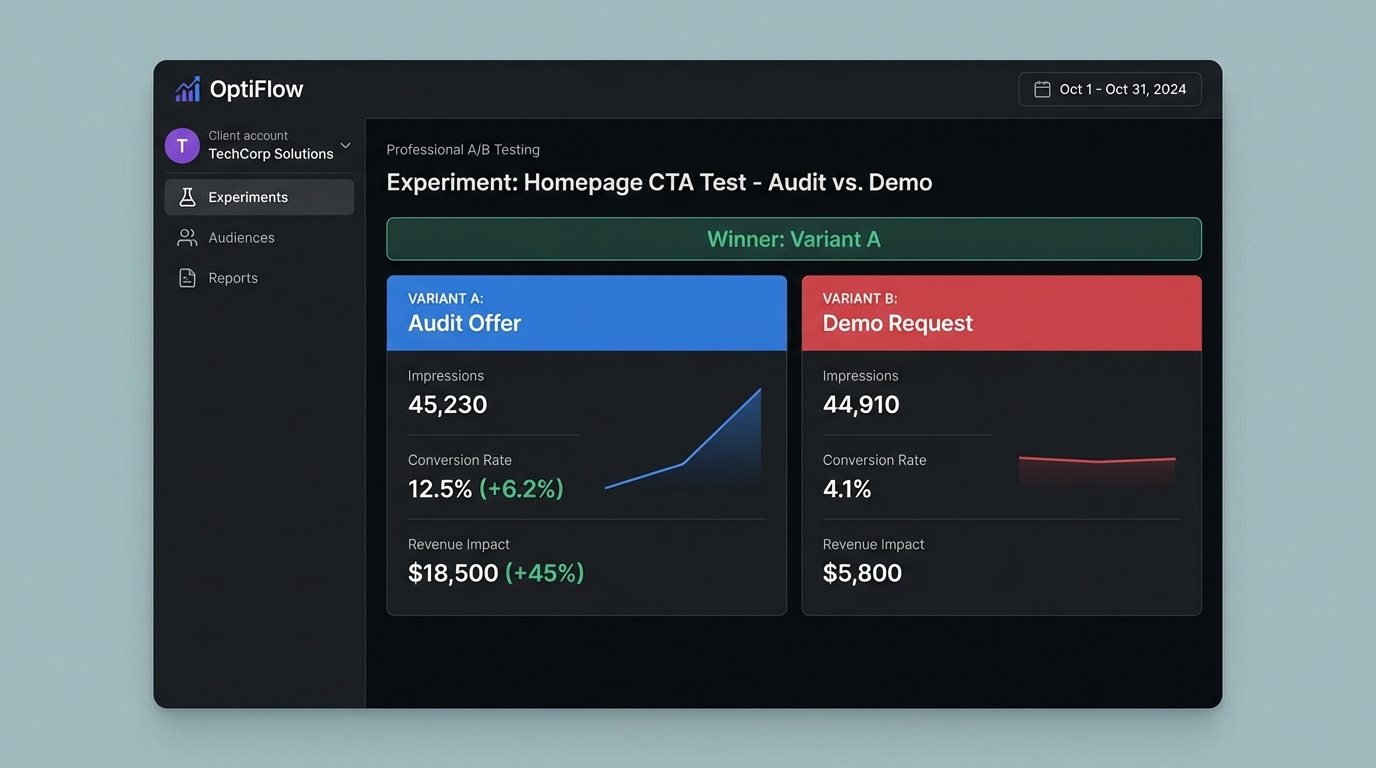
Successful technical deployment marks the minimum requirement, not the endpoint. For high-ticket acquisition, exit-intent strategies demand relentless A/B testing, precise data integration, and continuous optimization to validate ROI and scale performance.
Mandatory A/B Testing Protocol
Strategic optimization never relies on assumptions. To accurately identify true performance drivers, testing must be sequential, isolating one variable at a time. Prioritize testing the elements that impact perceived value and friction:
- Offer Type: Test high-value assets (e.g., a proprietary audit or consultation) against downloadable resources (e.g., a strategic checklist).
- Headline Copy: Test urgency (“Wait! Before you leave…”) versus direct benefit-driven language (“Secure your Q3 strategy roadmap”).
- Visual Design & Context: Test minimalist, text-only popups (high professionalism) versus bold, contextually relevant imagery.
- Form Length: Test the friction point—a single field (email only) versus two fields (name and email), balancing conversion volume against immediate qualification data.
Focus on two core, non-negotiable metrics: The Conversion Rate (CR) of the popup itself, and the subsequent Lead Qualification Rate (LQR) derived from the immediate follow-up actions and sales team vetting.
Integrating Lead Data for Instant Nurturing
Speed is paramount in high-ticket sales. Leads captured via exit popups—especially those from high-intent pages—must flow instantly and accurately into your CRM (HubSpot, Salesforce, etc.) to trigger immediate, personalized nurturing sequences.
Required Integration Steps:
- Field Mapping: Map the exit form fields directly to the corresponding CRM contact properties to ensure data integrity.
- Source Tagging: Explicitly tag the lead source (e.g., “Source: Exit Intent – Pricing Page”). This critical tag dictates the follow-up sequence and alerts sales to high-intent leads.
- SDR Notification: Trigger an immediate internal notification or task assignment to the Sales Development team for leads sourced from high-value pages (e.g., case studies, pricing pages, demo requests).
If leveraging HubSpot, ensure your integration utilizes smart lists and workflows to handle these segmentation tags automatically. (For technical setup, review our guide on Strategic Lead Form Integration with HubSpot CRM.)
Advanced Segmentation and Follow-up
The combination of the data collected in the exit form (e.g., response to a consultation vs. a checklist download) and the source page provides powerful segmentation criteria. This data must be used to hyper-personalize the initial follow-up sequence.
For example, if a visitor downloaded a “SaaS Implementation Checklist” from a feature page, the follow-up email should reference the checklist specifically, validate their immediate pain point, and immediately offer the next logical step—such as a personalized consultation focused on implementing Step 3 of the checklist.
To further enrich this data prior to the exit trigger, consider implementing interactive pre-qualification tools. Quizzes or mini-assessments deployed earlier in the user journey can provide deeper context on the visitor’s needs, resulting in richer segmentation data when the exit intent lead converts. (We detail this methodology in our guide on Strategic Lead Segmentation: Quizzes for High-Intent B2B.)
Frequently Asked Questions
- Are exit-intent popups still effective in 2025?
- Yes. When implemented with strategic intent, highly segmented targeting, and high-value B2B offers, exit-intent popups consistently outperform generic timed popups. The average conversion rate for top-performing exit campaigns remains between 5% and 10%.
- Should I use full-screen overlays or smaller modal popups?
- For high-ticket B2B, smaller, professional modal popups are generally preferred. Full-screen overlays are aggressive and can be perceived as intrusive, potentially damaging the professional image required for high-value transactions. Prioritize clean design and clear messaging.
- How often should a visitor see the exit popup?
- Implement strict frequency capping. If a user closes the popup, do not show it again for that session. If they convert, permanently hide it. A typical best practice is to set a cap of one time per 30-day period for non-converting visitors.
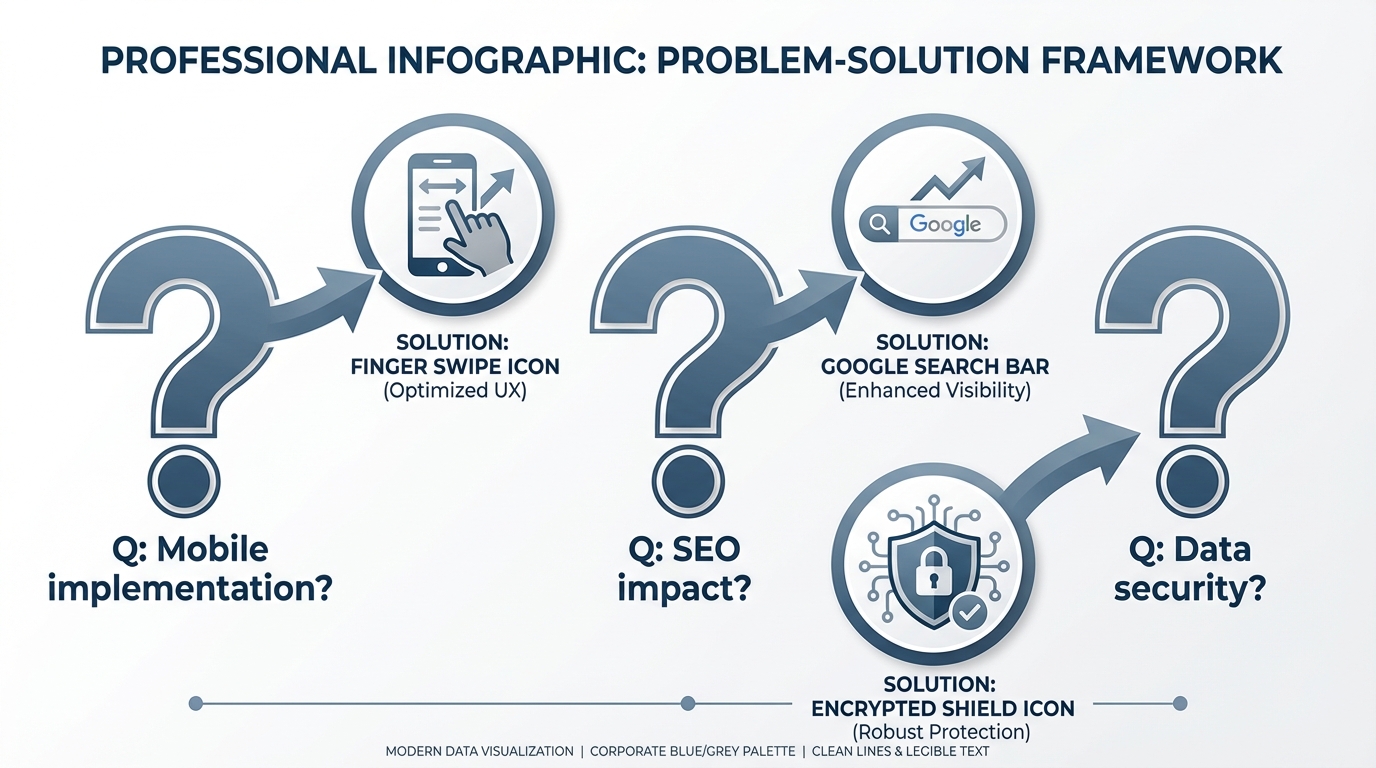
- Do exit popups hurt SEO or mobile ranking?
- Generally, no, provided they are triggered by exit intent and do not cover the content immediately upon landing. Google penalizes intrusive interstitials that block content on entry, especially on mobile. Exit-intent that activates when a user attempts to leave is usually compliant.
Ready to take the next step?
Try AI Lead Generation Today
Click HereReferences
- 20+ Exit-Intent Popup Examples and Tips [Guide 2025] – Wisepops
- How to Use Exit-Intent Pop-ups for Lead Generation – Leadfeeder
- 13 Lead Capture Popup Examples That Convert with Best Practices
- How to Use Popups for Lead Generation – Best Practices, Triggers …
- 6 Ways to Use Exit-intent Popups for Lead Acquisition – Socital