

You are operating in a market saturated by automated, spammy outreach. If your LinkedIn strategy still relies on generic connection requests and immediate sales pitches, you are not generating leads; you are generating instant deletion requests.
The brutal truth of 2025 is that LinkedIn is no longer a networking site; it is a mandatory visibility and validation platform. Decision-makers-the SaaS founders, the high-ticket service buyers, the C-suite-use it to vet you long before they ever respond to an email.
This blueprint is not about volume. It is about precision, authority, and trust. We are focused on the organic, manual methods that scale relational selling, ensuring every connection request is high-intent and every conversation moves directly toward conversion.
The Brutal Truth About LinkedIn in 2025

The average buyer’s LinkedIn inbox is a wasteland of poorly disguised sales pitches. Your competitors are wasting money on InMails or running cheap, volume-based automation tools that destroy their reputation. This is your opportunity.
Our strategic approach demands two shifts:
- You must transform your profile from a résumé into a definitive authority asset.
- You must prioritize conversation starters over sales pitches.
If you cannot articulate the specific, urgent problem you solve within three seconds of a prospect viewing your profile, you have already lost the lead. We must move past the idea of mere “connections” and focus on establishing immediate, undeniable expertise.
Phase 1: Mandatory Profile Audit (The Anti-Sales Profile)
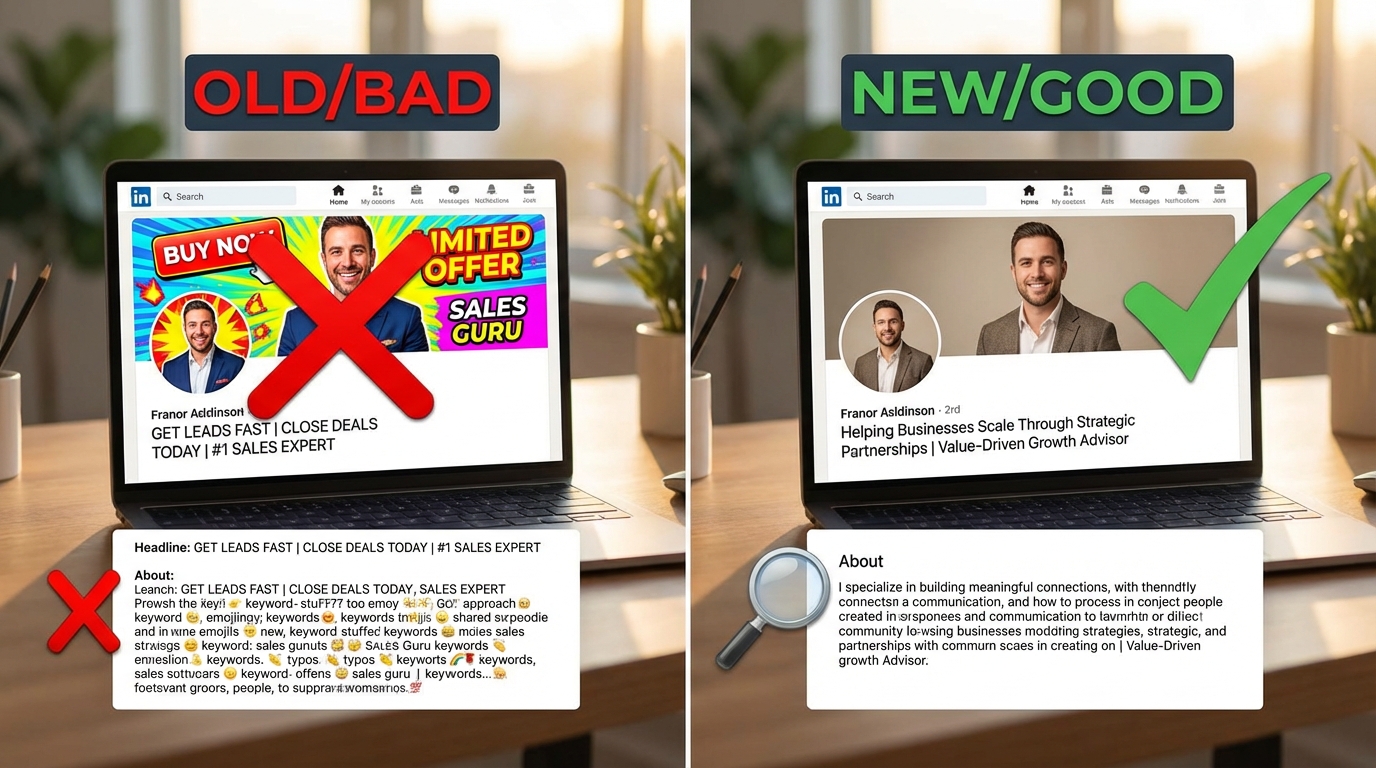
Your LinkedIn profile is not a historical document. It is a landing page designed for conversion. If it screams “SALESPERSON,” decision-makers will activate their defensive shields and ignore you immediately. This is a catastrophic failure in strategy.
The 5-Second Test: Does Your Profile Pass?
When a target prospect lands on your profile, they spend less than five seconds deciding if you are worth engaging with. What do they see?
- Do they see your job title, or do they see the problem you solve?
- Does your banner image look generic, or does it validate your unique mechanism?
- Is your photo professional and approachable, or does it look like a blurry vacation shot?
The goal is radical clarity. We are cloning the principles of successful manual lead generation, which rely heavily on immediate trust signals. For more details on optimizing your foundational assets, review our profile optimization checklist.
Optimizing the Headline and Banner: Stop Using Job Titles
Your headline is the most critical piece of real estate. Do not list “Sales Director at XYZ Corp.” That is irrelevant to the prospect.
Mandatory Headline Structure: Helping [Target ICP] achieve [Desired Outcome] by eliminating [Core Pain Point].
- Weak Example: Sales Manager at SaaS Solutions.
- Strong Example (SaaS Founder Target): Scaling SaaS Revenue Past $1M ARR by optimizing retention-without hiring costly sales teams.
- Strong Example (Real Estate): Guiding high-net-worth investors to secure off-market commercial deals in NYC.
Your banner image must visually reinforce this promise. Use clean, high-contrast text that acts as a secondary headline or a direct call to value. This solidifies your position as an expert, not a solicitor.
Phase 2: Hyper-Targeting the Right Decision Makers

Volume is dead. Precision is currency. If you are reaching out to 1,000 leads to land one meeting, your targeting is fundamentally flawed. We need to identify individuals who are exhibiting clear signs of pain, budget, and authority.
While many marketers rely on Sales Navigator, the strategic user understands how to layer that data with real-world intent signals.
Sales Navigator vs. Manual Search: A Strategic Comparison
Sales Navigator is powerful, but it often encourages lazy, broad outreach. The true advantage comes from using it to filter down to a manageable, highly qualified list that you can manually vet.
| Feature | Sales Navigator (Volume Focus) | High-Intent Manual Strategy (Precision Focus) |
|---|---|---|
| Lead Identification | Broad demographic filters (Title, Industry, Location). | Filters + Intent Signals (Recent posts, comments in niche groups, recent job changes, competitor engagement). |
| Connection Method | InMails or generic connection requests. | Blank connection request followed by personalized, short DM post-acceptance. |
| Qualification Metric | Did they open the InMail? | Did they respond to a specific, observed pain point conversation starter? |
Identifying High-Intent Triggers
Stop reaching out to people who are comfortable. Target those undergoing change or expressing specific frustration.
Mandatory Triggers to Look For:
- Recent Funding Announcement: They have new budget and immediate scaling problems that require urgent solutions.
- New Executive Hire (e.g., VP of Sales): The new executive is under pressure to generate results quickly, meaning they are actively seeking solutions to internal bottlenecks.
- Engagement with Competitor Content: They are commenting on a competitor’s post or engaging in a discussion about a problem your solution fixes. This is explicit pain signaling.
- Posting Job Openings: They are trying to hire a person to solve a problem that technology or a service could solve more efficiently. This indicates a high-priority operational gap.
These triggers provide the necessary context for your initial outreach, moving you from a generic salesperson to a relevant consultant.
Phase 3: Strategic Content Pillars That Build Authority

Content on LinkedIn is not about going viral. It is about establishing credibility with the 10 people who matter most this quarter. Every post must serve one of two purposes: educating your ICP or validating your solution.
Text-Based Infographic: The 3 Pillars of 2025 B2B Trust
- Pillar 1: Specificity Over Generality. Focus on a single, high-value outcome (e.g., “Reducing churn by 15%”), not vague concepts (e.g., “Better leadership”).
- Pillar 2: Anti-Generic Critique. Publicly criticize the outdated methods your competitors still use. Position yourself as the necessary evolution.
- Pillar 3: Data-Driven Proof. Use case studies and quantifiable results. Thought leadership without proof is just opinion.
We see far too many professionals posting motivational quotes or regurgitated self-help advice. That is noise. Your audience needs actionable, highly specific insights that only an expert in their niche could provide.
Mandatory Content Focus Areas:
- The “How We Fixed It” Post: Detailed, anonymized case studies showing a complex problem and the exact steps taken to generate the desired result.
- The “Brutal Truth” Critique: Directly addressing a major industry myth or outdated strategy (e.g., “Why 90% of B2B cold emails fail”).
- The Future Forecast: Strategic predictions about industry shifts (e.g., “How AI will redefine the role of the VP of Marketing by Q3 2026”). This demonstrates forward-thinking authority.
Phase 4: Intentional Outreach and The Short-Form DM Framework
Once your profile is optimized and you have established minimal authority, you must initiate contact. This is where most strategies collapse due to impatience.
Why InMails Are a Catastrophic Failure
Stop using InMails. They are universally recognized as sales tools. They cost you credits, and they immediately position you as a vendor, not a peer. Furthermore, they often hit the inboxes of inactive users.
The strategic move is to send a blank connection request. This lowers the psychological barrier to acceptance. Once accepted, you have access to the direct message channel, which is inherently more conversational and less formal than email or InMail.
The Observation-Based DM (The Taxi Driver Analogy)
The goal of the first DM is not to sell. The goal is to elicit a response. You are not the person selling a mix tape in Times Square; you are the taxi driver offering a ride to someone who is clearly running late.
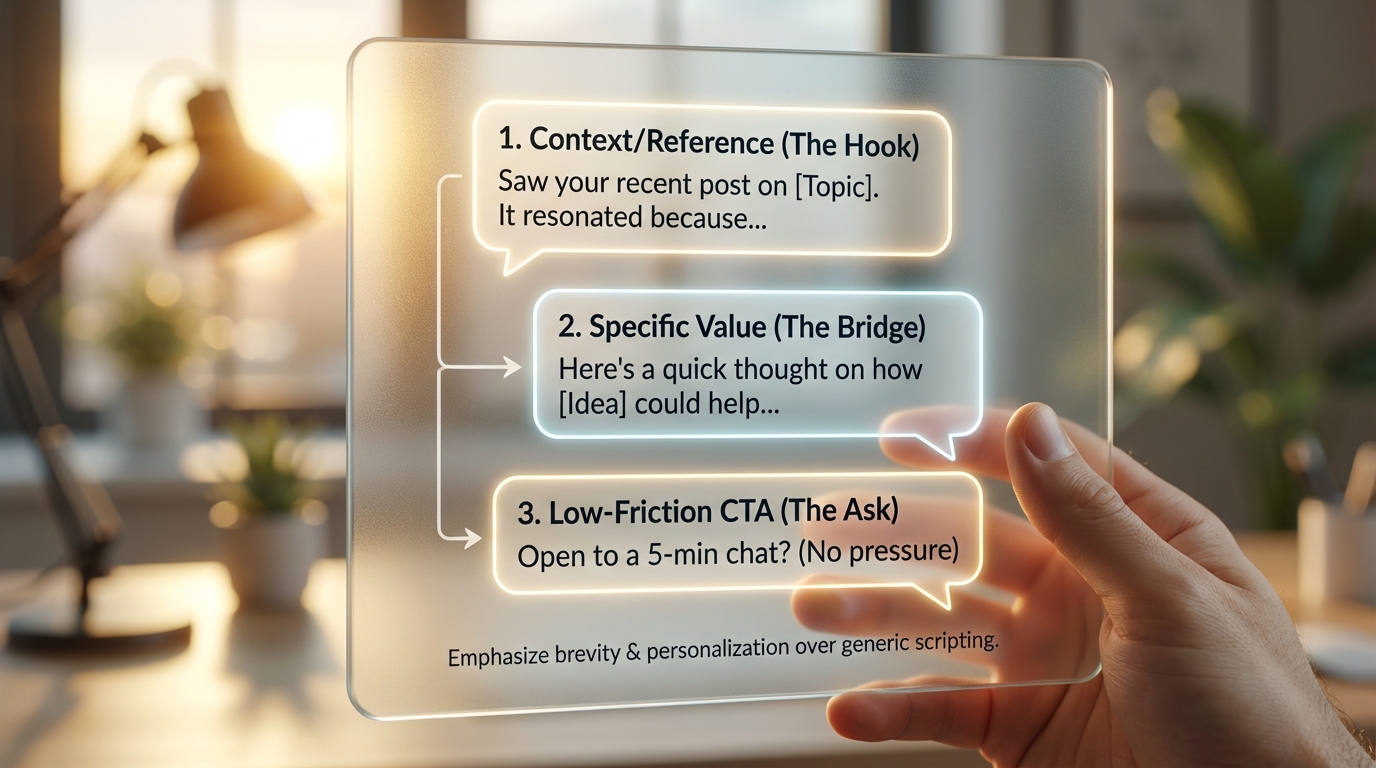
Your message must be short-under 50 words-and based entirely on the specific trigger you identified in Phase 2. This is the core of effective, non-spammy outreach. If you want to master high-intent, manual outreach, you need to treat the DM like a text message, not a formal email. This is essential for B2B lead generation ideas without cold calling.
The Framework: Observation + Conversational Question
- Observation: Reference the trigger. (“I saw your company just secured Series B funding,” or “I noticed you posted about high talent acquisition costs last week.”)
- Contextual Value: Briefly state a relevant insight. (“That kind of growth usually makes current reporting systems obsolete.”)
- Conversational Question: Ask a low-friction question that requires a specific answer. (“Are you currently seeing bottlenecks in X department, or is Y the priority right now?”)
This approach forces the prospect to engage on their terms, about their problem. If they respond, you have successfully qualified them into a conversation.
Phase 5: Conversion and Extraction (The Critical Step)

The conversation is flowing. The prospect has confirmed a pain point that you solve. Now, you need to move them off LinkedIn and into your conversion system. Staying in the LinkedIn DM ecosystem adds friction and slows down the sales cycle.
For high-ticket sales and service providers, the ultimate goal is not just the connection; it is acquiring verified contact information to begin multi-channel follow-up and nurture sequences.
Key Highlights: The Conversion Mandate
- The AI Advantage: Use AI lead generation software to instantly find the verified personal email address and direct phone number of the prospect once the connection is established. This bypasses the need to ask for contact details directly in the DM.
- Channel Shift: Once verified contact details are secured, shift the conversation immediately to a more professional medium (email or scheduled call).
- Define the Next Step: Never end a conversation without proposing a clear, low-commitment next step, such as sharing a highly relevant 5-minute video or a specific case study tailored to their confirmed pain point.
The strategic use of AI tools in this phase is mandatory for scalability in 2025. Manual verification of hundreds of leads is inefficient. Leveraging technology to find a prospect’s direct, personal contact information allows you to initiate a high-trust, multi-touch follow-up sequence that is impossible to achieve solely within LinkedIn’s messaging system.
Qualification Checklist for LinkedIn Leads
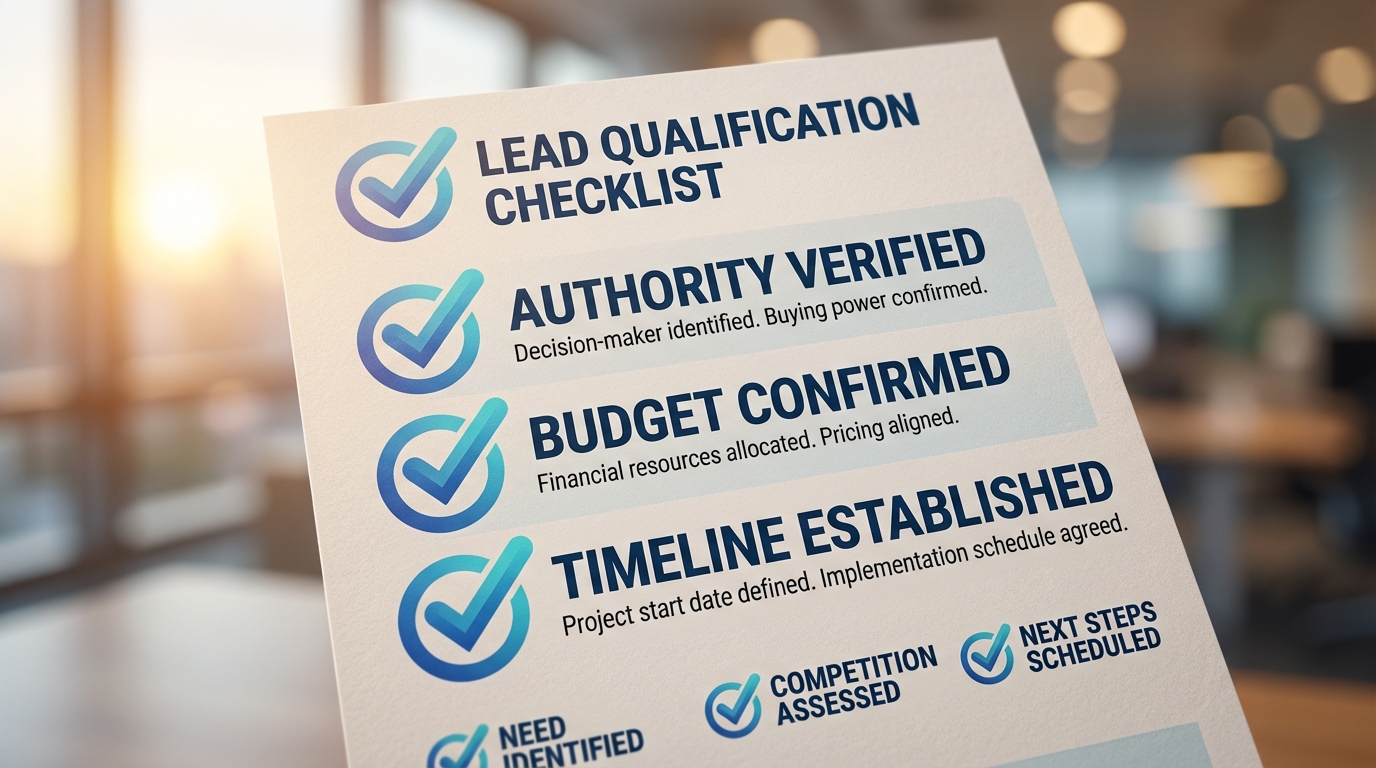
Before you spend time nurturing a lead, you must ensure they meet your Ideal Client Profile (ICP). Use this checklist to score the lead based on observed data, moving beyond simple title or company size.
- ✅ Authority: Is the individual the primary decision-maker, or do they directly influence the budget holder? (Check their title and recent professional history.)
- ✅ Need/Pain: Have they explicitly confirmed a pain point that your solution solves, either in their content, public activity, or private DM conversation?
- ✅ Urgency/Timing: Is the problem immediate (i.e., triggered by a recent event like funding, growth, or a failed project)? Avoid leads who are merely “researching.”
- ✅ Engagement Quality: Do they respond quickly and thoughtfully, indicating they value the conversation, or are they sending one-word replies?
- ✅ Verified Contact: Have you successfully acquired a non-LinkedIn contact method (personal email or phone)?
If a lead scores low on the first three items, archive them. Your time is finite. This level of rigorous qualification, combined with disciplined tracking manual lead generation efforts, is what separates scalable businesses from those stuck in perpetual outreach cycles.
LinkedIn Lead Generation: Pros and Cons (The Unfiltered View)
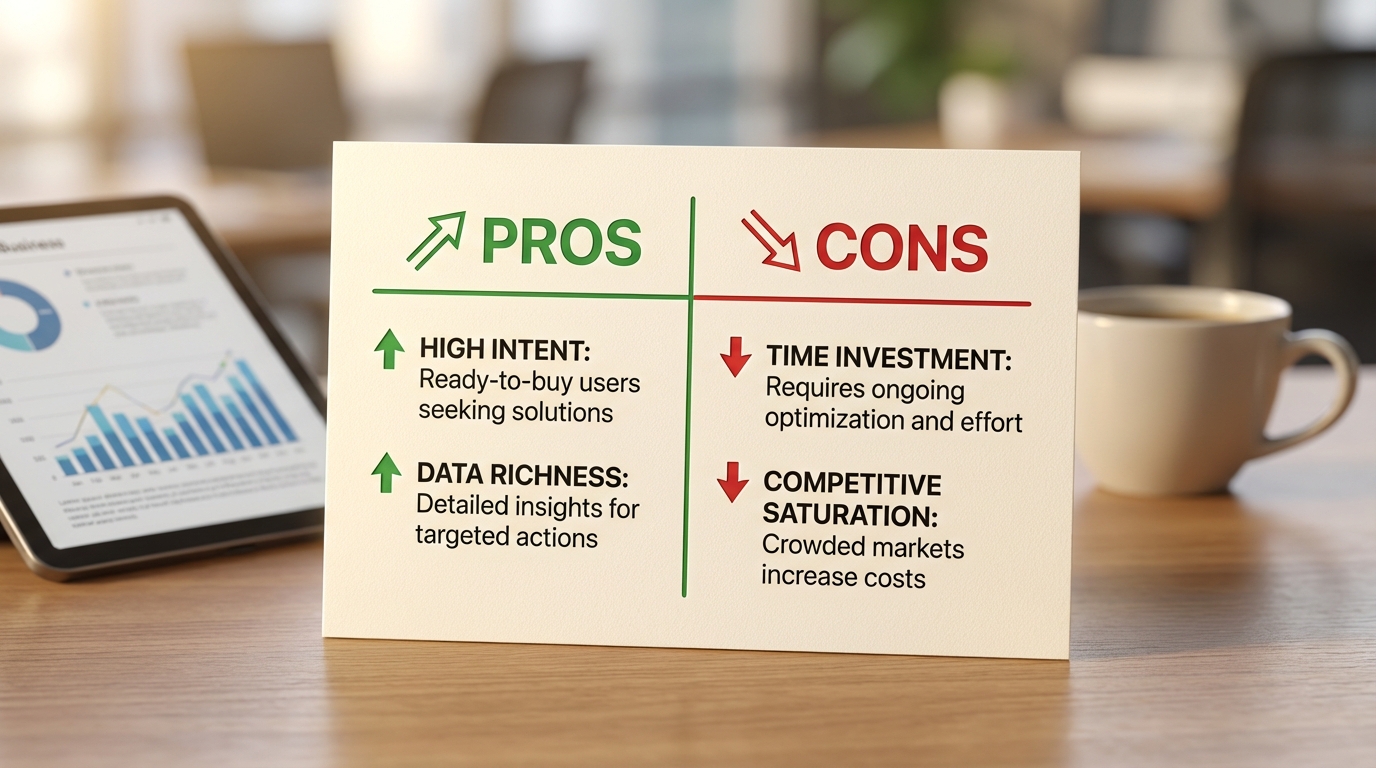
LinkedIn is powerful, but it requires strategic discipline. Do not confuse activity with productivity.
PROS (Strategic Advantages)
- Unmatched B2B Data Quality: Precise targeting based on verified professional roles and company data.
- Immediate Authority Building: Content and profile optimization instantly position you as an expert, accelerating trust.
- Intentional Outreach Context: Allows for outreach based on high-value triggers (promotions, funding, job posts).
- High-Value Connections: Quality over quantity results in shorter sales cycles for high-ticket services.
CONS (Operational Risks)
- Reputation Risk from Automation: Over-automation leads to spam flagging and immediate damage to brand trust.
- High Noise Level: Your content and messages compete against millions of other poorly executed sales attempts.
- DM Constraint: Conversations must be kept ultra-short; complex sales processes struggle in the DM environment.
- Focus Drift: Easy to spend too much time on content creation that generates engagement but not qualified revenue.
Conclusion: The Mandate for Precision

The era of mass LinkedIn scraping and automated InMails is over for anyone serious about high-ticket B2B sales in 2025. You must accept that lead generation is a trust game, and trust is built manually, one highly qualified connection at a time.
Start by auditing your profile today. Stop selling your job title and start selling the critical solution you provide. Use the observation-based DM framework to initiate conversations that matter, and leverage modern AI tools to extract verified contact information, ensuring your follow-up is relentless across multiple channels. Precision is the only path to scalability.
Frequently Asked Questions

Is LinkedIn automation completely dead for lead generation in 2025?
Definitive Answer: Automation used for mass connection requests or generic InMails is a liability that destroys your brand reputation. However, automation used for research, identifying high-intent triggers, or using AI to find verified contact data (post-connection) is mandatory for efficient scaling. Use automation to augment precision, not volume.
How quickly should I follow up after a prospect accepts my connection request?
Definitive Answer: Immediately. Your personalized, observation-based DM should be sent within minutes of acceptance. This capitalizes on the prospect’s active presence on the platform. Waiting longer allows them to forget who you are and why they accepted.
Should I use video messages or voice notes on LinkedIn?
Definitive Answer: Yes, but strategically. Video messages and voice notes are high-friction communication methods, but they are highly effective for follow-up or when a written DM has been ignored. They demonstrate effort and break through the noise, proving you are not an automated bot. Use them only after a prospect has confirmed a pain point or failed to respond to your initial text DM.
Ready to take the next step?
Try AI Lead Generation Today
Click Here