

Founders and sales reps rely heavily on high-touch, manual lead generation.
That approach works,initially. But scaling requires massive labor costs (and significant burnout).
Our strategy is simple: separate time from income.
We build systems designed to generate revenue passively, allowing us to focus on product development and core business growth.
The solution is the automated affiliate funnel: A strategic, set-and-forget mechanism.
It converts cold traffic into recurring commission without daily intervention.
We are not chasing one-off ClickBank sales. We are building digital assets that deliver predictable, passive revenue streams in 2026 and beyond.
Key Takeaways for Immediate Action
- Prioritize Recurring Commissions: Single-payment products equal manual labor. Focus 100% on high-LTV SaaS, subscriptions, and membership platforms.
- Build the Technical Stack First: Your funnel fails without robust, integrated automation. This means tools for landing pages, sequencing, and serious integration capabilities (think Zapier/Webhooks).
- Leverage AI for Evergreen Assets: Use AI to generate high-quality, long-form content (SEO articles, webinar scripts). This perpetually drives cold traffic.
- Measure Efficiency (TIR): Track the Time-to-Income Ratio (TIR), not just gross sales volume. Passive income is fundamentally an efficiency metric.
#1: The Foundation: Choosing Automated Products
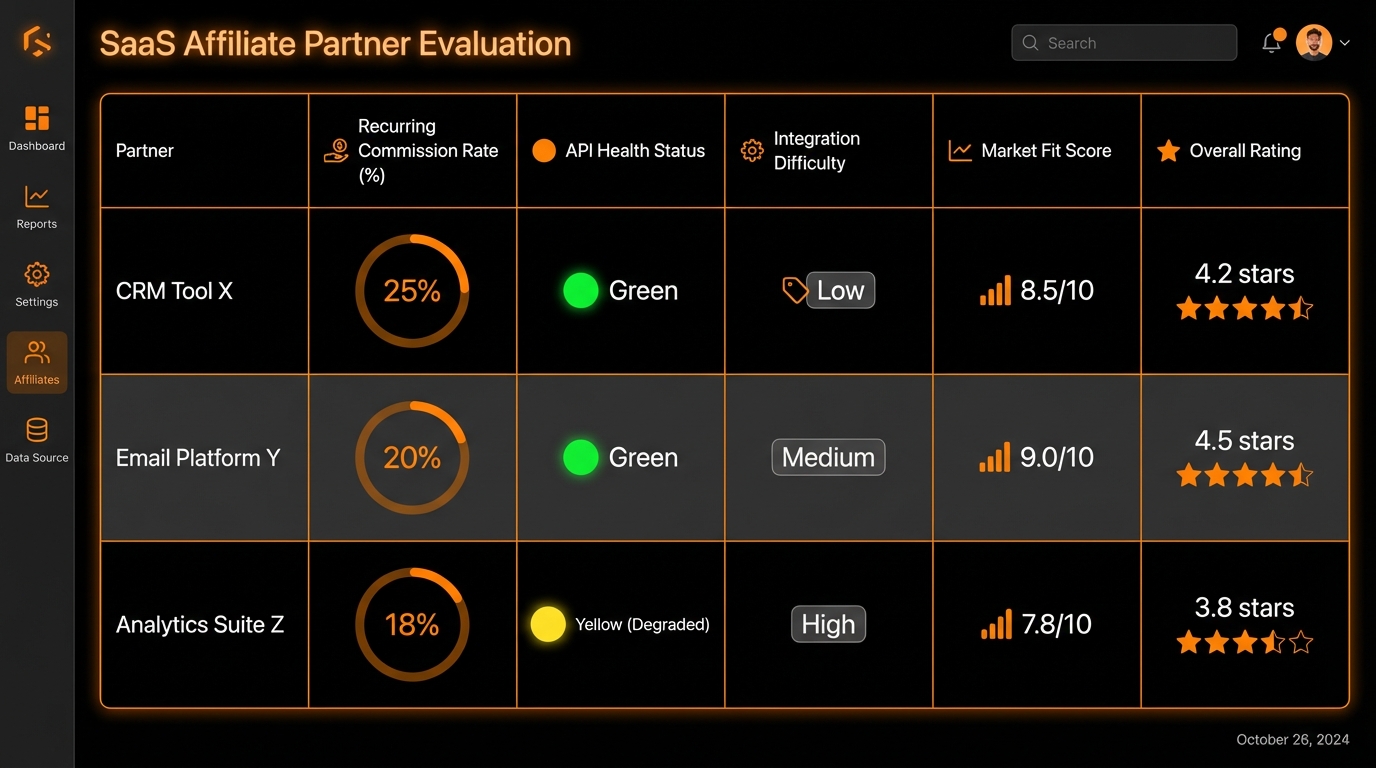
Passive income mandates recurring payments. If your product pays only once, you are forced to constantly refill the funnel just to maintain revenue.
That is not automation. That is a high-cost job.
Our strategy is non-negotiable: Affiliate offers must carry high retention rates and strong recurring commissions. We target high-value assets relevant to our core audience (Founders, SDRs, Sales Reps): SaaS tools, premium memberships, and high-ticket digital subscriptions.
Why SaaS Is the Only Viable Strategy
Software-as-a-Service (SaaS) is the ideal vehicle for automated affiliate income. Period.
- Predictable Revenue: A customer signed today means revenue next month. This allows for accurate, reliable financial forecasting.
- High Lifetime Value (LTV): SaaS solves critical business pain points. Integration into a workflow ensures high stickiness: customers rarely churn. This maximizes your referral LTV.
- High Commission Rates: B2B SaaS platforms often offer 20% to 40% recurring commissions. These payments last for the entire life of the customer.
Focus on products that solve painful, immediate problems for our target audience (Founders, SDRs, Sales Reps). If the tool demonstrably saves time or directly increases revenue, retention is guaranteed.
“We stopped promoting $50 eBooks years ago. The effort required to sell 100 copies is better spent finding one high-value SaaS tool that pays us $50/month per user for three years.”
This strategic shift separates passive success from active, low-leverage hustle. You must anchor your funnel around recurring revenue streams.
#2: The Tech Stack: Blueprinting True Automation
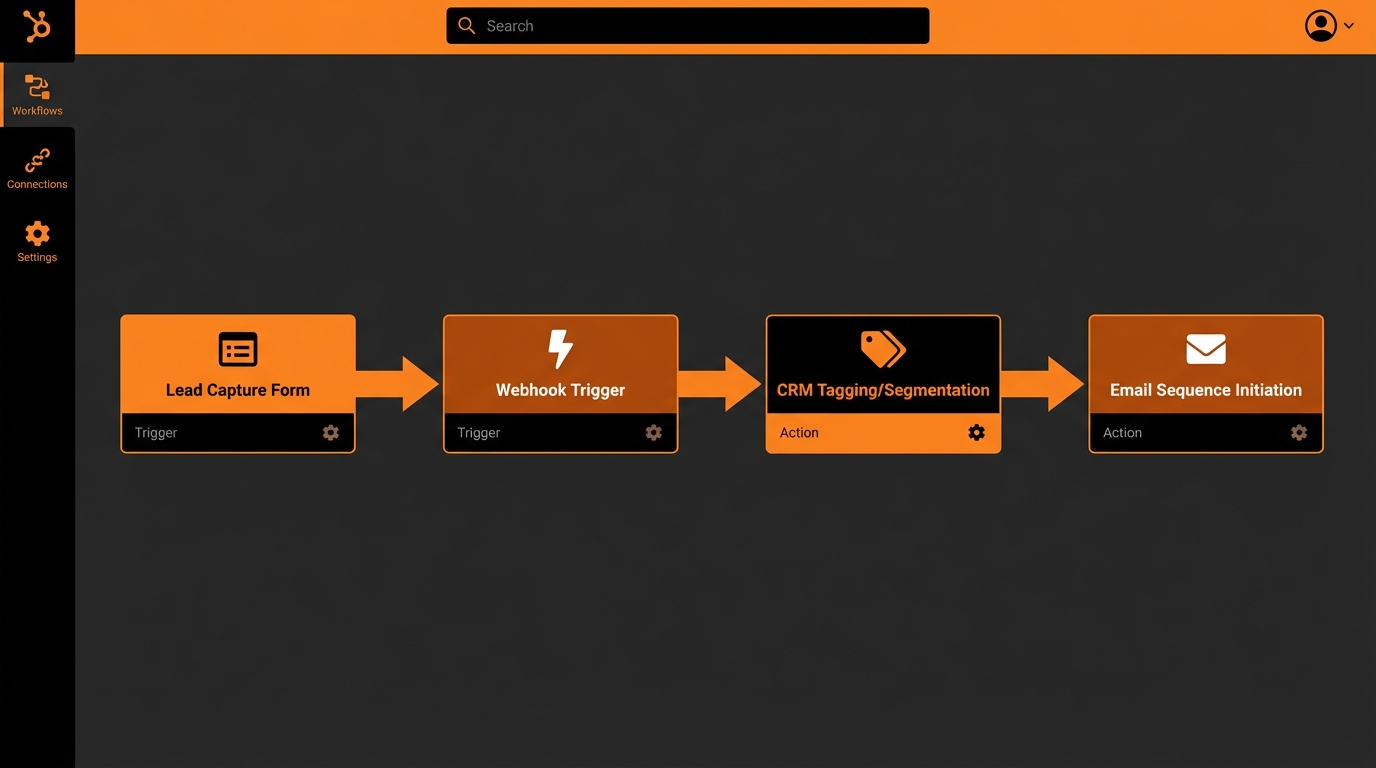
True automation requires seamless communication between systems. If your components don’t talk, your funnel breaks.
We know this because manual data transfer is a time sink,it kills velocity. Our approach is tiered: Start lean to validate the offer. Then, scale aggressively using professional tools built specifically for integration and speed.
The Validation Stack: Proving the Concept (Under $50/month)
This stack minimizes capital expenditure. It validates the core conversion hypothesis before we commit serious resources. Use this framework for the first 90 days.
- Landing Page / CRM: Systeme.io or ConvertKit. Both offer robust free tiers. They handle basic lead capture and the initial segmentation process.
- Email Automation: MailerLite (Free up to 1,000 subscribers). Crucial for setting up the initial 7-day automated indoctrination sequence.
- Tracking & Attribution: Google Analytics 4 (GA4) and strict UTM parameters. This is manual, high-friction tracking,but it is effective for proving source traffic ROI early on.
The Velocity Stack: Scaling for Revenue ($300+/month)
This is the infrastructure we use for high-volume, multi-channel lead generation. If you want strategic velocity,the kind that boosts revenue by 77%,you need these tools. This stack is non-negotiable for scaling past 100 leads per day.
- Funnel Builder: ClickFunnels 2.0 or GoHighLevel. These platforms are engineered for rapid deployment, high conversion rates, and minimal downtime.
- Advanced Email & CRM: ActiveCampaign or HubSpot (Sales Hub). This allows for complex behavioral tagging, lead scoring, and hyper-personalized follow-up sequences.
- Integration Core: Zapier or Make.com (Webhooks). This is the engine of automation. It connects traffic sources (like Typeform quizzes or custom software signups) directly to your CRM and tracking sheets without human intervention.
This is the critical competitive gap we exploit: Most affiliates rely on basic, static email signups. We don’t. We leverage webhooks and Zapier to instantly transfer lead data (behavioral scores, source data, firmographic details) directly into our CRM.
This triggers personalized, behavior-based sequences immediately,which drastically increases conversion rates. Competitors simply cannot keep up with that level of speed and personalization.
| Component | Lean Stack Recommendation | Pro Stack Recommendation (Velocity) | Key Automation Role |
|---|---|---|---|
| Page Builder | Systeme.io (Free) | GoHighLevel / ClickFunnels | Rapid deployment; maximized conversion rate optimization (CRO). |
| Email/CRM | MailerLite (Free Tier) | ActiveCampaign | Behavioral segmentation and automated follow-up sequences based on intent. |
| Integration Layer | Manual Data Transfer (High friction) | Zapier/Make.com (Webhooks) | Instant data transfer; triggers sales events automatically. |
| Tracking | GA4 + UTMs | Custom Affiliate Tracking Software (e.g., Post Affiliate Pro) | Precise attribution; calculating true Lifetime Value (LTV). |
#3: The 3 Passive Funnel Blueprints
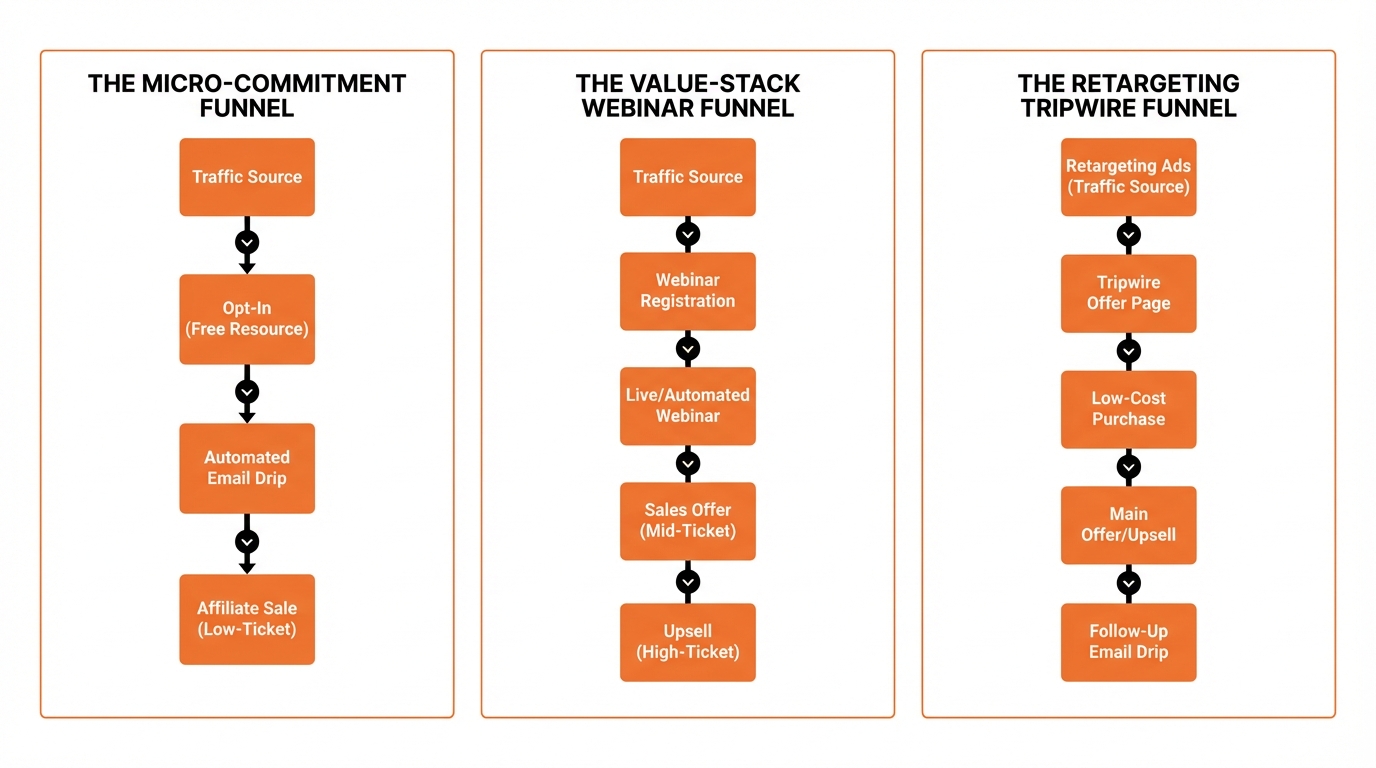
AIDA (Awareness, Interest, Desire, Action) provides the framework. The blueprint determines the revenue outcome. We prioritize three high-leverage models,designed exclusively for set-and-forget automation.
Blueprint #3.1: The Bridge Page Funnel
This is the shortest path to conversion. It is built for audiences already aware of their problem and actively searching for a specific solution.
- High-Intent Traffic Source: Target users already searching for solutions (e.g., “Top 5 AI Lead Gen Tools 2026”). This is pure high-intent traffic.
- The Bridge Page (Pre-Sell): This is a lean, high-impact landing page. It summarizes the core pain point, introduces the affiliate product as the definitive fix, and leverages social proof (testimonials, case studies). Critical: Zero opt-in required here.
- Conversion: Direct click-through via your trackable affiliate link.
Strategic Insight: The Bridge Page is the ultimate pre-sell mechanism. It frontloads the conviction, ensuring the user hits the vendor page ready to buy. We deploy this strategy for fast conversions on low-to-mid ticket SaaS offers.
Blueprint #3.2: The Free Asset Funnel (The List Builder)
This is the standard lead generation model. It builds the email list, which remains your most valuable, perpetually scalable passive asset.
- Traffic Source (Volume): Use organic channels (SEO/Social) to drive high volume. Example: Long-form guide promoting list growth.
- The Lead Magnet Hook: Offer a high-value asset (e.g., “The 2026 Client-Winning Email Template Pack”). This is the required opt-in gateway.
- The Automated Nurture Sequence: Subscribers enter a pre-written, perpetually running email sequence (we recommend 5–7 days). Emails 1–2 deliver the promised asset and establish authority. Emails 3–5 strategically introduce the affiliate tool required to execute the strategy taught in the magnet.
- Final CTA: The last email delivers the direct affiliate link, paired with a strong scarcity or limited-time offer (e.g., “Free Trial Access Ends Tonight”).
This model is truly passive. The email sequence runs indefinitely. Your only job is scaling traffic to the lead magnet landing page,and measuring the revenue output.
Blueprint #3.3: The Evergreen Webinar Funnel
This model is engineered to convert high-ticket offers ($500+). It requires higher setup investment, but delivers massive returns.
- Traffic Source (High-Quality): Use targeted paid traffic (essential for testing viability) or high-volume organic content that validates the registration offer.
- Registration Gateway: Capture essential data (name/email) for the “exclusive free training” or “masterclass.”
- The Automated Event: This is a high-production, pre-recorded video (45–60 minutes). It must deliver massive value while strategically positioning the affiliate product as the only viable solution for achieving the training’s promise.
- Post-Webinar Sequence: A short, high-conversion email sequence (3 days maximum) follows up. This sequence addresses common objections, reinforces the value proposition, and drives the final CTA.
We leverage advanced AI scripting tools to generate the core outline and high-converting copy for these webinars. This dramatically cuts down on production time (and cost). This is how we maintain high velocity in our funnel deployment. For more on this, review The 2025 Blueprint for AI Passive Income & Tools.
#4: Implementing “Set-and-Forget” Automation
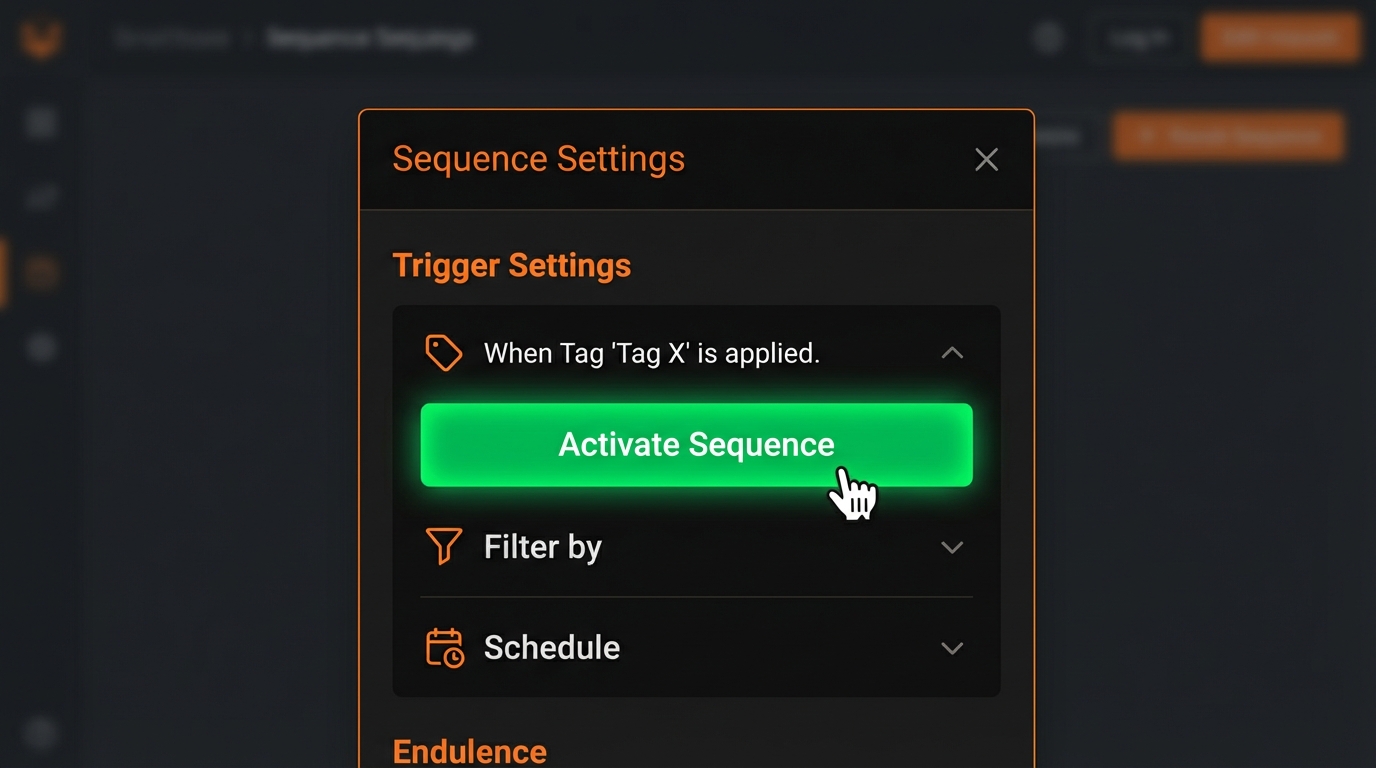
Step #4.1: AI-Driven Content Generation Velocity
- SEO Content Drafts: We deploy LLMs to generate high-velocity, comprehensive article drafts (3,000+ words). These target long-tail, high-intent keywords. Our internal editors then refine the output, ensuring brand authority and voice consistency.
- Email Copy Sequencing: AI handles 80% of the initial 5-7 email follow-up sequence copy. Crucially, this sequence must be strategically mapped to the AIDA framework for maximum conversion lift.
- Video Scripts (Webinars): For the Evergreen Webinar Funnel blueprint, AI creates the initial script, transitions, and powerful calls-to-action. This structured output enables rapid, high-quality faceless video production.
Step #4.2: Mapping the Automated Email Sequence
- Day 0 (Delivery): Immediate lead magnet delivery. Maximize perceived value instantly.
- Day 1 (Nurture/Problem Identification): Share a high-impact case study or testimonial. Introduce the core problem the affiliate product solves. (Crucially: No affiliate link yet.)
- Day 2 (Pre-Sell/Mechanism): Detail the precise solution. Explain how the affiliate product functions and demonstrate its capability. Embed a non-affiliate link to a related blog post for deeper trust-building.
- Day 3 (The Conversion Ask): This is the main revenue driver. Provide the affiliate link and emphasize the unique, time-sensitive benefit. (CTA Example: Start Your Free Trial Now.)
- Day 5 (Objection Handling & Exit): Send the final email. Address the single most common objection (e.g., cost, complexity). Reinforce scarcity or the trial expiration deadline.
#5: Scaling, Metrics, and Compliance
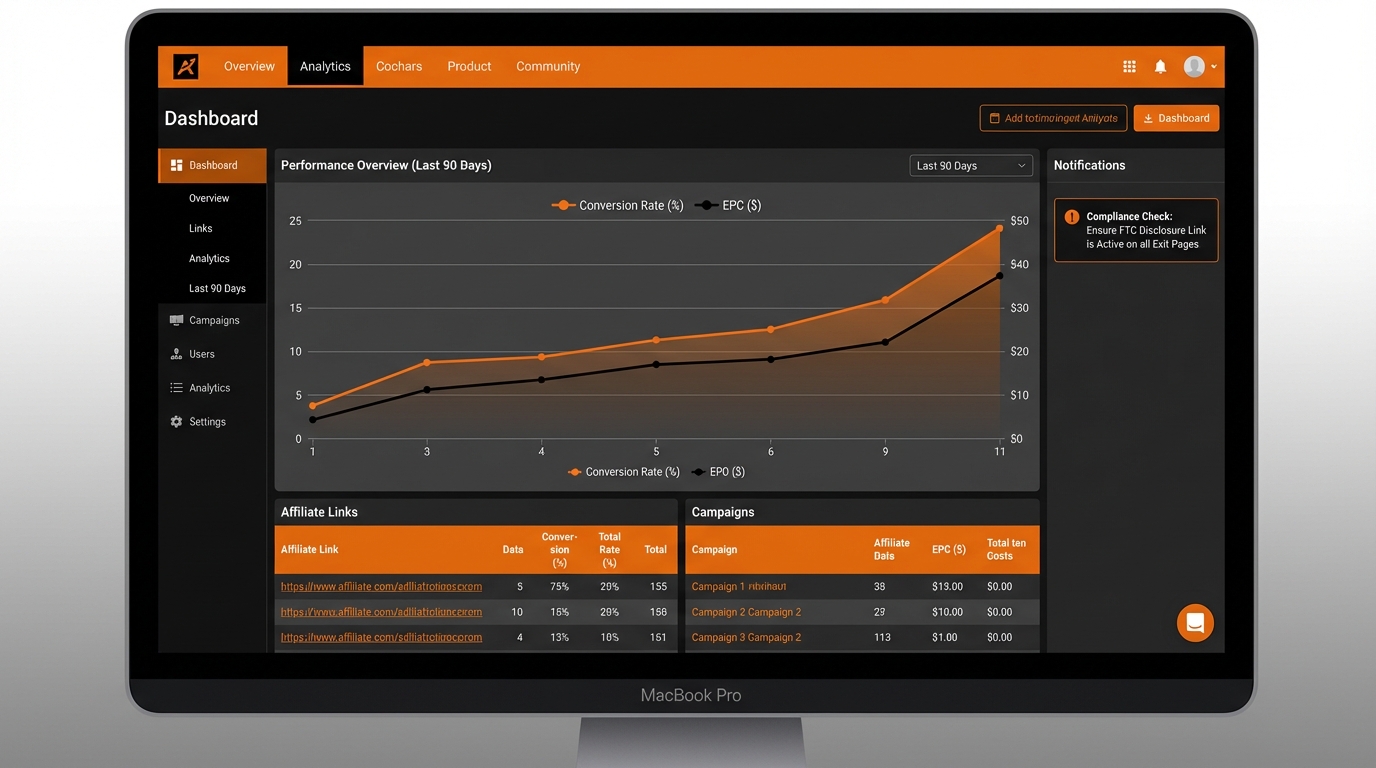
You cannot scale what you refuse to measure. Automated funnels demand more than standard sales metrics. We track KPIs designed specifically for measuring passive efficiency.
Key Passive Efficiency Metrics
These metrics differentiate a truly passive funnel from disguised manual labor. They tell you if your system is scaling,or just stalling.
- Time-to-Income Ratio (TIR): Total hours spent building and optimizing the funnel / Total passive revenue (12 months). A lower TIR is the goal. It signals true automation efficiency.
- LTV of Referral (LTVR): The total lifetime revenue from one referred customer. We only prioritize products where the LTVR exceeds $500. Focus on recurring revenue streams.
- Asset Conversion Rate (ACR): The conversion rate from the traffic asset (blog post, video, ad) to the initial opt-in (lead magnet). If the ACR drops below 3%, kill the asset or optimize immediately.
If your TIR is consistently high, your current tech stack is costing you time. Upgrade your automation tools. Automation is a mandatory investment in efficiency,it is not a cost center.
Mitigating Risk: Compliance is Non-Negotiable
The regulatory environment is tightening daily. This is mandatory, especially concerning AI usage and affiliate disclosures. Ignore compliance, and you kill your revenue stream.
- Clear FTC Disclosure: Every piece of content (blog, email, video) utilizing an affiliate link must have a prominent disclosure. We recommend placing it at the top and bottom (e.g., “This post contains affiliate links. We may earn a commission.”).
- GDPR/CCPA Compliance: Your email opt-in forms must clearly state how data is used. Automated sequences must respect regional privacy laws. Use double opt-ins universally.
- AI Content Transparency: If you leverage AI for scale, acknowledge it where required by platforms (Google, Amazon KDP). Honesty builds trust. Trust drives long-term, predictable sales.
A strategic, automated business minimizes legal and reputational risk by design. Prioritize AI Ethics alongside revenue generation. Your reputation is your ultimate asset.
Frequently Asked Questions (FAQ)
1. How long does it take to see passive income from these funnels?
We define passive income as revenue without daily, active input. The initial build takes 4 to 8 weeks,this covers the technical stack, the core lead magnet, and the crucial 7-day email sequence.
Expect true revenue traction only after 3 to 6 months. Why the lag? Organic assets (SEO, high-value content) need time to gain authority. Be pragmatic: immediate results mean manual labor, not automation.
2. Should I focus on paid traffic or organic traffic for automation?
Focus strictly on organic first (SEO, faceless video assets). Organic traffic is perpetual; it aligns perfectly with the passive definition.
Paid traffic demands constant monitoring and optimization,it immediately spikes your Time-to-Income Ratio (TIR). Only deploy budget after your funnel is proven to convert consistently with zero ad spend. This minimizes risk and maintains passivity.
3. Can I use AI to manage the entire funnel?
AI is an accelerator, never a manager. It eliminates the busywork: content generation, email drafting, optimization suggestions.
But strategy remains a human task. You must handle product selection, funnel architecture, integration setup (Zapier is non-negotiable), and high-level performance review. AI removes execution overhead; it doesn’t replace the strategist.
4. What is the biggest mistake people make with automated funnels?
The fatal flaw: treating automation as “set-it-and-forget-it.”
True passive income demands active review, not active execution. You must audit your KPIs (LTVR, ACR) monthly. If conversion rates dip, your content is stale or the offer positioning is failing. Automation handles the delivery; you handle the strategic pivot.
Ready to take the next step?
Manual outreach is a time sink. Stop wasting hours. Leverage our proprietary AI Lead Generation Software now,find clients’ personal emails and hyper-fill your automated funnels immediately.
Start Your Free TrialReferences
- Building a hands-off affiliate funnel using free tools,here’s what’s …
- How to Make Passive Income with Affiliate Marketing in 2025
- How to create a profitable affiliate marketing funnel in 2026
- How I Built a Passive Income Stream with AI , Before I Ever …
- Top Automated Affiliate Programs for Passive Income – Refgrow