


The role of the Sales Development Representative (SDR) has fundamentally changed. You are no longer just a cold caller: you are a strategic operator. You are a cyborg.
To dominate pipeline generation in 2025, you need more than grit,you need the right technology stack. We use these tools to augment human effort, systematically removing friction and automating administrative noise.
We see far too many sales organizations fail at this stage. They either over-invest in tools they never fully utilize, or they rely on outdated systems that deliver dirty, unusable data.
The truth is simple: a powerful tech stack amplifies a good process. It cannot fix a broken one.
This guide breaks down the non-negotiable categories of the modern SDR stack. We show you precisely where to invest your budget for maximum pipeline generation and quantifiable revenue acceleration.
Key Takeaways for the 2025 SDR Stack
- Data Quality is Non-Negotiable: Your stack is only as effective as the data feeding it. Invest heavily in enrichment tools that prioritize mobile numbers and verified personal emails, not generic info@ addresses.
- The CRM is Your Memory: Use platforms like Salesforce or HubSpot as the central source of truth. If the data isn’t logged, the activity didn’t happen,and your pipeline reporting is flawed.
- SEPs Drive Consistency: Sales Engagement Platforms (SEPs) ensure consistent multi-channel follow-up. This is critical because meaningful engagement often requires 8 to 12 touches.
- AI Augments, Not Replaces: The modern stack utilizes AI for lead scoring, conversation intelligence, and finding hyper-targeted contact information, freeing the SDR to focus on high-value human interaction.
- Audit Regularly: Review your stack twice yearly. Cut tools that create data silos or fail to connect directly to revenue outcomes. A tighter stack always beats a taller one.
Step #1: The Core Foundation: CRM as the Central Command

Every successful sales operation begins with a solid foundation. The Customer Relationship Management (CRM) system is not just software; it is the memory, the map, and the motor of your entire Revenue Operations (RevOps) framework. Treat it as the central command.
It must be the single source of truth for every prospect, every interaction, and every stage of the pipeline. If your CRM fails, the entire sales machine stalls.
1.1. Choosing Your CRM Platform
The choice is dictated by two factors: scale and complexity.
- Salesforce: The enterprise standard. It offers immense customization and unmatched scalability. Ideal for organizations with complex, multi-stage sales cycles and large teams that need deep, custom reporting capabilities.
- HubSpot Sales Hub: Known for its intuitive interface and seamless integration across marketing and sales. Excellent for startups and SMBs that prioritize speed and ease of use. We find that HubSpot gets new SDRs productive faster due to its streamlined UI.
If your CRM is clunky, everything else slows down. Reps waste crucial time hunting for context or manually logging activities,that is non-negotiable friction. Our goal is zero friction for new SDRs.
We found that simplifying our CRM logging process cut the administrative load on our SDRs by 15%. That 15% immediately translated into more time spent engaging prospects and booking meetings.
1.2. The Data Hygiene Mandate
This is the critical failure point for most sales stacks. Companies invest heavily in expensive engagement tools but fundamentally neglect the quality of the data feeding those systems. Bad data guarantees poor results.
Data decay is a measurable threat. Industry research confirms that nearly 30% of B2B contacts change roles or companies annually. If your data isn’t constantly verified and enriched, your outreach efforts are simply targeting ghosts. This wastes budget and crushes SDR morale.
Action Mandate: Clean data is not a luxury feature; it is the absolute prerequisite for sustainable revenue generation. If your CRM is dirty, the rest of the stack is useless.
Step #2: AI-Powered Prospecting and Data Enrichment

The modern SDR operates differently. The 2025 sales playbook mandates moving beyond static lists and generic databases. We now leverage intelligent tools to find precise, actionable contact data,data tied directly to buying signals and intent.
Why the shift? Generic outreach yields generic, low open rates. Our focus must be on finding the specific, non-automated contact points that enable a high-trust, personalized approach.
2.1. The Critical Role of Enrichment
Data enrichment tools are essential. They take basic company information (firmographics) and layer on specific contact details (personal emails, direct dials, technographics). This process transforms a simple name into an actionable, fully-profiled lead.
Key Players for B2B Data:
- ZoomInfo: The established market leader, offering extensive B2B contact data, critical intent signals, and detailed organizational charts.
- Cognism / UpLead: Focused heavily on data quality and GDPR/CCPA compliance, often providing higher mobile number accuracy than competitors.
However, even the best traditional enrichment often misses the mark on deep personalization. It provides the ‘what,’ but rarely the high-value ‘who’ and ‘where.’
2.2. Leveraging AI for Personal Email Acquisition
The highest quality outreach,the kind that converts high-ticket, enterprise clients,requires reaching the decision-maker directly. This means strategically bypassing corporate firewalls and shared departmental inboxes.
This is where specialized AI lead generation platforms come into play. They fill the gap left by traditional B2B databases.
For example, our offering, Pyrsonalize, focuses specifically on finding verified, personal email addresses for key decision-makers. This enables a level of strategic cold email personalization that mass-market tools simply cannot touch.
The Strategic Advantage of Personalized Data:
- High Deliverability: Targeting personal emails drastically reduces bounce rates and spam filtering risk.
- Reduced Noise: You reach the prospect in a less cluttered, high-priority environment.
- Trust Building: Personal outreach facilitates a non-automated, human-first conversation. This is essential for high-value B2B sales cycles.
If you are serious about non-automated, trust-based lead acquisition and hitting enterprise quotas, this specialized data layer is mandatory.<!–
Step #3: The Engagement Engine – Scaling Human Interaction
Data is useless without action. Having executed Step #2 (Data Enrichment), the immediate challenge is scaling personalized interaction. This requires persistence, precision, and multi-channel orchestration.
The solution is the Sales Engagement Platform (SEP),the engine that turns clean data into qualified meetings.
3.1. Sales Engagement Platforms (SEPs)
SEPs automate the precise sequencing of touches: Email 1, LinkedIn connection request, Call Attempt 1, Email 2, etc. They are the operational backbone ensuring no prospect falls through the cracks, regardless of the SDR’s pipeline volume.
This is mission-critical: research consistently shows that 44% of reps abandon outreach after only one follow-up. SEPs prevent this institutional failure by enforcing a structured B2B cold calling approach and rigorous follow-up strategy.
They are your System of Action, sitting directly atop your CRM (which remains your System of Record).
Key Players:
- Outreach: A robust, enterprise-grade platform known for powerful sequencing, governance controls, and deep analytics on cadence performance.
- Salesloft: Similar to Outreach, offering strong engagement analytics, AI-powered guidance for optimal timing, and seamless integration with core CRM systems.
3.2. Social Selling and Networked Intelligence
B2B relationships are built on LinkedIn, but it remains a massive time sink if managed without structure. Social selling is not optional in 2025; it must be integrated directly into your SEP sequence flow.
- LinkedIn Sales Navigator: Non-negotiable for targeted prospecting. It provides essential advanced search filters, real-time updates on key accounts, and InMail credits necessary to reach non-connections outside of your shared network.
- Inbox Management Tools (e.g., Kondo): Tools that streamline the LinkedIn inbox are emerging as critical productivity hacks. They allow SDRs to label, snooze, and manage their DMs like a high-speed email client, ensuring timely follow-up on critical social conversations that often lead to direct bookings.
The goal here is integration. LinkedIn activity should trigger the next step in the SEP, ensuring the SDR utilizes every available channel efficiently.
Step #4: The Optimization Layer – Intelligence and Productivity

Execution is only half the battle. Elite SDR teams don’t just execute outreach; they continuously analyze and adapt their approach in real-time. Step #4 is where we leverage intelligence and automation to maximize productivity and conversion rates,this is the differentiator between average and world-class performance.
4.1. Conversation Intelligence (CI)
Conversation Intelligence (CI) platforms are non-negotiable for modern coaching. These tools record, transcribe, and analyze every single sales call and meeting. They instantly shift coaching from subjective anecdote and scattered notes to objective, actionable data.
CI provides immediate visibility into what is working (and what isn’t) across the entire team:
- Topic Tracking: Instantly see which topics (pricing, competitors, features) are driving engagement or causing friction.
- Talk-to-Listen Ratio: Optimize the balance between talking and listening, ensuring SDRs maintain control while prioritizing prospect needs.
- Objection Analysis: Identify common prospect resistance points and analyze how top performers successfully navigate them. This is critical for handling complex objections efficiently.
Key Players: Gong, Chorus.ai, ExecVision.
CI platforms are the ultimate coaching multiplier. They scale the expertise of your top 5% of reps across the entire team instantly, ensuring consistent messaging and rapid skill development.
4.2. Scheduling and Meeting Management
Friction is pipeline leakage. After an SDR successfully qualifies a prospect, the handoff to the Account Executive (AE) must be seamless and instant. SDRs should never waste time engaging in back-and-forth email chains just to find a time slot.
Dedicated scheduling tools eliminate this administrative burden, speeding up time-to-meeting:
- Standard Booking (e.g., Calendly): These tools integrate directly with the SDR’s calendar and CRM, allowing prospects to book time instantly via a personalized link embedded in the outreach sequence.
- Advanced Routing (e.g., Chili Piper): Offers sophisticated routing capabilities. Once the SDR qualifies the prospect, the tool allows the prospect to book directly with the assigned AE, or the relevant specialist, based on territory or product line. This ensures smooth, fast, and accurate handoffs, preventing qualified leads from cooling off.
This layer ensures that once the hard work of engagement is done, the administrative process doesn’t kill momentum.
SDR Tech Stack Comparison: Core Categories Defined
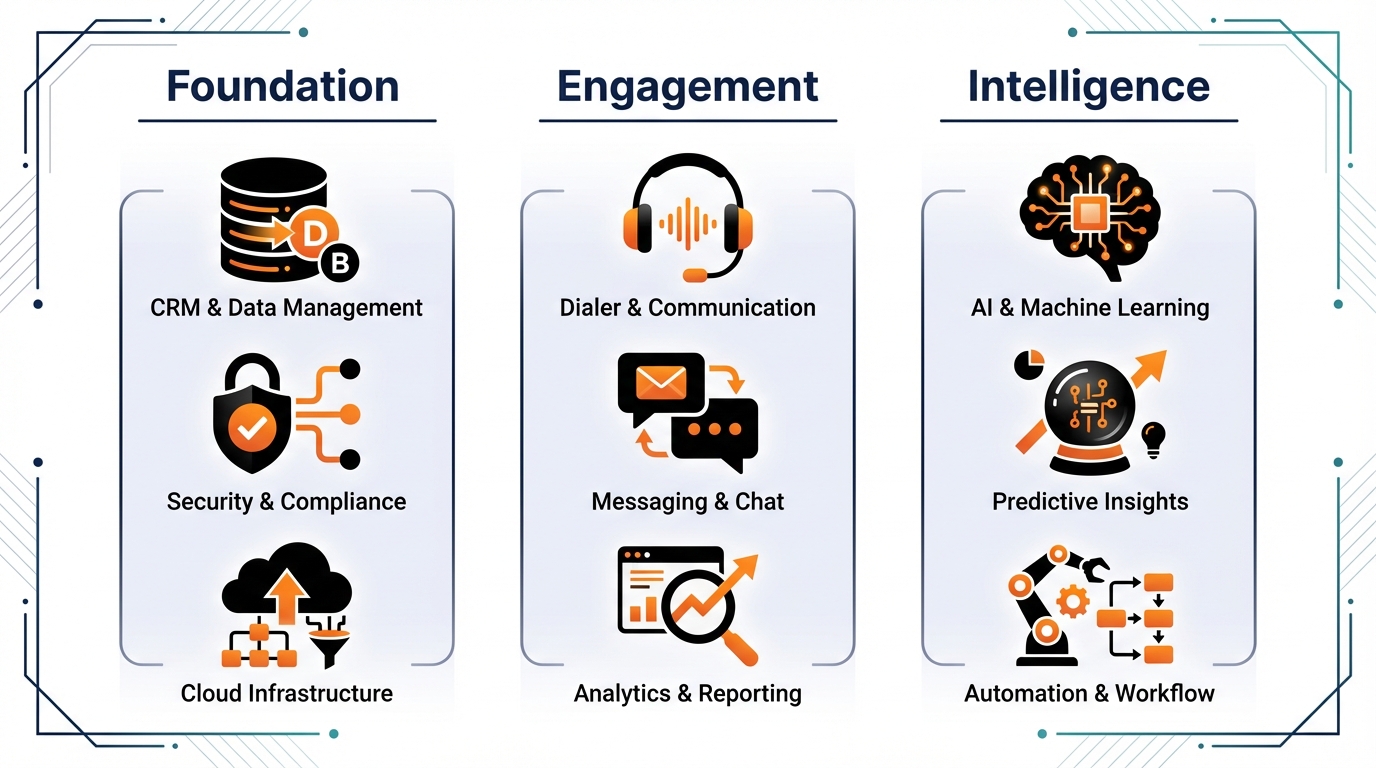
We have outlined the four critical layers required for a high-performing SDR team. Before deploying budget or onboarding new agents, you must have clarity on the foundational tech stack components. Every tool must serve a specific, measurable purpose (if it doesn’t, cut it).
This comparison breaks down the core categories, defining their primary function and the exact revenue metrics they are designed to impact. This is how we justify every investment.
| Category | Primary Function | Key Metric Impacted | Example Tools |
|---|---|---|---|
| CRM (System of Record) | Central data storage, pipeline tracking, and standardized reporting (The single source of truth). | Forecasting Accuracy, Data Hygiene, Pipeline Visibility. | Salesforce, HubSpot, Close. |
| Data/Enrichment (Fuel) | Finding and verifying accurate contact information (emails, mobile dials) to ensure outreach hits the target. | Deliverability Rate, Connect Rate, SDR Productivity. | ZoomInfo, Cognism, Pyrsonalize (Personal Email AI). |
| SEP (System of Action) | Multi-channel sequence automation, task management, and rigorous follow-up enforcement across channels. | Touches per Prospect, Reply Rate, Meeting Booked Rate. | Outreach, Salesloft, Groove. |
| Conversation Intelligence (Coaching) | Analyzing sales calls for actionable insights, quality assurance, coaching, and performance tracking at scale. | Win Rate, Talk-to-Listen Ratio, Time-to-Ramp (for new hires). | Gong, Chorus.ai. |
Step #5: Avoiding Tool Sprawl and Proving ROI
The primary mistake new sales leaders make is purchasing a tool for every perceived gap. This results in “tool sprawl”,a silent killer of productivity.
Tool sprawl generates shadow work, creates data silos, causes integration headaches, and drives adoption rates into the ground. If our SDRs spend more time managing the tech stack than engaging prospects, the technology is failing the team.
5.1. The Integration Imperative
Every component we add must integrate seamlessly with our foundational systems (CRM and SEP). If data does not flow automatically and bidirectionally, that tool is not adding value,it is creating administrative drag.
We aggressively prioritize converged stacks. Look for platforms that offer native AI, analytics, and enablement built directly into the core systems, eliminating the need for complex, failure-prone API synchronization.
5.2. Measuring Adoption and Impact
Success is not measured by the purchase order; it is measured by adoption rate and verifiable revenue impact. Before renewal, we must answer these critical performance questions:
- Are 90% of our SDRs actively using the Sequence Engagement Platform (SEP) daily?
- Has the accuracy of our contact data increased by X% since implementing the enrichment tool, leading to a Y% decrease in bounce rates?
- Is our average time-to-first-booked-meeting decreasing directly because of the scheduling software implementation?
If you cannot tie a tool directly to a measurable increase in efficiency, consistency, or revenue generation, cut it immediately.
Our goal is simple: less admin, more selling. A strategically curated tech stack frees our SDRs to focus on the human elements that actually drive pipeline: deep research, hyper-personalization, and meaningful conversation.
Frequently Asked Questions

- What is the biggest mistake sales leaders make when equipping their SDRs?
- The primary error is prioritizing the “flashy” engagement tools (SEPs) over foundational data quality (Enrichment). An SDR using the world’s best sequencing platform will fail if 30% of their emails bounce due to bad data. This is a pipeline collapse waiting to happen. Our rule is simple: Invest in clean, high-quality data first. Engagement tools are useless without accurate inputs.
- How often should a sales organization audit its SDR tech stack?
- We mandate a formal audit twice annually. The acceleration of AI capabilities means your competitive edge can erode rapidly. Auditing ensures two critical outcomes: 1) You are immediately cutting redundant tools (avoiding tool sprawl), and 2) You are leveraging new AI features that provide a measurable ROI advantage.
- Should new SDRs rely on free tools?
- Free tools are valuable for proof-of-concept testing (e.g., freemium CRM tiers or basic data lookups). However, they rarely scale to support predictable revenue targets. If you are serious about achieving enterprise-level results, you must invest in robust, enterprise-grade data enrichment and a dedicated Sales Engagement Platform (SEP). Free options are for learning; paid options are for earning.
- What is the functional difference between a CRM and an SEP?
- The CRM (Customer Relationship Management) is the System of Record,it tracks history, manages the pipeline, and holds the relationship data. The SEP (Sales Engagement Platform) is the System of Action,it executes the multi-channel sequences (calls, emails, social touches) and automates follow-up tasks. Crucially, they must integrate perfectly. If they don’t sync, you lose data integrity and waste SDR time.
- How does AI Lead Generation support high-value, non-automated sales?
- AI Lead Generation, especially for validated personal contact data, is the engine of personalization. Instead of mass-blasting generic addresses, the SDR uses the hyper-accurate, high-quality data to craft a specific, human message. This targeted approach cuts through the noise, builds immediate trust, and drastically increases conversion rates compared to generic, automated outreach.
Ready to take the next step?
Try AI Lead Generation Today
Click HereReferences
- The Modern Sales Tech Stack: Essential Tools for 2025 – Highspot
- the ultimate sales “tech stack” (learned after 20 years as an SDR in …
- The Ultimate SDR Tech Stack for 2025 – Kondo
- The Complete SaaS Sales Tech Stack: 15 Tools Every SDR Should …
- SDR Tech Stack 101: Understanding Common Sales Tools – Vendition