
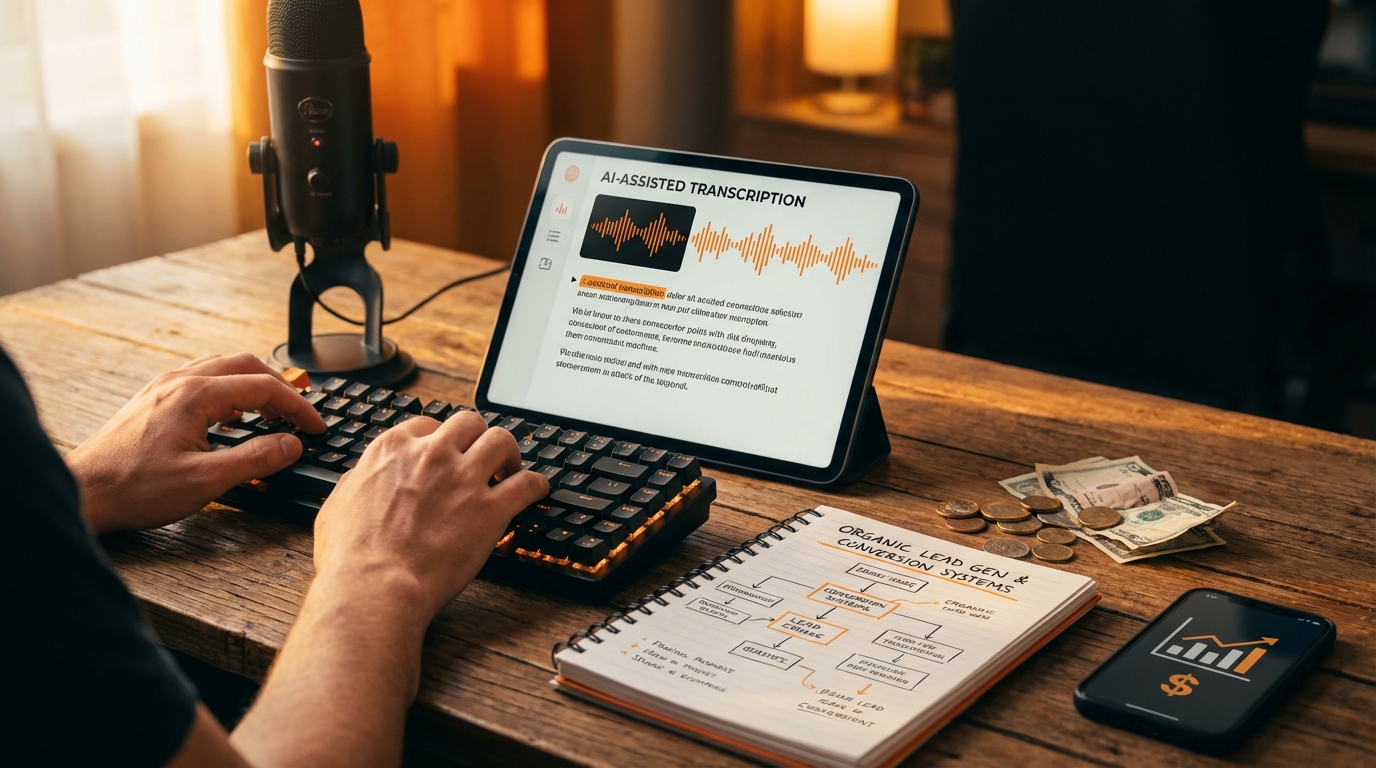

The transcription landscape fundamentally changed the moment AI became viable. We tracked this strategic shift starting in late 2023.
Now (in 2025), the game is completely different: You are no longer paid to type audio files.
That task is automated. It is economically obsolete.
The traditional transcription model,where a human types every word from scratch,pays far less than minimum wage, even on specialized platforms.
If you want to earn real money, your new role is the AI Post-Editor.
This is the definition of high leverage. You leverage AI accuracy (which reliably hits 90%+) and then apply human Quality Control (QC). The goal: hitting 99%+ accuracy fast. This strategy maximizes output volume and drives up your effective hourly rate. This is how we operate.
We built this guide on maximizing efficiency and revenue. We focus strictly on the strategic path: getting paid for your time, not your typing speed.
Key Takeaways: The New Transcription Reality
- Focus on Leverage: Manual transcription is dead. Period. Your role is the AI Post-Editor, focused on high-speed Quality Control (QC) and optimization.
- Avoid Platform Traps: Platforms quote high rates per audio hour. But the effective hourly wage is often $5-$15. Why? Low leverage and unsustainable competition.
- The 1:3 Efficiency Target: Our benchmark is spending 20 minutes of work time editing 60 minutes of audio. This specific ratio defines immediate profitability.
- Go Independent: Highest rates require direct client acquisition. Focus on niche markets (Legal, Academic). Here, you control the tool stack, the margin, and the entire conversion system.
The High-Leverage Role: Mastering AI Post-Editing
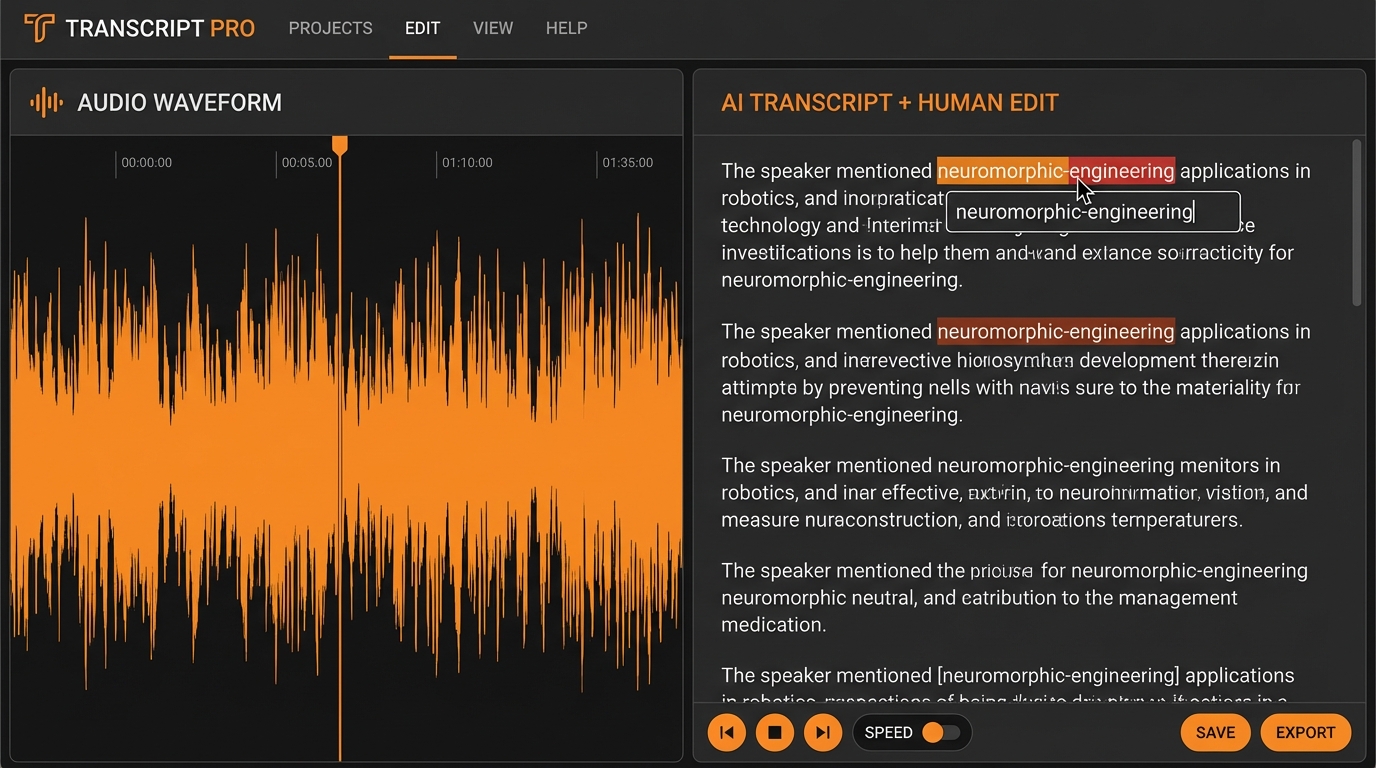
The transcription environment has evolved. We tracked this strategic shift.
AI delivers the first draft instantly. This means your required skill set is fundamentally changed: it shifts from typing speed to strategic editing and contextual intelligence.
Your job is not data entry. Your job is quality control and risk mitigation.
The AI Post-Editor focuses only on the final 10% of the transcript’s execution. This 10% is the high-leverage activity that separates usable data from garbage.
The AI draft is fast. It is never perfect.
It can transcribe the sound, but it cannot transcribe the meaning. This critical distinction is your core value proposition,the reason clients pay a premium.
If you aim for high-paying niches (Legal, Medical, Specialized Research), absolute accuracy is non-negotiable. Errors in these fields cost thousands of dollars or risk litigation.
This is precisely where generic AI fails. This is where your specialized expertise commands a premium rate.
AI’s Three Fundamental Fail Points (The Human Advantage)
AI models improve daily, but they consistently struggle with three core issues that define the need for a human editor:
- Contextual Homophones: AI prioritizes acoustic similarity over semantic meaning. It might hear “coastal data” when the speaker clearly said “caudal data” (a medical term). These contextually nonsensical errors require strategic human intervention.
- Speaker Attribution Failure: Dialogue sequencing breaks down instantly when multiple people speak simultaneously. A human must manually tag, verify, and sequence speaker identities,a necessity for legal or research interviews.
- Specialized Terminology & Jargon: AI cannot verify unique proper nouns, legal precedents, or proprietary corporate acronyms against external, proprietary databases. Manual research and correction are mandatory for any high-value document.
We leverage AI for speed; we leverage human intelligence for accuracy.
Path Comparison: Platform Editing vs. Independent AI Workflow
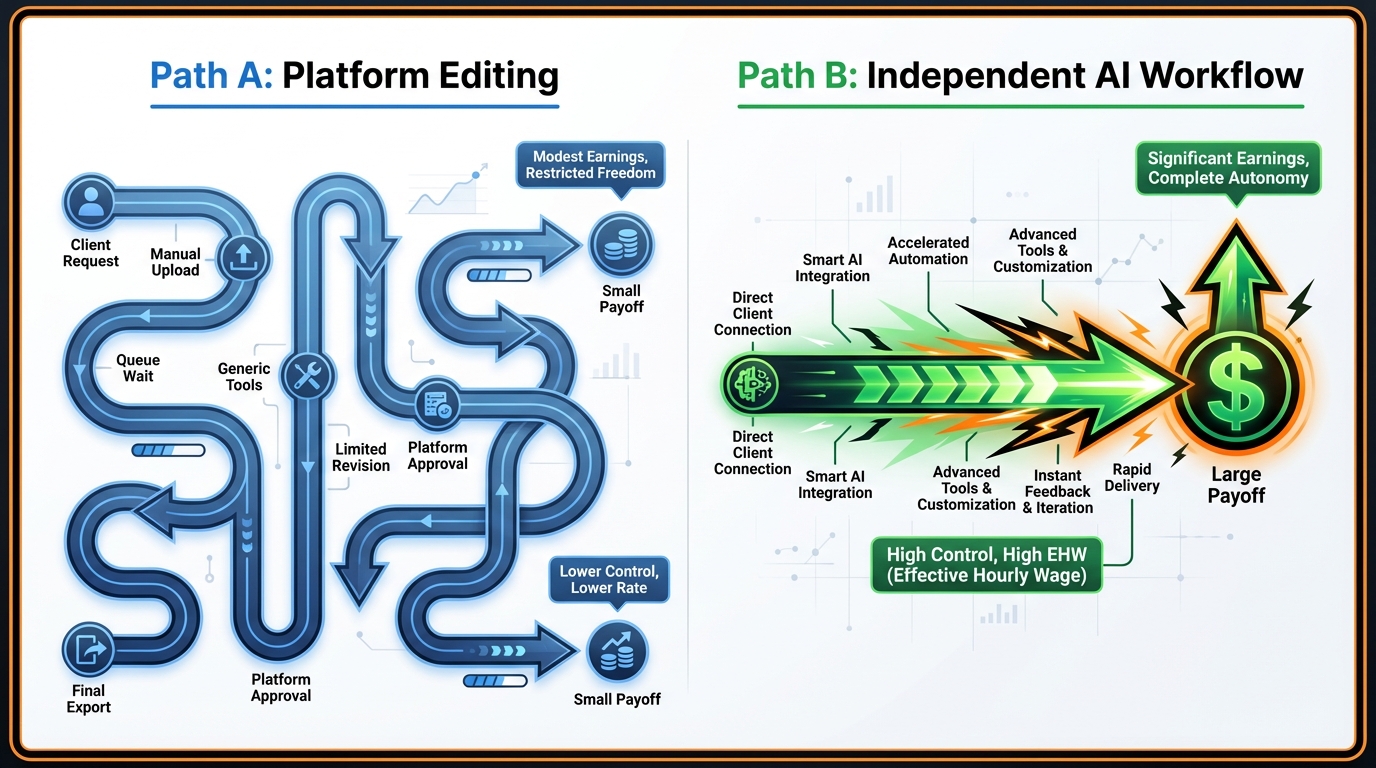
You have two routes to monetize this specialized skill: the platform route or the independent workflow.
We have analyzed both paths extensively. Only one offers true scalability and margin capture.
We recommend the Independent Workflow. Platforms are designed to maximize *their* margin, not yours. We focus on leverage.
The Platform Trap: Low Leverage
Platforms (like Rev or GoTranscript) rely heavily on AI. They then outsource the crucial quality control—the post-editing—to you. But they capture all the efficiency gains.
This model is fundamentally flawed for maximizing profit:
- The Cut: The platform takes a massive margin (often 50% or more) for simply aggregating the work.
- The Competition: You compete against thousands of global freelancers. This drives the effective hourly wage into the ground.
This is a volume game, not a leverage game. We do not chase volume; we chase margin.
(If you are only looking for minimum-effort tasks, you can review Legitimate Micro Job Platforms,but understand the earning ceiling is low.)
The Independent Blueprint: High Leverage
This is the strategic path. You build control over the process, the pricing, and the client relationship. You become the owner of the efficiency gain.
The blueprint is simple:
- Acquisition: Acquire clients directly (this is where targeted cold outreach becomes critical).
- Tooling: Purchase your own dedicated AI tool (e.g., Descript or Otter.ai). Cost is fixed; efficiency is yours to keep.
- Pricing: Charge premium rates for guaranteed 99% accuracy and rapid turnaround.
- Margin Capture: You pocket the entire margin.
You are charging based on value (accuracy, niche expertise, speed)—not simply volume (audio minutes processed). This is the key difference between a freelancer and a business owner.
Comparison Table: Platform vs. Independent
| Feature | Platform Work (Rev, GoTranscript) | Independent AI Workflow |
|---|---|---|
| Starting Rate Quote | $15 – $90 per audio hour | $1.00 – $3.00 per audio minute ($60 – $180 per audio hour) |
| Effective Hourly Wage (Reality) | $5 – $15 USD (Low leverage, high competition) | $25 – $50+ USD (High leverage, specialized skill) |
| Tool Margin | Platform captures the AI efficiency gains. | You capture the AI efficiency gains. |
| Client Focus | General/Volume (Podcasts, lectures) | Niche/Quality (Legal, Medical, Academic Interviews) |
The Leverage Metric: Calculating Your Effective Hourly Wage (EHW)
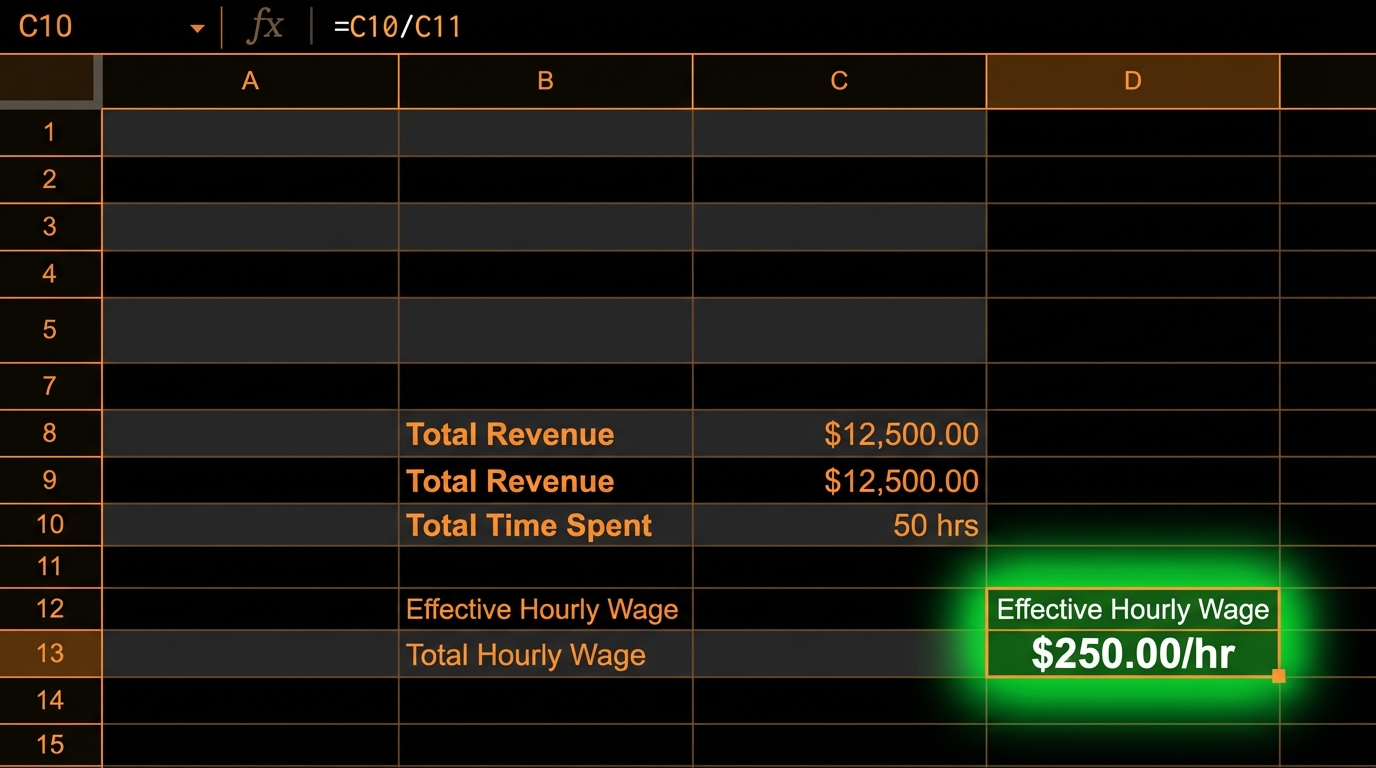
Mastering the 1:3 Efficiency Ratio
The Effective Hourly Wage (EHW) Formula
EHW = (Audio Hours Completed Per Real Hour) X (Rate Per Audio Hour)
Case Study: Independent Workflow Leverage
- Target Independent Rate: $90 per audio hour (standard for specialized, clean audio contracts).
- Required Efficiency Ratio (R): 1:3. (You must complete 3 audio hours in 1 real hour.)
- EHW Calculation: 3 Audio Hours * $90/hour = $270 Per Hour.
The AI-Assisted Workflow: Step-by-Step Guide
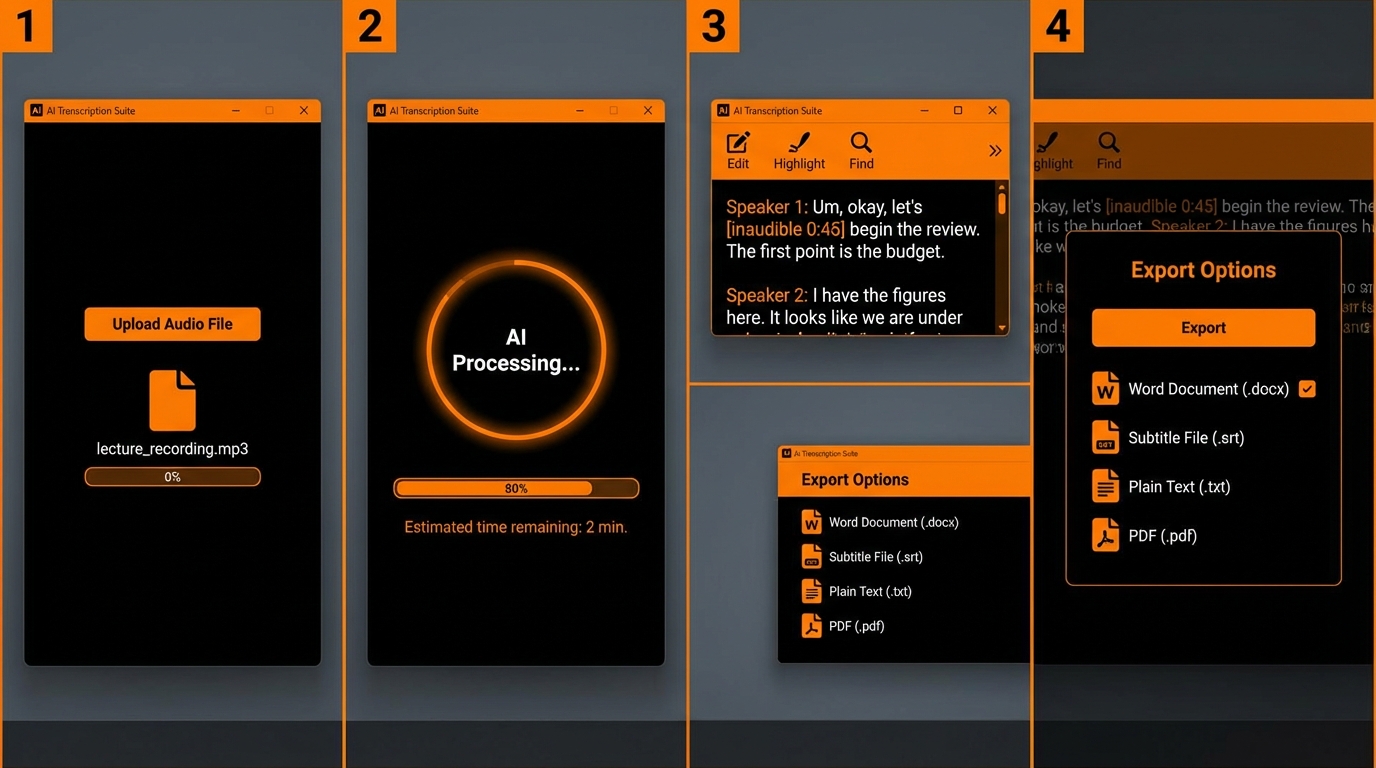
This is the precise, scalable workflow. We use this exact process to maintain high-volume output while maximizing the critical 1:3 Efficiency Ratio.
Step #1: Choose the High-Accuracy AI Tool
Do not use free tools. Period. Free transcription platforms deliver 80% accuracy,at best,forcing you into a low editing ratio (1:1 or 1:2). This immediately destroys your profitability and scalability.
Invest in accuracy. We prioritize tools optimized for multi-speaker identification and specialized jargon (Legal, Medical, Technical). This is non-negotiable.
- Descript: Ideal for high-end podcast/video clients who value integrated editing features.
- Otter.ai: Strong for general interviews and corporate meetings requiring rapid turnaround.
- Whisper API: Provides the highest accuracy ceiling, but requires technical integration or specialized third-party wrappers.
We detail the best options,and the ones we use internally,in The 2025 Blueprint for AI Passive Income & Tools.
Step #2: Process the File and Generate the Draft
Upload the file. Let the AI run. This phase must be 100% hands-off. If your tool requires manual intervention here, replace it.
A 60-minute file should take 5–10 minutes to process. This is the only step that scales linearly based on file length.
Step #3: The 3 Stages of Human QC (Proofreading, Context, Formatting)
The critical error many transcribers make is trying to edit holistically. You must break Quality Control (QC) into distinct, measurable passes.
Trying to handle grammar, context, and formatting simultaneously guarantees slower output and immediate fatigue. We separate the passes to maintain focus and speed.
Pass 1: The Contextual Correction Scan (High-Value Error Capture)
- Focus: Errors that fundamentally impact meaning (proper nouns, industry jargon, homophones). These are the errors that cost you client retention.
- Action: Correct misidentified speakers. Flag and bracket all unintelligible sections immediately.
Pass 2: The Grammar and Flow Polish (Readability Audit)
- Focus: Punctuation, capitalization, and sentence structure. Ensure the final text reads naturally and smoothly.
- Action: Implement client-specific rules. Remove excessive filler words (um, ah, like) only if the client requested a “clean” transcript. Do not guess.
Pass 3: Formatting and Final Delivery (The Compliance Check)
- Focus: Adhering strictly to the client’s specific style guide (e.g., Legal, Academic, Verbatim). This is the final compliance step.
- Action: Insert final time stamps, headers, speaker identification keys, and ensure all required metadata is correct before submission.
AI Limitations, Ethics, and Quality Control

Leveraging AI for client data introduces immediate legal and ethical exposure. You must manage these risks strategically,or face catastrophic trust failure.
The Data Privacy Warning: TOS Scans
If you handle sensitive client information (legal depositions, proprietary interviews, internal strategy sessions), explicit data privacy guarantees are non-negotiable.
Many free or cheap platforms retain and use your uploaded files for training their models. This isn’t just a risk; it’s a massive, avoidable liability that can destroy client relationships.
If you are building a high-ticket service business, risk mitigation is paramount. We strongly advise a full TOS scan focusing on two critical points:
- Ensure the platform explicitly deletes files immediately after processing.
- Confirm they do not use your client’s proprietary data for model training.
For a deeper dive into protecting your revenue stream from legal threats, review our guide: AI Ethics: Scale Revenue Without Legal or Trust Risk.
Maintaining 99% Accuracy: The Non-Negotiable
Premium transcription rates demand near-perfection. We target 99.5% accuracy minimum. Your Quality Control (QC) system must be robust and repeatable:
- Pre-Processing Check (Client Input): Before the AI runs, obtain a list of proper nouns, technical jargon, and key acronyms from the client. Injecting these into the AI’s custom dictionary (if available) dramatically reduces post-editing time.
- Validate Speaker Identification: AI often struggles with initial speaker changes, especially in multi-person interviews. Manually audit the first three instances of speaker switching. If the AI fails here, the entire document requires a deeper manual review.
- Leverage Confidence Scoring: If your chosen professional tool provides a word-level confidence score (which it should), prioritize editing time strictly on the flagged, low-confidence sections. This maximizes the 1:3 efficiency ratio we discussed previously.
Required Tech Stack: Hitting the 1:3 Efficiency Ratio
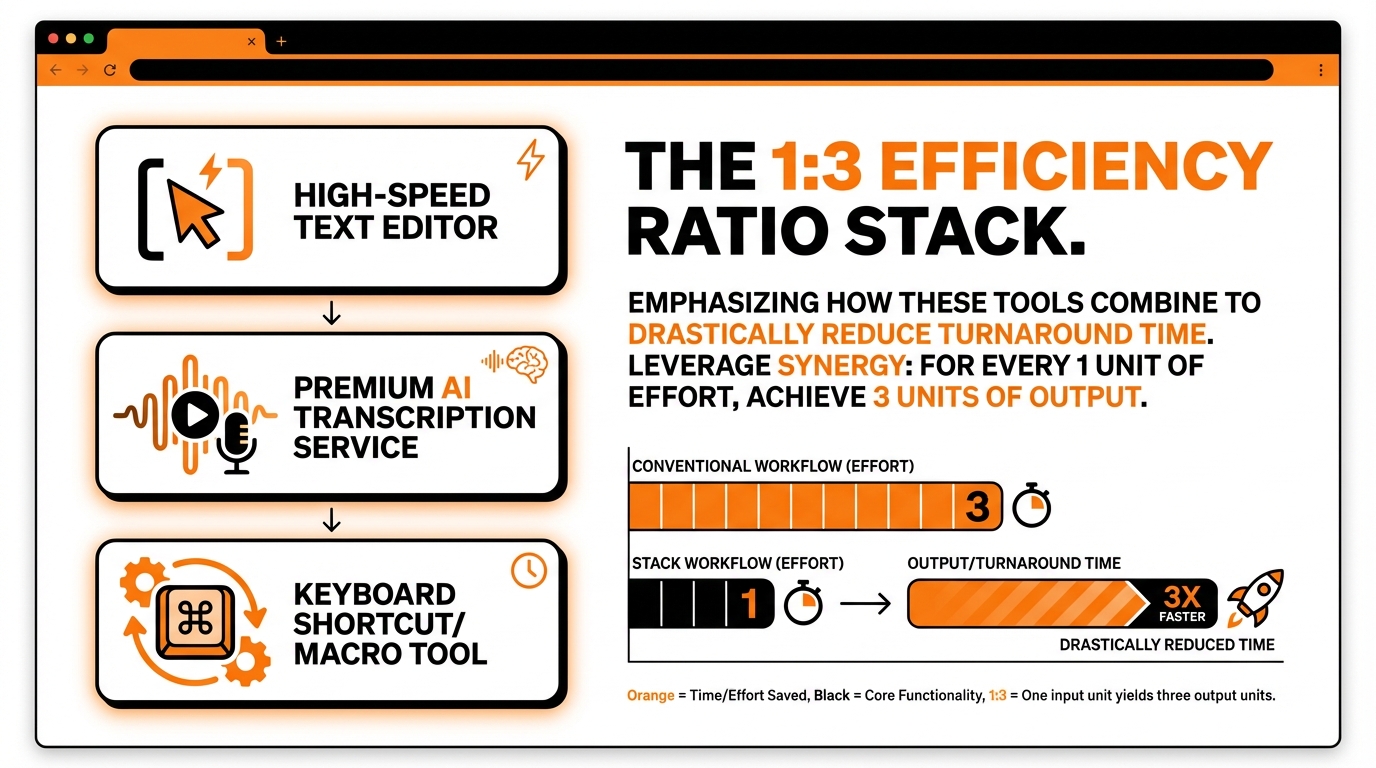
Hitting a consistent 1:3 efficiency ratio (1 hour of editing per 3 hours of audio) is non-negotiable for profitability. If you fall below this, you are losing money.
This requires optimizing both your physical setup and your digital workflow immediately.
Hardware: The Physical Foundation for Speed
- High-Fidelity Noise-Canceling Headphones: Mandatory. You will encounter low-quality client recordings,poor microphones, overlapping speech, or heavy background noise. Cheap headphones will destroy your accuracy and double your editing time. Protect your time investment.
- USB Foot Pedal (e.g., Infinity): This is not optional for professional volume. It allows 100% hands-on-keyboard control for playback (stop, start, rewind). If your hands leave the keyboard to click the mouse, you lose efficiency. Period.
Digital Assets: Maximizing AI Output
- Core AI Transcription Engine: You need commercial-grade access (Otter Pro, Descript, or a direct Whisper API integration). Choose based on your required security level (refer back to the TOS warning).
- Advanced Grammar/Style Checker: Grammarly Premium is required. AI transcription tools are excellent listeners, but they often fail on complex punctuation, flow, and sentence structure. Use this layer to catch the 10% human errors the machine generates.
- Internal & Client Style Guides: This document is your operational bible. Transcribing is not just typing; it is formatting. Define strict rules for speakers, timestamps, and notation. (This level of structure is non-negotiable for high-value clients, similar to the blueprint we detail for scaling a technical writing business).
Frequently Asked Questions: Maximizing Leverage
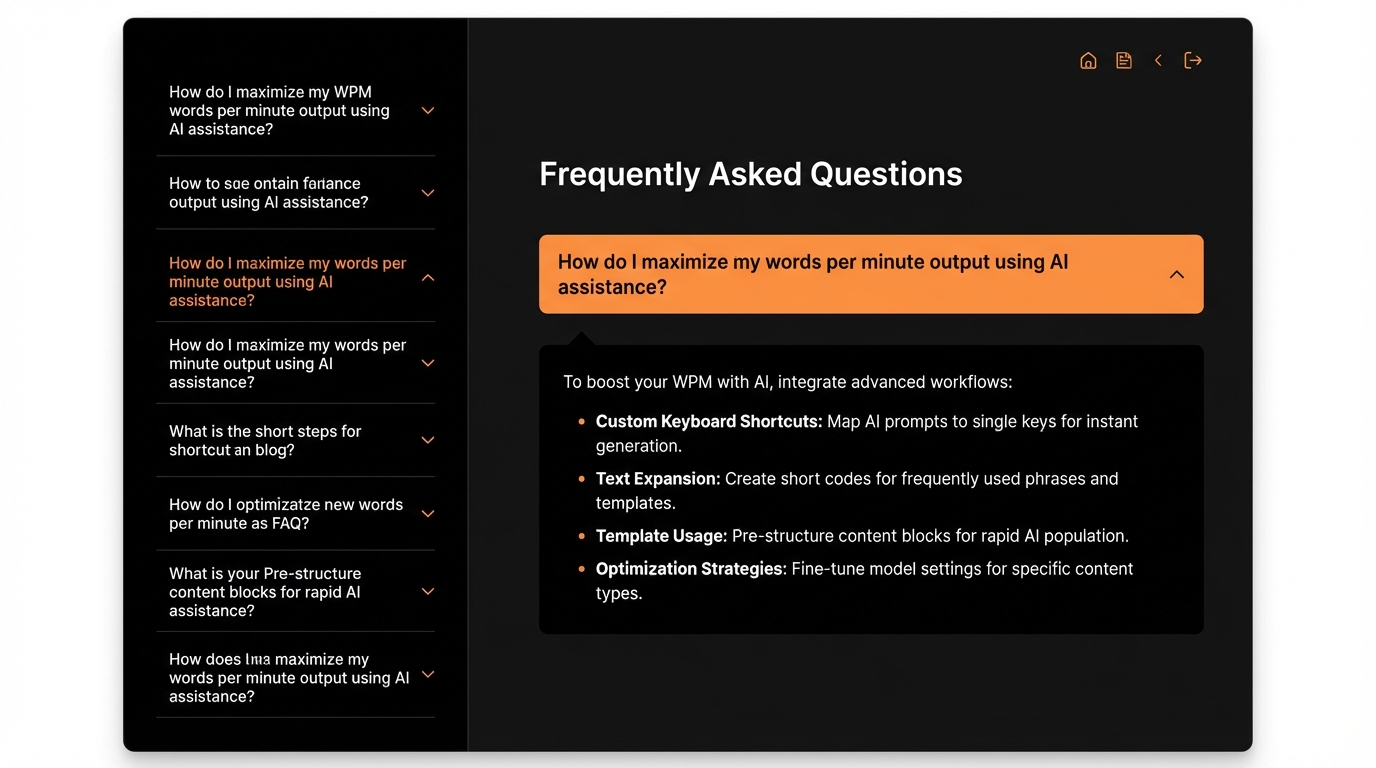
- How fast do I need to type to be an AI Post-Editor?
-
Typing speed (WPM) is secondary. Editing speed is the only metric that matters.
Focus entirely on efficiency: the time required to correct one minute of audio. Raw WPM is meaningless if your digital workflow is slow.
A 50 WPM minimum is pragmatic for applying corrections and formatting quickly. Remember: Efficiency dictates profit margin. - Is transcription still a viable side hustle in 2025?
-
Only if you adopt a high-leverage, independent model.
Relying on minimum-rate platforms (like Rev or TranscribeMe) is not strategic; it is a revenue drain.
Strategy dictates specialization immediately: Focus on high-value niches like Legal, Academic research, or specialized B2B content. This is how you command premium, profitable rates. - What is the best way to find high-paying independent clients?
-
You must target groups obsessed with accuracy and compliance:
- PhD students and academic researchers.
- Boutique law firms handling complex discovery.
- High-value B2B podcasters who repurpose content heavily.
Ready to take the next step?
The highest leverage skill is finding clients who pay. Our AI software automates lead generation so you can focus on high-value delivery.
Start Your Free Trial