


The B2B outreach landscape shifted completely in 2024. Yet, most digital marketing agencies are still relying on templates that died three years ago.
They are relying on mass-send tools and generic personalization tags: {{First_Name}} and {{Company}}. This approach guarantees failure.
In 2025, high-ticket clients—SaaS founders, executives, and successful real estate brokers—ignore anything that smells like automation without intelligence.
We know this because our internal lead generation systems—the ones fueling our own revenue growth—rely on surgical precision, not sheer volume. We don’t send 10,000 emails. Instead, we send 500 emails that are hyper-personalized, based entirely on deep data insights.
This guide breaks down the strategic cold email frameworks we use. You are about to learn how to build templates that convert $10k+ retainers, not $500 projects.
Key Shift: Precision Over Volume
The core philosophy of 2025 cold outreach must change immediately:
- Old Model (Mass Mail): Volume-based outreach (10,000+ sends), generic personalization, guaranteed low conversion rates.
- New Model (Surgical Outreach): High-value targeting (500 hyper-personalized sends), deep data insights (trigger events, proprietary data), conversion of $10k+ retainers.
Stop chasing the low-hanging fruit. We are targeting executives who value intelligence, not activity.
Key Takeaways: High-Value Agency Outreach
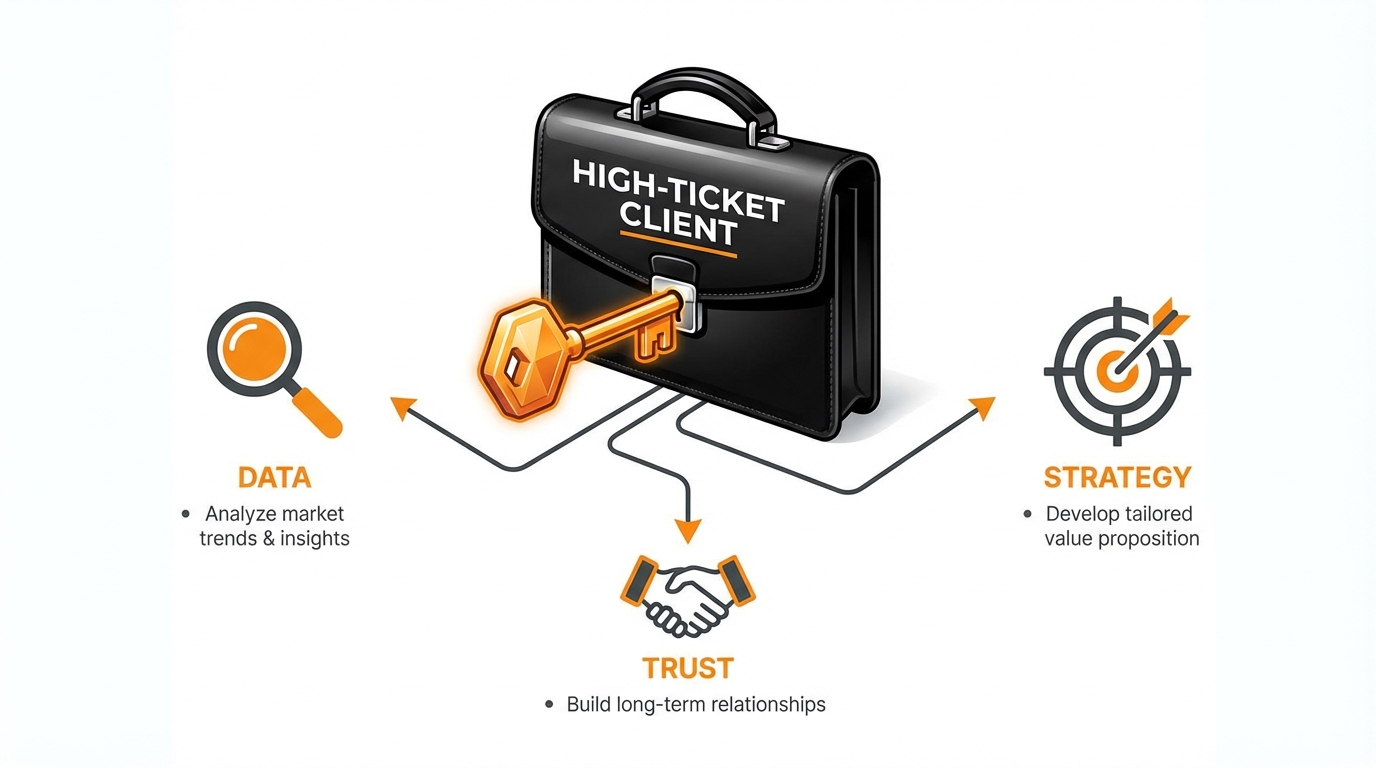
- Generic Templates Are Dead: High-ticket prospects immediately delete emails relying solely on basic merge tags (Name, Company). Personalization must run deeper than the salutation.
- Data-First Frameworks Are Mandatory: Outreach must be based on specific, timely trigger events (e.g., recent funding rounds, executive hires, major product launches). This signals relevance and justifies the interruption.
- Focus on the Revenue Gap: Do not sell services. We must immediately articulate a specific, measurable problem—a revenue leak—that we identified in their current strategy or site audit.
- Brevity Drives Conversion: Keep the core message under 150 words. Executives read on mobile devices, and the value proposition must be delivered instantly, requiring zero effort from the reader.
- Leverage Advanced Insights: True personalization requires AI-driven tools (like Pyrsonalize) to find accurate, non-public contact information and behavioral insights that unlock high-level engagement.
Why Generic Templates Fail Agency Outreach (The 2025 Reality)
Let’s be direct: Your high-ticket prospects are sophisticated. They are founders, CEOs, and VPs. They receive hundreds of pitches weekly—and they delete 99% of them instantly.
Download the Visual Guide
Get the slide-by-slide visual summary of this article (PDF) for free.
They can spot a canned template instantly. This isn’t just about poor grammar; it’s about the fundamental failure to build trust. The failure point is not the template itself; it is the absolute lack of context and specificity.
A generic sequence relying on basic merge tags is a revenue killer. A message that just says:
- “I saw you work at
{{Company}}…” - “…and we help with
{{Service}}.”
This provides zero value, zero trust, and zero urgency. It is the death sentence for high-value outreach.
To win high-value contracts—contracts that move the needle—you must demonstrate pre-sales intelligence. You need to prove you spent 15 minutes researching their specific pain points, not 15 seconds plugging data into an automation sequence. We must shift from volume outreach to hyper-personalized, data-backed execution.
Step #1: Data is the New Personalization Currency

True personalization is costly. It demands finding specific, high-value data about the prospect or their business—data that only a dedicated researcher or advanced AI can uncover.
This deep, verifiable data is your outreach currency.
When we deploy our high-ticket outreach campaigns, we focus exclusively on identifying “Intent Signals.” These signals transform a generic cold email from a pitch into a timely, hyper-relevant conversation starter.
The Critical Data Points for 2025 Agency Outreach
Forget just the name, title, and company size. These are the intelligence points that actually drive replies and establish immediate authority:
- The Revenue Gap: A specific, observable metric that is underperforming (e.g., “I noticed your blog traffic dropped 15% after the recent Google core update,” or “Your competitor, X, ranks for 30 high-intent terms you are currently missing.”).
- Trigger Events: Recent funding rounds, major executive hires (especially CMO or VP of Growth), or a failed product launch mentioned in recent industry news.
- Tech Stack Observation: Identifying key software they currently use (e.g., “Since you just integrated HubSpot, our lead generation system integrates seamlessly to immediately fill the top-of-funnel gap.”).
- Public Commentary: A recent LinkedIn post, conference appearance, or interview where the prospect explicitly stated a goal or a pain point (“You mentioned struggling specifically with lead quality in your last podcast…”).
If your agency is still relying on basic list scraping, you are making one of the critical strategic errors costing you revenue. The high-ticket market demands intelligence.
Step #2: The 3 Core Strategic Outreach Frameworks
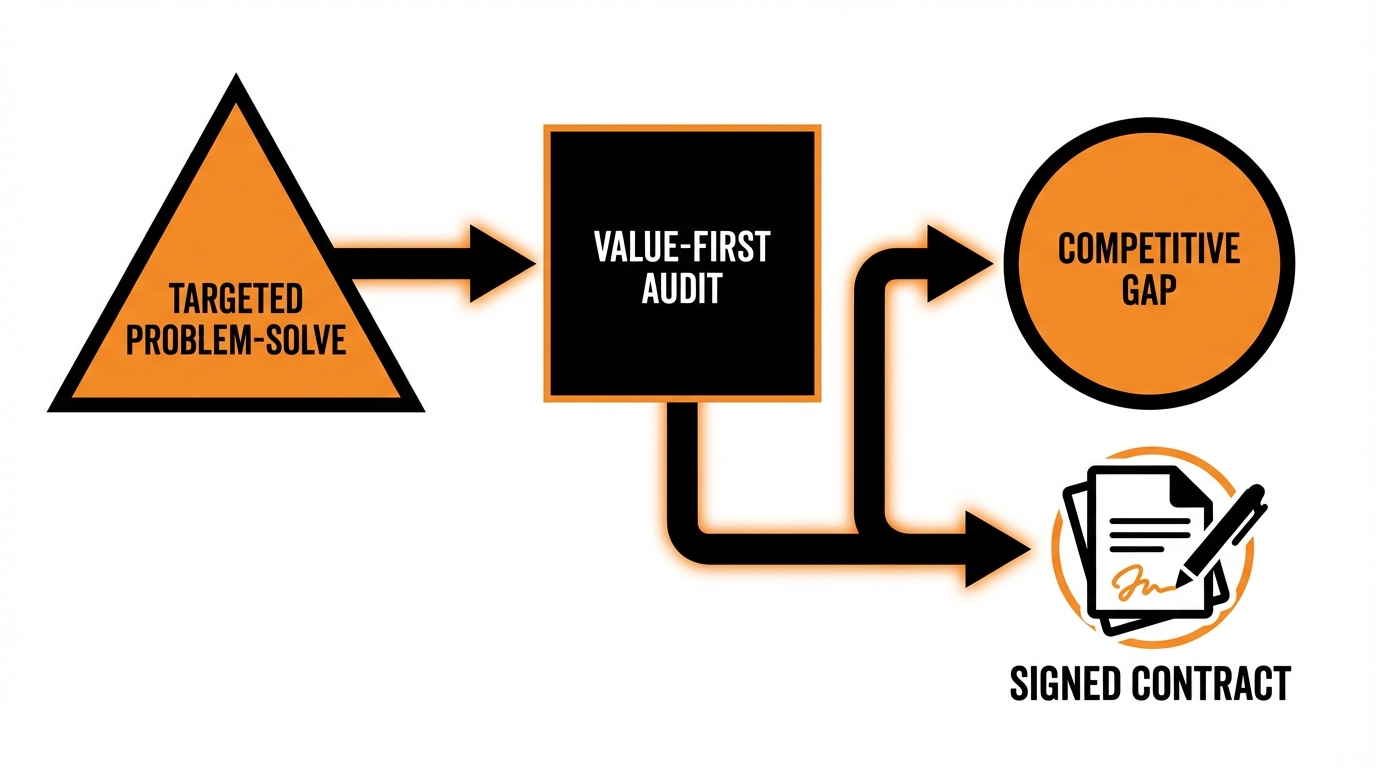
Once you have identified the high-value Intent Signals (Step #1), you must structure that data into a compelling narrative. Generic cold emails fail because they lack strategic scaffolding.
We structure our high-ticket outreach around three proven frameworks. Each one is engineered to bypass the prospect’s immediate “sales pitch” filter and establish undeniable authority based on pre-diagnosed pain.
| Framework | Primary Goal | Required Data Depth | Best For |
|---|---|---|---|
| Revenue Gap Analysis | Establish immediate authority and urgency (quantifying inaction). | Specific, quantifiable data (traffic, rankings, spend, conversion rates). | SEO, PPC, CRO, and Performance Marketing Agencies. |
| Trigger Event Hook | Ensure maximum timeliness and relevance (must land within 48 hours). | Recent news (funding, acquisition, major hire, product launch). | Agencies specializing in rapid scale, PR, or integration services. |
| Mutual Connection/Referral | Lower friction and leverage existing trust networks. | Confirmed shared connection (investor, client, partner, peer). | High-trust, boutique agencies targeting specific VC portfolios or niches. |
Framework 1: The Revenue Gap Analysis (The Authority Play)
This is the most powerful framework for performance agencies (SEO, PPC, CRO). It leverages quantifiable proof of missed revenue.
You are not asking for a meeting. You are presenting a calculated, quantified cost of inaction. This immediately frames you as a consultant, not a vendor.
The Structure: Presenting the Cost of Inaction
- The Observation (The Hook): State a specific, quantifiable failure or missed opportunity you found on their site (e.g., “You are ranking #12 for a keyword worth $150k/month in revenue.”).
- The Credibility Bridge: Reference a similar client success story where you fixed this exact gap, citing the verifiable result (e.g., “We recently moved [Client X] from #10 to #2, unlocking $45k/month in 60 days.”).
- The Strategic Ask: Offer to share the 3-step fix or the full quantitative analysis in a quick, non-committal way.
“We found that 90% of cold emails fail because the first line focuses on the sender’s capabilities, not the recipient’s quantifiable problem. Flip the script: lead with the pain point you already diagnosed.” – Pyrsonalize Research Team, Q3 2025
Framework 2: The Trigger Event Hook (Timeliness Wins)
Timing is everything in sales. A company that just received $10M in Series A funding has an immediate, acute need to spend that capital on growth systems. This is an open window of opportunity.
This email must land within 48 hours of the trigger event. Any later, and the prospect is already drowning in generic congratulations.
The Structure: Leveraging Current Momentum
- The Acknowledgment: Congratulate them specifically and sincerely on the funding, major hire, or product launch.
- The Strategic Link: Connect the trigger event directly to the service you provide. (E.g., “New funding means rapid scaling, which requires the precise lead acquisition system we build to handle 5x volume.”).
- The Specific Proposal: Propose a system or strategy tailored specifically to their new, immediate goal (e.g., “We can deploy the post-Series A ad infrastructure in 14 days.”).
Framework 3: The Mutual Connection/Referral Loop
This is the “warmest” cold email you can send. It dramatically lowers friction by leveraging existing trust networks.
If you share a verified connection—an investor, a past client, or a known industry peer—you must lead with that relationship.
Critical Rule: Do not just drop the name. Explain why the connection referred you or how your work with the connection is directly relevant to the prospect’s current needs. Mere association is useless; demonstrated value is everything.
The Structure: Building Trust Via Proxy
- The Connection Hook: Immediately name the shared contact in the subject line or first sentence.
- The Relevance Bridge: Detail the specific, relevant success you achieved for that shared connection that mirrors the prospect’s needs.
- The Soft Proposal: Suggest a quick introduction or a 15-minute call to discuss how those results could be replicated for them.
Strategic Templates for High-Ticket Agency Clients
Leveraging the strategic scaffolding outlined in Step #2, we now provide two battle-tested, high-conversion templates. These examples demonstrate how to utilize Intent Signals and structure the narrative to secure high-ticket agency clients immediately.
Template A: The Revenue Gap Template (SEO/CRO Focus)
This template is engineered for agencies selling high-ticket SEO, advanced content strategy, or conversion rate optimization (CRO) services. It relies on specific, undeniable data points pulled from Step #1 (Intent Signals).
Target Persona: VP of Marketing or Founder at a funded SaaS company.
Subject: Quick observation on [Competitor]’s Q4 organic strategy
Hi [First Name],

I was analyzing the content strategy of [Competitor Name] and noticed they are ranking for 12 key “bottom-of-funnel” terms that you are currently missing. This gap alone is costing [Company Name] an estimated $25,000 in monthly qualified traffic.

Our agency specializes in closing these precise revenue gaps. We implemented a similar cluster strategy for [Past Client, e.g., TechCo] and boosted their demo requests by 45% in six months.

I already identified the three core cluster topics you need to target immediately. It's a quick fix that drives immediate ROI.

Are you open to a 7-minute voice note where I outline the strategy, or should I just send the data via email?

Best,
[Your Name]
Why this works (The Strategy):
- Instant Authority: The opening line (“I was analyzing your competitor…”) establishes immediate expertise and shows pre-work.
- Painful Specificity: It uses a precise, painful metric ($25,000 in lost traffic), anchoring the conversation to measurable revenue, not vanity metrics.
- Proven Results: Includes a highly relevant case study demonstrating the agency’s ability to solve this exact problem.
- Low-Friction CTA: The call-to-action bypasses typical meeting resistance by offering two easy choices: a “7-minute voice note” or simply “sending the data.”
Template B: New Funding Trigger Template (Scale Focus)
Use this template immediately after a prospect has announced a major funding round (Series A, B, etc.) or a significant product launch. Speed and relevance are critical here, as the window for budget allocation is narrow.
Target Persona: CEO or Head of Sales at a high-growth startup.
Subject: Congrats on the Series B – scaling lead acquisition systems
Hi [First Name],

Fantastic news on the $15M raise. That capital needs to be deployed into scalable, trust-based systems immediately to hit the next valuation milestone.

We work exclusively with post-Series A companies like yours (we helped [Client C] transition from organic chaos to a predictable 200 MQLs/month pipeline after their raise).

Right now, your team is likely focused on hiring engineers and product staff. Our focus is the other side: building the non-automated lead generation infrastructure that maximizes your new budget’s ROI and ensures capital efficiency.

Are you the right person to share a 3-slide deck on our Q1 scaling blueprint, or should I forward this to your VP of Growth?

Regards,
[Your Name]
Why this works (The Strategy):
- Timeliness is Key: It acknowledges the funding immediately, making the email highly relevant and bypassing the spam filter.
- Anticipates Needs: It anticipates their current internal focus (hiring) and positions the agency as solving the complementary, necessary problem (scaling infrastructure).
- Positions Agency as Partner: The language focuses on valuation milestones and capital efficiency, aligning the agency with executive-level business goals.
- Soft Challenge CTA: The CTA uses a soft challenge (“Are you the right person…”) which often prompts a quick internal referral to the correct decision-maker (VP of Growth, Head of Demand Gen).
Step #3: Optimization: Subject Lines and CTAs That Convert
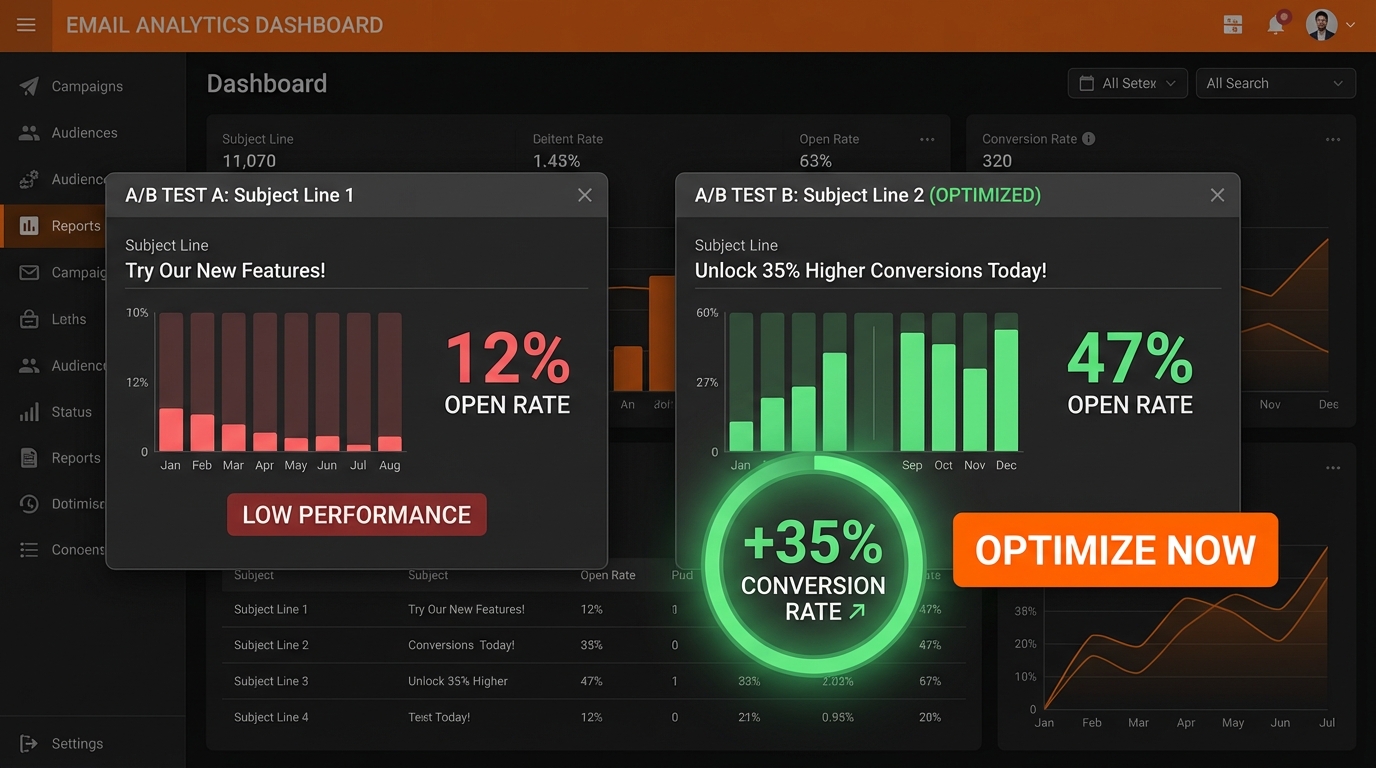
A perfectly crafted email body is useless if the message is never opened, or if the prospect doesn’t know what to do next. A weak subject line or a vague Call-to-Action (CTA) renders the entire effort wasted.
Optimization is critical. We must optimize both ends of the message—the entry point and the exit strategy—for maximum efficiency and reply rate.
Subject Line Strategy: Be Specific, Not Clever
The subject line must function as a micro-summary of the immediate value you provide, strictly tied to the prospect’s current business reality. Our goal is high opens, not high drama.
Avoid These Low-Performing Structures:
- “Quick question about your marketing” (Too vague; sounds like a generic pitch.)
- “Want to 10x your revenue?” (Unrealistic and spammy. High-ticket clients ignore hyperbole.)
- “A thought for [Company Name]” (Too soft, easily filtered, and lacks urgency.)
Use These High-Conversion Structures:
- “Fixing the [Specific Pain Point] gap at [Company Name]” (This is hyper-specific and implies prior research. Example: “Fixing the mobile conversion gap at SalesForce”)
- “Data on [Competitor]’s recent traffic spike” (Leverages competitive intelligence and the powerful motivator: Fear Of Missing Out (FOMO).)
- “Referral from [Mutual Connection]” (If applicable, use this. It consistently delivers the highest open rate possible.)
CTA Strategy: The Low-Friction Ask
The primary goal of your initial cold email is not to sell the retainer. It is simply to secure a reply. We are seeking a micro-commitment, not a meeting request.
Every Call-to-Action must minimize the prospect’s perceived time commitment. Avoid friction-heavy language like, “Are you free next week for a 30-minute exploratory call?”
Effective, Low-Friction CTAs for High-Ticket Outreach:
- “Should I just send the 3-point breakdown we prepared?” (Requires a single-word reply: “Yes.” This is the lowest possible friction.)
- “Are you the right person to handle this, or should I loop in [Relevant Title, e.g., Head of Growth]?” (Drives an internal referral if they aren’t the decision-maker.)
- “Worth a 7-minute voice note explaining the data?” (Specific time commitment, non-intrusive format, and demonstrates expertise.)
The ultimate goal is always momentum. We move the conversation forward, establishing perceived value immediately, which primes the client for negotiating higher agency retainers down the line.
Step #4: Scaling Trust: Automating Data, Not Messaging

Scaling outreach is counterintuitive. Many agencies attempt to scale by increasing sheer volume; this is the wrong metric and guarantees burnout. We scale by increasing the quality of the data points fueling personalization.
To efficiently execute the Revenue Gap or Trigger Event frameworks, our process demands specific technology. These tools must quickly ingest, analyze, and deliver high-quality data: verified personal emails and actionable intelligence insights.
The Non-Negotiable: Leveraging AI for Data Enrichment
Manual prospecting is a bottleneck. Trying to find a decision-maker’s direct email, cross-reference recent activity, and verify the tech stack takes hours per lead—time that should be spent closing. AI lead generation software is non-negotiable for high-ticket sales.
Our systems allow agencies to automate the research phase, delivering three critical outputs:
- Verify Email Accuracy: Ensure your message lands in the primary inbox of the decision-maker, not a generic info@ or sales@ address.
- Generate Intent Signals: Automatically flag companies based on recent funding, hiring surges, or specific content performance drops (the core of the Trigger Event framework).
- Enrich Contact Profiles: Provide the specific, personalized data (like the “Revenue Gap” metric) required to write the impactful first line of your email.
Scaling high-ticket outreach requires leveraging technology to handle the heavy lifting of research. This frees our sales team to focus exclusively on writing one-to-one, hyper-relevant messages that drive immediate replies.
For a detailed breakdown of how we build and implement this system, review our Strategic Lead Generation Blueprint.
Frequently Asked Questions

What is the ideal length for a high-ticket cold email?
Keep the body copy strictly under 100 words—ideally closer to 50. Executives read emails on their phones, often between meetings. If they are forced to scroll, the message is already lost.
Focus on the three core components of a successful cold email: Observation (the personalized hook), Proof (a measurable result), and a Low-Friction CTA (a simple next step).
Should I attach case studies or resources in the first email?
Absolutely not. Never attach documents to a cold email. Attachments are a major red flag that immediately increases the risk of triggering spam filters and landing in the junk folder.
Instead, leverage proof points efficiently:
- Mention a specific, measurable result (e.g., “45% boost in demos for a competitor”).
- Link directly to a dedicated landing page or a summarized Google Doc if necessary.
- Offer to send the full breakdown (the case study) in the subsequent step, making it a reward for replying.
How many follow-ups are strategically necessary for agency outreach?
We mandate a sequence of 4–6 strategic touchpoints delivered over a 21-day period. Crucially, these cannot be simple “bumping this to the top” messages.
Every follow-up must add new value, reference a unique trigger event, or introduce a new angle of the Revenue Gap you identified. For example, Follow-up #2 could reference a recent company announcement or a specific LinkedIn post to maintain immediate relevance and personalization.
Is it better to use AI to write the entire cold email?
AI is a tool for efficiency, not strategy. Use AI for data gathering, identifying common trigger events, and drafting the initial email structure.
However, AI should never write the final, personalized hook. High-ticket sales require nuanced, specific observations that AI struggles to generate (e.g., “The specific missing Schema markup on your /pricing page” or “The recent 10-K filing showing flat organic growth”). A human must inject that strategic intelligence.
Does sending emails from a personal name (e.g., John@) perform better than a company name (e.g., Marketing@)?
Always use a personal name and email address. High-ticket B2B outreach is fundamentally about building trust and relationships, not sending mass broadcasts.
Recipients ignore emails originating from generic departments (e.g., Sales@ or Marketing@). They reply to individuals. Ensure the sender name is the founder, CEO, or a high-level salesperson within your agency.
This is the pragmatic reality of high-ticket B2B outreach in 2025.
Stop chasing volume. Start chasing precision.
Ready to take the next step?
Try AI Lead Generation Today
Click HereReferences
- The Perfect Cold Email: 5 Templates for Marketing Agencies – SPP.co
- 25 Cold Email Templates I Use to Skyrocket Reply Rates in 2025
- What are some of the most effective cold email templates for B2B …
- 17 Cold Email Template Examples (And When to Use Them)
- 7 cold email templates that skyrocket response rates – Zendesk