


The inbox is saturated. In 2025, generic outreach is not just ineffective it is actively damaging your domain reputation and sinking deliverability rates. SDRs cannot afford to rely on surface-level personalization or outdated tactics.
We analyze millions of outreach attempts annually. Our data confirms a ruthless truth: 90% of cold email subject lines fail to generate measurable interest. They get deleted. Or worse: they get marked as spam.
This is not a list of 50 random subject lines. This is a strategic blueprint. We are defining the high-leverage formulas that cut through noise, driven by intent data and a genuine value proposition.
To scale lead generation, you must abandon prioritizing volume over precision. SDRs need verified contact data and subject lines that warrant the prospect’s time. (This is why tools that deliver verified, personal emails—like our AI software—are non-negotiable.)
Key Takeaways for the Strategic SDR
- Open Rate is a Vanity Metric: Focus exclusively on Reply Rate. A high open rate with zero replies means your subject line was deceptive or misleading.
- The “Quick Question” Failure: This line is dead and signals immediate waste of time. Avoid it entirely in 2025.
- Leverage Intent Signals: The best subject lines reference a specific, recent, measurable event (e.g., funding, hiring, content publication). This proves you did your research.
- Keep it Short: Optimal length remains under 50 characters for mobile display dominance.
The Core Metrics: Open Rate Versus Reply Rate
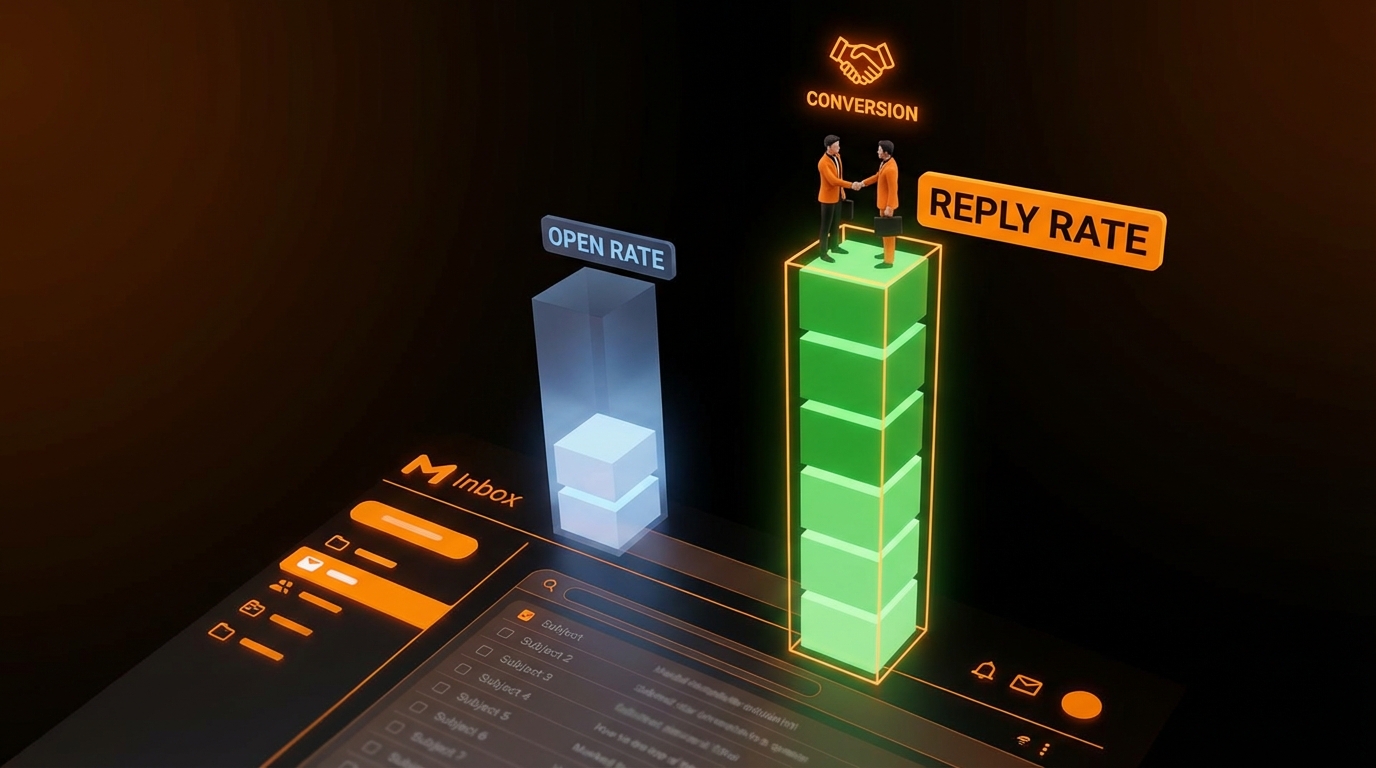
Most SDR training focuses solely on maximizing the open rate. This is a fundamental strategic error—a vanity metric that actively damages conversion.
An open rate measures only curiosity. It tells you nothing about genuine conversion potential. If your subject line relies on clickbait or ambiguity, your open rate will spike. Your reply rate, however, will plummet. We are not selling clicks; we are starting conversations.
We prioritize the Reply Rate.
A high reply rate is the only metric that matters in cold outreach. It confirms two critical factors:
- Relevance: The prospect felt the subject line was targeted enough to warrant their immediate attention.
- Intent: The prospect saw a clear, immediate connection between the subject line and a current pain point or strategic goal they are actively trying to solve.
Our mandate is simple: Write subject lines that authentically set the stage for the email body. They must promise value that is delivered immediately upon opening the email. If the subject line and the body conflict, you lose trust—and the deal.
The Formula for High-Intent Subject Lines
The best subject lines utilize deep personalization—the kind that cannot be automated easily. This is the crucial difference between merging a placeholder and referencing a specific, recent business metric.
Generic Personalization (Low Value, High Volume): These subject lines signal mass outreach and require zero research.
- Hi [Name], quick chat?
- [Company] + [Your Service]
- Question about your role at [Company]
Strategic Personalization (High Value, Low Volume): These prove you invested time; they bypass spam filters and trust barriers simultaneously.
- Your comments on the [Q3 Earnings Call]
- Idea regarding [Competitor’s Recent Launch]
- Follow-up on [Specific Industry Event/Webinar]
The second category proves you spent 60 seconds researching their world. That small, initial investment of time builds instant, non-automated trust. For high-ticket B2B sales, this trust factor is the single most critical element for securing a reply.
Why Generic Subject Lines Are Revenue Poison in 2025
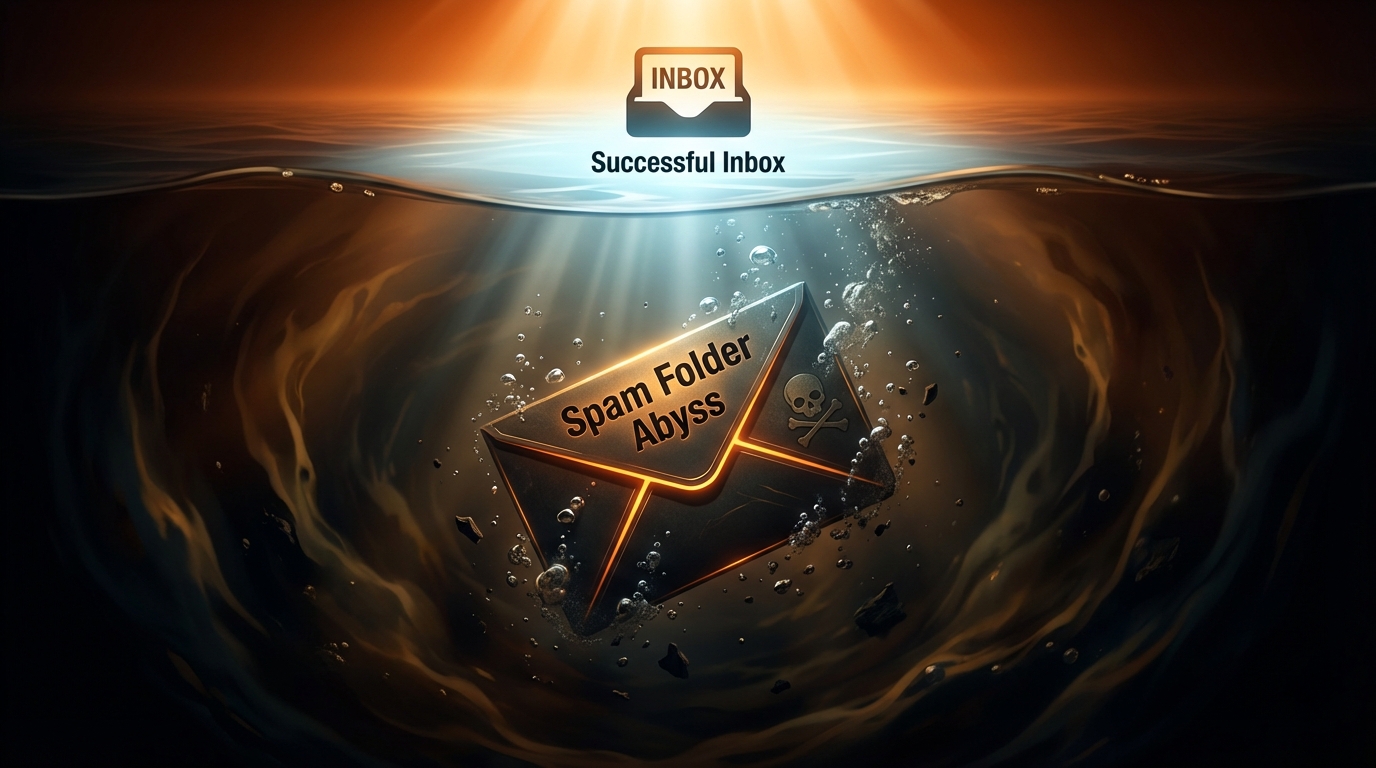
The goal is not the open; it is the conversation. We must immediately address the toxic, failed standards of the last decade. The market has matured drastically. Decision-makers are filtering aggressively; they recognize a generic pitch before they even click. In 2025, relying on ambiguity is a direct path to pipeline stagnation.
The Death of “Quick Question”
For years, “Quick question” was the industry standard. It relied solely on manufactured curiosity and low commitment. It worked only when inboxes were quiet and competition was low.
Today, this subject line signals only one thing: I am about to waste your time.
As SDRs, your primary job is to be an expert resource, not a time-waster. We must replace manufactured curiosity with strategic relevance. This is the core principle of high-conversion cold outreach.
Strategic Relevance Subject Line Structure:
The core shift is moving from curiosity bait to immediate value proposition. The subject line must prove you have done the research required to understand their operational challenges.
- Structure: [Specific Trigger/Pain Point] + [Implied Solution or Value]
This approach is direct, pragmatic, and forces the recipient to consider the operational impact of your message.
Examples of Strategic Relevance in Action:
Q3 churn rate reduction strategy?
Fixing the [CRM Name] integration issue
The Problem with “Re:” and “Fwd:” Scams
Some SDRs still attempt to use “Re:” or “Fwd:” at the start of a cold email to trick the recipient into thinking they are continuing an existing thread. This is a short-term hack. It destroys long-term credibility and poisons the relationship before it even begins.
“Deceptive subject lines generate opens, but they generate resentment. Resentment kills deals. We measure trust, not clicks.”
If you rely on deceit to get the open, you have already lost the battle for trust. Focus on transparency and verifiable value. This is the only scalable way to build a robust, high-quality pipeline.
Phase 1: Strategic Subject Lines Based on Intent Signals
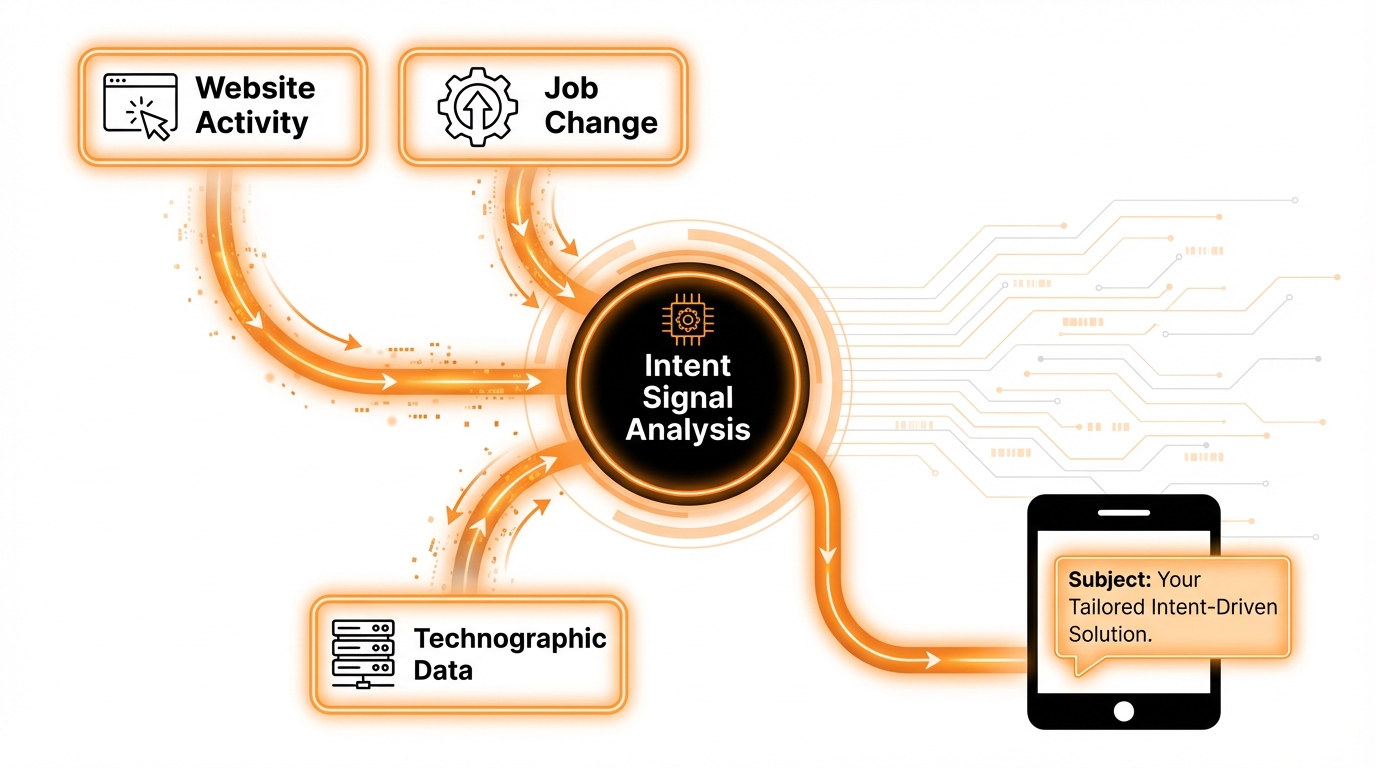
We do not guess. We leverage data. The highest converting subject lines are not clever; they are derived exclusively from real-time intent signals. This is the foundation of modern prospecting. We prioritize finding these triggers: the recent funding round, the critical leadership hire, or the public comment on LinkedIn.
When you possess this intelligence, the subject line writes itself. You are no longer cold emailing. You are initiating a highly relevant conversation based on their immediate, measurable reality. This instantly bypasses spam filters and buyer skepticism.
Our strategy links common intent signals directly to high-impact subject line formulas. Below are the five most reliable formulas we use to guarantee relevance:
| Intent Signal Detected | Strategic Subject Line Formula | Example (Under 50 Chars) |
|---|---|---|
| Recent Funding Round (Series A/B) | [Funding Amount] + Scaling [Department] for Growth | $10M: Scaling engineering team? |
| Hiring for a Specific Role (e.g., Head of Sales) | New Head of [Role] + [Pain Point] Solution | New Head of Sales: Q4 ramp-up strategy |
| Recent Content/Press Mention | Your comments on [Topic] + Quick thought | Your take on AI ethics: My thoughts |
| Using a Specific, Competitor Tool | [Competitor Tool] + Migration/Efficiency Idea | Idea to improve [Competitor] efficiency |
| Geographic Expansion/New Office | [City Name] expansion logistics | Austin office launch: Lead strategy? |
These subjects work because they are hyper-specific. They are not about your product or your pitch. They are about the prospect’s current reality, their known pain points, and their immediate future goals. Specificity is the only mechanism that drives trust and forces the open.
Phase 2: High-Leverage Subject Line Formulas for SDRs
![A blueprint graphic titled 'ENGINEERING SUCCESS: PROJECT: OUTREACH FORMULAS' displaying three numbered formulas for successful outreach. Formula 1 is: [Trigger] + [Specific Pain Point] = HIGH-LEVERAGE SUBJECT LINE. Formula 2 is: [Efficiency] + [Solution] = REPEATABLE OUTREACH. Formula 3 is: [Personalization] + [Value] = SUCCESSFUL ENGAGEMENT. Each component is accompanied by a relevant engineering or scientific icon (gear, wrench, caliper, flask, magnifying glass, balance scale, blueprint).](https://pyrsonalize.com/blog/wp-content/uploads/2025/12/article-section-image-85.jpg "The 3 High-Leverage Outreach Formulas for SDR Success: Engineering Subject Lines and Engagement")
Even when you have leveraged Phase 1 intent signals, crafting the final subject line requires precision. The subject line is the gatekeeper of your message. We break down the most effective strategies into three high-leverage categories. SDRs must master these formulas immediately to maximize open rates and pipeline generation.
Category 1: Hyper-Personalization and Connection
This category is about establishing immediate, shared context. It signals that you did the research—a high-touch approach that prospects respect. Leverage the specific data points we gather on their recent activity and connections.
- The Mutual Connection Subject: If you share a connection, use it. This is instant social proof and dramatically increases trust.
- [Mutual Connection] recommended I reach out
- Referred by [Name] regarding [Project]
- The Content Reference Subject: Reference a specific article, podcast, or LinkedIn post they created or commented on. This proves you are engaging with their thoughts, not just their title.
- Loved your post on [Specific Metric]
- Follow-up to your Q4 strategy comments
- The Specific Compliment Subject: Flattery works, but it must be detailed and specific to recent company achievements. General praise is ignored.
- Kudos on the Q2 product launch success
- That [Company Name] rebrand is sharp
Note: Authenticity is non-negotiable. Never fabricate a referral or connection. If you claim a mutual connection, ensure the connection is legitimate and the prospect knows them well. Trust is your most valuable currency.
Category 2: Value-Driven Curiosity (Data/Metric Focused)
Decision-makers do not care about your product features; they care exclusively about metrics: revenue growth, cost savings, efficiency gains, and risk mitigation. Use the subject line to hint at a measurable, strategic outcome you can deliver. This is where you introduce a concept that ties directly to their P&L.
- The Competitive Edge Subject: Tap into the fear of missing out (FOMO) or competitive intelligence. Show them what they might be missing relative to their peers.
- What [Competitor Name] is doing differently
- [X]% improvement for companies like yours
- The Time-Bound Goal Subject: Connect your solution directly to their current planning cycle. (Example: If it is Q4, Q1 2026 planning is paramount.)
- Q1 2026 hiring efficiency insight
- Cutting Q1 operational spend by 15%
- The Direct Solution Subject (The Anti-Question): State the benefit directly. Do not ask a vague question; present the solution to a known pain point.
- Solution for your [Specific Problem]
- Increasing sales team pipeline by 20%
Category 3: The ‘Pattern Interrupt’ (Short and Unexpected)
These are the subject lines that cut through the inbox noise by being unexpected, brief, and slightly cryptic. They are risky, yes. Use them sparingly and only when targeting high-value, hard-to-reach prospects (C-Suite) who ignore standard outreach.
- Single Word Subjects:
- Growth?
- Feedback.
- Thoughts?
- The Ultra-Short Question: Keep it vague enough to prompt a click, but specific enough to relate immediately to the email body’s content.
- Still pursuing [Goal]?
- Worth 5 minutes?
Critical Warning: When using these ultra-short lines, the first sentence of your email body must deliver immediate, relevant value. If the subject line is “Feedback,” the email must instantly ask for feedback on something specific they own or created. Failure to deliver immediate context violates trust and burns the prospect.
Finally, SDRs must master the follow-up sequence. If your first attempt fails to generate a response, the second attempt requires a significant angle shift—never just a “Bumping this” message. We advise a strategic change of channel (incorporating a B2B Cold Calling Scripts: The 2025 Strategic Blueprint approach) or a subject line that introduces new, unexpected value.
Strategic Follow-Up Subject Lines
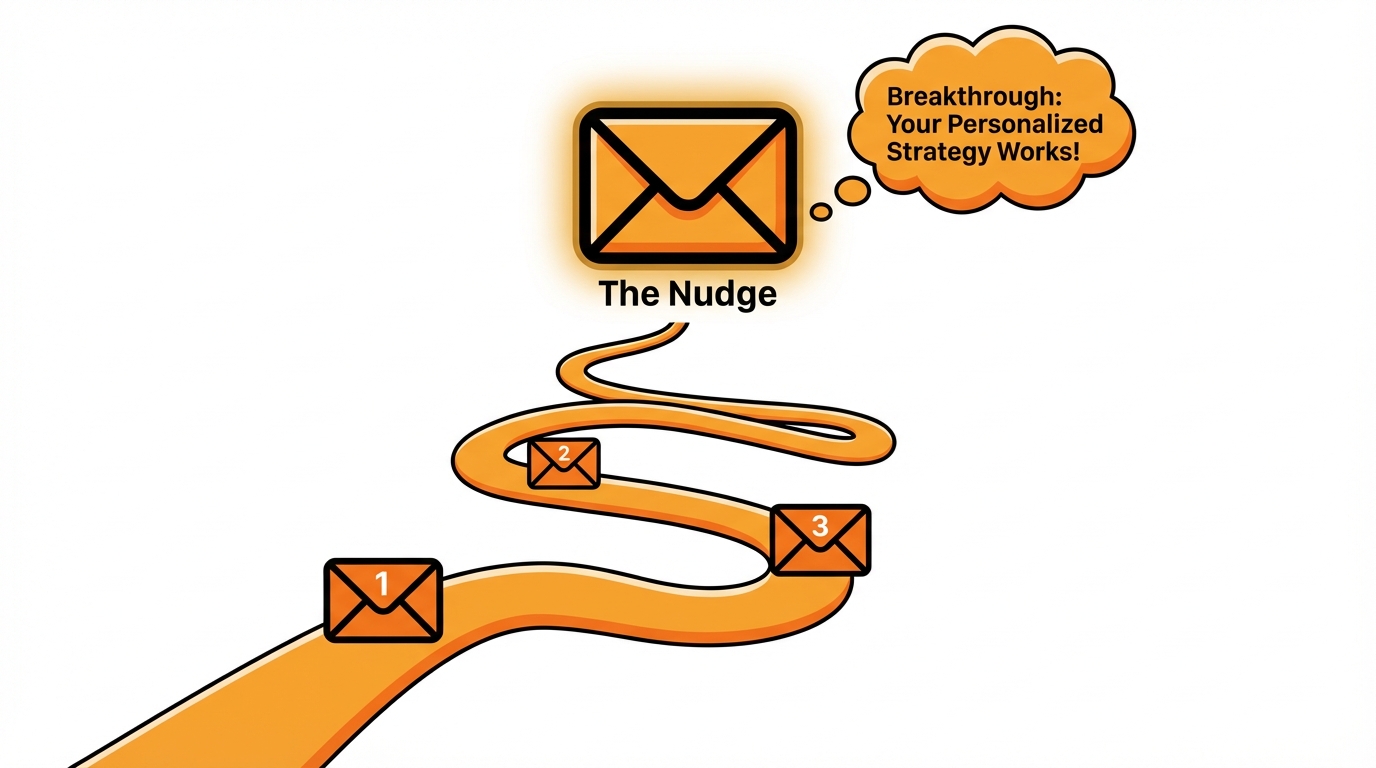
Follow-up is the critical phase where pipeline is either built or abandoned. Most SDRs quit after 1–2 attempts; we know that 80% of sales require 5+ touches. Do not quit. We must change the narrative and treat follow-up subject lines as high-priority conversion points.
If the prospect didn’t open the first email, the follow-up subject line must be completely different. It needs a new hook and a fresh value proposition.
Follow-Up Strategy A: The Value Add (The Non-Ask)
The goal here is simple: provide immediate, relevant value that proves you understand their world, without requesting time or a meeting. This builds micro-credibility necessary for a later ask.
- Quick article on [Competitor X]’s strategy
- Saw this data on [Industry Trend] — relevant for [Company Name]
- New benchmarks for [Specific Role/KPI]
Follow-Up Strategy B: The Breakup Email (The Clarity Close)
This is the final, high-impact attempt. It leverages vulnerability and forces a decision (yes or no). Use this sparingly—it burns the bridge but often generates a definitive response, even if that response is “No.”
- Should I stop reaching out?
- Closing the loop on [Project]
- One last thought on [Problem]
Follow-up consistency is non-negotiable. Successful follow-up often triggers objections, such as “Send me more info.” You must be prepared to handle these pivot points immediately. We have a full guide on Overcoming the SDR Objection: Send Me More Info, but the core principle remains: Never let the prospect off the hook with a vague, generic response. Your subject line got the open; now your response strategy must secure the next step.
Subject Line Testing Blueprint: Our A/B/C Framework
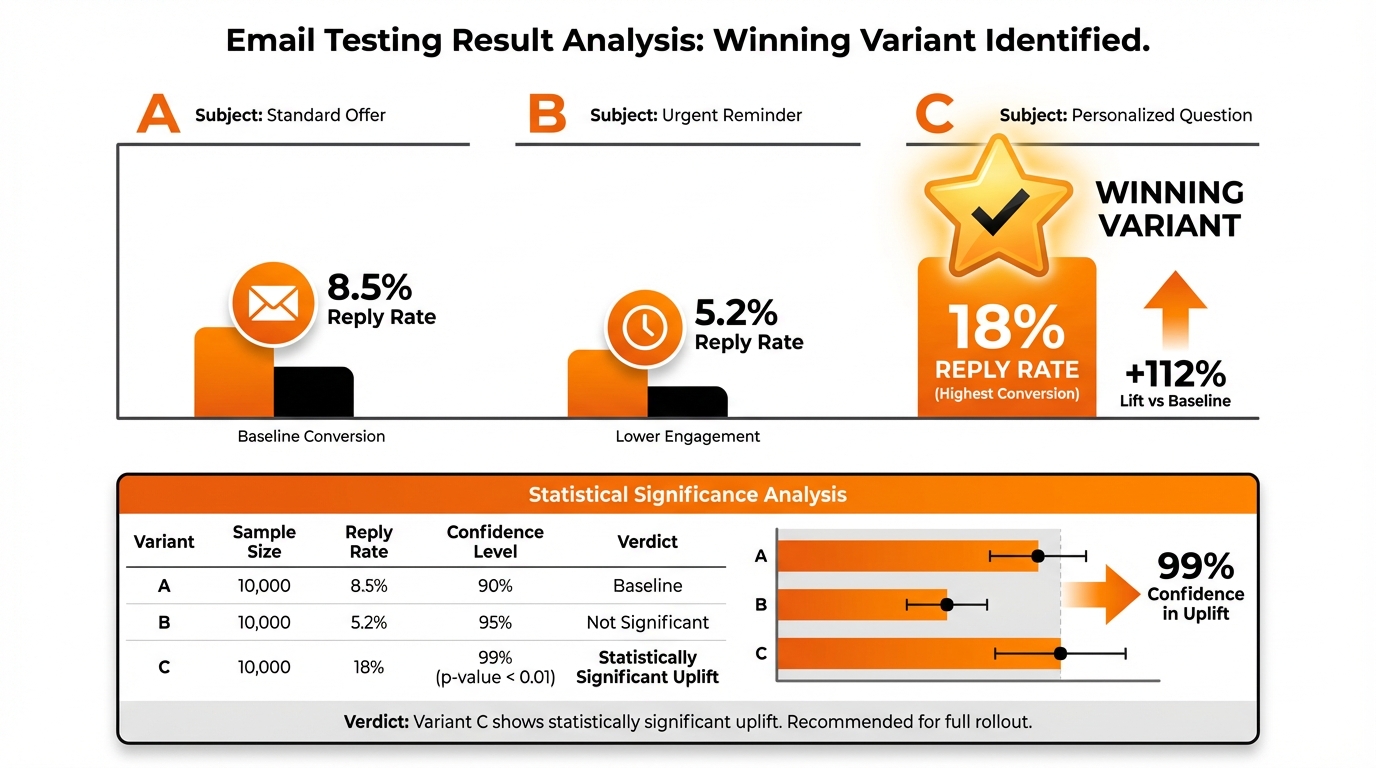
Static subject lines die fast. The moment a formula works, the market begins to adapt, leading to immediate fatigue. If you are not testing, you are losing money. This is why you must operate a continuous, data-driven testing environment.
Our A/B/C Framework is non-negotiable. It mandates that SDR teams test three distinct subject line archetypes simultaneously for every single campaign segment. We do not guess; we measure.
Test Group A: The Specificity Anchor
This group leverages deep research and intent data. The goal is to immediately establish trust through hyper-relevance.
- Focus: Hyper-personalization, derived from recent trigger events or high-value firmographic data.
- Goal: Maximize Reply Rate through immediate trust and specificity.
- Example: Your Q4 hiring goal vs. industry benchmarks
Test Group B: The Curiosity Gap
This group aims for raw volume. It relies on psychological triggers to maximize the click without revealing the full context.
- Focus: Short, unexpected, or metric-based hints that demand an open.
- Goal: Maximize Open Rate to test if the underlying topic itself is compelling enough for your segment.
- Example: [X]% cost reduction idea
Test Group C: The Direct Value Statement
Clarity over cleverness. This group is designed to pre-filter prospects, ensuring that only those truly interested in the specific value proposition open the email.
- Focus: Clear, upfront articulation of the immediate, measurable benefit.
- Goal: Maximize qualified replies by sacrificing high open rates for high reply quality.
- Example: Helping [Industry] firms fix lead quality
Execute all three groups concurrently. The key metric we track is the Reply Rate—not the Open Rate. Analyze performance after 7 days. The winning archetype immediately becomes the default standard for the next 30 days. This is a continuous loop: Rinse, measure, repeat. If you stop testing, your pipeline stops growing.
Deliverability Killers: Critical Mistakes That Land SDRs in Spam
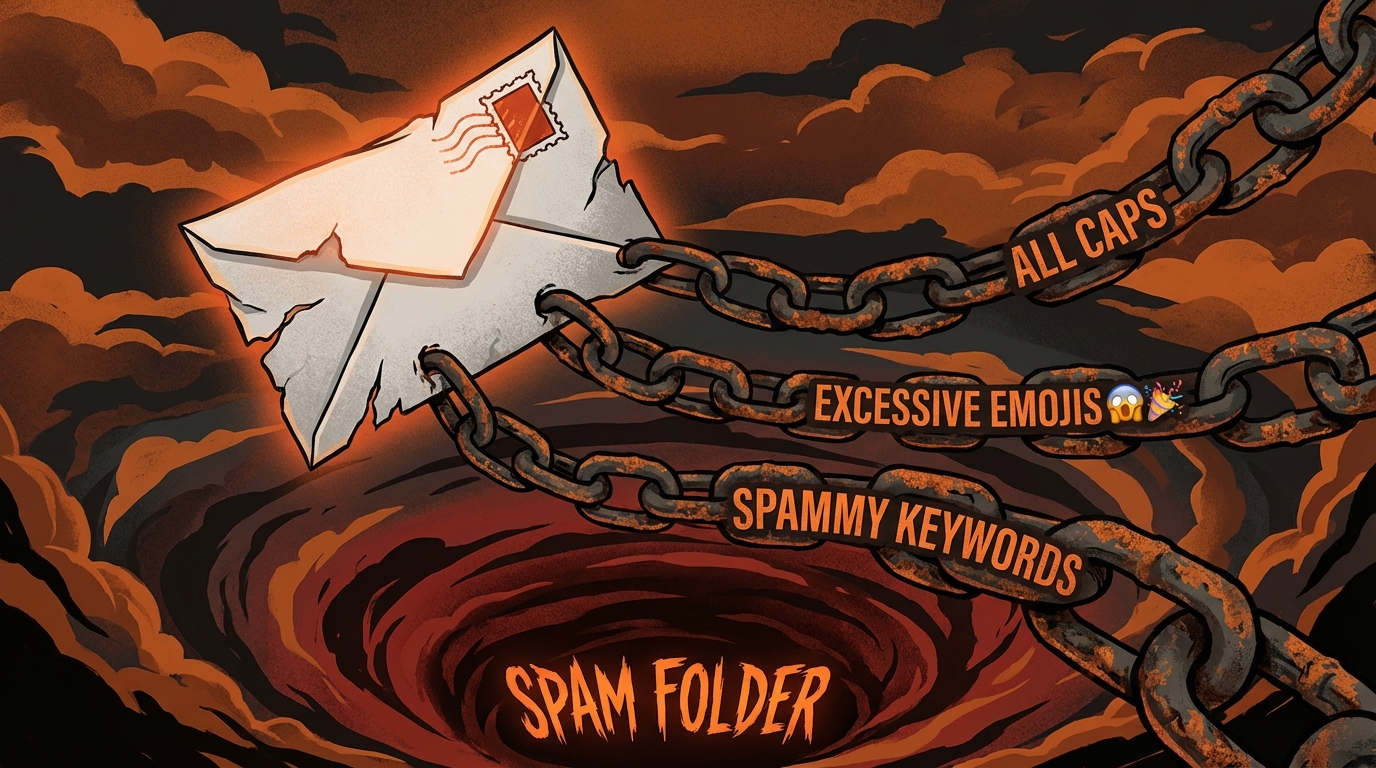
The subject line is the gatekeeper of your entire outbound strategy. Fail here, and your pipeline collapses before the prospect even sees your pitch. We must treat deliverability as a strategic asset, not an afterthought.
Absolute Red Flags: How to Avoid Spam Filters
Spam filters and human filters are increasingly sophisticated. To maintain a high sender reputation and ensure inbox placement, SDR teams must operate with surgical precision. These are non-negotiable pitfalls:
- Spam Trigger Words: Words like “Free,” “Guaranteed,” “Act Now,” “Urgent,” “Discount,” or excessive use of dollar signs ($$$) are immediate, system-wide red flags. Avoid them entirely.
- Excessive Punctuation: Using three or more consecutive exclamation points (!!!) or question marks (???) screams low-quality blast and mass marketing intent. We limit ourselves to one, context-appropriate punctuation mark.
- ALL CAPS: This is the digital equivalent of shouting. It is unprofessional, damages credibility, and triggers spam filters instantly.
- Hidden Text/Font Manipulation: Manipulating font size or color to hide text (a classic spam tactic) guarantees immediate blacklisting by major email providers.
Strategic Elements: High-Risk, High-Reward Tactics
Beyond the absolute red flags, certain subject line elements must be deployed pragmatically and only after rigorous A/B/C testing. We need to understand the risk profile of each element:
| Element | Pros (When Used Correctly) | Cons (When Used Excessively or Poorly) |
|---|---|---|
| Emojis (🔥) | Can increase open rates in certain, informal industries (e.g., MarTech, startups) by standing out visually. | Immediately flags the email as mass marketing; inappropriate and damaging for conservative sectors (Finance, Legal, Enterprise). |
| Personalization Tags ({Name}) | Essential for proving the email is not generic, boosting human filter acceptance. | If the tag fails (shows up as {Name} or {Company}), it instantly destroys credibility and damages deliverability metrics due to negative recipient interaction. |
| Brevity (Under 7 Words) | Guarantees full display on mobile devices, increasing readability and open rates across all platforms. | Too short can be vague or seem deceptive (e.g., just “Hello” or “Quick Question”), leading to immediate deletion. |
| Numbers/Metrics (20%) | Signals quantifiable value and strategic focus, appealing directly to outcome-oriented buyers. | If the number is too high or unbelievable (e.g., “1000% ROI”), it triggers immediate skepticism and spam flags. |
Our Mandate: Professionalism and Specificity. We prioritize clarity over cleverness. Lean heavily on Specificity and Brevity. Minimize reliance on high-risk curiosity tactics like excessive emojis or shock value.
Remember: The subject line’s only job is to secure the open. The email body must capitalize on that open. SDRs managing high-volume outbound systems need robust, proven frameworks for the entire message. Ensure your Strategic Outreach Templates convert that initial interest into booked meetings.
Conclusion: SDRs Must Become Strategists

The transition from mastering deliverability to maximizing engagement is the final, non-negotiable step. The era of mass-blasted, generic cold email subject lines is definitively over. SDRs are no longer merely volume dialers or email senders; they are strategic researchers.
To succeed, they must leverage proprietary data—such as verified personal emails found through our advanced AI software—to initiate high-value, hyper-personalized conversations. The subject line is the final gatekeeper and your ultimate promise to the prospect.
To win in the inbox, SDRs must adhere to a new, reply-focused mandate:
- Specificity Over Generality: Make the subject line specific, relevant, and focused entirely on the prospect’s current pain, not your product’s features.
- Test Constantly: Focus ruthlessly on the reply rate, treating the open rate only as a diagnostic metric.
- Strategic Personalization: Use the subject line to confirm you have done your research and understand their world.
This strategic shift—moving from sheer volume to targeted, data-backed personalization—is the singular factor that drives measurable revenue growth in 2025.
Ready to take the next step?
Try AI Lead Generation Today
Click HereNow that we have established the strategic necessity of leveraging proprietary data and hyper-personalization, SDRs must translate this high-level strategy into tactical, measurable execution. Below, we address the most common, critical questions SDR teams face regarding subject line mechanics and continuous optimization.
Frequently Asked Questions

What is the optimal length for a cold email subject line in 2025?
The optimal length is 50 characters or less—ideally between 5 and 8 actionable words. This is a non-negotiable rule because the majority of professionals check email first on mobile devices. Exceeding 50 characters results in truncation, instantly diluting your core message and lowering open rates. We prioritize brevity and density of meaning over descriptive length to maximize mobile readability.
Should SDRs use personalization tags like {First Name} in the subject line?
Yes, but SDRs must understand the difference between basic and strategic personalization.
- Basic Personalization: Simple inclusion of the prospect’s first name is the entry fee. It helps bypass basic spam filters and provides a minimal psychological advantage.
- Strategic Personalization: This is the differentiator. Referencing their company (e.g., [Company Name] growth strategy), a specific project, or a recent event proves manual research and relevance. Strategic personalization yields significantly higher reply rates because it positions the outreach as high-value, not mass-produced.
Does using a single word subject line still work?
It works as a ‘pattern interrupt’ but is a high-risk, high-reward tactic. Single-word subject lines (e.g., “Thoughts?” or “Quick question”) rely entirely on the strength and specificity of the email body’s first line to establish context immediately.
If the email body is generic, the subject line is immediately perceived as manipulative or spam. Use this tactic only for highly targeted, low-volume campaigns where you are certain the email body delivers instant, hyper-relevant value.
How often should SDRs A/B test their subject lines?
SDRs must run continuous A/B/C testing. Testing is not a one-time project; it is a continuous feedback loop required for operational excellence. Test cycles should last 7 to 10 days to achieve statistically significant results across your target volume.
Audience fatigue is real, and market conditions change constantly. A winning subject line today may be completely ineffective 90 days from now. Continuous testing is a non-negotiable operational standard for maximizing long-term engagement.
References
- The Most Effective Email Subject Lines for Sales – Salesforce
- 47 Best Cold Email Subject Lines That Actually Get Opened – LinkedIn
- Cold emails: What subject lines worked best for you? – Reddit
- 30+ Good Cold Email Subject Lines for 2025 – Woodpecker
- 30 Best Cold Email Subject Lines To Increase Open Rates