
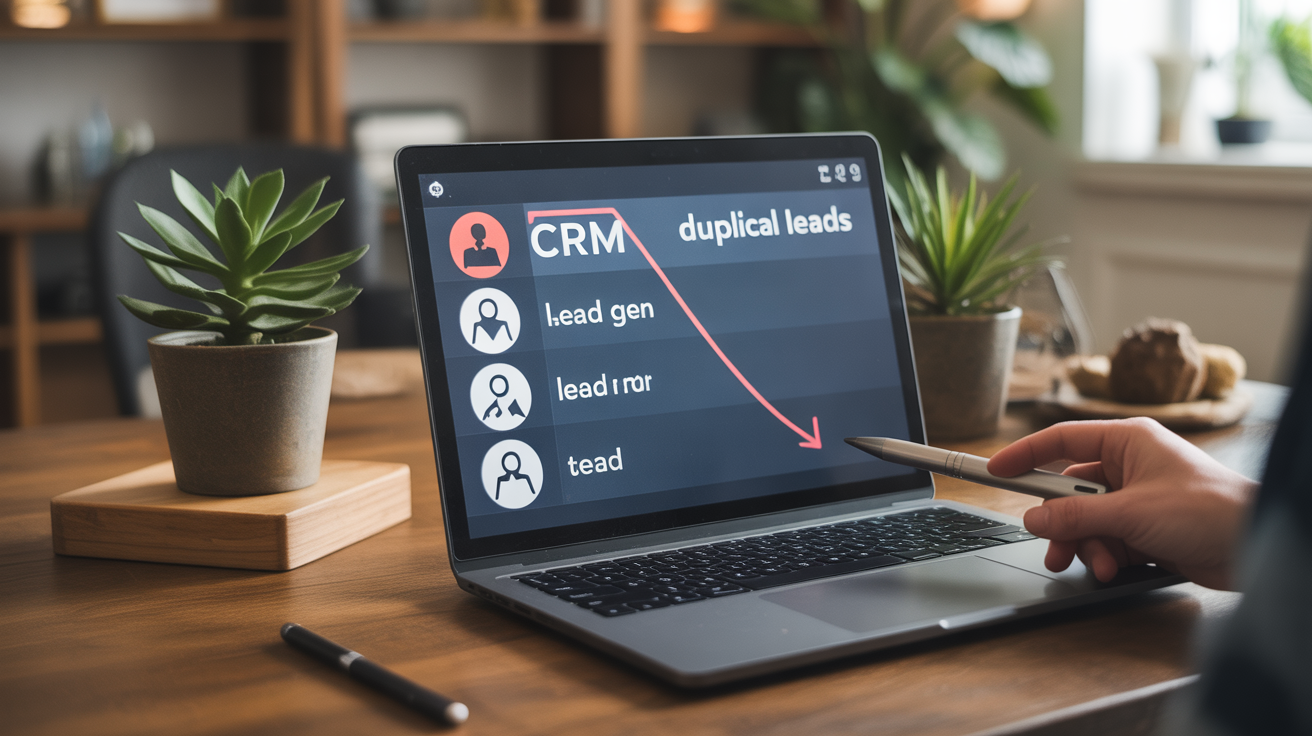

For SaaS companies and small businesses focused on aggressive growth, scaling lead generation is paramount. You invest heavily in AI lead generation tools, maximizing outreach and capturing data from every digital touchpoint. But as volume increases, a silent, insidious threat emerges: duplicate leads.
This isn’t just a minor annoyance. Duplicate records pollute your Customer Relationship Management (CRM) system, derail sales efforts, and inflate your Cost of Customer Acquisition (CAC). In the high-stakes environment of 2025, where efficiency dictates survival, you cannot afford data chaos. Industry estimates suggest that poor data quality costs businesses an average of $15 million annually, making proactive data hygiene a mandatory strategic priority.
As experts in automated outreach, we understand that effective lead generation relies entirely on clean data. This comprehensive guide details the strategic imperatives and technological solutions necessary for successfully managing duplicate leads in CRM using lead gen software, ensuring your growth engine runs smoothly.
The Hidden Cost of Lead Duplication in 2025
When you are running sophisticated, multi-channel campaigns powered by AI, leads flow into your CRM faster than ever before. If your system lacks robust deduplication protocols, the same prospect can enter your database via a chatbot, a form submission, and a third-party list import, resulting in three separate records. Why is this data fragmentation so damaging to your bottom line?
Resource Wastage and CAC Inflation
Every duplicate lead represents wasted time and money. Your sales development representatives (SDRs) might spend hours qualifying a lead that is already being worked by another team member. This reduces sales efficiency dramatically; internal studies often show that 20% to 30% of SDR time is wasted pursuing redundant contacts. Furthermore, marketing automation costs increase because you are sending multiple, identical email sequences to the same individual, needlessly consuming platform credits.
We see this cycle frequently: sales teams invest time, resources, and emotional energy into “prospects” that are already engaged elsewhere. This heightened, unnecessary investment directly inflates your CAC, making otherwise profitable lead generation campaigns appear inefficient and unsustainable at scale.
Data Integrity and Reporting Distortion
Your CRM data is the foundation of strategic decision-making. When your database is flooded with duplicates, your reporting becomes unreliable. How many unique prospects did you actually acquire last month? What is the true conversion rate from Marketing Qualified Lead (MQL) to Sales Qualified Lead (SQL)?
Duplicate entries grossly distort key metrics. You might overestimate the size of your pipeline by up to 40% or misinterpret the effectiveness of a specific marketing channel. This leads to poor resource allocation, where you invest more heavily in campaigns that are seemingly high-volume but are merely generating repeat entries, rather than new, viable prospects.
Reputational Damage and Customer Experience
In B2B sales, relationships are everything. Imagine a high-value prospect receiving three different outreach emails or calls from three different members of your team within a week, all offering the same service. This lack of internal coordination signals disorganization and unprofessionalism.
This confusion damages the prospect relationship immediately. It erodes trust and makes your company look fragmented, ultimately reducing the likelihood of conversion. Maintaining a single, unified view of the customer, often referred to as the ‘Golden Record,’ is non-negotiable for modern sales success.
The solution to these critical issues lies not just in manual cleanup, which is slow, expensive, and error-prone, but in integrating intelligent, automated systems. This leads us directly to the power of modern AI lead generation software.
Leveraging AI Lead Gen Software for Proactive Deduplication
Manual data cleansing is a maintenance nightmare, especially for fast-growing SaaS and service businesses handling thousands of new records monthly. The sheer volume of incoming data requires an automated, intelligent defense system. This is where advanced AI lead generation platforms excel, shifting the strategy from reactive cleaning to proactive prevention.
Effective AI tools move beyond simple exact matching (e.g., matching ‘john.doe@company.com’). They use sophisticated algorithms to identify near-duplicates, addressing variations in spelling, formatting, and sourcing that traditional database checks miss.
Real-Time Validation and Standardization
The best defense against duplicates is preventing them from entering the system in the first place. Modern lead generation software integrates real-time validation checks at the critical point of data capture, ensuring data quality from the outset.
This includes:
- Email Verification: Ensuring the email address is valid and active before it hits the CRM. This immediately slashes bounce rates and prevents wasted effort on dead leads. Implementing robust verification tools is essential for data hygiene. Verify Email Leads: Slash Bounce Rates in 2025.
- Data Standardization: AI automatically formats incoming data, for example, capitalizing company names, standardizing address formats, and removing common abbreviations like ‘Co.’ or ‘Inc.’. Inconsistent formatting is a primary driver of technical duplicates that confuse simple matching logic.
- Instant Lookup: The system performs an instant check against existing CRM records based on key identifiers, such as email, phone, or LinkedIn profile, before the new record is created, blocking ingestion if a match is found.
AI-Powered Fuzzy Matching and Merging
Fuzzy matching is the core technology required for successfully managing duplicate leads in CRM using lead gen software. This process uses algorithms, often based on phonetic or distance metrics, to calculate the probability that two records, which are not identical, actually refer to the same person or company.
Consider these common duplicate scenarios that fuzzy matching handles, often by calculating a confidence score:
- Typographical Errors: “Jhon Smith” vs. “John Smith.”
- Name Variations: “William Jones” vs. “Bill Jones.”
- Domain Changes: “sarah@oldcompany.com” vs. “sarah@newcompany.com” (if linked by phone or previous activities).
- Missing Fields: One record has a full address, the other only has a phone number and name.
Once identified, the AI platform doesn’t just delete the duplicate; it triggers a smart merge process. The system automatically selects the “master record” based on criteria like recency, completeness, or engagement score, and then consolidates all associated activity history, notes, and fields from the secondary record into the master record. This ensures no valuable historical data or context is lost during the cleanup process.
Source Integration and Centralization
A fragmented tech stack is a breeding ground for duplicates. If your landing pages feed data into one spreadsheet, your chatbot feeds into another system, and your sales team manually enters leads into the CRM, you have lost control of the data stream.
The strategic solution is centralizing all lead capture through a unified AI lead generation platform, such as Pyrsonalize. When all sources, from website widgets to cold outreach campaigns, are funneled through a single system, that system can apply sophisticated deduplication logic universally before the data ever reaches the CRM. This prevents the initial duplication.
Furthermore, robust integration capabilities ensure that as soon as a lead is generated, the necessary steps are taken, including deduplication and immediate qualification. This level of automation is critical for achieving the operational efficiency required for rapid scale. AI Lead Gen Software: Automate Your Funnel with Zapier.
Best Practices for Implementing Deduplication Protocols
Technology is only half the battle. Even the most sophisticated AI tools require clear processes and human oversight to maintain peak data hygiene. Implementing strict, organization-wide protocols ensures long-term success in managing duplicate leads in CRM using lead gen software.
Establishing Data Entry Standards
Inconsistency is the enemy of clean data. You must define and enforce strict rules for how data is entered, both manually and via system integrations. This minimizes the creation of “soft” duplicates that confuse algorithms and require manual intervention.
Consider standardizing the following fields:
- Company Name: Always use the legal name. Avoid abbreviations unless specified (e.g., use ‘Google LLC’ consistently).
- Job Title: Enforce capitalization rules and standardized titles (e.g., “CEO” vs. “Chief Executive Officer”).
- Source Field: Use standardized picklists for lead sources. Never allow free-text input for this critical field, as variations like ‘webinar’ and ‘webinar_oct’ lead to reporting chaos.
- Contact Formatting: Standardize phone number formats (e.g., always include country code, or enforce all US format).
The goal is predictability. When humans or systems enter data, they must adhere to the same format every single time, making the data recognizable to both the CRM and the AI deduplication engine.
Scheduled Audits vs. Continuous Monitoring
Historically, businesses performed massive, painful data audits once or twice a year. This is no longer viable given the velocity of modern lead generation. Today’s high-velocity lead flow demands continuous monitoring, supplemented by periodic deep dives.
| Strategy | Frequency | Primary Tool | Benefit |
|---|---|---|---|
| Continuous Monitoring | Real-Time (Per Ingestion) | AI Lead Gen Software (e.g., Pyrsonalize) | Stops duplicates at ingestion, maintains high data quality immediately, and prevents downstream errors. |
| Scheduled Audit | Monthly/Quarterly | CRM Deduplication Tools/Data Steward Review | Catches historical errors, identifies complex fuzzy matches missed during initial ingestion, and reviews records flagged for manual merge. |
While AI handles the real-time blocking, scheduled audits remain necessary to review the AI’s suggestions and manage complex merges, especially for historical or highly incomplete records that require human context.
Training Your Sales and Marketing Teams
Your team members are the frontline defense against data corruption. They must understand why clean data matters, as it directly impacts their commission, sales efficiency, and forecasting accuracy.
Training should cover:
- The financial impact of duplicate leads on the business, quantifying the wasted effort.
- How to properly search the CRM before creating a new record, emphasizing the use of multiple identifiers (email, company name, phone).
- The standardized data entry rules and the consequences of deviation.
- How to use the lead generation platform’s built-in deduplication alerts and merge features when prompted by the system.
Ensure that your teams are proficient not only in generating leads but also in qualifying them accurately and efficiently. A well-trained team understands the value of a clean pipeline, improving both lead quality and conversion rates. AI Automation: Qualify Leads Instantly in 2025.
Selecting the Right Tools for Deduplication and Lead Management
When selecting lead generation software, especially for SMBs and SaaS firms, look beyond basic lead capture features. The platform must be purpose-built to handle the data volume and complexity that modern AI-driven outreach creates, ensuring scalability without sacrificing precision.
The ideal platform for managing duplicate leads in CRM using lead gen software offers three core capabilities:
1. Seamless CRM Integration
The chosen tool must integrate deeply with your primary CRM (e.g., Salesforce, HubSpot, Pipedrive). Integration is not just about moving data; it’s about synchronization. The lead gen tool must be able to check the CRM database in real-time, apply matching rules, and either merge the data or flag the record before creating a new entry. This bi-directional communication ensures the lead gen tool is always working with the most current CRM data.
2. Customizable Matching Rules
Generic deduplication rules are inadequate for nuanced B2B data. Your software must allow you to define custom matching logic based on your unique business needs. For instance, you might prioritize email and company domain as high-confidence matches, while treating phone numbers with slightly lower confidence due to shared office lines or personal number changes.
Advanced platforms allow you to set specific confidence thresholds. Records above a 90% match probability can be automatically merged, while records between 70% and 90% are flagged for manual review by a designated data steward, ensuring critical data decisions are reviewed before execution.
3. Automated Conflict Resolution
When merging two records, a conflict occurs if both records have different values for the same field (e.g., Record A says “Marketing Manager,” Record B says “Director of Demand Gen”). High-quality AI lead generation software utilizes automated conflict resolution rules to resolve these discrepancies instantly.
These rules might dictate:
- Always prioritize the most recently updated field, assuming it is the most current information.
- Always prioritize data from the field with the most characters, assuming more detail or completeness.
- Always prioritize data from the highest-value lead source (e.g., a direct referral over a general list import).
By automating these decisions, you significantly reduce the manual effort required to maintain data quality. This ensures that your sales team spends its valuable time selling, nurturing relationships, and closing deals, not cleaning spreadsheets.
For organizations seeking a solution that combines powerful AI outreach with proactive data hygiene and deep CRM synchronization, utilizing Pyrsonalize provides the framework necessary to scale without succumbing to data chaos. We built the platform to handle the velocity of modern lead generation while keeping your CRM pristine.
Ready to take the next step?
Utilize the featured AI lead generation platform (‘Pyrsonalize’) for automated outreach and prospecting, or implement the detailed strategies provided in the guides.