


The 2025 sales landscape is unforgiving. Manual processes are obsolete. Your team cannot afford data silos.
Are you still exporting CSV files to update your pipeline? That approach hemorrhages time and revenue.
Modern lead generation demands speed, precision, and perfect continuity. The integration between your lead capture mechanism and your Customer Relationship Management (CRM) system is no longer optional.
It is the foundation of competitive scaling.
We are moving past simple API connections. We require true, native, or built-in CRM functionality within our lead generation tools. This guide covers the strategic shift required. It details the best AI-powered lead generation tools with built-in CRM integration for SMBs and SaaS companies today.
The Imperative of Unified Lead Management in 2025

Why are we focusing specifically on “built-in” integration? It is about eliminating friction. Every manual touchpoint introduces delay.
Delays lead directly to cold leads.
Speed is the new currency in sales outreach. Leads generated today must be nurtured immediately. They need to be scored, enriched, and routed without human intervention.
What does true, zero-latency unification look like?
- Leads captured from a website form instantly appear in the sales queue.
- Behavioral data tracked by the lead tool updates the CRM contact record in real-time, sub-second latency.
- Sales sequences are triggered automatically based on lead score and source, ensuring immediate follow-up.
This efficiency defines the modern, scalable sales engine. Failure to unify data results in predictable pipeline collapse.
Why Siloed Data Kills Conversion Rates
Siloed data is fragmented information. It creates a disjointed customer journey. Your marketing team sees one set of data. Your sales team sees another.
How can you personalize outreach if you lack the full context?
When lead data sits outside the CRM, several critical failures occur:
- Delayed Follow-up: The average response time for sales teams often exceeds five hours when leads are manually transferred. The probability of conversion plummets by over 80% after 60 minutes. Speed is paramount.
- Inaccurate Scoring: Without real-time behavioral data (website visits, content downloads), lead scoring models become unreliable. Your reps waste time on low-intent prospects.
- Poor Personalization: Reps cannot access the specific pain points or campaign source that brought the lead in. Generic outreach destroys trust and engagement.
- Compliance Risks: Managing opt-ins and consent across multiple, disconnected databases is a compliance nightmare, especially under GDPR and CCPA regulations. Data fragmentation equals legal risk.
Integrated systems solve these problems instantly. They provide one source of truth. This single view accelerates the path from prospect to paying customer.
The E-E-A-T Advantage of Integrated Systems
We talk a lot about E-E-A-T in content marketing. It stands for Experience, Expertise, Authoritativeness, and Trustworthiness. This concept applies equally to your sales process.
A unified system demonstrates expertise. It shows your team has the right context at the right moment.
When a sales development rep (SDR) reaches out, they should already know what the lead downloaded, what pages they visited, and what questions they asked a chatbot. This is powered by deep integration.
The benefits of this contextual expertise are clear:
- Higher Trust: Prospects trust companies that remember their interactions and offer relevant solutions immediately.
- Better Experience: The sales journey feels seamless, not robotic. The lead feels heard and understood, enhancing conversion psychology.
- Increased Authority: Your reps spend less time gathering basic information and more time offering high-value, strategic insights.
This seamless data flow is not just about automation. It is about building a professional, high-authority brand experience. For small businesses and SaaS founders, this level of polish is critical for competing against enterprise brands.
Core Categories of Lead Generation Tools with CRM Functionality
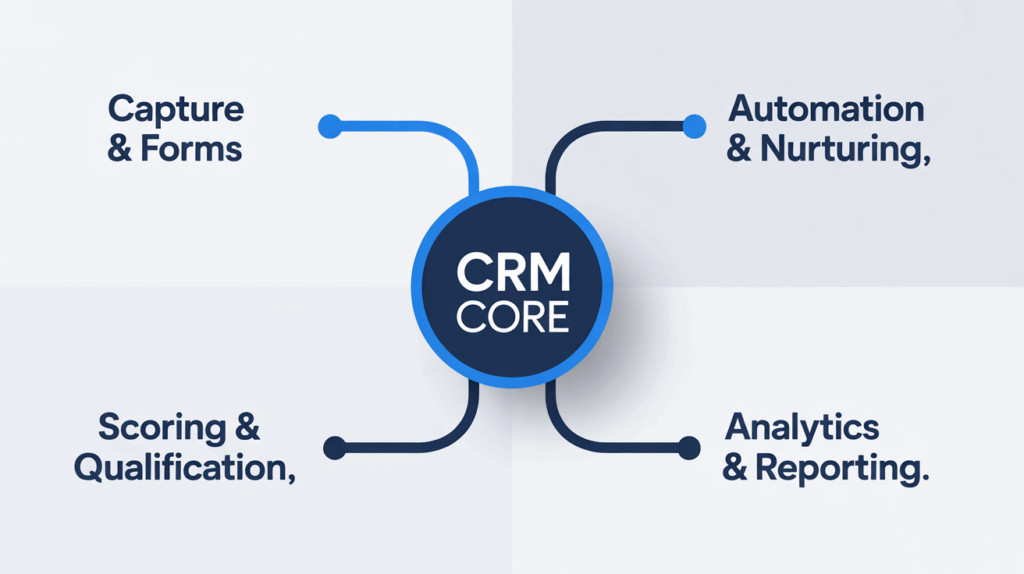
The market for lead generation tools with built-in CRM integration has matured significantly in 2025. We no longer rely solely on simple forms. We use AI, behavior tracking, and multi-channel outreach simultaneously.
These tools fall into three primary categories. Each offers a different depth of built-in CRM functionality, catering to distinct business needs.
All-in-One Marketing Automation Suites
These tools inherently provide the deepest integration. Why? Because the lead generation tool and the CRM are the same platform. They are designed for end-to-end management from capture to close.
HubSpot is the prime example. It offers forms, landing pages, email marketing, and a full CRM database under one roof. Marketo (now Adobe Experience Cloud) operates similarly, focusing heavily on complex B2B lead scoring and enterprise nurture workflows.
Evaluation of All-in-One Suites:
| Feature | Pros (Built-in CRM) | Cons (Built-in CRM) |
|---|---|---|
| Data Unification | Perfect data synchronization; zero latency. Single source of truth. | Vendor lock-in; extremely difficult to switch components or tools later. |
| Scalability | Excellent for rapid, complex scaling across multiple departments. | High cost, especially for advanced features like predictive scoring. |
| Lead Capture | Native forms, chatbots, and landing pages instantly populate the CRM. | Often less flexible or customizable than specialized third-party tools, potentially limiting conversion rates. |
These suites are powerful. However, they demand a significant budget and often involve a steep learning curve. Are you ready for that investment? Understanding how these large systems integrate is crucial even if you opt for a specialized stack.
Specialized Lead Capture Platforms
This category includes tools focused exclusively on maximizing onsite conversions. Think high-performance popups, sticky bars, gamified forms, and exit-intent technology. Tools like Wisepops or OptinMonster excel here.
These platforms often do not contain a full CRM themselves. Their value lies in their robust, native connectors to major CRMs (HubSpot, Salesforce, Pipedrive, etc.). The integration is so tight that the experience feels almost built-in.
They specialize in capturing visitor intent. They track behavior and deliver contextually relevant forms. This captured data is then immediately pushed into your CRM, updating the contact record before the visitor even leaves the page.
Key Integration Attributes for Capture Platforms:
- Real-time Sync: Data submission must trigger an immediate CRM record creation or update, not a batch process.
- Field Mapping Flexibility: Ability to map custom form fields directly to custom CRM properties (e.g., mapping a “Product Interest” field or a specific lead magnet download).
- Segmentation Triggers: The tool should be able to segment leads based on existing CRM data, allowing you to show different forms to existing customers versus new prospects.
These tools are ideal if you need conversion features that your main CRM lacks.
AI-Powered Outreach and Data Enrichment
This is where the 2025 landscape truly differentiates itself. AI tools are focused on finding, enriching, and initiating contact with leads outside your website. They specialize in cold outreach, B2B data scraping, and email verification.
Why do these tools need deep CRM integration? Because manually transferring enriched data defeats the entire purpose of automation and speed.
For example, Pyrsonalize.com leverages AI to identify high-intent prospects based on specific criteria. This information is useless if it stays trapped in our platform.
The integrated approach means receiving high-quality, actionable data:
- The AI identifies a qualified lead based on ICP matching.
- The tool enriches the lead profile with critical data points: verified contact info, current tech stack, recent funding rounds, and intent signals. (This is where data quality matters. Learn more about data enrichment tools to score leads faster.)
- This complete, scored profile is automatically pushed into your CRM (e.g., Salesforce, Pipedrive) as a new contact or opportunity.
- The CRM automation engine immediately assigns the lead to the correct rep and launches the personalized outreach sequence.
This category of lead generation tools with built-in CRM integration focuses on feeding high-quality, pre-qualified data directly into the sales pipeline. It maximizes the efficiency of your SDRs by providing context from the very first touchpoint.
Deep Dive: Evaluating Built-in CRM Integration Features
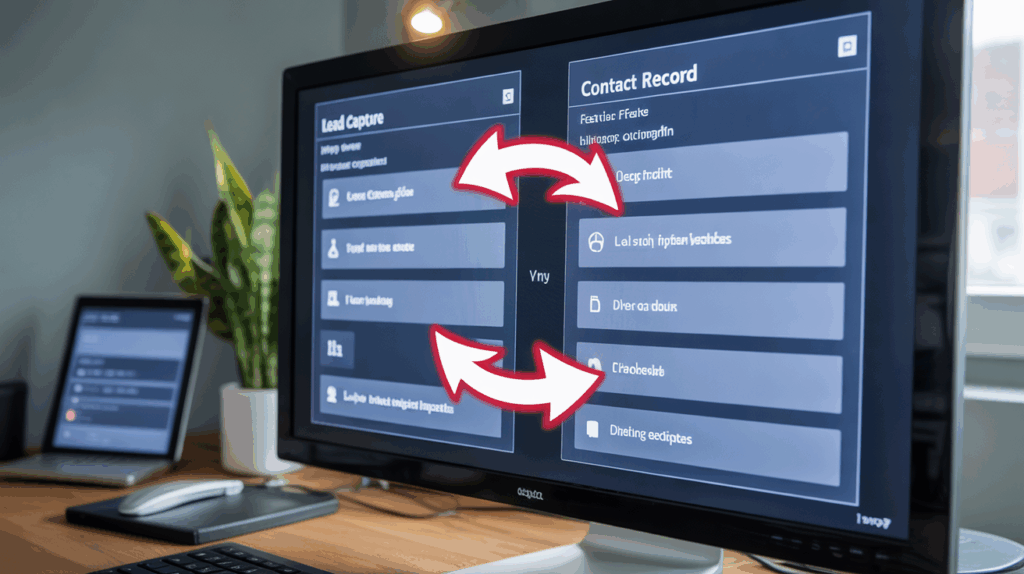
Choosing the right tool requires looking beyond the marketing claims. You must scrutinize the depth and quality of the integration itself. A simple “We integrate with X” statement is insufficient for modern sales operations.
We need to assess three critical areas of built-in functionality for true seamlessness.
Essential Synchronization Capabilities
Synchronization is the heartbeat of integrated lead management. It ensures that changes in one system are immediately reflected in the other. If the sync is slow or flawed, the system fails.
Ask these specific, technical questions when evaluating a tool’s integration:
- Is the Sync Bi-Directional? Does the lead tool only push data *to* the CRM, or can it also pull existing CRM data? Bi-directional sync prevents duplicate records and ensures personalization based on existing customer status.
- What Triggers the Sync? Is it immediate upon event completion (form submission, behavioral trigger), or does it run on scheduled batches? Immediate, event-based triggering is mandatory for hot leads.
- How is Deduplication Handled? The system must use unique identifiers (usually email address or company domain) to prevent creating duplicate records. Does the tool update existing records or simply create new ones? Updating is always preferred to maintain data hygiene.
- Can it Handle Custom Objects? If your CRM uses custom fields or objects (common in highly specialized SaaS pipelines), can the lead generation tool map data to these specific structures?
If the synchronization feels clunky, requires complex mapping, or introduces latency, it is not truly “built-in.” It is merely connected via weak middleware.
Lead Scoring and Behavioral Tracking Automation
Effective lead scoring is impossible without integrated tracking. The lead generation tool captures high-value actions. The CRM needs that data immediately to assign a score and prioritize follow-up.
A superior integrated tool automates the entire scoring process:
- Activity Logging: Every interaction (popup view, video watched, pricing page visit) is logged directly onto the contact timeline within the CRM. This creates the historical context needed by sales.
- Score Calculation: The lead tool’s data triggers rules within the CRM’s scoring model (e.g., “If the lead visits the demo page AND downloads the PDF, add 25 points”).
- Threshold Alerts: Once a lead crosses a high-intent threshold (e.g., 75 points), the integration automatically changes the CRM lead status to “Sales Qualified Lead (SQL).”
- Automated Routing: The SQL status triggers an automatic assignment to the appropriate sales rep, often accompanied by a real-time notification via Slack or email.
This level of automation ensures that high-intent leads are handled within minutes. It removes the need for sales reps to constantly monitor external dashboards or spreadsheets.
Reporting and Pipeline Visualization
Data visualization is the final test of a unified system. You should be able to answer complex attribution questions directly within your CRM or a connected reporting tool.
Can you measure the precise ROI of a specific lead capture form? Can you trace a closed-won deal back to the exact outreach sequence that initiated contact?
Integrated reporting allows you to connect the dots seamlessly:
- Lead Source Accuracy: Every lead record must clearly show the precise campaign, form, or outreach method that generated it. This data must be immutable.
- Conversion Path Analysis: You can track the time it takes from initial capture to conversion, segmented by the lead generation channel. This identifies bottlenecks.
- Forecasting Reliability: When all lead data is centralized, sales forecasts become significantly more accurate because they are based on real-time behavioral metrics, not just subjective sales notes.
If you have to pull reports from two different platforms and manually merge them to understand pipeline health, your integration is failing. Demand a single, unified view.
Strategic Implementation: Choosing the Right Integrated Stack
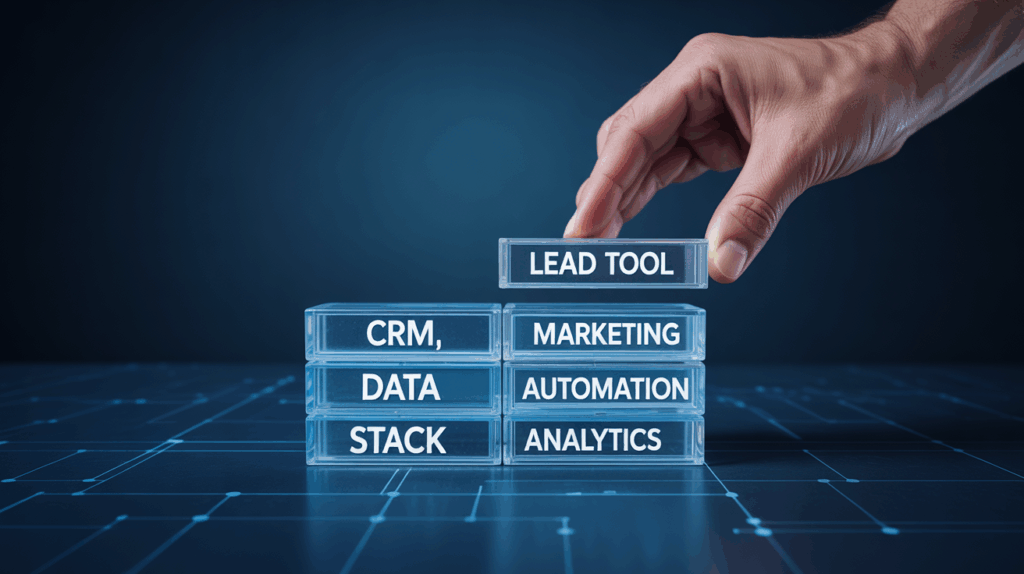
The “best” lead generation tools with built-in CRM integration depend entirely on your business size, budget, and sales complexity. A startup needs agility. A scaling SaaS needs specialized, high-volume data handling.
Small Business and Startup Considerations
Startups often require tools that offer maximum value for minimal cost. They must prioritize speed to market and conversion rate optimization over complex features.
For small teams, simplicity trumps complexity. We recommend focusing on two key options:
- Freemium All-in-One: Start with the free or low-cost tier of an established suite like HubSpot or Pipedrive. Use their native forms and landing pages exclusively. This keeps everything unified from day one, minimizing integration headaches as you grow.
- Specialized AI Outreach + Basic CRM: If your focus is primarily outbound (B2B SaaS), pair a high-efficiency AI tool like Pyrsonalize with a user-friendly, affordable CRM (e.g., Pipedrive, Zoho). The AI handles the heavy lifting of finding and enriching leads, feeding clean data directly into the affordable CRM.
Remember that budget matters. Look for the best AI lead generation tools for small business that offer robust integration features without the enterprise price tag.
Prioritize tools that are immediately actionable. You need results now, not six months from now.
Scaling SaaS Operations Efficiently
SaaS companies face unique challenges. They rely heavily on free trials, product usage data, and complex onboarding funnels. Their integrated stack must be able to handle immense data volume and trigger highly specific workflows.
For scaling SaaS, the ideal stack requires specialized components:
- A Robust CRM Foundation: Typically Salesforce, HubSpot Professional/Enterprise, or a highly customized Pipedrive setup. This manages the complex pipeline stages and custom objects.
- Behavioral Analytics Integration: Tools like Mixpanel or Amplitude must feed product usage data (PQL signals) directly into the CRM contact record in real-time.
- AI Lead Enrichment & Outreach: Use specialized AI platforms to continuously find new ICP matches and enrich existing leads with up-to-date firmographic data (e.g., recent funding, headcount changes).
In this environment, the integration must support trigger-based outreach. If a free trial user stops using a core feature, the integrated system must automatically notify the account manager via the CRM and trigger a personalized email sequence. This high level of precision is non-negotiable.
This precision is the difference between retaining a customer and losing them to churn.
Integrating Pyrsonalize for Seamless Lead Flow
We designed Pyrsonalize.com specifically to solve the data silo problem for high-growth businesses. Our focus is AI-driven lead identification and precise personalization for sales outreach.
How does Pyrsonalize function as a lead generation tool with built-in CRM integration?
It ensures that every lead generated is immediately actionable within your existing sales environment. We prioritize clean, contextual data delivery.
Pyrsonalize Integration Workflow:
- AI Prospecting: Our system identifies ideal customer profiles (ICPs) using advanced AI modeling across various B2B data sources, focusing on high-intent signals.
- Validation and Enrichment: We verify contact details and enrich the profile with critical data points (technologies used, recent news, intent signals).
- Native CRM Sync: The enriched, qualified lead is instantly pushed to your CRM (e.g., Pipedrive, Salesforce, HubSpot) via native, deep-level integration. We avoid fragile API middleware.
- Automated Routing: Within the CRM, the new lead is automatically tagged, scored, and assigned to the correct sequence or sales representative based on the data Pyrsonalize provided.
- Feedback Loop: Data on outreach success (replies, conversion) flows back into Pyrsonalize, continuously refining the AI models for better future targeting, creating a truly recursive system.
This workflow eliminates manual data handling entirely. It allows your sales team to focus 100% on conversion, knowing the leads they receive are high-quality, verified, and contextualized.
In 2025, your lead generation tool should not just capture data. It must seamlessly manage, score, and route that data to maximize pipeline efficiency. If your current tools require Zapier or manual intervention for every lead, it is time to upgrade your stack.