

Most small marketing agencies hit a predictable ceiling.
They rely exclusively on referrals and cheap inbound traffic. This approach works temporarily, but it is not a system. It is luck.
When the referral pipeline dries up (and it always does), these agencies stall. Their growth becomes erratic. Their revenue flatlines.
We approach agency lead generation differently. We view it as a predictable, scalable system built on two non-negotiable pillars: hyper-targeted outbound and high-intent inbound conversion.
This is not a list of 10 generic tactics. This is the strategic blueprint our high-ticket clients use right now to secure predictable, high-value retainers in 2025.
The Blueprint: What We Cover
This guide moves past vanity metrics. We focus exclusively on strategies designed to generate qualified meetings and secure high-LTV clients (Lifetime Value).
- Systematized Outbound: How to build a precise Ideal Client Profile (ICP) and launch personalized outreach campaigns that bypass gatekeepers.
- High-Intent Inbound: Leveraging specific content assets (like proprietary research or tools) to convert traffic directly into sales conversations, not just email subscribers.
- The Agency Offer Stack: Structuring your services to justify $5k–$15k+ monthly retainers, making your agency irresistible to serious buyers.
- Scaling the System: Transitioning from founder-led sales to a predictable, repeatable sales process that guarantees steady pipeline growth.
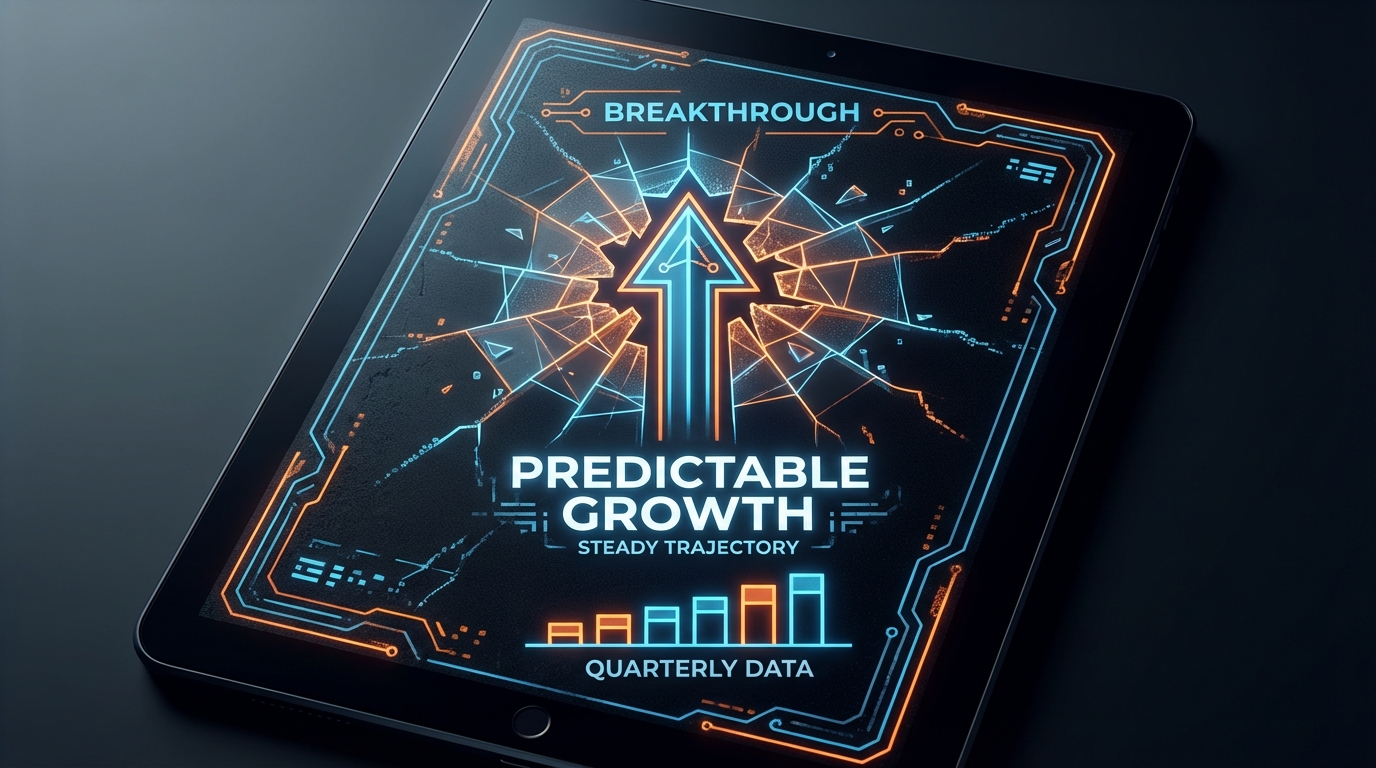
Key Takeaways: The Agency Mandate for Predictable Growth
- Ditch Generic Outbound: High-volume, low-personalization outreach is financially dead. Scaling demands hyper-personalization, which is only possible with superior data acquisition (verified personal emails are non-negotiable).
- Focus on Intent Signals: Outbound prospecting must be rooted in observable, real-time triggers (e.g., new funding rounds, recent C-suite hires, detected broken PPC campaigns, or technology shifts).
- Weaponize Your Website: Your agency site is not a brochure; it is a high-converting lead magnet. Implement mandatory tools like quizzes, gated technical assets, and aggressively optimized forms.
- Measure Predictability (The Hope Test): If we cannot accurately forecast next quarter’s revenue based on current lead velocity and conversion rates, we do not have a system. We are operating on hope.
- Prioritize Lifetime Value (LTV): Client acquisition cost (CAC) is high. Strategic reporting frameworks and proactive client success systems are mandatory for maximizing long-term LTV—the only sustainable metric.
The Core Lead Acquisition System: The 2025 Mandate for Predictable Revenue
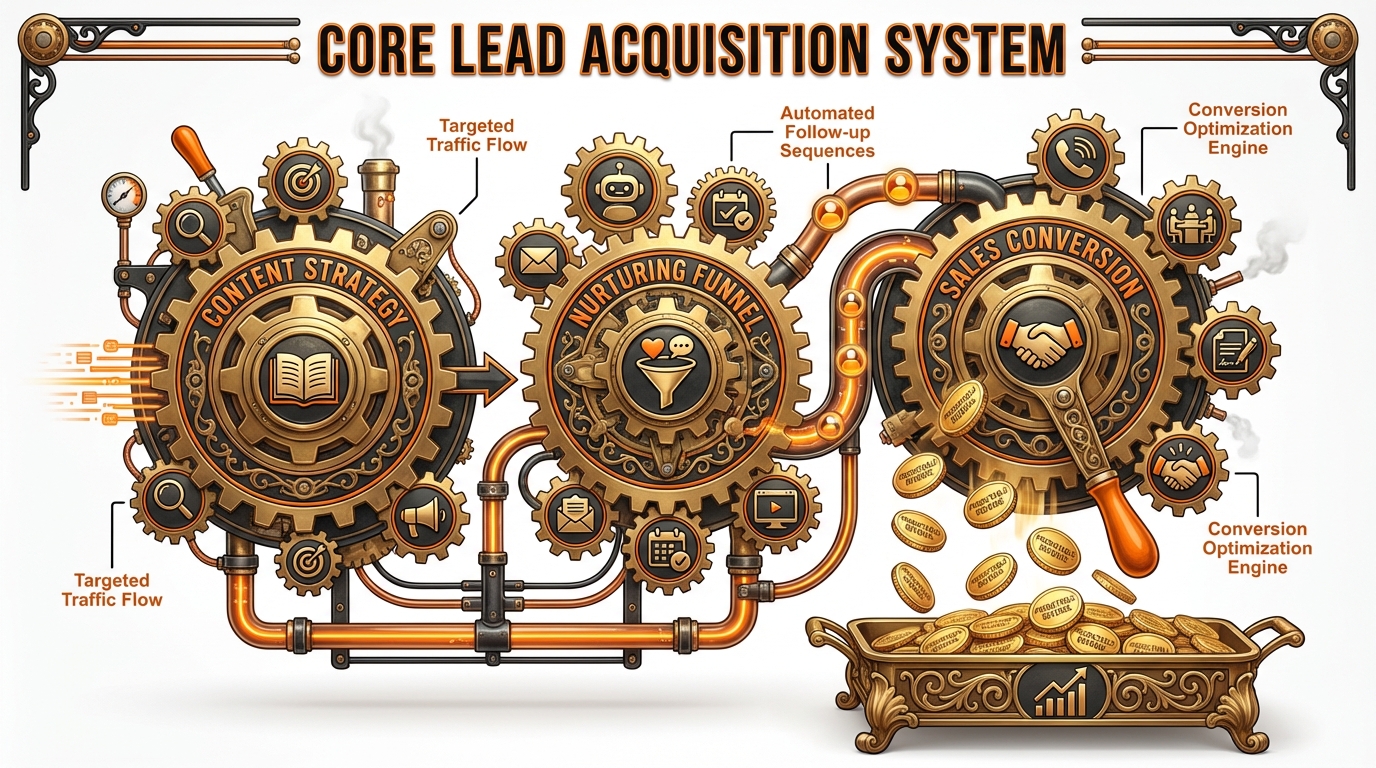
If generic outbound is financially dead, what replaces it? The modern agency requires a controlled, measurable lead acquisition system. You must pull levers that reliably generate qualified meetings, not just leads. This entire system hinges on superior data and hyper-personalization.
Step #1: Define the Hyper-Specific ICP
Your Ideal Client Profile (ICP) cannot be “SaaS companies with $1M+ revenue.” That definition is too broad; it’s where generic agencies bleed resources and fail to convert. We require precision. We need triggers. Your ICP definition must incorporate explicit behavioral and technological data points that signal readiness to buy.
A High-Value ICP Must Specify:
- Industry/Niche: Be specific. (e.g., B2B FinTech SaaS selling accounting software to SMBs in the US).
- Technographic Data: What software are they running? (e.g., Uses HubSpot, runs Google Ads, but hasn’t updated their core product landing page structure in 18 months).
- Firmographic Triggers: What makes them ready to buy now? (e.g., Closed a Series A round in the last 6 months, recently hired a VP of Marketing from a competitor, or is actively running PPC campaigns with a low Quality Score).
- Budget & LTV: What is the minimum acceptable retainer? Focus only on clients who can reliably generate 5-figure monthly revenue.
When you define your ICP this tightly, your messaging shifts from a vague “We offer SEO services” to a compelling, contextualized pitch: “We noticed your recent Series A funding and simultaneously identified three critical keyword gaps in your Q4 content strategy. We closed those exact gaps for clients X and Y.”
The narrowest niche wins. A tight ICP allows for 100% personalization, which is the only way to break through B2B noise in 2025.
Step #2: Master Strategic Outbound Data Acquisition
Generic lead lists are worthless. They are polluted with stale data, catch-all emails, and unqualified contacts. Your competitive advantage in 2025 is data quality, not list volume. We use AI-powered tools to bypass corporate gatekeepers and find the decision-maker’s verified personal contact information.
The Personalized Data Stack:
- Intent Data Scrape: Utilize specialized tools (e.g., Bombora, G2 intent data) to monitor buying signals. Identify companies actively researching your service category or competitors in real-time.
- Contact Verification: Once intent is flagged, use AI lead generation software to locate and verify the specific personal email addresses of the CEO, VP of Marketing, or Founder.
- Contextual Research: Scrape recent LinkedIn activity, press releases, or news articles immediately before outreach. This proprietary research provides the hyper-personalization hook necessary for Step #3.
The focus must be on accuracy: finding the direct, verified personal email of the decision-maker. This inbox is significantly less saturated than the generic corporate info@ address. This targeted data acquisition means you send 50 highly researched emails instead of 5,000 generic blasts—multiplying your response rate instantly.
Step #3: Deploy Multi-Channel, Hyper-Personalized Sequences
Outbound prospecting is not a single email. It is a strategic sequence of coordinated touches across multiple channels designed to build trust and authority rapidly. The sequence must feel entirely non-automated, even if you are utilizing tools like HubSpot or Apollo for timing and tracking efficiency.
The 10-Day Personalized Outreach Blueprint:
- Day 1: Personalized Email (The Hook). Lead immediately with the contextual data point found in Step #2. Mention their recent funding, a competitor’s failed campaign, or the specific technical flaw you found on their site. Keep the ask small: a 15-minute diagnostic call, not a commitment.
- Day 3: LinkedIn Connection Request. Reference the email briefly in the connection note. Restate the core value proposition concisely.
- Day 5: Loom/Video Message. Record a 60-second personalized screen-share video. Show them the specific, tangible issue you found on their website (e.g., slow load time, broken form, poor mobile responsiveness). This is a high-effort, high-reward investment.
- Day 7: Second Email (The Bump). Follow up, asking if they saw the video. Provide a single, quantifiable result we achieved for a similar client (social proof).
- Day 10: Breakup Email. The final, professional touch. State you understand they are busy and that you are closing their file for now, but you are leaving the resources open should they need them later.
This system demands rigorous discipline. Every single touch point must be personalized and justified by the data collected in Step #2. If you cannot justify the personalization, do not send the message—it will fail.
Need a framework for converting those initial meetings? We published a guide on Strategic Blueprint: Land Your First 10 Agency Clients in 30 Days that details the initial outreach and qualification process.
Scaling Inbound: Attracting High-Ticket Leads

Outbound secures immediate control over pipeline. Inbound, however, is the engine that builds long-term authority, validates your expertise, and dramatically reduces your long-term Client Acquisition Cost (CAC).
For high-ticket agencies, your inbound strategy cannot chase volume. It must focus exclusively on capturing high-intent leads—prospects who already recognize their complex problem and are actively searching for a high-level strategic partner.
Step #4: Build High-Intent Conversion Assets
The era of generic ‘Download our eBook’ calls-to-action is over. Our focus is lead qualification before the sales call. We use interactive, high-value assets to segment and score leads instantly.
Mandatory Agency Lead Magnets:
- The Diagnostic Quiz: Use a specialized quiz to force prospects to self-identify their pain points and readiness (e.g., “Find Your Agency Growth Score: Are You Ready for Scale?”). The questions must inherently qualify the lead on critical metrics: budget, urgency, and technical stack compatibility.
- Gated Calculators: High-ticket clients prioritize financial metrics. Create a gated ROI calculator (e.g., “Calculate Your Potential Q4 Traffic Value”). Gate the final result submission to capture accurate, high-intent personal data (email/role).
- The Benchmarking Report: Offer a hyper-specific, proprietary industry report (e.g., “2025 FinTech SaaS Lead Conversion Benchmarks”). This instantly validates our authority and captures data from prospects actively seeking performance improvements.
The goal is immediate qualification. If a prospect scores high on urgency and budget in your quiz, they bypass standard nurturing sequences and go straight to a sales rep’s calendar. This dramatically accelerates pipeline velocity.
We detail the precise framework for these assets in our The 2025 Blueprint for High-Converting Quizzes guide.
Step #5: Dominate Solution-Focused SEO
High-ticket clients—CEOs, VPs, and Directors—do not search for “digital marketing tips.” They search for immediate, complex solutions to costly business problems. Your organic strategy must target high-intent, bottom-of-funnel keywords.
High-Intent Keyword Clusters:
- Comparison Keywords: Targeting direct competitive analysis (e.g.,
[Competitor A] vs [Competitor B] for FinTech). - Service + Modifier: Explicitly defining your specialization (e.g.,
High-Ticket SEO Agency for E-commerce). - Problem + Solution: Addressing core financial issues (e.g.,
Fix SaaS Churn Rate with Content Strategy). - Alternatives: Capturing buyers actively seeking change (e.g.,
HubSpot Alternatives for Mid-Market B2B).
Every piece of content must address a specific, costly pain point experienced by your Ideal Client Profile (ICP). It must be authoritative, demonstrating precisely how our agency solves that problem using proprietary methodologies, case studies, and measurable results. We are not playing the volume game here; we are playing the authority and conversion game.
Step #6: Weaponize Your Data: Strategic Reporting and Retention
Acquisition is only half the battle. Retention is where agency revenue truly scales and where your LTV (Lifetime Value) is built. A high CAC is only justifiable if the resulting LTV is massive. Therefore, retention strategies are lead generation strategies.
How do you reduce churn? By making yourself financially indispensable.
Your reporting must shift entirely from activity metrics (clicks, impressions, time on site) to executive-level financial impact (ROI, pipeline velocity, LTV changes, and strategic opportunity cost).
Clients do not fire agencies that consistently prove their financial worth. They fire agencies that send confusing, generic reports detailing only activity, not impact.
We recommend a standardized, strategic reporting mechanism. This forces transparent communication about performance, proactively eliminates client doubt, and strategically opens the door for upselling and contract expansion.
For a detailed breakdown on this system, review our guide on Strategic Monthly Reporting: Agency Client Retention.
Comparison of Agency Lead Acquisition Channels (2025)
To optimize investment, we must understand the trade-offs between speed, cost, and the personalization required for securing high-ticket clients.
| Channel | Speed to Lead | Cost Per Qualified Lead (CPL) | Personalization Potential | Scalability |
|---|---|---|---|---|
| Hyper-Personalized Outbound (Email/LinkedIn) | Fast (Days) | Low (High effort, low dollar spend) | Extremely High | Medium (Limited by research capacity) |
| High-Intent PPC (Google/LinkedIn Ads) | Fast (Hours) | High (Competitive bids) | Medium (Landing page optimization) | High (Scales with budget) |
| Organic SEO (Solution Content) | Slow (6–12 Months) | Very Low (Time/Content investment) | Medium (Authority building) | High (Evergreen asset) |
| Referral Program (Incentivized) | Variable | Very Low (Commission/Discount) | High (Trust-based) | Low (Unpredictable volume) |
Step #7: Financial Mechanics of Agency Growth
If you run a small agency targeting high-value clients, you must adopt the financial rigor of a SaaS business. Your lead generation system is treated as a strategic investment, not a variable expense.
To scale predictably, you must track and optimize these two core metrics:
1. Client Acquisition Cost (CAC)
CAC is the total cost of sales and marketing (including salaries, software, and ad spend) divided by the number of new clients acquired in that measurement period.
Example: If your CAC is $5,000, and your average client retainer is $8,000/month, you are profitable within the first month. This indicates a highly efficient system.
2. Lifetime Value (LTV)
LTV is the average monthly retainer multiplied by the average client lifespan (measured in months).
Example: If your average client stays 18 months at $8,000/month, your LTV is $144,000.
The Golden Ratio: For a scalable, optimized agency, your LTV must be at least 3x your CAC. This is non-negotiable.
LTV:CAC = 3:1.
If your ratio is 1:1, you are burning cash and operating unsustainably. If your ratio is 5:1, you are under-investing in acquisition and severely limiting your growth potential. Use this ratio to justify increased, strategic investment in the high-effort data acquisition and personalization required for the 2025 landscape.
Frequently Asked Questions

- How much personalization is required for cold email?
-
100% personalization is the non-negotiable baseline for high-ticket services. Generic templates fail immediately and are flagged as spam or simply ignored. Your personalization must move past basic merge tags (Name, Company). It requires referencing a specific, observable trigger event—something that proves you did your research and deeply understand their current pain point or status.
- Is cold calling still relevant for agencies?
-
Yes, absolutely, but never in isolation. Cold calling functions exclusively as a high-urgency bump within a multi-channel sequence. It must follow prior personalized outreach (email, LinkedIn). The call’s purpose is not to pitch; it is to reference the previous value delivered and ensure the insight wasn’t missed. Example: “I sent you a personalized audit video showing a critical site speed issue on Monday. I’m calling now to ensure that data point didn’t get lost in your inbox.”
- Should small agencies charge setup fees for new clients?
-
Absolutely. Setup fees are non-negotiable when delivering high-ticket services. They serve three critical functions: (1) They qualify the client financially; (2) They cover necessary heavy lifting (deep audits, research, onboarding); (3) They ensure the client is financially committed. If a prospect resists a reasonable setup fee, they are not ready for a high-level partnership. We cover the rationale in depth in Agency Setup Fees: The Non-Negotiable Cost of Scale.
- How quickly can a small agency see results from this system?
-
The timeline is dual-tracked. Outbound strategies (personalized cold email, LinkedIn) can generate qualified meetings within 10–15 days, provided your data acquisition and targeting systems are operational. Inbound strategies (SEO, Gated Content) are a long game, requiring 6+ months of consistent execution for reliable, high-volume lead flow. Use outbound for immediate revenue injection and inbound for strategic, long-term Client Acquisition Cost (CAC) reduction.
Ready to take the next step?
Try AI Lead Generation Today
Click HereReferences
- Lead generation for marketing agencies: 9 actionable strategies
- What lead generation / client acquisition strategies do your agencies …
- 10 Strategies for Sales Teams to Generate Leads – Salesforce
- 13 Lead Generation Strategies & Tactics That Work – Cognism
- Lead Generation for Digital Marketing Agencies: A Beginners’ Guide