![A person holds a smartphone recording a video message while looking at a laptop screen displaying a personalized video template that reads: "Hello, [Name]! A personal message for you... LEAD GENERATION THROUGH PERSONALIZED VIDEO".](https://pyrsonalize.com/blog/wp-content/uploads/2025/11/generating-leads-through-personalized-video-messages.jpg)

The era of generic outreach is over. We are in 2025. If your sales team is still relying solely on templated cold emails or LinkedIn InMails, you are losing deals before the conversation even starts. You are failing the relevance test.
High-ticket sales and B2B SaaS demand trust. Trust requires effort. Automated, text-based volume strategies are now categorized as noise. They are immediately filtered out by sophisticated prospects.
The definitive solution? Personalized video outreach. This is not a gimmick. This is a mandatory, high-leverage channel that cuts through the noise and builds instant, undeniable trust. You must adopt this strategy now to secure high-intent leads.
The Failure of Generic Outreach and the Video Imperative
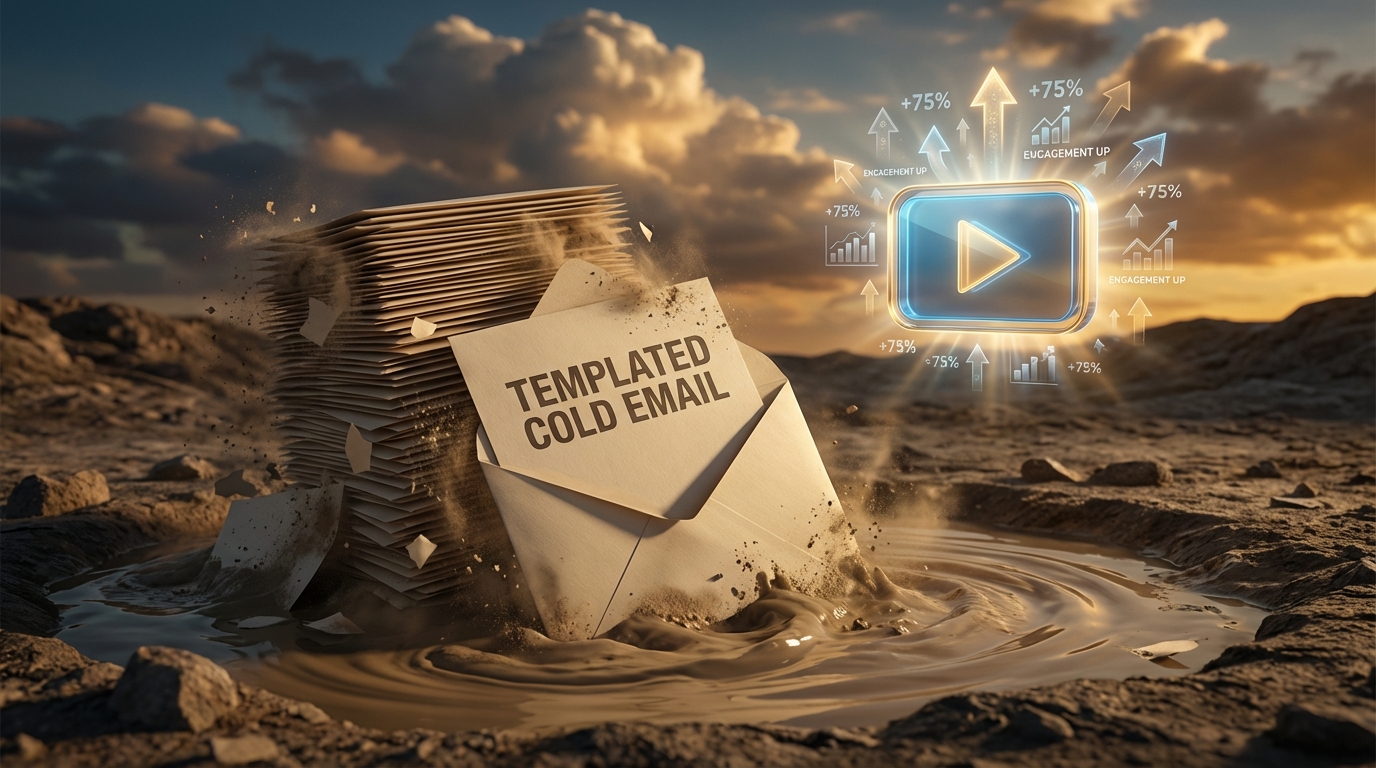
Why do standard outreach sequences fail? Because they are designed for scale, not connection. Your prospect knows they are one of a thousand recipients. They recognize the template. They delete the email.
In the high-ticket space-where contracts exceed $10,000-a transaction must start with a relationship. Video provides the fastest route to establishing that relationship. It places a human face on your brand. It demonstrates effort.
According to current industry data, personalized videos drive up to 8x higher click-through rates and can triple response rates compared to plain text. This isn’t optional. This is the new baseline for engagement.
Defining True Personalization: The Anti-Generic Stance
We need to be direct about what personalization is not. Personalization is not simply merging a prospect’s first name into a generic script. That is mass automation disguised as effort. Prospects see right through it.
True personalization means the video content itself is tailored to the individual’s context, pain points, and recent activity. It must be specific. It must be relevant. It must show you did the work.
This level of effort is exactly what separates high-conversion outreach from spam. It signals that the lead is valuable enough for you to spend 5 minutes recording a custom message.
The 2025 Personalized Video Blueprint: Five Actionable Steps
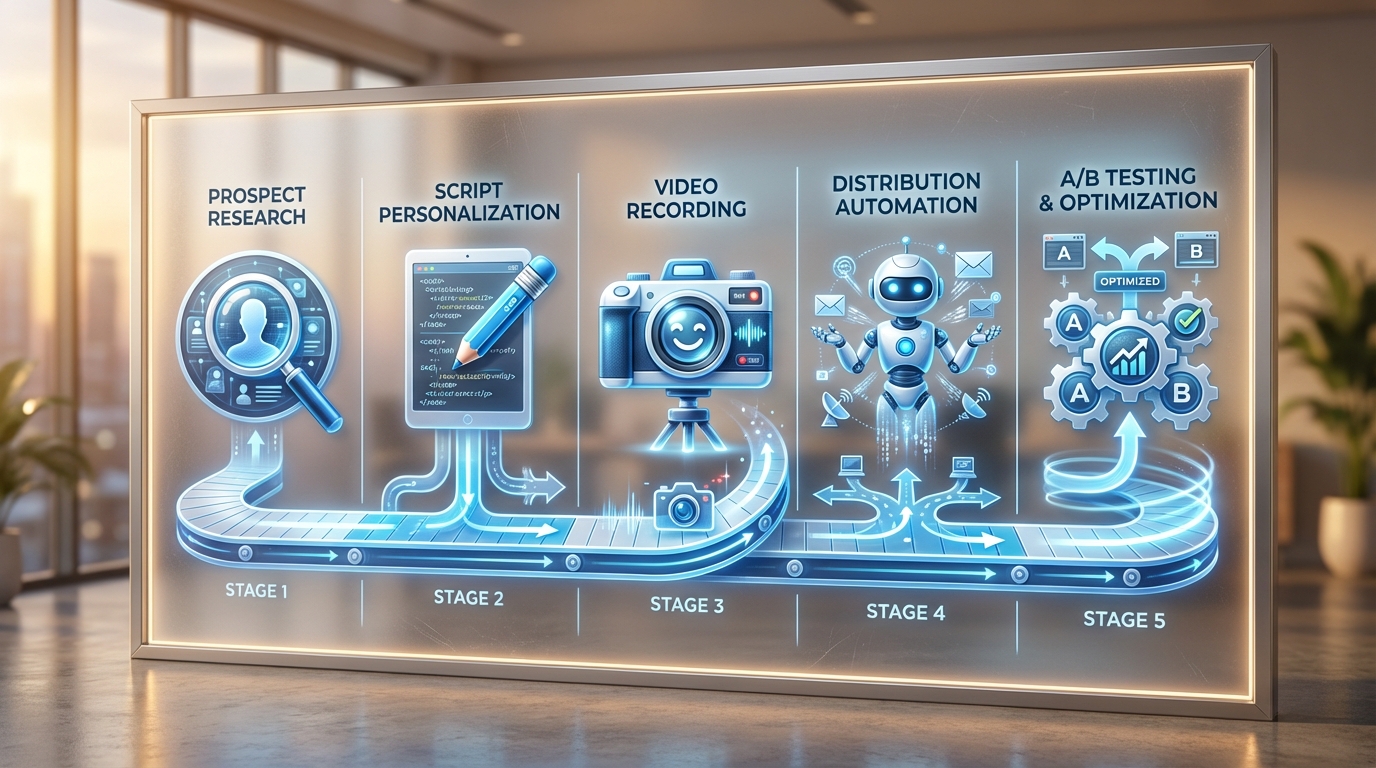
Deploying personalized video outreach effectively requires a rigorous workflow. You cannot improvise. Follow this definitive five-step blueprint to maximize your conversion rates.
Step 1: High-Intent Prospect Identification and Data Acquisition
Before you hit record, you must identify prospects who possess the highest probability of conversion. This is the critical first filter. Personalized video is too high-effort to waste on unqualified leads.
Focus your energy on leads who have exhibited high-intent behavior. This could be a recent demo request, engagement with your marketing content, or, critically, contacts whose specific personal emails you have successfully retrieved using advanced AI tools. Knowing the direct line to the decision-maker is mandatory.
If a prospect has previously shown interest-perhaps by abandoning a high-value action-they are prime targets for this high-touch strategy. Learn how to recapture this critical segment: Abandoned Cart Lead Generation: The Mandatory 2025 Strategy.
Mandatory Data Points Before Recording:
- Verified Contact Channel: Direct email or LinkedIn DM access.
- Recent Activity: Did they post on LinkedIn? Did their company just announce funding?
- Specific Pain Point: What problem are they publicly trying to solve that your solution addresses?
- Role/Title: Confirmation that they are the decision-maker or key influencer.
Step 2: The Pre-Recording Research Mandate
The difference between a generic video and a conversion machine is the research phase. You must dedicate 3-5 minutes per prospect to deep-dive research. This is non-negotiable for high-ticket sales.
Where to Focus Your Research:
- LinkedIn Activity: Reference a recent post, a comment they made, or a shared connection. Use this as your opening hook.
- Company Website/News: Mention a specific product launch, a recent hire, or a challenge stated in their mission statement.
- External Tools: Use AI tools to quickly summarize their company’s tech stack or recent financial performance. This shows strategic alignment.
Pro Tip: The Whiteboard Strategy. Write the prospect’s name and company logo on a small whiteboard or sticky note and hold it up in the video thumbnail. This instantly validates that the video was made for them, boosting open rates immediately. The thumbnail is your first conversion point. Treat it with urgency.
Step 3: Scripting for Brevity and Impact
Personalized outreach videos must be concise. Do not exceed 90 seconds. Anything longer dilutes the urgency and risks abandonment. The goal is to move the conversation from asynchronous video to a synchronous meeting.
Use the definitive 4-Part structure:
- The Hook (0-10 seconds): State their name and reference the specific research point immediately. (e.g., “Hi Sarah, I saw your post yesterday about scaling your B2B onboarding process.”) This establishes relevance.
- The Value Bridge (10-30 seconds): Connect their pain point directly to your solution’s core outcome. Do not list features. Explain the transformation. (e.g., “That scaling challenge often leads to 30% churn in the first 90 days. Our platform solves that specific bottleneck by…”)
- The Proof (30-60 seconds): Provide ultra-short, relevant social proof. Mention a competitor or a company in their industry you have helped. (e.g., “We implemented this exact framework for Acme Corp, reducing their time-to-value by 4 weeks.”)
- The Single CTA (60-90 seconds): End with one, clear, low-friction call to action. Do not offer two options. (e.g., “I’ve included a link below to schedule a 15-minute diagnostic call. That’s all I need. Speak soon.”)
Step 4: Technical Execution and Trust Signals
The technical quality must be professional, but not overly produced. Authenticity trumps cinematic quality. Poor lighting or audio, however, destroys credibility.
Mandatory Execution Checklist:
- ✅ Use a high-quality external microphone (Mics built into laptops are insufficient).
- ✅ Ensure adequate, natural lighting (Facing a window is ideal).
- ✅ Maintain eye contact with the webcam, not the screen preview.
- ✅ Choose a clean, professional background. Avoid clutter.
- ✅ Utilize a screen-share/hybrid format when discussing their website or a specific proposal detail. Seeing you interact with their context is powerful.
Warning: Avoid using overly enthusiastic, salesy language. Your tone must be strategic, confident, and direct. You are an expert offering a solution, not a desperate cold caller.
Step 5: Distribution and High-Leverage Channels
The video must be delivered where the prospect is most likely to consume it without friction. For B2B, this means direct email and LinkedIn DMs.
When embedding in email, use an animated GIF or the personalized thumbnail (from Step 2) that links directly to the video hosting page. Never attach the video file itself. This is a security risk and clogs inboxes.
LinkedIn is a mandatory channel for high-ticket outreach. The platform is designed for professional connection, making video a natural fit for breaking the ice. If you are not utilizing LinkedIn for high-intent lead acquisition, you are failing to leverage 50% of your potential pipeline. Review the definitive guide: LinkedIn Lead Generation: The 2025 Trust Blueprint.
Scaling Trust: Manual Effort vs. AI Automation

A critical debate in 2025 is whether to generate personalized videos manually or rely on generative AI video avatars. For high-ticket sales, the answer is clear: Manual effort wins.
AI avatars and hyper-personalized video templates (where only the text overlay changes) sacrifice authenticity for scale. While they achieve high volume, they fail the trust test required for $50k+ contracts. Prospects can detect AI-generated content rapidly. The slight imperfections and human delivery of a manual video are key trust signals.
However, AI is essential for the data acquisition phase. You should use AI to identify the highest-value prospects and retrieve their accurate, direct contact information. This allows you to focus your manual video effort on the 10-20 leads per week that actually matter.
Pros and Cons of Video Personalization Methods
| Method | Pros | Cons | Best For |
|---|---|---|---|
| Manual (1:1) Video | Highest trust, maximum authenticity, strong human connection. | Low scalability, high time investment (5-10 mins/video). | High-ticket B2B, Account-Based Marketing (ABM), Complex SaaS Sales. |
| AI Avatar/Generative Video | Extreme scale, low cost per video, rapid deployment. | Low trust, risks being detected as generic, poor for complex pitches. | Low-value follow-ups, mass re-engagement campaigns. |
Mandatory Metrics: Tracking Video ROI in 2025
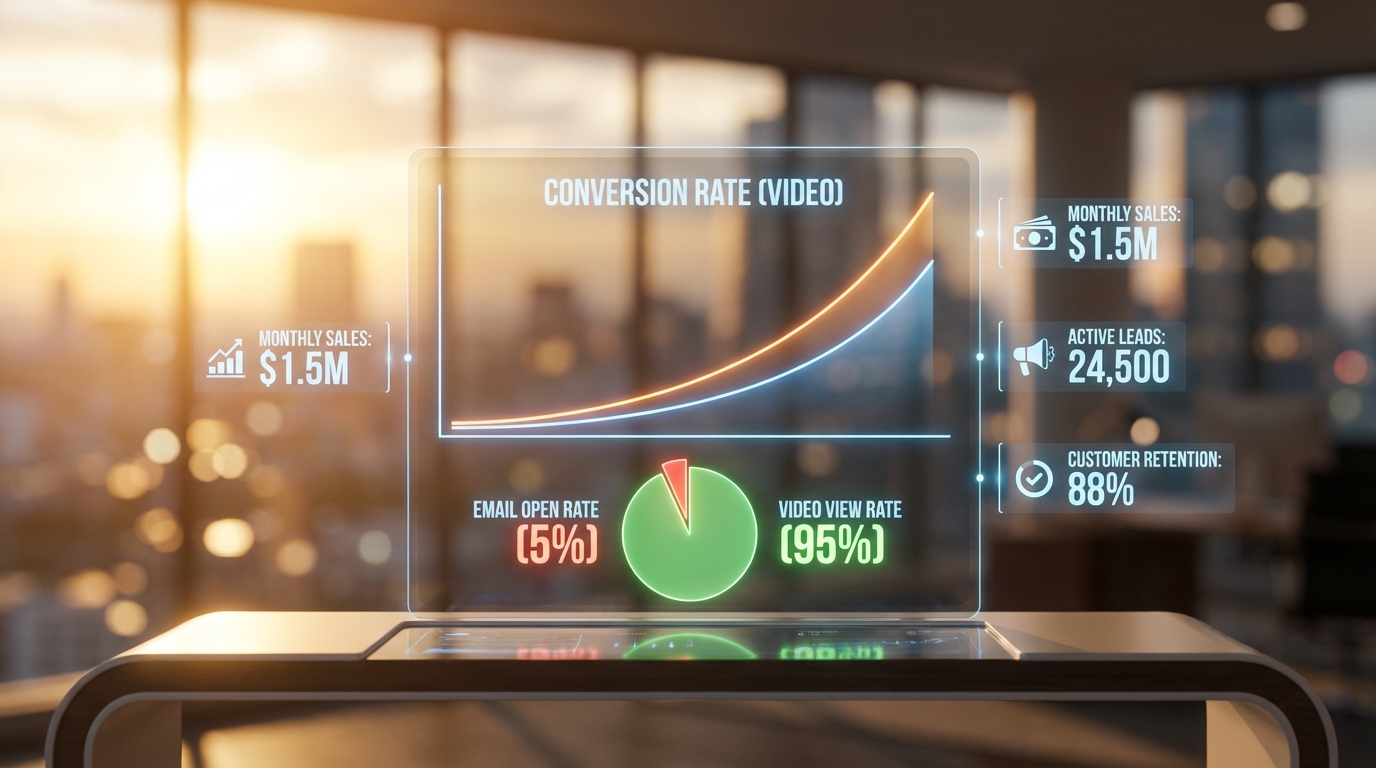
If you cannot measure it, you cannot scale it. You must track the performance of your personalized video campaigns rigorously. Move beyond vanity metrics like views.
Key Performance Indicators (KPIs) to Track:
- Video View Rate (VVR): Percentage of recipients who clicked the link/thumbnail. If this is low, fix your thumbnail and subject line.
- Video Completion Rate (VCR): Percentage of viewers who watched 75% or more of the video. If this is low, your script is too long or lacks urgency.
- CTA Click-Through Rate (CTR): Percentage of viewers who clicked the meeting link immediately after the video. This is the ultimate conversion metric.
- Reply Rate: The percentage of videos that generated a direct, conversational reply (positive or negative).
- Meetings Booked: The definitive metric of success.
Integrating video tracking data directly into your CRM is mandatory. This allows your sales team to trigger specific follow-up actions based on prospect behavior. For instance, if a prospect watches 90% of a video but does not book a meeting, they receive a targeted conversational AI follow-up message addressing their specific interest area.
Understanding which behavioral triggers convert high-intent leads is the difference between outreach and revenue generation. You need systems that track micro-conversions at every stage. Review the power of behavioral tracking: Conversational AI Lead Generation: The 2025 High-Intent B….
Text-Based Infographic: Video Impact Data (2025)
The High-Leverage Video Advantage
- +300%: Increase in email CTR with personalized video thumbnails.
- 93%: Revenue leaders reporting positive ROI from personalized video use.
- 3x: Higher reply rates compared to generic text-only cold emails.
- 90 Seconds: The maximum effective length for cold outreach videos.
Common Objections and Strategic Counterpoints

Sales teams often raise objections to implementing personalized video. These objections are rooted in fear of effort or lack of strategic understanding. Address them definitively.
Objection 1: “It takes too much time.”
Counterpoint: This is a failure to prioritize. If a deal is worth $20,000, spending 10 minutes to record a video that triples your reply rate is the highest leverage activity possible. You must stop wasting time on 100 generic emails and start focusing 80% of your effort on the 20% of leads that will close. Use AI to source the high-intent contacts; use manual video to close them.
Objection 2: “I’m not comfortable on camera.”
Counterpoint: Authenticity is more important than polish. Your prospects are buying a solution from a person, not a Hollywood actor. Practice your 90-second script structure. The discomfort dissipates after the first five videos. This is a mandatory skill for 2025 sales professionals.
Objection 3: “Prospects won’t click links from strangers.”
Counterpoint: This is why the personalized thumbnail and the context of the email are critical. The thumbnail must show the prospect’s name. The email subject line must reference the research point you found in Step 2. This immediate relevance overcomes link hesitation. Furthermore, by using professional hosting platforms, the link appears secure, addressing the security concerns often raised in the market.
Final Strategic Mandate
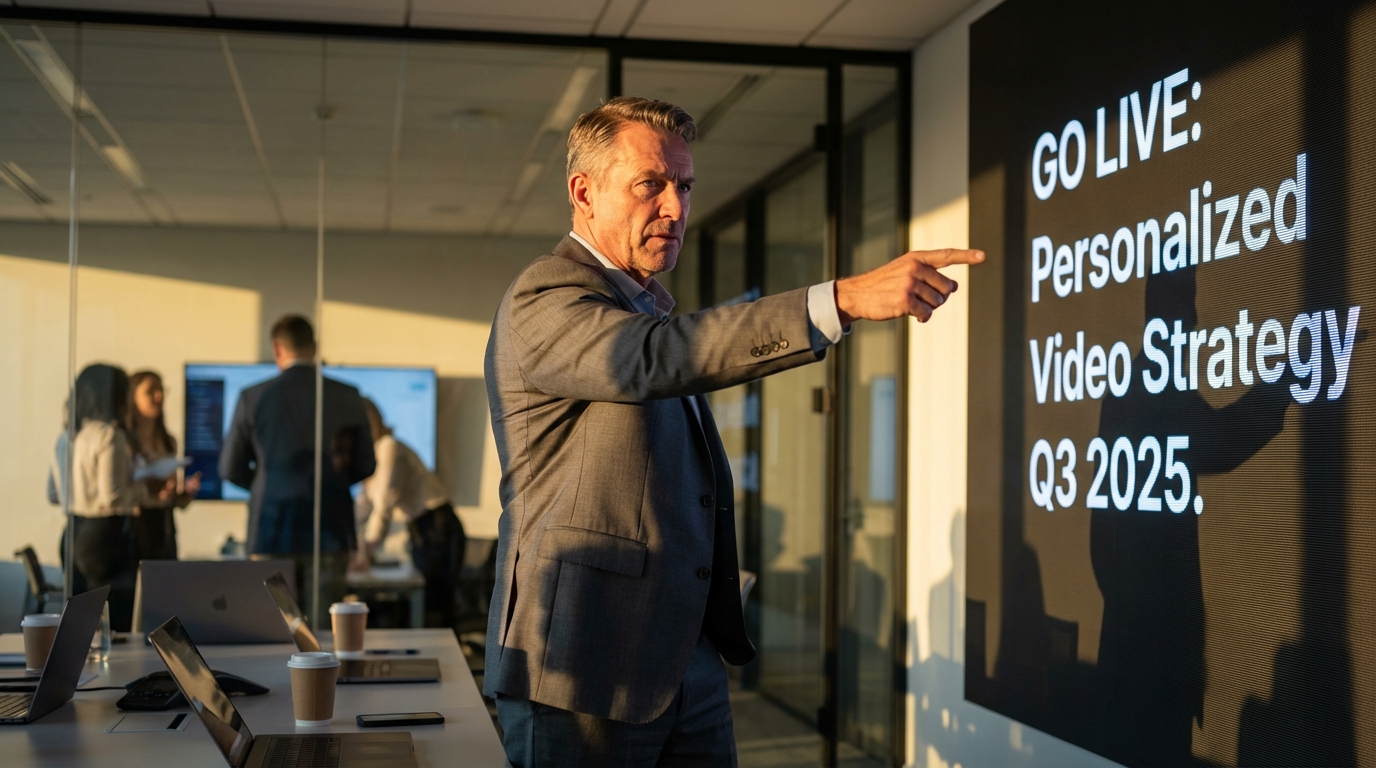
Personalized video is not a supplement to your outreach strategy. It is the core mechanism for building trust in the high-ticket, non-automated sales environment of 2025. It demands effort, rigor, and strategic data acquisition. If you are selling solutions that require a human relationship, you must leverage the human element of video.
Focus your high-effort video production only on the most qualified leads. Use advanced data tools to identify those contacts and secure their direct communication channels. Then, execute the 90-second trust blueprint rigorously. This is how you cut through the noise and scale your conversions without sacrificing authenticity.
Ready to take the next step?
Try AI Lead Generation Today
Click Here