

You are a high-ticket service provider or a SaaS founder. Your time is your most expensive asset. If you are still relying on generic, low-intent lead magnets like “The Ultimate PDF Checklist,” you are actively sabotaging your sales pipeline.
The brutal truth of 2025 is that attention is cheap, but qualified data is priceless. We are past the era of Buzzfeed quizzes designed merely for entertainment. If your quiz does not immediately pre-qualify the prospect and arm your sales team with actionable, trust-building data, it is a catastrophic failure.
This is your mandatory guide to designing lead generation quizzes that capture high-intent data, segment prospects automatically, and establish trust before the first sales call even happens. This is the 2025 High-Intent Quiz Blueprint for service businesses that demand quality over volume.
The Catastrophic Failure of Low-Intent Quizzes

Competitors are still building quizzes around vague personality types or surface-level knowledge tests. Why? Because they prioritize vanity metrics like high completion rates over actual purchase intent. For a high-ticket service that requires a $5,000+ commitment, a “Which CEO Are You?” quiz is useless.
The moment a prospect enters your system, you must know their specific pain points, budget constraints, and operational deficiencies. A low-intent quiz forces your sales team to start every conversation from zero, wasting cycles on unqualified leads.
The High-Intent Quiz Mandate: Data is the New Trust
The objective of the 2025 quiz is not list building. The objective is diagnostic data collection. You are positioning yourself as the mandatory authority who can diagnose the problem better than the client can articulate it. This builds immediate trust and authority.
When you ask a prospect to invest 3-5 minutes answering structured questions about their business, they are making a cognitive commitment. They are signaling intent. The personalized result you provide-the “diagnosis”-is the immediate value exchange that justifies asking for their contact information.
Key Highlights: The High-Intent Standard
- Mandatory Pre-Qualification: Every question must serve to qualify or disqualify the lead based on budget, need, or timeline.
- Diagnostic Focus: The quiz must diagnose a specific business problem (e.g., “Your Marketing Funnel Leak Rate is 47%”).
- Segmentation Fuel: Answers must segment leads instantly into hot, warm, and cold sequences for targeted follow-up.
- Anti-Generic Results: Results must be a detailed, actionable report, not a simple one-line personality type.
Three Mandatory Quiz Archetypes for High-Ticket Services
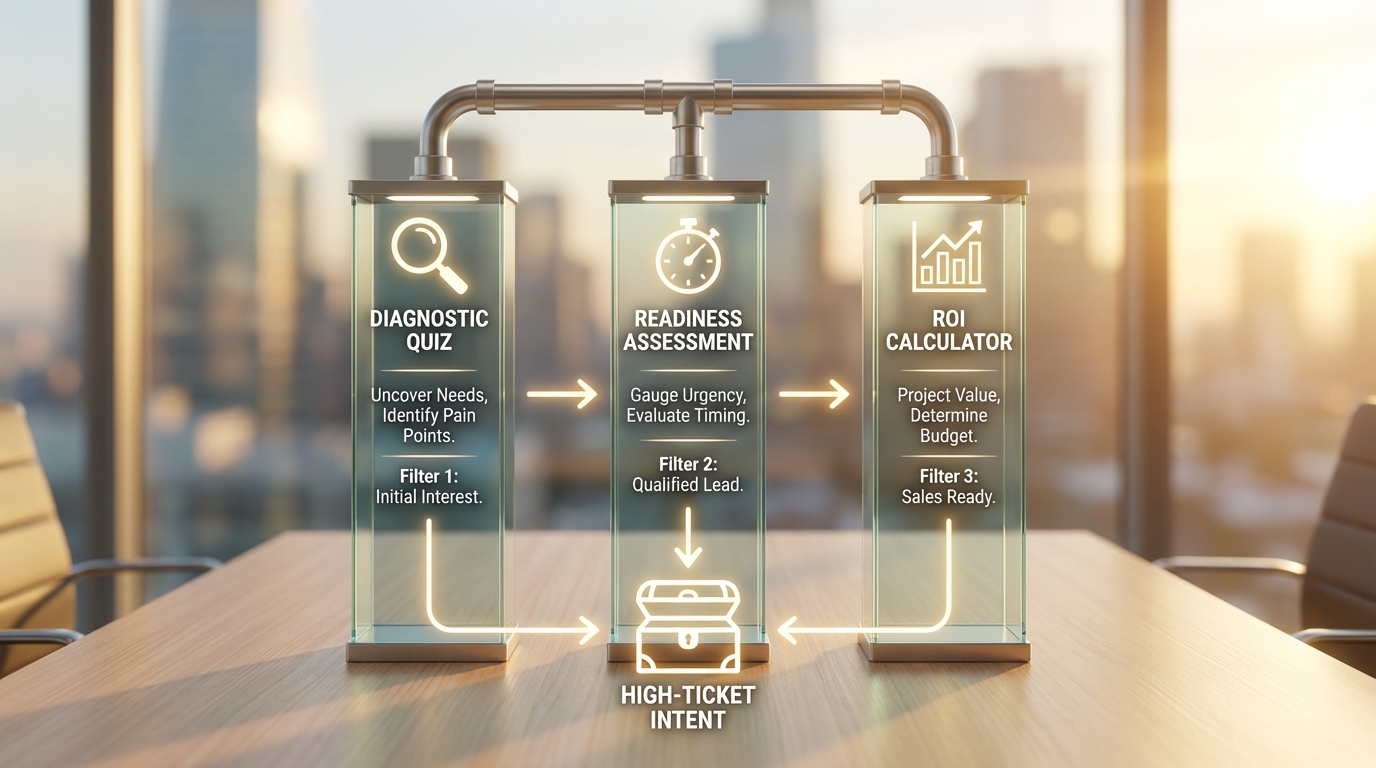
Forget generic templates. Your quiz structure must align directly with the complexity and cost of your service offering. These three archetypes are non-negotiable for serious lead generation.
1. The Diagnostic Assessment Quiz (The Authority Builder)
This is the most potent quiz type for consultants, coaches, and specialized SaaS platforms. It evaluates the user’s current operational state against industry benchmarks you define. It doesn’t ask “What are your goals?” It asks, “Where is your system failing?”
- Focus: Pinpointing specific operational leaks, inefficiencies, or compliance gaps.
- Structure: 8-12 questions focused on metrics, processes, and tools.
- Outcome: A “Scorecard” or “Health Check Report” (e.g., “Your B2B Lead Generation Health Score is 52/100. Mandatory Fixes A, B, and C Required”).
This instantly establishes you as the expert who knows the exact metrics required for success. It creates the necessary urgency for them to book a call.
2. The ROI/Cost of Inaction Calculator (The Urgency Driver)
For high-ticket services, the biggest hurdle is often justifying the investment. This quiz type bypasses the price objection by focusing on the hidden cost of doing nothing or using outdated methods.
- Focus: Quantifying financial loss due to current inefficiencies.
- Structure: Questions about current team size, manual hours spent, conversion rates, and average client value.
- Outcome: A personalized calculation showing the estimated monthly loss (e.g., “You are losing $14,500/month due to untargeted outreach. Our solution recaptures 80% of this leak.”).
When you put a dollar value on their pain, the cost of your solution becomes a necessary investment, not an expense. This strategy works particularly well for B2B lead generation ideas without cold calling: The 2025 High-Intent Blueprint, where time efficiency is paramount.
3. The Solution Finder/Fit Assessment (The Segmentation Engine)
If you offer multiple high-ticket services or tiers (e.g., fractional CMO vs. full-scale agency), this quiz ensures the lead is routed to the correct offer immediately. It is less about diagnosis and more about matching needs to your capacity.
- Focus: Determining the best-fit service based on their immediate constraints (budget, timeline, internal resources).
- Structure: Questions about existing infrastructure, timeline for implementation, and desired scope of work.
- Outcome: A direct recommendation (e.g., “Based on your current team size, the Fractional Strategy Package is your mandatory next step.”)
Strategic Quiz Ideas for High-Value Verticals (2025 Edition)
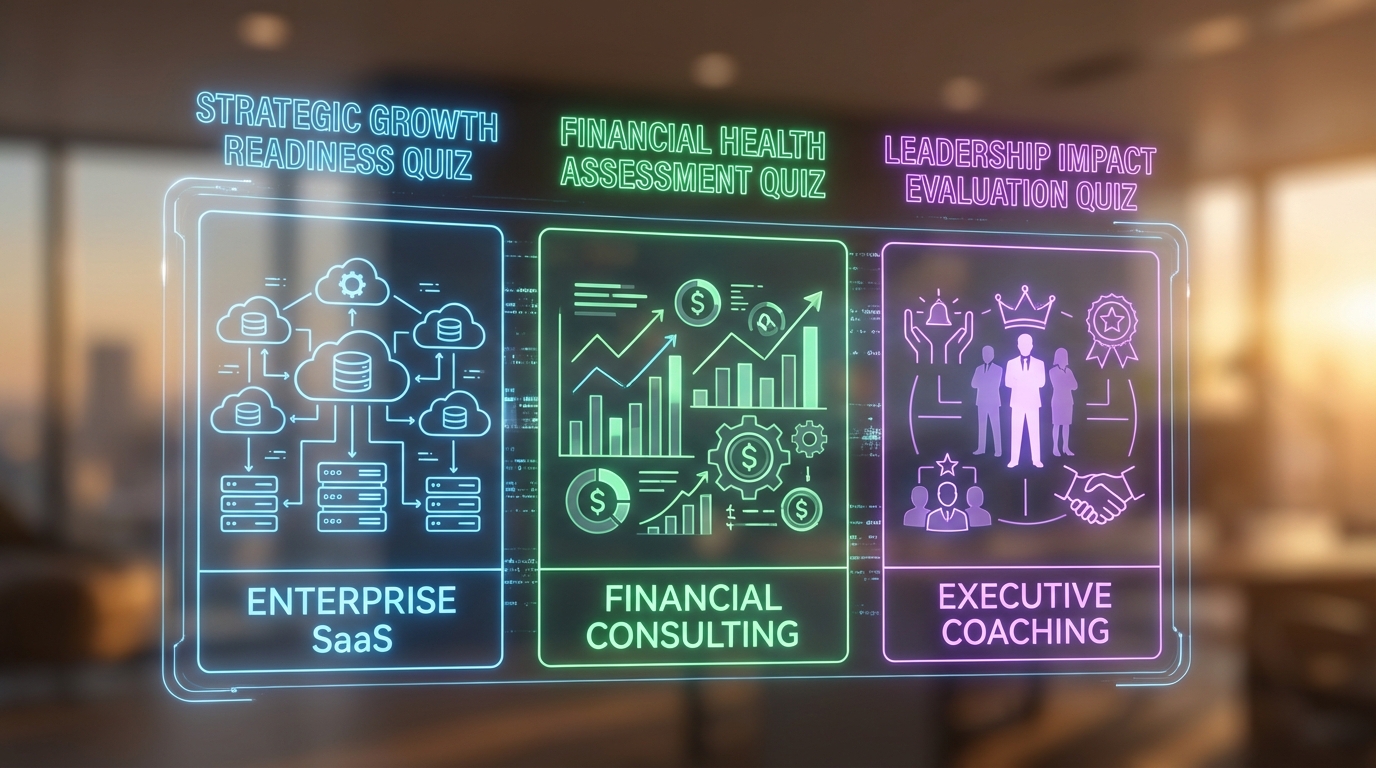
You cannot afford general advice. You need vertical-specific examples that translate directly into qualified sales opportunities.
SaaS Founders & Consultants: Diagnosing Catastrophic Failure Points
SaaS founders need clarity on scaling, retention, and feature-set alignment. Your quiz must expose the misalignment between their current strategy and market reality.
| Quiz Title (H1 Style) | Target Pain Point | Mandatory Data Capture |
|---|---|---|
| “What is Your True Customer Acquisition Cost (CAC)?” | Unscalable marketing spend, leaky funnels. | Current channels, average deal size, monthly churn rate. |
| “The 5-Second Retention Risk Assessment” | High churn, poor feature adoption. | Onboarding time, weekly active user percentage, feedback loop frequency. |
| “Is Your Product Market Fit (PMF) a Myth?” | Stagnant growth, unclear ICP (Ideal Customer Profile). | Target user definition, current conversion rate from free trial, funding stage. |
High-Ticket Real Estate & Brokerage: The Pre-Qualification Funnel
Real estate agents waste immense time on leads who are not financially ready or serious about a timeline. Your quiz must act as the mandatory filter.
Instead of generic “Find Your Dream Home” quizzes, focus on financial readiness and urgency. This immediately elevates the lead quality and focuses your effort. This ties directly into strategic outreach plans, such as The 2025 Blueprint for Manual Facebook Lead Generation for Real Estate Agents.
- Quiz Idea: “What is Your True Buying Power & Timeline Assessment?”
- Question Focus: Pre-approval status, required down payment percentage, urgency (30, 60, 90+ days), non-negotiable location criteria.
- High-Intent Outcome: Segmentation based on immediate financial viability. Only leads with pre-approval or verified liquid funds proceed to the “Hot Lead” sequence.
- Quiz Idea: “The Investment Property ROI Risk Calculator”
- Question Focus: Desired cap rate, current portfolio size, preferred property type (residential/commercial), management capability.
- High-Intent Outcome: Identifies sophisticated investors who require complex, high-value consulting, not just listings.
Financial & Legal Services: Compliance and Risk Assessment
For professionals dealing with high stakes (finance, legal, compliance), the primary driver is fear of loss or regulatory failure. Your quiz must amplify this risk and present your service as the mandatory safety net.
Text-Based Infographic: The Risk Amplification Effect
MANDATORY RISK STATS (2025)
- 89% of small business owners underestimate their data compliance risk exposure.
- High-Intent Diagnostic Quizzes see 2x higher conversion-to-booked-call rates compared to e-books.
- Leads segmented by quiz data have a 35% higher average lifetime value (LTV).
- Quiz Idea (Legal): “The 2025 Employment Law Compliance Scorecard”
- Question Focus: Contractor vs. employee classification, handling of remote worker data, mandatory documentation status.
- High-Intent Outcome: A “Compliance Gap Report” highlighting specific areas of immediate legal exposure, forcing a consultation booking.
- Quiz Idea (Financial): “Are You Prepared for a 2026 Market Correction?”
- Question Focus: Current asset allocation, risk tolerance quantification, debt-to-equity ratios, retirement planning status.
- High-Intent Outcome: Segmentation based on urgency and capital availability. Leads demonstrating high assets but poor allocation are immediately prioritized.
Mandatory Post-Quiz Strategy: Turning Data into Trust

The quiz is merely the data capture mechanism. The conversion happens in the follow-up. If you treat all quiz takers the same, you have failed the high-intent mandate.
The core philosophy of high-intent lead generation is using the collected data to make your outreach hyper-personalized and non-generic. This is critical for building trust, which is the foundation of high-ticket sales.
Review Manual Follow Up Strategy For Facebook Lead Generation. The principles apply here: personalization, speed, and relevance.
The Immediate Segmentation Matrix
Every quiz answer must map to a segmentation tag. This dictates the speed and content of your follow-up sequence.
- Hot Leads (Immediate Contact): These prospects meet all your mandatory criteria (e.g., Budget confirmed, timeline urgent, problem severity high).
- Action: Automated email delivers the diagnostic report + a direct link to your calendar with pre-filled context (e.g., “Let’s discuss your 47% marketing funnel leak rate”).
- Sales Team Mandate: Contact via phone/email within 60 minutes. Reference specific quiz answers to demonstrate preparation.
- Warm Leads (Nurture Sequence): They have the problem but lack budget or urgency.
- Action: Deliver the diagnostic report + a 5-day educational nurture sequence focusing on the Consequences of Inaction.
- Content Focus: Case studies that demonstrate ROI for similar businesses. No hard sell until Day 5.
- Cold Leads (Long-Term Value): They are browsing or clearly unqualified (e.g., low budget, wrong industry).
- Action: Deliver the report + place them on your general monthly newsletter. Do not waste sales time.
High-Intent Quiz Funnel vs. Generic Lead Magnet
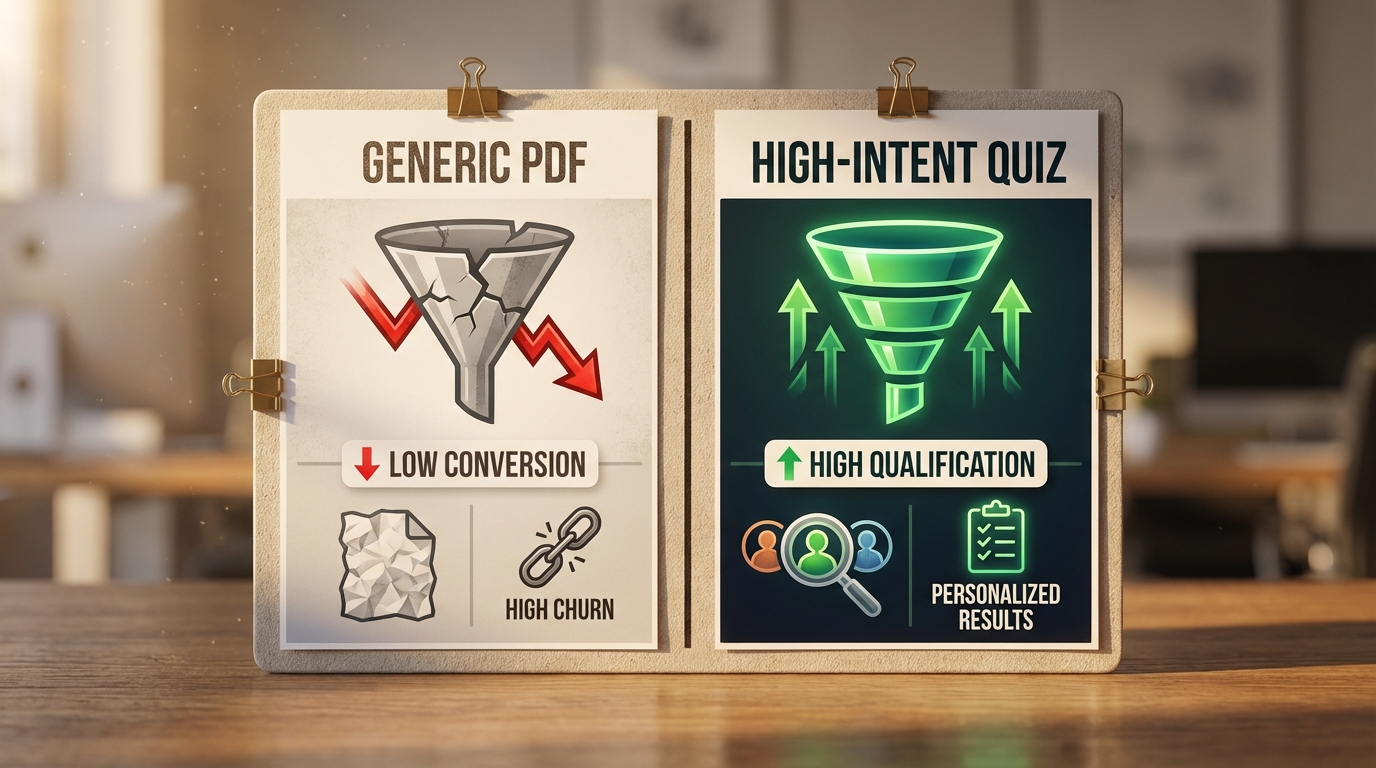
You need to understand the fundamental difference between the old way and the mandatory 2025 approach.
| Metric | Generic Lead Magnet (PDF/Checklist) | High-Intent Diagnostic Quiz |
|---|---|---|
| Conversion Rate (Visitor to Lead) | 10% – 15% (Often inflated) | 30% – 50% (Due to high engagement) |
| Data Captured | Name, Email (Zero context) | Name, Email, Budget, Urgency, Pain Point Score, Specific Challenges (Actionable context) |
| Sales Call Preparation Time | 15-20 minutes (Discovery required) | 5 minutes (Data is pre-qualified) |
| Perceived Value to Prospect | Low (Generic content, easily forgotten) | High (Personalized diagnosis of their problem) |
| Trust Established | Minimal | Immediate (You diagnose, you know their business) |
Advantages and Critical Pitfalls of Quiz Strategy
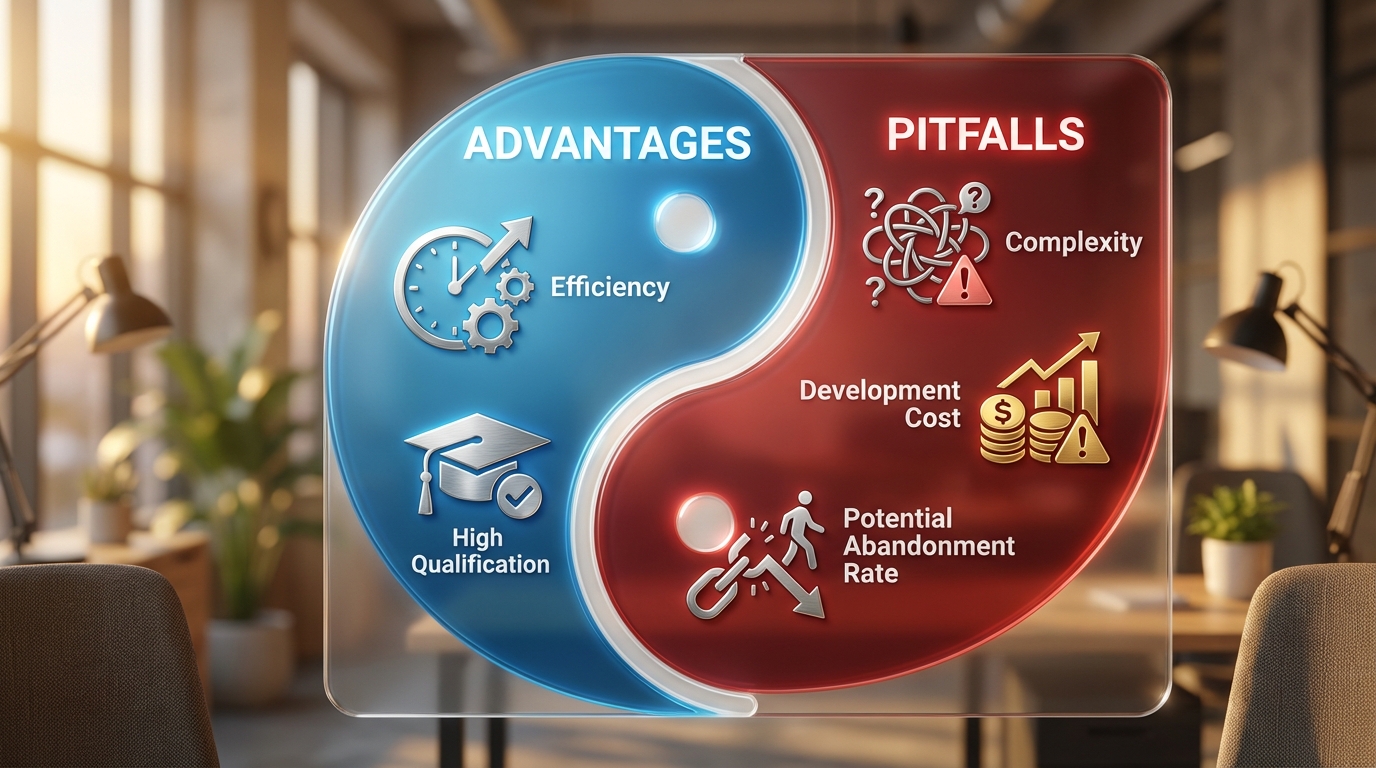
While quizzes are a mandatory tool in the 2025 toolkit, they are not a silver bullet. You must approach implementation strategically to avoid wasting resources.
Pros: Why Quizzes Are Mandatory for Service Businesses
- High Engagement: Interactive content holds attention longer than static pages.
- Superior Segmentation: Instant lead scoring based on explicit data provided by the prospect.
- Accelerated Trust: Providing a diagnosis positions you as the expert before the sale begins.
- Reduced Discovery Time: Sales calls start at Step 3 (Solution), not Step 1 (Problem Identification).
Cons: Critical Pitfalls to Avoid
- The Length Trap: Quizzes exceeding 10 questions see catastrophic drop-off rates. Keep it under 3 minutes.
- The Buzzfeed Syndrome: If the questions are generic or irrelevant to your core offering, the resulting leads will be low-intent trash.
- Gating Error: Do not ask for contact information until the prospect has completed the entire quiz and is anticipating the result. Gate the diagnosis, not the participation.
- Weak Follow-Up: Collecting data without using it for hyper-personalized outreach negates the entire strategy.
For a detailed breakdown of the entire high-intent capture process, review The 2025 Quiz Blueprint for High-Intent Lead Capture.
The 2025 High-Intent Quiz Implementation Checklist
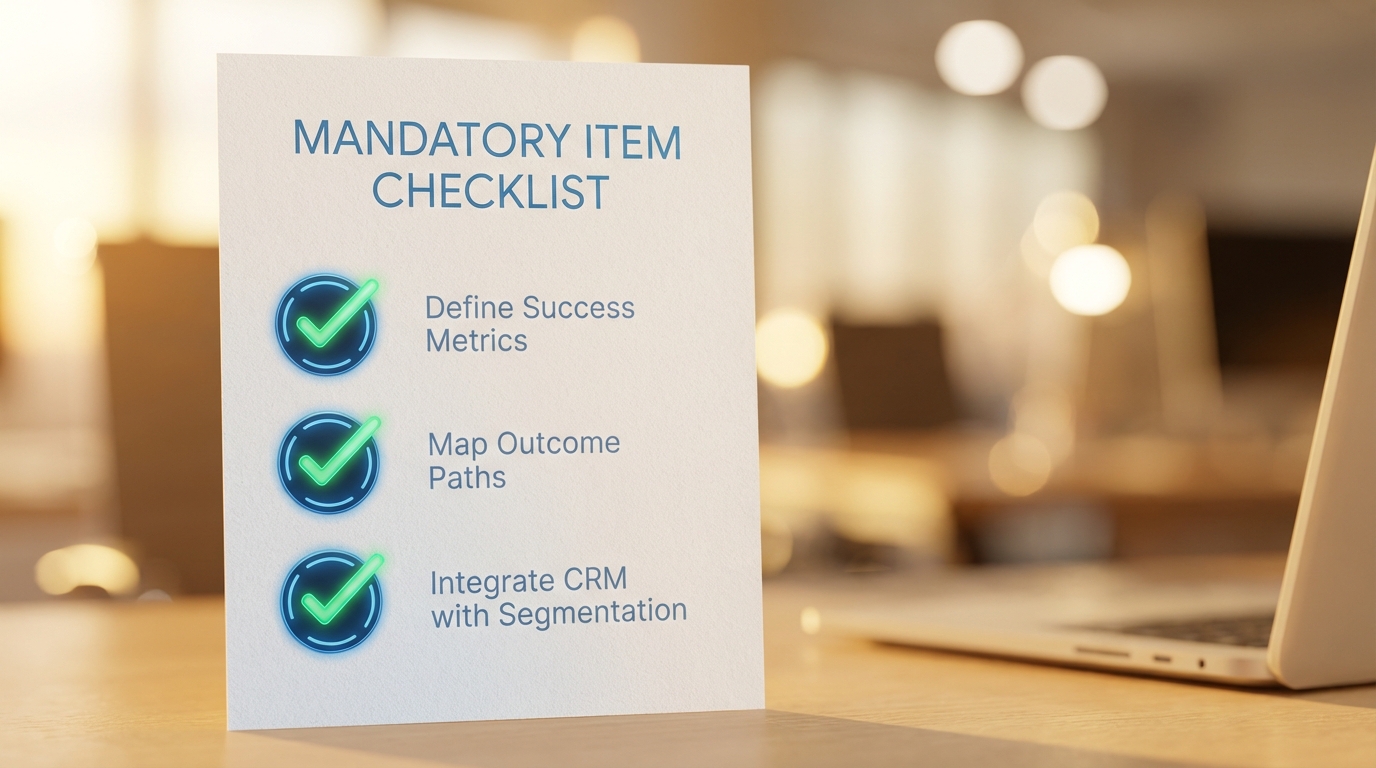
Do not launch your quiz until you have checked off every item on this list. Failure to adhere to these steps will result in low-quality leads and wasted effort.
- ✅ Define the Single Conversion Goal: Is it a booked call, or a highly segmented email list entry? Do not attempt both simultaneously.
- ✅ Identify the Core Pain Point: Your quiz title must directly address the most urgent pain point of your Ideal Customer Profile (ICP).
- ✅ Design for the 5-Second Test: The landing page must clearly articulate the value exchange (What they give, what diagnosis they receive) in under five seconds.
- ✅ Map Questions to Segmentation Tags: Ensure every critical question automatically assigns a high-intent score or a specific segment tag (e.g., “Ready to Buy,” “Needs Budgeting,” “Compliance Risk”).
- ✅ Craft the Diagnostic Report: The result must be substantial. Provide 3-5 actionable steps the prospect can take, even if they don’t hire you. This solidifies trust.
- ✅ Implement the Lead Gate Strategically: The email capture form must appear immediately before the results page, maximizing commitment and completion rates.
- ✅ Integrate CRM/Follow-Up Automation: Ensure high-intent leads trigger an immediate internal notification for manual outreach within 60 minutes.
- ✅ Test for Mobile Optimization: Quizzes must be seamless and fast on all mobile devices. This is non-negotiable in 2025.
Conclusion: Your Mandatory Next Step

The days of passive content are over. High-intent lead generation demands active participation and immediate value exchange. Implementing a diagnostic, high-intent quiz is not an optional marketing tactic; it is a mandatory strategic component for any service business or SaaS company aiming for scalable, trust-based growth in 2025.
Stop generating lists of names. Start generating actionable data points that pre-qualify your prospects, accelerate your sales cycles, and position you as the only credible solution.
Frequently Asked Questions

What is the ideal length for a high-intent lead generation quiz?
The ideal length is 7 to 10 questions, maximum. Your goal is quality data capture, not comprehensive surveying. The quiz must be completable in under three minutes. Every additional question dramatically increases abandonment rates and reduces the overall quality of the committed lead.
Should I use a personality quiz for my high-ticket consulting business?
Absolutely not. Personality quizzes (the “Buzzfeed Syndrome”) generate low-intent leads who are seeking entertainment, not solutions. For high-ticket consulting, you must use Diagnostic Assessments or ROI Calculators. These focus on operational metrics and financial risk, which are direct indicators of purchase intent and budget authority.
When should I ask for the prospect’s email address?
You must gate the results, not the participation. Ask for the email address immediately after the final question, right before displaying the personalized diagnostic report. By this point, the prospect has invested time and is eager to receive the promised value, making them significantly more likely to convert.
How does quiz data help with manual lead generation and follow-up?
The quiz provides the exact language, pain points, and urgency level required for a personalized, trust-based outreach. Instead of asking “What are your challenges?”, your sales team can open with, “I saw your Compliance Score was 42% due to X and Y. We need to fix this immediately.” This demonstrates preparation and expertise, accelerating the trust curve.
Ready to take the next step?
Try AI Lead Generation Today
Click Here