

You are a small business owner, a high-ticket service provider, or a SaaS founder, and you are tired of hearing the same recycled, generic lead generation advice. We get it. In 2025, throwing money at Facebook ads or hoping a basic blog post goes viral is a strategy for catastrophic failure.
The brutal truth is this: the market is saturated with noise. Your competition is automating their spam, and consumers are filtering out everything that doesn’t feel personalized and authoritative. For you to succeed, you must ditch the volume game and focus exclusively on high-intent, trust-based acquisition.
This is not a list of 10 easy tips. This is the definitive 2025 blueprint, broken down into three mandatory strategic pillars designed to build scalable, predictable lead flow without relying on expensive, low-conversion automation.
The Catastrophic Failure of Generic Lead Generation

Why are most small businesses stuck in stagnation? Because they confuse activity with strategy. They are chasing vanity metrics like impressions and clicks, but they are failing the fundamental 5-second trust test.
If your lead generation system relies on any of the following, you are actively losing money:
- Running broad, untargeted social media campaigns designed only for “brand awareness.”
- Using cheap, low-quality lead magnet forms that capture emails but yield zero qualified conversations.
- Publishing content that answers “what” but fails to deliver the “how” (i.e., generic listicles).
- Ignoring your online reputation and hoping prospects don’t check your reviews before buying.
In 2025, your lead generation must be surgical. It must validate your authority, prove immediate value, and create a clear path to a high-ticket conversation.
Pillar 1: Building High-Intent Digital Assets

Your website and content are no longer brochures. They are conversion mechanisms. If a prospect lands on your site and cannot immediately determine your specific value proposition and trust indicators, they are gone.
Mandatory Local SEO Optimization and the 5-Second Test
If you serve a geographical area, Local SEO is non-negotiable. But we are moving past basic keyword stuffing. We are optimizing for speed, clarity, and trust.
When a high-intent prospect searches for “high-ticket service near me,” they spend five seconds judging your results. What do they look for?
- Verified Authority: Are you listed correctly on Google Business Profile (GBP)? Do you have recent, high-quality reviews?
- Immediate Clarity: Does your headline explicitly state the problem you solve and the area you serve? If you are a specialized real estate agent, do you instantly say, “We close $5M+ commercial deals in Austin,” not just “Top Real Estate Services”?
- Mobile Speed: If your site loads slowly on mobile, you have already lost the lead.
Focus resources here first. A perfectly optimized GBP profile with 50+ recent, positive reviews is a more powerful lead generator than $10,000 in banner ads.
The Content Pivot: Authority, Not Volume
Competitors are still churning out 1,000-word fluff pieces. You must pivot to deep-dive, strategic content that positions you as the definitive expert. This is the difference between attracting tire-kickers and attracting qualified buyers who know exactly what they need.
Use this comparison to audit your current content strategy:
| Generic Content (Failure) | High-Intent Content (Mandatory) |
|---|---|
| “5 Tips for Better SaaS Marketing” | “The Q3 2025 SaaS Pricing Model Audit: Why Your Tiered System is Leaking $50k/Month” |
| Focuses on general awareness and high-volume keywords. | Focuses on hyper-specific pain points and technical jargon understood only by the ICP. |
| Written quickly; outsourced to generalist writers. | Expert-driven; includes proprietary data, case studies, and actionable blueprints. |
| CTA: Subscribe to our newsletter. | CTA: Schedule a 15-Minute Diagnostic Call. |
Converting Traffic: The Anti-Generic Lead Magnet
A PDF guide is not a lead magnet; it’s digital clutter. Your lead magnet must be an irreplaceable asset that immediately solves a fraction of the prospect’s problem, making them realize they need your full solution.
Mandatory Lead Magnet Ideas for Small Businesses in 2025:
- The Diagnostic Audit Template: Give them the exact spreadsheet or checklist you use to diagnose their problem (e.g., “The 2025 Real Estate Investment Risk Assessment Checklist”).
- The Proprietary Calculator: A simple tool that calculates their potential loss or gain based on their input (e.g., “Calculate Your Projected Savings on High-Efficiency HVAC Installation”).
- The Personalized Mini-Report: Use AI tools to quickly generate a tailored report based on their submitted data (e.g., “Your Personalized Competitor Content Gap Analysis”).
Pillar 2: High-Leverage, Manual Outbound Acquisition
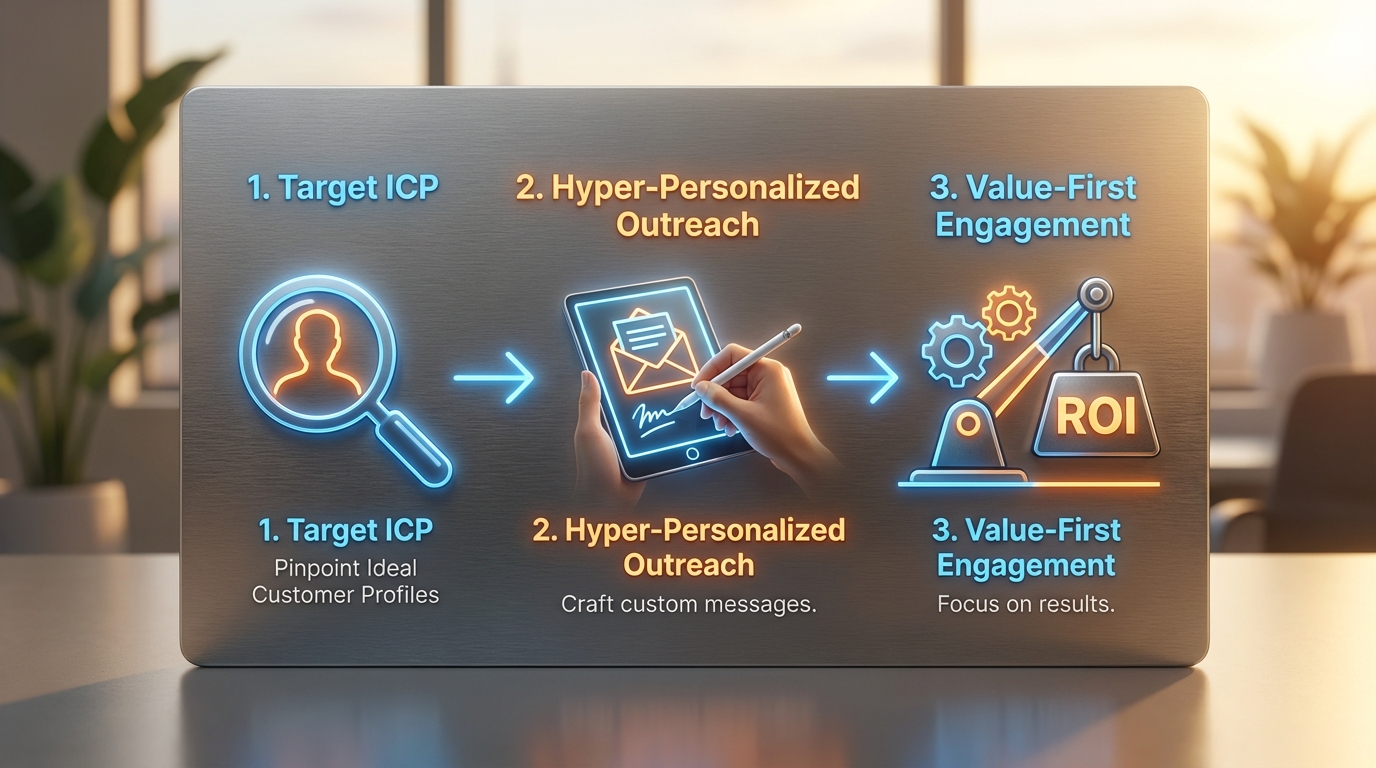
Automation at scale leads to spam. Manual, personalized outreach, powered by precision data, generates high-intent leads. This is where small businesses win. You can move faster and be more human than any large corporation.
AI-Powered Prospecting: Finding the Needle in the Haystack
Your time is too valuable to manually scour LinkedIn or corporate registries. You need tools that identify your Ideal Customer Profile (ICP) and deliver their direct, verified contact information.
The 2025 shift is using AI not to write generic emails, but to find the exact right people to talk to. We are talking about finding the CEO of a mid-sized e-commerce company in Chicago who just announced a Series B funding round, and getting their personal, verifiable email address.
This bypasses gatekeepers and ensures your message lands directly in the inbox of the decision-maker. This is the foundation of effective, non-spammy outbound lead generation. You cannot execute a hyper-personalized outreach strategy without precision data.
If you need to scale this high-precision data acquisition, you must leverage technology designed for this specific purpose. Forget bulk list purchases; focus on verified, intent-based contact data.
> CALL TO ACTION: Start finding the personal emails of your ideal clients today. Try AI Lead Generation Today.
The Hyper-Personalized Outreach Mandate
Once you have the high-intent lead data, your outreach must follow a strict personalization protocol. Generic cold emails are dead. Your message must pass the “Why Me, Why Now?” test instantly.
Mandatory Elements of 2025 High-Intent Outreach:
- The Trigger: Reference a specific, recent event (a new hire, a funding announcement, a recent post, a competitor’s failure). This proves you did your homework.
- The Hypothesis: Based on the trigger, state a clear hypothesis about a problem they are currently facing. (e.g., “Since you just hired a new CTO, I hypothesize you are struggling to integrate legacy systems quickly.”)
- The Ultra-Specific Value Proposition: Don’t talk about your service. Talk about the specific outcome for them.
For service providers and B2B professionals, mastering this personalized, value-first outreach is the only sustainable way to fill your pipeline without relying on expensive ads. You must treat every outreach as a strategic, one-off conversation, not a mass blast. If you need a deeper dive into this manual, trust-building approach, read B2B Lead Generation Ideas Without Cold Calling: The 2025 High-Intent Blueprint.
Leveraging Niche Communities (The Anti-Spam Strategy)
High-intent leads congregate in niche communities-Facebook Groups, LinkedIn groups, industry Slack channels, or specialized forums. You are looking for where your ICP is asking questions and seeking solutions.
The strategy here is not to post your link. That is spam, and it will get you banned. The strategy is value contribution and strategic listening.
How to Generate Leads from Niche Communities:
- Identify the Questions: Spend 15 minutes daily reading posts where people express pain points that your business solves.
- Provide Definitive Answers: Offer a detailed, non-salesy solution directly in the comments. Establish authority.
- Strategic Profile Optimization: Ensure your social profile (especially Facebook or LinkedIn) is optimized to instantly explain who you are and what you do. This is critical because they will click your profile after reading your valuable comment.
- The Manual Follow-Up: If they engage with your answer, or if you see repeated, high-intent questions, send a personalized DM offering a deeper resource (not a sales pitch).
This is a manual, high-effort strategy, but it generates the warmest leads possible because they have already seen your expertise in action. If you are using Facebook Groups, you must adopt this strategic approach. For a complete guide on how to operate effectively in these spaces, review The 2025 High-Intent Blueprint: How to Post in Facebook Groups Without Spamming (The Anti-Spam Strategy).
Pillar 3: Trust Amplification and Conversion

Leads are useless if they don’t convert. In 2025, conversion hinges entirely on trust. You must actively manage your reputation and systematize your follow-up process.
Reputation Management as a Lead Asset
Every lead, regardless of how they found you (SEO, outreach, referral), will perform due diligence. They will check Google, Yelp, and your social media reviews. Your reputation is not a passive consequence of service; it is an active, measurable lead generation asset.
Text-Based Infographic: The Cost of Reputation Neglect (2025 Data)
- 94% of consumers say that a bad review has convinced them to avoid a business.
- A one-star increase on Yelp can lead to a 5-9% increase in revenue.
- Businesses that actively respond to all reviews (good and bad) are viewed as 70% more trustworthy.
- The average customer reads 10 reviews before trusting a local business.
You must have a mandatory system for soliciting new reviews from every closed client and responding professionally to every piece of feedback-positive or negative. Stop thinking of reviews as validation; start seeing them as high-conversion landing page copy.
The Referral System: Making Clients Your Sales Force
The highest quality lead you will ever receive is a referral. Yet, most small businesses treat referrals as happy accidents.
You need a formal, incentivized referral system. This is not just asking, “Do you know anyone?” It is giving your current clients a structured, easy way to pass along your information.
Strategic Referral Methods:
- The Double Incentive: Offer a reward to both the referrer and the referred client (e.g., a discount on their next service and a bonus gift card for the person who sent the lead).
- The Pre-Written Introduction: Give your clients a simple, pre-written email or message they can copy/paste to introduce you to a peer. Lower the friction of the referral process.
- Post-Project Review: 48 hours after a project closes and the client is thrilled, that is the peak time to ask for a testimonial AND a referral. Never wait a month.
Follow-Up Strategy: The Conversion Checklist
The brutal truth is that 80% of sales require five or more follow-up attempts, yet 44% of salespeople give up after the first attempt. Your lead generation efforts are worthless if you cannot convert the lead through persistence and strategic nurturing.
You must implement a manual, multi-channel follow-up sequence that respects the lead’s time while demonstrating your urgency and value.
Mandatory Lead Follow-Up Checklist (7-Day Sequence)
- ✅ Attempt 1 (Immediate): Personalized email response within 60 minutes of lead submission.
- ✅ Attempt 2 (Day 1): Personalized follow-up call or voicemail referencing the email.
- ✅ Attempt 3 (Day 2): Connect on LinkedIn/Social Media with a short, non-salesy message about a relevant industry update.
- ✅ Attempt 4 (Day 4): Send a high-value piece of content (your strategic blog post, case study, or proprietary tool-not a sales deck).
- ✅ Attempt 5 (Day 7): The “Breakup Email.” A definitive, polite email stating you assume they are busy, and offering one last chance to connect.
This is where many small businesses fail. They generate a lead, then drop the ball. If you are serious about converting the high-intent leads you acquire, you must master the post-acquisition process. For tactical steps on managing this process, review the Manual Follow Up Strategy For Facebook Lead Generation.
Selecting Your 2025 Lead Generation Stack
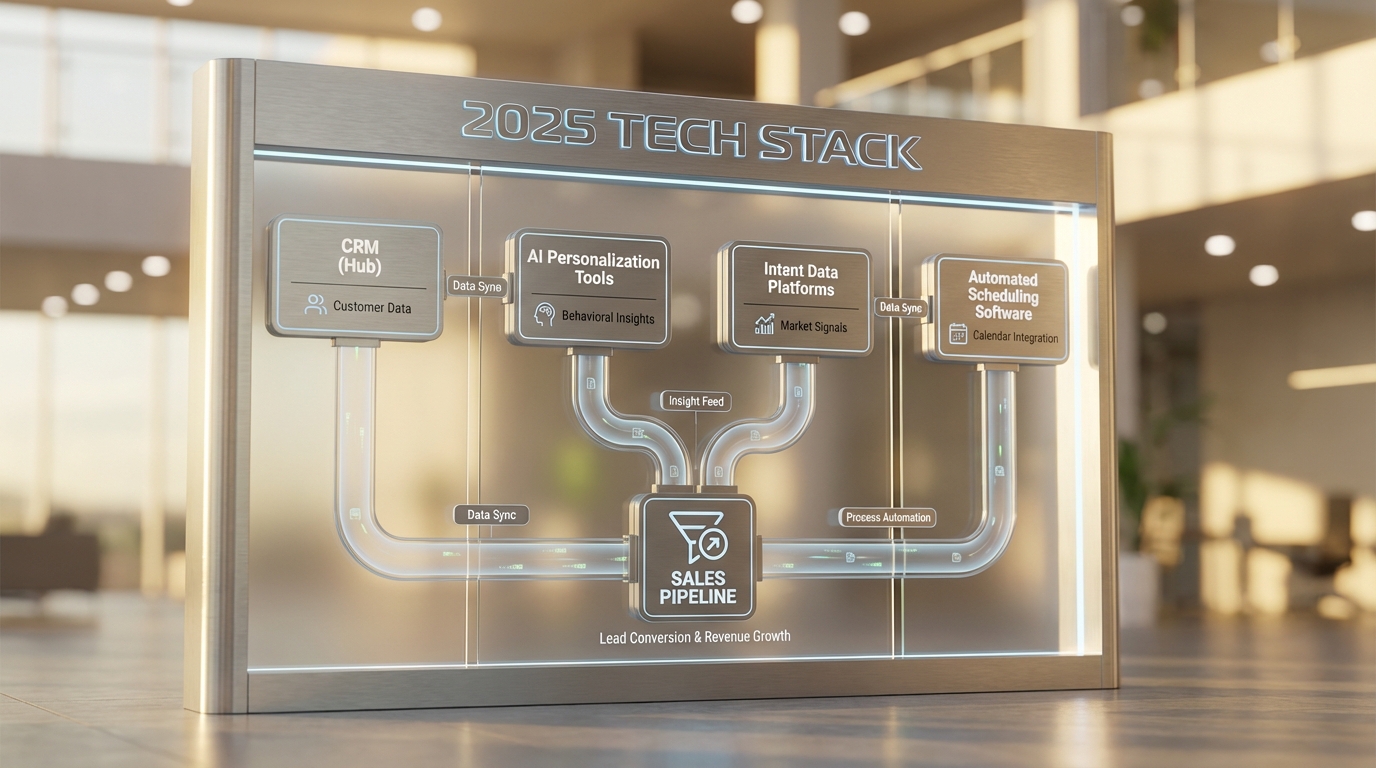
You do not need 50 different tools. You need a centralized system that allows you to prospect, track, and nurture effectively. For small businesses focused on high-ticket, trust-based sales, the stack should be lean and powerful.
The Essential Tools for High-Intent Lead Flow
Your stack should cover three core functions: Data Acquisition, Relationship Management, and Communication.
Pros & Cons: Automation vs. Precision Tools
In 2025, the choice is stark: invest in tools that automate spam, or invest in tools that enable precision.
| Approach | Pros | Cons (The Fatal Flaw) |
|---|---|---|
| Mass Automation (e.g., General Email Blasting) | High volume capacity; low cost per send. | Zero personalization; low deliverability; high spam risk; damages brand trust. |
| Precision AI & Manual Outreach (The Blueprint) | High conversion rates; builds authentic relationships; bypasses gatekeepers. | Requires manual effort per lead; lower volume capacity (but higher quality). |
For small businesses where every client matters, the choice is clear. You need precision data tools (like AI lead generation software to find accurate contact information) paired with a robust CRM that tracks every touchpoint and conversation history, allowing for that mandatory manual follow-up.
Key Highlights: The 2025 Lead Gen Mandate
- Focus on Intent: Stop chasing broad awareness. Only pursue leads who demonstrate specific, immediate pain points.
- Reputation is Currency: Treat your online reviews (GBP, Yelp) as your highest-performing landing pages.
- Outbound Precision: Leverage AI tools to acquire verified, direct contact information for decision-makers.
- Manual Nurturing: Conversion happens in the follow-up. Implement a mandatory, multi-step, personalized sequence.
- Content Authority: Publish deep-dive, proprietary content that positions you as the singular, definitive expert in your niche.
Frequently Asked Questions

What is the most effective lead generation channel for small B2B services in 2025?
For B2B high-ticket services, the most effective channel is AI-powered personalized outbound outreach, primarily via LinkedIn and direct email. This strategy allows you to bypass generic marketing noise and deliver a hyper-relevant value proposition directly to the decision-maker, leading to higher quality conversations immediately.
Should small businesses still invest in paid ads?
Only strategically. Paid ads (like Google Search Ads) are mandatory if your target audience has high intent and is actively searching for a solution (e.g., local emergency services). However, if your brand reputation is weak or your landing page conversion rate is low, paid ads are a waste of capital. Fix your trust signals first.
How do I generate high-intent leads without resorting to spam?
The anti-spam mandate requires two steps: 1) Use precision data tools to ensure you are only contacting your ICP, eliminating mass volume. 2) Ensure every message you send references a specific, verifiable trigger event unique to that prospect. If your message doesn’t pass the “Why Me, Why Now?” test, delete it.
Ready to take the next step?
Try AI Lead Generation Today
Click Here