

If you are running a local service business, whether you are a high-ticket B2B consultant, a real estate agent, or a specialized home service provider, you face a unique challenge. You need volume, but you cannot afford wasted effort targeting prospects outside your geographical kill zone.
The generic lead generation advice you see plastered across the internet-“just post consistently” or “run a Facebook ad”-is a recipe for catastrophic failure in 2025. Your competitors are already doing that. You are hemorrhaging time and capital if you rely on low-intent inbound traffic.
We operate on a single, definitive principle: Local lead generation must be high-intent, trust-based, and aggressively targeted. You need systems that put you in front of the exact decision-maker at the moment they need your service, leveraging local authority as your unfair advantage.
This 2025 blueprint cuts through the noise. We are detailing the strategic pillars for local service providers who need scalable, non-automated, trust-based lead acquisition methods immediately.
The Brutal Truth: Why Local Ads Are Failing You Now
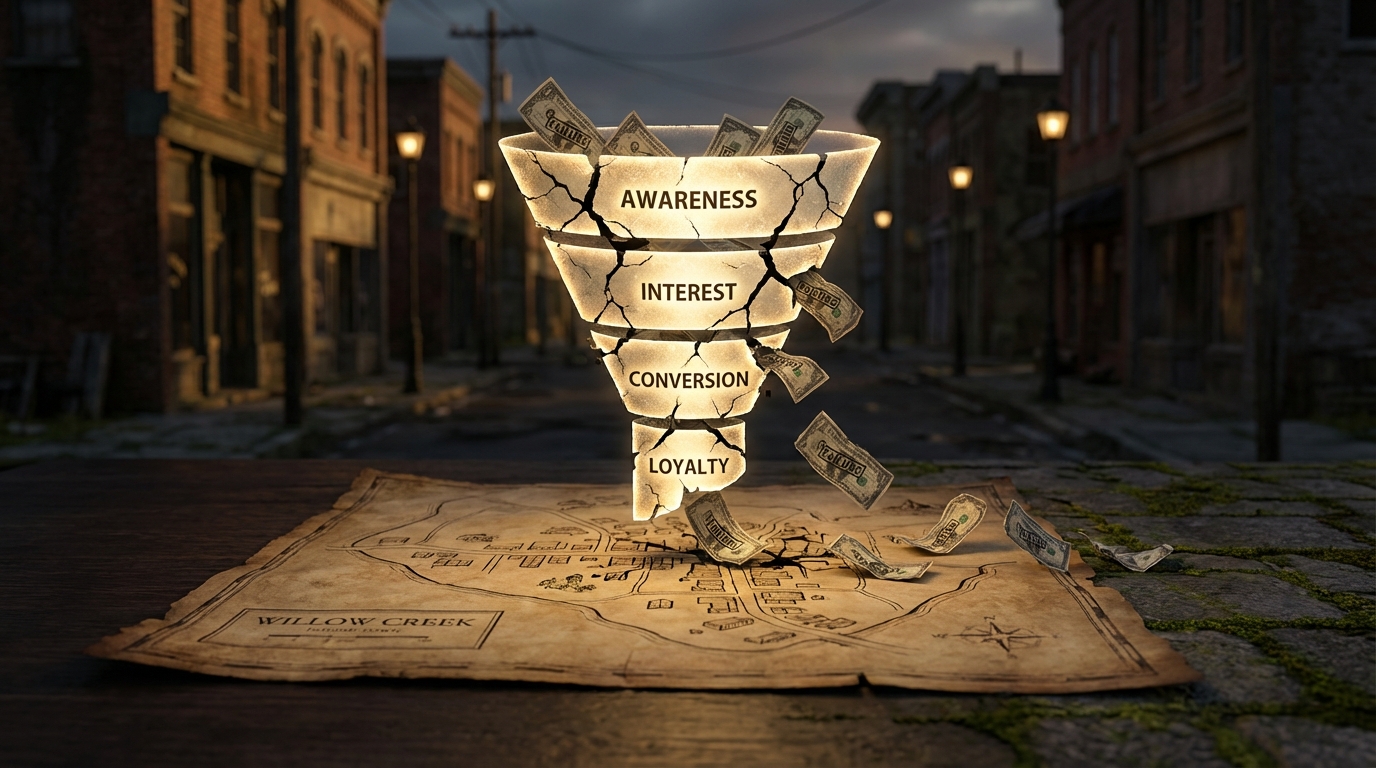
Many local business owners default to localized PPC or boosted social posts. They believe throwing money at a tight radius solves the intent problem. It doesn’t. You are paying a premium to interrupt a disinterested audience.
The market is saturated. Consumers are fatigued by generic ad copy, even if it mentions their neighborhood. The cost per lead (CPL) for high-value services like legal, financial, or specialized home renovation has become unsustainable for small margins.
Here is the reality you must accept: Trust precedes transaction. A local prospect searching for a service is evaluating not just your skill, but your community presence and reputation.
You need to pivot your focus from generalized advertising to building definitive local authority and manually engaging high-intent prospects.
Pillar 1: Hyper-Targeted Local Prospecting in 2025 (The AI Advantage)
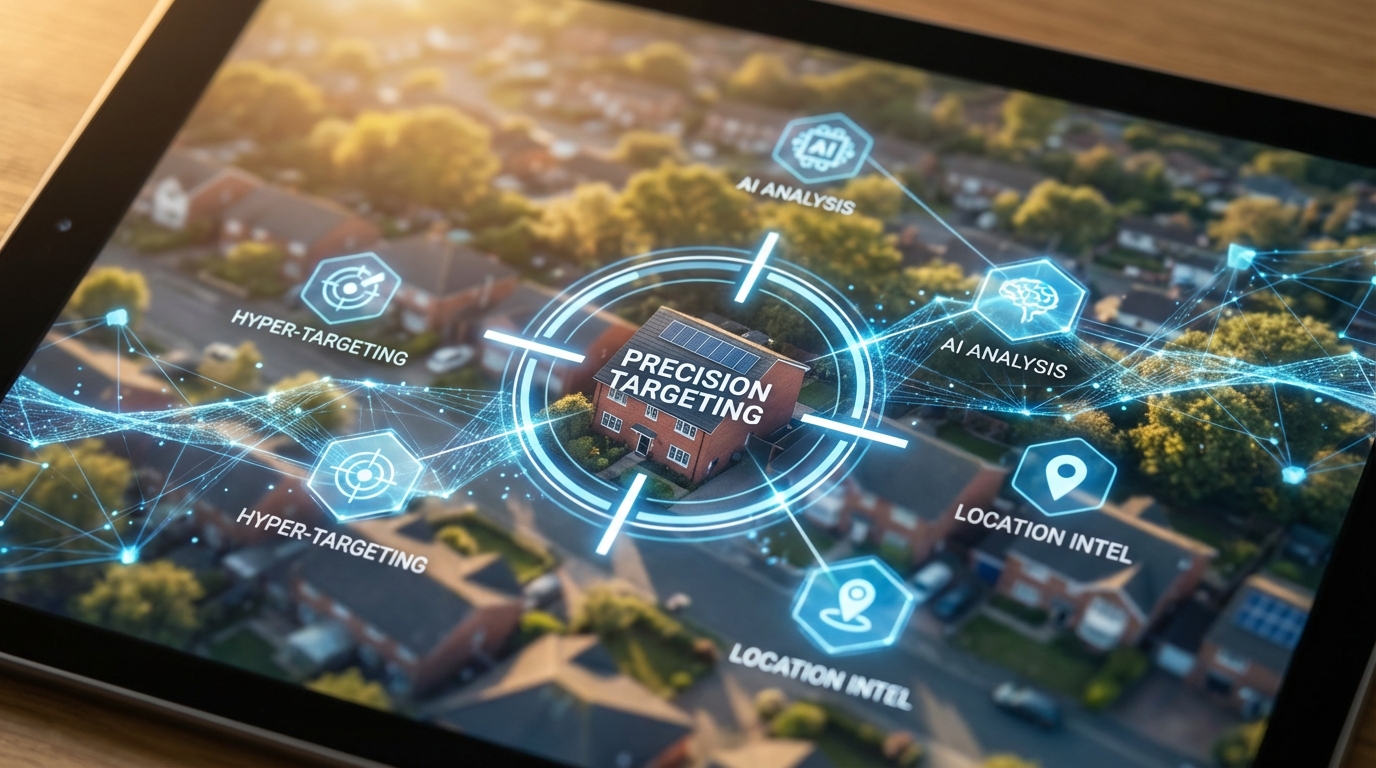
The definition of “local lead generation” has shifted. It is no longer about mass mailers or broad neighborhood targeting. It is about identifying the specific individuals or businesses in your area who meet your Ideal Customer Profile (ICP) criteria and initiating a personalized, trust-based conversation.
For B2B service providers (HVAC, commercial cleaning, IT services, specialized legal counsel), this means bypassing gatekeepers and reaching the local decision-maker directly.
Identifying Local Decision-Makers (Using AI Tools)
Your competition is still relying on generic list brokers or manual Google Maps scraping, which often yields outdated or generalized contact data. You need precision data extraction.
This is mandatory: You must use modern AI lead generation tools to find the personal, verified contact information (specifically, personal emails) of local business owners, property managers, or high-net-worth individuals in your target zone. Why? Because a personalized email to a decision-maker’s inbox is 10x more valuable than a generic form submission.
- Geo-Filtering for ICP Match: Use AI tools to filter local databases by specific criteria: business size, industry, revenue estimates, and crucially, physical address or neighborhood cluster.
- Role Mapping: Do not settle for the generic info@ address. Find the CEO, the Facilities Director, or the Owner. Tools today can map public data to verified private contact channels.
- Trigger-Based Outreach: Identify local triggers. Did a new commercial building just open? Did a local competitor receive a flurry of bad reviews? Is a specific neighborhood experiencing seasonal issues (e.g., flooding, high wind damage)? Use this real-time data to personalize your outreach.
If you are focused on B2B lead generation, this strategic approach to finding verified, high-value contacts locally is non-negotiable. It replaces the low-conversion volume game with a high-conversion precision approach. This is how you win without resorting to ineffective cold calling systems. Read more about leveraging precision outreach in our guide: B2B Lead Generation Ideas Without Cold Calling: The 2025 High-Intent Blueprint.
Pillar 2: Local Authority Stacking (Beyond GMB)
Every local business knows they need a Google Business Profile (GBP) and basic local SEO. That is the baseline. We are talking about Authority Stacking-layering trust signals so that when a prospect finds you, they cannot reasonably choose anyone else.
The 5-Second Trust Test
When a local prospect lands on your profile (be it your website, GBP, or social profile), they perform an instant, subconscious “5-second test.” They are looking for definitive proof that you are the expert, specifically for their area and their problem.
If your website copy is generic and lists services applicable nationwide, you fail the test. If your testimonials are vague, you fail. Authority Stacking is the process of ensuring you pass immediately.
Mandatory Local Authority Stacking Checklist 2025
- ✅ Hyper-Localized Case Studies: Do not just list client names. Detail specific projects in named neighborhoods (“The Elm Street Roof Replacement” or “IT Overhaul for the Downtown Law Office”). Include before/after pictures and specific results.
- ✅ Local Media Integration: Secure mentions (even small ones) in local news blogs, community newsletters, or chamber of commerce publications. Link these high-authority local citations back to your website.
- ✅ Local Partnership Endorsements: Formalize referral agreements with complementary, non-competing local businesses (e.g., a plumber partnering with a disaster restoration specialist). Testimonials from other trusted local business owners carry immense weight.
- ✅ Service Area Landing Pages (S.A.L.P.s): Create dedicated landing pages for each high-value neighborhood or zip code you serve. The copy must reference local landmarks, specific regulations, or unique challenges of that area. This proves you are an insider.
- ✅ Geo-Specific Video Content: Record short, educational videos addressing common issues specific to your climate or city (e.g., “Preparing Your Denver Home for Hail Season 2025”). Host these on your GBP and website.
Pillar 3: High-Intent Community Hijacking (Manual, Trust-Based)

Your highest-intent leads are clustering in digital spaces where they feel safe asking for recommendations. These are local Facebook Groups and Nextdoor feeds. Running ads here is often ineffective and expensive. The strategic move is manual, trust-based engagement, which we call “Community Hijacking.”
Nextdoor and Facebook Groups: The Anti-Spam Strategy
The majority of service providers attempt to spam these groups with direct solicitations, which results in bans and destroyed reputation. Your approach must be radically different: Be the definitive, non-sales expert first.
The Strategic Play:
- Identify the Pain: Use AI listening tools or manual monitoring to track keywords related to your service area within local groups (e.g., “broken AC,” “need lawyer,” “plumber recommendation”).
- Provide Unsolicited Value: When you see a post, do not pitch your service immediately. Offer a detailed, expert answer that solves 50% of their problem for free. Example: Instead of “Call me, I’m a roofer,” say, “That type of shingle failure often indicates poor attic ventilation; here are two things you can check immediately before calling anyone.”
- Wait for the Ask: The community will see your expertise. Other members, or the original poster, will inevitably ask: “What company are you with?” That is your cue.
- Leverage the Referral Loop: Actively encourage satisfied local customers to post positive recommendations when someone asks for a referral in these groups. A recommendation from a neighbor is infinitely more powerful than your own self-promotion.
This strategy requires discipline and consistency. You are building social capital, which converts into high-intent leads who already trust your authority. If you want to scale this manual process effectively, you need a system. We break down the exact methodology for engaging these goldmines here: The 2025 Blueprint: Converting Facebook Group Members into High-Intent Leads Manually.
Pillar 4: The Mandatory Conversion Multiplier: Reputation

For a local service provider, your online reputation is not just a marketing channel; it is the gatekeeper of your sales funnel. Prospects are not just reading reviews; they are analyzing how you manage negative feedback, how recent your positive feedback is, and the sheer volume of your social proof.
A mediocre reputation system is a slow leak in your revenue pipeline. A strategic reputation system actively generates leads and maximizes conversion rates.
Old vs. New Local Review Strategy
You must shift from passively collecting reviews to aggressively soliciting and leveraging them.
| Outdated Strategy (Pre-2025) | Mandatory 2025 High-Intent Strategy |
|---|---|
| Asking for a review “when you have time.” | Automated, immediate SMS/Email trigger 30 minutes after job completion. |
| Focusing only on Google reviews. | Multi-platform coverage (GBP, Yelp, Nextdoor, Industry-Specific Directories). |
| Ignoring negative reviews or offering generic apology. | Public, definitive response detailing the specific corrective action taken (turning a negative into a demonstration of customer service excellence). |
| Using star rating as the only metric. | Leveraging review content for localized keyword optimization (e.g., reviews mentioning “best HVAC in Reston”). |
Reputation management is not optional; it is the foundation of local sales. If your reputation is weak, every dollar spent on ads or outreach is wasted because the prospect’s due diligence will sink the deal. If you want to understand the strategic weight of this, you must read our breakdown on the subject: Why Reputation Management is Crucial to Sales.
Strategic Implementation: Building Your 2025 Local Funnel
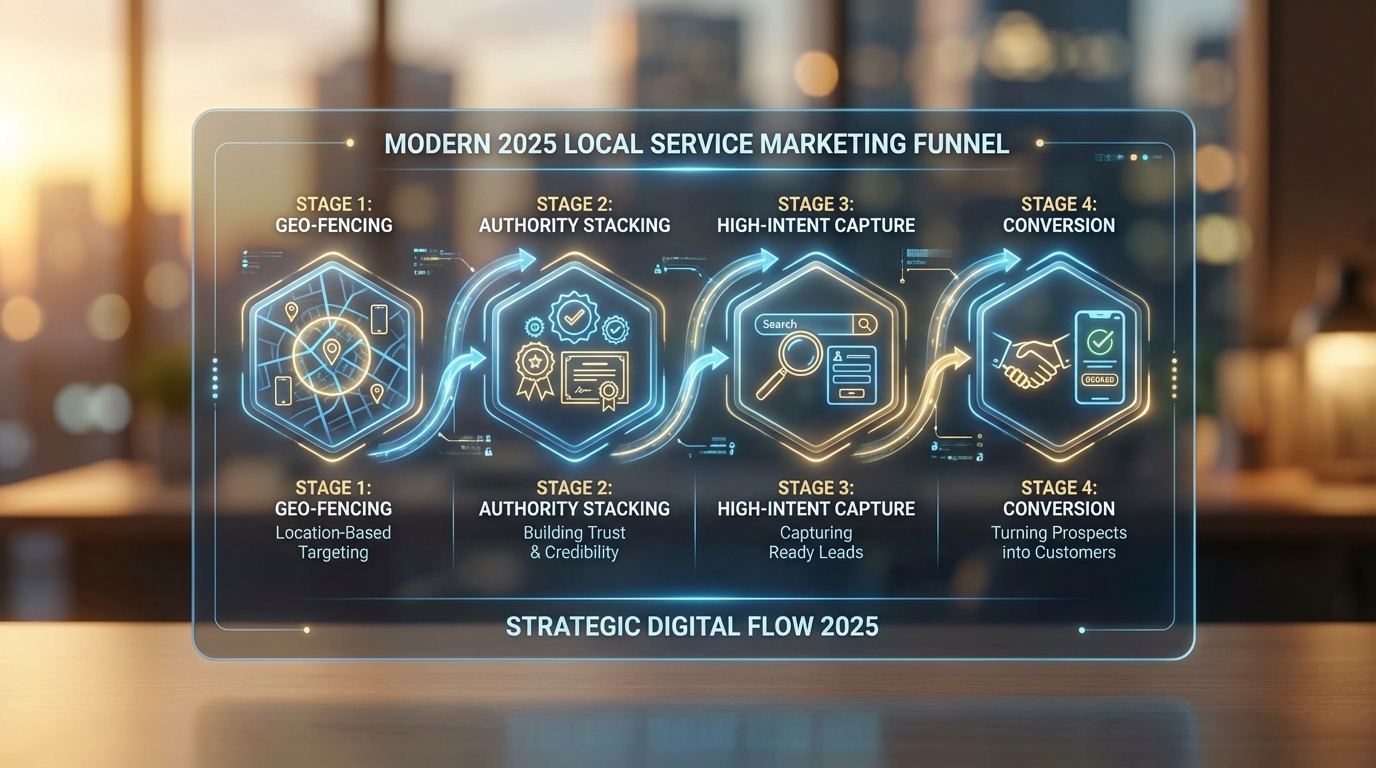
The goal is to integrate these pillars into a cohesive system that drives high-intent leads without relying solely on expensive paid traffic.
Pros and Cons: High-Intent Manual vs. Traditional Local Methods
High-Intent Manual/AI Methods (2025 Blueprint)
- ✅ Pros:
- High conversion rates (leads are pre-qualified).
- Lower CPL over time (reduced ad spend dependency).
- Builds deep, defensible local authority.
- Scalable through AI-powered contact identification.
- ❌ Cons:
- Requires precise execution and personalization.
- Initial setup time for AI tools and ICP definition.
Traditional Local Methods (Outdated)
- ✅ Pros:
- Easy to launch (e.g., basic PPC campaign).
- Can generate high volume (if budget is large).
- ❌ Cons:
- Extremely high CPL in competitive markets.
- Low intent leads (high drop-off rate).
- Builds dependency on platforms (Google/Facebook).
- Generic outreach damages trust.
Text-Based Infographic: Local Conversion Metrics
Local Service Provider Conversion Snapshot (2025 Data)
92% of local prospects read reviews before contacting a service provider.
76% of mobile local searches result in a phone call within 24 hours.
40% higher conversion rate achieved by personalized outreach versus generic lead forms.
1.5x increase in booking value when referred via a trusted local source (Nextdoor/Facebook Group).
$42 ROI for every $1 spent on highly targeted local email marketing (when using verified personal contact data).
Key Takeaways for Local Service Providers

You cannot afford to be passive. Local lead generation in 2025 is a strategic offensive, not a defensive marketing spend. Your focus must be on maximizing intent and minimizing friction.
Strategic Key Highlights
- Prioritize Personal Data: Stop chasing generic leads. Invest in tools that find the personal, verified contact information of local decision-makers. This is the fastest path to high-ticket clients.
- Reputation is Your Funnel: Treat your reputation management system (reviews, responses, social proof) as your primary lead qualifier. A 5-star rating on a high volume of recent reviews is mandatory.
- Be the Local Insider: Use hyper-localized content (S.A.L.P.s, specific case studies) to pass the 5-second trust test instantly. Prove you understand the neighborhood better than anyone else.
- Manual Trust Wins: Engage actively and helpfully in local digital communities (Nextdoor, Facebook Groups). Your goal is to generate organic referrals and position yourself as the non-sales expert.
Frequently Asked Questions

What is the single most important local lead gen channel in 2025?
The most critical channel is your Google Business Profile (GBP), but only if it is fully optimized with fresh, high-volume reviews and geo-tagged visual content. However, GBP serves as the conversion point for leads generated through other channels (SEO, social, word-of-mouth). The most effective acquisition strategy is personalized, high-intent outreach enabled by AI contact finding.
Should I still use direct mail or door hangers for local leads?
Only if they are hyper-targeted and highly personalized. Generic flyers are trash. A personalized letter addressing a specific local issue or offering a service based on a recent local event (e.g., “Saw the recent storm damage-here is a free inspection”) can still work, especially when targeting high-value homeowners or commercial properties where digital saturation is high.
How can I compete with national service aggregators like Angi’s or Thumbtack?
You beat them by focusing on Trust and Specialization. Aggregators compete on price and convenience. You must compete on local expertise and authority. Aggressively solicit video testimonials from local customers, showcase specialized, high-ticket work the aggregators cannot handle, and focus on building relationships via community engagement rather than just transactional clicks.
How much time should I allocate to manual community engagement weekly?
Allocate a mandatory 3-5 hours per week. This time should be dedicated solely to monitoring and providing value in 5-10 targeted local Facebook or Nextdoor groups. Do not use this time to sell; use it to answer questions and establish yourself as the definitive local resource. This investment will yield referral leads far cheaper and higher intent than any paid ad campaign.
Ready to take the next step?
Try AI Lead Generation Today
Click Here