

You run a lean SaaS operation.
Perhaps you manage lead generation for an ambitious service business.
Efficiency is not just a goal, it is survival.
In 2025, AI tools have drastically increased the speed and volume of outreach. But there is a catch.
Higher volume means higher scrutiny.
Your landing pages are now under immense pressure to perform. They must convert skeptical, busy prospects instantly.
How do you bridge the gap between AI-driven awareness and human conversion?
The answer lies in trust signals. These are the visual and psychological cues that reduce perceived risk for the user.
This comprehensive guide details the non-negotiable trust elements required for successful lead generation in the current digital landscape, focusing specifically on increasing trust signals on landing pages conversion.
We are going beyond basic security badges. We are building institutional credibility.
The Trust Imperative in 2025 Lead Generation

Trust is the new currency of digital marketing.
Consumers are flooded with options and automated messages. They are inherently suspicious of new brands, especially those promising revolutionary AI solutions.
Your landing page is your digital handshake. It must convey competence and security immediately.
According to recent Edelman Trust Barometer data, trust is often the single most critical factor in B2B buying decisions, frequently outweighing brand likeability or even price point. If a visitor does not trust you, they will not convert.
This reality is critical for SaaS companies and small businesses. You don’t have the established brand equity of Fortune 500 firms.
You must borrow credibility.
Trust signals are those borrowed elements. They are symbols, icons, messaging, and design choices that minimize user vulnerability.
Why Trust Signals Are Essential for AI Lead Generation
We use sophisticated tools, like Pyrsonalize.com, to identify and target qualified leads efficiently. This process drives high-intent traffic to specific landing pages.
But what happens when those high-value prospects arrive?
If the page feels cheap, slow, or insecure, the entire lead generation investment, and your Customer Acquisition Cost (CAC), is wasted.
Trust signals directly impact your conversion rate optimization (CRO) efforts by addressing fundamental psychological barriers:
- **Perceived Security Risk:** Will my data be safe? Is this transaction secure?
- **Competence Risk:** Can this company actually deliver on its promise? Do they possess verifiable expertise?
- **Transactional Risk:** If I buy this, can I get a refund? Is there a clear guarantee?
By effectively increasing trust signals on landing pages conversion metrics improve dramatically. You reduce friction, shorten the decision cycle, and immediately establish authority. We must start with the non-negotiable foundations.
Foundational Trust Signals: Security and Compliance

Security is not optional in 2025. It is the cost of entry.
If you fail these basic requirements, no amount of glowing testimonials will save your conversion rate.
These foundational elements must be implemented across all transactional and data-capture pages.
1. Non-Negotiable Technical Trust Marks
These are the indicators that prove your website is structurally safe.
- **SSL Certificates (HTTPS):** This is mandatory. The padlock icon in the browser bar is the simplest, most universal trust signal. Without it, browsers flag your site as unsafe, killing conversions instantly.
- **Security Seals (Trust Badges):** Third-party certifications signal that your site is scanned regularly for vulnerabilities. Popular examples include Norton, McAfee Secure, or Google Trusted Store. Placing these near the form submission or checkout button can reduce form abandonment by 10% to 15%.
- **Payment Provider Icons:** Displaying logos like Visa, Mastercard, PayPal, and Amex reassures users that their transaction is backed by reputable financial institutions. This reduces checkout abandonment fear.
2. Transparency in Data Handling
Your audience is highly sensitive about data privacy.
The rise of CCPA and GDPR compliance means users expect full transparency. Hiding your policies is a massive red flag.
How can you be transparent without overwhelming the user?
We recommend making these documents accessible and easy to understand. Users should ideally be able to scan and verify policies within seven seconds:
- **Clear Privacy Policy and TOS:** Do not use dense legalese. Provide an easily navigable link near the form submission button or in the footer.
- **Data Usage Statement:** Next to the CTA, include a short, punchy sentence explaining exactly how their submitted data will be used. (e.g., “We will only use your email to send the demo link. No spam, ever.”)
- **Compliance Badges:** If you operate in regulated industries (Healthcare, Finance, etc.), display HIPAA or SOC 2 compliance badges prominently. This validates your operational integrity.
Remember, asking for excessive information early on erodes trust. Limit initial forms to the bare essentials-Name and Email, usually-and progressively profile the lead later in the funnel. We’ve covered how to maximize lead capture efficiency, even on a tight budget. Budget Lead Capture Tools: Maximize Leads Under $50 are essential for optimizing this process.
Ignoring security or reputation issues is costly. It can instantly negate the high-quality traffic generated by your AI campaigns. You must understand How Negative Reviews Impact Lead Conversion Rate to prevent these foundational trust failures.
Leveraging Social Proof for AI-Driven Conversions
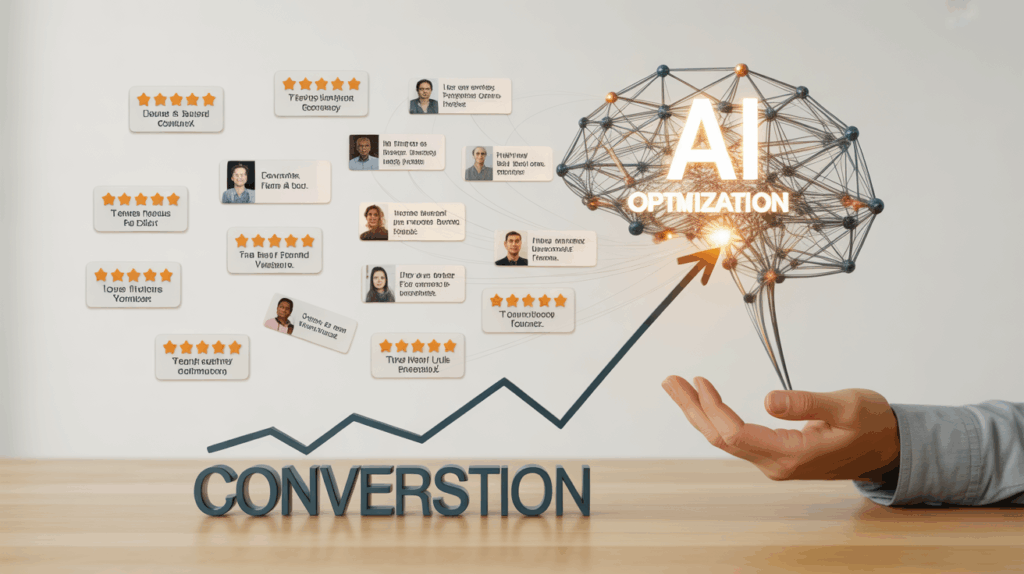
Security is the floor. Social proof is the ceiling.
People trust other people more than they trust your marketing copy. This is a fundamental human trait called confirmation bias.
Effective social proof acts as external validation. It tells the prospect, “Others like me have successfully taken this risk.”
Once you have established the security foundation, this type of validation is indispensable for increasing trust signals on landing pages conversion rates.
1. The Power of Client Logos and Case Studies
If you serve recognizable brands, use them.
Client logos are a quick, visual way to borrow authority. If a well-known entity trusts you, the prospect should too.
When selecting logos for your landing page, follow these best practices:
- **Relevance:** Feature logos relevant to the specific prospect segment viewing the page.
- **Prominence:** Place the logo strip above the fold, or immediately below the main value proposition.
- **Volume:** Use a manageable number-four to six are usually enough to convey impact without cluttering the design.
Case studies, conversely, offer deep, data-based proof.
They move the user past the initial skepticism and into the “how can this work for me?” stage.
What should a high-converting case study section include?
- **The Challenge:** Clearly define the customer’s initial pain point.
- **The Solution:** Detail how your product (like Pyrsonalize, for example) addressed the specific need.
- **The Results:** Use concrete ROI metrics (e.g., “300% increase in qualified leads over Q3,” “50% reduction in outreach time, saving $15k monthly”).
2. Integrating Reviews and Testimonials
Testimonials should be authentic, specific, and verifiable.
A generic quote like “Great service!” is worthless. A specific quote linked to a real person and verifiable result is gold.
| Social Proof Type | Best Placement | Key Conversion Impact |
|---|---|---|
| Star Ratings (e.g., G2, Capterra) | Header/Near Main CTA | Immediate legitimacy and credibility boost. |
| Video Testimonials | Mid-page (below the fold) | Highest emotional connection and authenticity. |
| Third-Party Review Snippets | Near pricing or features section | Unbiased validation from external sources. |
Always link to the source of the review if possible. This allows users to verify authenticity, completing the trust loop.
Many of the same principles that govern effective landing page trust also apply to the effectiveness of your sales outreach sequences. Are your sales teams using the The Best AI Lead Generation Tools for Sales Teams in 2025, and are those tools feeding into high-trust pages?
Establishing E-E-A-T: Authority and Transparency

Social proof tells the prospect that others use you. E-E-A-T tells them why they should trust you specifically.
Google’s algorithm emphasizes E-E-A-T: Experience, Expertise, Authoritativeness, and Trustworthiness.
While E-E-A-T is an SEO concept, it perfectly mirrors the signals needed to convince a human prospect.
Are you positioning your brand as a market leader?
The expert advice you provide must be backed by verifiable credentials, confirming your institutional authority.
1. Certifications, Awards, and Affiliations
These signals prove that external, recognized bodies have vetted your expertise.
For SaaS companies, industry-specific awards or certifications are crucial because they validate technical competence.
Consider displaying:
- **Industry Awards:** Any recognition for innovation, growth, or product excellence (e.g., G2 Leader badges, SaaS Awards).
- **Partnerships:** Affiliations with major platforms (e.g., Google Partner, AWS Certified, official integrations with CRM platforms). These partnerships imply a high standard of vetting.
- **Professional Memberships:** Relevant trade organizations or regulatory bodies that lend weight to your operations, demonstrating compliance commitment.
These elements show commitment. They confirm you are playing by established industry rules.
2. Authority Through Human Transparency
Who is behind the software? Who is running the service?
In the age of AI automation, showing the human element builds profound trust.
Do not hide your team.
What should you integrate into your landing page or link to prominently?
- **Accessible About Us Page:** Include real team photos, bios, and credentials. LinkedIn links are excellent for verifiability and expertise confirmation.
- **Thought Leadership:** Link to recent, relevant content (blog posts, white papers, podcasts) demonstrating expertise in your niche. Show that you lead the conversation.
- **Clear Contact Information:** A visible phone number, email address, and physical business address (if applicable) removes anonymity and implies stability.
Transparency extends to your offers. Use guarantee trust signals to remove the customer’s risk entirely.
Guarantees are powerful conversion boosters because they shift the risk from the buyer back to the seller.
Examples of High-Impact Guarantee Signals:
- “30-Day Money-Back Guarantee” (Use a specific time frame, not vague promises).
- “Try It Risk-Free, No Obligation” (Ideal for free trials or demos).
- “No Credit Card Required to Start” (Lowers the barrier to entry immediately, signaling confidence).
Place these guarantees immediately next to the CTA button. Do not bury them in the fine print.
Strategic Placement and Optimization of Trust Elements
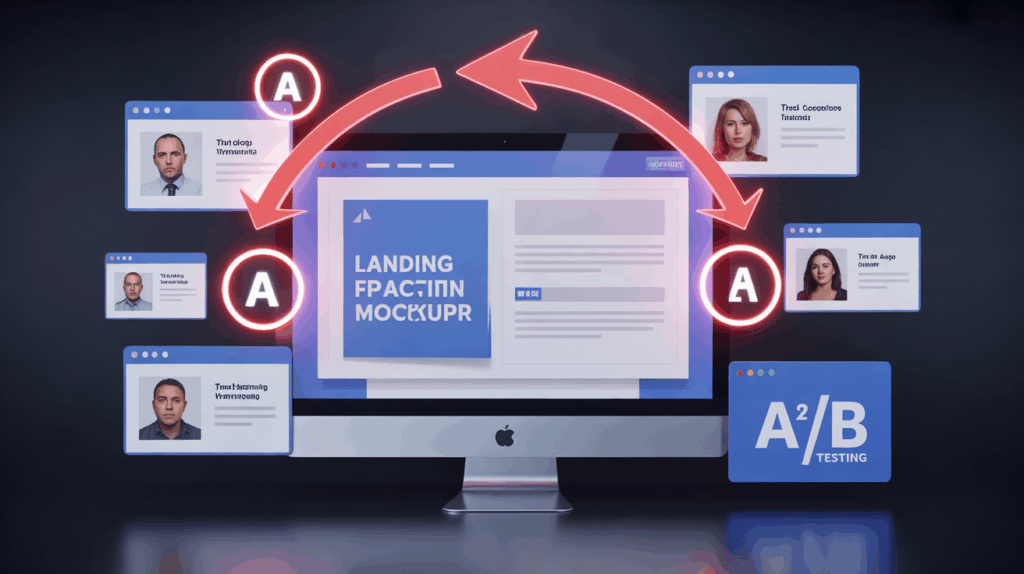
You have collected the necessary trust signals. Now, where do you put them?
Placement is everything in CRO. The signal must appear at the exact moment the user is asking the relevant question.
If they are wondering about security, show the Norton seal.
If they are wondering if the product works, show the 5-star rating.
Mapping Signals to the Conversion Journey
Different areas of the landing page address different stages of user skepticism. Strategic placement maximizes the effect of increasing trust signals on landing pages conversion.
We break down placement into three critical zones:
Zone 1: Above the Fold (Immediate Trust)
This is where the first impression is formed. You have seconds to establish credibility.
- **Logo & Branding:** Consistent, professional visual design.
- **Core Social Proof:** High-level metrics (e.g., “Trusted by 5,000+ SaaS teams”) or aggregate star ratings.
- **Security Indicator:** The HTTPS padlock and, optionally, a small, highly recognizable trustmark (e.g., Verified by McAfee).
Zone 2: Mid-Page (Validation and Competence)
As the user scrolls and reads the features and benefits, they seek confirmation that you are capable.
- **Client Logo Strip:** Showcasing recognizable names relevant to the visitor.
- **Case Study Snippets:** Short, outcome-focused testimonials showing results, often placed near relevant features.
- **Awards/Certifications:** Badges related to industry expertise, validating technical claims.
Zone 3: Near the Form/Checkout (Transactional Trust)
This is the moment of commitment. The user is vulnerable, sharing personal or financial data.
- **Payment Badges:** Visa, PayPal, etc., confirming transaction security.
- **Guarantee Seal:** Money-back guarantee icons, removing perceived financial risk.
- **Privacy Assurance:** A short line reassuring data safety, often paired with a reCAPTCHA element.
The Importance of Credibility Design
Trust signals are not just badges. They are also design choices.
A cluttered, poorly formatted, or slow-loading page instantly destroys trust.
Ask yourself these questions during your CRO audit:
- Is the design clean, professional, and consistent with our brand identity?
- Is the page loading speed optimized (aim for Core Web Vitals green status, especially on mobile)?
- Are there unnecessary visual distractions that pull focus from the CTA?
A high-quality, professional aesthetic signals competence and reliability. If your website looks like it was built in 2010, prospects will assume your technology is equally outdated.
Continuous A/B Testing of Trust Signals
Trust is subjective. What works for one demographic might fail for another.
You must A/B test your trust signals constantly.
What should you test?
- **Badge Type:** Does the Norton seal convert better than the BBB accreditation for your audience?
- **Placement:** Does moving the testimonial strip higher or lower affect conversion rates?
- **Guarantee Wording:** Is “Full Refund If Unsatisfied” better than “100% Risk-Free Trial”?
Data drives optimization. Never assume a trust signal is working; prove it with testing.
By integrating a powerful AI lead generation platform, such as Pyrsonalize, with strategically optimized, high-trust landing pages, you create a seamless and highly efficient funnel. You generate the leads, and the landing page converts them by eliminating skepticism.