

You cannot ignore customer reviews in 2025.
They are the lifeblood of B2B and SaaS credibility.
Most business leaders fear negative feedback. They view poor ratings as conversion killers.
This perspective is outdated and strategically flawed.
We need to shift the mindset. Negative reviews, when handled correctly, are powerful conversion assets.
They build the authenticity required to close high-value leads.
How exactly do negative reviews impact lead conversion rate for your SaaS or service business? The answer is complex, counter-intuitive, and essential for scaling efficiently.
This guide provides the data-driven strategy you need. We will show you how to leverage criticism to boost trust, prioritize leads, and ultimately, increase your bottom line.
The Conversion Crisis: Understanding Review Psychology

Trust is the highest currency in lead generation.
Modern buyers are skeptical. They have been burned by overly polished marketing claims.
They are searching for validation from peers, not sales reps.
This is where reviews become critical. For B2B buyers, reviews act as essential social proof during the consideration and decision stages.
Did you know B2B buyers often consume 13 different pieces of content before making a final decision?
A significant portion of that content is peer feedback.
The Problem with Perfection: Why 5-Stars Fail
A perfect 5-star rating often triggers suspicion.
Your prospects are smart. They know no product is flawless.
When they see only glowing, unblemished feedback, they assume manipulation.
This erosion of trust instantly reduces conversion rates. Why would a prospect commit to a demo or a free trial if they suspect the reviews are fake?
Authenticity is the key differentiator.
A mix of positive and negative reviews shows transparency. It signals that your company is real, and your customers are verified.
Reviews as Decision-Making Tools in SaaS
Authenticity allows buyers to move past suspicion and into evaluation.
SaaS purchases involve high commitment and integration costs.
Buyers are highly risk-averse. They need confidence before adopting new technology.
Reviews provide this confidence by offering real-world experiences.
What are B2B buyers looking for in reviews?
- Functionality Assessment: Does the product actually solve the stated problem?
- Integration Compatibility: Does it work seamlessly with their existing tech stack?
- Customer Service Quality: How does the company handle issues when they arise?
- Long-Term Value: Is the ROI sustainable over time?
Negative reviews, paradoxically, provide the most valuable data points for mitigating risk. They highlight potential shortcomings, allowing the prospect to decide if that specific flaw affects their use case.
The Data-Driven Reality: How Negative Reviews Boost Authenticity
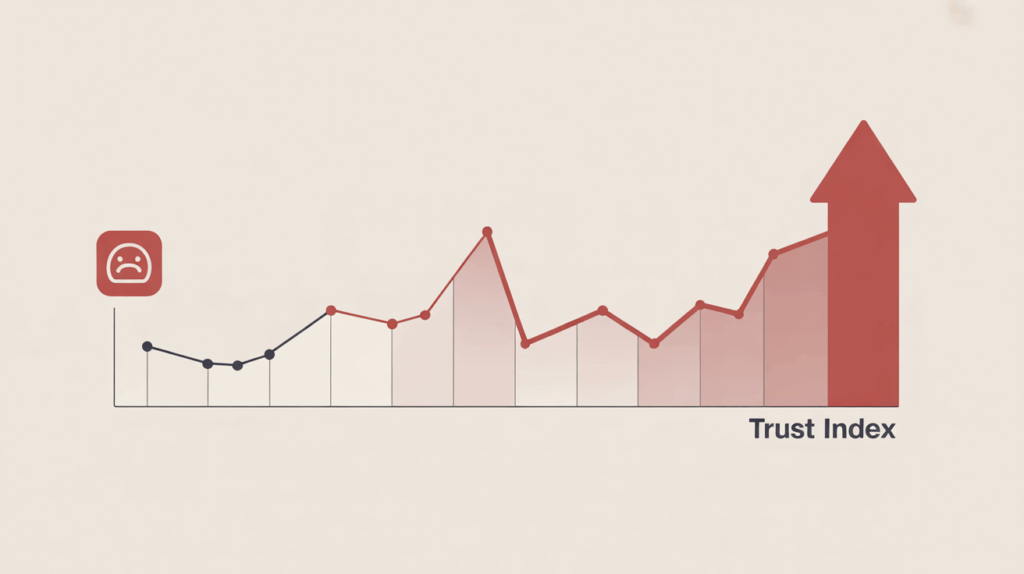
Let’s look at the numbers. They tell a clear story.
Products with reviews sell 270% more than those without.
But the real conversion boost comes from balance.
The 4.2-Star Sweet Spot
Research, including studies by Northwestern University and PowerReviews, consistently shows that products with an average rating around 4.2 to 4.5 convert better than those with perfect 5-star ratings.
This specific band is statistically proven to maximize conversion.
Why is this the case?
It’s the transparency effect. A slightly imperfect score reassures the buyer that the feedback is trustworthy and unmanipulated.
Negative feedback clarifies potential product shortcomings. This sets realistic expectations for the lead, drastically reducing the likelihood of churn or buyer’s remorse later.
Transparency fosters long-term trust in your brand.
Quantifying the Review-Conversion Relationship
We often underestimate how negative reviews impact lead conversion rate by focusing only on the rating number. The interaction with those reviews is what truly drives engagement.
Consider this authoritative data on B2B buyer behavior:
| Metric | Impact on Conversion/Trust |
|---|---|
| Products with Reviews vs. None | 270% higher likelihood of sales. |
| Average Rating of 4.2-4.5 Stars | Highest conversion rates compared to 5.0 stars. |
| Customers Reading Negative Reviews | Spend 4x longer on the site, indicating high engagement and intent. |
| Brands Responding to Negative Reviews | 45% of consumers are encouraged to visit the business website. |
Do you see the opportunity here?
Leads who engage with negative reviews are highly motivated. They are actively researching risk mitigation.
They are essentially scoring themselves as high-intent prospects.
The Negativity Bias: A Strategic Advantage
The human brain is wired for caution.
We pay more attention to negative information, this is called negativity bias.
While this sounds scary, it is a massive opportunity for your brand.
When a lead focuses on a negative review, they are primed to see your response.
Your public resolution becomes the most memorable part of their research.
You can proactively address common complaints. You can demonstrate superior customer commitment.
This strategic usage of the negativity bias transforms a potential drawback into a powerful demonstration of E-E-A-T (Experience, Expertise, Authoritativeness, Trustworthiness).
Mitigating Damage: Strategic Response and Review Management
Negative reviews only damage conversion rates if they go unaddressed.
Ignoring criticism is professional negligence. It signals to prospects that you do not value customer experience.
Effective management is non-negotiable for scalable lead generation.
The Golden Rule: Respond Promptly and Professionally
Time is of the essence. A swift response minimizes the negative exposure.
Your reply must be empathetic, professional, and solution-focused.
Remember, you are not just replying to the unhappy customer. You are communicating directly with hundreds of future leads who are reading the thread.
What should your response strategy include?
- Acknowledge and Validate: Start by thanking them for the feedback and validating their frustration (“We understand how frustrating this must be.”).
- Take Ownership: Avoid deflecting blame. Even if the issue was a user error, own the confusion (“We clearly need to improve our onboarding guide.”).
- Offer a Private Channel: Always move resolution offline. Provide an email or direct phone number to resolve specific account issues.
- Publicly State the Fix: If the review highlighted a product bug, state publicly that the issue has been routed to the development team and provide an expected resolution timeframe.
Responding actively shows prospective clients that you care. It proves that you are a business worth investing in.
Modern sales teams must track these interactions. Integrating review data with your CRM is vital for providing context to sales reps. This ensures they can address perceived weaknesses during the demo phase. Using the best AI lead generation tools for sales teams in 2025 can help automate and track these critical touchpoints.
Incorporating Feedback into Product Development
Negative reviews are free consultancy.
They identify gaps in your product, service, or marketing messaging.
SaaS founders must establish a clear feedback loop.
How do you leverage critical feedback constructively?
- Categorize and Tag: Systematically tag negative reviews by theme (e.g., “UI confusion,” “slow loading,” “poor support”).
- Identify Patterns: If 15% of 2-star reviews mention difficulty with the Zapier integration, that is a high-priority product fix.
- Publicize Improvements: Once the fix is rolled out, update the original review thread or create a public announcement. Show leads that their peers’ feedback drives your roadmap.
This process transforms negative sentiment into a tangible value proposition for new leads.
It demonstrates that you are a responsive, evolving platform.
Leveraging AI to Turn Negative Feedback into Lead Fuel
Manual review management is slow and inefficient.
This is 2025. We use AI to scale lead generation. Why wouldn’t we use it to manage the feedback that qualifies those leads?
AI for Sentiment Analysis and Prioritization
AI-powered tools can instantly analyze thousands of reviews across G2, Capterra, and social media.
They identify sentiment trends faster than any human team.
This allows for rapid response allocation. If a critical issue is trending, AI flags it immediately.
How AI enhances review management:
- Trend Detection: Spotting emerging complaints before they become widespread crises.
- Automated Response Drafting: Generating professional, customizable response templates based on the specific complaint category.
- Lead Prioritization: Identifying prospects who left negative reviews on competitor sites (Displacement Opportunities).
Finding Your Competitor’s Unhappy Leads
This is where the strategic advantage of negative reviews truly crystallizes.
Negative reviews are a roadmap to competitor dissatisfaction.
You need to find the specific companies and individuals who are complaining about your rivals. These prospects are in the market now.
They are actively looking to switch providers.
Tools like Pyrsonalize.com excel at this kind of targeted lead identification. We use AI to scour public forums and review sites, matching pain points to your specific solution.
If a prospect complains, “Competitor X’s API integration is unreliable,” and your platform offers a superior, stable integration, that prospect is now a high-priority target for your sales outreach.
You can craft hyper-personalized cold outreach that speaks directly to their documented pain.
The messaging isn’t generic. It’s: “We saw you struggled with [Specific Pain Point]. Our platform, Pyrsonalize, was designed specifically to solve that with our guaranteed 99.9% uptime API.”
This precision targeting dramatically increases lead conversion rates.
Integrating Feedback Data into the CRM
Data from review platforms must flow directly into your central sales hub.
Why is this crucial?
It allows sales reps to anticipate objections. A rep heading into a demo can see that the lead mentioned reading a review about a feature they disliked.
The rep can proactively address that concern, turning a potential weakness into a sales strength.
This level of preparation showcases expertise and meticulousness.
If you are managing high volumes of data, ensuring smooth integration is paramount. AI lead gen tools with built-in CRM integration are essential for maintaining this seamless flow of critical customer intelligence.
Optimizing the Funnel: Displaying Reviews for Maximum Trust
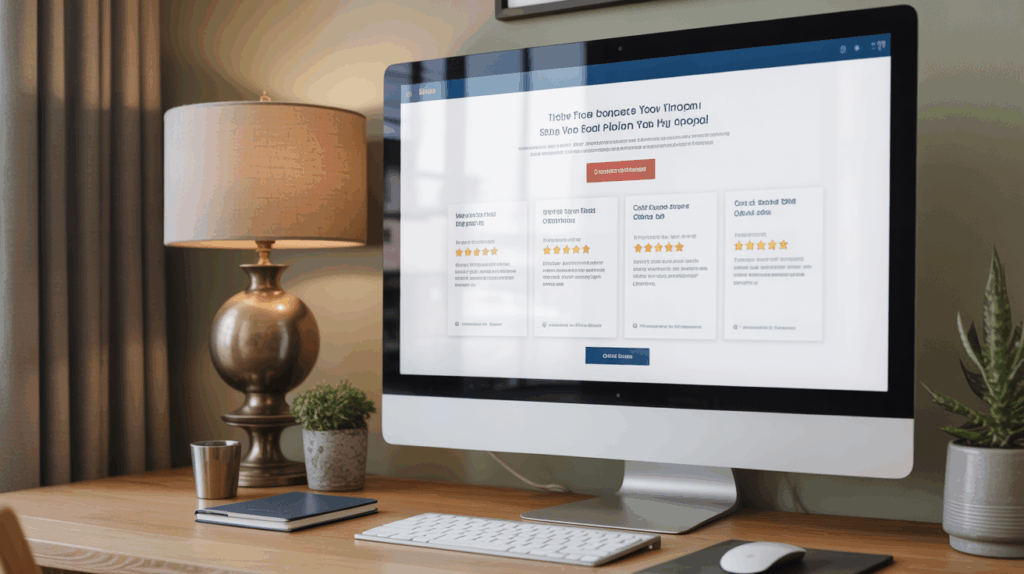
It is not enough to just collect reviews. You must display them strategically.
Your goal is to guide the prospect toward an informed, confident conversion.
How can you leverage the presence of negative reviews without deterring potential clients?
Showcase a Balanced Review Profile
Do not attempt to hide your 1-star reviews.
Instead, integrate them into a balanced display. This reinforces authenticity.
Savvy prospects look for the full spectrum of experiences.
Strategies for balancing your display:
- Feature Constructive Criticism: Highlight negative reviews that offer specific, actionable feedback rather than vague complaints.
- Pair Criticism with Resolution: Immediately follow the negative review with your public, professional response demonstrating commitment to service.
- Create Filters: Allow users to filter reviews by star rating or theme (e.g., “Fit,” “Performance,” “Support”). This empowers the buyer to find the information most relevant to their decision.
Use Visual Summaries for Quick Context
Leads are often time-poor. They need context quickly.
Visual summaries make complex feedback highly digestible.
Examples of effective visual summaries:
- Star Rating Histogram: A bar graph showing the percentage breakdown of 5-star, 4-star, 3-star, etc. This instantly confirms the overall health of your ratings.
- Common Pros and Cons Lists: Use AI to summarize recurring themes in short, digestible bullet points right next to the product description. (e.g., Pros: Excellent support, powerful API. Cons: Steep learning curve for beginners.)
- Review Highlights: Feature short quotes from reviews that speak directly to key features or benefits.
These elements help prospects process the information rapidly. They build confidence and accelerate the journey toward conversion.
Enhance Pre-Purchase Communication
Many negative reviews stem from unmet expectations, not product failure.
If your AI tool is excellent for high-volume users but complex for startups, be explicit about that upfront.
Use your product descriptions to address common negative feedback points proactively.
Did a review complain about the installation time? Update your page: “Installation takes approximately 45 minutes, guided by our video tutorial.”
Are customers confused about pricing tiers? Use clear comparison charts.
By using the insights from negative reviews to clarify your offer, you minimize friction. You ensure the leads you acquire are highly qualified and have realistic expectations.
This refinement of the funnel boosts lead quality and significantly increases your final conversion rate.
Negative reviews are not a conversion impediment. They are an essential ingredient in building the high level of trust required for successful AI lead generation in 2025.