
The landscape of digital marketing changes rapidly.
Today, static web forms are simply not enough.
Your small business or SaaS company needs immediate engagement.
Visitors land on your page expecting instant answers.
How do you capture high-quality leads efficiently?
The answer lies in leveraging conversational AI.
We are in 2025. AI chatbots are no longer novelties; they are essential infrastructure for AI lead generation.
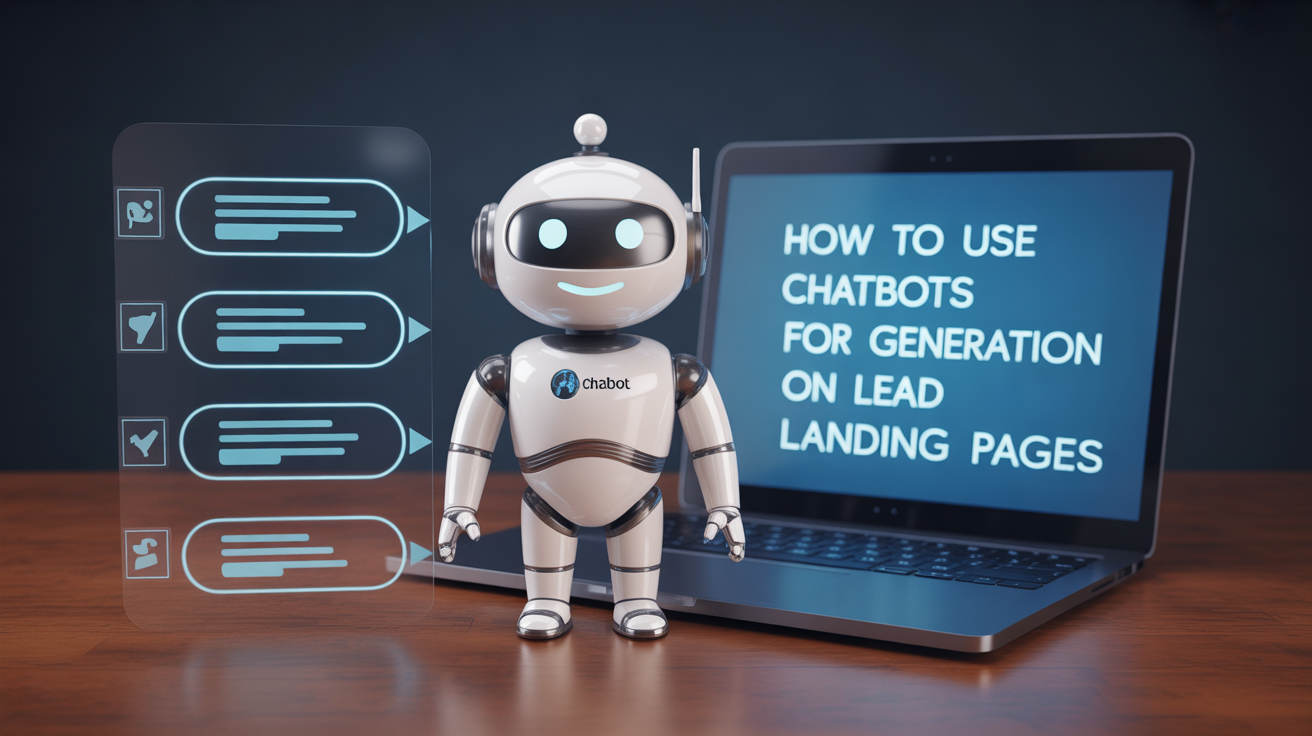
This comprehensive guide details exactly how to use chatbots for lead generation on landing pages.
We transform passive visitors into qualified prospects.
Are you ready to optimize your conversion funnel?
Why Chatbots Dominate Traditional Lead Forms
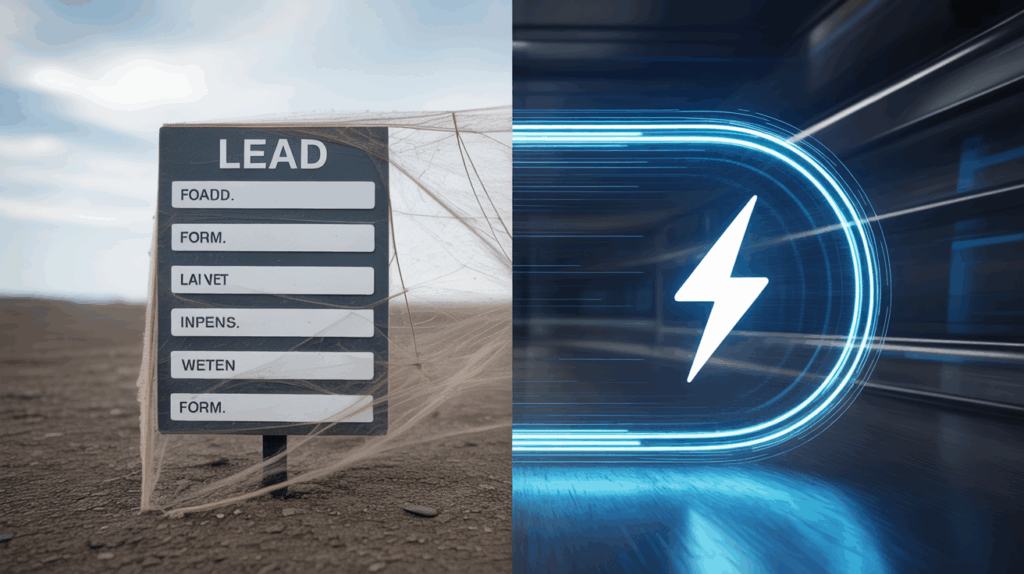
Traditional lead capture methods suffer from inertia.
Forms feel transactional and cold.
They force the visitor to do all the work.
Chatbots, conversely, offer a dynamic, personalized experience.
They engage the user immediately.
This shift from passive submission to active conversation yields significant advantages for SMBs and SaaS providers focused on scaling.
The Conversion Rate Revolution
Conversion rates are notoriously low across the web.
The average website converts around 3.3% of visitors into leads.
That is a massive amount of wasted traffic.
Conversational marketing fundamentally changes this metric.
By replacing standard forms with interactive AI chatbots, conversion rates often skyrocket.
We have seen examples where chatbot-qualified leads convert at over 40%.
This contrasts sharply with average landing page rates of 2-3%.
Why such a huge difference?
Chatbots eliminate friction and provide immediate value exchange through interaction.
Lower Cost Per Lead (CPL)
Efficiency dictates profitability for small businesses.
High CPL can quickly drain marketing budgets.
AI automation reduces the need for constant human intervention during the initial qualification phase.
This dramatically lowers the operational costs associated with lead capture.
Sales teams report 60-70% less time wasted on unqualified prospects due to effective chatbot screening.
When conversion rates increase, the cost of acquiring that lead naturally decreases.
This makes AI chatbots one of the most cost-effective lead generation tools available today. If you are focused on maximizing budget efficiency, consider exploring the Cheapest Lead Generation Software for Startups in 2025 that leverage these efficiencies.
Enhanced User Experience and Engagement
Visitors hate wading through walls of text.
They want specific information relevant to their immediate needs.
A well-designed chatbot delivers data conversationally.
It acts as a personalized guide, not a gatekeeper.
This increased engagement keeps visitors on your landing page longer.
It ensures they feel heard and understood, building early trust.
How can you leverage this trust for maximum lead quality?
Strategic Blueprint: How to Use Chatbots for Lead Generation on Landing Pages
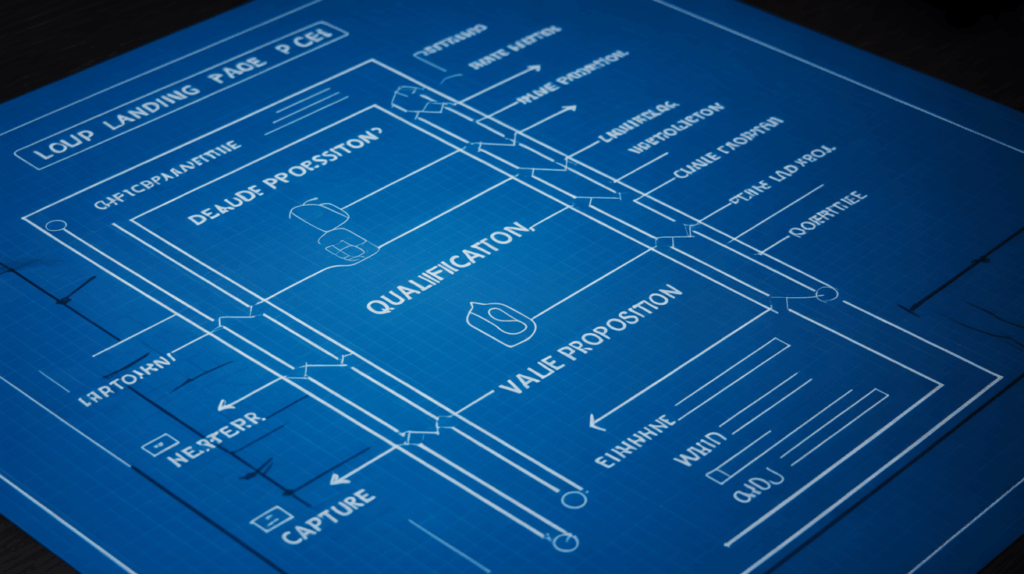
Leveraging this high level of engagement requires precision.
We must move beyond theory.
Implementing a chatbot requires careful planning; it is more than just dropping a widget onto your page.
The goal is to create a seamless, high-converting funnel.
This blueprint provides the necessary steps to deploy an effective conversational lead capture strategy.
1. Define the Chatbot’s Singular Goal
Every landing page must have a singular goal.
The chatbot’s purpose must align perfectly with that objective.
Is the landing page focused on a demo request?
Is it designed for an ebook download?
The chatbot flow should lead directly to that conversion action.
Avoid multipurpose bots that confuse the user or dilute intent.
Key objectives for landing page bots often include:
- Immediate lead qualification (using BANT criteria: Budget, Authority, Need, and Timeline).
- Scheduling a product demo or consultation instantly.
- Delivering a specific piece of gated content.
- Providing instant technical support triage and routing.
2. Design the Conversational Flow (The Script)
A successful chatbot mimics human interaction.
The script must be polite, direct, and highly efficient.
Use conversational blocks instead of long text prompts.
The flow must prioritize data collection in a natural sequence.
- The Welcome and Hook: Greet the visitor immediately. Ask a quick, engaging question related to the landing page offer. Example: “Welcome! Are you here to learn how AI can boost your sales pipeline?”
- Name Collection: Personalization starts here. Ask for the user’s name early to use throughout the rest of the chat.
- Qualifying Questions: Use button responses to rapidly segment the lead. Ask about company size, role, or primary pain point. This prevents low-intent leads from wasting valuable sales team time.
- Email/Contact Capture: Once qualified, ask for the essential contact information (email and phone). Explain *why* you need it (e.g., “So we can send you the personalized comparison report we just generated”).
- Next Steps/Handover: Immediately direct the qualified lead to the desired action (e.g., booking a meeting, receiving the asset).
3. Implementing Conditional Logic for Qualification
This is where AI chatbots truly shine.
They do not treat all leads equally.
Conditional logic allows the bot to branch the conversation based on user input.
A startup founder needing immediate help is handled differently than a student doing research.
Use “If/Then” scenarios to automatically separate the ‘hot’ leads from the ‘cold’ ones.
A detailed qualification process requires defining your Targeted Buyer Persona for AI Lead Gen before building the chatbot flow.
| Input Variable | Qualification Score | Action Triggered |
|---|---|---|
| Company Size: 50+ Employees | High (5 points) | Immediate Human Takeover or Meeting Scheduler |
| Pain Point: “I need to reduce CPL.” | Medium (3 points) | Offer a specific case study (Gated Content Delivery) |
| Role: Student/Researcher | Low (1 point) | Redirect to FAQ or knowledge base for self-service |
4. Integrate Data Seamlessly
Lead data is useless if it sits in a silo.
Your chatbot must integrate directly with your CRM or spreadsheet.
This ensures instant lead routing and avoids manual data entry errors.
Tools like Pyrsonalize.com specialize in this seamless integration.
They connect the conversation directly into your sales pipeline.
This step is non-negotiable for scalable, high-volume operations.
Maximizing E-E-A-T with Conversational AI

Successful implementation generates qualified leads.
It also fundamentally impacts your brand reputation.
In competitive markets, establishing Expertise, Authoritativeness, and Trustworthiness (E-E-A-T) is paramount.
Your chatbot reflects your brand’s professionalism and sophistication.
A smart, responsive bot enhances E-E-A-T.
It shows that your company is technologically sophisticated and values the user’s time.
Leveraging Gated Content Delivery
High-intent leads often seek valuable, deep-dive content.
Gated content (e.g., white papers, exclusive reports) is an excellent lead magnet.
Chatbots revolutionize how this content is delivered.
Instead of a standard form, the bot asks qualifying questions first.
It then offers the content dynamically based on the user’s answers, ensuring relevance.
This is ‘AI gated content delivery’ in action.
The process feels personalized, not generic.
Effective gated asset strategies using chatbots:
- Personalized Asset Recommendation: The bot recommends one of three assets based on the user’s defined pain point (e.g., “Since you mentioned CPL, here is our exclusive report on advanced budget optimization.”).
- Micro-Commitment Strategy: The bot asks for the lead’s email *after* they have committed to wanting the content, making the final ask easier to fulfill.
- Instant Delivery: The bot immediately delivers the link or asset via email, fulfilling the promise instantly and building crucial trust.
User Behavior Lead Capture
Not every visitor engages immediately.
Some visitors browse your landing page extensively before taking action.
We must capture these leads based on their activity.
This is ‘user behavior lead capture.’
Sophisticated AI platforms use behavioral triggers to launch the chatbot at the optimal moment.
Key Behavioral Triggers for Chatbot Launch:
- Scroll Intent Bots: The bot triggers when a user scrolls past 75% of the page. This indicates high interest but potential hesitation.
- Exit Intent: The bot deploys when the user moves their cursor toward the browser’s close button. This is a last-ditch effort to capture the lead before bounce.
- Time on Page Threshold: If a visitor spends more than 60 seconds reading, they are clearly engaged. Launch the bot with a helpful, context-specific prompt (e.g., “Looks like you’re interested in features-can I answer any specific questions about our API?”).
- Inactivity Trigger: If a user stops moving their mouse or typing for 15 seconds, the bot can gently prompt them back to engagement.
These triggers ensure your chatbot acts like a helpful, attentive sales rep, not an annoying pop-up.
Integrating Your AI Chatbot into the Sales Ecosystem
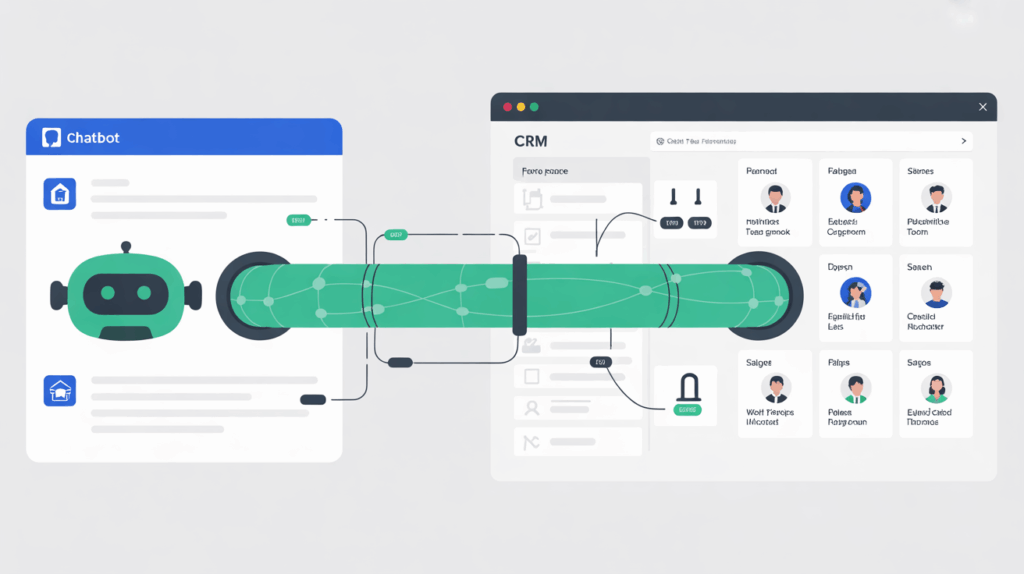
A lead generation chatbot is an extension of your sales team.
It needs to hand off leads smoothly and intelligently.
The goal is to move leads from automation to human interaction without dropping the ball.
This requires a robust ‘traffic to lead bot’ funnel and clear protocols.
Setting Up Human Takeover
Automation handles qualification, but humans close deals.
Define clear criteria for immediate human intervention.
If a lead meets the highest qualification score (e.g., large budget, urgent need), the bot must signal a live agent.
Human takeover should ideally occur within 30-60 seconds of this high-intent qualification.
This is crucial for managing high-value prospects instantly.
The chatbot should notify the agent and provide a transcript of the entire conversation.
The human agent can then step in, fully informed, maintaining a seamless experience.
Seamless Funnel Workflow with CRM
The conversational data must flow directly into your CRM.
This process ensures accurate lead scoring and timely follow-up.
What specific data points should you prioritize capturing?
- Source Information: Where did the lead come from (e.g., Google Ad, social campaign)?
- Qualification Variables: Budget, timeline, specific pain points mentioned during the chat.
- Chat Transcript: The full conversation history provides essential context for the sales team.
- Assigned Lead Score: The numerical score determined by the conditional logic.
When this workflow is optimized, your sales team saves hours weekly.
They focus only on high-intent, qualified leads.
This efficiency is paramount for small teams competing in crowded SaaS markets.
Continuous Optimization and A/B Testing
Your chatbot is not a ‘set it and forget it’ tool.
It requires ongoing refinement and analysis.
Analyze the drop-off points in the conversational flow.
Are users abandoning the chat when asked for their phone number?
Test different welcome messages and question phrasing for better engagement.
A/B test the timing of your behavioral triggers for maximum impact.
Small adjustments to the script can yield massive conversion gains.
Always review the data to understand user intent better and iterate quickly.
For SaaS companies, optimizing the initial lead capture funnel is critical for long-term growth. Detailed guides on this topic, such as those covering High-Converting Lead Gen Landing Page Examples, often highlight the necessity of iterative testing.
Using Pyrsonalize.com for Advanced Lead Capture
Building complex, integrated lead generation flows can be daunting.
This is especially true if you lack dedicated development resources.
Pyrsonalize.com simplifies this entire process for you.
Our AI Lead Generation SaaS platform provides pre-built conversational templates optimized for high conversion on landing pages.
We handle the complex integrations with your existing CRM and marketing stack.
You define the qualification criteria; the AI handles the conversation and scoring automatically.
This allows small businesses and SaaS founders to deploy enterprise-level lead capture capabilities without the enterprise budget.