


Choosing the right CRM is critical.
It dictates your sales velocity and efficiency.
For small businesses and SaaS companies focused on aggressive growth, the choice often narrows to two powerhouses: Close and Outreach.
Both platforms promise robust sales execution.
However, their core philosophies diverge significantly based on target market and operational complexity.
We are in 2025. Efficiency demands specialization, not generalization.
This comprehensive guide delivers a detailed Close vs Outreach lead generation features comparison.
We will help you determine which tool aligns best with your budget, team size, and specific AI-powered sales outreach goals.
Are you building an enterprise machine, or a high-velocity SMB engine?
Fundamental Differences: Audience and Philosophy
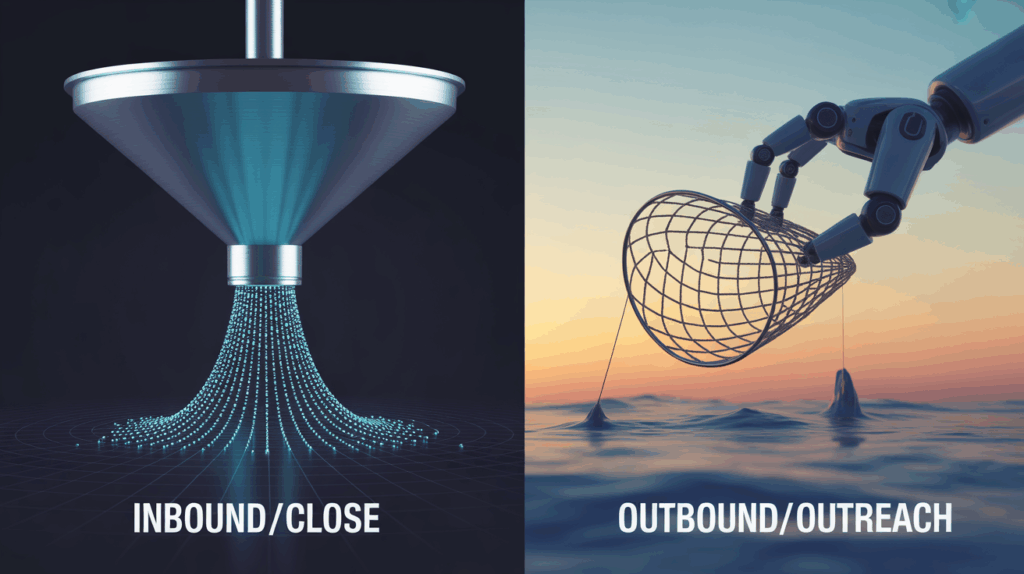
Understanding the intended customer base is the foundational step.
Close and Outreach are frequently compared, yet they serve drastically different operational models and business scales.
Outreach targets the large enterprise market.
It focuses heavily on deep data, machine learning insights, and complex sales enablement.
Close focuses on the small to mid-sized business (SMB) and startup market.
Its goal is maximum sales efficiency, speed of execution, and rapid implementation.
Close: The SMB Efficiency Engine
Close is engineered as a true all-in-one platform.
It was built to maximize your sales team’s productivity immediately upon deployment.
Think of it as a complete sales execution platform that requires zero external plugins for core communication functions.
This integrated approach is crucial for budget-conscious SaaS founders and service business owners.
Implementation is remarkably fast.
Onboarding is intuitive, often taking hours, not weeks.
A sales leader can deploy Close quickly, achieving a much faster velocity to product use and ROI.
What defines a typical Close customer?
- You need high-volume outreach via email, voice, or SMS.
- You must qualify large lead lists rapidly and efficiently.
- You prefer a unified, all-in-one system over managing disparate tools (reducing subscription sprawl).
- Your team requires powerful, built-in calling features (VoIP, Power Dialer, Predictive Dialing).
- You are looking for affordable, transparent pricing without hidden enterprise fees.
Close is ideal when sales efficiency software is your primary requirement.
It streamlines the daily performance and output of your lean team.
Outreach: The Enterprise Intelligence Platform
Outreach is a highly sophisticated Sales Execution Platform.
Its primary strength lies in robust sales reporting and predictive business intelligence.
Outreach is built heavily on machine learning algorithms and requires large, clean datasets to function optimally.
It provides predictive insights and deep analytics, crucial for managing complex, multi-layered sales cycles.
However, this power correlates directly with complexity and cost.
Outreach often requires dedicated Sales Operations (Sales Ops) team members and paid consulting services to manage the CRM effectively.
It frequently leans on expensive third-party applications for critical functionality that Close includes natively, increasing the Total Cost of Ownership (TCO).
Who benefits most from Outreach?
- Large enterprises needing advanced forecasting and multi-layered pipeline management.
- Organizations with dedicated Sales Operations and Enablement teams managing data streams.
- Teams seeking deep data-driven deal inspection and real-time in-meeting enablement via AI prompts.
- Businesses prioritizing AI-driven sequence optimization over sheer dialing volume capabilities.
If you have the resources for heavy investment in management and integration, Outreach offers unparalleled depth in strategic sales intelligence.
Core Lead Generation Features Deep Dive
Effective lead generation and sales outreach require specialized tools.
The functional gap between Close and Outreach is most visible in how they handle high-volume activity and system integration.
Both platforms offer sequencing, but their approach to execution differs dramatically.
Sales Outreach Capabilities (Calling, Email Sequences)
Outreach excels at high-impact sequences and playbooks.
These features automate the steps reps take to engage leads, ensuring consistency across a large enterprise team.
For organizations utilizing multiple channels for cold engagement, reviewing competitors and alternatives is vital. For example, exploring Best Apollo.io Alternatives for Cold Outreach in 2025 can provide context on sequencing tools.
Close, however, dominates the built-in, native communication features.
It integrates VoIP calling, SMS, and email directly into the CRM interface.
This unified approach is a massive advantage for high-volume sales teams focused on velocity.
What critical features are often missing or require expensive third parties in Outreach?
- VoIP and Power Dialing: Close includes these natively for maximizing call efficiency and minimizing manual dialing time.
- Predictive Dialing: Close offers this for high-speed list qualification, often boosting connect rates by 300% compared to sequential dialing.
- Call Coaching: Close has built-in features to help improve rep performance and quality assurance during live calls, reducing the need for separate QA software.
If your sales motion relies heavily on the phone, a critical component for many high-velocity SaaS and service businesses, Close provides superior out-of-the-box functionality.
The speed at which you reach a prospect matters immensely in the competitive landscape of 2025.
CRM Integration and All-in-One Functionality
The term “all-in-one” is frequently misused in software marketing.
In this comparison, it defines the necessity for external, paid third-party applications.
Close is genuinely an “all-in-one” solution.
You can run your entire sales cycle, from prospecting list upload to deal closing, entirely within the platform.
This drastically reduces integration headaches, eliminates data silos, and minimizes subscription sprawl.
Outreach, while powerful, often functions as a sales engagement layer built on top of or alongside a separate primary CRM (like Salesforce).
It necessitates complex integrations for core sales functions like pipeline management and deal tracking.
Do you want to manage several interconnected, expensive systems?
Or do you prefer a unified, seamless workspace?
For SMBs, reducing technical complexity is the key to resource optimization and growth speed.
Many organizations also utilize external CRM systems like Pipedrive for their pipeline management. If you are comparing core CRM functions, understanding the landscape is vital. Read our Pipedrive Lead Generation Free Trial Review 2025 for a deeper dive into alternative CRM capabilities.
Integrating lead generation tools like Pyrsonalize.com with an efficient, all-in-one CRM structure (like Close) ensures seamless lead capture and follow-up, maximizing the ROI of your AI automation efforts.
| Feature Category | Close (SMB/Velocity Focus) | Outreach (Enterprise/Intelligence Focus) |
|---|---|---|
| Calling Capabilities | Built-in VoIP, Power Dialer, Predictive Dialer, Call Coaching. Superior native calling features and quality assurance. | Requires third-party integration for advanced dialing, coaching, and telephony features, increasing TCO. |
| Platform Type | All-in-one CRM and Sales Engagement platform. Standalone use is highly effective and simple. | Sales Execution Platform often used alongside a primary CRM; requires extensive integrations and data sync management. |
| Reporting & Analytics | Custom reporting and analytics focused on daily sales performance, productivity metrics, and pipeline health. | Heavy machine learning, business intelligence, predictive insights, and deep deal inspection across large data sets. |
| Implementation Speed | Fastest onboarding and adoption rates (days); easy for sales leaders to implement immediately without IT. | Complex setup requiring dedicated resources and paid consulting for effective scaling and data structuring (weeks/months). |
| Ideal Audience | Startups, SMBs, and growing sales teams focused on productivity and cost-effectiveness. | Large enterprise sales organizations with complex hierarchies, dedicated ops, and multi-million dollar enablement budgets. |
Assessing Cost, Scalability, and Implementation

Cost is rarely limited to the monthly subscription fee.
When evaluating lead generation tools, you must calculate the true Total Cost of Ownership (TCO).
TCO includes integration costs, training time, and the expense of necessary third-party applications.
This is where the Close vs Outreach lead generation features comparison reveals the most significant financial differences.
Total Cost of Ownership (TCO) Analysis
Outreach pricing is notoriously opaque.
It typically targets enterprise budgets, meaning high per-seat costs are expected.
More critically, Outreach’s need for expensive third-party applications adds substantial hidden costs and vendor management overhead.
Need advanced VoIP or Predictive Dialing? That is often an extra subscription or integration fee.
Need specialized reporting or custom dashboards? That might require expensive consulting hours.
Close offers competitive and transparent pricing tiers.
Its “all-in-one” nature means core features like VoIP, power dialing, SMS, and email sequences are included natively.
This consolidation significantly lowers the peripheral costs for SMBs and growing teams.
The inherent value proposition of Close is maximizing productivity without financial surprises or mandated minimum seat counts.
For growing businesses, predictability in the sales tech budget is paramount.
Let’s look closely at the resource implications:
- Software Sprawl: Outreach requires managing multiple subscriptions and integrations (e.g., separate dialers, separate CRMs, separate QA tools). Close consolidates these functions, simplifying vendor management dramatically.
- Dedicated Management: Outreach often necessitates a dedicated Sales Ops team member just to maintain system health and manage data integrations. Close is designed for sales leaders to implement quickly without heavy IT involvement.
- Support Costs: Close offers free support and migrations, ensuring a smoother transition and continuous assistance without mandatory professional services fees.
Speed of Adoption and Team Training
Time to value (TTV) is a key competitive metric in 2025.
How quickly can your new reps start generating qualified leads?
Close is renowned for its fast onboarding and intuitive design.
Its user interface prioritizes sales efficiency and activity logging, not enterprise complexity.
This minimal design minimizes the learning curve.
New hires can ramp up and begin using the platform effectively in days, often achieving full utilization within one week.
Outreach, due to its deep feature set and reliance on complex machine learning models, requires a more intensive training investment.
Teams must be thoroughly trained not just on basic sequences, but on utilizing the advanced analytics, playbooks, and integration points.
If your team size is small or you experience high sales team turnover, the low adoption hurdle of Close is a massive operational benefit.
Reducing ramp time directly and immediately impacts pipeline generation metrics.
Strategic Alignment: Choosing Your 2025 Lead Gen Tool

The final decision ultimately rests on your strategic sales goals.
Are you focused on volume, speed, and immediate productivity gains?
Or are you building a complex, data-intensive sales machine that prioritizes predictive forecasting and global consistency?
When to Choose Close for AI Lead Generation
Close aligns perfectly with the modern AI lead generation needs of SMBs and mid-market companies.
AI tools, like Pyrsonalize.com, focus on feeding high-quality, pre-qualified leads into your funnel.
You need a CRM that can handle the subsequent high-volume outreach with maximum efficiency and minimal friction.
Close’s built-in calling features, native dialers, and unified platform ensure maximum velocity in lead follow-up and faster conversion rates.
This execution speed is crucial for converting warm leads generated by sophisticated AI campaigns.
If your strategy involves:
- Quickly acting on high-intent leads generated by AI tools.
- Prioritizing direct communication (phone/SMS) to close deals faster (velocity selling).
- Maintaining a lean, highly productive sales team that requires minimal Ops support.
- Seeking a unified view without relying on expensive, complex integrations.
Choose Close.
It provides the necessary infrastructure to handle the high output of scalable Targeted Buyer Persona for AI Lead Gen campaigns.
When to Choose Outreach for Sales Intelligence
Outreach excels when deep data analysis dictates every strategy change.
If you have dedicated Sales Enablement staff who spend significant time modeling sequence performance, A/B testing hundreds of variables, and inspecting deal health, Outreach is the better fit.
Its machine learning insights provide a strategic competitive advantage in complex, long sales cycles typical of large, established enterprises.
Consider Outreach if:
- Your organization requires deep, predictive forecasting driven by proprietary AI algorithms.
- You have the budget and staffing for ongoing, complex CRM management and consulting.
- Your sales process relies heavily on multi-channel sequences across vast, segmented prospect lists.
- You need high-level consistency across hundreds of sales representatives globally, governed by strict compliance rules.
This Close vs Outreach lead generation features comparison shows that Outreach is a strategic investment in intelligence and control, while Close is an investment in execution speed and efficiency.
Both are powerful tools.
Their utility depends entirely on the size, complexity, and scope of your specific operation.
Do not overcomplicate your tech stack if speed is your primary competitive edge.