


Unlocking Your Niche Blog’s Potential: Mastering AdSense RPM
You’ve poured your heart and soul into building a thriving niche blog, attracting a dedicated audience. Now, the crucial question: how do you transform that traffic into substantial, scalable revenue? The answer lies in optimizing your AdSense RPM.
AdSense Revenue Per Mille (RPM), or revenue per thousand impressions, is the key metric that separates a hobby blog from a serious income stream. It’s the bottleneck that, when widened, can significantly boost your earnings. But in the evolving digital landscape of February 2026, simply churning out more content isn’t enough.
The old adage of “volume over value” is obsolete. Google’s increasing emphasis on E-E-A-T (Experience, Expertise, Authoritativeness, and Trust) isn’t just an SEO ranking factor; it’s a powerful monetization signal. Think of it this way: high-quality, authoritative content attracts premium advertisers willing to pay a premium for access to your engaged audience.
Why? Because they trust your inventory. They know that ads displayed alongside credible, informative content are more likely to resonate with users and drive conversions. This is the core principle of our strategic blueprint for niche publishers.
Let’s break down exactly what RPM means. RPM is calculated by dividing your estimated earnings by the number of page views you received, then multiplying by 1000. For example, if you earned $5 from 500 page views, your RPM would be ($5 / 500) * 1000 = $10. Understanding this calculation is the first step to optimizing it.
This blueprint focuses on two high-impact areas:
- Contextual Relevance Engineering: Crafting content that is laser-focused on your niche, attracting highly targeted traffic and premium advertisers.
- Ad Tech Optimization: Implementing advanced strategies to maximize the value of each ad impression, including ad placement, ad formats, and potentially exploring header bidding.
By mastering these two areas, you can bypass the low-CPM trap and demand higher auction rates for your ad inventory. This guide will provide actionable strategies to increase your AdSense RPM and unlock the true earning potential of your niche blog. We’ll provide strategies to increase your AdSense RPM and unlock the true earning potential of your niche blog. We’ll explore factors like ad placement best practices (beyond simple manual placement), the impact of different ad formats (e.g., native ads vs. display ads), and troubleshooting common issues that lead to low RPMs. We’ll also explore the importance of mobile optimization, ad viewability, and even touch upon alternatives like header bidding to further boost your revenue.
Actionable Strategies to Skyrocket Your Niche Blog’s AdSense RPM
Ready to translate these concepts into tangible results? Here are the key takeaways, transformed into actionable strategies you can implement today to significantly boost your AdSense RPM:
- Contextual Relevance is King: Dominate High-Value Keywords
Stop chasing broad, low-paying keywords. The future of AdSense RPM lies in hyper-focused contextual relevance. Shift your content strategy to aggressively target specific, high-intent commercial keywords, particularly in B2B niches. Think SaaS solutions, financial services, insurance products, and high-end consulting. These keywords attract advertisers willing to pay significantly more; often 5x or even 10x the average CPM. For example, instead of “small business tips,” target “best CRM software for SaaS startups.” This precision targeting ensures your ads are seen by the right audience, driving up their value.
Actionable Step: Conduct thorough keyword research using tools like Semrush or Ahrefs to identify high-CPC, low-competition keywords within your niche. Then, create in-depth, authoritative content that comprehensively addresses the user’s search intent.
- Speed is Revenue: Optimize for Viewability and Core Web Vitals
A fast-loading, user-friendly website is vital for maximizing ad revenue. Implement a combination of manual ad unit placement, strategically placing ads where they’re most likely to be seen without disrupting the user experience, and lazy loading, loading ads only when they’re about to enter the viewport. This powerful combination can achieve 70%+ ad viewability while maintaining excellent Core Web Vitals performance. Remember, Google prioritizes user experience, and a slow site will be penalized, impacting your traffic and, ultimately, your AdSense RPM.
Actionable Step: Use Google’s PageSpeed Insights to identify and address any performance bottlenecks on your site. Implement lazy loading for all ad units and experiment with different ad placements to find the optimal balance between viewability and user experience. Consider using a caching plugin to further improve site speed.
- Geo-Target for Maximum Impact: Focus on Tier 1 Traffic
Not all traffic is created equal. Aggressively target Tier 1 countries, US, UK, Canada, Australia, where advertisers are willing to pay significantly higher CPMs. Use highly specific language, cultural references, and long-tail keywords that resonate with these audiences. For example, instead of “best vacuum cleaner,” target “best vacuum cleaner for pet hair in small apartments UK.” This level of specificity instantly boosts your effective RPM by ensuring your ads are relevant to the user’s location and interests.
Actionable Step: Use Google Analytics to identify the geographic distribution of your traffic. If you’re not already attracting a significant amount of Tier 1 traffic, adjust your content strategy and SEO efforts to target these regions. Consider using location-specific keywords and creating content that addresses the unique needs and interests of users in these countries.
- Take Control with Floor Pricing: Filter Out Low-Value Bids
Don’t let low-paying ads drag down your AdSense RPM. Utilize AdSense’s minimum pricing controls to filter out low-value bids and ensure that only the highest-paying ads are displayed on your site. This simple yet effective strategy increases the average value of every single served impression, leading to a significant boost in overall revenue. Think of it as setting a minimum acceptable price for your ad inventory.
Actionable Step: Experiment with different floor prices to find the optimal balance between fill rate, the percentage of ad requests that are filled with an ad, and revenue. Start by gradually increasing your floor price and monitoring your RPM and fill rate. If your fill rate drops too low, slightly reduce the floor price until you find a sweet spot.
I. Understanding the Niche Publisher’s AdSense RPM Challenge
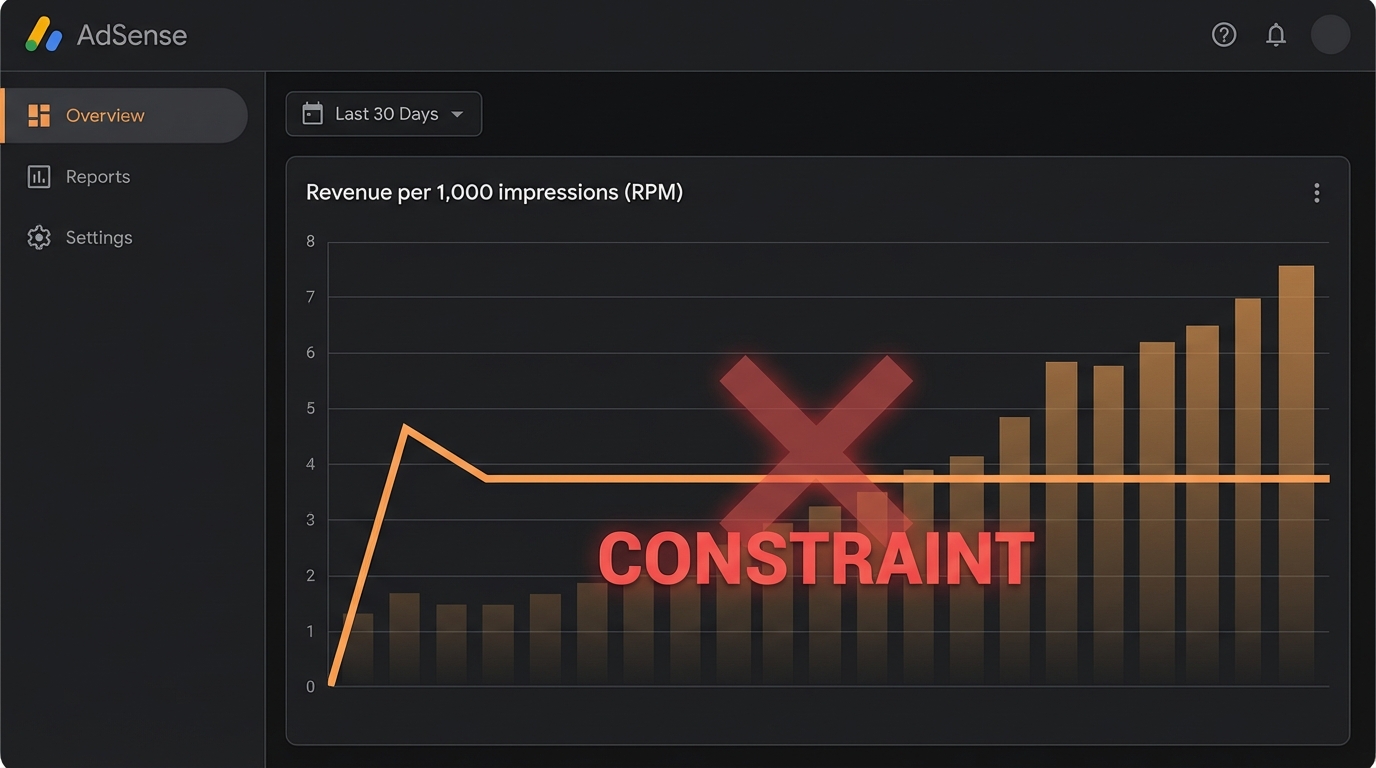
Niche publishing offers incredible potential, but many expert bloggers face a frustrating reality: low AdSense RPM despite highly engaged audiences. You’ve cultivated a loyal following, established your expertise, and consistently deliver valuable content; yet, your revenue doesn’t reflect the true worth of your traffic. Why is this the case?
The core problem lies in the inherent limitations of the AdSense auction system; while AdSense is a powerful platform, it often struggles to accurately value specialized traffic. This is particularly true for niche blogs with lower overall traffic volume. The algorithm may treat your highly relevant audience as just another commodity, leading to significantly undervalued ad impressions.
Consider this: a general news site might get thousands of page views on a generic article, but the value of each impression is low because the audience is broad and unspecific. Your niche blog, on the other hand, might only get a few hundred views on a highly specialized piece of content, but those views are from a laser-targeted audience actively seeking information related to a specific product or service. Advertisers should be willing to pay a premium for that level of targeting, but AdSense doesn’t always reflect this in the RPM.
For example, a blog focused on “quantum computing algorithms” might attract a highly technical audience of PhDs and research scientists. These individuals are likely involved in influencing purchasing decisions for cutting-edge technology. Advertisers in this space would gladly pay a premium to reach them; however, if AdSense treats this traffic the same as generic “tech news” traffic, the resulting RPM will be far lower than it should be.
This often results in unsustainable RPMs in the $1-$3 range, making it difficult to scale your blog and justify the time and effort invested in creating high-quality content. This is the “RPM constraint”, the bottleneck that prevents niche publishers from reaching their full earning potential.
To combat this undervaluation, we need to shift our focus from simply generating more traffic to maximizing the value of each impression. This means strategically targeting high-intent keywords, optimizing ad placements for maximum visibility, and potentially exploring alternative monetization strategies like header bidding to compete with AdSense’s pricing.
Remember, AdSense RPM is calculated as: (Estimated Earnings / Number of Page Views) x 1000. Increasing your RPM means increasing your earnings per thousand page views, and that’s the key to unlocking sustainable revenue growth for your niche blog.
The goal is not just more impressions; it’s higher-value impressions. This requires a strategic pivot:
- Stop focusing solely on traffic volume.
- Start prioritizing commercial intent and strategic ad placement.
By implementing these strategies, you can potentially increase your revenue by 50% or more without significantly increasing your organic traffic. It’s about working smarter, not harder, to unlock the true earning potential of your niche blog. Consider that many publishers in the financial niche saw a 60% RPM increase in 2025 by focusing on long-tail, high-intent keywords related to specific investment strategies.
Let’s consider a real-world example. Imagine two blogs: one covering “general cooking tips” and another focused on “sous vide recipes for Wagyu beef.” The latter, while having a smaller audience, attracts advertisers selling high-end kitchen equipment and premium food products, resulting in a significantly higher AdSense RPM.
II. Strategy 1: Engineering Contextual Authority to Maximize AdSense RPM

With third-party cookies fading into obsolescence, contextual targeting is now more important than ever. Attracting traffic isn’t enough; you need the right traffic. This is especially true in B2B, where CPMs can exceed $50 for highly targeted audiences.
This strategy is about building undeniable contextual authority. Make your content the definitive resource for B2B bidders seeking your specific audience. Engineer a perception of expertise and relevance that justifies higher ad rates and boosts your AdSense RPM.
Step 1.1: Identifying and Scaling High-Value Commercial Keyword Clusters
Reverse-engineer your revenue. Don’t guess which keywords might work; analyze existing data to see what already does. This data-driven approach focuses your efforts on proven revenue generators.
- Audit Your AdSense Data: Find the 5-10 articles driving the majority (60%+) of your revenue. These pages contain the commercial keywords your audience uses when ready to buy.
- Pivot from ‘How-To’ to ‘Tool’: General info is fine, but it doesn’t attract high-paying advertisers. Shift from broad “how-to” guides to specific product reviews, comparisons, and best-of lists. Instead of “How to Improve Small Business Productivity,” focus on “Best CRM Software for X Industry 2026” or “Cost Comparison: Tool A vs. Tool B.”
- Analyze Bid Gaps with Advanced SEO Tools: Use tools like Semrush, Ahrefs, or Moz to find keywords with consistently high CPCs, ideally $5+. These keywords represent the advertisers you want. Look for gaps between organic ranking difficulty and potential CPC. This indicates an opportunity to rank for a high-value keyword with relatively less effort.
- Build Topical Depth and Authority: Create comprehensive content clusters around your high-value commercial keywords. Develop interconnected articles, guides, and resources covering the topic in depth. For example, if targeting “Best CRM Software for X Industry 2026,” create articles on:
- A detailed comparison of top CRM software options for that industry.
- Case studies of businesses in that industry successfully using CRM software.
- A guide to choosing the right CRM software for your specific needs.
- Reviews of individual CRM software products.
This signals to Google’s indexing system, and ad exchanges, that you’re the definitive source. It also improves user experience, increasing engagement and ad viewability.
This attracts B2B SaaS companies, financial institutions, and specialized service providers willing to pay for high intent. By focusing on commercial keywords and building topical authority, you can significantly increase your AdSense RPM.
Step 1.2: Geo-Targeting for Maximum Revenue: Locking in Tier 1 Traffic
AdSense RPM is geographically dependent. Advertisers in Tier 1 countries (US, UK, Canada, Australia) pay significantly higher CPMs. CPMs in Tier 1 can be 5-10 times higher than in Tier 2 or Tier 3.
If your traffic is global, optimize for Tier 1 intent. Prioritize quality over quantity, attracting a smaller, more valuable audience from these high-paying regions.
- Jurisdictional Specificity: Use language, currency, and legal frameworks specific to Tier 1 countries. Instead of “tax regulations,” focus on “IRS regulations” (US) or “UK VAT processes” (UK). This signals relevance to users and advertisers.
- Long-Tail Filtering: Add geographic qualifiers to your high-value commercial keywords. Instead of “Top Payroll Solutions,” target “Top 5 Payroll Solutions for Canadian Startups” or “Best Accounting Software for Small Businesses in Australia.”
- Internal Link Weight: Use high-authority pages to link to pages targeting Tier 1 commercial intent. This concentrates link equity where the money is, boosting rankings in Tier 1 search results.
- Localize Examples and Case Studies: Focus on businesses and situations relevant to Tier 1 audiences. This builds trust and credibility.
You may sacrifice some global traffic, but you’ll gain higher revenue density. It’s about the right traffic. By focusing on Tier 1 geo-targeting, you can dramatically increase your AdSense RPM.
Step 1.3: Leveraging E-E-A-T to Unlock Premium Ad Inventory and Boost AdSense RPM
Ad exchanges categorize websites based on perceived quality. E-E-A-T (Experience, Expertise, Authoritativeness, and Trustworthiness) is key. A higher E-E-A-T score classifies your ad inventory as “premium,” justifying higher bids from brand advertisers. Think of E-E-A-T as the gatekeeper to higher AdSense RPM.
Google’s algorithms are increasingly sophisticated at evaluating E-E-A-T. Demonstrate these qualities throughout your website and content.
- Author Credentials: Every piece of content, especially commercial reviews, must be tied to an author with verifiable expertise. Generic bylines dilute authority. Include author bios with links to professional profiles (e.g., LinkedIn) and highlight relevant experience. A review of accounting software should be written by a CPA or someone with accounting experience.
- Original Data and Research: Integrate unique data, proprietary case studies, or original research. This establishes authority in a way that AI-generated content cannot. Conduct surveys, analyze industry trends, or perform experiments to generate original data.
- Content Scaling Systems: Maintaining high E-E-A-T requires a scalable content creation system. Produce high-quality content consistently without sacrificing expertise. Consider specialized talent, such as subject matter experts, technical writers, and experienced editors. Review our blueprint for applying these principles: You must scale high-quality content without sacrificing expertise. Start by reading The 2026 Blueprint for a Technical Writing Business.
- Transparency and Accuracy: Be transparent about sources and methods. Cite sources accurately and provide clear explanations of research methodologies. Correct errors promptly and be upfront about potential biases.
- User Reviews and Testimonials: Encourage users to leave reviews. Positive reviews build trust and credibility with potential advertisers.
III. Strategy 2: Technical AdSense Optimization: Speed, Viewability, and Pricing
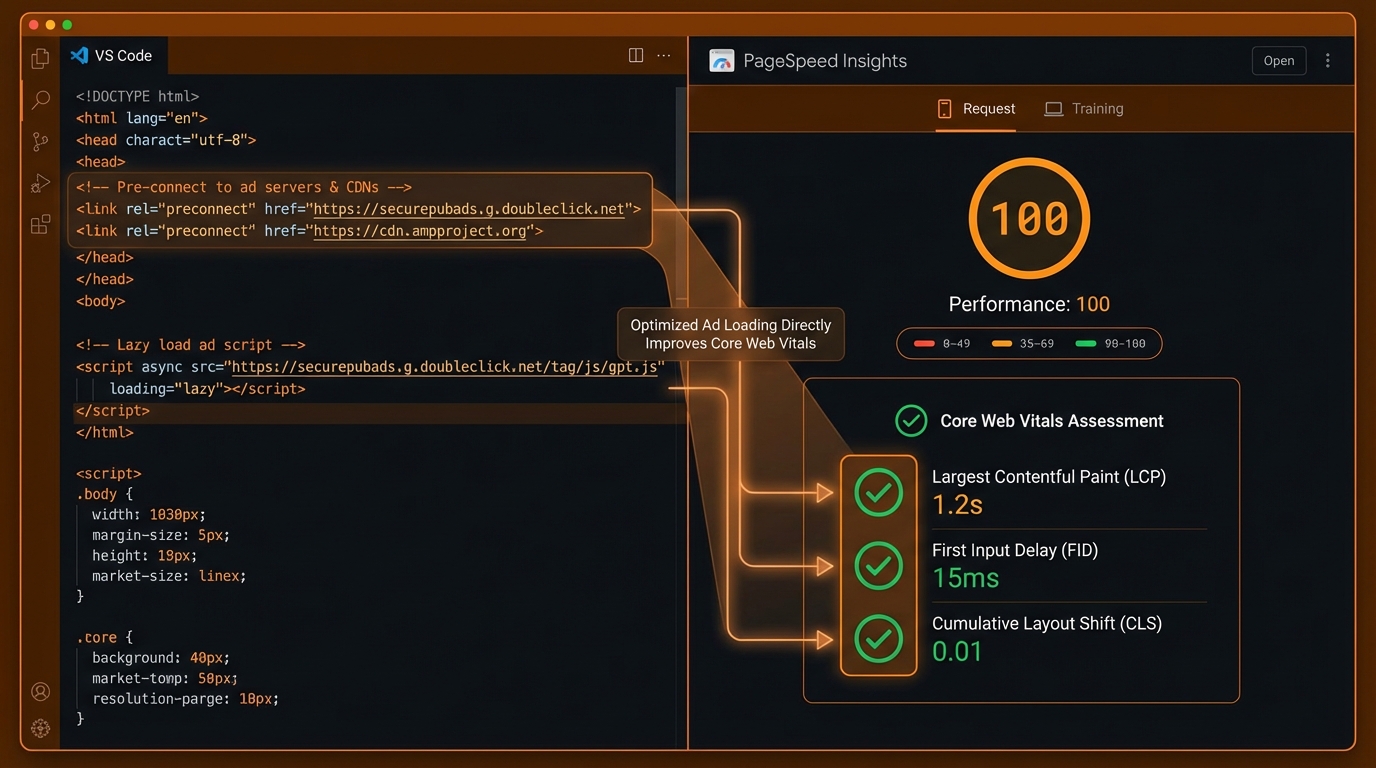
Technical optimization is a core element to maximize your AdSense RPM; it’s not just an afterthought. Think of it as tuning a high-performance engine. Even the best content will underperform if your site is slow, ads are poorly placed, or settings aren’t optimized. Site speed impacts ad viewability, and low viewability decimates potential earnings. Technical inefficiencies start a domino effect that ends with a lower AdSense RPM.
This strategy focuses on technical adjustments to improve user experience, boost ad viewability, and command higher ad rates. We’re talking about controlling your ad setup, optimizing for Core Web Vitals, and strategically pricing your ad inventory.
Step 2.1: Mastering Ad Placement: Beyond Auto-Ads
AdSense’s Auto-Ads offer convenience, but often lack the precision for optimal performance. Manual control over ad placement is essential for niche publishers aiming to maximize their AdSense RPM. Auto-Ads can lead to poor placement, intrusive experiences, and lower revenue. Be the architect of your ad layout, not a passive observer.
- Take Control: Disable Auto-Ads and use manual ad unit placement. This gives you control over ad placement, allowing strategic positioning for maximum visibility and engagement.
- Above-the-Fold (ATF) Optimization: Place a high-impact, responsive ad unit immediately after your second paragraph. This prime real estate guarantees maximum initial viewability, capturing user attention. Ensure this ad doesn’t contribute to Cumulative Layout Shift (CLS) by reserving space.
- Strategic In-Content Placement: Experiment with placing ads within your content, breaking up long blocks of text for a seamless ad experience. Consider using “in-article” ads that blend naturally, minimizing disruption and maximizing engagement.
- Sidebar Optimization: If using a sidebar, strategically place ads in prominent positions, such as near the top or bottom. Ensure these ads are relevant to the page content to maximize effectiveness.
- Mobile Optimization: Optimize ad placements for mobile devices, ensuring ads are easily viewable and don’t disrupt the user experience. Use responsive ad units that adapt to different screen sizes. Mobile devices account for approximately 60% of web traffic, according to Statista, so mobile optimization is critical for maximizing your AdSense RPM.
Step 2.2: Supercharging Site Speed: Core Web Vitals and Ad Performance
Site speed is a critical ranking factor and major influence on your AdSense RPM. Slow loading times lead to higher bounce rates, lower engagement, and reduced ad viewability. Google’s Core Web Vitals (Largest Contentful Paint (LCP), First Input Delay (FID), and Cumulative Layout Shift (CLS)) are key metrics for measuring user experience; optimizing for these is essential for maximizing ad revenue.
- Lazy Load Ads: Implement lazy loading for all ad units below the fold. This means ads only load when they are about to enter the viewport, reducing initial page load time and improving user experience.
- Asynchronous Ad Loading: Ensure ad scripts load asynchronously, preventing them from blocking the main thread and slowing down page rendering. This allows content to load quickly, even if the ad scripts are still loading in the background.
- Optimize Images: Compress and optimize all images to reduce file size and improve loading times. Use modern image formats like WebP, which offer superior compression and quality compared to traditional formats like JPEG and PNG.
- Browser Caching: Implement browser caching to store static assets (e.g., images, CSS, JavaScript) in the user’s browser, reducing the need to download them on subsequent visits.
- Minimize HTTP Requests: Reduce the number of HTTP requests required to load your page by combining CSS and JavaScript files, inlining critical CSS, and using CSS sprites.
- Content Delivery Network (CDN): Use a CDN to distribute content across multiple servers, ensuring users can access your site quickly and reliably, regardless of their location.
Step 2.3: Strategic Floor Pricing: Maximizing Revenue Per Impression
AdSense’s floor pricing feature allows you to set a minimum CPM (Cost Per Mille) for your ad inventory. Only ads with a CPM above your specified floor price will be displayed. This is a powerful tool for filtering out low-value bids and maximizing your AdSense RPM, but implement floor pricing strategically to avoid negatively impacting your fill rate (the percentage of ad requests that are filled with an ad).
A conservative approach to floor pricing can yield gains in AdSense RPM without drastically reducing fill rate. More aggressive strategies can further boost revenue, but require careful monitoring and adjustment.
| Strategy | Recommended Floor Price (CPM) | Expected Fill Rate Change | Expected RPM Change |
|---|---|---|---|
| Baseline (No Floor) | $0.00 | High (95%+) | Low / Baseline |
| Conservative Filter | $0.50 – $0.75 | Minimal reduction (90-95%) | +10% to +15% |
| Aggressive Niche Filter | $1.00 – $1.50 | Moderate reduction (75-85%) | +25% to +40% (Monitor closely) |
The optimal floor price will vary depending on your niche, traffic quality, and ad inventory. Experiment with different floor prices and closely monitor your RPM and fill rate to find the sweet spot. If your fill rate drops too low, slightly reduce the floor price until you find a balance that maximizes revenue without sacrificing too many impressions.
Step 2.4: Exploring Advanced Ad Formats and Technologies
Beyond standard display ads, experiment with different ad formats and technologies to further boost your AdSense RPM. Native ads, for example, blend seamlessly with content, providing a less intrusive and more engaging ad experience. Video ads can also command higher CPMs, particularly if they are relevant to your audience and content.
Explore the potential of header bidding, an advanced advertising technology that allows you to offer your ad inventory to multiple ad exchanges simultaneously. This can increase competition for your ad inventory, leading to higher CPMs and a boost in your AdSense RPM. While header bidding requires more technical expertise to implement, the potential revenue gains can be substantial.
IV. Beyond AdSense: Building a System for Scalable Revenue

Optimizing your AdSense RPM is a key step, but not the final goal. AdSense is the foundation for a diversified revenue system. Sole reliance on AdSense leaves you open to algorithm shifts, fluctuating ad rates, and a single income source. The aim is to use insights from AdSense optimization to create a robust business model.
Many niche publishers fixate on AdSense, constantly seeking higher RPMs. Smarter publishers see AdSense as a data source and a revenue stream to optimize, not just depend on. The power lies in using that traffic and authority to build owned revenue streams.
This section details the shift from AdSense dependence to a system with multiple income streams, giving you control and sustainability. This means qualifying for premium ad networks or, more strategically, moving to higher-margin revenue models.
We recommend building your own revenue ecosystem. This future-proofs your income and unlocks your niche blog’s potential.
Step 3.1: Building the Foundation: Premium Network Qualification Metrics
Even if you don’t want to join a premium ad network, optimizing to meet their requirements is valuable. Networks like Mediavine and Raptive want high-quality traffic, strong engagement, and a clean user experience. Use AdSense optimization as a site cleanup period. This ensures you meet profitability thresholds and creates a better foundation for all monetization.
- Session Depth: Premium networks want high engagement. Aggressive internal linking is mandatory. Every article must guide users deeper into your content cluster, encouraging exploration. Aim for 2.0+ pages per session, ideally 3.0 or higher.
- Bounce Rate: A high bounce rate signals user dissatisfaction. Lower your bounce rate through fast loading times, compelling content, and relevant internal links. A bounce rate below 50% is good, below 40% is excellent.
- Compliance: Premium networks are strict about user consent and legal liability. Ensure full GDPR and CCPA compliance, including a clear privacy policy and a robust cookie consent banner.
- Traffic Volume: Most premium networks require 50,000+ sessions per month. Even if you don’t join, this shows your site’s value.
Step 3.2: Diversify Revenue Streams: Taking Control of Your Value
The highest returns come from owning the product or service. Display ads provide income and fund content creation. However, the real opportunity is selling specialized solutions directly to your niche traffic. This unlocks higher profit margins and builds a sustainable business.
Consider a hybrid model: Display ads fund content, while product sales drive 100% of the profit. Reinvest ad revenue into high-quality content, expanding reach and authority.
Start experimenting with high-margin assets:
- Digital Products: Create and sell e-books, templates, online courses, or niche guides that address audience needs. Package your expertise into valuable resources. Learn how to launch quickly by reviewing the Building A Digital Product Empire Using PLR Content blueprint.
- Affiliate Funnels: Automate recommending high-commission B2B tools relevant to your content. Create targeted funnels that guide users through buying, providing information and recommendations. This is detailed in The 2026 Blueprint for Automated Affiliate Funnels.
- Membership Programs: Offer exclusive content, resources, and community access to paying members. This provides recurring revenue and fosters a stronger connection.
- Consulting Services: Offer consulting services to businesses in your niche. This can be lucrative, especially with a strong reputation.
Step 3.3: Shifting the Metric: From RPM to Revenue Per Visitor (RPV)
The goal is to control the entire monetization system, owning the flow from lead generation (traffic) to conversion (product/service). When you achieve this, your AdSense RPM matters less. You shift to Revenue Per Visitor (RPV), a superior metric that reflects your monetization strategy’s effectiveness.
RPV measures total revenue from each visitor, regardless of ad clicks, product purchases, or service sign-ups. This provides a holistic view and allows you to optimize your entire funnel, not just ad revenue.
To calculate RPV, divide total revenue by unique visitors. For example, $1,000 revenue from 10,000 visitors equals $0.10 RPV.
By focusing on RPV, you can increase the value of each visitor through improved ad placements, effective promotions, or a better user experience. This builds a sustainable business, less reliant on AdSense fluctuations.
Stop Trading Time for Clicks.
You have the authoritative traffic. Now, monetize it directly. Stop relying on inconsistent ad metrics and start finding the personal emails and direct contact information of your ideal B2B clients using our AI lead generation platform.
This is how you control RPV, not RPM. Start Your Free Trial today.
Start Your Free TrialDeeper Dive: Resources and Further Reading on AdSense RPM Optimization
To truly master AdSense RPM optimization and build a thriving niche blog in 2026, continuous learning is key. Staying updated with the latest industry trends is essential. This section provides a curated list of resources for deepening your understanding. Explore advanced strategies for maximizing your ad revenue.
These resources cover a range of topics. They range from understanding AdSense and RPM fundamentals to exploring advanced techniques. Ad placement, ad format optimization, and troubleshooting are covered. Mobile optimization, ad viewability, and header bidding are also explored.
- Understanding AdSense Fundamentals:
- Google AdSense Help Center: The official resource for all things AdSense. Explore documentation, troubleshooting guides, and best practices. Maximize your ad revenue. (https://support.google.com/adsense/?hl=en)
- “RPM for Publishers: The Complete Guide to Maximizing Your Revenue” – Aditude: This guide provides an overview of RPM. It includes its calculation, influencing factors, and actionable strategies. Increase your earnings. (https://www.aditude.com/blog/rpm-for-publishers)
- Advanced Ad Placement and Optimization:
- “What is the best way to monetize a blog in 2026” – Productive Blogging: Explores monetization methods. It includes advanced ad placement strategies. Optimize your ad layout for maximum viewability and engagement. (https://www.productiveblogging.com/what-is-the-best-way-to-monetize-a-blog/)
- Heatmap Analysis Tools (e.g., Crazy Egg, Hotjar): Track user behavior on your site. Identify areas where users are most engaged. Strategically place ads in high-visibility areas. Optimize your ad layout for maximum performance.
- Mobile Optimization and Ad Viewability:
- Google’s Mobile-Friendly Test: Ensure your site is mobile-friendly. Provide a seamless user experience on all devices. Maximize ad viewability and revenue. Mobile devices account for a significant portion of web traffic. (https://search.google.com/test/mobile-friendly)
- Google PageSpeed Insights: Analyze your site’s performance. Identify opportunities to improve loading times and Core Web Vitals. Faster loading times lead to higher ad viewability. Improve user engagement. (https://developers.google.com/speed/pagespeed/insights/)
- Exploring Alternative Monetization Strategies:
- “How To Make Money Blogging: 11 Proven Methods for 2026” – Shopify: Explores monetization methods beyond AdSense. It includes affiliate marketing and selling digital products. Offer consulting services. (https://www.shopify.com/blog/make-money-blogging)
- Header Bidding Resources: Research header bidding. Explore the potential benefits of implementing this advertising technology. Consider consulting with a header bidding expert. Determine if it’s the right solution for your niche blog.
- Staying Updated with Industry Trends:
- Industry Blogs and Publications (e.g., AdExchanger, Marketing Land): Stay informed about the latest trends. Learn about new technologies, strategies, and best practices. Maximize your ad revenue.
- “Boost Your Website Ad Earnings in 2026 | upGrowth”: Provides insights into strategies. Boost website ad revenue in the current digital landscape. (https://upgrowth.in/website-ad-revenue-metrics-2026/)
- “How to Future-Proof Your Blog for 2026: AI SEO + Alternative Traffic …” – YouTube: Explores strategies for future-proofing your blog. It includes AI for SEO and alternative traffic sources. (https://www.youtube.com/watch?v=i2wdUDTm4SM)
Remember, increasing your AdSense RPM is a continuous process. Stay informed, experiment with new strategies, and adapt to the ever-changing digital landscape. Success in 2026 requires agility and a commitment to ongoing optimization.
By combining the strategies outlined in this blueprint with the resources provided, you’ll be well-equipped to unlock the true earning potential of your niche blog and achieve sustainable revenue growth. Don’t just aim for higher RPM; aim for a thriving, profitable online business. The future of niche publishing is bright, and with the right approach, you can be a part of it.