


You are not looking for a freelance gig. You are building an enterprise.
Most guides focus entirely on the craft: grammar, structure, or landing that first $50/hour contract.
That is the wrong focus. Writing is the product. The business structure is the engine that generates predictable revenue.
A technical writer who scales successfully in 2026 does not just write documentation.
They establish a legal firewall. They optimize their financial workflow. They implement a scalable client acquisition system.
We know this because our internal content teams, who produce complex, strategic guides daily, operate under the same rigorous operational requirements we outline here. We treat content production as a high-value, high-risk business unit,not a hobby.
This guide is the blueprint for launching a legally sound, high-leverage technical writing business. We skip the basic writing tips. We move straight into the administrative and operational infrastructure required to scale past $100k annually.
Key Takeaways for Founders
- Freelancing is not a business. You must establish a legal structure (LLC is recommended) and separate your banking immediately.
- Portfolio quality supersedes degrees. Focus on 3-5 high-value samples (API docs, SaaS tutorials) over academic credentials.
- Insurance is non-negotiable. Errors & Omissions (E&O) insurance protects your personal assets from client liability issues.
- The Operational Stack drives profit. Implement a CRM and contract management software before accepting your second client.
- Pricing must be value-based. Abandon hourly rates to scale revenue without trading more time for money.
Pillar I: Professional Requirements (Building the High-Value Asset)

Validate the product before formalizing the business. Your product is your specialized writing skill set, targeted at a profitable niche.
The 2026 market punishes generalists. It rewards specialists. Focus on solving complex problems efficiently: That is the path to predictable revenue.
Step #1: Master Simplification, Not Technical Wizardry
Stop waiting for a Computer Science degree. That is a strategic misconception.
Your value is not writing code. Your value is translating complex developer knowledge into simple, actionable content for the end-user.
“The technical writer is the reader’s advocate. If you understand the problem, you can explain it. If you cannot explain it, the SME failed to communicate, or you need better research.”
This means your core skills must be sharp:
- Audience Empathy: Pinpointing user pain points and knowledge gaps instantly.
- Information Architecture: Structuring documentation logically (DITA, Markdown, structured authoring).
- SME Extraction: Mastering the interview process with engineers and PMs to extract core data fast.
Step #2: Create a Portfolio of Measurable Value
Your portfolio is your primary sales mechanism. It must demonstrate capability in the documentation types that command high rates.
Ditch the generic blog posts. Focus only on complexity and mastery of process.
Mandatory Portfolio Samples (3-5 required):
- API Documentation Sample: Show how you structure reference documentation. Include parameters, response codes, and working examples.
- SaaS Feature Tutorial: A step-by-step guide for a complex software feature. Focus on clarity, visual aids, and optimized task flow.
- Internal Policy/SOP: A sample Standard Operating Procedure or Policy Manual section. Demonstrate your ability to handle legal or regulatory precision.
Lacking client work? Create these samples using open-source projects or complex public APIs (Stripe, GitHub, etc.). The goal is demonstrable structure, not payment history.
Step #3: Niche Down for Premium Pricing
High-ticket clients exist in high-risk, high-reward sectors. Your niche sets your revenue ceiling.
We track our network: Specialists in regulated or rapidly scaling sectors command 50% higher rates than generalists.
- SaaS/FinTech Documentation: High volume, high churn, constant updates. Requires extreme speed and accuracy.
- Biotech/MedTech Compliance: Highly specialized, low volume. Commands extremely high rates due to regulatory risk.
- Web3/Blockchain APIs: Rapidly evolving. Requires constant learning and comfort with ambiguity.
Choose a niche where the cost of documentation failure is high. That is precisely where the premium budget is allocated.
Pillar II: Administrative & Legal Requirements (The Essential Firewall)
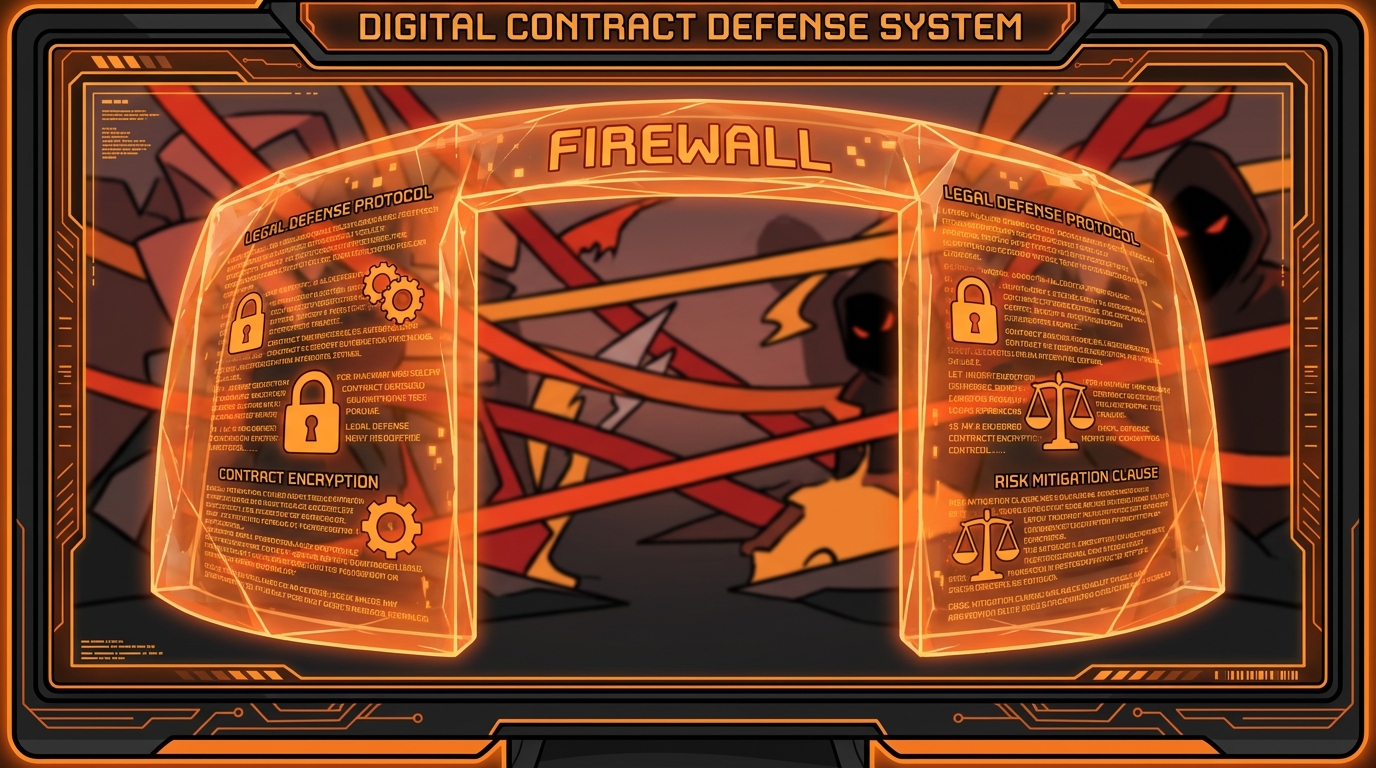
This is where most solo operators fail. They treat the business like a side hustle. We treat liability as a non-negotiable risk factor.
If you send an invoice, you create legal exposure. Period. This pillar establishes your operational firewall.
Step #4: Formalize Your Business Structure
Stop operating as a Sole Proprietorship (SP). An SP is a liability magnet.
It merges your personal assets (your house, your savings) with business risk. Our standard advice: Establish an LLC (Limited Liability Company) before you land Client #3. This is not optional.
Why an LLC is critical:
- Liability Protection: A client lawsuit (e.g., documentation error causing financial loss) hits the LLC, not your personal bank account.
- Tax Flexibility: Allows future election as an S Corp. That shift saves thousands in self-employment taxes as revenue scales.
- Professional Credibility: Incorporated entities close bigger deals. It signals stability and long-term commitment.
The process is simple: register with your state, pay the filing fee, and draft an operating agreement.
| Feature | Sole Proprietorship (SP) | Limited Liability Company (LLC) |
|---|---|---|
| Liability Protection | None (Personal assets at risk) | High (Separates business/personal debt) |
| Formation Cost | Minimal ($0 – $50) | Moderate ($100 – $500+) |
| Tax Filing | Schedule C (Simple) | Flexible (Schedule C, Partnership, or S Corp) |
| Credibility/Scale | Low; difficult to scale or hire | High; built for growth and partnerships |
Step #5: Secure Your EIN and Separate Your Finances
Once the LLC is registered, immediately apply for an Employer Identification Number (EIN) from the IRS. This is your business’s SSN equivalent.
You need this for two critical functions:
- Use the EIN instead of your personal SSN on all W-9 forms.
- It is mandatory for opening a dedicated business bank account.
Financial Separation is Mandatory
Never mix personal and business funds. This is the quickest path to disaster. Co-mingling funds “pierces the corporate veil.” Your liability protection vanishes instantly.
- Open dedicated business checking and savings accounts.
- Use a specific business credit card for all operational expenses (software, subscriptions, hardware).
- This separation makes quarterly tax estimates and year-end bookkeeping instantly manageable.
Step #6: Obtain Errors & Omissions Insurance (E&O)
E&O Insurance is the ultimate professional firewall. Technical writing is a high-risk service.
If you document a complex system, and a client claims an omission caused a $50,000 fine or system failure, they will sue the documentation provider (that’s you).
Errors & Omissions (E&O) Insurance (Professional Liability) covers legal fees, settlements, and damages resulting from alleged service mistakes.
- The cost is negligible compared to the potential exposure ($30–$60 per month is standard).
- Crucially: Large SaaS and enterprise clients require proof of E&O insurance. No policy, no Master Service Agreement (MSA). No MSA, no high-value recurring revenue.
Pillar III: Operational Requirements (The Scalability Stack)
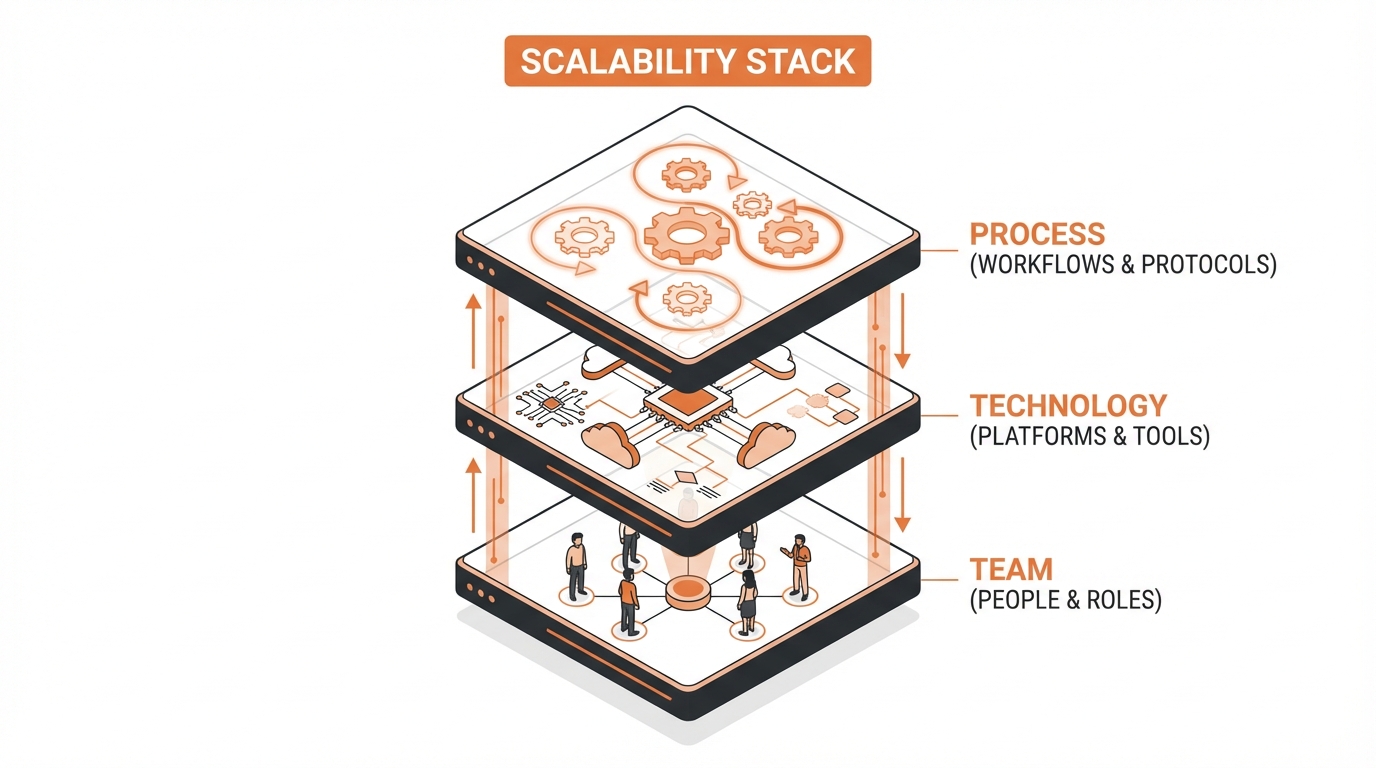
Scaling requires leverage. Period. Leverage is built on systems and automation, not manual effort.
If you are wasting time tracking leads or chasing invoices, you are hemorrhaging profit. We build systems to prevent this loss.
Step #7: Implement a Lead Generation & CRM System
A technical writing business requires a pipeline. A predictable one.
You cannot scale if you rely on memory or spreadsheets to track outreach, manage proposals, or nurture high-value leads.
We leverage AI tools to streamline lead acquisition. This allows us to instantly find the specific founders and SDRs who need technical content right now. Your system must prioritize this speed and accuracy.
Your Mandatory Client Acquisition Stack:
- CRM (HubSpot, Pipedrive, or Notion): This is non-negotiable. Track every lead stage (Outreach, Proposal Sent, Follow-up Due). Never rely on email inbox searches.
- Lead Sourcing Automation: Use tools that identify high-value prospects in your niche. Target recently funded SaaS companies needing API documentation. This is how we ensure consistent deal flow.
We know consistent, targeted outreach yields the highest quality leads. This is why we focus heavily on Strategic LinkedIn Commenting for Client Conversion: it builds authority while identifying immediate client needs.
Step #8: Automate Invoicing and Accounting
Cash flow is the absolute lifeblood of any service business. Manual invoicing is a massive operational liability.
It is inefficient. It is error-prone. It slows down payment cycles.
Automate this process immediately.
Mandatory Financial Stack Checklist:
- Accounting Software (QuickBooks Online/FreshBooks): Essential for real-time tracking of income, expenses, and P&L statements. Integrate this directly with your business bank account.
- Invoicing Platform: Use Stripe/PayPal Business or your accounting software’s built-in feature. Ensure invoices are professional, itemized by project, and include non-negotiable 30-day payment terms.
- Tax Liability Management: Set aside 25–35% of every incoming payment. Move it to a separate, dedicated business savings account. This prevents year-end tax panic and ensures compliance with estimated quarterly payments.
Step #9: Solidify Contractual Requirements
Never start work on a handshake. Never rely on a simple email confirmation.
Your contract is your operational shield. It defines the scope, payment terms, ownership rights, and liability limits.
This is how you eliminate scope creep and prevent payment delays before they start.
Essential Legal Templates Required:
- Master Service Agreement (MSA): The high-level agreement. Defines the long-term relationship, confidentiality rules, and indemnification clauses.
- Statement of Work (SOW): Project-specific. Attached to the MSA. Must detail deliverables, deadlines, revision limits, and the fixed price structure.
- Non-Disclosure Agreement (NDA): Standard operating procedure for technical writers handling proprietary IP. Sign this immediately,before the initial discovery call.
We know high-value clients respect structure. Sending professional, legally sound contracts establishes you as a serious, strategic partner from day one. You control the engagement.
Pillar IV: Strategic Pricing (Scaling Revenue)

Scaling a technical writing business requires decoupling effort from income. We are done trading time for money.
Hourly billing caps your revenue potential. It actively punishes efficiency.
Think about the math: If you deliver a $1,000 solution in five hours, you deserve the full $1,000. Not $250 because you charge $50/hour.
The Revenue Killer: Why Hourly Rates Fail
Hourly rates incentivize slowness. They create immediate friction whenever a client requests a progress report.
You are selling effort, not outcome. Effort is cheap.
Measurable outcomes,like reduced support tickets or faster user onboarding,drive high-ticket value. We focus exclusively on selling measurable outcomes.
Shift to Value-Based and Retainer Models
To scale past the solopreneur ceiling, you must adopt models that guarantee profit regardless of the hours logged.
- Project-Based Pricing (The Immediate Upgrade)
Define the scope of work (SOW) precisely. Then, charge a flat fee for the delivery of the defined assets (e.g., $4,000 for the full API documentation suite).
This is crucial: Project pricing incentivizes you to leverage efficiency tools,AI generation, advanced templates, modular content structures. You deliver faster without sacrificing income.
- Retainer Agreements (The Revenue Stabilizer)
The most predictable, stable revenue stream comes from retainers. Technical documentation is never ‘finished,’ especially in fast-moving SaaS environments.
Propose a fixed monthly fee (e.g., $3,500/month) for maintenance, continuous updates, and guaranteed access to a fixed block of hours.
Retainers guarantee cash flow. They build deep, sticky client relationships. Our successful founders use this model to forecast revenue 12 months out.
The principles of value negotiation are universal across B2B writing sectors. For guidance on structuring these complex, high-ticket deals, review The 5-Figure Copywriter’s Negotiation Playbook for 2025.
The Technical Writing Business Launch Checklist (2026)
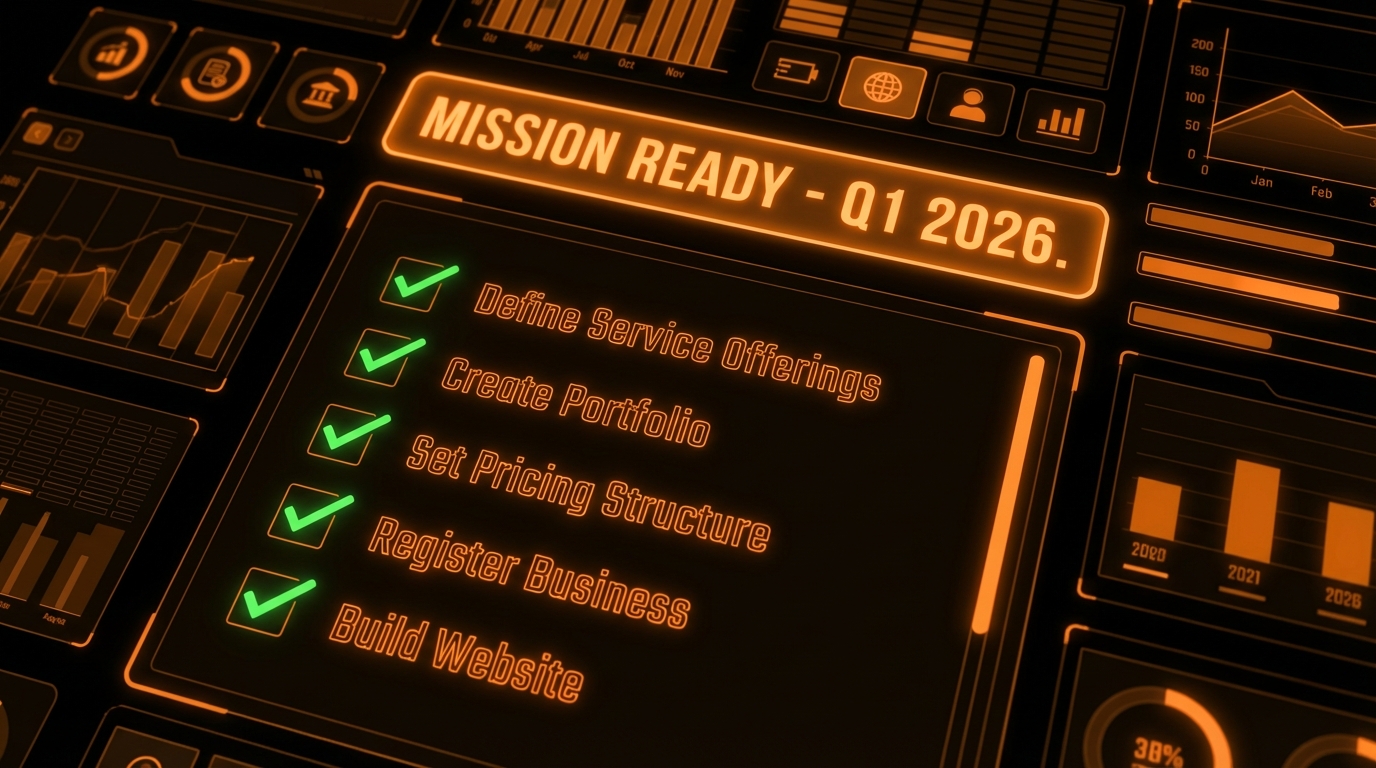
You now have the structure. This is the sequence for execution:
- Define Niche: Select 1-2 high-paying industries (SaaS, FinTech).
- Build Portfolio: Create 3-5 high-quality, measurable documentation samples (API, Tutorial, SOP).
- Incorporate: Register your LLC with the state and obtain your EIN.
- Financial Separation: Open dedicated business bank accounts and credit cards.
- Secure Insurance: Purchase Errors & Omissions (E&O) liability insurance.
- Install Operational Stack: Set up your CRM, accounting software (QuickBooks), and secure contract templates (MSA, SOW, NDA).
- Price Strategy: Shift all proposals to project-based or retainer models.
- Launch Outreach: Implement a system for targeted lead generation and client acquisition.
Launching a profitable B2B service requires velocity. If you need a framework for rapid deployment, consult our guide on The 4-Week Velocity Model: Profitable B2B Consulting Launch. The fundamental strategy applies directly to specialized technical writing services.
Stop thinking like a writer hunting for a gig. Start thinking like a founder building a scalable asset.
Frequently Asked Questions (FAQs)

1. Is a college degree required to start a technical writing business?
No. The reality in 2026 is simple: Portfolio beats pedigree.
Clients hire for demonstrable skill. They care about output quality and speed,not your transcripts.
Actionable advice: Direct your capital and time toward creating 3–5 specialized, high-impact portfolio pieces. That is the only certification that matters.
2. What is the biggest financial risk for a technical writing business?
The critical risk is professional liability.
If your documentation contains errors or omissions, the client faces severe financial or regulatory damage. They will sue your business.
This is why we mandate two foundational steps for serious operations:
- Establish an LLC immediately for asset protection.
- Obtain Errors & Omissions (E&O) insurance.
E&O coverage is non-negotiable. Treat it as the cost of doing high-ticket business.
3. Should I focus on internal documentation or external content marketing?
Focus strictly on internal documentation first.
This means API docs, user manuals, and standard operating procedures (SOPs).
Why this focus?
- It is higher paid (premium rates).
- The market is less saturated than general content marketing.
- It is mission-critical: Directly tied to product functionality and user adoption.
External content marketing (blog posts, white papers) is typically lower paying and far more competitive. Stick to product documentation for maximum revenue lift.
The Next Strategic Move: Client Acquisition
You have the strategy. Now you need the founders who pay high-ticket rates.
Stop relying on bidding platforms. Use our proprietary AI Lead Generation Software to find the exact founders and decision-makers who need your documentation services today.
Start Your Free TrialReferences
- So you’re thinking of starting your own technical writing or content …
- How I Make $1K+ Online Per Month With Technical Writing – Medium
- Everything You Need to Know to Start a Freelance Technical Writing …
- How to Become a Technical Writer | ASU Online
- Technical Writing: I Broke in as a Technical Writer – You Can Too