

The market is saturated. Low-value AI services are everywhere.
Everyone is selling basic content writing or generic prompts for five dollars,that model is dead on arrival.
We know this. Our internal lead generation data confirms one fact: Businesses will not pay a premium for basic automation. They pay for strategic integration.
They pay for leverage. They pay for certainty.
We moved past the generic content treadmill years ago. We are focused strictly on 2025 monetization strategies. These strategies deliver $5k+ monthly retainers.
This isn’t about content creation. This is about becoming an AI architect: building scalable systems.
We are going to show you the three high-leverage tracks for monetizing advanced prompt engineering skills. Zero coding required.
Key Takeaways for High-Leverage AI Income
- Stop Selling Volume: Shift focus immediately. Stop selling content volume; start selling AI infrastructure and quantified efficiency gains.
- Target the Budget Holders: Founders and executive teams hold the budget. They pay premium rates to solve internal knowledge gaps and operational bottlenecks.
- Productize Authority: Build niche prompt bundles and specialized training. Address industry-specific, high-pain problems (e.g., regulatory compliance, financial synthesis).
- Value-Based Pricing Only: Never charge for time. Base your fee (10-20%) on the measurable annual revenue increase or efficiency gains you deliver.
Track #1: The B2B Consulting Engine (High-Ticket Retainers)

This is the fundamental shift: from freelancer to consultant.
You are not selling writing or basic prompts. You are selling organizational infrastructure.
High-ticket clients,the ones paying $10,000 to $25,000 per project,do not need a Virtual Assistant (VA). They need a strategic partner. They need someone who can manage their internal knowledge gap.
This is precisely where your advanced prompt engineering expertise becomes a high-value consulting asset.
Step #1: Become a Custom GPT Architect
OpenAI’s Custom GPT Builder is the biggest no-code opportunity of 2026.
Businesses struggle constantly with internal knowledge management. They have thousands of SOPs, training documents, and client histories buried across shared drives.
The solution is simple: They need an internal, specialized bot. They need a Custom GPT designed for their specific workflow.
Your job is the architecture. You use advanced system instructions (the core of prompt engineering) to define the bot’s role, the guardrails, and the knowledge base. You are coding logic, not syntax.
How We Position This Service:
- The Internal Knowledge Bot: Trained exclusively on the client’s private documents (HR policies, technical manuals). This immediately reduces new hire onboarding time by 40%.
- The Sales Accelerator GPT: Trained on successful case studies and competitor analysis. SDR teams use this to generate hyper-personalized Strategic Domain Sales Emails (SDSEs) tailored to specific client pain points.
- The Compliance Checker: Crucial for legal and finance sectors. This GPT reviews documents against internal compliance checklists instantly, mitigating risk.
“We stopped selling generic chatbot integration. We started selling 77% faster knowledge retrieval. That distinction is worth $15,000 per implementation.”
Focus only on the measurable outcome: time saved, compliance risk reduced, or sales velocity increased. The technology is merely the delivery mechanism.
Step #2: Develop AI Standard Operating Procedures (SOPs)
Most companies buy AI tools. They then fail the integration step entirely.
Their teams use ChatGPT for random, unstructured tasks. This leads directly to inconsistent output and critical security risks.
Your high-value service is creating the rulebook,the institutional guardrails.
You define precisely how, when, and why their teams use AI. This requires deep prompt expertise: ensuring every employee (from marketing to finance) gets the exact same high-quality output every single time.
Deliverables for AI SOP Consulting:
- System Instruction Library: A centralized database of master prompts, designed by you, ensuring brand voice consistency across all departments.
- Workflow Mapping: Integrating AI into existing systems. Example: “Before drafting a proposal, run the key points through the ‘Clarity & Conciseness’ prompt chain.”
- Corporate Training Workshops: You teach the team how to execute your new SOPs. This is an immediate, high-margin upsell opportunity. (We use this model internally. We detail how to Launch Your AI Agency in 2026 using these core consulting models).
Track #2: The Productization Engine (Scalable Income)
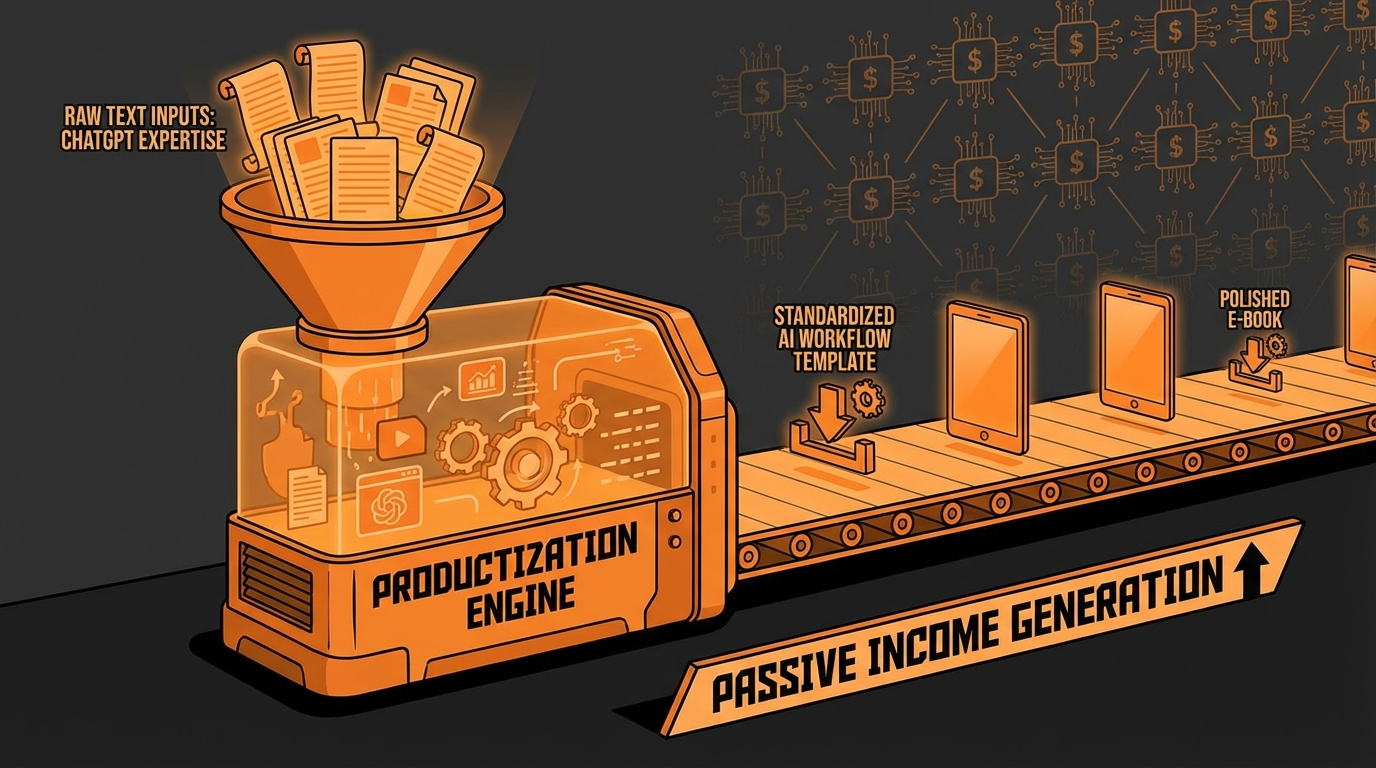
Selling individual prompts is low-value noise. Selling specialized, high-leverage prompt systems is scalable income. You leverage your prompt engineering expertise once. Then you sell the result infinitely. This is precisely how we achieve scale without increasing labor hours.
Step #3: Create Niche Prompt Template Bundles
Abandon the “100 ChatGPT Prompts for Marketing” bundles immediately. That is low-value, 2023 thinking. We focus on hyper-specific niches where the user has a complex, expensive problem,and a high budget to solve it.
High-Value Niche Examples (2025 Strategy):
- Advanced Sales Negotiation Scenarios: Prompt chains that allow your SDRs or sales reps to run complex negotiation simulations. This tests counter-arguments and identifies the client’s leverage points before the call happens. (Directly impacts conversion rates.)
- M&A Due Diligence Prompts: Templates engineered to synthesize thousands of pages of financial reports into concise executive summaries. They identify key risks and opportunities instantly.
- Pharmaceutical Regulatory Drafting: Structured prompts designed to generate initial drafts of highly specific regulatory documents (e.g., FDA submissions). This demands deep understanding of system constraints and legal terminology.
These prompt bundles sell for $197 to $497,minimum. Why? They solve a critical, expensive problem instantly. The client is buying certainty and speed, not just text generation. They are buying measurable efficiency gains.
Step #4: Launch Expert-Level AI Courses
The digital market is flooded with low-quality “AI Basics” courses. We skip them entirely. Your unique expertise is not basic content creation; it is prompt chaining, system instruction architecture, and advanced data synthesis.
Your Course Focus Must Be Advanced and Strategic:
- Prompt Chaining Mastery: Teaching users how to break down a complex task into 5-10 sequential prompts. The output of Prompt 1 feeds Prompt 2, ensuring maximum accuracy, depth, and consistency across long-form projects.
- Fine-Tuning System Instructions: How to write the initial “You are…” command (the meta-prompt) to establish unbreakable authority, tone, and constraints. This ensures long-term project consistency and high-quality output every time.
- Data Synthesis and Strategic Analysis: Training users to structure inputs (e.g., CSV data, long-form transcripts, competitive intelligence reports) for maximum analytical output. We turn raw data into strategic, actionable insights.
This strategy instantly positions you as the definitive expert. You are teaching the meta-skill: controlling the AI at the architectural level. That skill set is exponentially more valuable than basic content generation.
Track #3: The Service Multiplier (Efficiency and Scale)
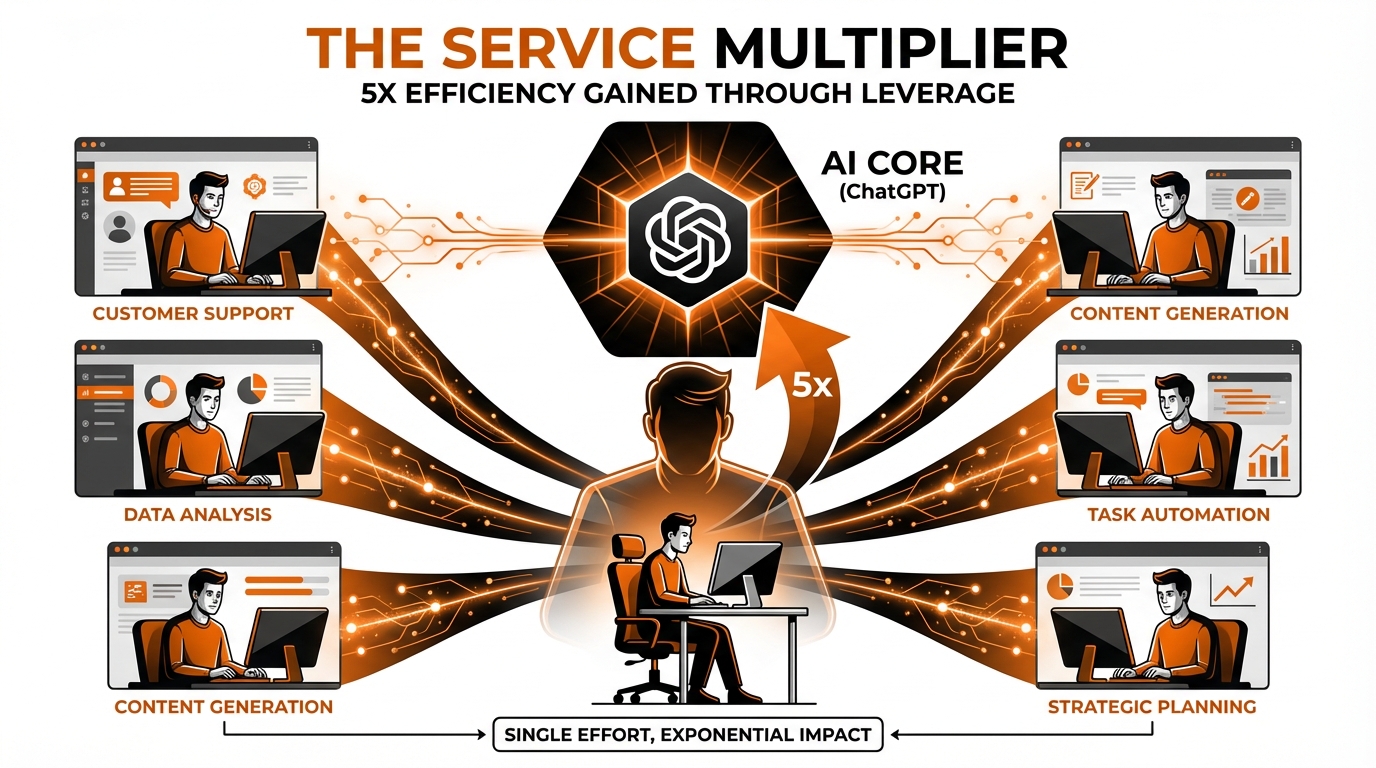
Service roles are the fastest path to immediate monetization. If you are currently a Virtual Assistant (VA), an SDR, or a Researcher, your prompt engineering expertise is your greatest leverage point.
It allows you to handle 2x or 3x the client workload. We do this without adding a single hour to the clock.
Step #5: 3x Your Output in Existing Service Roles
The core strategy here is efficiency arbitrage. You maintain the standard market rate. But your cost of labor (your personal time investment) drops drastically due to AI automation.
This single move instantly boosts your effective hourly rate,often by 200% or more.
We see this measurable increase most clearly in two key areas:
A. AI-Powered Virtual Assistance (VA)
The modern VA does not push paper. They architect systems. They are not scheduling emails manually; they are building agents that handle 90% of the routine workflow.
- Meeting Prep Automation: Using a Custom GPT to ingest a client’s calendar invite, pull up the corresponding contact history, and generate a 3-point briefing document (Who, Why, Key Discussion Points). This happens in under 60 seconds.
- Email Triage and Drafting: Setting up an agent to analyze incoming emails, categorize them by urgency/topic, and draft 80% of the response based on pre-approved templates. The VA flags only the 20% requiring human nuance.
B. Strategic Sales Development (SDR)
Strategic Sales Development (SDR) teams leverage AI for one reason: personalization at scale. This is the only way to maintain high conversion rates while managing massive outreach volume.
- Deep Prospect Research: Feeding a prospect’s latest LinkedIn posts, company news, and earnings calls into a structured prompt system. The output is a hyper-personalized opening line,a line that proves you did the homework required to earn the meeting.
- Objection Handling Scripts: Using AI to run “what-if” scenarios against common client objections before the call even happens. This gives the SDR a pre-rehearsed, strategic response that closes the knowledge gap instantly.
This is not theory. This is precisely how our SDR teams maintain high conversion rates and scale outreach volume indefinitely. It is pure, measurable leverage.
Start Your Free Trial: Find Client Emails Today
Track #4: Value-Based Pricing (Stop Trading Time for Money)
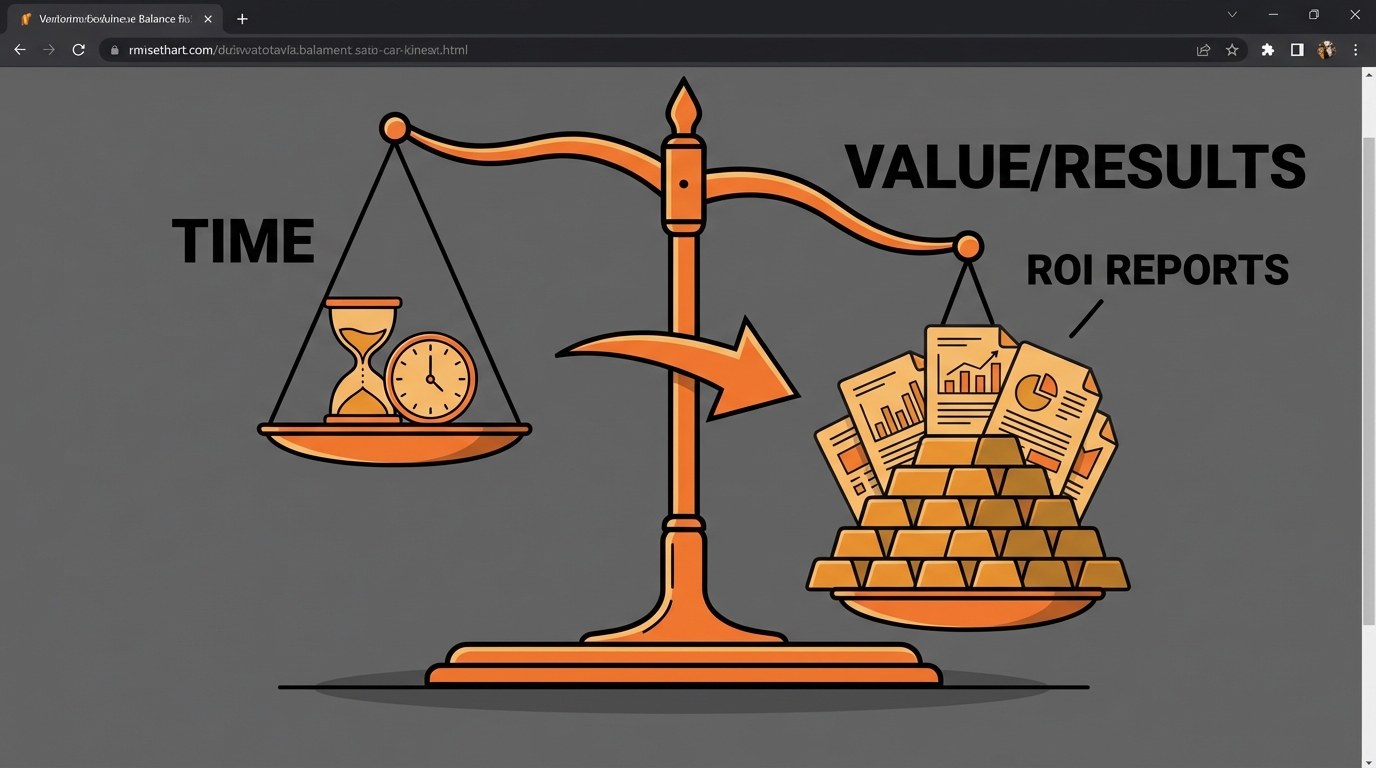
The biggest mistake AI experts make? Trading time for money.
If your prompt architecture saves a client $10,000 per month in labor, why are you charging $100 per hour? That is a fundamental misalignment.
You must shift immediately to value-based pricing.
Your pricing must reflect the financial benefit delivered, period. It ignores the time you spent building the solution. Example: If your Custom GPT saves a 50-person team 250 hours per month, calculate that labor savings. Then charge a strategic fraction of that total.
The Pricing Arbitrage Comparison
We never sell commodity services. We sell strategic leverage. This model is non-negotiable for all our high-level consulting engagements:
| Metric | Low-Value Model (Hourly/Content) | High-Value Model (Architecture/Strategy) |
|---|---|---|
| Pricing Basis | Time spent ($50 – $150 per hour) | Value delivered (10-20% of annual savings) |
| Client Perception | Contractor / Freelancer | Strategic Partner / Efficiency Expert |
| Typical Revenue (Per Client) | $500 – $2,500 (Project-based) | $5,000 – $25,000 (Retainer/Implementation) |
| Core Skill Sold | Writing, Editing, Basic Tasks | Prompt Architecture, System Integration, Business Process Optimization |
Step #6: Anchor Your Pricing to ROI
When you present any proposal,for an AI SOP implementation or a Custom GPT build,you must frame the cost as an investment, not an expense. We use quantifiable ROI as the anchor point every time.
The Strategic Prompting Proposal Framework:
- Identify the Pain Point: Quantify the waste. Example: “Your sales team spends 15 hours per week manually researching prospects.”
- Calculate the Cost: Translate time into dollars. “At an average salary of $70k, those 15 hours cost you $1,050 per month in wasted labor.”
- Propose the Solution & Savings: Show the immediate ROI. “Our Strategic Prompt System cuts research time to 3 hours per week, saving you $840 per month ($10,080 annually).”
- Set the Value Price: Anchor the fee to the savings. “Our implementation fee is $3,500 (35% of Year 1 savings). Plus, a $500 monthly maintenance retainer.”
This methodology works, consistently. It proves you understand their business finances (their revenue, their overhead). It makes the cost of not hiring you significantly higher than your fee. That is how you close high-ticket deals.
Frequently Asked Questions (FAQs)

Q: What is the single fastest way to land my first high-ticket client using ChatGPT skills?
Identify the Revenue Leak:Build a Micro-Solution:Guarantee the Result:Q: How do I justify value-based pricing when clients expect traditional hourly rates?
Cost of Time:Cost of Opportunity:The Rule:Q: Is the market for non-coding ChatGPT consulting already saturated?
Ready to Scale Your Lead Generation? Start Your Free Trial TodayHow fast can I start charging high-ticket rates?

The transition is immediate,if you possess existing domain expertise (sales, finance, legal, operations). You are not selling a new skill; you are simply upgrading an existing one.
The speed of monetization depends entirely on your willingness to execute a high-leverage pilot project. This is how we prove ROI immediately; there is no alternative.
The 3-Step Anchor Strategy:
- Identify the Warm Target: Find a former colleague or a warm connection struggling with a specific, quantifiable manual process (e.g., lead list scrubbing, personalized outreach drafting).
- Execute the Pilot (Free): Use your AI skills to automate or refine 80% of that task. This is a non-negotiable step.
- Anchor the Rate: Convert those measurable efficiency gains,the hard data,into your primary case study. Use that proof (e.g., “We cut SDR research time by 6 hours/week”) to anchor your first $5,000+ monthly retainer.
Stop waiting for certification or permission. Start measuring revenue impact now.
Do I need to learn Python or other coding languages?
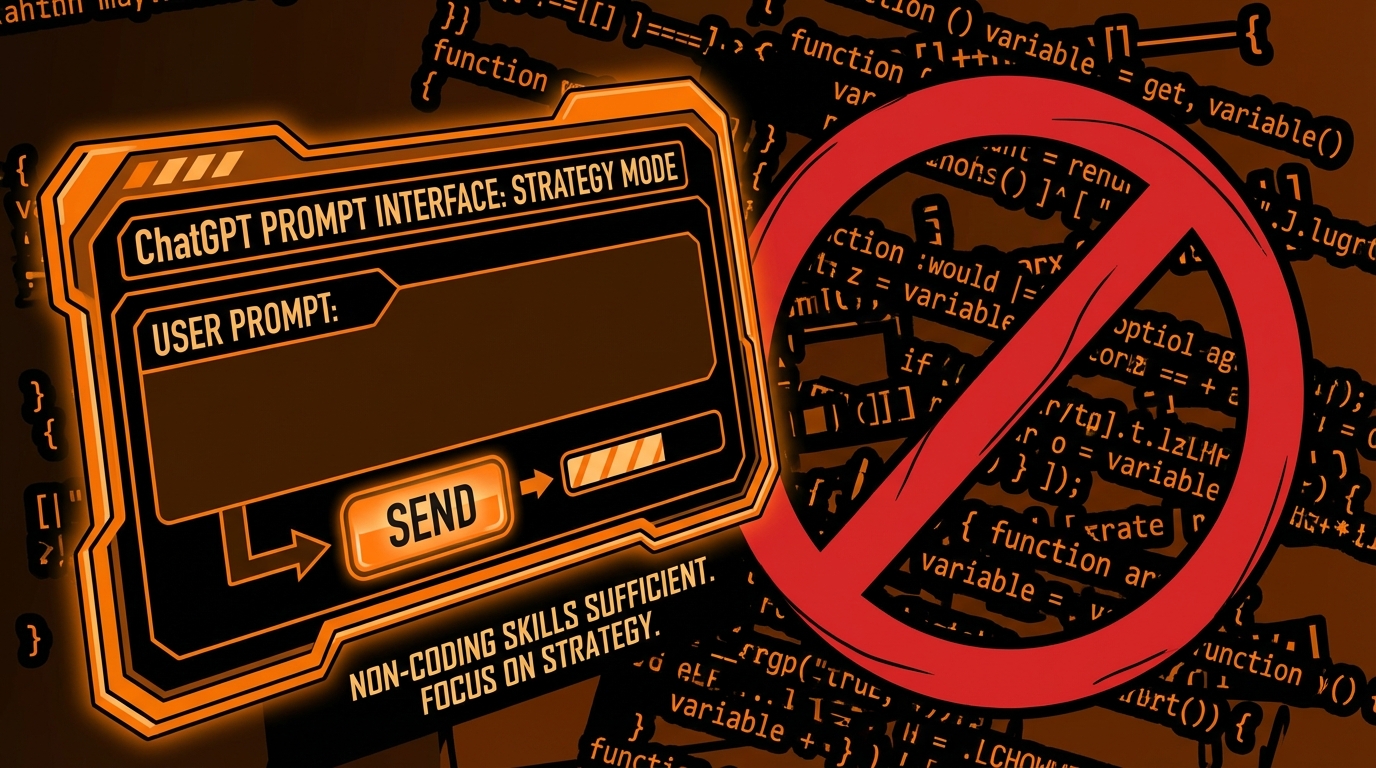
- System Instructions: Crafting proprietary, deep instructions for Custom GPTs or specialized models.
- Workflow Logic: Integrating no-code platforms (Zapier, n8n, Make) to execute complex, multi-step tasks.
How do I find clients willing to pay for AI SOPs?

Is the market for AI consulting saturated in 2025?

Yes, the market is saturated,if you are selling generic “AI content writing.”
That low-value work is already dead. You cannot compete on price there. We advise our high-ticket consultants to pivot immediately.
The market for strategic AI architects,the experts who build internal, customized systems and define corporate AI policy,is wide open.
You must specialize. Specialization is the only way to escape the price competition treadmill:
- If you are selling general AI help, you compete on price.
- If you sell specialized regulatory analysis systems (AI SOPs for compliance/legal teams), you dictate the price.
We focus on high-leverage specialization. This is the only way to guarantee the $10k+ consulting fees your business requires.
Ready to take the next step?
Find the client contact information you need to implement these high-ticket strategies.
Start Your Free TrialReferences
- How to Monetize Your AI Skills (outside of your 95 job) – Medium
- Are there any legitimate ways one can actually make decent money …
- 10 Ways To Make Money With ChatGPT Even If You Lack Tech Skills
- 3 Ways to Make Money with GPT-5 (Beginner Methods) – YouTube
- How to turn your tech skills into income beyond a job – LinkedIn