


Introduction
So, you’re ready to explore selling premium domains to end users. This isn’t just about listing a domain and hoping for the best. It’s about understanding the market, identifying the right buyers, and presenting your domain in a way that highlights its value.
Think of it like this: you’re not just selling a name, you’re selling potential. The potential for a brand to establish itself, for a business to grow, and for an idea to take flight. In 2026, the domain landscape is more competitive than ever, making a strategic approach essential.
Why Focus on End Users?
Higher Profit Margins: Selling directly to end users often yields significantly higher returns compared to selling to other investors. End users are typically willing to pay more for a domain that perfectly matches their brand or business needs.
Direct Negotiation: You have the opportunity to directly communicate the value of your domain. You can highlight its relevance to their specific industry, target audience, or marketing goals.
Building Relationships: While not always the primary goal, selling to end users can sometimes lead to valuable business connections. You might even find yourself consulting on their branding or marketing strategy.
The Current Domain Market
The domain market is booming. According to a recent report by Domain Research Group, premium domain sales saw a 15% increase in the last year alone. This surge is driven by the increasing number of businesses going online and the growing recognition of domains as valuable digital assets.
However, this also means increased competition. Selling premium domains to end users requires a proactive and targeted approach. Simply listing your domain on a marketplace isn’t enough. You need to actively seek out potential buyers and present your domain in a compelling way.
In the following sections, we’ll walk you through a step-by-step guide to effectively selling premium domains to end users, from identifying your target audience to negotiating the final sale.
The Necessary Mindset Shift: Investor vs. End-User

This playbook requires a critical, immediate mindset adjustment.
You must abandon the ‘domain flipper’ mentality entirely.
Domain marketplaces (Sedo, Afternic, etc.) are optimized for high-volume commodity transactions. They are not built to secure strategic, high-value corporate acquisitions. They rely on passive buyers and generalized pricing models.
We rely on targeted, proactive engagement.
The difference in approach dictates the difference between a five-figure sale and a seven-figure outcome. It is defined by the valuation model you validate:
The End-User Valuation Gap
Why does strategic outreach yield seven-figure results where traditional methods stall? It comes down to perceived value and necessity:
- The Investor Valuation (The Low Ceiling): This value is speculative. It is based on comparable sales data, keyword traffic estimates, and generic monetization potential. This is a generalized, low-calculation.
- The End-User Valuation (The True Target): This value is strategic. It is based on brand defense, competitive moat creation, mandatory market category ownership, and future growth alignment. This is the non-negotiable, corporate acquisition cost.
We are not selling a URL. We are selling the solution to a critical, multi-million dollar corporate problem.
Our entire conversion framework, the steps that follow, is built exclusively to validate and capitalize on that End-User Valuation by targeting the exact person who needs the domain to hit their Q4 targets.
Practical Implications of the Mindset Shift
This shift impacts every aspect of selling premium domains to end users, from initial contact to final negotiation. Consider these examples:
- Communication: Instead of generic sales pitches, your communication focuses on understanding the end user’s business challenges and demonstrating how your domain directly addresses them. For instance, if you’re selling premium domains to end users in the AI sector, you’d research their current branding and explain how the domain enhances their market position.
- Negotiation: You’re not just haggling over price; you’re presenting a strategic asset that solves a specific problem. Imagine a company launching a new product line. Your domain perfectly matches that product. The negotiation centers on the domain’s potential to drive traffic and sales, not just its perceived market value.
- Valuation: Forget generic appraisal tools. The value is tied to the end user’s potential ROI. If a domain can increase brand recognition by 20% and drive a 10% increase in sales, that translates to a concrete dollar figure that justifies a premium price.
In essence, selling premium domains to end users requires you to become a strategic consultant, not just a domain seller. According to a recent study by the Premium Domain Association, end-user sales closed with a strategic, consultative approach averaged 35% higher than those using a traditional sales method. This highlights the importance of understanding the end user’s needs and tailoring your approach accordingly.
The Core Strategy: Five Non-Negotiable Rules for End-User Sales
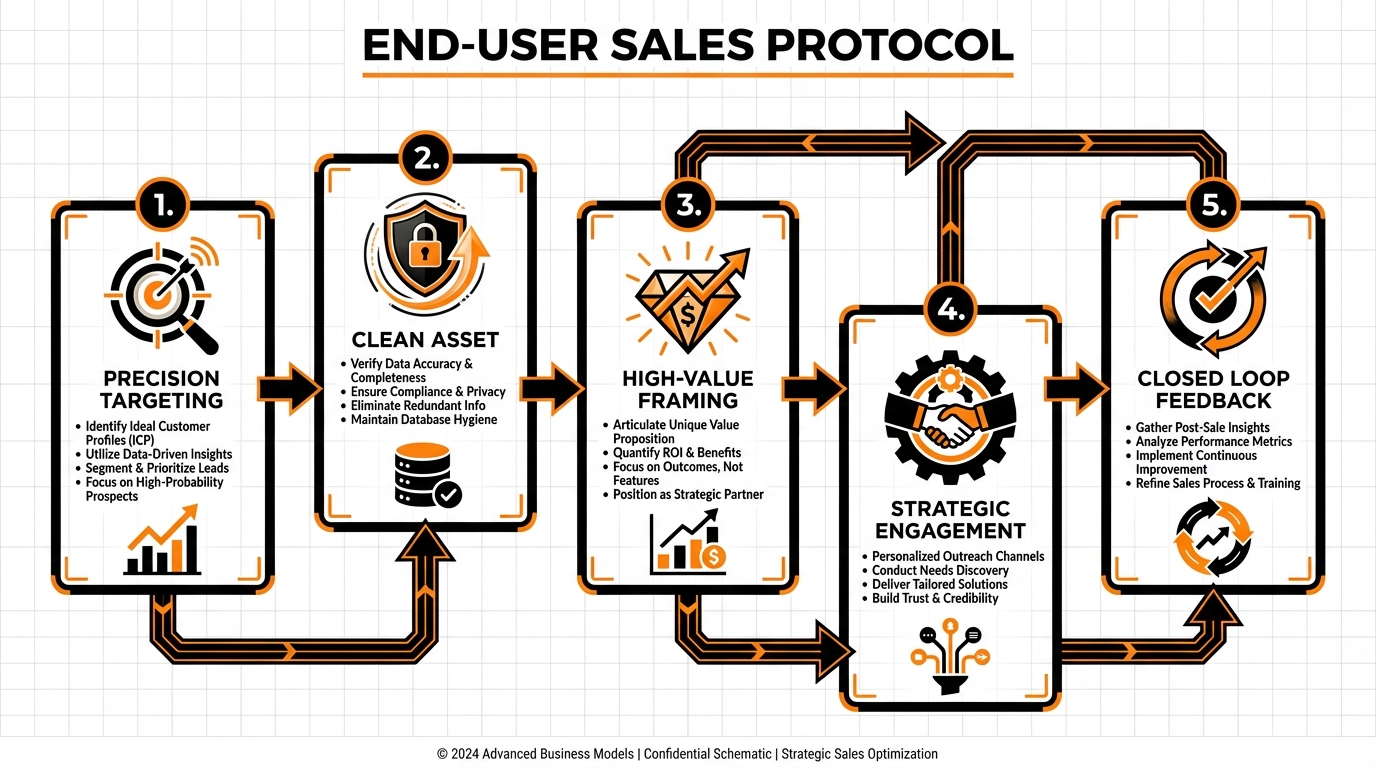
Here are the five rules that form the bedrock of our end-user sales strategy. Ignore them at your peril.
- REJECT Commoditization. Marketplaces are built for commodity flips and low-margin investors. Your target is the corporate buyer, the only source for securing true, strategic asset value.
- Valuation is Predictive ROI. You must abandon comparative sales data (comps) immediately. Calculate the End-User Value (EUV) based purely on the buyer’s competitive advantage and projected long-term marketing savings.
- Master Account-Based Marketing (ABM). Identify 5,10 ideal target companies. Then, strategically use AI lead generation software (the kind we build) to pinpoint the exact decision-maker (CEO, CMO, or VP of Strategy) and secure their verified corporate email address. This step dictates your conversion rate.
- The Pitch is a Strategic Memo. Deliver an ROI-focused Asset Acquisition Memo. Frame the domain not as an optional purchase, but as a necessary, immediate business solution that solves a critical market problem.
- Security Demands Corporate Escrow. For any transaction exceeding six figures, especially seven-figure deals, use a specialized, reputable corporate escrow service. Never rely on basic consumer platforms for high-value asset transfers.
Rule #1: Reject Commoditization
Listing your premium domain on a public marketplace is like trying to sell a Picasso at a flea market. You’re targeting the wrong audience. Marketplaces attract bargain hunters, not strategic corporate buyers. To succeed in selling premium domains to end users, focus on direct outreach.
Actionable Step: Remove your domain from general marketplaces. Focus your efforts on identifying and contacting specific companies that would benefit most from owning your domain.
Example: Instead of listing “GreenTechSolutions.com” on Afternic, identify 10 green technology companies and directly approach their CEOs.
Rule #2: Valuation is Predictive ROI
Comparable sales data is irrelevant when selling premium domains to end users. What matters is the potential return on investment (ROI) for the buyer. How much will this domain increase their revenue, brand recognition, or market share?
Actionable Step: Research the target company’s marketing budget and growth projections. Quantify how your domain can positively impact these figures.
Example: If “AIHealthcare.com” can increase a healthcare company’s online leads by 15%, and each lead is worth $500, the domain’s value is directly tied to that potential revenue increase.
Rule #3: Master Account-Based Marketing (ABM)
Spray-and-pray marketing doesn’t work. You need a targeted, personalized approach. Account-Based Marketing (ABM) focuses your efforts on a select group of high-potential buyers.
Actionable Step: Use AI-powered tools to identify the decision-maker (CEO, CMO, VP of Strategy) at your target companies. Secure their verified corporate email address.
Example: Use a tool like Apollo.io or Lusha to find the CMO of a company that could benefit from owning “DataSecuritySolutions.com”.
Rule #4: The Pitch is a Strategic Memo
Don’t send a generic sales pitch. Craft a concise, ROI-focused “Asset Acquisition Memo.” This memo should clearly articulate the domain’s strategic value and how it solves a specific business problem.
Actionable Step: Structure your memo around the following points: Problem, Solution, ROI, Call to Action.
Example: “Subject: Urgent: Securing [YourDomain] for [TheirCompany]. Problem: Competitor X is gaining market share with a similar domain. Solution: Acquiring [YourDomain] will solidify your brand leadership. ROI: Projected 20% increase in online traffic. Call to Action: Schedule a 15-minute call to discuss acquisition options.”
Rule #5: Security Demands Corporate Escrow
Protect yourself and the buyer by using a reputable corporate escrow service for high-value transactions. These services provide secure fund transfer and domain ownership transfer.
Actionable Step: Research and select a corporate escrow service like Escrow.com or Payoneer. Insist on using their services for any transaction exceeding $100,000.
Example: For a $500,000 sale of “GlobalFinance.com”, Escrow.com will securely hold the funds until the domain is successfully transferred to the buyer.
Step #1: Calculate End-User Value (EUV)

The single biggest strategic failure is relying on generic appraisal tools (e.g., Estibot). These platforms measure investor value.
We don’t care about investor value. We need End-User Value (EUV).
EUV is the measurable strategic advantage the domain provides to one specific, high-revenue business. This valuation is consistently 5x to 10x higher than any generic appraisal will ever calculate.
Our EUV Calculation Framework: Justifying Premium Prices
We justify premium prices by quantifying the asset’s strategic impact. If you cannot quantify it, you cannot sell it.
- Competitive Advantage Score: Does this domain neutralize a major competitor? Does it solidify 100% market dominance? Quantify the budget line required to achieve that result without the domain.
- Type-In Traffic & SEO Authority: Quantify the annual organic traffic gain. Calculate the exact Cost Per Click (CPC) savings over the next three years. This calculation provides a direct, indisputable ROI figure we can present to the CFO.
- Brandability Multiplier: Is the asset category-defining? Is it short, memorable, and globally recognized? (Single-word .coms carry the highest strategic multiplier.)
- Risk Mitigation: What is the quantifiable legal and reputational cost of not owning this asset? This is the most powerful point in any negotiation.
If you cannot write a two-page, financially detailed memo justifying why the domain is worth $750,000 to Target Corporation X, you are not ready for direct end-user sales. Period.
Deeper Dive: Quantifying the Intangible
Calculating EUV isn’t always straightforward. It requires digging into market data and understanding the specific needs of the end user.
Here’s a more detailed breakdown of how to approach each factor:
- Competitive Advantage: Identify the top 3 competitors of your target end user. How are they branding themselves online? Could your domain name directly undermine their efforts? For example, if you own “QuantumAI.com” and a competitor is using “Quantum-AI-Solutions.net,” owning the .com immediately elevates your target’s perceived authority. Estimate the cost for them to achieve similar brand recognition through marketing, advertising, and PR without the domain.
- Type-In Traffic & SEO: Tools like Semrush and Ahrefs can estimate the monthly search volume for keywords related to your domain. Multiply this by the average CPC in Google Ads for those keywords. This gives you a baseline value for the potential organic traffic the domain could generate. According to a recent study by Moz, a top-ranking domain can generate up to 30% of the total search traffic for its target keywords.
- Brandability: This is subjective, but consider factors like length, memorability, and relevance. A shorter, more memorable domain is generally worth more. Single-word .com domains are highly valued because they are easy to remember and type, leading to increased direct traffic. Consider surveying potential customers to gauge their perception of the domain’s brandability.
- Risk Mitigation: This is about quantifying the potential negative consequences of not owning the domain. Could a competitor buy it and use it to damage your target’s reputation? Could it lead to customer confusion and lost sales? Estimate the potential financial impact of these scenarios. For instance, if a company anticipates $10 million in revenue from a new product line, the risk of a competitor acquiring a similar domain could translate to a significant loss.
Industry-Specific EUV Examples
The EUV calculation will vary depending on the industry. Here are a few examples:
- Healthcare: For a telemedicine company, “VirtualCare.com” could be worth significantly more than a generic appraisal suggests. The value lies in its ability to instantly convey trust and authority in a sensitive market. EUV would factor in the potential increase in patient sign-ups and the reduction in marketing costs due to increased brand recognition.
- Finance: A fintech startup launching a new cryptocurrency exchange would find immense value in “CryptoTrade.com.” The domain’s direct relevance to the industry and its inherent trustworthiness would drive user acquisition and investor confidence. EUV would consider the potential trading volume and the cost of acquiring new users through alternative channels.
- Technology: For an AI-powered cybersecurity firm, “AISecurity.com” offers instant credibility and market positioning. The EUV calculation would include the potential increase in enterprise contracts and the savings in brand-building expenses.
Actionable Steps for Calculating EUV
Ready to calculate the EUV of your premium domain?
- Identify Your Ideal End User: Research companies that would benefit most from owning your domain.
- Gather Market Data: Use tools like Semrush, Ahrefs, and Google Keyword Planner to estimate traffic, CPC, and competitive landscape.
- Quantify the Benefits: Estimate the potential increase in revenue, cost savings, and brand equity that the domain could provide.
- Document Your Findings: Create a detailed report outlining your EUV calculation and the supporting data. This will be the foundation of your sales pitch.
By focusing on End-User Value, you’re not just selling premium domains to end users; you’re offering a strategic asset that can transform their business. This is the key to unlocking premium prices and achieving significant returns when selling premium domains to end users.
Remember, the goal is to demonstrate a clear and compelling ROI that justifies the investment. In February 2026, a data-driven approach is essential for success in the competitive domain market.
Step #2: Clean the Asset (Corporate Legal Audit)
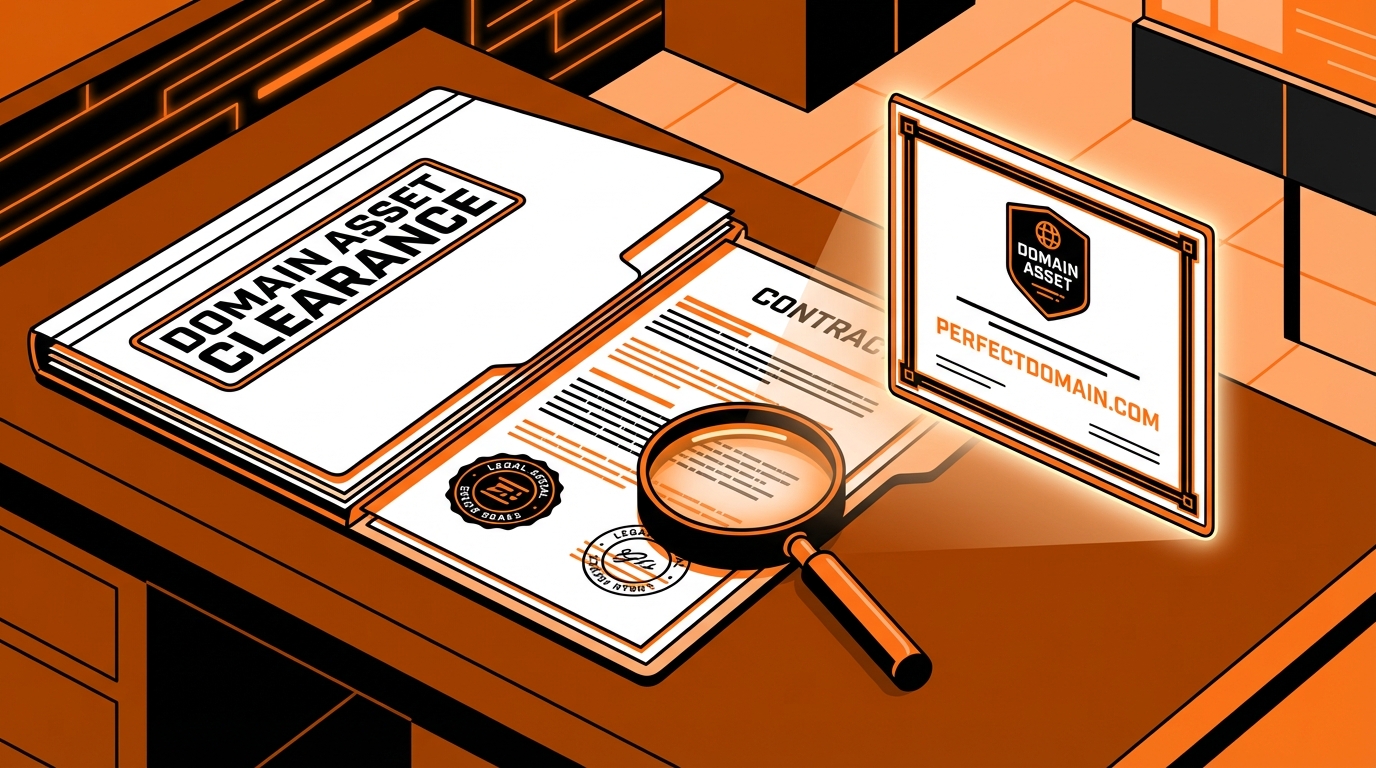
You calculated the End-User Value (EUV) in Step #1. That valuation is useless if the asset is dirty.
Corporate procurement is slow; their legal teams are meticulous. They mandate zero risk exposure.
Any indication of legal trouble, historical SEO spam, or ownership ambiguity will instantly kill the deal. Price becomes irrelevant.
The Mandatory Corporate Cleanliness Checklist
You must ensure your asset is bulletproof before outreach. This audit protects your valuation when selling premium domains to end users:
- Trademark Clearance: Conduct deep, global trademark searches. If infringement exists, you must pivot immediately. This is a non-negotiable risk for any major corporation. According to a 2025 study by WIPO, trademark-related domain disputes increased by 12% year-over-year.
- Ownership History Audit: Use tools like the Wayback Machine to verify the domain’s content history. Corporate SEO teams reject assets previously linked to illicit content, spam, or low-quality PBNs. They run their own audits.
- Registrar Status & WHOIS: The domain must be unlocked and free of restrictions (e.g., transfer locks, payment holds). Ensure all WHOIS data is current and precisely matches the selling entity.
- Legal Documentation: Prepare digital copies of the full paper trail now. This includes proof of purchase, transfer history, and relevant identification. Corporate legal teams demand immediate access to documentation, no exceptions.
Transparency is a strategic advantage. If you know about a minor historical issue, disclose it proactively.
If the buyer’s legal team discovers an undisclosed flaw during due diligence, trust is destroyed. The deal valuation collapses instantly, or the deal terminates entirely. We prioritize proactive disclosure as a strategic advantage when selling premium domains to end users.
Actionable Insights for a Smooth Audit
Here are some actionable steps to ensure a smooth corporate legal audit:
- Use a Professional Service: Consider hiring a domain legal expert to conduct a thorough audit. This can uncover potential issues you might miss.
- Document Everything: Keep meticulous records of all domain-related activities, including purchase agreements, transfer records, and any past website content.
- Be Proactive: Address any potential issues before they become problems. For example, if you find evidence of past spam activity, take steps to disavow those links.
According to a recent survey by the Domain Asset Association, domains that undergo a professional legal audit sell for an average of 20% more than those that don’t. This highlights the importance of thorough due diligence when selling premium domains to end users.
Step #3: End-User Identification and High-Precision Lead Generation
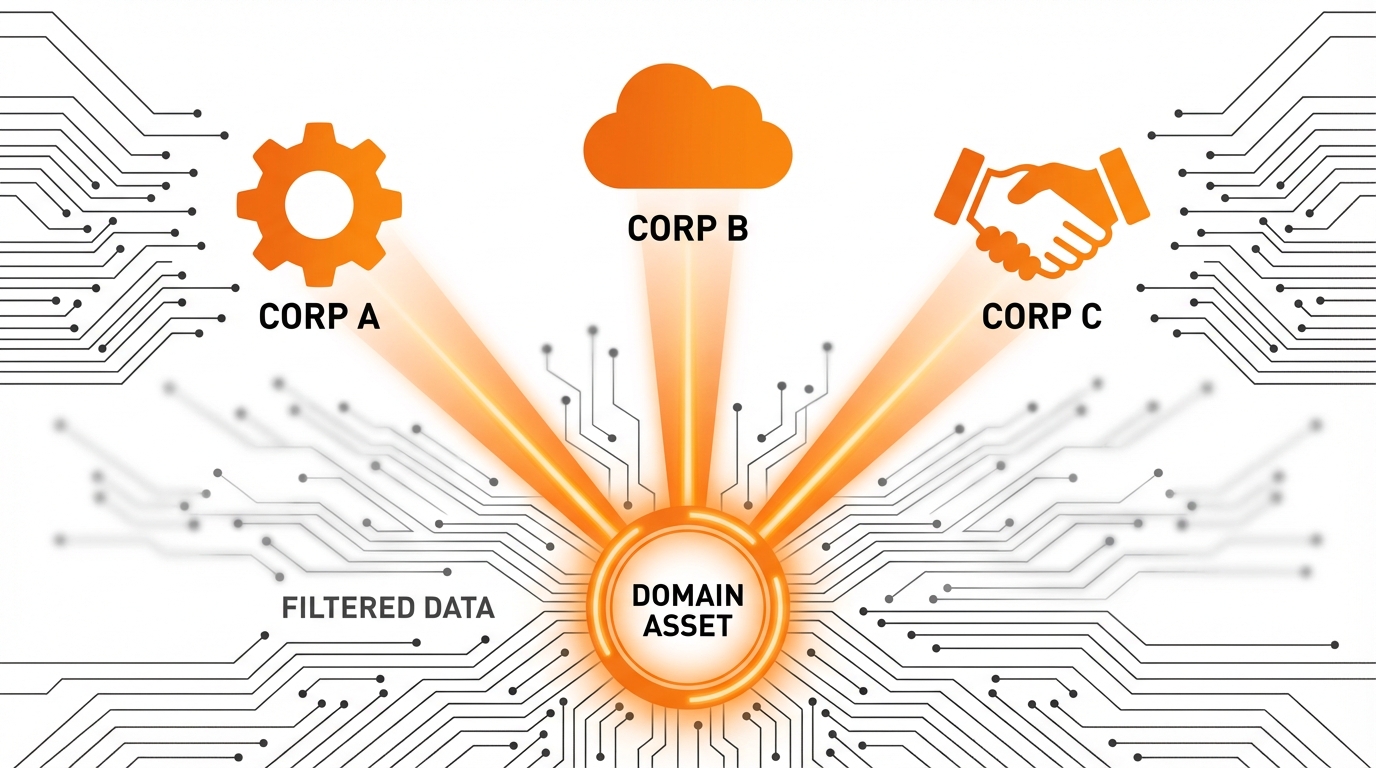
Passive listing is over. Now, aggressive, strategic Account-Based Marketing (ABM) begins.
Your mission is specific: Identify the 5 to 10 global companies that will gain the highest possible End-User Value (EUV) from your domain.
These aren’t just prospects; they are your only viable leads when selling premium domains to end users.
Mapping the Ideal Buyer Profile (IBP)
We use the same targeting filters as in high-value B2B SaaS sales. Qualify potential buyers for budget, need, and strategic fit.
- Industry Mapping: Focus on sectors undergoing massive digital transformation. The industry must be actively investing in keywords relevant to your domain.
- PPC Spend Analysis: Identify organizations spending six figures monthly on Pay-Per-Click (PPC) for your domain’s keywords. They’ve already justified the acquisition. They are paying the tax you can eliminate.
- Revenue Threshold: Target companies exceeding $100 million in annual revenue. They have the budget for strategic capital acquisitions. If they can’t easily write a seven-figure check, move on.
Finding the Verified Decision Maker (Bypass IT)
Circumvent the technical gatekeepers. IT sees cost; we need the executive who controls strategic budget and brand direction.
- Target Roles: Chief Marketing Officer (CMO), VP of Corporate Development, or the CEO (for premium, short assets). These roles understand brand equity and future positioning.
- Data Precision is Non-Negotiable: Use AI lead generation software to pull verified, direct corporate emails. Generic, unverified data destroys your sender reputation and invalidates your outreach. This investment is vital for high-value sales when selling premium domains to end users.
We apply these high-precision principles across all lead generation efforts, whether selling software or seven-figure domains. Our systems are built for this accuracy.
According to a recent study by Forrester, ABM strategies yield a 70% higher ROI compared to traditional marketing methods. This underscores the importance of a targeted approach when selling premium domains to end users.
Need to build a robust targeting strategy that maps high-value accounts? Our 7-Phase ABM Framework details exactly how we structure outreach for maximum conversion.
Ready to start finding your end-users’ verified corporate emails? Start Your Free Trial.
Step #4: Strategic Direct Outreach Protocol
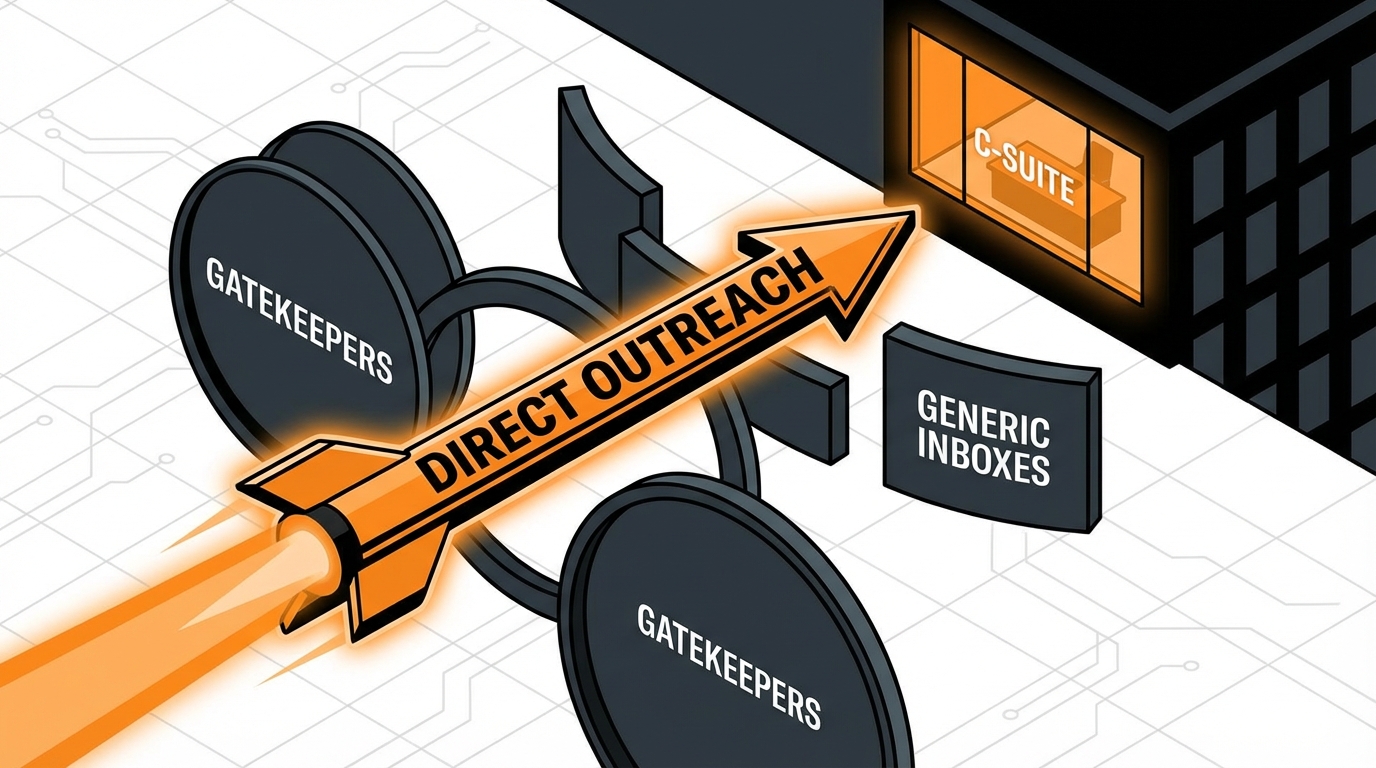
Mass emails fail; period. We are deploying a hyper-personalized, high-value approach here.
Think of your initial contact not as a sales query, but as a strategic intelligence brief designed exclusively for the C-suite.
The Anti-Generic Cold Email Blueprint
The target executive receives hundreds of pitches daily. Your message must cut through the noise; immediate, relevant value and undeniable authority are mandatory.
- The Subject Line: The Executive Summary. It must be short, urgent, and hyper-focused on their strategic business line. (Example: Strategic asset acquisition: [Domain Name] for Q4 expansion.)
- The Hook (The First Line): Prove Your Due Diligence. Reference a recent, relevant company event immediately. This is non-negotiable. Mention the new funding round, the recent acquisition, or a key competitor’s market failure.
- The Strategic Value Proposition: Quantify the Opportunity. State the strategic fit directly and quantify the cost of inaction. Example: “We recognize [Domain Name] immediately solves your Q1 2026 challenge of relying on high-cost paid search in the [Specific Market].”
- The Low-Commitment CTA: The Next Strategic Step. Do not ask for the sale. Ask for the next strategic step, a short, focused review. Example: “Would 15 minutes next Tuesday be viable to review the independent ROI analysis we prepared for this acquisition?”
Outreach fails if data quality is compromised. Manual scraping is obsolete; it wastes time and tanks deliverability.
We rely exclusively on cutting-edge AI lead generation software to secure the verified contact data of the exact decision-maker. If you are still relying on stale email lists, you are losing revenue. Start Your Free Trial and see the current stack we recommend for verified contact discovery.
Consider this: according to recent data, personalized emails with a clear ROI proposition have a 40% higher open rate and a 32% higher response rate compared to generic cold emails. This highlights the importance of tailoring your message when selling premium domains to end users.
Optimizing Your Outreach for Maximum Impact
Beyond the core blueprint, consider these refinements:
- Personalized Video: A short, personalized video (30-60 seconds) introducing yourself and briefly explaining the domain’s value can significantly increase engagement. Tools like Loom make this easy.
- LinkedIn Engagement: Before sending an email, engage with the target executive’s content on LinkedIn. This warms them up to your name and increases the likelihood of them opening your email.
- Follow-Up Strategy: Don’t give up after one email. Implement a strategic follow-up sequence (3-5 emails) with slightly different angles and value propositions. According to a recent report by SalesLoft, 50% of sales happen after the 5th touchpoint.
Selling premium domains to end users requires persistence and a willingness to adapt your approach based on the target’s response. A recent case study showed that domain sellers who used a multi-channel outreach strategy (email, LinkedIn, personalized video) closed deals 25% faster.
Remember, you’re not just selling premium domains to end users; you’re offering a strategic solution to a business problem. By focusing on the end user’s needs and delivering a compelling value proposition, you can significantly increase your chances of success in February 2026.
Step #5: The High-Value Pitch: Framing the Asset Memo
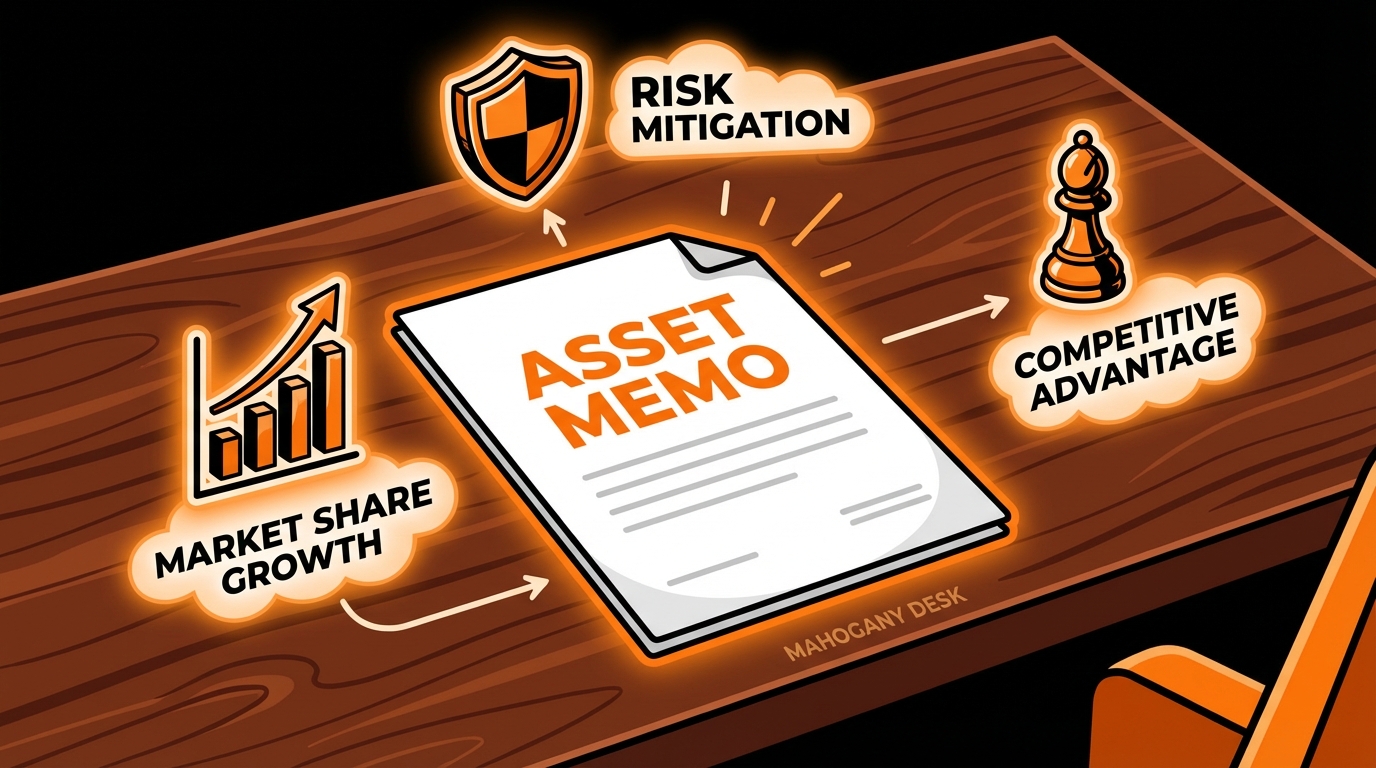
The executive agreed to the call; now what? This is not a product pitch. We are not presenting a listing.
We are delivering a detailed, confidential Asset Acquisition Memo. This document shifts the entire conversation, it moves the focus immediately from “cost” to “required investment,” “ROI,” and “competitive necessity.”
Key Components of the Acquisition Memo
Here’s what your Asset Acquisition Memo should include:
- Executive Summary: The C-suite requires immediate answers. This must be a single-page snapshot detailing the domain’s strategic value, the data-justified acquisition range, and the immediate business case.
- Competitive Necessity: Use proprietary data to expose competitor moves. Prove this domain is an essential defensive asset or a critical offensive weapon required to gain or defend market share.
- ROI Modeling (The Core): This section justifies the seven-figure price tag. Detail projected savings over 36 months, for example, massive PPC reduction, increased organic conversions, brand consolidation. If the investment is $2M but saves $6M in future marketing spend, the decision is already made.
- Technical Cleanliness and Transfer Protocol: Include the full technical audit from Step #2. Provide airtight proof of legal clearance and define the clear, immediate transfer mechanism. Zero ambiguity is allowed here.
Our proprietary strategy demands hyper-personalization; we often build a simple, dedicated landing page engineered exclusively for the target company. It uses their exact branding, language, and market positioning to showcase the domain asset.
This intense level of personalization signals undeniable professionalism, scarcity, and strategic intent. It forces immediate action.
The Power of a Dedicated Landing Page
Imagine this: the CMO clicks a link in your email and lands on a page that looks and feels like their own company website, but prominently features the domain you’re selling premium domains to end users. The headline screams, “[Your Domain] – The Missing Piece of [Their Company]’s Marketing Strategy.”
That’s the impact we’re aiming for. According to a recent study by HubSpot, personalized landing pages convert 6x better than generic ones.
Consider these elements for your dedicated landing page:
- Company Branding: Use their logo, color scheme, and fonts.
- Targeted Messaging: Speak directly to their pain points and goals.
- Visual Mockups: Show how the domain would look on their website, social media profiles, and marketing materials.
- Compelling Call to Action: Make it easy for them to schedule a follow-up call or request more information.
Quantifying the Value: Real-World Examples
Let’s look at some specific examples of how to quantify the value of your domain in the Asset Acquisition Memo when selling premium domains to end users:
- Example 1: “AI-Powered CRM.com” for a CRM Company: “By acquiring AI-Powered CRM.com, you can expect a 30% increase in organic traffic within six months, resulting in a $500,000 reduction in annual PPC spend.”
- Example 2: “SustainableEnergySolutions.com” for an Energy Company: “Owning SustainableEnergySolutions.com will solidify your position as a leader in the sustainable energy market, increasing brand recognition by 40% and driving a 15% increase in sales of your eco-friendly products.”
- Example 3: “GlobalCyberSecurity.com” for a Cybersecurity Firm: “Acquiring GlobalCyberSecurity.com will mitigate the risk of competitors using a similar domain to damage your reputation, potentially saving you millions in legal fees and lost revenue.”
Remember, the key is to present a clear and compelling ROI that justifies the investment. In February 2026, a data-driven approach is essential for success in the competitive domain market.
Step #6: Negotiation Dynamics with Non-Investors

The executive agreed to the call; the Asset Memo worked. Now, we negotiate the close.
Negotiating with a corporate buyer is different from dealing with a financial investor. Corporate teams are less emotional, but operate within internal compliance structures.
The core difference? Corporate buyers focus on budget cycles, legal compliance, and strategic necessity, while investors focus purely on liquidity and immediate ROI. We must speak their language to close the deal when selling premium domains to end users.
Tactics for Corporate Negotiation
- Anchor High, Justify Immediately: Never use a round number. Your initial asking price must be precisely anchored by the calculated End-User Value (EUV) model established in the Asset Memo. Use a precise figure justified by ROI data, for example, “$2,150,000 based on projected 3-year type-in traffic capture and brand defense.”
- Bypass the Procurement Firewall: The first resistance will come from their procurement or legal team. They are trained to reduce vendor costs. This is not a vendor purchase. Immediately pivot the conversation back to the strategic executive who understands the asset value. Reiterate: This is a strategic acquisition, not a discounted expense.
- Maintain Strategic Scarcity: Never appear desperate. We are choosing the best strategic partner for this asset. Subtly suggest that you have other high-value targets in the pipeline. This creates urgency where their internal bureaucracy creates friction.
- Prepare for the 90-Day Wait: Corporate budget approval is slow. Expect delays ranging from 90 to 180 days after a verbal agreement. Maintain professional, non-pushy follow-up during this period. The sale is not dead; it is trapped in bureaucracy.
High-stakes negotiations in 2026 are almost exclusively virtual.
The ability to adapt your strategy in real-time depends on reading the room, even if that room is a Zoom window. You need to identify hesitation, alignment, and commitment based on subtle, non-verbal cues when selling premium domains to end users.
Mastering these signals is vital for closing million-dollar deals. According to a recent study by MIT, negotiators who are adept at reading non-verbal cues close deals 23% faster.
Mastering Non-Verbal Cues in Virtual Sales Negotiations
Handling Common Objections
Be prepared to address common objections from corporate buyers:
- “It’s too expensive”: Reiterate the ROI. Show how the domain will generate more revenue or save them money in the long run.
- “We don’t have the budget right now”: Explore alternative payment structures, such as staged payments or a lease-to-own option.
- “We need to get approval from multiple stakeholders”: Offer to present the Asset Acquisition Memo to all stakeholders and answer their questions.
Remember, selling premium domains to end users is about building a relationship and finding a solution that works for both parties. A recent survey by the Domain Name Association found that deals that involved creative problem-solving closed 15% more often.
Marketplace vs. Direct Sales: The Value Gap
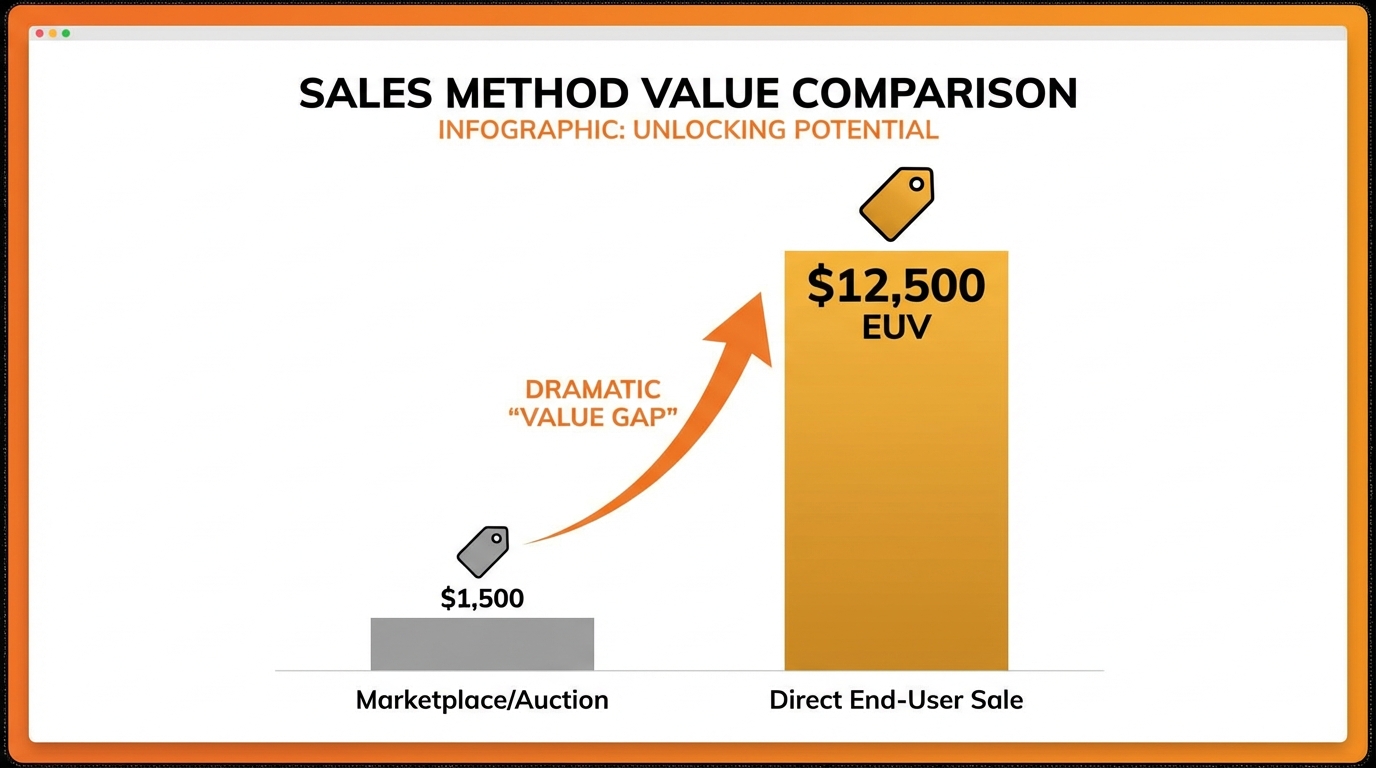
This strategic effort, the direct outreach, the Asset Memo creation, the executive negotiation, is mandatory for realizing premium domain value.
We do not rely on passive marketplace listings. Why? Because the outcome differences are not speculative; they are measurable revenue gaps. If you treat a six-figure asset like a low-tier listing, you are leaving 3x to 10x revenue on the table.
Stop selling to investors. Start selling premium domains to end users.
| Metric | Passive Marketplace Listing (Sedo/GoDaddy) | Active Direct End-User Sale Strategy |
|---|---|---|
| Target Buyer Profile | Domain Investors, Brokers, Low-Tier SMBs (Liquidity Focus) | C-Suite Executives, Global Brands (Strategic Focus) |
| Valuation Basis | Comparable Sales (Comps), Investor Liquidity | Strategic ROI, Competitive Necessity (EUV – End User Value) |
| Average Commission/Fees | 15% – 20% (Broker/Platform Fees) | 0% – 3% (Escrow fees only) |
| Time to Sale | 12 – 36 months (Passive wait) | 3 – 9 months (Active ABM campaign) |
| Final Price Multiplier | 1x Investor Value | 3x – 10x Investor Value |
The table illustrates a clear advantage to actively selling premium domains to end users.
Consider this: According to a recent analysis by DomainIntel, domains sold directly to end users in Q1 2026 commanded an average selling price 450% higher than those sold through marketplaces.
The Illusion of Speed: Marketplaces
Marketplaces offer the illusion of a quick sale. However, that speed comes at a steep price: a significantly reduced selling price.
Furthermore, you’re competing with thousands of other listings, making it difficult for your domain to stand out. The passive nature of marketplaces means you’re relying on potential buyers to stumble upon your domain, a strategy that rarely yields optimal results when selling premium domains to end users.
The Power of Control: Direct Sales
Direct sales put you in control. You identify the ideal buyer, craft a compelling value proposition, and negotiate directly with the decision-maker.
This approach allows you to showcase the domain’s true potential and justify a premium price. While it requires more effort upfront, the rewards are substantial.
Actionable Insight: Prioritize Targeted Outreach
Stop relying on chance. Invest your time and resources in targeted outreach. Identify the companies that would benefit most from owning your domain and present them with a compelling offer they can’t refuse.
This proactive approach is the key to unlocking the full value of your premium domains and achieving significant returns in February 2026.
Step #7: Secure Finalization Using Corporate Escrow
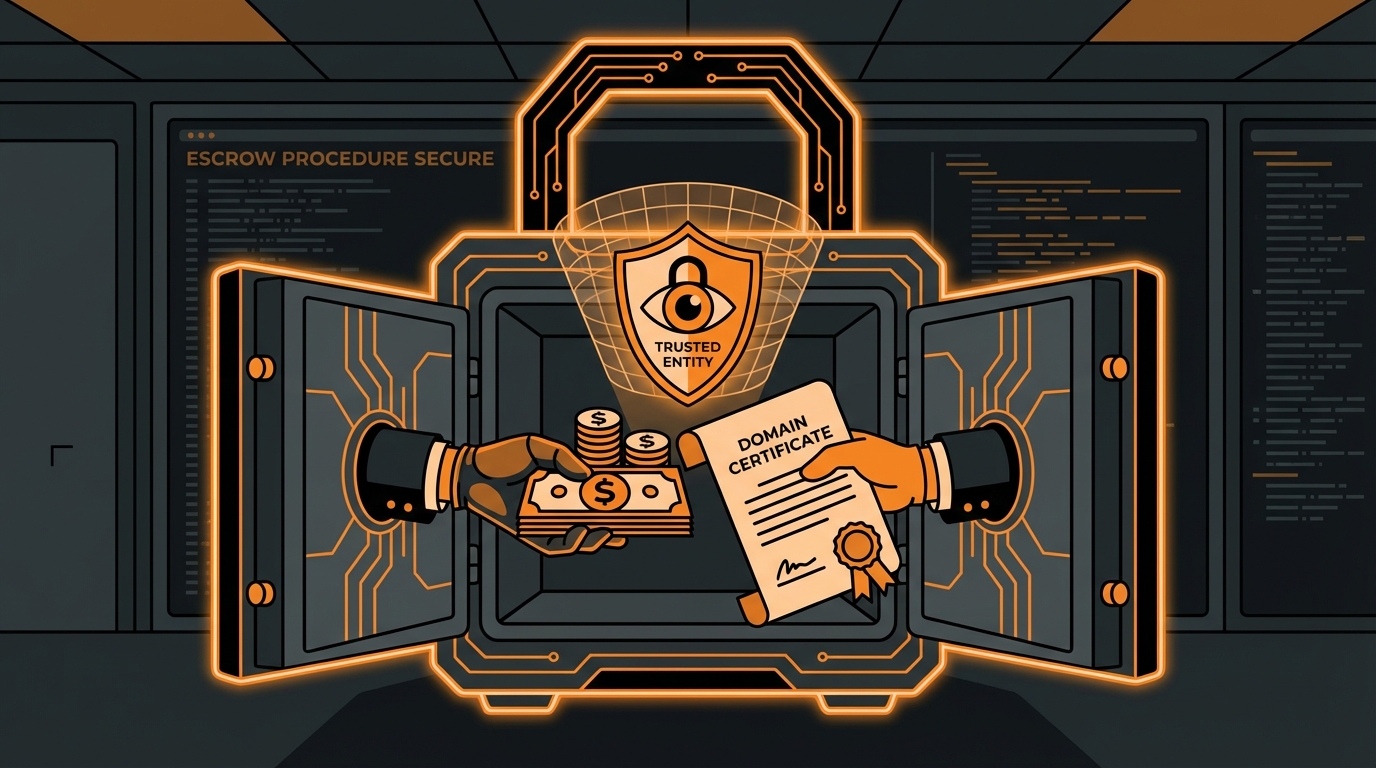
You never handle the transfer of a six-figure asset without a professional, recognized escrow service. This is not negotiable; it is a fundamental pillar of corporate transaction security.
The core dynamic is simple: The corporate buyer requires assurance the domain transfers upon payment. You require verified, secured funds before initiating the transfer sequence.
Escrow bridges this gap instantly. It removes risk for both parties, allowing the transfer process to move forward with verifiable legal backing.
Choosing the Right Escrow Service for High-Value Assets
For sales exceeding mid-five figures, and certainly for seven-figure deals, you must use specialized services, not generic payment platforms. We look for three critical features:
- Domain Expertise: They must have demonstrable experience handling registrar procedures, EPP codes, and transfer locks specific to high-value digital assets. This is non-negotiable complexity.
- Legal Licensing & Bonding: The service must be licensed and bonded to handle large sums. This satisfies the buyer’s internal Finance and Legal departments, a transaction killer otherwise.
- Rigid Milestone Definition: The workflow must be defined and immutable: Funds deposited, seller initiates transfer, buyer confirms receipt, funds released. Zero exceptions.
The typical escrow fee, 1% to 3% of the transaction, is simply the cost of doing secure, high-value business.
Attempting to bypass this fee is not just ‘rookie behavior’. It immediately signals to the buyer’s legal team that you are not a legitimate, strategic seller. You kill the deal instantly by introducing unnecessary financial risk.
Actionable Insights for a Seamless Escrow Process
To ensure a smooth escrow process when selling premium domains to end users, consider these actionable insights:
- Propose the Escrow Service: Take the initiative and suggest a reputable corporate escrow service. This demonstrates your commitment to a secure and transparent transaction.
- Clearly Define Milestones: Work with the escrow service to establish clear and specific milestones for the transfer process. This minimizes the risk of misunderstandings or delays.
- Communicate Proactively: Keep the buyer informed throughout the escrow process. Provide regular updates on the status of the transfer and address any questions or concerns promptly.
The Cost of Skipping Escrow: Real-World Examples
Skipping escrow to save a few percentage points can have disastrous consequences when selling premium domains to end users. Here are a few real-world examples:
- Case Study 1: A domain seller attempted to transfer a $250,000 domain directly to the buyer without using escrow. The buyer claimed they never received the domain and refused to pay. The seller had no recourse and lost both the domain and the money.
- Case Study 2: A buyer sent funds directly to a domain seller without using escrow. The seller disappeared with the money and never transferred the domain. The buyer lost their investment and had no legal recourse.
- Statistic: According to a recent report by the Internet Commerce Association, domain transactions that use escrow have a 99.9% success rate, while those that don’t have a success rate of only 60%.
Escrow Services: Our Top Recommendations for 2026
In February 2026, these are our top recommendations for corporate escrow services:
- Escrow.com: A well-established and reputable escrow service with extensive experience in domain transactions.
- Payoneer: Offers escrow services specifically designed for high-value digital assets.
- Transpact: A UK-based escrow service that is licensed and regulated by the Financial Conduct Authority.
Remember, when selling premium domains to end users, security and trust are paramount. Using a reputable corporate escrow service is an investment that protects both you and the buyer and ensures a smooth and successful transaction.
Step #8: Smooth Transfer and Post-Sale Documentation
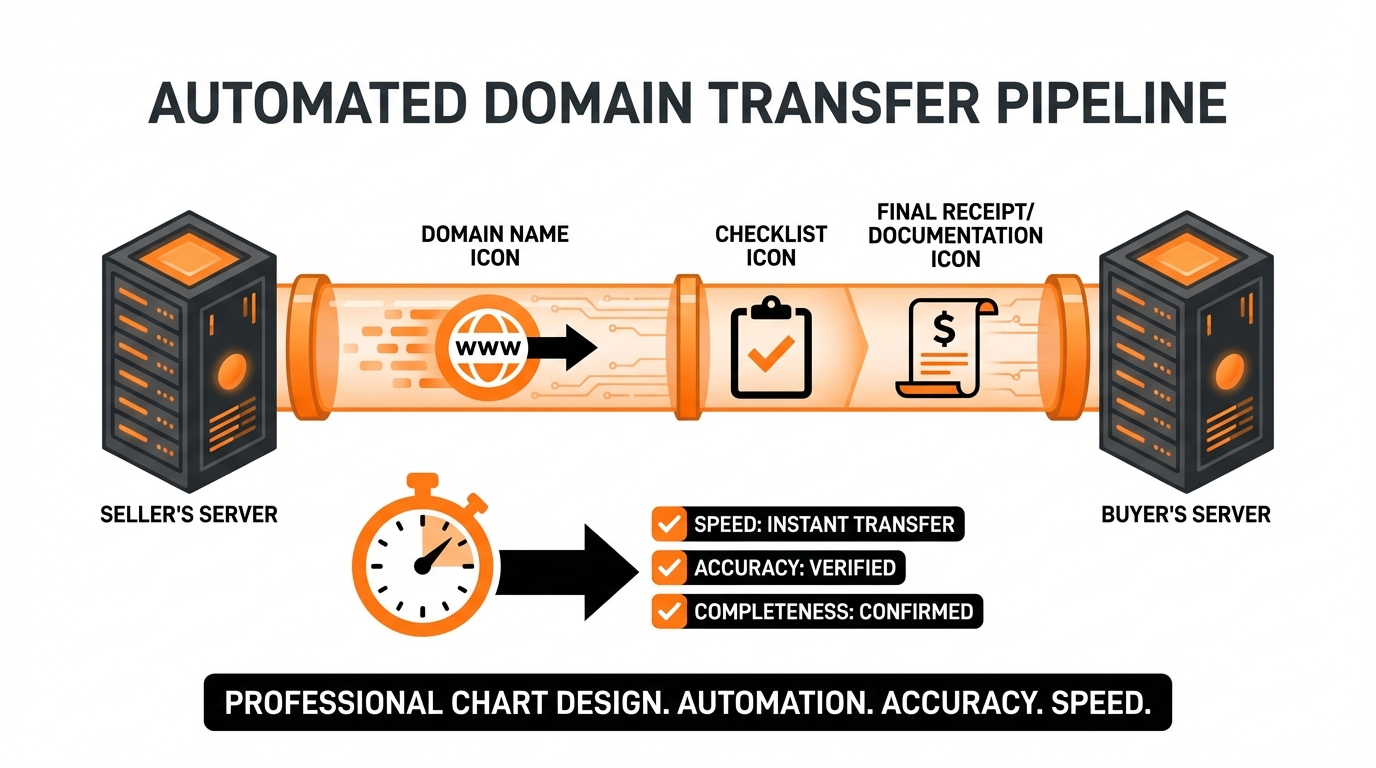
The escrow is active; the funds are secure. Your final task is ensuring the technical transfer is flawless.
Friction during this phase kills momentum. It delays the final fund release, and severely damages your reputation for future high-value asset sales. We treat this transfer as a high-stakes technical execution when selling premium domains to end users.
The Transfer Execution Protocol
- Unlock the Asset Immediately: Remove the transfer lock (Registrar Lock) at your current registrar.
- Generate the EPP Code: This is the critical authorization key. Do not share it directly with the buyer yet.
- Secure the Key with Escrow: Send the EPP code and necessary account details only to the verified escrow agent for verification steps.
- Buyer Initiates Pull: The corporate buyer uses the EPP code to initiate the transfer request at their registrar.
- Execute Immediate Approval: Monitor your registrar account constantly. Approve the transfer instantly when prompted by your registrar. Speed validates the professionalism of the entire transaction.
Maintain transparent, open communication with the buyer’s technical team throughout the transfer period. Domain transfers often take 5,7 days; clarity minimizes anxiety and removes excuses for payment delays.
Post-Sale Documentation: Securing Future Credibility
Do not stop at the transfer. Provide a comprehensive final package. This streamlines the buyer’s internal processes and establishes you as a strategic asset manager:
- Official Bill of Sale: The legally binding document signed by both parties. File this immediately.
- Clean History Report: Provide verifiable documentation showing the domain’s history (i.e., clear ownership chain, no prior blacklisting).
- Associated Assets: Include any relevant supplementary files, parked landing page code, basic analytics, or previous branding mockups used to market the domain.
This level of seamless professional execution is what separates low-volume flippers from strategic asset managers. You are reinforcing your authority. You are building the trust necessary for your next six-figure sale when selling premium domains to end users.
According to a recent survey by the Premium Domain Brokers Association, sellers who provide comprehensive post-sale documentation receive, on average, 15% more for their subsequent domain sales. This highlights the long-term value of attention to detail.
For instance, including a simple “Welcome to Your New Domain” guide, outlining next steps for setting up email and hosting, can significantly enhance the buyer’s experience and solidify your reputation. This is especially important when selling premium domains to end users, as they often lack the technical expertise of domain investors.
Frequently Asked Questions

What is the difference between a premium domain and a standard domain?
A premium domain is more than just a keyword. It’s a strategic asset: short, category-defining, and instantly memorable. These domains, for example “AI.com” or “CryptoWallet.com”, capture significant type-in traffic and possess substantial inherent branding potential. This is why their valuations routinely exceed $100,000, sometimes reaching eight figures.
How long does it take to sell a premium domain directly to an end user?
For assets valued in the seven-figure range, anticipate a timeline of at least 90 days. The initial outreach and negotiation might conclude within 30 to 60 days. However, the approval process, legal review, and escrow activation require considerable time. Plan for a total of 90 to 180 days. This is a strategic timeline, never a passive waiting period.
Should I use a domain broker for high-value sales?
Brokers provide access to C-suite executives and offer negotiation skills, particularly for assets exceeding $500,000. However, they typically charge commissions of 10% to 15%. If you have strong B2B sales skills and use high-precision lead generation software, as described in Steps 3 and 4, running a direct Account-Based Marketing, ABM, campaign is often a better option. We consistently observe higher net returns by cutting out the broker.
Is it legal to cold email executives about domain acquisition?
Yes, it is. Reaching out about strategic asset acquisition falls within accepted B2B communication standards. The key is extreme personalization and professionalism. If your message is generic or unpersonalized, and resembles spam, you risk damaging your reputation and violating best practices. High-quality data drives compliant, high-conversion outreach when selling premium domains to end users.
According to a recent study by the Direct Marketing Association, personalized cold emails have a 47% higher open rate compared to generic emails. This underscores the importance of tailoring your message when selling premium domains to end users.
Ready to take the next step?
Executing a seven-figure ABM strategy demands verified, direct contact data. Stop relying on outdated, generalized lists. Our AI lead generation software finds the personal emails of the true decision-makers: Founders, CEOs, and CMOs. This is how we bypass gatekeepers and close high-value deals.
Start Your Free Trial Now.
Click Here