

In 2025, mass outreach is dead. We know this. Founders and sales teams are shifting focus from volume posting to high-leverage micro-engagements. The highest ROI activity on LinkedIn is no longer publishing content; it is strategic commenting.
Why? A targeted, insightful comment on a prospect’s post generates immediate visibility, signals expertise, and bypasses the cold DM wall. Generic “Great post!” replies achieve nothing.
We need engineered comments designed for a specific outcome: conversion. This is the only way to scale engagement without sacrificing authenticity.
This guide breaks down the advanced DEPTH prompting framework. We utilize Level 7+ prompt engineering applied directly to client acquisition to ensure every comment is client-winning.
Key Takeaways
- The primary focus for 2025 lead generation is shifting from mass posting to high-ROI strategic commenting.
- You must use the DEPTH Framework (Define Perspectives, Establish Metrics, Provide Context, Task Breakdown, Human Feedback) to engineer non-generic comments.
- We must move beyond basic value-add to specific comment types: Authority Builders, Qualifying Questions, and Bridge-to-DM hooks.
- Target an engagement metric of 5% profile views per comment to measure the success of strategic commenting efforts.
1. Why Strategic Commenting Replaces Cold DMs
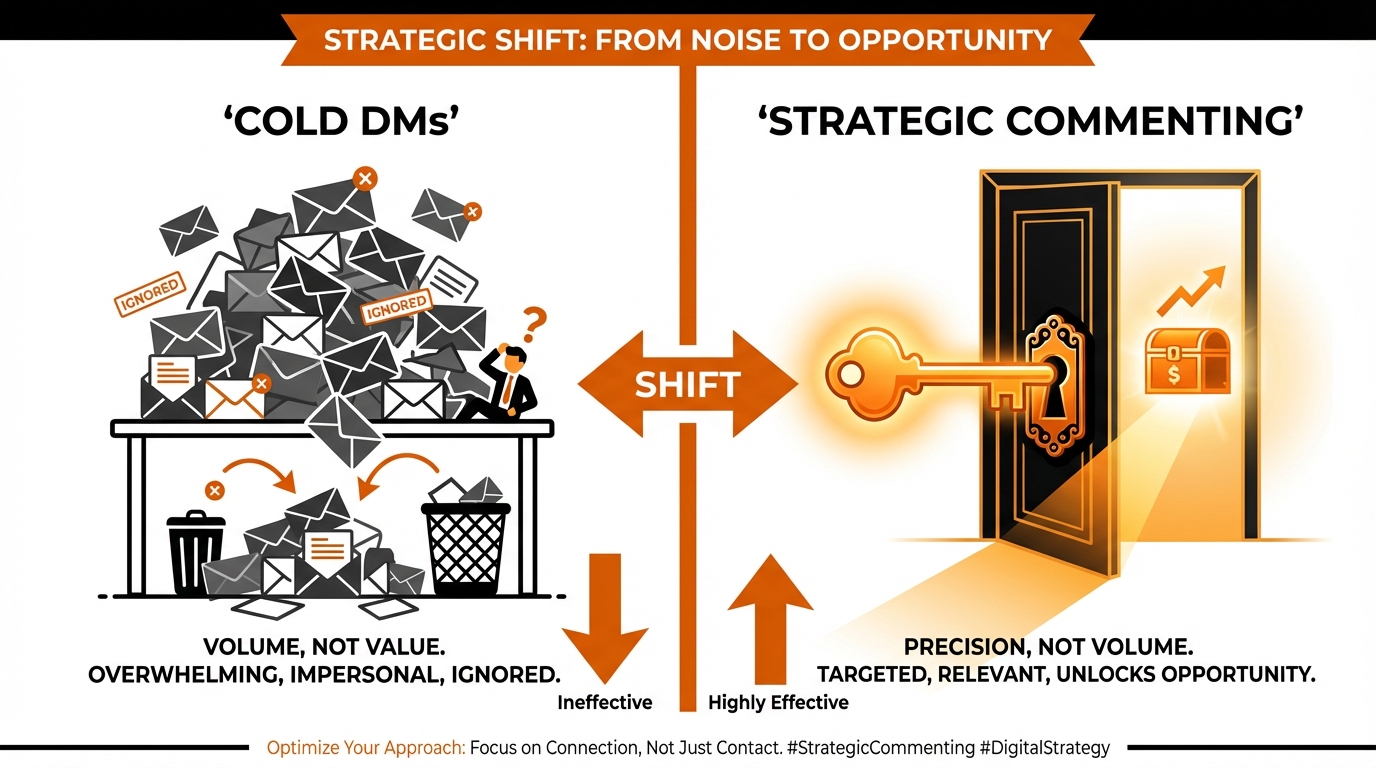
The traditional cold outreach funnel is saturated. Prospects ignore generic DMs and mass-sent sequences. Strategic commenting flips the script: you earn attention publicly before initiating the private conversation. This establishes immediate, verifiable credibility.
We have measured this fundamental shift internally. A prospect who has seen and engaged with three of your thoughtful comments is 4x more likely to accept your connection request than a recipient of a standard cold DM sequence. This is not anecdotal; it is a measurable system for client acquisition.
The strategic comment functions as a high-leverage micro-pitch:
- It bypasses the cold DM wall and LinkedIn’s spam filters.
- It positions you as an expert instantly, leveraging the prospect’s audience for social proof.
- It forces the prospect to voluntarily consume your expertise and value proposition.
“A well-engineered comment acts as a micro-sales pitch that the prospect voluntarily reads. It’s pattern interruption disguised as genuine engagement.”
To leverage this fundamental shift, you cannot rely on generic AI prompts or surface-level engagement. We must use AI to structure strategic thought, not just generate filler text. This requires the DEPTH framework.
2. The DEPTH Framework for Comment Engineering
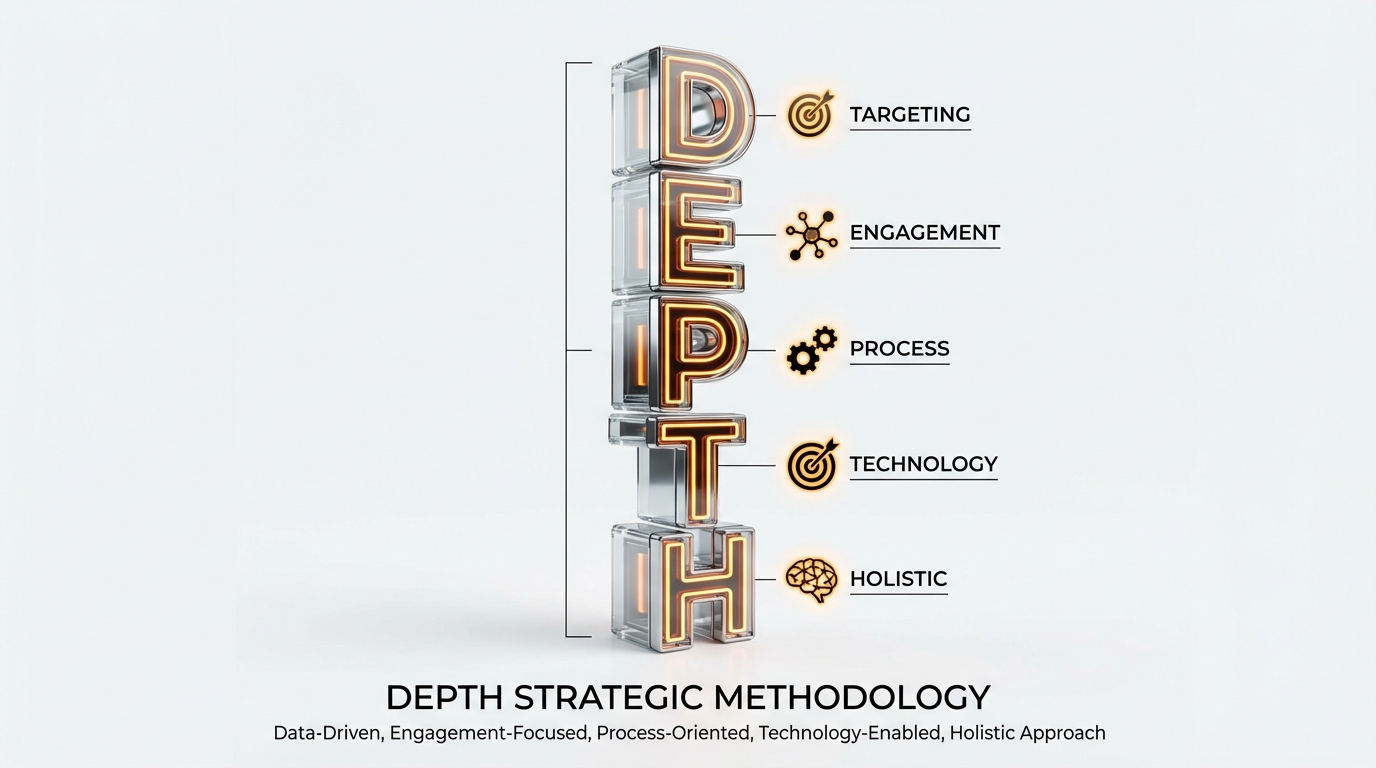
Stop using Level 1 prompts like “Write a comment.” The DEPTH framework is how we engineer Level 7, high-conversion outputs, specifically tailored to the strict 1,000-character constraint of a LinkedIn comment. This framework ensures your AI output is strategic, not just verbose.
- D – Define Multiple Perspectives: Assign the AI specific, high-value roles (e.g., B2B Founder, Senior Data Analyst, Behavioral Economist). This immediately eliminates the generic “AI voice” and ensures the commentary is niche-relevant.
- E – Establish Success Metrics: Clearly define the measurable outcome before the prompt runs. For commenting, specify the target action: “Optimize output for a 5% Profile Click-Through Rate (CTR)” or “Ensure the comment forces a direct, nuanced follow-up question from the prospect.”
- P – Provide Context Layers: Feed the AI comprehensive background data. This must include the original post, the prospect’s known industry pain points, and the precise, unique angle of your company’s solution (the USP).
- T – Task Breakdown: Structure the comment into mandatory components. Example structure: (1) Validate the prospect’s core premise, (2) Introduce a nuanced, data-backed counterpoint, and (3) Conclude with a low-friction qualifying question.
- H – Human Feedback Loop: Mandate that the AI self-critique its initial draft against the established metrics (E). Instruct it to eliminate all traceable AI jargon, corporate filler, and platitudes, guaranteeing human-level strategic depth.
Ignoring D, E, P, and H means you are only using the AI for basic writing (the ‘T’ task). This guarantees the flat, indistinguishable comments that prospects ignore. We must engineer the entire chain to achieve verifiable results.
3. The 5 Client-Winning Comment Categories
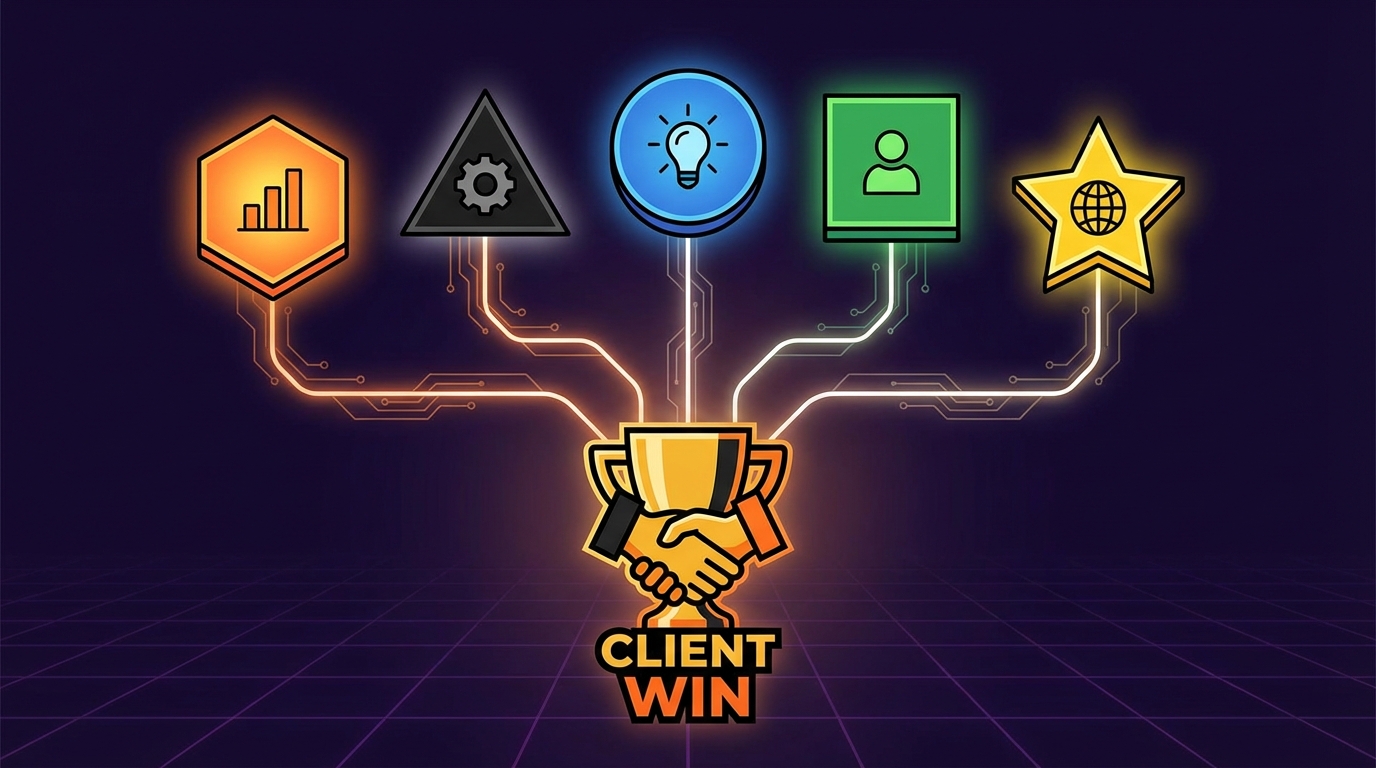
Client acquisition through commenting is a strategic exercise, not a popularity contest. It is exclusively about establishing authority and relevance to route leads. We have mapped high-ROI comments into five distinct categories. Each type serves a specific funnel stage, ensuring your output is strategic lead generation, not merely engagement.
| Category | Goal / KPI | Risk Profile |
|---|---|---|
| Authority Builders (AB) | Establish expertise and deep insight. Trigger a profile view (Target: 8% view rate). | Low risk, high effort (requires verifiable, actionable insight). |
| Qualifying Questions (QQ) | Uncover specific pain points or process gaps. Prompt a detailed reply (Target: 50% reply rate). | Moderate risk (must sound like strategic curiosity, not a cold survey). |
| Bridge-to-DM (BDM) | Create a natural exit ramp to a private message. Trigger connection request (Target: 10% acceptance). | High risk (requires extreme personalization to avoid appearing spammy). |
| The Uncommon Take (UT) | Differentiate your stance and position yourself outside the consensus. Maximize visibility/likes. | Moderate risk (must be contrarian and evidence-based, not combative). |
| Data-Driven Critique (DDC) | Reference specific industry metrics, internal A/B test results, or proprietary success data. Maximize credibility. | Low risk (only if the data is accurate, relevant, and supports your core offering). |
4. The 10 Advanced DEPTH Prompts for Client Acquisition

The DEPTH framework is designed to force high-ROI outputs from the Large Language Model (LLM). Use these 10 advanced prompts as non-negotiable templates. Replace all bracketed items [LIKE THIS] with your specific context. Do not alter the structure; the performance relies on the precise sequencing of the DEPTH variables.
4.1. Authority Builder Prompts (AB)
Authority Builder (AB) comments establish you as the definitive expert resource without resorting to a direct pitch. The single goal here is to compel a profile click,a key micro-conversion we track. We are optimizing specifically for LinkedIn Profile Views From Commenting Strategy.
Prompt AB-1: The Process Refinement Comment
D - Define Perspectives: You are a 15-year veteran B2B SaaS operations consultant and a direct response copywriter.
E - Establish Metrics: Optimize for a 7% profile view rate. Ensure the comment is under 500 characters and contains zero corporate jargon.
P - Provide Context: Prospect's Post Summary: "[PROSPECT'S POST SUMMARY ABOUT THEIR SALES CHALLENGE, e.g., 'We struggle moving leads from MQL to SQL.']" My Expertise: "[MY SPECIFIC SOLUTION, e.g., 'AI-driven personalized email sequences.']"
T - Task Breakdown:
1. Acknowledge the core problem identified by the prospect.
2. Introduce a superior, non-obvious step in their process that they missed.
3. Briefly mention the measurable result of this step (e.g., '30% lift').
4. End with a statement of shared struggle, not a question.
H - Human Feedback Loop: Rate the output 1-10 on authority, conciseness, and relevance. If any score is below 8, rewrite to be more direct and remove any phrases that sound like an AI wrote them.
Prompt AB-2: The Trend Validation Comment
D - Define Perspectives: You are a Chief Revenue Officer (CRO) focused on future trends and a market data analyst.
E - Establish Metrics: Maximize comment likes (Target: 15+ likes). Ensure the comment includes one forward-looking prediction for 2026.
P - Provide Context: Prospect's Post URL: "[PASTE THE URL OF THE POST HERE FOR TONE ANALYSIS]" Prospect's Industry: "[INDUSTRY]" My Service: "[MY SERVICE, e.g., AI lead scoring.]"
T - Task Breakdown:
1. Analyze the prospect’s tone from the URL provided.
2. Validate their core assumption using a contrasting industry example (e.g., 'This trend is mirroring what happened in FinTech in 2024').
3. Offer a short, high-value insight that relates their problem to the future of their market.
4. End with an open-ended question that encourages other readers to jump in.
H - Human Feedback Loop: Score the tone match (1-10). If the score is below 9, adjust the language to mirror the prospect's level of formality/casualness. What critical perspective did I miss?
4.2. Qualifying Question Prompts (QQ)
Qualifying Question (QQ) prompts are strategic interrogations. The objective is to make the prospect publicly elaborate on their specific operational bottlenecks, effectively self-qualifying the lead for your solution.
Prompt QQ-1: The Specificity Challenge
D - Define Perspectives: You are an experienced sales development representative (SDR) and a strategic interviewer.
E - Establish Metrics: Optimize for a reply that includes a specific number or metric (e.g., budget, timeline, team size).
P - Provide Context: Prospect's vague pain point: "[e.g., 'We need better lead quality.']" My product solves: "[e.g., 'Manual list building and verification.']"
T - Task Breakdown:
1. Express understanding of the general pain.
2. Immediately pivot to a hyper-specific, quantifiable question that requires them to reveal their current process flaw.
3. Frame the question as seeking "lessons learned," not as a criticism.
4. Keep the output under 3 sentences.
H - Human Feedback Loop: Does this question directly relate to the limitations of their current system? If not, sharpen the focus. Is the tone supportive?
Prompt QQ-2: The Priority Shift Inquiry
D - Define Perspectives: You are a CEO who must prioritize limited resources and a financial analyst.
E - Establish Metrics: Force a binary choice in the reply (A or B).
P - Provide Context: Prospect's competing priorities: "[PRIORITY A, e.g., 'Hiring 5 new SDRs']" and "[PRIORITY B, e.g., 'Implementing new AI software']". The post focuses on A.
T - Task Breakdown:
1. Validate the importance of Priority A.
2. Introduce Priority B as a necessary trade-off.
3. Ask which they believe yields higher ROI per dollar spent in the current market (2025).
4. Do not offer your own opinion.
H - Human Feedback Loop: Ensure the question is genuinely difficult and strategic, not rhetorical. Rewrite if the choice between A and B is too obvious.
4.3. Bridge-to-DM Prompts (BDM)
Bridge-to-DM (BDM) prompts are the final public step before conversion. These require introducing a highly valuable, proprietary asset that cannot be delivered publicly, thereby forcing the lead into a private message exchange. This sets the immediate foundation for a discovery call. For the subsequent steps, review Convert LinkedIn Comments to Discovery Calls: The 2025 Blueprint.
Prompt BDM-1: The Resource Offer Hook
D - Define Perspectives: You are a generous, non-salesy industry peer and a technical writer.
E - Establish Metrics: Trigger a "DM me" or "Send it over" reply (Target: 15% conversion).
P - Provide Context: Prospect's problem: "[PROSPECT'S PROBLEM, e.g., 'Wasting time manually verifying emails.']" My Solution Resource: "[RESOURCE NAME, e.g., 'Our proprietary 2025 AI Vetting Checklist.']"
T - Task Breakdown:
1. Validate the severity of the prospect's problem (waste/time).
2. Mention that we recently solved this exact problem using a specific, proprietary checklist/framework.
3. Offer the resource for free, explicitly stating it is too long for a comment.
4. Instruct the prospect to initiate the DM.
H - Human Feedback Loop: Does the offer sound valuable enough to warrant a DM? If not, increase the perceived specificity of the resource. Ensure the tone is purely helpful, not transactional.
Prompt BDM-2: The Proprietary Data Comparison
D - Define Perspectives: You are a data scientist who analyzes SaaS benchmarks and a pragmatic founder.
E - Establish Metrics: Get the prospect to ask for a specific data point or benchmark comparison.
P - Provide Context: Prospect's performance claim: "[PROSPECT'S CLAIM, e.g., 'We hit a 40% lead-to-opportunity rate last quarter.']" Our internal benchmark data: "[OUR BENCHMARK, e.g., 'Industry average is 32%; our clients hit 55%.']"
T - Task Breakdown:
1. Congratulate the prospect on their claim.
2. Introduce our internal, anonymous data set that suggests a higher benchmark is achievable.
3. Do not reveal the benchmark number. State that the full comparison chart is available.
4. Use a soft closing statement inviting them to see the comparison privately.
H - Human Feedback Loop: Is the tone humble, or does it sound like bragging? Adjust to emphasize the difficulty of achieving that benchmark, making the resource more valuable.
4.4. The Uncommon Take Prompts (UT)
Uncommon Take (UT) prompts are designed for maximum visibility. You introduce a strategic, data-backed counterpoint to the prospect’s thesis. The goal is professional disruption and debate, establishing you as a thought leader who challenges industry norms.
Prompt UT-1: The Contrarian Viewpoint
D - Define Perspectives: You are an industry contrarian who values efficiency over tradition and a seasoned venture capitalist.
E - Establish Metrics: Maximize replies from non-prospects (Target: 20+ replies).
P - Provide Context: Prospect's post thesis: "[PROSPECT'S THESIS, e.g., 'Outbound sales is back in 2025.']" Our counter-thesis: "[OUR COUNTER-THESIS, e.g., 'Outbound is only effective when 90% automated by AI.']"
T - Task Breakdown:
1. State the counter-thesis immediately and directly.
2. Provide one specific, pragmatic example of why the traditional view is outdated (2025 context).
3. Ask a polarizing, yet professional, question to force a division in the comments section.
H - Human Feedback Loop: Does the comment clearly position me against the majority without being hostile? If not, soften the language while retaining the core disagreement.
Prompt UT-2: The Efficiency vs. Effectiveness Trade-Off
D - Define Perspectives: You are an efficiency consultant, focused on long-term systemic ROI and brand equity.
E - Establish Metrics: Optimize for a comment that receives two separate replies from the prospect defending their original position.
P - Provide Context: Prospect's Post Thesis: "[Focus on short-term gains, e.g., 'We smashed Q4 targets by increasing cold calls.']" My long-term view: "[Focus on the hidden cost, e.g., 'Cold calling boosts short-term metrics but destroys long-term brand equity and conversion velocity.']"
T - Task Breakdown:
1. Validate the short-term success.
2. Introduce the concept of systemic cost associated with that strategy (e.g., SDR churn, brand dilution).
3. Ask a probing question about the long-term viability (3-5 years out) of their current system.
4. Maintain a respectful, analytical tone.
H - Human Feedback Loop: Did the LLM sound critical or analytical? If critical, soften the language to focus purely on data trade-offs and systemic risk.
4.5. Data-Driven Critique Prompts (DDC)
Data-Driven Critique (DDC) prompts are used when a prospect discusses internal performance or strategy. Your role is to inject irrefutable, real-world metrics or superior frameworks, instantly demonstrating that your advice is grounded in current market evidence, not opinion.
Prompt DDC-1: The Efficiency Metric Correction
D - Define Perspectives: You are a Lean Six Sigma expert and a B2B sales leader.
E - Establish Metrics: Introduce a new, better efficiency metric (e.g., 'Time to Verified Email' vs. 'Total Emails Sent').
P - Provide Context: Prospect's current metric: "[PROSPECT'S METRIC, e.g., 'We track pipeline velocity.']" Our preferred metric: "[OUR METRIC, e.g., 'We track pipeline quality score (PQS).']"
T - Task Breakdown:
1. Validate the prospect’s current metric as "legacy" or "lagging."
2. Introduce the superior, modern metric and explain its strategic advantage in one sentence.
3. Ask how they are currently weighting the variables that feed into the new metric.
4. Keep the output highly technical and brief.
H - Human Feedback Loop: Is the explanation of the new metric clear to a non-expert CEO? Simplify the definition if needed.
Prompt DDC-2: The Benchmark Inversion
D - Define Perspectives: You are a SaaS Benchmark Analyst specializing in conversion funnels and a process optimization expert.
E - Establish Metrics: Optimize for the prospect to ask for the source of the benchmark data.
P - Provide Context: Prospect's perceived success metric: "[e.g., 'Our trial conversion rate is 8%.']" Industry benchmark data (Pyrsonalize data): "[e.g., 'For our niche, 8% is 20% below the median; 12% is achievable with X optimization.']"
T - Task Breakdown:
1. Validate their number.
2. Introduce the context of the current 2025 benchmark, stating their number is sub-optimal.
3. State clearly that their number suggests a severe bottleneck in a specific funnel stage (e.g., lead scoring or email verification).
4. Close by asking if they have audited that specific bottleneck recently.
H - Human Feedback Loop: Ensure the critique is based on verifiable industry data, not subjective opinion. Is the tone purely analytical and professional?
5. The Conversion Workflow: From Comment to Client
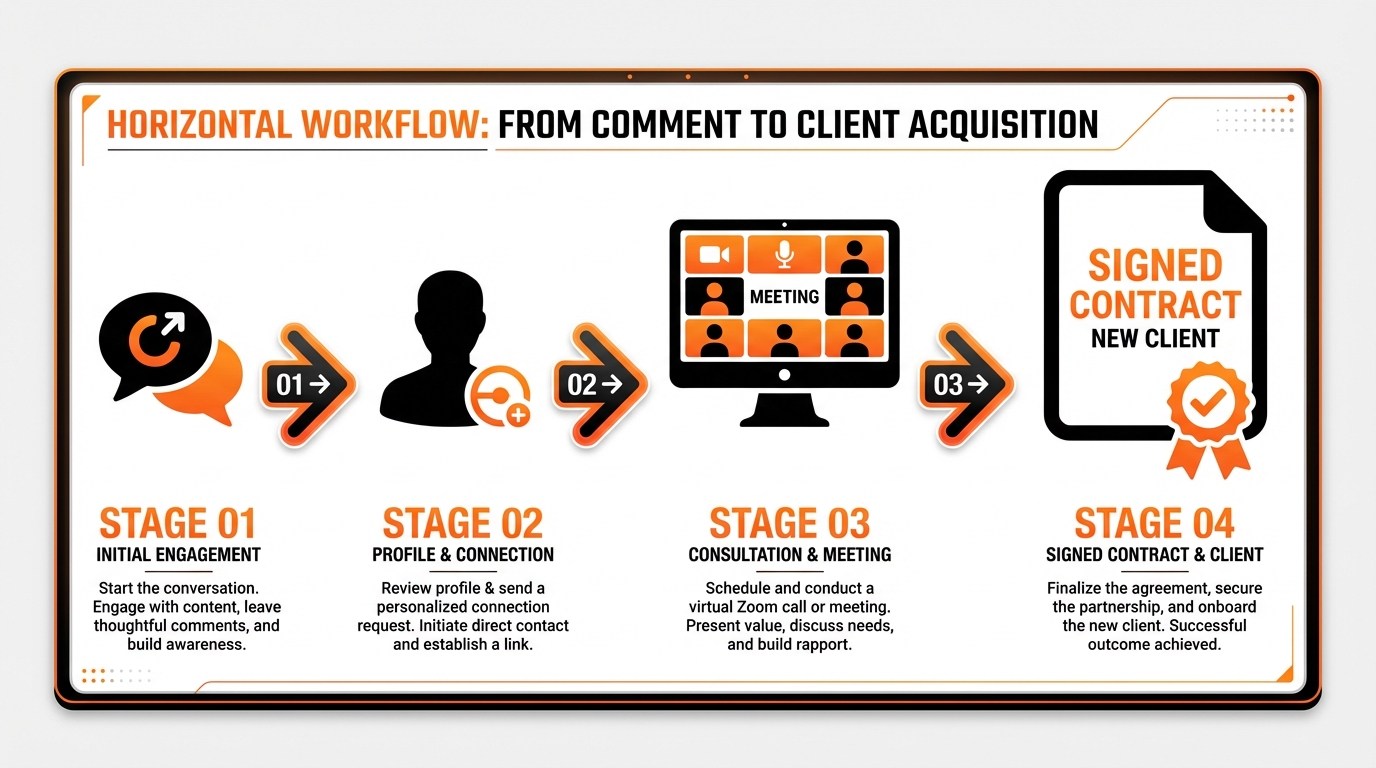
A high-value comment is merely the first tactical move. The strategic goal is always to migrate the relationship from the public feed onto a private channel where qualification and conversion can occur. This requires a non-negotiable, structured workflow.
- Monitor Engagement: Track which specific comments drive the highest profile views and direct replies from target prospects. We recommend using dedicated internal tracking systems (or Pyrsonalize) to efficiently identify high-intent leads generated by your activity.
- Enforce the 3-Touch Rule: Never initiate the Direct Message (DM) until you have delivered a minimum of three high-value, non-generic comments on the prospect’s content within a 7-day window. This consistency establishes credibility and primes the prospect for a private interaction.
- Execute the Bridge-to-DM (BDM Prompt): Leverage a specific BDM prompt (covered in the next section) designed to force the prospect to initiate the private conversation. This is non-negotiable. If you initiate the DM immediately, you appear needy; the prospect must pull you in.
- Initiate the DM Qualification Sequence: Once the prospect has successfully entered your inbox, deploy a dedicated, high-conversion DM sequence focused on immediate value delivery and strategic qualification.
We use the following DEPTH prompt to draft the initial DM response. Ensure this message maintains the tactical authority and strategic focus you established publicly.
Prompt DM-1: The Value Delivery and Qualification Prompt
D - Define Perspectives: You are a trusted advisor who has already established public credibility and is providing immediate, tactical value.
E - Establish Metrics: Convert the conversation into a 15-minute qualification call (Target: 30% booking rate).
P - Provide Context: Prospect's initial request: "[PROSPECT'S DM, e.g., 'Can you send me that checklist?']" My solution's core value: "[e.g., 'Eliminating 80% of manual lead vetting time.']"
T - Task Breakdown:
1. Deliver the promised value (the resource/data) immediately and without friction.
2. State the core value of the resource in relation to their initial problem (e.g., "This data set is specifically designed to address [Problem X] we discussed.").
3. Introduce a specific, data-backed qualification question related to the resource that requires a detailed answer (e.g., 'What is your current team size dedicated to this task?').
4. Offer a quick, no-pressure 15-minute call to discuss the data's application to their specific use case, positioning it as a strategic review of their current process, not a sales pitch.
H - Human Feedback Loop: Did I deliver the value before asking a question or proposing a call? If not, restructure the message flow immediately. Ensure the call is framed as a benefit to them (strategic insight), not a benefit to me (a booked meeting).
Frequently Asked Questions
- How long should a client-winning LinkedIn comment be?
-
The ideal length for a high-impact comment is between 300 and 600 characters. This length is precisely calibrated to deliver a strategic insight or qualifying question (QQ) without diluting intent.
Crucially, avoid forcing the reader to click “See More” unless the content is a proprietary data point or a complex, unavoidable case study summary.
- Is it ethical to use AI for commenting?
-
Yes, provided you adhere strictly to the Human Feedback Loop (H) element of the DEPTH framework. AI is a tool for strategic augmentation, not autonomous execution.
We utilize AI internally only to:
- Remove filler language and conversational fluff.
- Clarify the core intent and strategic alignment.
- Verify the tone matches the prospect’s industry and seniority level.
You must always review and edit the output to inject genuine, human perspective before posting.
- How do I measure the ROI of my commenting strategy?
-
The ROI of high-leverage commenting is measured by two primary metrics: Profile Click-Through Rate (CTR) and Reply Rate (RR).
- Profile CTR: Track profile views using LinkedIn Analytics on days you execute the strategy.
- Reply Rate (RR): Focus specifically on replies to your Qualifying Questions (QQs).
A successful Pyrsonalize-driven campaign should yield a 5–10% lift in profile views and maintain a minimum 30% reply rate on targeted QQ comments.
- Can I use these prompts for visual content (e.g., infographics)?
-
Absolutely. When adapting the DEPTH framework for visual content, use the “P – Provide Context” section to describe the image’s key data points or core thesis.
Instruct the AI to write a comment that specifically references a visual element, such as: “The Y-axis on your Q3 chart confirms a trend we’ve been tracking, but I wonder if the correlation holds when isolating for [SPECIFIC VARIABLE]. Excellent insight.”
The transition to AI-driven lead generation demands higher precision and better strategy. Stop sending generic messages that waste time. Start engineering conversations that convert.
Ready to take the next step?
Stop the manual grind. Use AI to find your client’s personal emails and initiate automated, personalized outreach.
Start Your Free Trial
Click Here