

The landscape of B2B prospecting shifted dramatically in 2025. Founders and SDR teams understand that scale requires automation, but LinkedIn’s enforcement of its Terms of Service (TOS) has never been stricter. Using generic browser extensions is now a high-risk liability, not a strategy.
For 2026, the winning strategy requires a fundamental shift in focus. We must move away from simple mass outreach automation and prioritize AI Sales Intelligence. This means using AI to find the right client, verify their personal contact details, and craft hyper-personalized messaging before any execution platform touches the LinkedIn profile.
This guide outlines the definitive, compliant AI stack for maximizing LinkedIn lead generation in 2026. We detail the tools that focus on data integrity, safe execution, and strategic workflow integration.
Strategic Imperatives: Your 2026 Lead Gen Checklist
We advise all sales teams to implement these four non-negotiable strategic shifts immediately:
- Decouple Execution from Intelligence: Never use automation tools that inject code directly into the LinkedIn browser environment. The intelligence phase (finding the lead) must happen separately from the execution phase (sending the outreach).
- Prioritize Data Extraction: The highest ROI comes from tools that use AI to verify and extract the client’s personal or corporate email address. This moves the conversation off-platform, minimizing TOS risk and increasing deliverability.
- Hyper-Personalization is Mandatory: Generic messages fail. Use AI to analyze the target’s profile, recent activity, and company news to generate unique, high-conversion openers. Do not rely on basic template fillers.
- Focus on Multi-Channel Scale: LinkedIn automation should only serve as the initial data source. True scale utilizes email and phone outreach based on the verified personal data you extract.
2026 Lead Generation: Key Compliance Directives
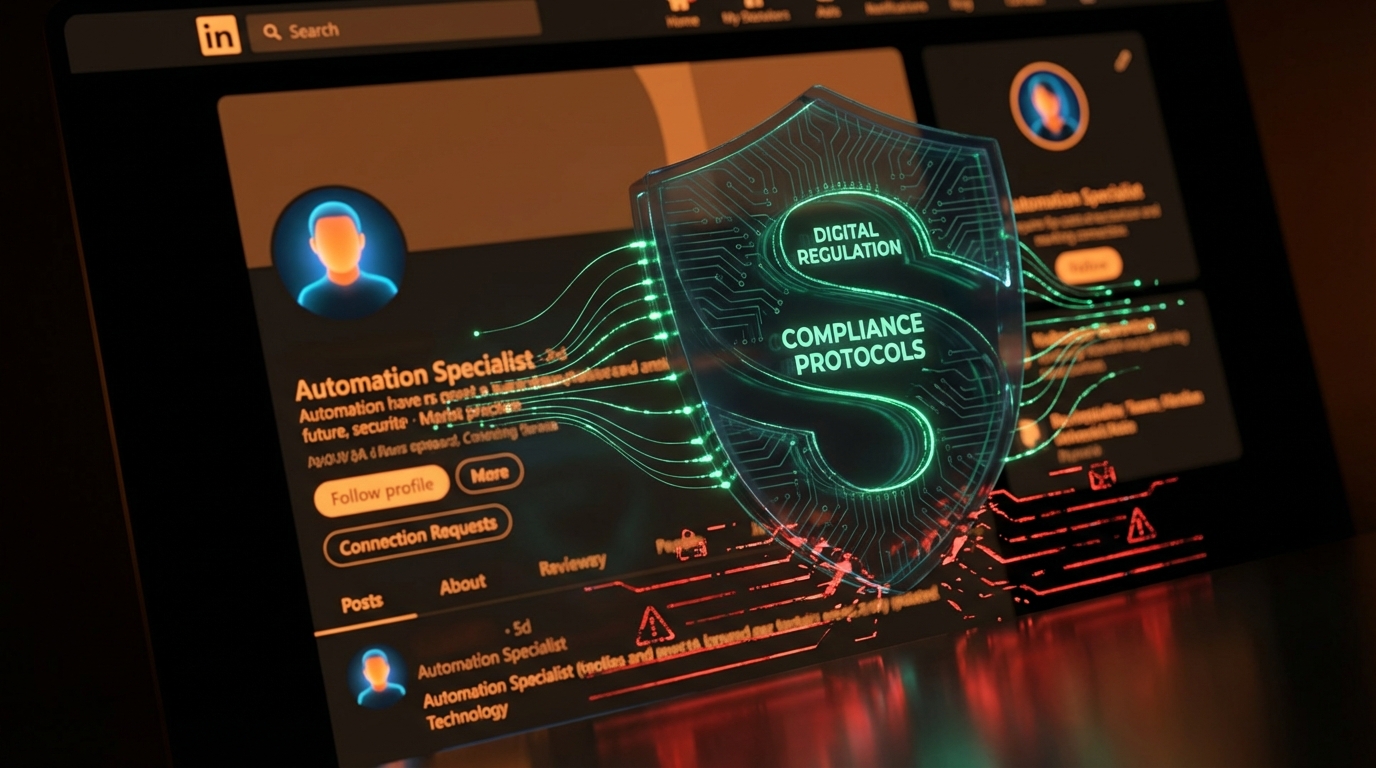
The successful execution of an automated LinkedIn strategy hinges entirely on compliance and risk mitigation. For founders and SDR teams operating in 2026, adhere strictly to the following mandates:
- Mandate Cloud-Based Execution: Compliance is non-negotiable. Immediately decommission all browser extensions and local scraping tools. Utilize cloud-based automation systems that specifically mimic human behavior and strictly adhere to LinkedIn’s defined daily connection and messaging limits.
- Prioritize Tier 1 Intelligence (Pre-Outreach): The highest conversion rates stem from lead enrichment performed before the first touchpoint. Focus resources on tools, like Pyrsonalize, that acquire verified personal emails and high-intent signals. This defines high-ROI prospecting in 2026.
- Integrate Multi-Channel Sequences: LinkedIn is a critical touchpoint, not the entire strategy. Combine compliant LinkedIn automation with verified cold email campaigns. This systematic approach maximizes conversion rates while safely distributing risk across platforms.
- Enforce Sustainable Daily Limits: Reduce daily connection requests and messages significantly below historical thresholds. Quality over volume is the only sustainable strategy for maintaining account health and ensuring long-term pipeline consistency.
1. The 2026 Compliance Framework: Defining Safe Automation Strategy
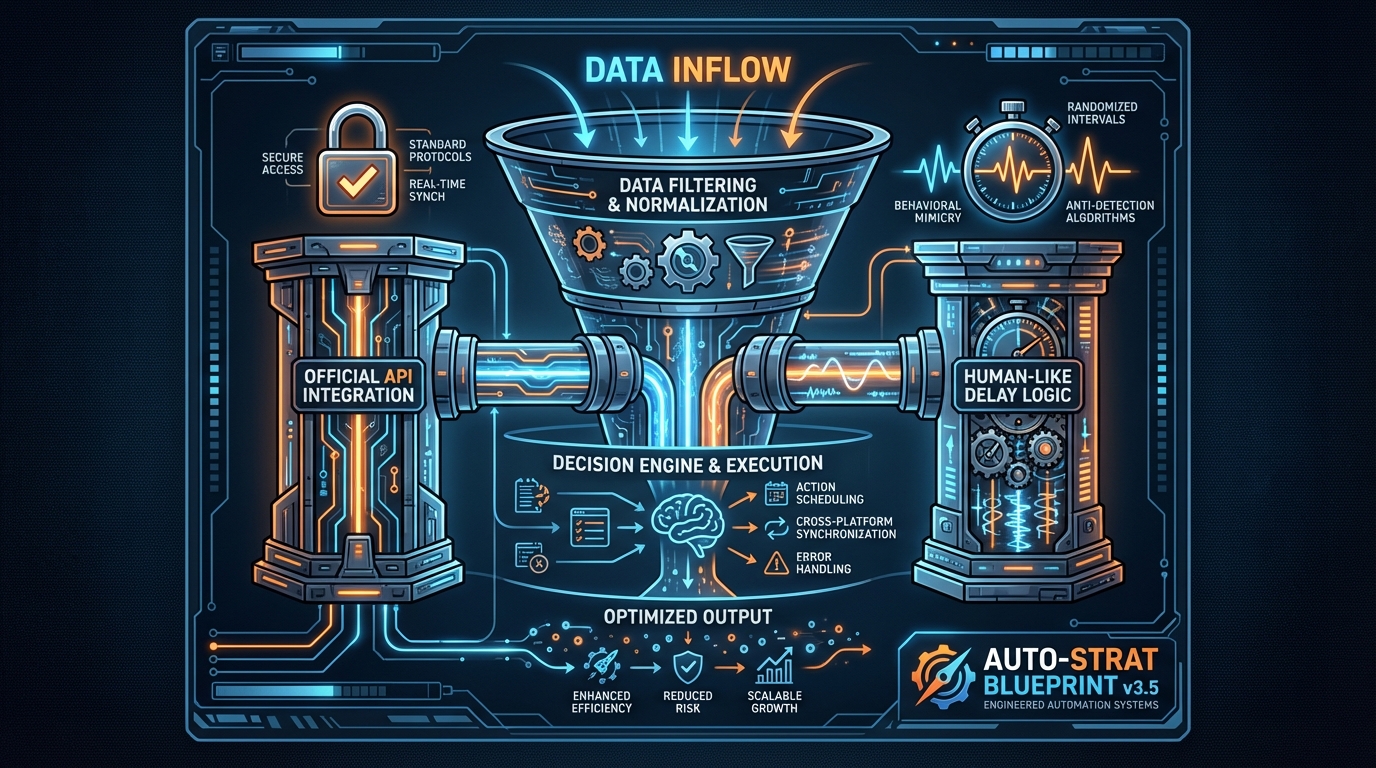
The core tension in professional lead generation is the balance between risk mitigation and scalability. In 2026, compliance is not optional; it must dictate your entire tool selection process. If a provider promises unlimited volume or relies on browser injection, that tool is immediately disqualified from a strategic sales stack. Focus on sustainable methods.
The Risk vs. Scalability Matrix
We categorize automation methods into three distinct risk zones. Founders and SDR leaders must understand where their chosen tools fall on this spectrum to protect assets.
- High Risk (Immediate Decommission): Browser Extensions (e.g., Dux-Soup, LinkedHelper). These tools inject code directly into your active LinkedIn session. They are easily detected by LinkedIn’s algorithms and are designed for high, unsustainable volume, leading to inevitable account suspension. Decommission these immediately.
- Medium Risk (Strict Management Required): Cloud-Based Execution Platforms (e.g., Expandi, Meet Alfred). These run remotely but log in using your credentials. They offer enforced human-like delays and limits, making them safer than extensions. However, aggressive use or high daily volume will still trigger security flags.
- Low Risk (Recommended Strategy): AI Data Intelligence & Approved APIs (e.g., Pyrsonalize, Clay, Sales Navigator + Zapier). This is the future framework. These tools focus on extracting and verifying external contact data (like personal emails) or utilizing LinkedIn’s own approved APIs for workflow integration. This critical approach separates data discovery from outreach execution.
“The future of LinkedIn prospecting is not automation on the platform itself. It is using AI to find the prospect’s verified, personal email and executing outreach across compliant, multi-channel sequences. LinkedIn becomes the source of intent, not the primary execution channel.”
Defining the New Safe Limits for 2026
LinkedIn has aggressively reduced maximum activity caps. Strategic teams must adjust their daily activity to ensure longevity and compliance.
- Connection Requests: Adhere strictly to the soft limit of 100 per week. For maximum safety and deliverability, target 10–15 highly personalized invitations daily. Volume must be secondary to relevance.
- Follow-Ups & Actions: Utilize automation tools that mandate sophisticated, randomized delays (e.g., 30–120 seconds between actions). This mimics genuine human behavior and prevents algorithmic pattern detection.
- Data Sourcing: Never use tools promising to scrape thousands of profiles daily. Leverage verified AI data providers that aggregate contact information ethically and legally. For a deeper dive into responsible scaling, review The 2026 AI Prospecting Ethics Blueprint.
2. Tiered AI Tool Segmentation: The Definitive List
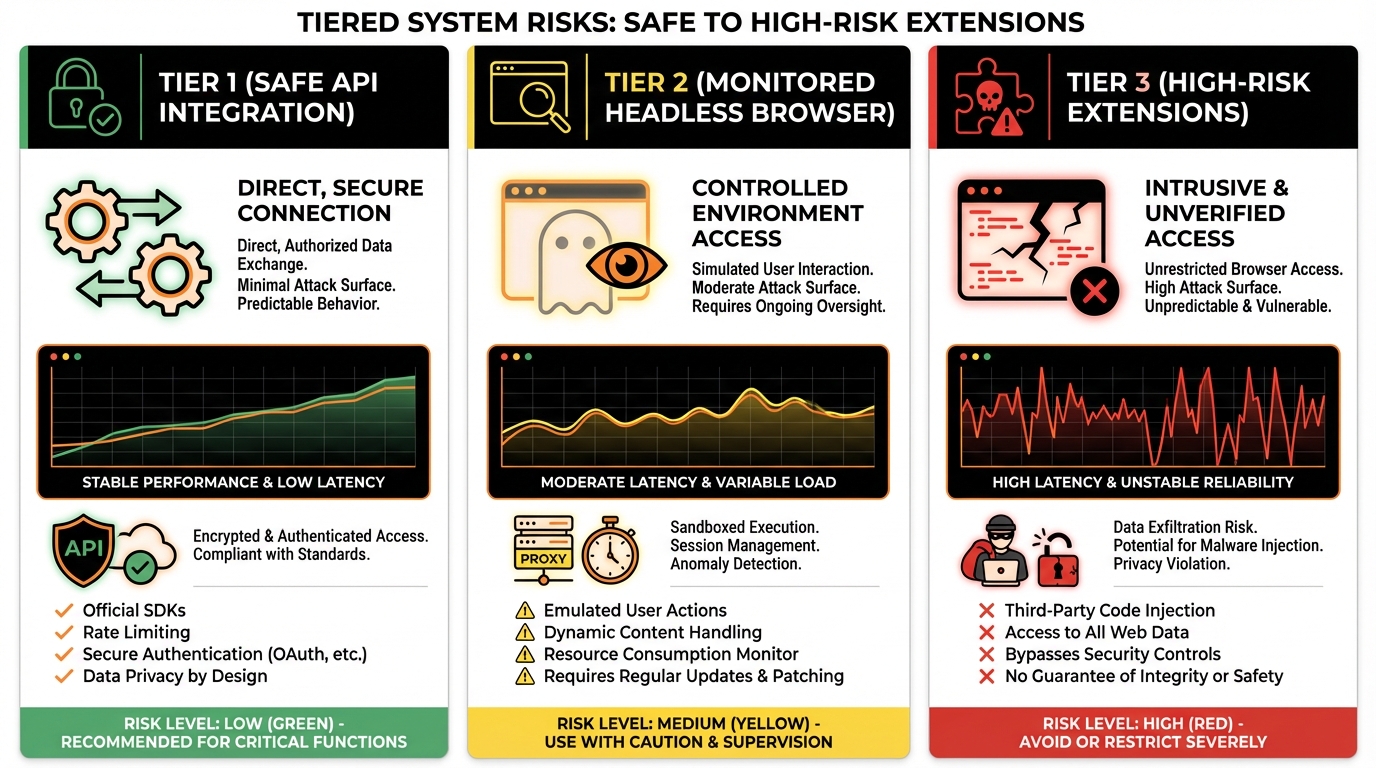
We segment the required tools into three tiers based on their function within the lead generation funnel. Successful, compliant teams utilize tools from all three tiers in sequence to maximize efficiency and minimize risk.
Tier 1: AI Data & Intelligence (The Foundation)
These tools generate the crucial, non-LinkedIn data necessary for truly personalized, multi-channel outreach. This is where your initial strategic investment must be focused.
- Pyrsonalize (Data Verification & Personal Email Discovery):
- Function: Takes a list of target LinkedIn profiles (or Sales Navigator searches) and uses proprietary AI to find and verify the prospect’s personal, non-corporate email address. This step is critical for avoiding spam filters and achieving superior deliverability.
- Why it Wins: We believe true personalization starts with reaching the prospect where they actually read messages. Corporate emails are often shielded by gatekeepers; personal emails cut through the noise immediately.
- Key Feature: High verification accuracy and personal email discovery, bypassing the limitations inherent in standard corporate email finders.
- Clay (Data Enrichment & Workflow Orchestration):
- Function: A data aggregation platform that allows you to enrich a single lead record using multiple external sources (e.g., Apollo, Clearbit, custom web scraping). It finds company size, tech stack, funding rounds, and critical intent signals.
- Why it Wins: Clay provides the raw, deep context required for hyper-personalization that reads as human, not robotic. It is the necessary bridge between a raw Sales Navigator list and the execution platform.
- Key Feature: Waterfall enrichment: if one source fails, the platform automatically queries another, ensuring maximum data completeness.
- Cognism / ZoomInfo (Intent & Verified Contact Data):
- Function: Provides high-volume, verified corporate contact data and valuable intent data (which companies are actively searching for your solution).
- Why it Wins: Essential for large-scale SDR teams requiring high confidence in corporate emails and direct dials for multi-channel sequences outside of LinkedIn.
- Strategic Use: Use intent data to prioritize your Sales Navigator searches, then route those leads through Pyrsonalize for personal email verification. This combination allows for superior AI Predictive Lead Scoring.
Tier 2: Compliant Outreach Execution
These tools handle the actual sequencing and delivery. Crucially, they run entirely in the cloud to protect your primary LinkedIn account. They are specifically designed to manage sequences across multiple channels (LinkedIn, Email, SMS).
- Expandi (Cloud-Based LinkedIn Sequencing):
- Compliance Focus: Known for its dedicated IP addresses and robust safety limits. It operates exclusively in the cloud, removing the fundamental risk associated with browser injection tools.
- Best Use: Running complex, multi-step LinkedIn campaigns (profile view, follow, connection request, layered message sequence) at scale while adhering to daily limits.
- Meet Alfred (Multichannel Orchestration):
- Function: Combines LinkedIn, email, and Twitter outreach into a single, cohesive campaign builder. This orchestration capability is essential for meeting the 2026 multi-channel requirement.
- Best Use: Teams that require visual, easy-to-manage campaign flows that automatically pause LinkedIn activity if a reply is received on another channel (like email).
Tier 3: AI Engagement & Content Generation
These tools support the human conversation and maximize efficiency, ensuring high-quality responses and streamlined meeting management once the lead is successfully engaged.
- Custom GPTs (Personalization at Scale): Train a proprietary GPT model on your past successful outreach scripts, case studies, and buyer personas. Use this model to generate personalized opening lines based directly on the Tier 1 data enrichment (e.g., “I noticed your company just raised a Series B, congratulations on the expansion. Are you currently hiring for X?”).
- Otter.ai (Meeting Intelligence): Automatically transcribes sales calls, highlights key action items, and generates concise summaries. This data feeds directly back into your CRM, enabling better human follow-up and accelerating pipeline movement.
3. The Integrated Workflow: Building a Low-Risk Stack

High-performance lead generation is not reliant on isolated tools. It requires a systematic, integrated workflow designed for low risk and maximum personalization. Below, we detail the exact sequence we use to structure our internal lead generation campaigns. This approach ensures predictable pipeline growth and maximizes client conversion, following the principles of a robust AI Lead Funnel.
Step-by-Step Compliant Lead Flow
- Target Identification (Sales Navigator): Utilize Sales Navigator’s advanced filtering capabilities (Job Title, Geography, Company Size). Integrate Intent Signals data, typically sourced from Tier 1 providers like Cognism or ZoomInfo, to build a highly targeted list of 500–1,000 prospects.
- Data Enrichment & Context (Clay): Route the segmented Sales Navigator list into Clay. Execute waterfall searches across 5+ external data sources (including Apollo and Clearbit) to pull critical context: company tech stack, recent news mentions, and precise firmographics.
- Validated Email Discovery (Pyrsonalize): Feed the enriched list into Pyrsonalize. We actively verify the corporate email address and, crucially, discover the prospect’s personal email. This step ensures superior deliverability and bypasses corporate spam filters for the critical cold email sequence.
- Personalization Scripting (Custom LLM/GPT): Leverage the deep contextual data points gathered in Step 2 to generate 3–5 unique, hyper-personalized opening lines. Script variations must be created for both LinkedIn and Email outreach channels.
- Multi-Channel Execution (Expandi/Meet Alfred + Dedicated Email Platform): This sequence maximizes visibility while minimizing direct LinkedIn automation risk.
- Day 1: Initiate the Personalized Cold Email Sequence (using the verified personal email).
- Day 3: Automated LinkedIn Profile View (executed via a cloud-based tool like Expandi or Meet Alfred).
- Day 5: Highly personalized Connection Request (low volume only, referencing a specific data point or shared interest found in Step 2).
- Day 10: Follow-up Email sequence triggered based on LinkedIn activity or lack thereof.
- CRM Synchronization & Hygiene: Implement immediate two-way sync for all prospect actions (replies, bounces, status updates) directly into your CRM (HubSpot, Salesforce). This ensures strict compliance, prevents duplicate outreach, and maintains a clean data pipeline.
AI Lead Generation Tool Comparison (2026 Outlook)
We provide a quick strategic overview of the recommended tools below. Note the critical functional difference between Intelligence (Data Gathering and Enrichment) and Execution (Automated Messaging and Sequencing).
| Tool | Primary Function | Compliance Risk Level | Key Differentiator (2026) |
|---|---|---|---|
| Pyrsonalize | AI Data Intelligence & Personal Email Verification | Low | Finds high-deliverability personal emails to bypass corporate firewalls. |
| Clay | Data Enrichment & Workflow Orchestration | Low | Aggregates 50+ data points for deep personalization context. |
| Expandi | LinkedIn Outreach Execution (Cloud) | Medium | Dedicated IP structure and cloud-based architecture for enhanced safety. |
| Meet Alfred | Multichannel Sequencing (LI, Email, Twitter) | Medium | Centralized dashboard for managing complex, sequential multi-channel flows. |
| ZoomInfo/Cognism | Verified Corporate Data & Intent Signals | Low | Provides the highest volume of verified corporate contacts and buying intent data globally. |
4. The Future Edge: LinkedIn Automation Predictions for 2026

As we move into 2026, the market is stabilizing around high-quality data and compliance. Generic automation is dying. Successful lead generation demands foresight and strategic alignment. Here are the strategic shifts we predict will define the next 12 months in LinkedIn lead generation.
Advancements in Real-Time Intent Data
The greatest competitive advantage will be knowing exactly who to contact right now. We predict a massive expansion in tools that track real-time behavioral intent outside of the LinkedIn platform. This data allows for immediate, hyper-relevant outreach based on observed activity:
- Job Posting Shifts: AI will identify companies posting roles related to competitive solutions or new growth initiatives. This signals budget allocation and urgent pain points.
- Content Consumption Tracking: Advanced tools will monitor which topics a prospect or target company is actively engaging with across the wider web. This provides immediate context for your opening line.
- Dynamic Prioritization: Your CRM must automatically re-score leads based on these real-time signals. This pushes only the high-intent prospects to the top of your SDR queue, ensuring immediate, personalized outreach when timing matters most.
Deep Personalization: AI-Driven Connection Scripts
Personalization must move beyond simple first name insertion. To achieve acceptance rates above 40%, AI must generate entire connection scripts that feel completely bespoke and manually researched.
- The Data Requirement: Tier 1 intelligence tools must gather 5–10 specific, verifiable data points about the prospect (e.g., recent promotion, published article, specific technology they just implemented).
- The Output Generation: A Custom GPT or specialized AI model uses these facts to write a concise, 3-sentence connection request. The output must appear to be manually researched, making the prospect feel truly recognized.
- The Impact: This systematic approach drastically increases acceptance and reply rates compared to reliance on generic, templated outreach methods.
How LinkedIn Will Respond to Generative AI
LinkedIn’s platform will continue its battle against generic, low-effort content and automated outreach. To maintain platform quality and drive paid services, expect two major changes that will impact your tooling strategy:
- Stricter Content Filtering: LinkedIn will deploy advanced internal AI to detect and suppress content generated by standard, untrained GPT models. The platform will favor human-written, industry-specific expertise, pushing generic posts out of the feed.
- Premium API Access and Pricing: LinkedIn will push more advanced features,such as bulk InMail sending, deep profile scraping, or CRM integration,behind expensive, approved APIs. This move effectively eliminates the grey market of cheap, high-risk automation tools entirely. This strategic shift reinforces the necessity to invest in Tier 1 intelligence tools that specialize in finding non-platform data (like personal emails) and executing safe, off-platform outreach.
Conclusion: Secure Your Pipeline in 2026

The shift is complete. The era of high-volume, low-effort LinkedIn automation is definitively over. For 2026, success in lead generation is defined by two non-negotiable pillars: strategic compliance and superior data intelligence.
We advise marketing and sales leaders to shift resources immediately. Move away from risky execution platforms and invest exclusively in Tier 1 data intelligence tools like Pyrsonalize and Clay. These systems provide the verified, contextual data required to fuel effective multi-channel sequences that bypass LinkedIn’s restrictions and drive high conversion rates on compliant channels, primarily verified cold email.
To secure your pipeline and establish competitive advantage in the coming year, implement these final strategic mandates:
- Prioritize Data Over Volume: Quality data intelligence,specifically verified personal emails and real-time intent signals,is the new conversion currency.
- Adopt Multi-Channel Workflows: Use LinkedIn for intent gathering and connection building, but execute primary outreach via compliant, high-conversion channels like verified cold email.
- Invest in Intelligence, Not Just Execution: Shift budget from generic, high-risk automation platforms to data enrichment tools (like Pyrsonalize) that secure compliant and accurate contact information.
Adopt this integrated workflow. Prioritize quality over legacy quantity. This is how you build a scalable, compliant, and highly profitable lead generation engine for 2026.
Ready to take the next step?
Start Your Free Trial and access the verified personal emails required for compliant, high-converting outreach.
Start Your Free TrialFrequently Asked Questions

- 1. Are LinkedIn automation tools still safe to use in 2026?
-
Safety is conditional and depends entirely on the tool’s execution method. We define three risk tiers for 2026:
- High Risk (Avoid): Browser extensions and local desktop tools. These are easily flagged by LinkedIn’s detection algorithms. Account suspension is guaranteed.
- Medium Risk (Limited Use): Cloud-based execution tools (e.g., Expandi). These are safer but require extremely low daily limits and constant monitoring.
- Safest Strategy (Recommended): AI Data Intelligence tools (Tier 1, like Pyrsonalize). These find contact information *outside* of LinkedIn, minimizing direct platform automation risk and maximizing compliance.
- 2. Why is finding a prospect’s personal email address critical for LinkedIn lead generation?
-
This is the core of modern, compliant outreach. Corporate emails are aggressively protected by spam filters and internal gatekeepers, resulting in critically low deliverability and reply rates. Leveraging AI to discover and verify a prospect’s personal email achieves three strategic goals:
- Direct Access: Bypasses corporate defenses and ensures your highly personalized message lands directly in front of the decision-maker.
- Compliance: Shifts your primary outreach channel away from high-risk LinkedIn TOS violations.
- High ROI: Enables a compliant, high-deliverability multi-channel sequence that drastically improves conversion rates.
- 3. What is the difference between AI Data Intelligence and basic automation tools?
-
The difference is strategy versus execution.
- Basic Automation Tools: Focus on volume and execution (e.g., sending connection requests). They prioritize speed over quality, operate in high-risk zones, and violate TOS. They provide zero strategic context.
- AI Data Intelligence Tools (Tier 1): Focus on verification and pre-outreach context (e.g., Pyrsonalize, Clay). These platforms use AI to find intent signals, enrich prospect profiles with dozens of data points, and verify non-LinkedIn contact details. This foundation ensures the *limited* outreach you do perform is 10x more relevant and effective.
- 4. How many connection requests should my SDR team send per day to stay compliant?
- You must adhere to the platform’s strict weekly limits. We recommend a maximum of 10 to 20 highly personalized connection requests per day, per account. LinkedIn has enforced severely restricted weekly caps (often limited to 100 per week for mature accounts). Scaling beyond this low threshold, regardless of the cloud tool used, creates an unacceptable risk of account suspension and profile damage. Focus on quality data, not volume execution.
References
- The AI tools you actually need if you want more leads in 2026. Not …
- 10 Best LinkedIn Automation Tools for Lead Generation & Outreach
- Top LinkedIn Automation Tools for Lead Generation In 2026
- LinkedIn Sales Navigator Alternatives for 2026: Top 21 AI Tools
- The best AI lead generation tools in 2026 – LeadsBridge