

The market is currently flooded with tools promising instant AI personalization.
They guarantee thousands of unique intro lines, claiming to save your SDR team hundreds of hours per week.
Here is the reality check:
Most of those outputs are generic garbage packaged as innovation.
You have seen the results. The AI scrapes a LinkedIn summary or a company’s “About Us” page, remixes the content using GPT-4, and spits out a sentence that sounds vaguely complimentary,but offers zero strategic value.
Prospects are not stupid. They identify mass-produced, automated icebreakers instantly.
This is why many founders in 2025 report that their response rates actually dropped when they moved from focused manual personalization to basic, low-level AI systems.
The solution is not abandoning AI.
The strategic solution is adopting a framework that handles complexity and depth.
You must move past simple ‘icebreaker generation’ and implement a hierarchical system for data aggregation and sophisticated prompt engineering. This guide breaks down that necessary strategic shift: The 5 Levels of AI Personalization Depth.
This is the blueprint for building a scalable, high-conversion machine.
Key Takeaways: Mastering AI Outreach in 2025

- Kill the Scraping: Level 1 (Mail Merge) and Level 2 (Generic Website Scrapes) are not personalization. They are automated spam signals. Stop actively destroying your sender reputation for marginal gains.
- Dynamic Data Drives ROI: Forget static data points. The only data worth feeding AI is high-intent, dynamic triggers: recent funding rounds, new job posts, shifting tech stacks. This is the foundation of Level 4 and 5 success.
- Prompt Engineering > Copywriting: Your success doesn’t depend on flowery language. It hinges on structured, multi-variable data inputs and specific prompt blueprints. You must personalize the Value Proposition itself, not just the first sentence.
- The Mandatory Human Gate: AI generates drafts. It does not generate perfection. Every Level 4 and 5 campaign requires a mandatory human review step,otherwise, you risk robotic misfires that torpedo credibility.
- Deliverability Demands Diversity: Spam filters are smart. Sending thousands of emails generated by the exact same algorithm creates detectable patterns. Implement prompt rotation and structural variability to ensure your campaigns actually land in the inbox.
The AI Personalization Paradox: Why Generic Intros Fail
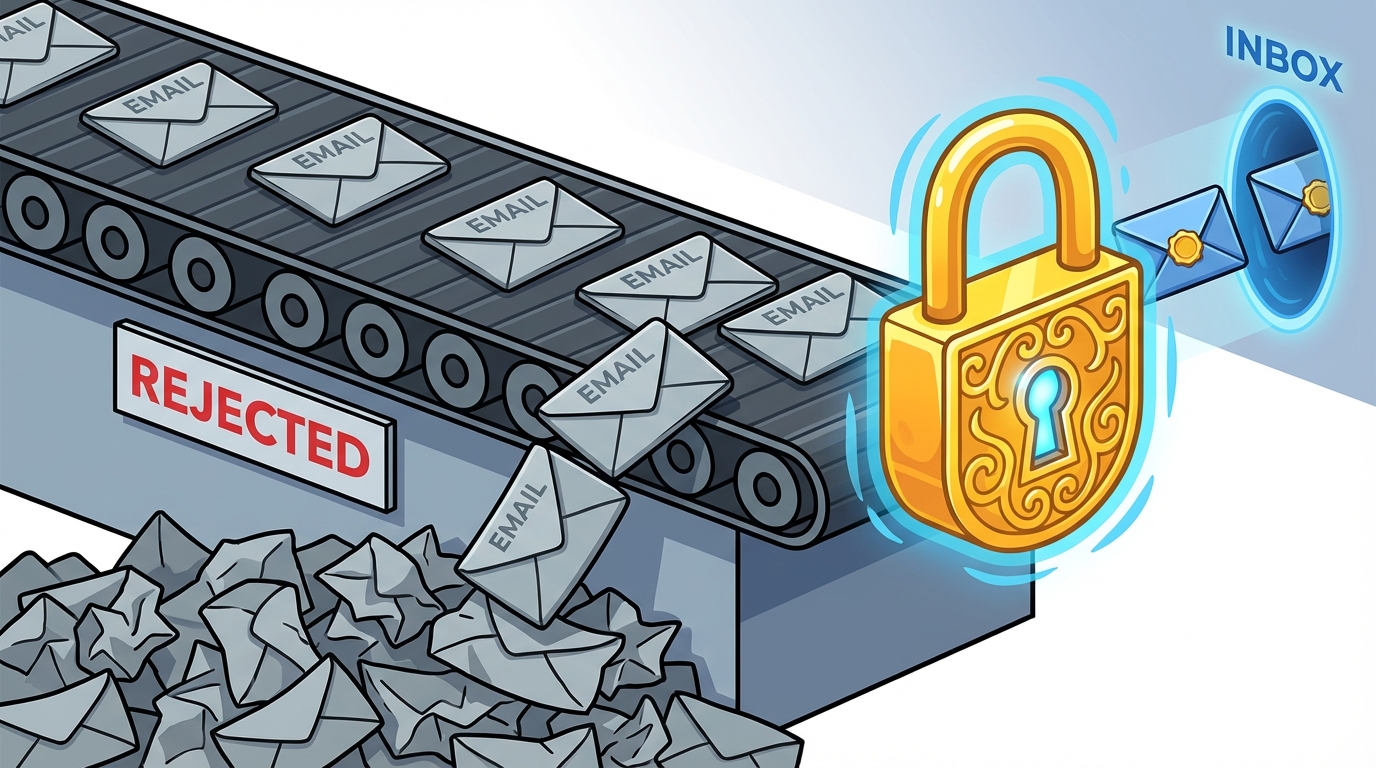
We’ve established that Level 1 (Mail Merge) and Level 2 (Generic Scraping) are dead strategies. They actively destroy your sender reputation.
Now, let’s define the specific failure point that kills 90% of AI-driven campaigns today. It’s the Paradox.
The competitive landscape shows everyone is reviewing tools, but few are addressing the core strategic breakdown:
“AI personalization is mostly overhyped bullshit right now. Most AI tools just pull basic info like company name and job title then insert it into templates. That’s not real personalization,it’s just mail merge with extra steps.”
This assessment is 100% accurate if you treat AI as a strategy replacement. It is not. AI is simply an accelerator for a strategy you already defined.
The current default playbook is fatally flawed. It relies on AI grabbing a random, hyper-specific fact (e.g., “I saw you posted about your dog, Buster, on LinkedIn!”) and using it as a disposable introduction.
This creates immediate dissonance.
The prospect reads a hyper-specific, yet contextually irrelevant, opening line, followed immediately by a generic, self-serving pitch about your SaaS product.
The email starts hot, but ends ice cold.
The result? A confusing, schizophrenic message that screams automation without understanding. We need to reverse this failed paradigm immediately.
Your personalization efforts must shift from being decorative noise to being strategic leverage. The data you gather must inform the core selling points:
- The Value Proposition (VP): Why should they care *right now*? (i.e., tying their recent activity directly to the pain point you solve).
- The Call to Action (CTA): What is the logical next step based on *their specific context*? (i.e., making the request relevant to their current projects, not just a generic meeting link).
The 5 Levels of AI Personalization Depth: A Strategic Mandate
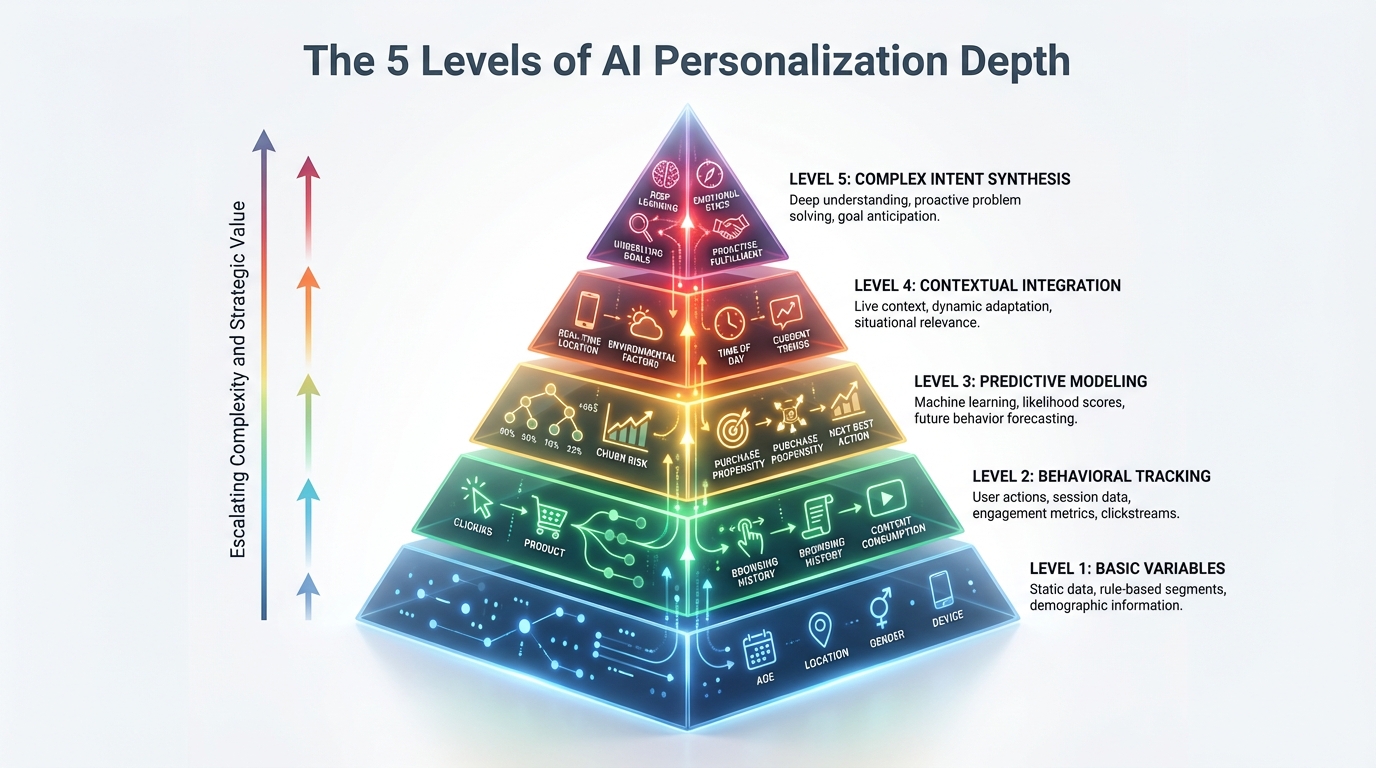
You cannot scale personalized outreach effectively if you treat all prospects the same. That is a fundamental resource failure.
To maximize ROI and minimize wasted effort, you must categorize your targets. Use this tactical framework to allocate data investment and set realistic expectations for your response rates.
Level 1: Basic Mail Merge (The Dinosaur Method)
This is not AI personalization. This is the static baseline. It involves nothing more than inserting {First Name} and {Company Name}.
This method is fast, easy, and completely useless for driving qualified conversions. It is the minimum requirement for sending an email, but it yields universally low response rates (typically <1%) and actively damages your sender reputation over time.
- Data Source: Static CRM data.
- Investment: Minimal.
- Result: Scalable spam.
Level 2: Surface-Level Scraping (The Generic AI Trap)
This is where 90% of AI personalization tools currently operate,and fail. They scrape readily available public information (LinkedIn headline, latest blog post title, generic company size) and generate a single, complimentary “icebreaker.”
The intent is good, but the execution is obvious. Prospects know this is automated. They smell the automation instantly because the personalization lacks strategic relevance.
- Data Source: LinkedIn, Company Website (homepage/blog).
- Investment: Low setup cost, high volume processing.
- Result: Improved open rates (marginally), but response rates stall due to lack of strategic depth. This is a volume play, not a conversion strategy.
Level 3: Strategic Contextualization (The SDR Sweet Spot)
This is the critical pivot. We move past generic compliments and into relevance. This level uses AI to aggregate specific, relevant data points related to your solution and embeds them into a pre-written template.
The AI doesn’t just compliment the prospect; it contextualizes the pitch based on their verifiable activity. Example: If you sell security software, the AI finds a recent mention of the prospect attending a major cybersecurity conference or a job opening for a “Head of Security.”
- Data Source: Industry news, specific LinkedIn activity (not just profile), job postings.
- Investment: Medium; requires sophisticated AI Prospecting tools to pull and structure this non-obvious data.
- Result: Measurable, repeatable lift in qualified responses. This is the minimum level you should tolerate (2-4% reply rate).
Level 4: Dynamic Intent Personalization (The Revenue Driver)
This is where the real money is made. We shift from static data (what they are) to dynamic intent (what they are doing right now). This requires advanced tools like Clay or specialized data aggregators to find high-intent signals.
This personalization is based on events that indicate a sudden, urgent need for your service. We look for signals that scream imminent pain: recent Series B funding, a major leadership change, or sudden hiring sprees in a relevant department.
- Data Source: Financial news, technographic data (G2/BuiltWith for tech stack shifts), intent signals.
- Investment: High; requires complex workflow setup and meticulous data validation. This is tactical intelligence.
- Result: High-quality, warm responses from prospects currently experiencing the pain point. High conversion to discovery calls (5-8% reply rate).
Level 5: Predictive Insight Commentary (The Future of Sales)
The apex. AI doesn’t just summarize data; it generates a specific, actionable insight or prediction based on that data, directly relevant to your offering. This is pure Account-Based Marketing (ABM) intelligence.
The difference: Instead of saying, “I see you just raised $10M,” you say, “Given your recent $10M Series B and the three open roles for Sales Engineers, I predict massive strain on your current CRM structure by Q3. We solve that scaling bottleneck.”
This level demands Human-in-the-Loop review and leverages AI Predictive Lead Scoring Models. You reserve this investment for your absolute highest-value, enterprise targets.
- Data Source: Multi-variable, cross-referenced dynamic data (Level 4 + internal sales cycle data/proprietary models).
- Investment: Very High; reserved exclusively for ABM and Enterprise targets.
- Result: Unmatched response quality, near-guaranteed conversion to booked meetings (10%+ reply rate).
Advanced Workflow Blueprint: Data Aggregation and Intent Synthesis
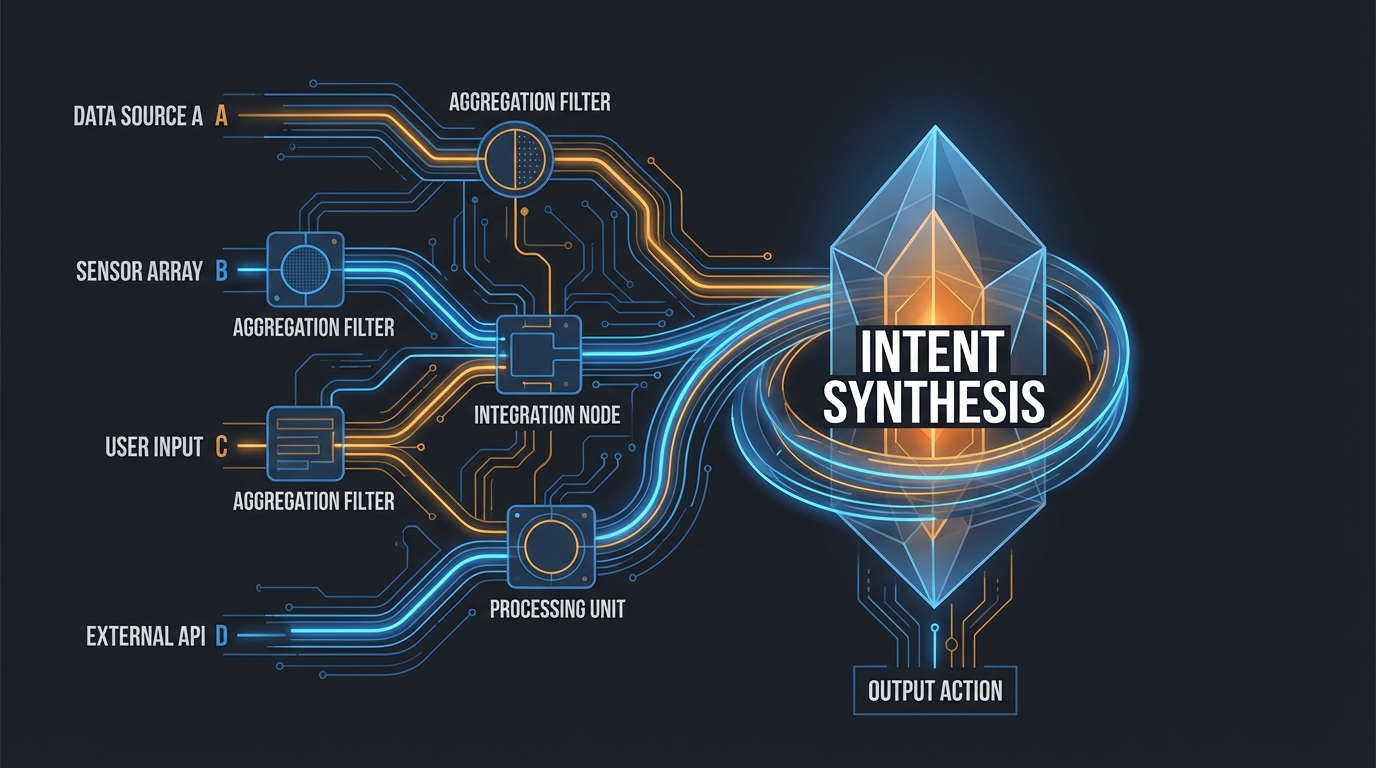
Step 1: Data Aggregation & Cleansing Mandate
If your primary data source is static LinkedIn scraping, you are stuck at Level 2 personalization. You are using yesterday’s news. You need a sophisticated data stack,a machine,capable of pulling dynamic, real-time intent signals. At Pyrsonalize, we rely on a multi-tool approach. We leverage platforms like Clay and Apollo, integrating dedicated news APIs and financial trackers to enrich our lists far beyond standard firmographics. This process is resource-intensive. It is also non-negotiable for achieving high-level personalization ROI. Here is the data blueprint required for Level 4 campaigns and beyond:| Data Category | Example Data Point | Personalization Utility |
|---|---|---|
| Static Firmographic | Industry, Location, Employee Count | Basic segmentation (Level 1/2). Necessary, but insufficient. |
| Technographic Intent | Recently installed HubSpot; just dropped Salesforce; using a competitor tool. | Directly references pain points or migration cycles (Level 3/4). Highly actionable. |
| Financial Signals | Recent funding announcement (Series A/B); recent acquisition; major debt raise. | Indicates budget availability and scaling pressure (Level 4/5). |
| Hiring Pressure | 3+ open roles in Marketing/Sales; hiring for a specific tool (e.g., “Gong Expert”). | Proves current scaling pain points that require your solution (Level 4). |
| Recent Activity | Prospect mentioned a specific industry trend on LinkedIn in the last 7 days. | Establishes immediate, relevant context and rapport (Level 3). |
Step 2: Prompt Engineering Blueprints for Synthesis
You now have a spreadsheet with 8 to 10 columns of hyper-relevant, dynamic data. The data is only useful if the AI synthesizes it correctly. The goal is not to generate an “icebreaker.” The goal is to generate output that sounds like a senior SDR spent 30 minutes of deep research,in 30 milliseconds. You must move past generic instructions (“Write an opening line”). You need strategic blueprints that force the AI to connect disparate data points into a coherent, authoritative narrative. Here are two tested frameworks that consistently drive Level 4 response rates:Blueprint 1: The Scaling Pain Point Prompt (Targeting Founders/VPs)
Goal: Generate a 3-sentence opening that references two high-intent variables (Funding + Hiring Pressure) and connects them directly to a predicted scaling challenge that your product solves. This establishes credibility immediately.This structured prompt forces the AI to use the data strategically,not just list it. It produces lines like this: * “Congrats on the recent Series B. Given the $15M raise and the immediate need to fill four new AE roles, I anticipate huge strain on your current lead scoring system. That influx of reps needs clean, prioritized data to hit quota.” See the difference? This is specific, strategic, and authoritative. It earns trust instantly.Prompt Template:
“You are a strategic sales consultant. Analyze the following data for
{Company Name}:{Recent Funding Amount},{Date of Funding}, and{Number of Open Sales Roles}. Your task is to write a single, professional paragraph (max 40 words) that acknowledges the funding success, highlights the immediate scaling pressure created by the open roles, and subtly suggests that this scaling creates a specific operational bottleneck (e.g., lead data quality, SDR onboarding time, or pipeline visibility). Focus 100% on the prospect’s pain, not our solution.”
Blueprint 2: The Tech Stack Migration Prompt (Targeting Operations/IT)
Goal: Generate a short, direct opening that references a confirmed technology stack change (Technographic Intent) and positions your product as the necessary bridge or replacement for data integrity.This approach avoids flowery language and generic rapport-building. It immediately addresses a complex, transactional pain point, resulting in much higher response rates from technical buyers who value efficiency over flattery.Prompt Template:
“You are a technical specialist. We sell a tool that fixes data gaps during CRM migration. I need an opening line for
{Prospect Title}at{Company Name}. The prospect is currently using{Old Tech Stack}but is migrating to{New Tech Stack}. Write a single sentence that validates their migration effort but immediately asks if they have solved the common data integrity issue associated with moving from{Old Tech Stack}to{New Tech Stack}. Be direct, technical, and avoid flowery sales language.”
Beyond the Icebreaker: Personalizing the Full Sequence

Most AI personalization campaigns fail because they focus 90% of the effort on the opener and 10% on the actual pitch.
This creates immediate dissonance.
You hook the prospect with hyper-relevance, then immediately lose them with generic fluff. It destroys trust and tanks conversion rates.
If you invested the effort to achieve Level 4 or 5 personalization, you already synthesized the core intent signal (e.g., recent funding, scaling friction, tech migration). You cannot waste that context.
Leverage that specific data point across every single touchpoint in your Outbound Sequence Setup.
1. Personalize the Value Proposition (VP)
Your Value Proposition should never be static. It must be a direct, surgical strike against the specific pain point identified by your AI data aggregation.
- Generic VP: “We help SaaS companies boost their lead qualification speed.” (A commodity statement.)
- Level 4 VP (Targeting Scale): “We specifically engineered our platform to handle the 5x lead volume spike that companies typically see post-Series B funding, ensuring zero data decay during your hyper-growth phase. This cuts your Ops team’s cleanup time by 40%.”
Use AI to dynamically rewrite your core value proposition based on the aggregated data column. If the intent data shows they are hiring SDRs aggressively, instruct the AI to emphasize rapid onboarding and immediate SDR efficiency gains in the VP section.
2. Personalize the Call to Action (CTA)
A generic CTA (“Do you have 15 minutes next Tuesday?”) is weak. It’s easily ignored because it demands their time without promising specific value.
A personalized CTA leverages the strategic context established in the opening and focuses on measurable ROI.
- Generic CTA: “Book a demo.” (Low intent, high friction.)
- Level 4 CTA (Targeting Tech Stack Migration): “Would it be worth 10 minutes to show you the specific data integrity checks we run for companies moving from
{Old Tech Stack}to{New Tech Stack}? If we can’t save your operations team 10+ hours in the first month of migration, you can hang up.”
That personalized CTA demonstrates you respect their time and are focused on solving the specific, painful problem you just identified,not just selling them a generic tool.
3. Personalize the Follow-Up Sequence
If your follow-ups are just “Bumping this to the top of your inbox,” you are failing.
Follow-ups must re-engage the original strategic context and push the prospect toward the next logical step.
If the first email referenced their recent funding, the follow-up should reference the inevitable consequence of that funding:
“I know integrating new tools quickly after a raise is painful. If you’re currently evaluating vendors to support that new growth, here is a 2-minute case study showing how a similar company, {Similar Company Name}, implemented our solution and saw 30% faster time-to-value in 7 days.”
Actionable AI Strategy:
Instruct your AI engine to generate three unique follow-up versions for every prospect, using the intent data as the anchor:
- Version 1: Focuses on Implementation Speed/Time-to-Value.
- Version 2: Focuses on Competitive Advantage/Market Share Gain.
- Version 3: Focuses on ROI/Cost Avoidance related to the identified pain point.
Never send a reminder email again. Send a strategic continuation.
Deliverability and Sender Reputation in the AI Era

You can achieve Level 5 personalization. But if your system generates 5,000 emails that share the exact same stylistic fingerprint, you will fail.
In 2025, deliverability is no longer just about technical hygiene (SPF, DKIM, DMARC). It is increasingly about content variability and pattern detection.
If you use a single AI model (like GPT-4) with one prompt template across an entire high-volume campaign, advanced spam filters will flag the activity immediately. They are designed specifically to detect this algorithmic homogeneity.
Sending highly similar, machine-generated text,even if technically “personalized”,is a direct path to the spam folder. It destroys sender reputation faster than anything else.
Mandatory Deliverability Protocols for AI Campaigns:
- Prompt Rotation (The 3-Template Rule): This is non-negotiable. Never use a single prompt blueprint for a campaign exceeding 500 emails. You must create at least three distinct prompt templates (e.g., one strategic/problem-focused, one technical/feature-driven, one social proof/case study based). Rotate these blueprints across your list to force stylistic variability and break detection patterns.
- Temperature Checks: When generating text using LLMs, slightly increase the “Temperature” setting (we recommend 0.7 to 0.9). This introduces necessary creative randomness and reduces the risk of generating identical, machine-predictable phrasing that triggers filters.
- Human-in-the-Loop Review: For all Level 4 and 5 campaigns, implement a mandatory human review of the first paragraph. This is not about copy editing. This is strategic oversight. The reviewer’s job is to ensure zero awkward phrasing, smooth out transitions, and replace any overtly robotic or overly formal language.
- Kill the Buzzwords: Instruct the AI to aggressively avoid generic, overused sales fluff. This includes “synergy,” “cutting-edge,” “paradigm shift,” and the absolute worst offender: “hope this email finds you well.” (Yes, even the most expensive paid tools struggle to eliminate this garbage. You must enforce it.)
You cannot afford to treat AI personalization as a “set it and forget it” system. It is a powerful engine, but one that demands constant strategic input and monitoring to maintain both high sender reputation and conversion quality.
The modern SDR of 2025 is not a copywriter. They are a data strategist and prompt engineer.
Your ability to integrate, synthesize, and strategically deploy rich data sources will determine your revenue ceiling. Period.
Strategic FAQs: Mastering AI Personalization
What is the biggest risk of using basic AI personalization tools?
Simple tools deliver Level 2 personalization. This is the death knell for modern cold email.
Prospects instantly recognize surface-level scrapes as mass-automated garbage. This isn’t just about a low reply rate; this is about long-term systemic damage:
- High deletion rates without reading.
- Increased spam reports.
- Irreversible damage to your sender reputation and domain health.
In short: You optimize for volume, and you destroy your future deliverability. Stop relying on tools that promise personalization but only deliver pattern recognition for spam filters.
How do I define the line between an effective AI intro and a “creepy” one?
The boundary is pragmatic relevance.
Effective Personalization (Level 4+): The AI connects a public, professional achievement (a recent funding round, a published article, a key technology stack change) directly to the business problem you solve. It is strategic. It shows you did the work.
Creepy Personalization (Instant Fail): The AI scrapes irrelevant personal data,a hobby listed on LinkedIn, an obscure post from five years ago, or anything that feels like surveillance. This screams over-automation and lack of focus.
The litmus test is simple: Would a highly trained, highly paid SDR naturally know this and use it to advance the sales conversation? If the answer is no, delete the personalization immediately.
Should I use AI to write the entire cold email body?
Absolutely not. This is a common strategic error.
AI excels at generating the personalized entry point (Level 3-5) and tailoring specific data points within your existing, proven value proposition. It is a research and customization engine.
It is not your copywriter.
When AI writes the entire body, you introduce generic, robotic language that tanks conversion rates. Your core sales message,the part that converts,must remain:
- Consistent.
- Human-edited.
- Focused on quantifiable outcomes.
Control the message. Let the AI control the personalization variables.
What data aggregation tools are essential for achieving Level 4 personalization in 2025?
You need orchestration, not just scraping.
For Level 4 and 5 personalization, you must chain multiple data enrichment steps together. Simple CSV upload/scrape tools are now obsolete.
Essential tooling includes:
- Workflow Orchestrators: Platforms like Clay or comparable multi-step enrichment providers. This is where you stitch data sources together.
- Technographic Signals: BuiltWith or similar providers to identify specific software stacks (critical for relevance).
- Firmographic/Intent Data: Crunchbase, PitchBook, or dedicated intent providers to identify trigger events (funding, hiring surges, leadership changes).
The goal is to provide the AI model with rich, multi-variable context,not just a job title and company name. Garbage in, garbage out.
Stop sending emails that get caught in the spam filter.
You need high-fidelity leads and personalization that converts. We find the exact clients you need, right now.
Start Your Free TrialReferences
- Cold Email AI: Are the 5 Best Personalization Tools Effective or …
- Which AI tools write the best cold emails? – Woodpecker
- Can AI help personalize cold emails at scale? : r/GrowthHacking
- How To Personalize 1,000+ Cold Emails With AI – YouTube
- 10 AI Tools to Supercharge Your Cold Email Campaigns – Persana AI