

Salesloft is built for “Revenue Orchestration.”
That sounds impressive: It implies enterprise-grade synchronization across marketing, sales, and CS.
But for a small SDR team (three to five reps trying to hit quota), “orchestration” is just another word for bloat.
You do not need a $10,000 annual platform. You need a simple, effective Outbound Sequence Setup that converts. Period.
We prioritize speed, simplicity, and superior deliverability. We focus on finding the clients personal emails and reaching them directly (not managing complex internal workflows).
This guide cuts through the noise. We analyzed the complexity, the hidden costs, and the feature overkill of every major Salesloft competitor.
Here is the strategic blueprint: Choose a sales engagement platform that actually fits your budget and your workflow in 2025. This means selecting a tool that supports trust-based, scalable outreach,not just automation volume.
The Pyrsonalize Strategic Mandate
We believe that for lean teams, complexity is the enemy of revenue. The right platform must meet three non-negotiable criteria:
- Simplicity Over Scale: Setup must take less than 60 minutes. We need to be selling, not configuring APIs.
- Superior Deliverability: The platform must actively protect your sender reputation. If your emails land in spam, the tool is worthless,regardless of its features.
- Cost-Effectiveness: Must provide 80% of Salesloft’s core sequencing functionality for 10% of the cost. Your budget should be spent on finding quality leads, not paying for unused features.
The alternatives below are optimized for this specific reality.
The Strategic Case Against Salesloft Bloat
- Salesloft is Not Cost-Effective: Its high, non-transparent pricing and mandatory onboarding fees (often $3,000+) immediately disqualify it for lean teams. You are paying for enterprise orchestration features you will never fully utilize.
- Efficiency Demands Consolidation: The strategic move is selecting alternatives (like Apollo.io) that integrate prospecting, enrichment, and sequencing into a single platform. This eliminates the costly need to stack ZoomInfo licenses or dedicated email finders.
- Deliverability is Non-Negotiable: If high email volume drives your revenue, you need superior warm-up features. Tools like Instantly or Lemlist offer built-in domain warming,a critical technical requirement that Salesloft fundamentally lacks.
- Avoid the CRM Complexity Trap: Small teams should bypass bloated enterprise CRMs (Salesforce, HubSpot). Focus instead on lightweight, Gmail-native tools (Mixmax) or platforms with integrated lead management to track SDR activity without administrative burden.
- Verify Dialer Costs Upfront: The core dialer functionality is essential. However, we consistently see it excluded from the affordable, non-Enterprise tiers. Always verify the true cost of the *full* stack before committing to any platform.
Why Salesloft Fails Small SDR Teams

Salesloft was engineered for enterprise users: massive organizations with dedicated RevOps teams and six-figure budgets.
For small teams, it is a liability. It is rigid, prohibitively expensive, and introduces operational friction precisely where your SDRs need speed and agility.
1. Non-Negotiable Pricing & Hidden Fees
Salesloft refuses to publish transparent pricing. For any lean startup or small business, this is an immediate, critical red flag.
The reality of their cost structure:
- The rumored entry-level package starts near $100 per user per month.
- You face mandatory, non-negotiable implementation fees,often $3,000 to $10,000+.
The math is simple and brutal: A three-person SDR team will burn $6,000 to $10,000 in Year 1 on licensing and onboarding alone. That investment is required before they send the first sequence.
2. Feature Bloat: Paying for Unused “Orchestration”
You are forced to purchase a bloated suite of tools, features your small team will never utilize:
- Conversation Intelligence (requires high volume to be useful).
- Deal Forecasting and Pipeline Management.
- Enterprise Analytics and complex RevOps dashboards.
Does your three-person team need AI-driven forecasting? Absolutely not. You need a clean, fast interface to manage tasks, send personalized emails (our focus), and log calls efficiently.
This unnecessary complexity slows down SDR Onboarding and significantly reduces adoption rates.
3. Operational Rigidity Kills Agility
Salesloft sequences are powerful,if you are running massive, standardized campaigns.
But they are fundamentally inflexible.
Small, agile SDR teams often need to test simple, one-off campaigns or run hyper-personalized outreach (which is our specialty). Salesloft forces you to build a rigid, full-scale cadence for every single outreach effort.
This rigidity kills agility. When you need to pivot messaging quickly or test a new ICP segment, Salesloft becomes a serious operational bottleneck.
Category 1: All-in-One Budget Multichannel Tools
These platforms consolidate prospecting, enrichment, and engagement. They roll it into a single, affordable license.
This is the 2025 mandate: maximum efficiency with minimal operational friction.
1. Apollo.io: The Prospecting Powerhouse
Apollo is the unavoidable choice for any lean team focused on pipeline generation. It solves the biggest problem first: finding the verified lead.
Why fragment your budget on ZoomInfo or Lusha? Apollo includes a massive, searchable database (over 200 million contacts) and the engagement suite.
This platform is the core of the modern SDR Sales Tech Stack.
- Core Focus: Lead generation, enrichment, and robust multi-step sequence management.
- Ease of Setup: High. You launch sequences in hours, not days.
- Dialing Included: Yes (Available in the crucial Professional tier).
The Apollo Advantage for Small Teams
The Professional plan is the strategic sweet spot. It provides the full engagement suite, advanced sequencing logic, and crucial API access for seamless integration.
The real value is data consolidation: You get verified emails, phone numbers, and firmographic data instantly.
This is pragmatic strategy: Your SDRs must spend 80% of their time selling, not searching for contact information.
We leverage Apollo’s extensive database to validate all leads before they enter our sequences. This guarantees a lower bounce rate and higher pipeline quality: a non-negotiable KPI for small, resource-constrained teams.
Cost for a 3-SDR Team (Annual Estimate)
Apollo Professional Plan ($79/user/month, billed annually):
$2,844 USD/Year (Plus scalable lead credit costs). This is often less than the onboarding fee for Salesloft.<!– 2. Lemlist: The Hyper-Personalization Specialist
Lemlist pioneered the use of dynamic image and video personalization in cold outreach.
If your strategy demands highly targeted, creative outreach (i.e., personalizing pain, not just people), Lemlist excels.
Crucially: It integrates Lemwarm, its market-leading email warm-up tool. This guarantees superior deliverability out of the box,a critical factor for new domains.
- Core Focus: High deliverability, visual personalization, and robust multichannel sequences.
- Ease of Setup: Medium. Setting up complex, dynamic personalized images requires initial configuration time.
- Dialing Included: Yes (Part of the Multichannel Expert plan).
The Lemlist Advantage for Small Teams
Lemlist avoids the bloat of core CRMs while providing surgical sequence management.
Its Multichannel Expert plan supports email, LinkedIn, and calls. This ensures your SDRs can execute a strategic, full-spectrum 2025 sequence without needing five different tools.
Cost for a 3-SDR Team (Annual Estimate)
Lemlist Multichannel Expert Plan ($79/user/month, billed annually):
$2,844 USD/Year
Category 2: Email Deliverability and Volume Specialists

We know the truth: Cold email is still the highest leverage channel for new pipeline. But only if you hit the inbox.
If high-volume cold email is your primary acquisition strategy, you cannot afford generic sending infrastructure. You need a platform optimized exclusively for deliverability, inbox rotation, and maximum scale.
These tools are hyper-focused. They are simpler,and dramatically cheaper,than feature-heavy engagement suites.
3. Instantly: The Unlimited Inbox Engine
Instantly is the definitive choice for agencies and lean teams running true high-volume campaigns. We are talking multiple domains, multiple personas, and maximizing outreach capacity.
It solves the core deliverability issue instantly (pun intended): It offers unlimited email account connections and features robust, automated warm-up protocols built directly into the platform.
This is the strategic mandate: Maximize daily send volume while aggressively mitigating deliverability risk. That singular focus defines its value proposition.
- Core Focus: Unlimited email accounts, automated warm-up, and centralized inbox management.
- Ease of Setup: High. Very clean, intuitive UI focused solely on email execution.
- Dialing Included: No. Email only.
The Instantly Strategic Advantage
The cost structure here is radically different,and critical for scaling. You pay a single platform fee, not a per-SDR seat fee tied to sending capacity.
This means a 3-person SDR team can scale email volume exponentially without license costs escalating alongside headcount. It completely decouples sending capacity from team size.
Additionally, Instantly offers a built-in lead database (SuperSearch). This makes it a direct competitor to Apollo for data access, adding significant competitive value.
Cost Analysis for a 3-SDR Team (Annual Estimate)
Instantly Hypergrowth Plan (Platform Access + Unlimited Sending):
- Base Platform Fee: $77.60/month
- SuperSearch Data Add-on: $77.60/month
Total Annual Platform Cost (Regardless of Seats): $1,862 USD/Year.
This covers all three SDRs. They share the sending infrastructure. This is how small teams achieve massive scale on a constrained budget.
Category 3: Lightweight CRM and Gmail Power Tools
Your team might already run on a lightweight CRM (e.g., Streak, Pipedrive). Introducing a heavy, standalone engagement platform is often counterproductive.
We focus here on tools that eliminate friction. They integrate directly into the existing workflow: Gmail.
4. Mixmax: Gmail-Native Sales Engagement
Mixmax transforms the Gmail inbox into a high-powered sales engagement hub. This is critical for SDRs who live in their email client: We eliminate context switching immediately.
Sequences, tracking, scheduling, and CRM updates (HubSpot/Salesforce) are all managed natively. You never leave the inbox.
- Core Focus: Deep Gmail integration, scheduling automation, and immediate tracking visibility.
- Ease of Setup: Extremely High. Install the extension and your team is operational.
- Dialing Included: Only available on Enterprise tiers. This is a significant limitation for small teams prioritizing multi-channel outreach.
The Mixmax Advantage for Small Teams
The learning curve is virtually zero. Your SDRs already know Gmail.
The SMB and Growth plans deliver powerful sequencing and tracking features at a highly competitive price point.
If phone outreach is secondary to email, Mixmax provides unbeatable simplicity and cost efficiency.
Cost for a 3-SDR Team (Annual Estimate)
Mixmax Growth Plan ($49/user/month, billed annually):
$1,764 USD/Year
5. HubSpot Sales Hub Starter: The Scalable Foundation
Too many founders dismiss HubSpot as “enterprise bloat.” This is a critical mistake.
HubSpot’s free CRM combined with the Starter Sales Hub is engineered specifically for lightweight SDR activity tracking.
If you project growth (moving from 3 SDRs to 10 SDRs), starting here prevents massive technical debt. You build on a foundation that scales.
- Core Focus: CRM-native engagement, simplified reporting, and future-proof scalability.
- Ease of Setup: Medium. Requires basic CRM configuration. Significantly faster deployment than tools like Salesforce Sales Cloud.
- Dialing Included: Yes. Built-in calling features are included in the Starter plan (with bundled minutes).
The HubSpot Advantage for Small Teams
The Starter tier delivers essential engagement features: sequences, basic automation, scheduling links, and a functional built-in dialer.
Crucially, the integration with the free CRM means all SDR activities (calls, emails, meetings) are logged automatically. This ensures clean, measurable data required to track core SDR Agent KPIs.
We eliminate the need for complex, messy integrations between a separate engagement platform and a standalone CRM.
Cost for a 3-SDR Team (Annual Estimate)
HubSpot Sales Hub Starter ($15/user/month, minimum 2 users, billed annually):
$540 USD/Year (Note: This is the lowest cost entry point for CRM-integrated engagement, but depth of features requires upgrading to Professional tiers.)
Strategic Matrix: Cost vs. Capability (2025 Benchmarks)
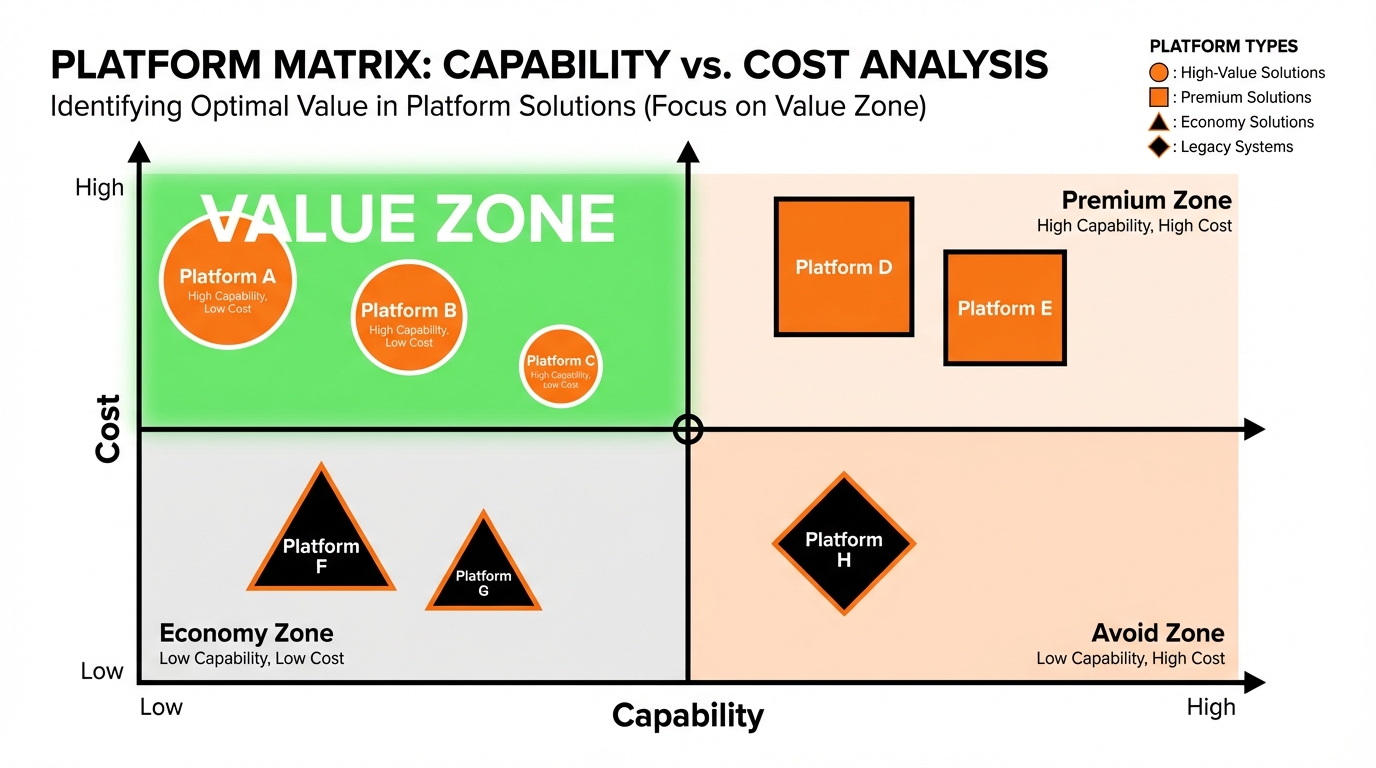
Choosing the right sales engagement platform is a strategic decision. It dictates your SDR team’s output capacity and your overall cost structure.
The decision is never about maximum features; it is strictly about ROI.
We compiled this matrix to cut through the marketing noise. Your choice must align your primary goal,whether it’s raw data access, high email volume, or deep CRM integration,with the total investment required.
Use this data to make a pragmatic decision based on measurable, annual metrics for a team of three SDRs.
| Platform | Core Focus | Dialer Included (Affordable Tier) | Built-in Prospecting/Data | Est. Annual Cost (3 SDRs) | Best For |
|---|---|---|---|---|---|
| Salesloft (Benchmark) | Revenue Orchestration | Yes (High Tier) | No (Requires Integration) | ~$6,600+ (Year 1 Incl. Onboarding) | Large Enterprise Teams |
| Apollo.io (Professional) | Data & Multichannel | Yes | Yes (Vast Database) | $2,844 | Max Data Consolidation |
| Lemlist (Multichannel Expert) | Personalization & Deliverability | Yes | Yes (Small Database) | $2,844 | Creative, High-Engagement Campaigns |
| Instantly (Hypergrowth) | Email Volume & Warmup | No | Yes (160M+ Contacts) | $1,862 (Platform Fee) | High-Volume Cold Email Strategy |
| Mixmax (Growth) | Gmail-Native Workflow | No | No | $1,764 | Teams Living in Gmail/Low Call Volume |
| HubSpot (Starter) | CRM & Scalability | Yes (Call Minutes Included) | No | $540 | Budget-Constrained Teams Needing CRM Integration |
Final Strategy: Choosing Your 2025 Sales Engine

Choosing the right platform is not merely a purchase; it is a declaration of your sales strategy.
Your choice must answer the fundamental question: Do you prioritize data, raw volume, or seamless CRM integration?
If You Need Data and Multi-Channel Reach: Choose Apollo.io
Apollo is the most comprehensive, direct replacement for Salesloft’s core functionality. Critically, it operates at a fraction of the enterprise cost.
This is the pragmatic choice for the expanding SDR team. The key advantage is the built-in database, which eliminates the need for expensive third-party data providers (saving thousands annually).
We advise Apollo when your strategy demands:
- Seamless execution across calls, emails, and LinkedIn sequences.
- Integrated, real-time data access (essential for personalized, trust-based outreach).
- Maximum functionality without the restrictive enterprise price tag.
If You Need High-Volume Email and Low Cost: Choose Instantly
If your only objective is scaling cold email outreach,cheaply and safely,Instantly is the clear winner.
This platform removes the restrictive per-seat constraint. Instead, it focuses purely on maximizing deliverability:
- Inbox warm-up and rotation.
- High-volume sending capacity.
- Superior deliverability optimization.
Be aware: This is a specialized tool. You gain an unmatched email engine, but you lose native multi-channel functionality (i.e., you will need a separate solution for calling and LinkedIn). It is a pure volume play, optimized for maximizing contact rates via email alone.
If You Need Simplicity and CRM Foundation: Choose HubSpot Starter
We strongly advise: Avoid the “lightweight CRM” trap. These solutions guarantee complex, expensive data migration headaches later in the scaling process.
HubSpot Starter is the most responsible, long-term decision. It is designed for teams that know they will eventually scale past two or three SDRs.
It provides enough core sales engagement features to hit quota immediately. More importantly, it builds a clean, scalable data foundation for future Account Executives and Marketing teams. You are investing in infrastructure, not just outreach capacity.
Frequently Asked Questions

Can a small SDR team use Outreach.io instead of Salesloft?
Outreach.io is built specifically for the enterprise. It mirrors Salesloft’s core strengths: powerful branching cadences and deep CRM integration. However, it carries the exact same liabilities for lean teams.
These liabilities are critical: high, non-transparent pricing and significant feature bloat. We define this as platform overhead that slows speed-to-market.
Our recommendation is clear: Start with Apollo or Lemlist. They deliver 80% of the core functionality needed to scale, but at 30% of the cost. This is strategic efficiency.
Do I need a built-in dialer for my small SDR team?
You need an integrated dialer if cold calling is a mandated component of your outreach strategy. This is non-negotiable.
Many budget engagement platforms,like Mixmax or Instantly,either omit the dialer entirely or gate it behind prohibitively expensive tiers. If your SDRs rely on phone outreach, verify the dialer is included in your chosen plan (Apollo, Lemlist, or HubSpot Starter).
Failing this step forces you to purchase and integrate a separate VoIP tool. That adds unnecessary complexity and cost. We prioritize simplicity for rapid scale.
What is the biggest hidden cost of choosing an engagement platform?
The single biggest hidden cost is data enrichment and prospecting. This is where budgets hemorrhage unnecessarily.
Legacy platforms,Salesloft and Outreach included,force you to license data credits or pay for full licenses from third-party vendors (think ZoomInfo). This is a constant, recurring expense that scales poorly.
Tools built for modern efficiency, like Apollo.io, solve this problem. They bake the prospecting database directly into the core product subscription. This integrated approach offers a massive, immediate ROI advantage for lean, strategic teams.
Ready to take the next step?
Stop relying on bloated, expensive enterprise software. Start generating predictable leads using proven, trust-based methods. Try AI Lead Generation Today
Click HereReferences
- 6 Best Salesloft Alternatives for Growing Sales Teams – Crono
- Top 5 Salesloft Alternatives Every Sales Team Needs to Try in 2025
- What’s the best lightweight CRM for an SDR? : r/sales – Reddit
- 9 Best Salesloft Alternatives for Sales Teams in 2025 – Outdoo AI
- 9 Best Alternatives to Salesloft: Features & Pricing – AiSDR