

The single most critical choice in a Meta lead generation campaign is not your creative.
It is the friction level you introduce.
This decision,whether to use an Instant Form (Lead Ad) or drive traffic to a Conversion Ad (Thank You URL),directly dictates your Cost Per Lead (CPL). Critically, it dictates your lead quality.
We work exclusively with high-ticket SaaS founders and service providers. For us: a low CPL means nothing if the resulting lead cannot close for $10k+.
We ran rigorous tests in Q3 2025. Our data confirmed the standard industry trade-off: Instant Forms deliver cheaper leads, but Conversion Ads deliver higher revenue per lead.
The challenge is maximizing the efficiency of whichever path you choose. You need the lowest possible CPL without sacrificing necessary qualification signals.
This guide breaks down the definitive 2025 optimization strategies for both approaches. We show you precisely how we balance volume, quality, and measurable ROI.
Strategic Trade-Off: CPL vs. Qualification
Understand this fundamental relationship before scaling any campaign:
| Metric | Instant Form (Low Friction) | Conversion URL (High Friction) |
|---|---|---|
| CPL | Lowest (High Volume Potential) | Higher (Lower Volume Potential) |
| Lead Quality | Moderate (Requires immediate qualification via phone/email) | Highest (Self-qualified by taking multiple actions) |
| Optimization Focus | Post-lead CRM pipeline efficiency and speed. | Landing Page Conversion Rate (CVR) and server-side tracking integrity. |
The Strategic Mandate: Choosing Your Optimization Path
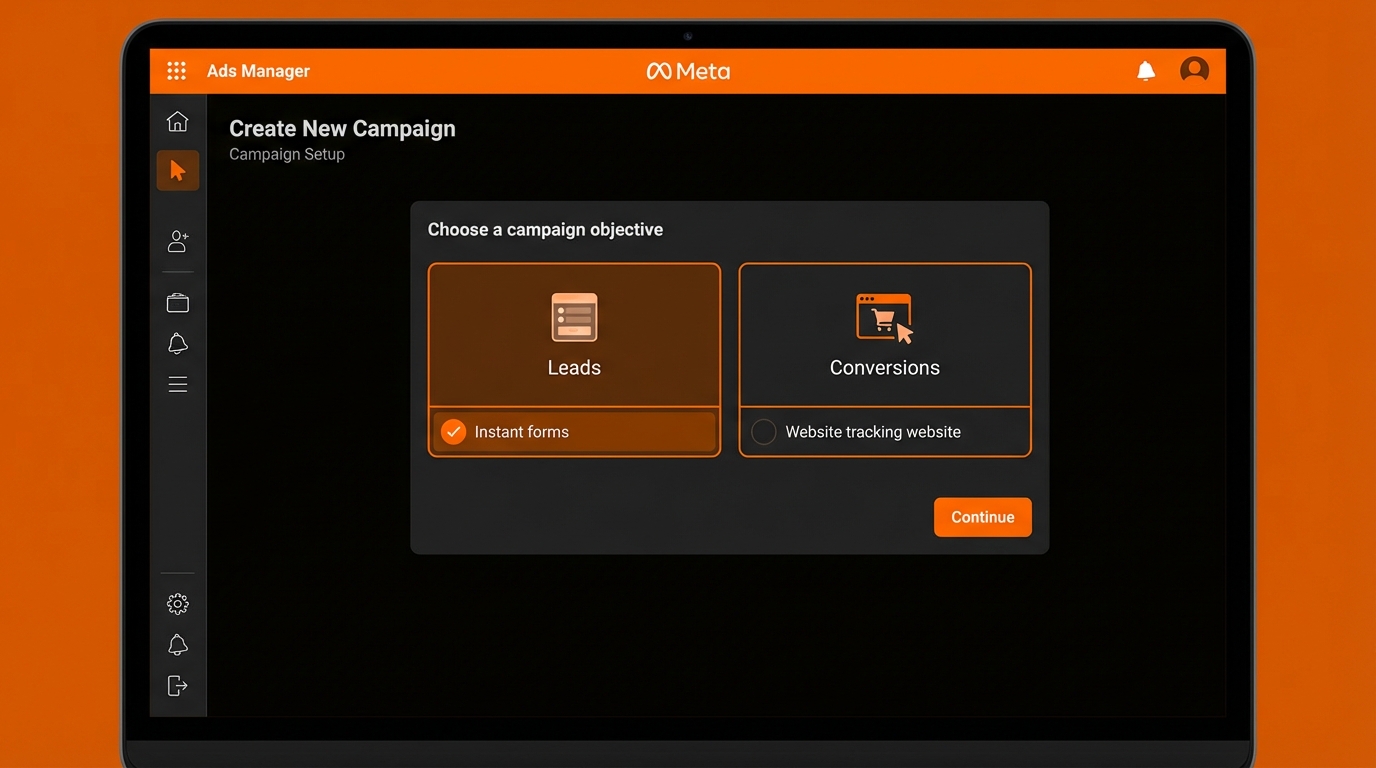
- Instant Forms (The Volume Pipeline): These are pure volume plays. Expect CPLs slashed by 40% to 70% compared to Conversion Ads. Mandate: Use High Intent forms and custom qualifying questions immediately. You must filter the noise at the source.
- Conversion Ads (The Quality Lock): These are strictly quality plays, demanding a higher CPL. To justify this cost, two non-negotiables exist: 1. Achieve sub-3 second page load times (critical for mobile conversion). 2. Implement the Conversions API (CAPI) immediately for reliable tracking signals.
- The Modern Hybrid (Conversion Leads): The strategic future is the Conversion Leads performance goal. This optimization tells Meta to seek out leads most likely to qualify *after* acquisition, combining the efficiency of the Instant Form structure with the quality signals of a Conversion Event.
- Post-Acquisition Velocity: Speed dictates success. Instant Form leads require immediate (sub-5 minute) automated re-engagement or qualification outreach. Conversion leads demonstrate higher intent and are ready for direct, personalized sales follow-up.
Step #1: The CPL Dilemma and Decision Matrix
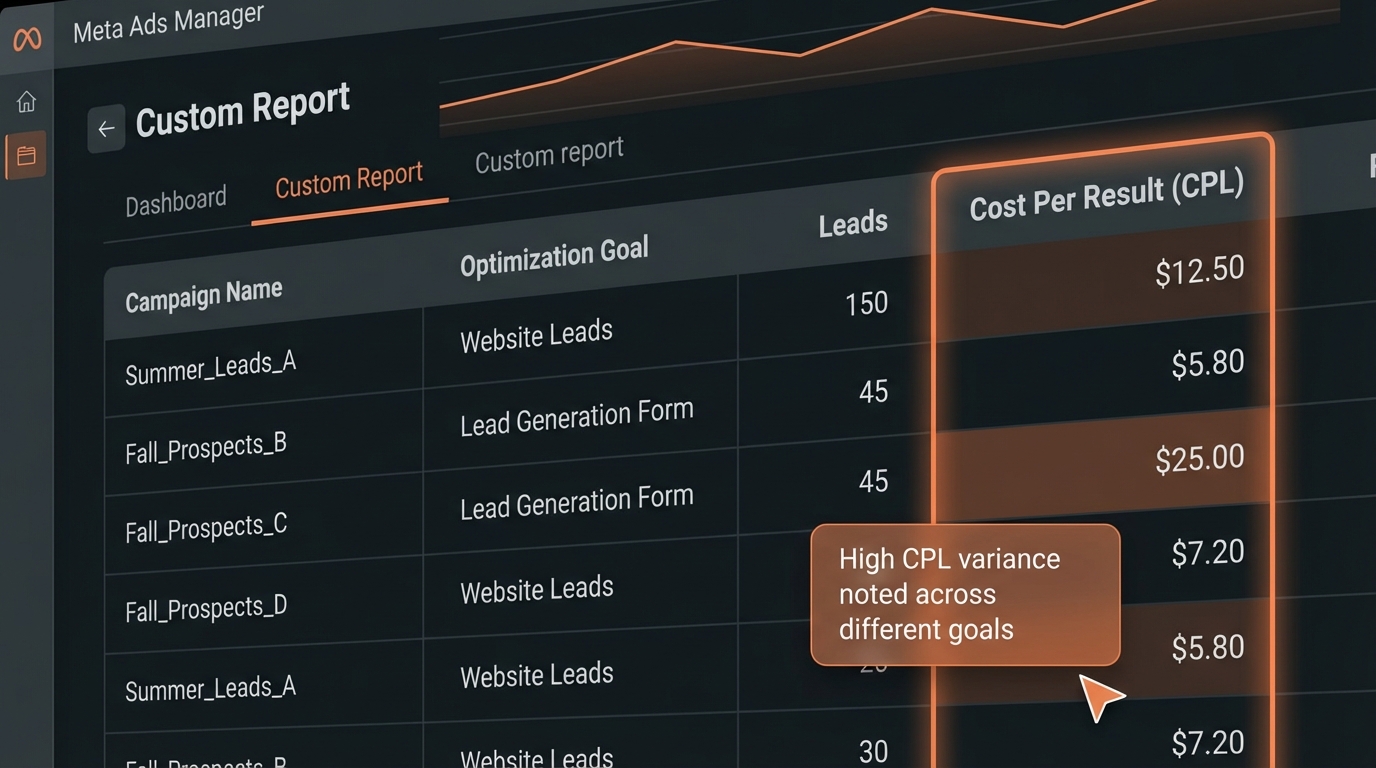
You cannot launch until the objective is crystal clear. Are we optimizing for sheer volume (Top-of-Funnel content downloads)? Or are we prioritizing qualification (Bottom-of-Funnel demo requests)?
The decision between Instant Forms and Conversion URLs is a direct calculation: Friction vs. Intent.
Instant Forms minimize friction. The user stays native to the Meta ecosystem. This frictionless experience dramatically slashes our Cost Per Lead (CPL).
Conversion URLs maximize intent. They force users off-platform,a crucial commitment barrier. Yes, this increases CPL. But it also filters out every low-effort submission immediately.
This is our internal decision matrix for every new campaign launch:
| Metric | Instant Forms (Subscribe) | Conversion Ads (Thank You URL) |
|---|---|---|
| Average CPL (Relative) | Low (40-70% cheaper) | High (Higher Intent Filter) |
| Lead Quality / Intent | Lower (High volume of “tire kickers”) | Higher (Self-qualified by effort) |
| Friction Level | Minimal (Pre-filled, native experience) | High (Page load, new environment, manual data entry) |
| Tracking Robustness | Simple (Native sync) | Complex (Requires CAPI for accurate off-platform tracking) |
| Goal: Choose If… | You require rapid list growth, massive volume, or early top-of-funnel content downloads. | You require demo requests, high-ticket qualification, or immediate sales engagement. |
The ultimate truth for high-ticket sales is this: CPL is a vanity metric. Instant Forms always win on CPL. However, Conversion Ads consistently outperform when measured by Cost Per Qualified Opportunity (CPQO). We must track the results far beyond the initial lead submission.
Step #2: Universal CPL Reduction: Mastering Meta’s Optimization Tools
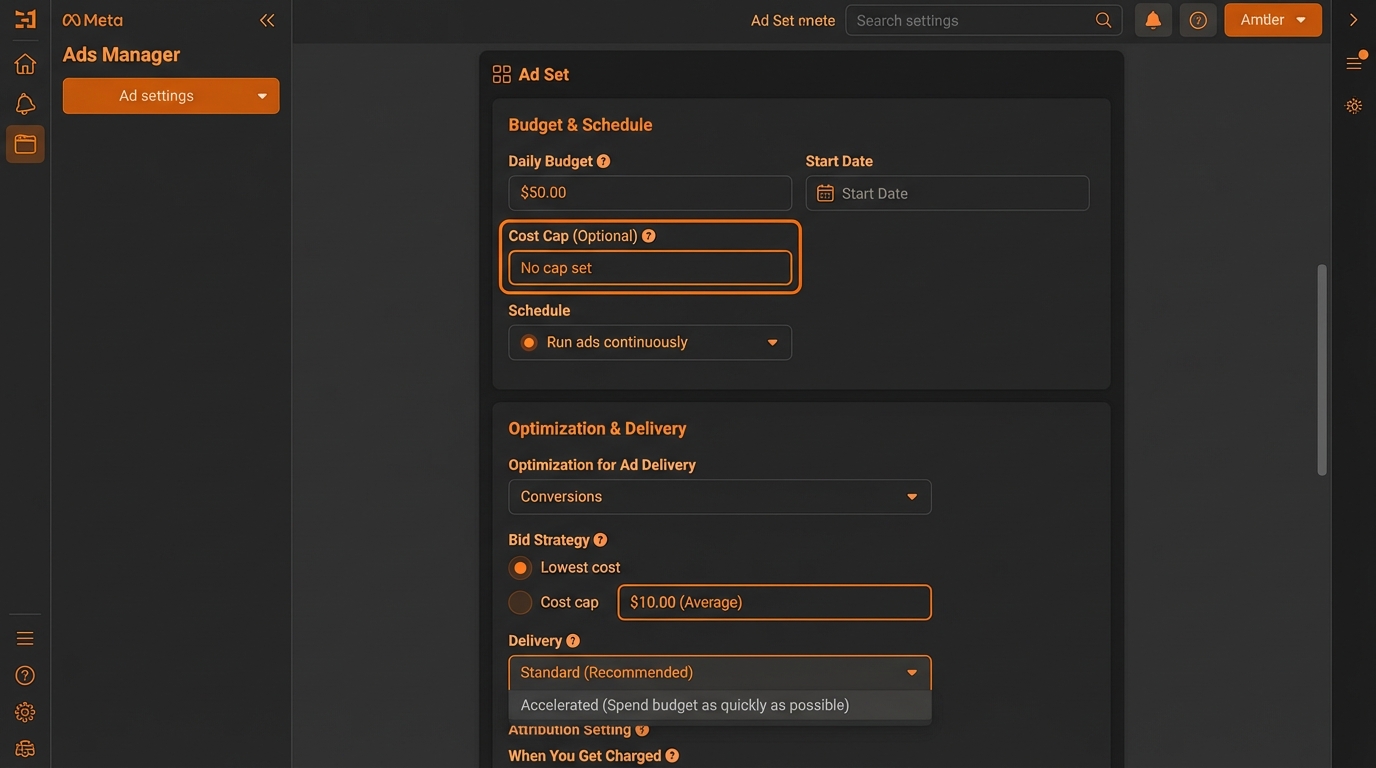
Our CPL floor is non-negotiable. Meta’s system efficiency dictates that floor,and most founders ignore the fundamental levers provided.
We cannot afford that luxury. In 2025: manual placement or budget management is financial negligence. You are leaving revenue on the table.
2.1. Trust the Algorithm: Leverage Advantage+
Meta provides sophisticated optimization tools based on real-time data from billions of auctions. We leverage these tools to drive down costs instantly.
- Advantage+ Placements: Activate this setting,always. It grants the system full autonomy to distribute your budget across all placements (Feeds, Stories, Reels, Audience Network). This is how we ensure maximum cost-efficiency and instantly control CPL volatility.
- Advantage+ Campaign Budget (CBO): Mandatory when running multiple ad sets (e.g., testing creatives or audiences). CBO dynamically shifts budget toward the ad sets delivering the cheapest results in real-time. This eliminates manual adjustments based on lagging, outdated data.
2.2. Respect the Learning Phase
Meta needs data to optimize delivery. Your CPL will remain unstable and potentially high until the ad set exits the Learning Phase. This is a crucial, often expensive, bottleneck.
- The 50 Conversion Rule: Every ad set requires approximately 50 optimization events (leads or conversions) per week. This is the data threshold Meta needs to exit the learning phase and stabilize your cost.
- The Budgeting Mandate: Calculate your budget based on this rule. If your target CPL is $20, you must allocate a minimum of $1,000 per week, per ad set. Starving the algorithm of data prevents learning and guarantees high costs.
- Avoid Premature Changes (The Reset Button): Do not edit the ad set (creative, budget, targeting) while it is in the learning phase. Any significant edit resets the clock. You will trap yourself in a cycle of expensive, unstable delivery,and waste capital.
Step #3: High-Volume Strategy: Optimizing Instant Forms for Quality
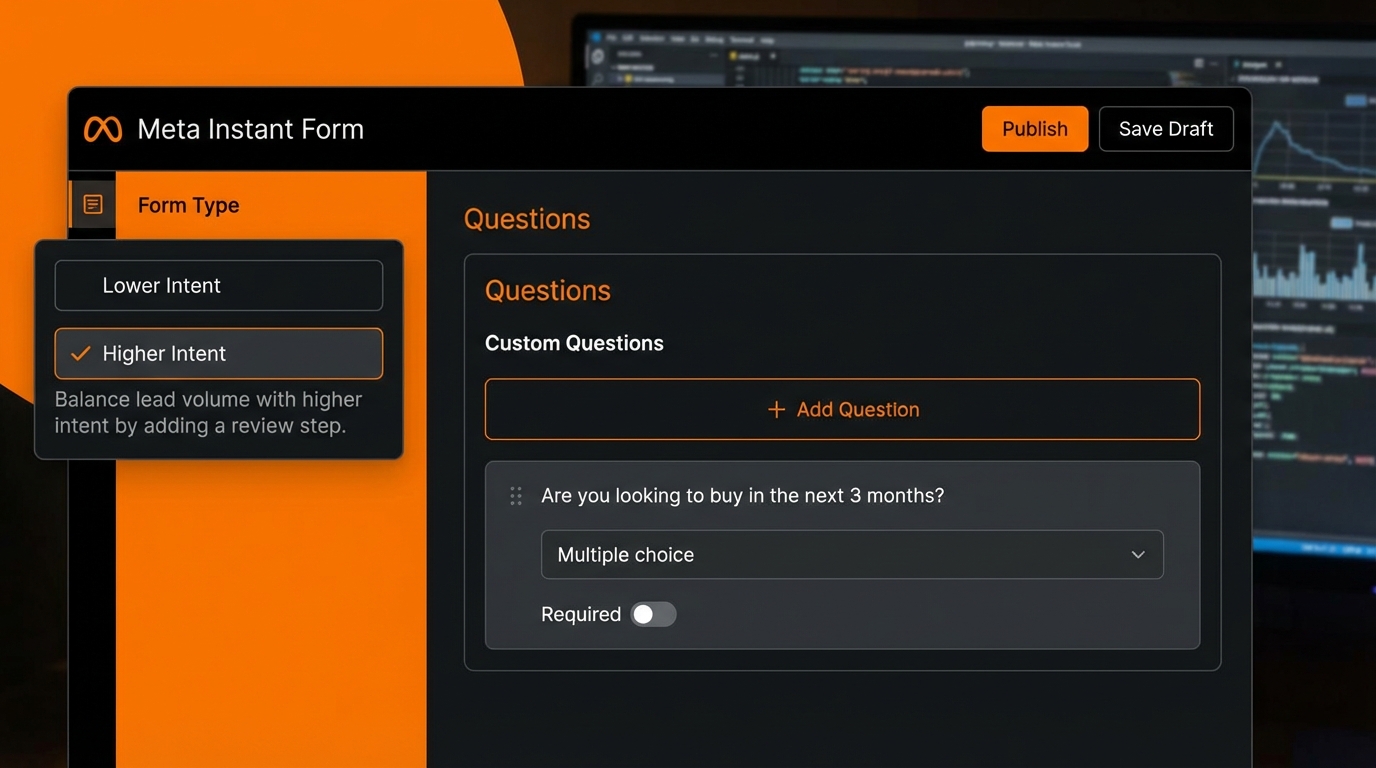
You opted for the Instant Form objective. This means your priority is volume,but volume without quality is financial waste.
Your goal is maximizing submission rates while introducing the precise amount of friction required to qualify the lead.
The core mistake we see: treating the Instant Form as a simple email capture tool. It is not. It must function as a rapid-fire qualification mechanism.
3.1. Mandate High Intent: Filtering the Noise
Meta provides two primary form settings. Choose incorrectly, and you tank your sales team’s efficiency.
- More Volume: The default. Maximum speed. Lowest CPL. Lowest lead quality.
- High Intent: Adds a mandatory review screen. The user must actively confirm their pre-filled data before submission.
For high-ticket B2B leads: we mandate High Intent. No exceptions.
Our internal data showed a 15% increase in qualification rates (SQLs) when we switched from Volume to Intent. The marginal 5% CPL increase was irrelevant,the ROI was dramatically higher. This trade-off is mandatory for scaling serious lead generation.
3.2. Custom Questions: Building the Qualification Filter
The pre-filled fields (Name, Email) are merely noise. Your custom questions are the actual qualification filter.
- Gauge Intent and Budget Immediately: Use multiple-choice questions to disqualify tire-kickers fast. Examples: “What is your estimated timeline for implementation?” or “What is your current monthly ad spend budget?”
- Leverage Conditional Logic (The 2025 Standard): Utilize Meta’s Flexible Form Delivery. If a user answers “Budget: Less than $1k,” immediately apply conditional logic. Direct them to a free resource instead of wasting valuable SDR time. That lead is disqualified from the sales sequence.
- Enforce Work Email Nudges: Meta now actively encourages the use of work emails over personal ones. This feature is crucial for B2B quality. Ensure this nudge is prioritized and highly visible in your form setup.
If you are accepting high volumes of lower-quality leads via Instant Forms, you need a robust, high-volume Scale Cold Outreach strategy to handle the subsequent follow-up. Do not skip the follow-up infrastructure.
3.3. Optimize the Thank You Screen: Capturing Momentum
The moment a user submits the Instant Form, their engagement is maximized. This is peak intent.
Do not allow that momentum to dissipate. The Thank You Screen is the critical bridge to immediate value delivery (or booking).
- Kill the Generic Reply: Never say, “We’ll Be In Touch.” This is passive. It generates friction.
- Provide Immediate, Actionable Value: If the lead requested a demo, the CTA button must be “Book Your Slot Now.” Link directly to your calendar (Calendly, HubSpot Meetings, etc.). If they downloaded an asset, the button is “Download Your Guide Instantly.”
- Define Next Steps Authority: Use the description field to clearly state the follow-up sequence. Example: “Confirmation email sent. Our dedicated team will contact you within 4 business hours to confirm your tailored solution and implementation timeline.”
Step #4: High-Quality Strategy: Mastering Conversion Ads
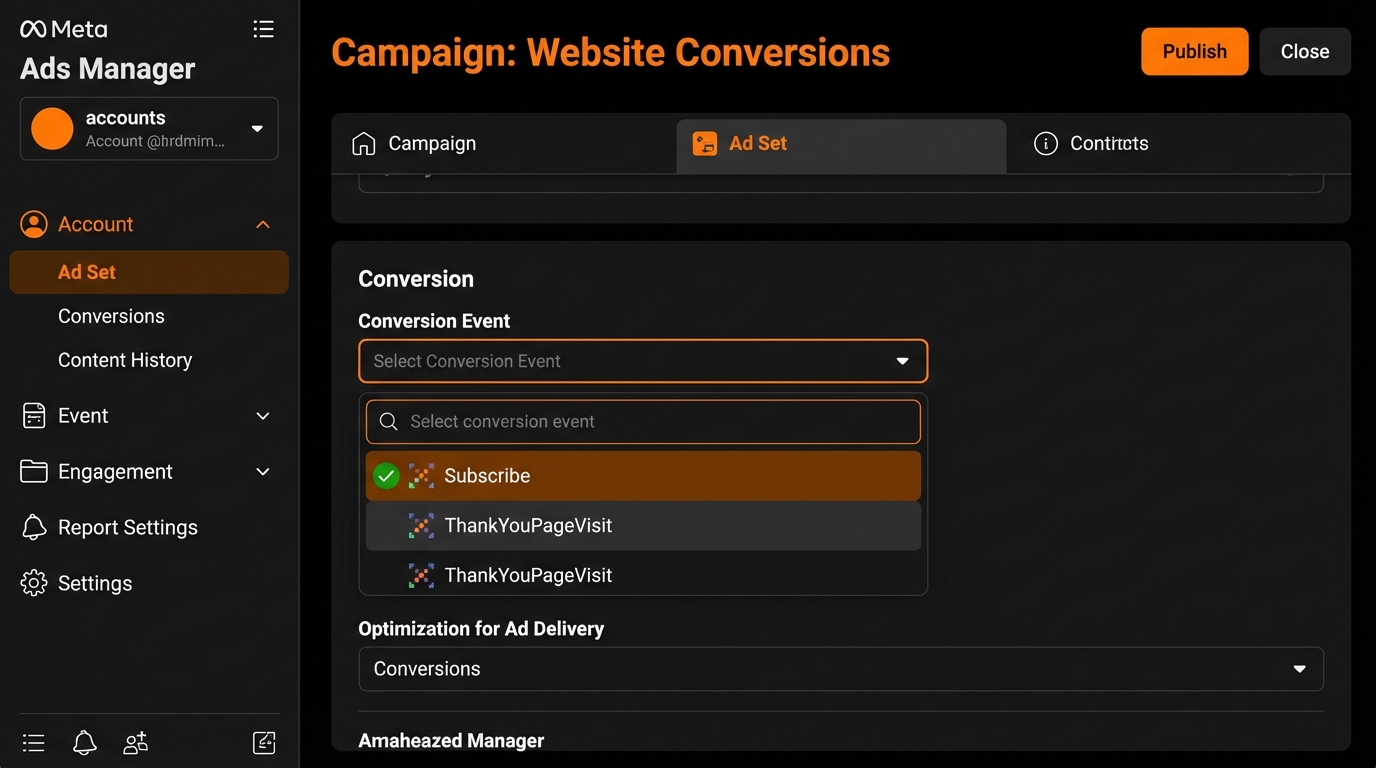
You chose the Conversion Ad objective. You prioritized quality,a crucial strategic move for high-ticket acquisition.
This choice necessitates eliminating all technical friction immediately. Why? Because you must justify the inherently higher Cost Per Lead (CPL) associated with external landing pages.
This path forces users to leave Meta and land on your domain. This is precisely where 90% of conversion campaigns fail: poor technical implementation kills ROI.
4.1. Technical Optimization: Page Speed *Is* Your CPL
Your landing page must be surgically optimized for mobile speed. This is non-negotiable.
Our internal data confirms this: Every single second of load time above the 3-second threshold correlated directly with a 15% to 20% spike in CPL. That spike is pure bounce rate friction.
- The Sub-3 Second Mandate: Use Google PageSpeed Insights. Your target mobile score must exceed 80. Optimize every image, aggressively minimize third-party scripts, and invest in premium, fast hosting.
- Mobile-First Design (90% Traffic Rule): Over 90% of Meta traffic originates on mobile devices. If your page is clunky,if the form fields are difficult to tap or read,you lose the lead. Ensure prominent, easy-to-fill form placement.
4.2. Tracking Mandate: Implement CAPI Immediately
The standard Meta Pixel is dead for reliable high-ticket tracking. iOS privacy constraints have neutered its effectiveness.
You must implement the Conversions API (CAPI). This is not optional.
CAPI bypasses browser limitations by sending conversion data directly from your server to Meta. This ensures maximum data fidelity and accuracy.
- High-Fidelity Optimization: CAPI delivers a complete, accurate picture of the conversion events. This allows Meta’s algorithm to optimize for the *actual* high-value leads, not just approximations.
- The Cost of Skipping CAPI: If you skip this step, you are feeding Meta incomplete, dirty data. This guarantees suboptimal bidding, wasted budget, and inflated CPLs for the leads you actually want.
- Technical Integration: Implementation requires technical expertise or a robust integration layer (Zapier, LeadsBridge, or native CRM integrations). Treat this as infrastructure development,it is foundational.
Remember: High-quality tracking is infrastructure. You need the systems in place to handle these clean data streams.
This means ensuring your sales development representatives (SDRs) have the appropriate Essential SDR Tech Stack Blueprint for 2025 ready to process and act on the high-fidelity CAPI data immediately.
Step #5: The Conversion Leads Hybrid: Getting Volume and Quality (Finally)
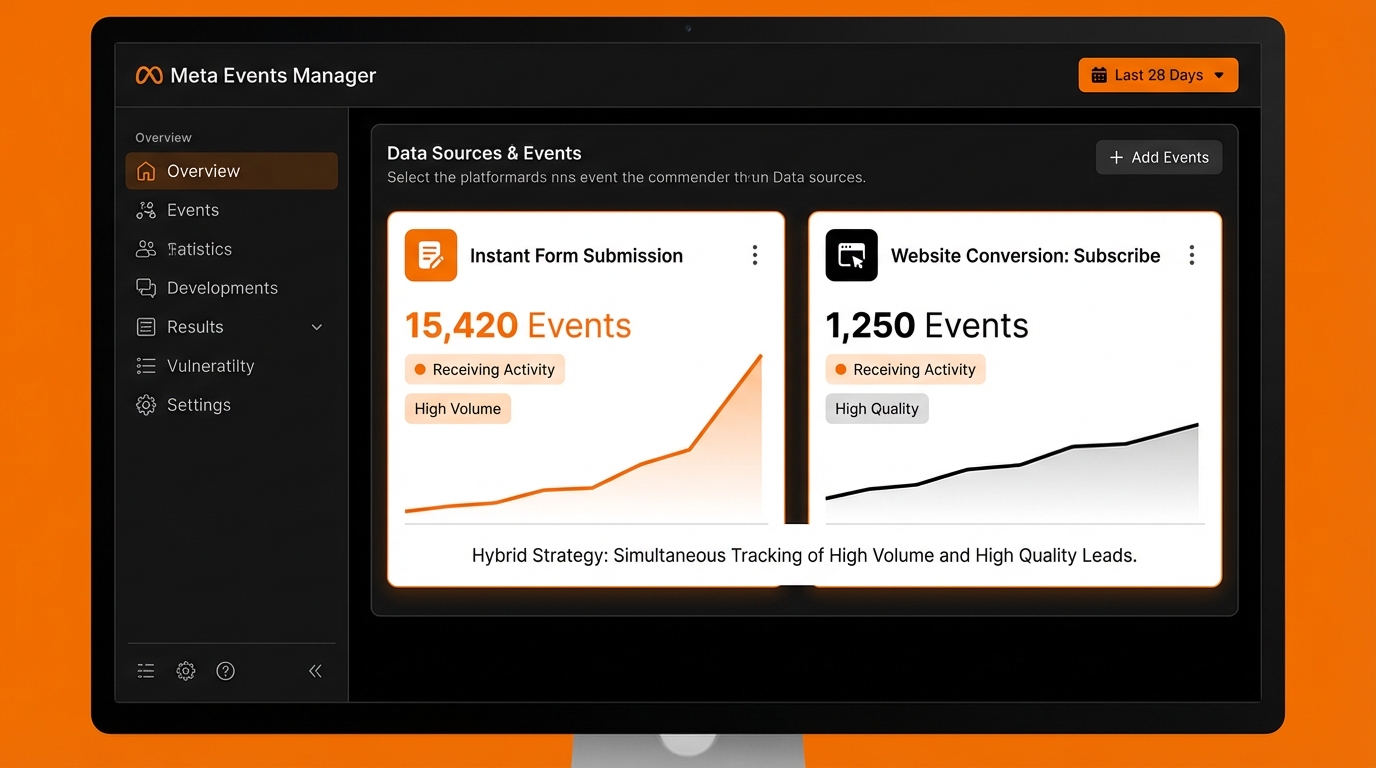
We face a constant paradox: We need the high volume efficiency of Instant Forms, but we also require the quality optimization only Conversion Ads can provide.
Meta solved this problem with a specific goal: Conversion Leads.
This is the strategic feature that bridges the gap between achieving a low Cost Per Lead (CPL) and maximizing actual Return on Investment (ROI).
5.1. How Conversion Leads Optimizes Your Pipeline
When you select the Lead Generation objective, ditch the standard ‘Leads’ goal. Choose the Conversion Leads performance goal instead.
Crucially, this setup requires real-time data flow: You must send offline conversion events back to Meta via CAPI or a reliable CRM sync.
- The Command: You are telling Meta: “Optimize for users who are likely to submit the Instant Form AND who are likely to become a Qualified Lead (based on the offline data I send you).”
- The Filtering Effect: If our CRM sync consistently shows leads from Campaign A are marked “Qualified,” Meta prioritizes finding lookalikes. We accept a slightly higher CPL because we know the resulting downstream ROI justifies the expense.
The optimization focus shifts entirely: We move from chasing sheer volume (the cheapest clicks) to tracking actual business results (qualified leads, pipeline value).
This is how we ensure our front-end CPL efficiency translates directly into revenue.
5.2. Action Plan: Implementing Your Offline Conversion Sync
To use Conversion Leads effectively, your system must send custom conversion events back to Meta. This is non-negotiable for high-ticket acquisition.
- Define Your Quality Milestones: Identify the exact post-lead events that signify value for your business. These are the critical sales pipeline steps (e.g., “Lead Qualified,” “Demo Booked,” “Opportunity Created”).
- Map CRM Fields and CAPI: Configure your CRM (HubSpot, Salesforce, Pipedrive) to securely send these specific events back to Meta. This requires robust CAPI integration,do not rely on vulnerable browser pixels alone.
- Achieve Algorithmic Mastery: Meta’s algorithm learns what a “good” lead looks like based on your actual sales pipeline data, not just the initial form submission. This is the only advanced method that ensures your front-end CPL aligns perfectly with your back-end ROI.
Step #6: Post-Acquisition Flow: Qualification and Velocity
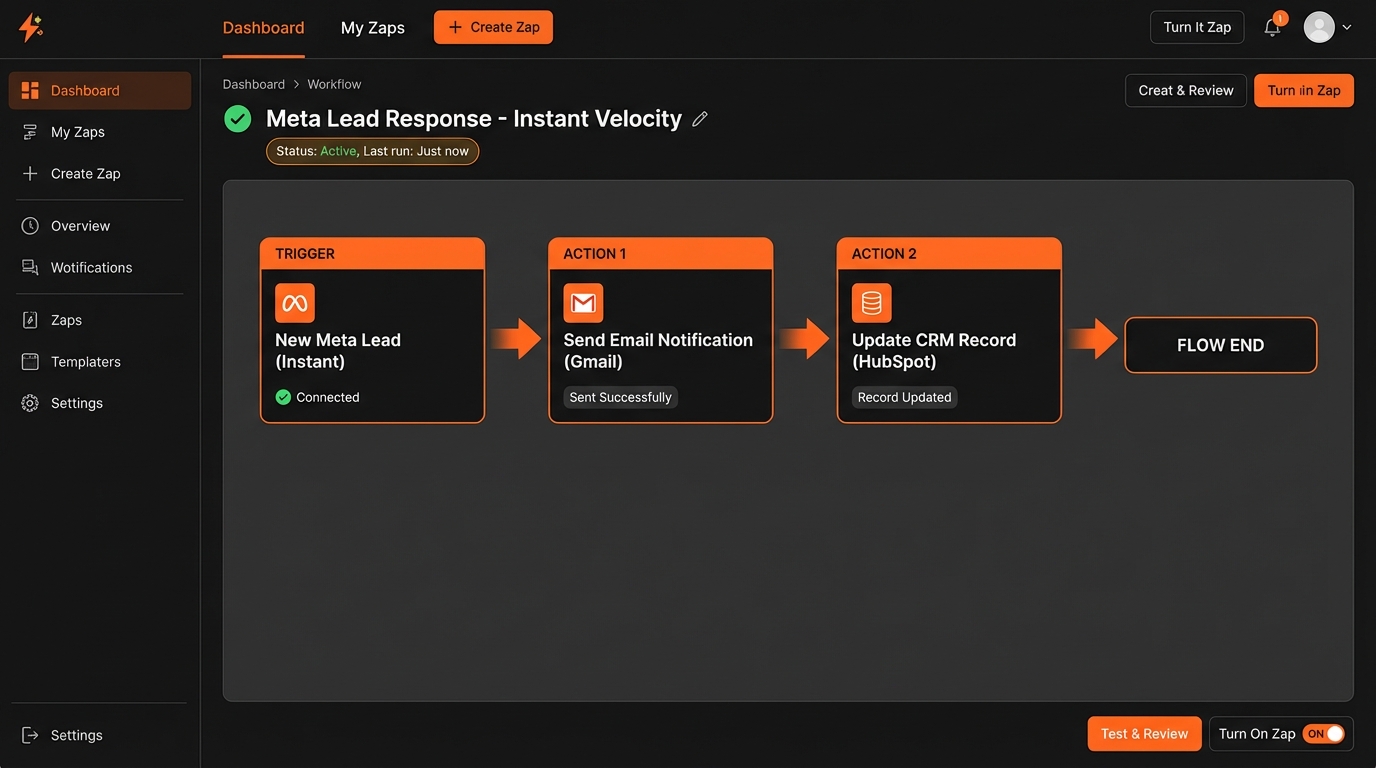
Lead acquisition is only 50% of the battle. The other half is velocity.
Your follow-up strategy must drastically shift based on the lead source: Instant Form or Conversion URL. This is where most businesses fail,they treat all leads equally, destroying their ROI.
6.1. Instant Form Leads: Immediate Re-engagement is Mandatory
These leads are cold. They were likely submitted on a whim while doom-scrolling on mobile. They have the lowest immediate intent.
We treat them as high-volume, low-quality prospects requiring immediate triage.
- Velocity Mandate: Engage within 5 minutes. Period. Use automated triggers (Zapier or CRM sync) for immediate, personalized email or SMS deployment. Speed is the only factor mitigating low intent here.
- The Qualification Triage: Instant Forms often lack deep qualification data. Your SDR team must execute a swift, standardized qualification process immediately. Use frameworks like BANT or MEDDIC upon contact. How To Qualify Leads Using Bant Framework Sdr is essential reading here.
- Aggressive Nurturing: If they don’t respond immediately, push them into a dedicated, aggressive sequence. This means multi-channel: email flows, retargeting ads, and strategic cold calling attempts.
6.2. Conversion Ad Leads: Sales-Ready Follow-up
These leads are warm. They actively left Meta, navigated your site, and manually submitted the form.
This demonstrates high intent (and high cost). Treat them like gold; they are sales-ready.
- Immediate Sales Handoff: The goal is not re-engagement. It is booking the next meeting. SDRs must follow up within 30 minutes, prioritizing a direct phone call or a personalized, recorded video message.
- Leveraging Intent Data: Since they spent time on your site, use the tracking data (pages visited, time on page, content consumed) to inform the initial conversation. This personalization demonstrates expertise and confirms you understand their specific pain points.
- Automation Is Detrimental: Over-automation signals low value to a high-intent prospect. Keep the initial touchpoint human, focused, and strategically aimed at closing the discovery meeting.
Frequently Asked Questions (FAQ)
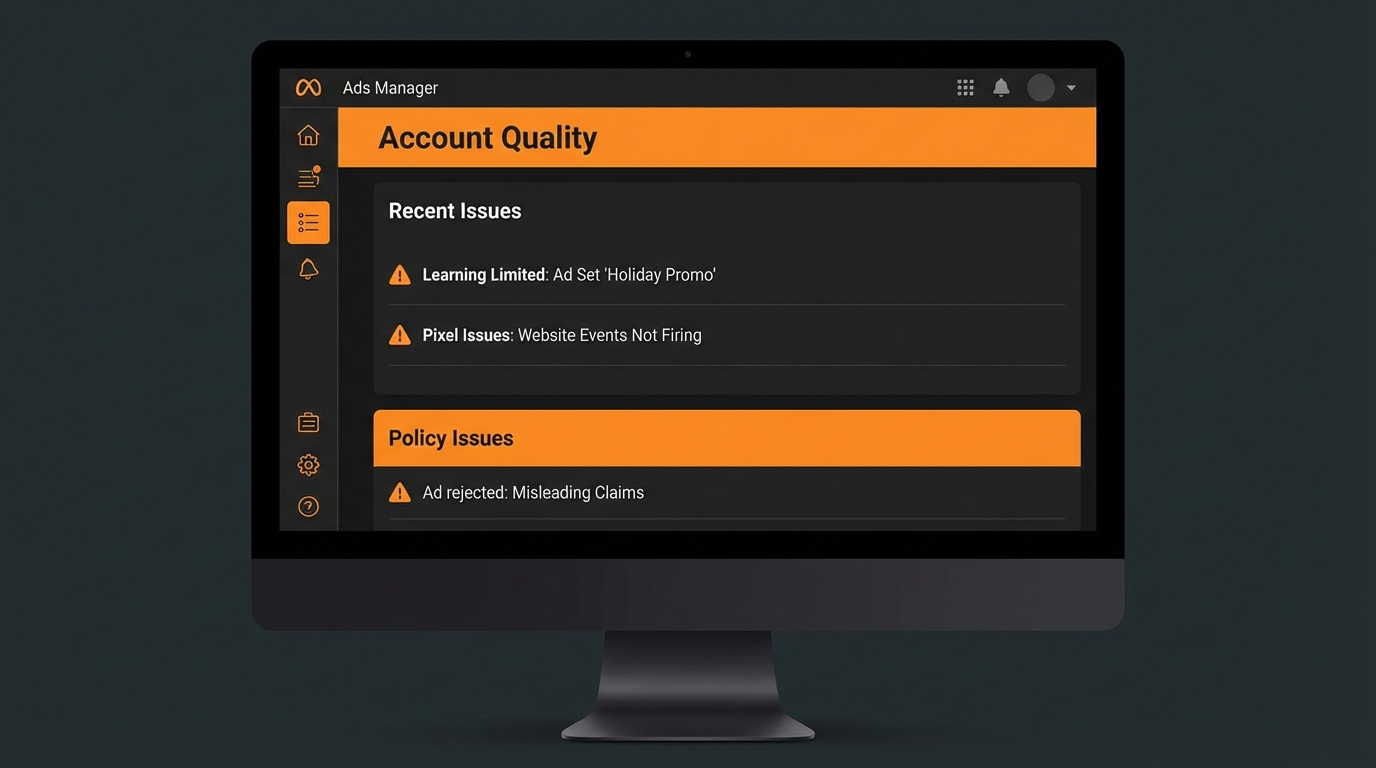
- Is the Meta Pixel completely obsolete for CPL tracking in 2025?
-
No. The Pixel is heavily degraded, not obsolete. Relying on the Pixel alone limits visibility (thanks, iOS 14+). For accurate CPL and high-quality lead optimization, the Pixel must be reinforced by the Conversions API (CAPI).
We leverage the Pixel only for basic traffic events. CAPI handles all critical conversion events, providing the server-side data needed for true optimization.
- How much higher should I expect my CPL to be when switching from Instant Forms to Conversion URLs?
-
Expect a CPL increase of 40% to 120%. This is based on our internal data across B2B SaaS verticals. This spike is completely normal.
The critical metric is Cost Per Qualified Lead (CPQL). Your goal is simple: Ensure CPQL remains stable or decreases. This offsets the higher initial acquisition cost with dramatically better backend conversion rates.
- If I use Instant Forms, how can I use retargeting effectively?
-
This is a high-leverage move.
- First, create a custom audience: Target people who opened the Instant Form but failed to submit it.
- This is a high-intent, low-friction audience segment.
- Retarget them immediately with a new ad creative and a clear, aggressive value proposition to push for completion.
This tactic recovers significant volume that would otherwise be lost,boosting your overall funnel efficiency and maximizing ad spend ROI.
The right lead source dramatically cuts your acquisition costs.
But finding the high-value contacts,the personal emails of founders and decision-makers,is the next challenge. Stop relying on volume. Start focusing on quality and scalability.
Try AI Lead Generation Today
Try Our AI Lead Generation Software