

The standard, automated five-step sequence is dead. It died years ago.
If you are still relying on generic templates and high-volume blasts, your domain reputation is suffering. Worse: Your team is missing crucial revenue targets.
The market in 2025 demands hyper-relevance and perfect deliverability. We are not interested in 2% reply rates.
Our systems consistently hit 12% reply rates for cold outbound. We achieve this by prioritizing trust over volume.
This is not a guide on how to click buttons in your Sales Engagement Platform (SEP). This is the strategic blueprint for building sequences that scale,without compromising trust or domain health.
Key Takeaways for Immediate Action
- Strategy First: Never build a sequence without defining your Persona-Goal Matrix. This dictates every touchpoint.
- The 15-Step Rule: High-converting sequences require 12 to 18 touchpoints across 21 business days. Five steps is insufficient for complex sales cycles.
- Deliverability is Non-Negotiable: Treat domain health and warm-up as your primary KPI. A single high bounce rate kills your entire system.
- Focus on Relevance: Personalization is a gimmick. Relevance answers the prospect’s critical questions instantly: “Why Me? Why Now?”
1. Define Your Strategic Foundation: The Persona-Goal Matrix
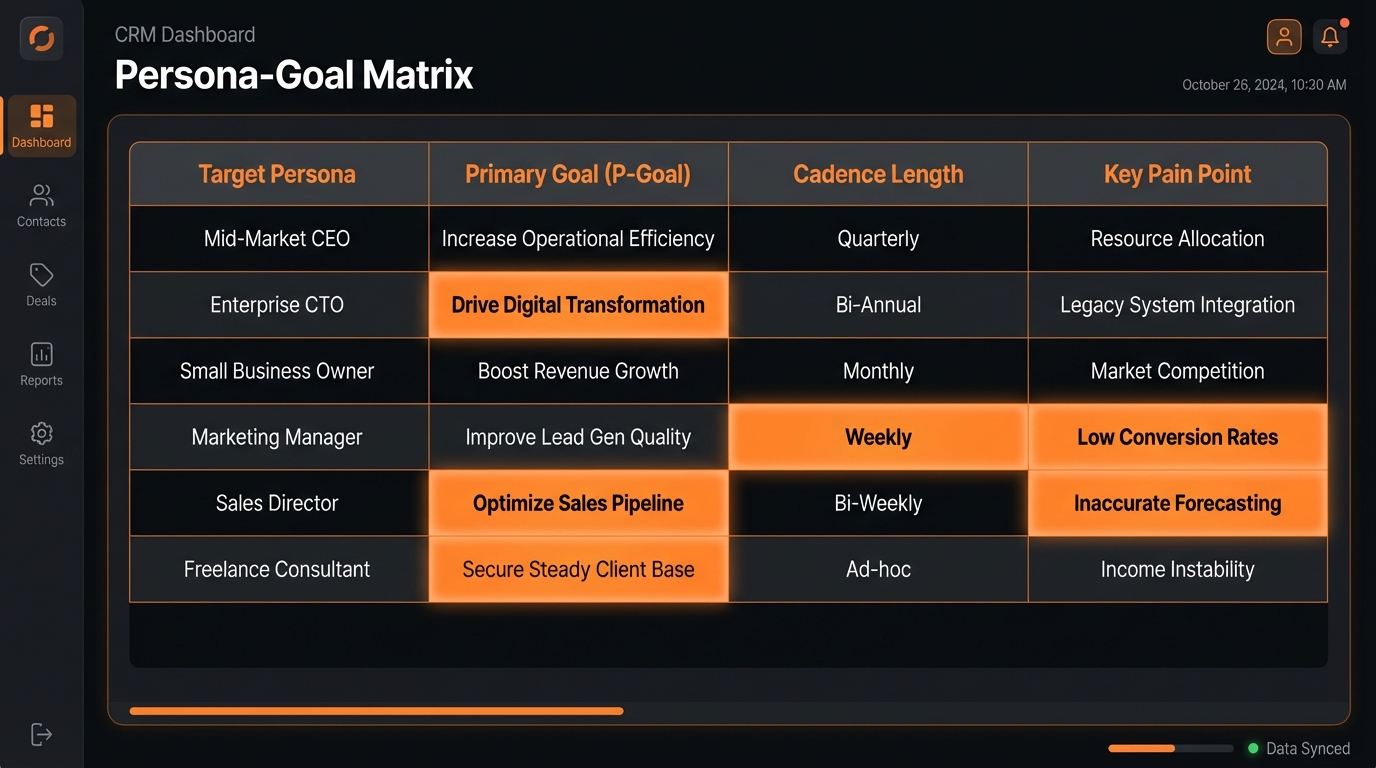
Generic sequences fail. They operate on the false assumption that all prospects share the same pain point. They do not.
Before drafting a single line of copy, you must segment your audience based on two critical vectors: Persona and Touch Intensity.
Step #1: Map Buyer Personas to Specific Goals
Identify your core target personas (e.g., VP of Sales, CMO, Head of Operations). Every persona demands a unique sequence. Their incentives are fundamentally different.
A VP of Sales prioritizes revenue expansion; a Marketing Director focuses on execution efficiency and time-to-value. We map each distinct persona to a specific sequence type, defining the core goal upfront:
- Cold Prospecting: Targeting net-new accounts. Goal: Secure the initial meeting. (Our benchmark: 12% reply rate minimum.)
- Warm Inbound: Targeting leads who actively engaged (downloaded content, attended a webinar). Goal: Qualification call. (Our benchmark: 20%+ reply rate.)
- Win-Back/Nurture: Targeting dormant leads or aged opportunities. Goal: Re-engagement and pipeline revival. (Our benchmark: 10%+ reply rate.)
Step #2: Establish Touch Intensity (High vs. Low)
Not all leads carry the same potential value. Your sequence effort must directly correlate with the potential deal size. This is an efficiency imperative: Stop wasting manual effort on low-value prospects.
The High Touch strategy is reserved for Tier 1 accounts (CROs, C-Suite, key industry leaders). The Low Touch strategy manages volume and relies heavily on scalable processes.
High Touch Sequence: The Strategic Investment
- Longer duration (typically four to six weeks).
- Heavy reliance on manual, hyper-personalized steps (custom video messages, deep LinkedIn research, referral requests).
- Maximum volume: 50 active prospects per rep per week. This is manual labor, not bulk sending.
Low Touch Sequence: The Volume Engine
- Shorter duration (max 21 days).
- Heavier automation (automated emails, standardized call scripts, simple follow-ups).
- Higher volume: 200+ active prospects per rep per week.
This foundational matrix is non-negotiable. It ensures your SDRs deploy maximum effort only where the ROI justifies it. We implemented this structure to drastically increase revenue per rep and reduce burnout.
2. Sequence Anatomy: The Universal 15-Step Cadence
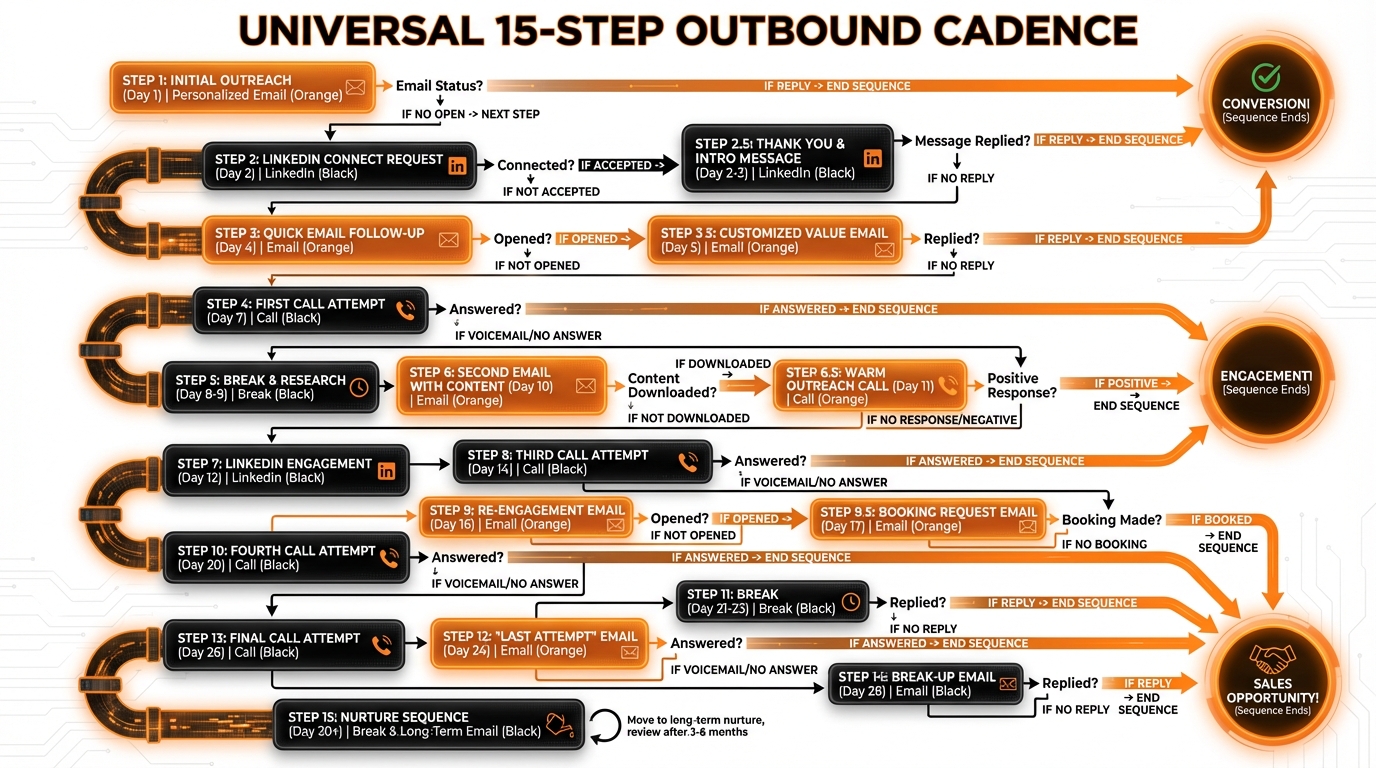
We have rigorously tested sequences ranging from 5 steps to 25 steps. Our internal data is conclusive: 12 to 18 high-quality touches over 21 business days is the optimal performance window.
This specific cadence delivers the perfect balance of persistence and anti-spam compliance. We do not blast prospects daily. We execute a strategic, spaced cadence designed for trust, not pure volume.
The 21-Day Multi-Channel Matrix
This is the exact, platform-agnostic framework (Outreach, Salesloft, Mixmax,it doesn’t matter) that drives our consistent 12%+ reply rate benchmark. This structure is non-negotiable for high-ticket acquisition.
| Day # | Step Type | Channel | Action / Goal |
|---|---|---|---|
| 1 | Automated | Email 1 (Cold Intro) | Establish Relevance (“Why Now?”) |
| 2 | Manual | LinkedIn Connection Request | Brief, personalized note referencing Email 1. |
| 3 | Manual | Phone Call 1 | Quick attempt. Leave a context-rich voicemail if possible. |
| 5 | Automated (Reply Step) | Email 2 (Bump) | Bumps Email 1 thread. Inject a new, relevant value proposition. |
| 7 | Manual | LinkedIn Message | If connected: Send a short text or high-effort video message. |
| 8 | Manual | Phone Call 2 | Reference previous attempts. Higher effort. |
| 10 | Automated | Email 3 (Case Study) | Social proof injection. Focus strictly on ROI metrics. |
| 12 | Manual | Internal Referral Search (Optional) | Find a better entry point within the company structure. |
| 14 | Automated (Reply Step) | Email 4 (Insight Bump) | Share a relevant industry insight or pain point,no direct CTA. |
| 16 | Manual | Phone Call 3 | Final direct call attempt. |
| 18 | Manual | Video Message (Loom/Vidyard) | Send via email. High-effort, visual break-through designed for personalization. |
| 21 | Automated | Email 5 (Breakup) | Final value proposition and a clear, professional exit. |
The Execution Mandate: Addressing Manual Bottlenecks
Manual tasks are not optional; they are critical differentiators. They are also the primary cause of sequence failure in most organizations.
If you observe prospects stacking up at high-effort steps (like Phone Call 2 or the personalized Video Message), your sales team is failing the process. This is a management issue, not a sequence design issue. Revenue flow stops when manual steps are ignored.
Address this immediately: Identify the bottleneck, re-train the rep, or re-assign the lead. Do not allow failure points to persist.
3. Technical Setup and Deliverability Focus
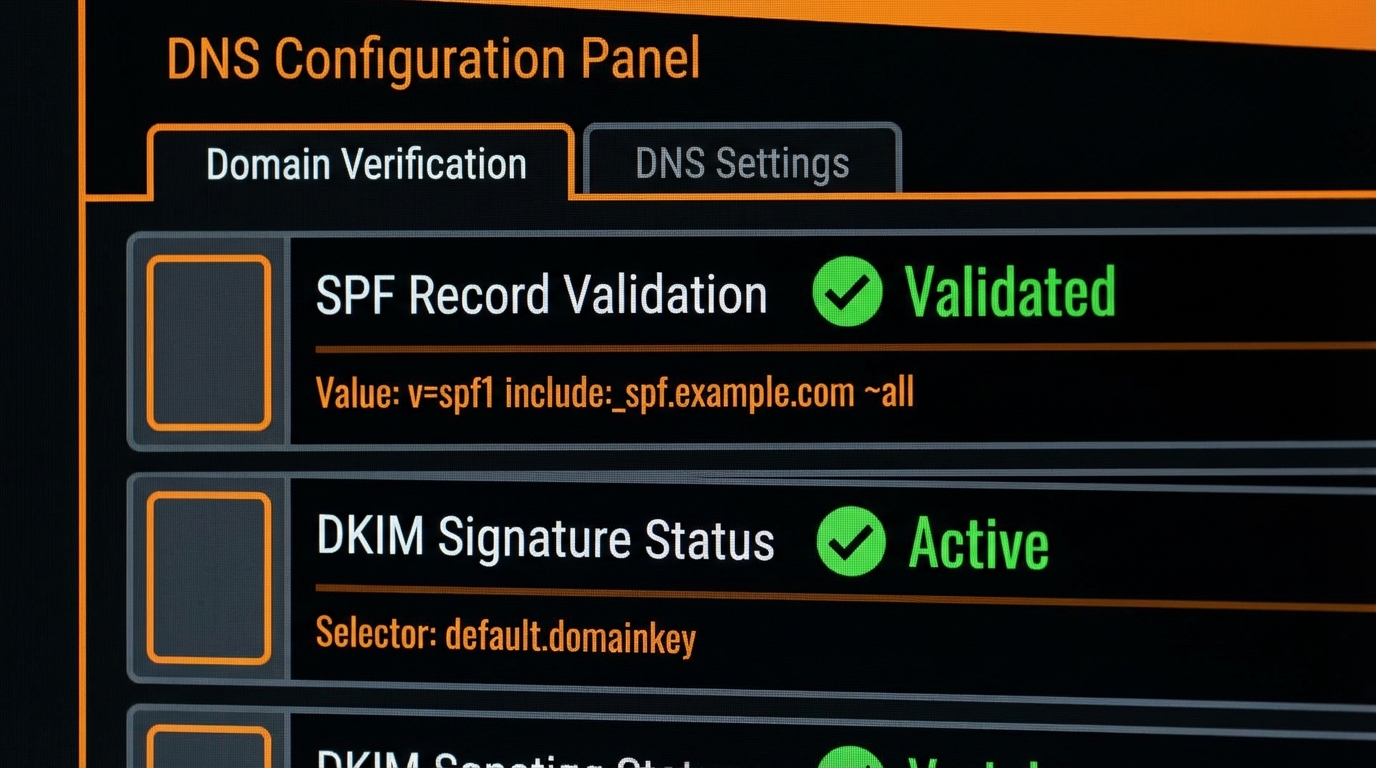
Deliverability is not optional. It is the bedrock of outbound success. Your perfectly crafted 15-step sequence is useless if the ISP routes it directly to spam.
We treat domain health as the absolute primary KPI. If the technical foundation is weak, the entire strategy collapses.
Step #3: Domain Warm-Up and Throttling
Never launch a cold campaign from a new domain immediately. Sending 500 emails on Day 1 is domain suicide.
ISPs flag this instant volume spike as malicious behavior. You must warm up your sender reputation slowly and systematically.
- Dedicated Sending Domain is Mandatory: Never use your primary corporate domain (e.g., pyrsonalize.com) for cold outreach. If you burn the outreach domain, your core business operations remain protected. Use a slight variation (e.g., pyrsonalize.co or get-pyrsonalize.com).
- The 6-8 Week Warm-Up Protocol: Start small. We begin at 30-50 emails per day and gradually increase volume by no more than 10% daily. Use a dedicated warm-up tool for a minimum of six weeks before launching any mass campaigns.
- Strict Throttling Logic: Utilize the throttling feature in your outreach platform. Set a strict daily limit per sender. We recommend no more than 150 emails per 24 hours per domain. This low limit protects your reputation and guarantees superior inbox placement long-term.
Step #4: Compliance and Time Zone Logic
Compliance is mandatory. Ignoring legal requirements or disrespecting the prospect’s workday will kill your domain faster than poor copy.
Compliance Checklist: Risk Mitigation
- Unsubscribe Link: This is non-negotiable in all mass emails. If a prospect cannot easily opt-out, they mark you as spam. That is domain suicide, not marketing.
- Physical Address: Required by CAN-SPAM laws (and others). Include your company’s physical address or mailing address in the footer of every email.
- GDPR and CCPA: If targeting the EU or California, ensure you have a legitimate interest basis documented for processing data. Document everything: this protects you from serious fines.
Time Zone Optimization: Maximizing Impact
Sending an email at 2 AM local time is unprofessional and a waste of a valuable touchpoint.
We configure all sequences to send based on the prospect’s local time zone (PST, EST, GMT, etc.). Our data shows the highest engagement rates occur within two strict windows:
- Morning Window: 9:00 AM to 11:00 AM local time.
- Afternoon Window: 2:00 PM to 4:00 PM local time.
We prioritize these specific windows for every Step 1 email and critical follow-up touch to maximize open rates and ROI.
4. The Messaging Toolkit: Relevance Over Noise
![A screenshot of an email sequence editor interface. The email body contains personalized merge tags highlighted in orange: "Hi {{First_Name}},
I was reading about how you recently {{Recent_Achievement}} at {{Company_Name}}, which is incredible.
It got me thinking about your focus on {{Company_Pain_Point}}.
Our platform is specifically designed to help with that.
Best,
[Your Name]."](https://pyrsonalize.com/blog/wp-content/uploads/2025/12/article-section-image-155.jpg "Crafting Hyper-Relevant Outbound Emails Using Personalization Variables")
Deliverability secures the inbox. Relevance secures the meeting.
Stop talking about your product. Prospects do not care about features; they care exclusively about solving their immediate, painful problem. This distinction is critical: Personalization is mentioning their dog. Relevance is zeroing in on their Q4 hiring bottleneck. We focus on relevance every time.
Step #5: Mastering the “Why Me? Why Now?” Framework
Every word of outreach must justify its existence. You must answer two questions instantly: Why me? Why now? If you cannot establish urgency, your sequence fails.
We use our AI Lead Generation Software to uncover verifiable, current triggers,the data that makes outreach hyper-relevant:
- They just hired a new VP of X (meaning a new initiative is starting).
- They announced a recent funding round (meaning they have budget and urgency).
- Their competitor just launched a new feature (meaning they are vulnerable to disruption).
This focus allows us to effectively Scale Cold Outreach: Personalize Pain, Not People. This strategic shift is directly responsible for our highest pipeline conversion rates.
Step #6: High-Converting Subject Line Categories
The subject line is the gatekeeper. It must sound internal, urgent, or hyper-specific. We mandate short lines: typically 2 to 4 words. Never use generic filler like “Quick Question.”
Use these four proven, high-conversion categories:
- The Specific Pain:
[Competitor Name] + [Problem](Example: “Outreach throttling issues?”) - The Mutual Connection/Referral:
[Name] suggested I reach out(Use only if true or highly probable; this bypasses standard skepticism.) - The Metric Focus:
30% reduction in lead cost?(Must be a metric they care about immediately.) - The Internal Vibe:
Quick thought on Q4 hiring(This sounds like a colleague, increasing open rates significantly.)
For more specific guidance, review our strategic guide on SDR Cold Email Subject Lines.
Step #7: The Breakup Email Strategy
The final step in the sequence,often deployed around Day 21,is crucial. We find the breakup email frequently converts better than Steps 2 or 3. The rule is simple: Do not beg. Do not guilt trip. The objective is to provide one final, clear value shot and force a definitive decision.
Structure of a High-Impact Breakup Email:
- Acknowledge and Exit: State clearly that you are removing them from the sequence. (Example: “I’m taking this off your plate. I assume this isn’t a priority right now.”)
- Final Value Shot: Restate the single, most specific metric you can improve. Use hard numbers. (Example: “We helped [Competitor X] boost pipeline by 77% in 90 days.”)
- The Referral CTA: Ask for a referral instead of a meeting. This softens the ask and increases response rates significantly.
6. Optimization Framework: The Metrics That Drive Revenue
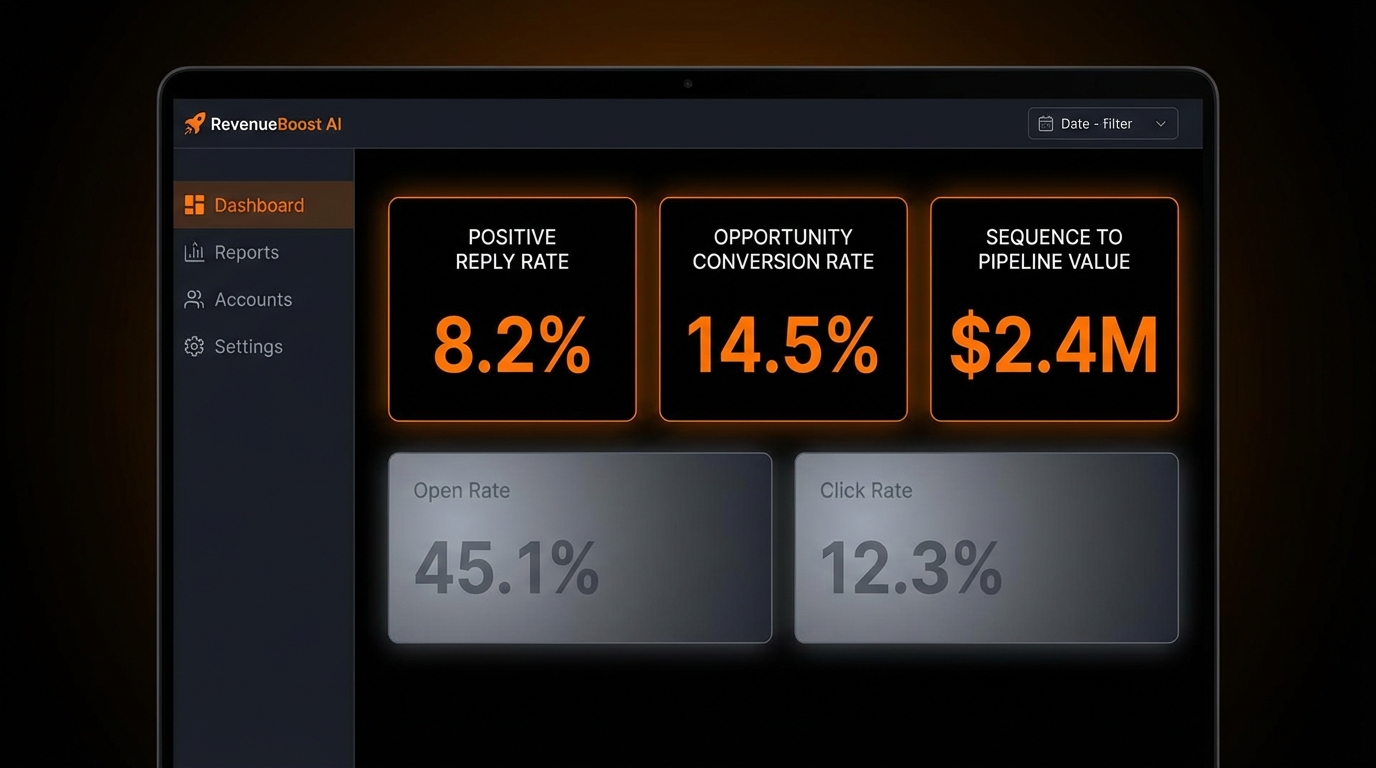
You cannot scale what you do not measure. Period. Our approach mandates continuous refinement through rigorous metric tracking.
We enforce strict quarterly review cycles to ensure every sequence is optimized for maximum conversion. This framework removes emotion from outreach decisions.
Step #6: Benchmark Your Performance Against the 2025 Standard
Reliable data requires volume. We recommend a minimum of 250 prospects per sequence variant to gather statistically significant results.
If your cold outbound campaigns fail to hit these numbers, the entire system is fundamentally broken: usually the targeting, the relevance, or the data quality.
This is the current standard for high-performance, trust-based prospecting:
| Metric | Cold Outbound Benchmark | Why It Matters |
|---|---|---|
| Top Line Reply Rate | 12% – 15% | Measures overall sequence effectiveness and persistence. This is the primary revenue driver. |
| Email Open Rate (Sequence Avg.) | 27% – 35% | Measures subject line quality and deliverability health. |
| Email Bounce Rate | Below 2.5% | Critical health indicator. Anything higher risks domain flagging and blacklisting. |
| Opt-out Rate | Below 1.5% | Measures relevance and messaging quality. High rates indicate poor targeting and low value. |
We monitor these metrics religiously. Warning: If your bounce rate hits 3% or higher, you must pause all sequences immediately. Address the data quality instantly. Protecting your domain health is non-negotiable; it is the foundation of deliverability.
Step #7: The A/B Testing Mandate
A/B testing is not optional. It is a mandatory operational requirement for any team serious about scaling revenue. Relying on gut feeling or anecdotal evidence kills scalability and wastes budget.
Our A/B Testing Protocol:
- Isolate Variables: Test one variable at a time. Never change the subject line AND the core Call-to-Action (CTA) simultaneously. If you do, you cannot reliably attribute the result.
- Statistical Significance: Run tests until a minimum of 200 prospects have completed each variant. Small sample sizes produce unreliable, misleading data.
- Execute the Pivot: If Variant B outperforms Variant A by 15% or more, kill the underperformer immediately. Clone the winning sequence, archive the loser, and begin testing the next high-leverage variable.
This relentless metric review is the core mechanism by which we manage our SDR Agent KPIs and ensure predictable, scalable revenue generation.
Try AI Lead Generation Today7. Maintenance and Scaling: Eliminating Sequence Decay
Sequences are not set-it-and-forget-it systems. They are dynamic assets that suffer inevitable decay. Market shifts, competitor noise, and stale messaging will actively erode your conversion rates.
A proactive maintenance strategy is non-negotiable. If you wait for performance to drop before you act, you have already lost revenue.
Step #10: Identify and Resolve Manual Bottlenecks
Manual, high-touch steps,personalized emails, custom LinkedIn messages, cold calls,are where trust is built and deals are closed. But they are also the primary point of failure.
A bottleneck occurs when prospects pile up waiting for a human action. This is not a sequence problem; it is a critical management and execution failure.
Solutions:
- Time Auditing: Determine the true execution time required for the step. If a personalized video takes 15 minutes, you must cap the number of prospects assigned to that sequence step per day. Volume must respect friction.
- AI-Driven Prioritization: Do not let reps waste time on cold leads. Use AI scoring or engagement triggers (e.g., prospect opened Email 3 five times) to elevate high-intent leads to the top of the manual task queue.
- Rep Training and Scripting: Resistance to high-value manual tasks (like calling) points to a lack of confidence. Review your scripts immediately. Ensure your team has the Best Cold Calling Openers that guarantee engagement in 2025.
Step #11: Enforce Quarterly Sequence Overhaul
We mandate a full sequence review every 90 days. Waiting six months is a concession to mediocrity; the competitive landscape shifts too quickly for complacency.
Your Content Committee must treat sequences as living documents requiring continuous, structured refinement.
Quarterly Review Agenda:
- Finalize A/B test results and immediately implement the winning copy across all relevant sequences.
- Deep-dive into unsubscribe and negative response data. Pinpoint the specific step or message that triggered opt-outs,this reveals messaging misalignment.
- Conduct structured interviews with your top-performing SDRs. Their ground-floor insights on prospect objections are invaluable for updating scripts.
- Adjust the Persona-Goal Matrix. This is mandatory after any new product launch or significant market event.
- Archive old, non-compliant sequences. Launch the refreshed, meticulously cloned versions with clear tracking parameters.
This systematic, quarterly approach is how we prevent performance decay. It ensures our outbound engine remains competitive, predictable, and scalable.
Ready to take the next step?
Try AI Lead Generation Today
Click HereFrequently Asked Questions

What is the ideal length for a cold outbound sequence?
Forget the generic 5-step sequence. That leaves revenue on the table.
Our data mandates 12 to 18 steps, spanning 21 business days (roughly one calendar month). Why this length?
- Over 30% of positive replies occur after the third touchpoint.
- Persistence is not annoyance; it is strategic multi-channel delivery.
If you stop early, you are actively filtering out qualified buyers.
How often should we review and update our sales sequences?
This requires two distinct review cycles:
- Monthly Analytics Review: Dive into A/B test results. Turn off underperforming steps immediately. This is continuous optimization.
- Bi-Annual Overhaul: Every six months, conduct a complete sequence audit. Buyer behavior and market conditions shift too rapidly for anything less aggressive. We use a cross-functional Content Committee to lead this overhaul, ensuring messaging alignment across the entire funnel.
What is the most important metric to track in a cold sequence?
It is not the Open Rate (that only tests subject lines). The non-negotiable metric is the Top Line Reply Rate.
This defines conversion success. Our internal benchmark for cold prospecting sits at a minimum of 12%.
If your team is performing below 12%, you have a fundamental problem: your targeting is irrelevant, or your messaging is failing to resonate.
Should I use my primary company domain for cold outreach?
Absolutely not. This is a critical error that costs revenue.
You must use a dedicated, secondary sending domain (e.g., get-[company].com or try-[company].com). This separation is vital:
- It protects your primary domain’s sender reputation.
- It shields crucial operational emails (invoices, support tickets, internal comms) from potential spam flags caused by high-volume cold outreach.
Domain health is non-negotiable. Treat your sending infrastructure like a high-value asset.