

The year is 2025. SDR burnout is not a myth. It is a predictable outcome of a broken process.
Every sales guru screams: “Personalize!”
This advice is dangerous. It creates SDR burnout.
SDRs waste 30 minutes researching one prospect’s obscure hobby (the “love letter” approach). They write 300-word emails that sound desperate. Volume drops instantly: maybe 10 emails per day, maximum.
The result? Low volume, high mental fatigue, and a reply rate that barely justifies the effort.
We approach personalization differently.
We learned a critical truth: Relevance scales; fluff burns you out.
Our strategy shifts the focus entirely. Stop trying to personalize the person (their golf handicap or recent LinkedIn post). Start personalizing the pain point they are experiencing *right now*.
This is how we scale: Identify a specific market trigger. Write one highly relevant master template. Deploy that template to hundreds of prospects sharing that exact, measurable problem. Volume increases without sacrificing quality.
This strategic pivot helped us increase our outbound meeting pipeline by 43% last quarter. We achieved this without increasing headcount. Now, we show you precisely how to implement this system.
Key Takeaways: The Pyrsonalize Scaling Mandate
- Stop Superficial Personalization: Mail merge tags (First Name, Company Name) are expected. They are not personalization.
- Focus on Triggers: Personalization must be tied to a recent, measurable event (e.g., new funding, hiring spree, tech stack change) that creates immediate pain.
- The 90/10 Rule: Spend 90% of your research time finding the trigger. Spend 10% writing one customized opening line (the Hook).
- Leverage AI Prompts: Use specific, copy-paste AI prompts to instantly translate raw data (like job postings) into compelling, ready-to-use personalization hooks.
- Implement the Spectrum: Not every prospect deserves a high-touch, Account-Based approach. Segment your list by potential value first.
Defining the Personalization Spectrum
You cannot scale cold outreach without rigorous segmentation.
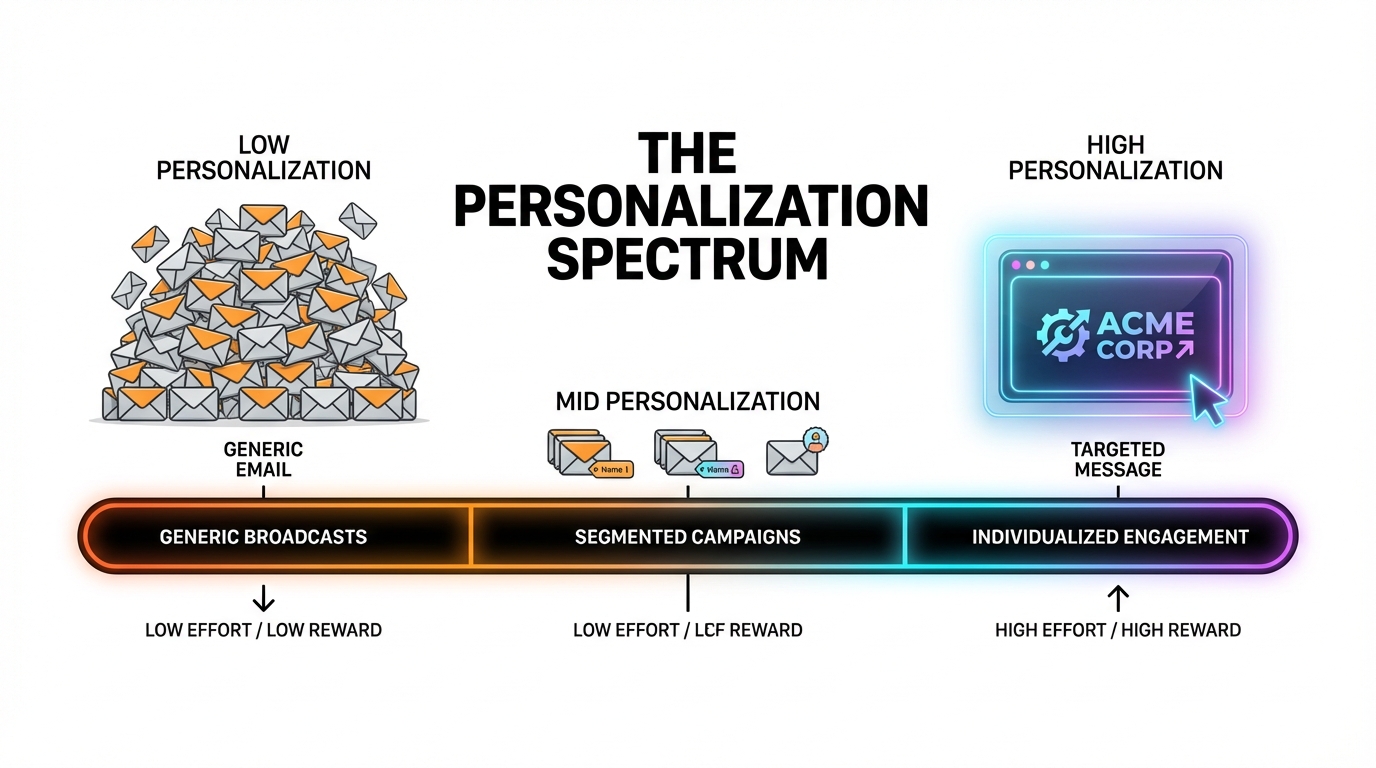
Before any personalization effort begins, you must define the level of effort required based on the potential return (ACV). We categorize all outreach into three distinct tiers.
Failure to segment is the #1 driver of SDR wasted effort. They spend high-touch time on low-value prospects,deals that will never justify the research cost.
We use the Personalization Spectrum to allocate SDR time strategically:
| Spectrum Tier | Target Audience Value (ACV) | Required Personalization Depth | Volume Potential (Per SDR/Week) |
|---|---|---|---|
| Low-Touch Merge | Low-Mid Market (<$5k ACV) | Basic merge tags + Industry relevance. Zero individual research required. | 500 – 1000+ |
| Medium-Touch Trigger | Mid-Market ($5k – $25k ACV) | Trigger-based research (Hiring/Funding/Tech Stack changes). One custom opening line (30-60 seconds research maximum). | 150 – 300 |
| High-Touch Account-Based | Enterprise/Strategic (>$25k ACV) | Deep research: Review of quarterly reports, earnings calls, or recent LinkedIn activity. Full custom email and multi-channel sequence. | 20 – 50 |
The Medium-Touch Trigger category is where most scalable B2B sales live.
If your ideal client profile (ICP) falls here, you need one thing: a system optimized for maximum speed and relevance.
The strategic goal is simple: Personalize just enough to prove you invested 60 seconds of targeted research. Stop there. Avoid the “stalker” effect that kills trust and wastes valuable volume.
The 4-Step SDR Scaling Workflow
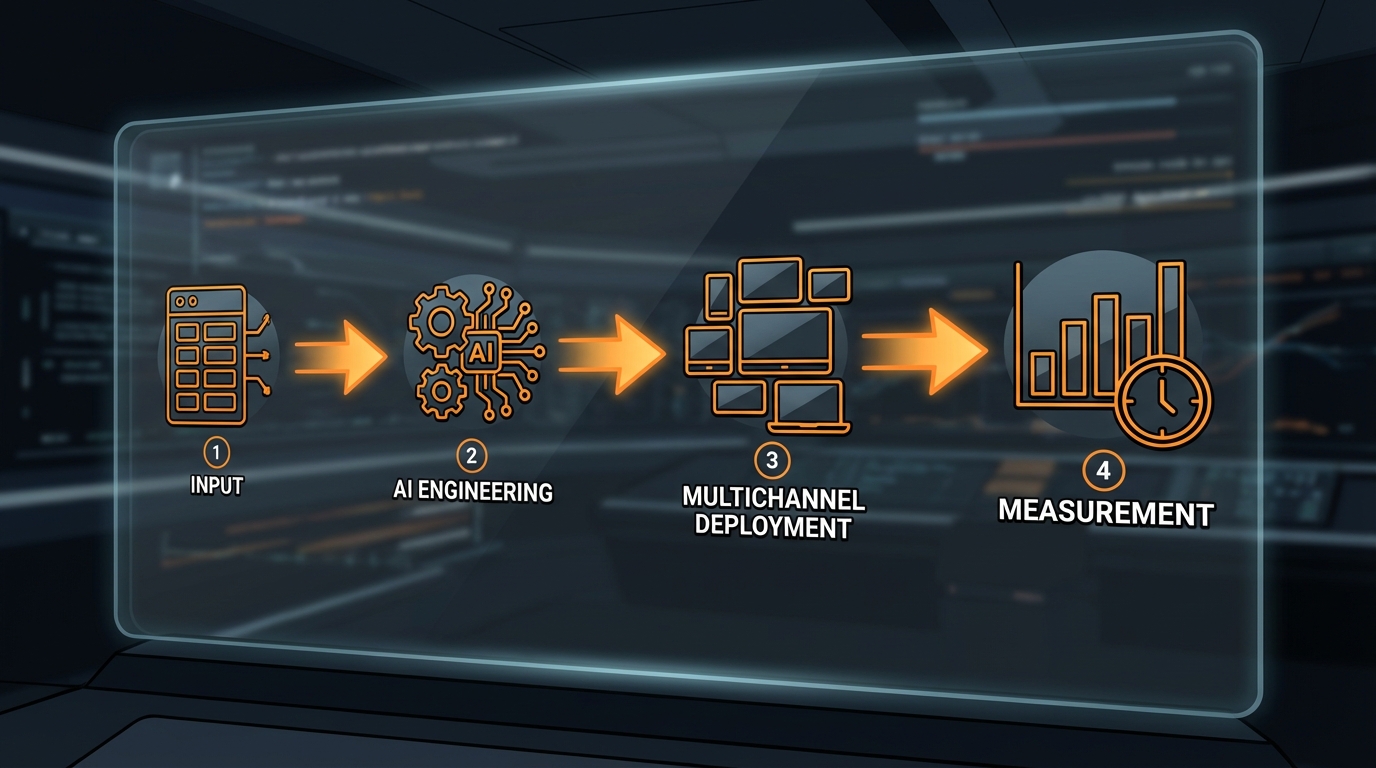
We standardized our outbound motion. This four-step workflow eliminates individual research paralysis for SDRs.
The result? Efficient, batch-based execution that drives predictable pipeline.
Step #1: Trigger-Based Batching
You cannot personalize 200 random leads efficiently.
You must group prospects by a shared, urgent pain point.
A trigger is a verifiable, public event that makes your solution immediately relevant,and necessary.
Example Triggers We Use:
- Hiring Spree: The company posted 5+ job openings for sales or marketing roles. (This indicates immediate scaling pain: How will they train all those new hires?).
- Recent Funding Round: They just raised capital. (This signals budget availability and pressure for rapid growth: They need to deploy that capital efficiently.).
- Tech Stack Change: They just adopted or dropped a major piece of software. (Indicates integration or replacement pain points).
- Negative Review Signal: They received a recent, public negative review related to a service you offer.
- Competitor News: Their main competitor just launched a major feature you can counter.
Your SDRs must dedicate time to identifying 50–100 leads that share one single trigger.
This is how you build a highly relevant campaign batch. Relevance drives replies.
Step #2: Data Aggregation & Hygiene
Personalization is useless if your data is dirty.
A personalized email sent to an outdated contact damages your credibility. Worse: a bounced domain destroys your sender reputation.
High-quality lead intelligence is non-negotiable for scalable batching.
- Verification is Mandatory: We run every list through a verification service before deployment. If your bounce rate exceeds 1%, your domain is actively being flagged as spam.
- Enrichment Waterfall: Use multiple data sources to fill in missing fields (phone numbers, titles, direct lines). Gaps in data kill personalization attempts instantly.
- Technographic Mapping: Use technographic data to automatically segment prospects by the exact tools they use. This provides a powerful, scalable personalization hook.
The right SDR Sales Tech Stack Blueprint is built specifically for this efficiency.
Step #3: The Hook-Problem-CTA Framework
The personalization effort must be concentrated entirely on the opening line: The Hook.
The rest of the email must rely on a proven, conversion-optimized template. This is how you scale high-touch messaging.
We use a highly compressed 4-part structure:
- The Hook (Personalized Line): Acknowledge the trigger event. Connect it directly to their immediate business reality.
- The Problem (Template): State the universal pain point that naturally follows that specific trigger.
- The Solution (Template): Briefly mention how our service resolves that exact problem (e.g., mention our AI lead generation).
- The CTA (Low Friction): A single, easy action. (Example: “Worth a quick 10 minutes next Tuesday?”).
We found that the perfect cold email is three sentences, optimized to display across no more than three lines on a mobile device. The personalized hook is the only variable that changes across the entire batch.
Example (Hiring Trigger):
[Hook]: “I saw you posted five new SDR roles in Dallas this month,that’s aggressive growth. When scaling rapidly, managing the quality of new hires’ pipeline usually becomes the first bottleneck.”
[Problem]: “Most sales leaders struggle to maintain lead quality and consistent training during rapid hiring cycles, often leading to a 20% drop in overall rep efficiency.”
[Solution]: “Our AI lead generation finds verified, high-intent contacts and builds the automated research summaries your new team needs to hit quota faster.”
[CTA]: “If addressing new rep ramp time is a priority, are you open to a 15-minute look at how we deploy this?”
Step #4: Automated Execution & A/B Testing
Once the batch is researched and the hook is written, execution must be automated.
SDRs are researchers and strategists, not manual email senders. Stop wasting their time.
We use sales engagement platforms to:
- Sequence Deployment: Load the batch list and the custom hook variable into your sales engagement platform. Deploy the sequence immediately (including automated, trigger-based follow-ups).
- Time Optimization: Schedule sends based on the recipient’s time zone and measured peak engagement hours.
- Rigorous A/B Testing: Never trust a single hook. Test two versions of the personalized opening line against the same problem statement to optimize reply rates.
We track performance metrics far beyond vanity metrics like open rates.
We focus on raw reply rates and, critically, the reply-to-meeting conversion rate,the only KPI that matters for predictable revenue generation.
For a full breakdown of what we track, see the SDR Agent KPIs: The 2025 Blueprint for Predictable Revenue.
Step #2: AI Prompt Engineering for Actionable Hooks
![A close-up shot of a dark computer screen displaying orange and green text resembling code or a command line interface. The text shows an AI prompt instructing the system to generate hyper-personalized outreach copy based on user data streams. The input specifies the user profile as 'tech_lead', interests as ['AI', 'automation', 'hiking'], and recent activity as 'webinar_attendee'. The goal is to craft an actionable hook. The resulting 'ACTIONABLE HOOK' is highlighted in green: 'Saw you at the automation webinar—let's discuss how AI can streamline your hiking gear workflows.'](https://pyrsonalize.com/blog/wp-content/uploads/2025/12/article-section-image-148.jpg "AI Prompt Engineering: Generating Hyper-Personalized Outreach Hooks from User Data")
The single biggest killer of SDR efficiency is manual research.
Our data shows reps spend up to 80% of their time searching for the “one thing” that makes an email relevant.
Generative AI eliminates this friction. But there is a critical caveat: generic prompts deliver generic results.
You need precise, structured prompt engineering (a system). We use these tool-agnostic prompts in all major LLMs,ChatGPT, Claude, etc.,to instantly turn raw trigger data into high-converting, actionable hooks. They standardize research time to under 60 seconds per lead.
The Job Posting Hack Prompt
This is the closest you get to a cheat code. A job posting is a direct, public admission of pain. Prospects are literally paying to solve the problem you address.
Raw Data Input: Copy and paste the full text of a relevant job posting (e.g., “VP of Marketing” or “Head of Sales Enablement”).
The Prompt:
You are an expert B2B sales development representative (SDR) focused on identifying urgent pain points. Analyze the following job posting text. Your goal is to generate one compelling, personalized opening line (The Hook) that connects a specific requirement in the posting to a common operational challenge (The Pain).

Our solution: We help SaaS companies reduce lead acquisition costs by 15% using verified, high-intent contact data.

Job Posting Text: [INSERT JOB POSTING TEXT HERE]

Output only the Hook (40-50 words maximum) that naturally leads into our solution.
Resulting Hook (Example): “I saw you are hiring a new VP of Marketing whose main priority is reducing CPA by 20%. That usually means existing lead sources are either too expensive or too low quality. We focus exclusively on solving that bottleneck.”
The Funding Round Pivot Prompt
Funding announcements are pure gold. They signal two things simultaneously: available capital and immediate, intense pressure to scale.
Your personalization must acknowledge the win, then immediately pivot to the inevitable operational challenge that rapid growth creates.
Raw Data Input: “Acme Corp just announced a $20M Series B round led by Sequoia.”
The Prompt:
You are an expert SDR writing to a VP of Sales at a newly funded company. The company just raised $20M. Funding means rapid scaling, which always introduces unexpected infrastructure challenges.

Our solution: We provide AI-powered competitive intelligence that allows scaling sales teams to target competitor weak points instantly.

Generate one personalized Hook (under 50 words) that acknowledges the funding and pivots to the need for scalable, real-time intelligence to ensure that capital is deployed effectively for market share expansion.
Resulting Hook (Example): “Congrats on the Sequoia Series B. With $20M to deploy, the pressure is on to grab market share fast. Most teams struggle to arm their reps with real-time competitive intelligence needed for that kind of accelerated expansion.”
Beyond Email: Multichannel Script Translation
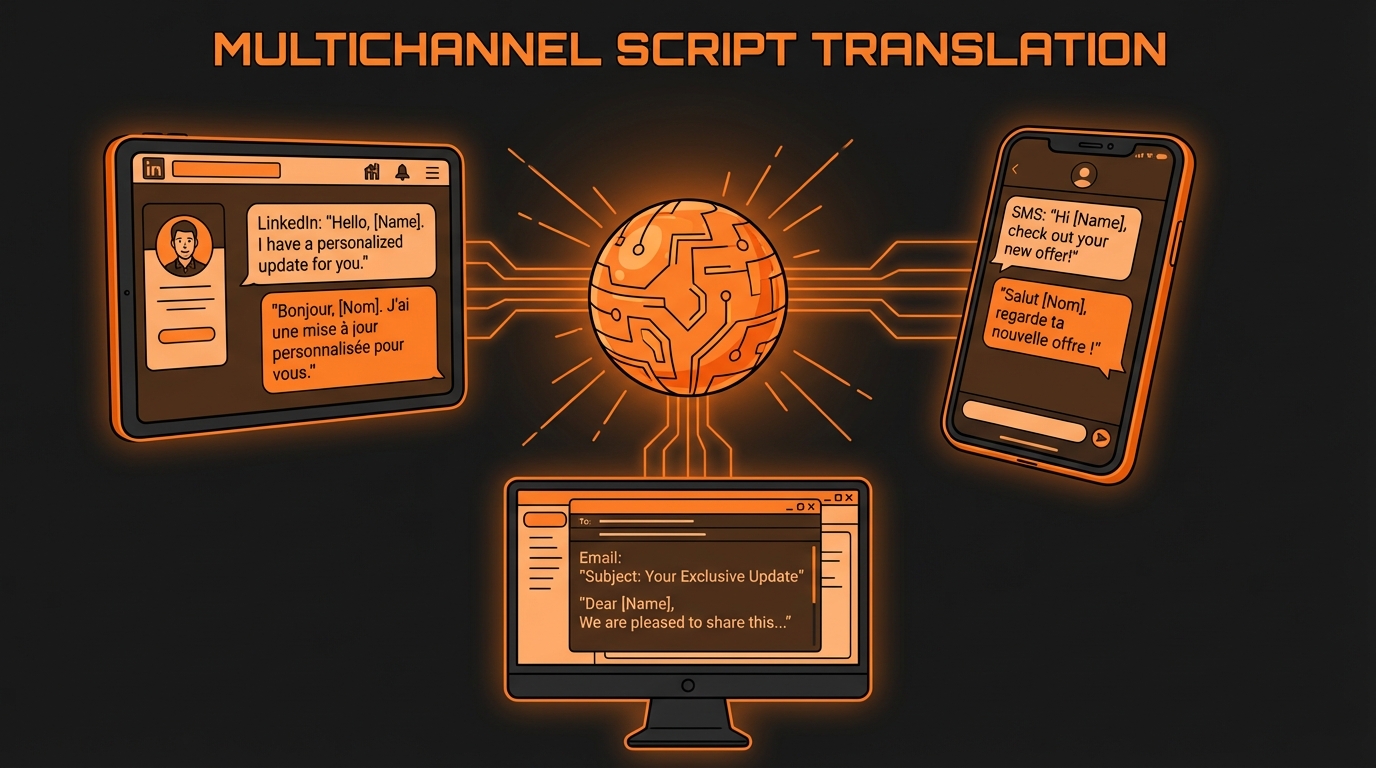
The power of trigger-based personalization is its portability. You find the core trigger and the pain point once.
Then, you deploy that high-relevance insight across every channel. Zero extra research time required.
That initial 60 seconds of research now fuels your entire 7-step sequence.
LinkedIn Connection Requests
LinkedIn connection requests are high-visibility assets. If they are not hyper-relevant, they are ignored instantly.
We use the trigger event to justify the connection itself.
- Goal: Justify the connection using the specific trigger data point.
- Example (Hiring Trigger): “[Name] – Noticed the five SDR roles you posted recently. We help teams scaling this fast ensure pipeline quality doesn’t suffer when volume increases. Worth connecting?” (Must stay under the character limit.)
Voicemail Scripts
Voicemails must be short, punchy, and value-driven. The trigger context is crucial: it prevents you from sounding like a generic cold caller.
- Goal: Reference the trigger immediately. Provide a compelling, results-oriented reason for the callback.
- Example (Funding Trigger): “[Name], this is [Your Name] from Pyrsonalize. I saw the $20 million Series B announcement,congrats. We work specifically with newly funded sales teams whose primary challenge is accelerating pipeline growth without inflating lead costs. If scaling pipeline responsibly is a priority, give me a call back at [Number].”
We recommend combining this approach with our proven strategies for navigating barriers: Read our guide on Best Cold Calling Openers for Gatekeepers.
Ready to scale your outreach without sacrificing quality?
Try AI Lead Generation TodayMeasuring Strategic Personalization
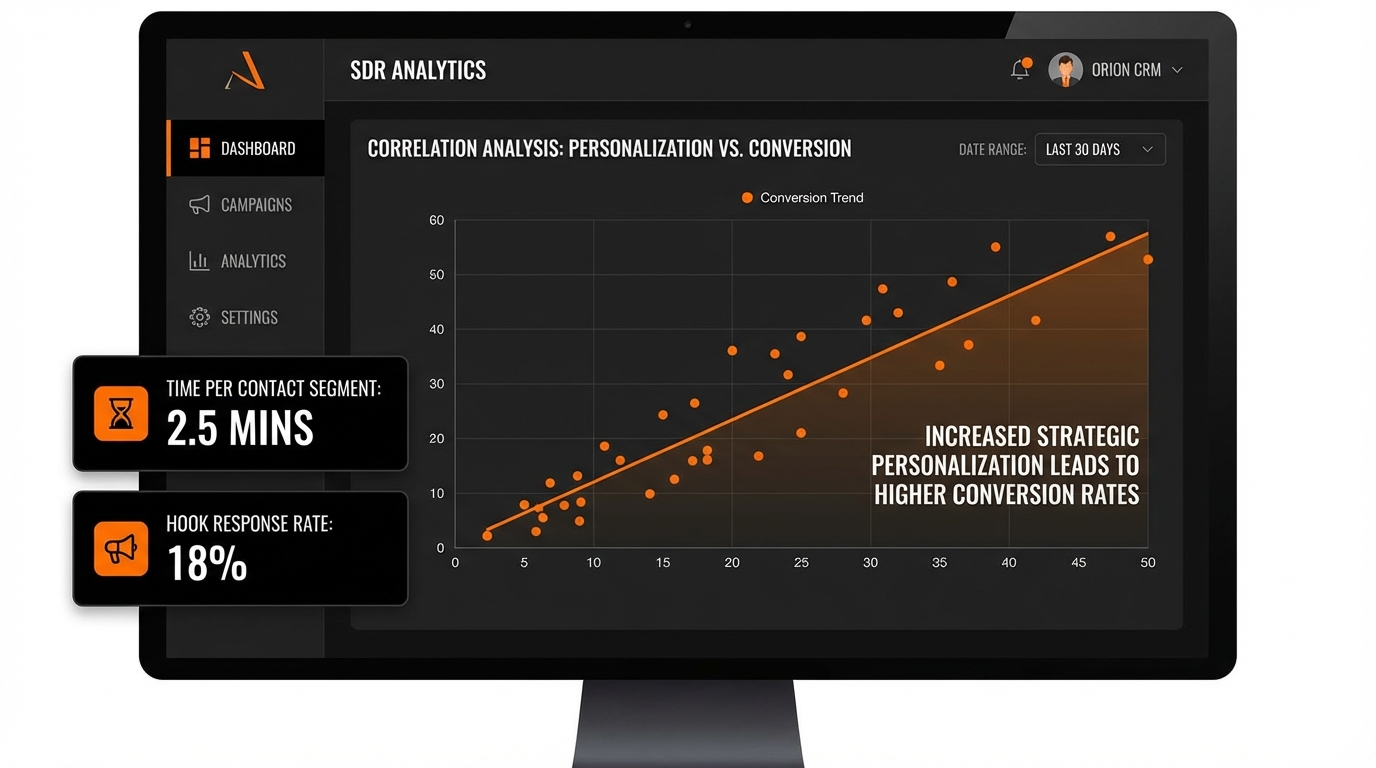
We must move past vanity metrics. Open rates are meaningless if they fail to generate pipeline.
True personalization effectiveness is measured by conversion, not clicks. If the outreach doesn’t lead to revenue, it is a waste of resources.
Our team focuses on three non-negotiable metrics. These determine if your personalized strategy is actually scalable,or just busywork:
- Trigger-to-Reply Rate: This is the immediate relevance test. What percentage of outreach using a specific trigger (e.g., “Hiring SDRs”) results in a positive reply? Our minimum target: 5%.
- Reply-to-Meeting Conversion Rate: The ultimate test of value. How often does a positive reply convert directly into a booked meeting? If this conversion fails, your offer is misaligned with the prospect’s current reality.
- Research Time Per Prospect: Time is finite. SDRs must strictly log research time. If the average time per prospect exceeds 90 seconds (for Medium-Touch strategies), the process is inefficient. We are scaling, not hobbying.
If a trigger template delivers high open rates but a lagging Reply-to-Meeting rate: the personalization was interesting, but critically irrelevant.
It entertained the prospect without addressing their urgent, core operational need.
Actionable takeaway: Adjust the Problem statement, not the Hook.
Frequently Asked Questions

How much time should an SDR spend personalizing a single email?
For true scalability (Medium-Touch), the hard limit is 90 seconds of research per prospect. This time must yield one relevant trigger hook. Exceeding two minutes? You are now doing High-Touch, Account-Based work.
Reserve that level of effort for your top 5% of target accounts only. Efficiency prevents SDR burnout; inefficiency kills pipeline velocity.
Is using AI for personalization seen as disingenuous by prospects?
Prospects do not care how the message was created. They only care that it is relevant.
If your AI-generated hook is specific, timely, and addresses an urgent business challenge: it is strategic outreach. The danger is using AI to produce generic, flowery compliments. That wastes everyone’s time and destroys credibility.
Should I personalize the subject line or the body copy first?
Personalize both simultaneously. Use the exact same trigger point for both elements.
The subject line references the trigger (e.g., “Question about your recent VP hire”). The body copy (the Hook) must immediately justify that subject line. This consistency is non-negotiable: it boosts open rates and establishes instant credibility.
What is the biggest mistake SDRs make when trying to personalize at scale?
The biggest mistake is confusing depth with relevance. SDRs waste time researching personal trivia (alma mater, hobbies). These details have zero bearing on professional pain.
Focus your research exclusively on company actions: hiring initiatives, funding rounds, strategic product launches. Personalization must directly impact their budget or revenue goals. It must drive value, not just connection.
Ready to take the next step?
Try AI Lead Generation Today
Click HereReferences
- How are you personalizing cold outreach at scale without burning out?
- How to personalize cold emails at scale | 30MPC Prospecting
- How to personalize sales emails at scale – Outreach
- How to send 1000+ personalized cold emails per week – Instantly.ai
- Personalization at Scale: How to Avoid Mass Generic Prospecting