
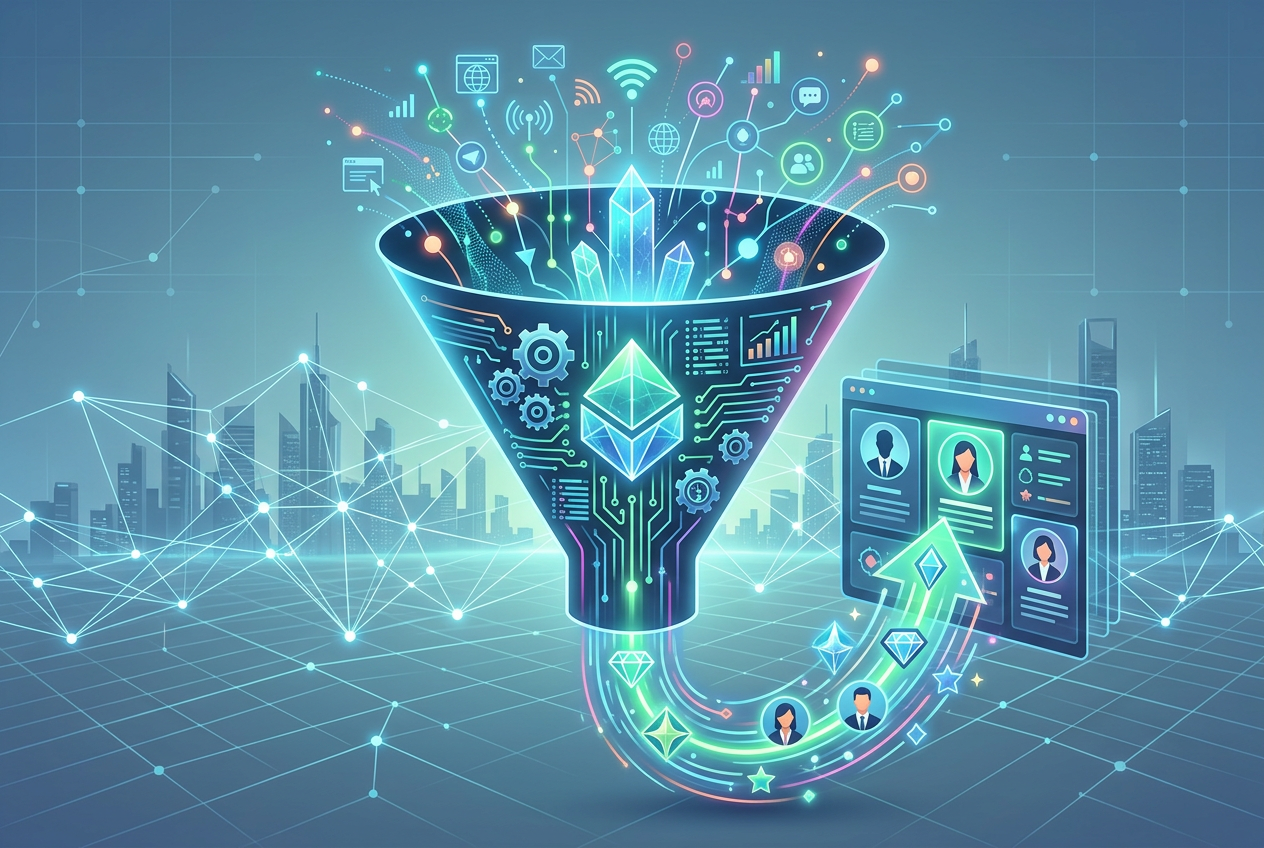

Why AI Lead Generation Matters in 2026
Traditional lead generation methods are struggling to keep pace with today’s demands. Cold calling feels colder than ever, and generic email blasts often land with a thud. The pressure is on demgen teams to deliver more with less.
AI offers a compelling solution. It automates repetitive tasks, freeing up valuable time for your team. More importantly, AI can analyze massive datasets to pinpoint high-intent buyers that traditional methods miss. This is why AI Lead Generation is no longer a luxury, but a necessity.
Here’s why AI is becoming essential:
- Efficiency: Automate tasks like data entry and initial outreach.
- Targeting: Identify and prioritize leads with a higher probability of conversion.
- Personalization: Deliver tailored messages that resonate with individual prospects.
- Scalability: Reach a larger audience without significantly increasing your workload.
AI isn’t about replacing human interaction; it’s about augmenting it. By handling the tedious aspects of lead generation, AI empowers your team to focus on building relationships and closing deals. Platforms like Pyrsonalize are leading the charge, offering AI-powered solutions to automatically discover, enrich, and engage ideal customers. AI Lead Generation tools are evolving rapidly, offering even more sophisticated capabilities.
The Limitations of Traditional Lead Generation
Consider the limitations of traditional approaches:
- Manual Data Entry: Time-consuming and prone to errors. Studies show that manual data entry can have an error rate as high as 1-5%, costing businesses significant time and resources.
- Generic Outreach: Lacks personalization and is often ignored. According to recent data, generic emails have an average open rate of just 15%, compared to personalized emails which boast open rates of 25% or higher.
- Limited Scalability: Difficult to expand reach without adding headcount. Traditional methods often require a linear increase in staff to scale, making it expensive and unsustainable.
AI Augments Human Interaction
AI isn’t designed to replace your sales team. Instead, it enhances their capabilities. For example, AI can identify potential leads and provide detailed insights, allowing sales reps to have more informed and productive conversations. This means your team can spend less time on research and more time building relationships and closing deals.
AI addresses these limitations, providing a faster, smarter, and more scalable path to lead generation success. It’s about working smarter, not harder, to achieve your revenue goals. Embracing AI Lead Generation is about empowering your team to focus on what they do best: building relationships and closing deals.
The 7 Best Strategies to Get Leads With AI Lead Generation Tools (Compared)
AI offers powerful tools to streamline your lead generation process and dramatically improve results. These strategies transform how companies identify and engage potential customers, moving beyond traditional methods.
Here are seven specific AI-powered lead generation strategies to supercharge your efforts:
- Identify Your Ideal Customer Profile: Leverage AI to analyze data and pinpoint your best prospects.
- Automate Lead Scoring and Qualification: Prioritize leads based on their likelihood to convert.
- Create Personalized Content: Tailor your messaging to resonate with individual prospects.
- Automate Email Campaigns: Reach more leads with personalized and timely communication.
- Use AI-Powered Chatbots: Qualify leads and schedule demos with intelligent chatbots.
- Integrate Predictive Analytics: Forecast future customer behavior to stay ahead of the curve.
- Get Data-Driven Insights for Optimization: Continuously improve your lead generation efforts with AI-powered analytics.
Platforms like Pyrsonalize offer AI-driven solutions that can help implement many of these strategies, providing a comprehensive approach to modern lead generation.
Let’s explore each of these strategies in more detail, comparing their benefits and practical applications. Before we do, let’s consider the landscape of AI Lead Generation tools.
A Comparison of AI Lead Generation Tools
The market offers a variety of AI-powered tools, each with unique strengths. Some focus on data enrichment, others on outreach automation, and some provide end-to-end solutions. Here’s a brief overview:
- Seamless.AI: Excels at real-time contact data verification and enrichment.
- LeadIQ: Simplifies LinkedIn prospecting and integrates with popular CRM systems.
- Customers.ai: Combines outbound prospecting, data enrichment, and campaign automation.
- Albert by Zoomd: Optimizes digital ad campaigns with AI-driven lead scoring.
- Outreach: A sales engagement platform that guides sales reps through multi-step cadences.
- CoPilot AI: Creates AI-powered outreach campaigns with auto-generated messages.
- useArtemis: Supports scalable lead generation with LinkedIn scraping and cold email automation.
- Kartra: Offers lead capture forms, dynamic response flows, and funnel tracking.
- Surfer: Analyzes competitor content and keyword density to enhance SEO rankings.
- Jasper: Combines GPT-powered content generation with predictive analytics.
Choosing the right tool depends on your specific needs and budget. Consider your current lead generation process and identify areas where AI can provide the most significant impact.
The Importance of CRM Integration
Integrating your AI lead generation tools with your CRM system is essential for maximizing their effectiveness. CRM integration allows you to:
- Centralize Data: Keep all lead data in one place for easy access and analysis.
- Automate Workflows: Streamline the process of moving leads through the sales funnel.
- Personalize Outreach: Use CRM data to tailor your messaging and offers.
- Track Results: Monitor the performance of your AI-powered campaigns and make data-driven adjustments.
Without CRM integration, you risk creating data silos and missing opportunities to personalize your outreach. This can significantly reduce the effectiveness of your AI Lead Generation efforts.
Identify Your Ideal Customer Profile
Defining your ideal customer profile (ICP) is the bedrock of effective lead generation. AI excels at this, sifting through vast datasets to reveal hidden patterns and insights.
AI can analyze data from various sources, including:
- CRM Data: Uncover trends in existing customer behavior and demographics.
- Website Visitors: Track engagement with specific content and pages.
- Social Media Interactions: Identify interests and conversations relevant to your business.
By connecting these dots, AI helps you spot patterns you might otherwise miss. This deeper understanding allows for more precise targeting and personalized outreach.
For example, consider a B2B tech company. Using AI, they might discover that CTOs who frequently engage with cybersecurity content on LinkedIn have a significantly higher conversion rate compared to the average lead. This insight allows them to prioritize these high-potential prospects and tailor their messaging accordingly.
Here’s how AI enhances ICP identification:
- Data Consolidation: AI aggregates data from disparate sources into a unified view.
- Pattern Recognition: Machine learning algorithms identify correlations and trends.
- Predictive Modeling: AI forecasts which prospects are most likely to become customers based on their attributes and behavior.
By using these capabilities, you can refine your ICP and focus your lead generation efforts on the most promising opportunities. This leads to increased efficiency, higher conversion rates, and a better return on investment.
This strategy is important for optimizing your lead generation efforts.
Automate Lead Scoring and Qualification
Manually sifting through leads is time-consuming. AI automates lead scoring and qualification, making it easier to meet your audience where they are.
Machine learning models identify behaviors that signal a high-quality lead. These models then automatically rank your prospects.
The benefits are clear:
- Marketing teams can focus on nurturing leads and guiding them through the sales funnel.
- Sales teams can prioritize outreach to leads who are ready to buy.
AI-powered predictive analytics looks to the future, not just past behavior. As leads interact with your brand, their scores change dynamically.
Consider HubSpot’s Prospecting Agent. It uses CRM data and your ideal customer profile to automatically identify and prioritize prospects likely to become paying customers. It can also create personalized email outreach sequences to boost response rates.
Here’s a breakdown of the process:
- Data Analysis: AI analyzes lead data from various touchpoints.
- Behavioral Pattern Recognition: AI identifies actions that correlate with conversion.
- Automated Scoring: Leads are assigned scores based on their likelihood to convert.
- Prioritization: Sales and marketing teams focus on the highest-scoring leads.
By automating lead scoring and qualification, you can significantly improve your team’s efficiency and effectiveness. This ensures that your resources are focused on the leads with the greatest potential.
This strategic approach ensures that your marketing and sales efforts are aligned and optimized for maximum impact.
Create Personalized Content
How do you speak to everyone in your target audience effectively? AI helps you craft personalized content that speaks directly to each prospect’s pain points or interests. This level of personalization is key to cutting through the noise and capturing attention.
Here are some specific ways AI personalizes your content:
- Emails: Tailors subject lines and body copy based on the recipient’s industry, role, and past interactions. This ensures that your message resonates with their specific needs and challenges.
- Ads: Serves up different versions of ads to match viewer demographics and browsing history. This targeted approach increases the likelihood of engagement and conversion.
- Landing Pages: Dynamically adjusts content, calls to action (CTAs), and offers based on who’s visiting the page. This creates a more relevant and compelling experience for each visitor.
For example, an AI-powered system might notice a prospect has been reading blog posts about improving their tech stack. It could then automatically send them a personalized email with a white paper on digital transformation. This proactive and relevant approach demonstrates that you understand their needs and can provide valuable solutions.
Consider this table illustrating the impact of personalized content:
| Content Type | Personalization Method | Impact |
|---|---|---|
| Tailored Subject Lines | Increased Open Rates by 20% | |
| Ads | Demographic-Specific Messaging | Improved Click-Through Rates by 30% |
| Landing Page | Dynamic Content Adjustment | Higher Conversion Rates by 15% |
By using AI to create personalized content, you can significantly improve your lead generation results and build stronger relationships with your prospects. This strategy ensures that your messaging is relevant, engaging, and effective.
This approach is vital for maximizing the impact of your content marketing efforts.
Automate Email Campaigns to Reach More Leads
Imagine an AI that’s not just smart, but intuitive. It’s like having a sales rep with perfect emotional intelligence and deep knowledge of your prospects. This AI doesn’t just personalize; it adapts.
AI can transform your email campaigns in several key ways:
- Dynamic Personalization: AI can reference specific details relevant to each prospect.
- Adaptive Messaging: AI learns which approaches resonate best with different personas.
- Automated Optimization: AI continuously refines your email strategy based on real-time data.
For example, say you’re reaching out to Alex, the CTO who’s always first in line for the latest tech. The AI could drop in a reference to a newly released product that should be on his radar. This level of personalization demonstrates that you understand his interests and are offering relevant solutions.
Here’s a table illustrating how AI can personalize email elements:
| Email Element | AI Personalization | Benefit |
|---|---|---|
| Subject Line | References recent activity or interest | Increased open rates |
| Body Copy | Addresses specific pain points | Higher engagement |
| Call to Action | Tailored to prospect’s role | Improved conversion rates |
The AI is constantly figuring out which approaches work best for different personas. By automating email campaigns with this level of intelligence, you can reach more leads with messaging that truly resonates. This leads to increased engagement, higher conversion rates, and a more efficient lead generation process.
This strategy is essential for scaling your email marketing efforts.
Use AI-Powered Chatbots
AI-powered chatbots are no longer limited to answering frequently asked questions. They now play a key role in lead qualification and demo scheduling, providing timely and on-brand interactions.
These chatbots can:
- Qualify Leads: Determine if a prospect meets specific criteria.
- Schedule Demos: Book appointments directly within the chat interface.
- Provide Information: Answer questions about products or services.
Consider Artisan’s Ava. Ava acts as a full-fledged AI sales representative, managing the entire outbound workflow. She researches leads, crafts personalized outreach messages, and engages in meaningful conversations to qualify prospects.
Ava’s capabilities include:
- Lead Research: Identifying potential customers based on predefined criteria.
- Personalized Outreach: Crafting tailored messages to resonate with individual prospects.
- Lead Qualification: Engaging in conversations to determine a prospect’s suitability.
By using AI-powered chatbots, you can automate key aspects of the lead generation process and free up your sales team to focus on closing deals. This ensures that your resources are used efficiently and effectively.
This strategy is vital for streamlining your sales process.
Integrate Predictive Analytics
Predictive analytics uses historical data to forecast future customer behavior. This helps you stay one step ahead of your prospects and anticipate their needs.
This proactive approach allows you to:
- Identify high-potential leads early in the sales cycle.
- Tailor your messaging to address their specific concerns.
- Offer relevant solutions before they even realize they need them.
For example, a restaurant supply company could use predictive analytics to identify which initial purchases correlate with long-term customer retention. By focusing on leads who show interest in those key purchases, they can prioritize their efforts and maximize their chances of building lasting relationships.
Here’s how the process works:
- Data Collection: Gather historical data on customer behavior, purchases, and interactions.
- Pattern Identification: Use machine learning algorithms to identify correlations and trends.
- Predictive Modeling: Develop models to forecast future customer behavior based on identified patterns.
- Actionable Insights: Use the insights to prioritize leads and tailor your messaging.
By integrating predictive analytics into your lead generation strategy, you can gain a competitive edge and drive significant improvements in your results. This data-driven approach ensures that your efforts are focused on the most promising opportunities.
This strategy is one of the best AI solutions to save you time and boost your bottom line.
Get Data-Driven Insights for Optimization
Imagine your team is struggling with email outreach. Open rates are decent, but you’re not hitting your numbers. AI-powered data analysis can help.
AI can uncover insights like:
- Emails sent on Tuesdays have higher open rates.
- Follow-ups referencing a prospect’s LinkedIn activity are more likely to get a response.
With these insights, you have a clear roadmap for engagement. AI can also implement these insights automatically, ensuring opportunities don’t slip through the cracks.
Here’s how AI provides data-driven optimization:
- Data Collection: AI gathers data from all lead generation activities.
- Pattern Analysis: AI identifies trends and correlations in the data.
- Insight Generation: AI provides actionable insights for optimization.
- Automated Implementation: AI automatically implements changes based on the insights.
Consider this table illustrating potential AI-driven optimizations:
| Area of Optimization | AI Insight | Result |
|---|---|---|
| Email Timing | Tuesdays at 10 AM yield highest open rates | Increased open rates |
| Follow-up Messaging | Referencing LinkedIn activity improves response rates | Higher engagement |
| Lead Source | Leads from specific webinars convert at a higher rate | Improved lead quality |
AI can do more than provide insights; it can start implementing them automatically. This ensures opportunities don’t fall through the cracks, optimizing your lead generation efforts.
This strategy is important for continuous improvement and maximizing ROI.
Understanding the Core AI Technologies
AI Lead Generation relies on several key technologies. These include Machine Learning (ML), Natural Language Processing (NLP), and Predictive Analytics. Understanding these concepts is essential for effective strategy implementation.
Machine Learning (ML)
ML algorithms analyze vast datasets. They predict customer behavior and automate lead scoring. ML models learn from new data. This allows them to adapt dynamically. They identify patterns that signal high-quality leads. This results in more accurate lead qualification.
For example, ML can predict which users are most likely to purchase a product. This is based on real-time behavior and historical data. This dynamic approach surpasses static, rule-based systems.
Natural Language Processing (NLP)
NLP enables computers to understand and process human language. AI agents use NLP to manage outbound workflows. They can even communicate with prospects. This evaluates how aligned the personas are with the business. NLP powers chatbots and AI assistants. These tools provide personalized customer experiences.
For instance, NLP allows AI to draft emails and summarize calls. This saves time and improves efficiency. It allows sales teams to focus on building relationships.
Predictive Analytics
Predictive analytics uses data to forecast future customer behavior. This helps businesses stay ahead of their prospects. It identifies early signs of purchase intent. This includes keyword searches and website visits. Marketers can engage leads before they formally express interest. Predictive analytics also helps with pricing and email campaign optimization.
For example, predictive analytics can identify which purchases correlate with long-term customer retention. This allows businesses to prioritize potential leads that show interest in those purchases.
Choosing the Right AI Lead Generation Strategies
Selecting the right AI Lead Generation strategies requires careful consideration. Not all strategies are created equal, and what proves successful for one business might not for another. Aligning your strategies with your specific business goals, assessing your data quality, and ensuring smooth integration with your existing systems are vital for success.
Here are key factors to consider:
- Alignment with Business Goals: Your AI strategy should directly support your overall business objectives. Are you focused on increasing lead volume, improving lead quality, or accelerating the sales cycle?
- Data Quality Assessment: AI algorithms are only as good as the data they’re trained on. Poor data quality can lead to inaccurate predictions and ineffective lead generation.
- Integration with Existing Systems: Your AI tools should integrate seamlessly with your CRM, marketing automation platform, and other systems. This ensures a smooth flow of data and avoids silos.
Aligning AI Strategies with Business Goals
Before implementing any AI Lead Generation tool, clearly define your business goals. For example, if your primary goal is to increase brand awareness, you might focus on AI-powered content creation and social media marketing. If your goal is to improve lead quality, you might prioritize AI-driven lead scoring and qualification.
Here’s a breakdown of how different AI strategies can align with specific business goals:
- Goal: Increase Lead Volume
- Strategy: Automate email campaigns and use AI-powered chatbots to engage with more prospects.
- Goal: Improve Lead Quality
- Strategy: Implement AI-driven lead scoring and qualification to prioritize high-potential leads.
- Goal: Accelerate Sales Cycle
- Strategy: Use predictive analytics to anticipate customer needs and tailor your messaging accordingly.
Assessing Data Quality
Data quality is paramount for successful AI lead generation. Inaccurate or incomplete data can lead to flawed predictions and wasted resources. Before implementing AI, assess the quality of your existing data and take steps to clean and enrich it.
Key considerations for data quality include:
- Accuracy: Is your data accurate and up-to-date?
- Completeness: Do you have all the necessary information for each lead?
- Consistency: Is your data consistent across different systems?
If your data quality is lacking, consider using AI-powered data enrichment tools to fill in missing information and correct errors. This will improve the accuracy of your AI models and lead to better results. Experian reports that poor data quality impacts 88% of companies, costing them an average of 12% of their revenue.
Ensuring Integration with Existing Systems
Smooth integration with your existing systems is essential for maximizing the benefits of AI lead generation. Your AI tools should be able to exchange data with your CRM, marketing automation platform, and other systems without any manual intervention.
Benefits of seamless integration include:
- Improved Data Flow: Data flows seamlessly between systems, eliminating silos and ensuring that everyone has access to the latest information.
- Increased Efficiency: Automation reduces manual tasks and frees up your team to focus on more strategic activities.
- Better Insights: Integrated data provides a more complete view of your customers and prospects, enabling you to make better decisions.
Before implementing AI, carefully evaluate the integration capabilities of different tools and choose solutions that are compatible with your existing infrastructure. A recent study by Forrester indicates that companies with integrated CRM and marketing automation systems see a 10-15% increase in sales productivity.
By carefully considering these factors, you can select the right AI lead generation strategies for your business and achieve your desired results. This strategic approach ensures that your AI investments are aligned with your goals and deliver a strong return on investment. You can also find more information on lead generation strategies on our blog.
Structuring Your AI Lead Generation Team
Successfully implementing AI Lead Generation requires the right team structure. A modern approach blends AI’s capabilities with human expertise. Consider how to best divide responsibilities for optimal results.
One effective model involves a dedicated AI Lead Generation specialist. This person manages the end-to-end lead generation process. They should possess sales skills and be comfortable with AI tools. Their responsibilities include identifying target companies, conducting research, setting up workflows, writing personalized outreach, and analyzing campaign results.
Sales Development Representatives (SDRs) then handle tasks requiring a human touch. This includes engaging prospects on LinkedIn, making direct calls, and sharing relevant content. SDRs focus on building relationships and fostering genuine connections.
A creative copywriter is also valuable. They craft core email sequences and social media posts. The AI specialist then personalizes this content for individual leads. This division of labor allows for efficient scaling. It also ensures a personalized approach.
With the right talent and AI tools, your B2B lead generation process can scale efficiently. This blended approach combines AI scalability with human insight. It can significantly improve your qualified pipeline. Consider these roles when building your team for maximum impact.
AI Lead Generation in the B2B Landscape
AI is transforming B2B lead generation. It helps businesses identify and qualify potential customers faster and more efficiently. AI tools analyze large datasets, predict customer behavior, and personalize outreach campaigns. This moves beyond traditional methods that rely on broad strategies and manual outreach.
AI algorithms use machine learning (ML), natural language processing (NLP), and predictive analytics. These technologies find potential leads with greater precision. They also help reach a target audience quicker than traditional methods. Businesses should evaluate their current lead generation process. They should identify opportunities for improvement before implementing new AI tools. Not all AI tools are one-size-fits-all. Businesses must consider which features best fit their needs.
Integrating AI tools directly into customer relationship management (CRM) systems is essential. This allows for lead scoring and personalized outreach. This type of automation streamlines the lead generation process. It also optimizes sales teams to focus on building relationships and closing deals. AI-powered tactics help sales teams target leads with greater precision. This can result in higher conversion rates.
Consider automating lead scoring and qualification. Machine learning algorithms can predict which users are most likely to purchase. This system is based on predictive analytics from vast datasets and real-time behavior. The ML models discover behaviors that signal high-quality leads. They then rank prospective users automatically. This provides a more fluid system that helps sales teams reach qualified leads faster. By March 2026, general-purpose marketing campaigns are becoming obsolete. AI can help craft personalized messages that go beyond job titles and industries. Build an ideal customer profile to spot patterns and identify the most likely prospects. This enables a personalized content approach for lead generation efforts.
GDPR and Data Privacy Compliance
Data privacy is a growing concern. Regulations like GDPR (General Data Protection Regulation) significantly impact AI Lead Generation. Compliance is not just a legal requirement; it’s a business imperative. It builds trust with potential customers.
GDPR grants individuals rights over their personal data. This includes the right to access, rectify, erase, and restrict processing. When using AI tools for lead generation, you must ensure you have a lawful basis for processing personal data. This often requires obtaining explicit consent. Transparency is key. Inform individuals about how their data will be used and who will have access to it.
Here are some actionable steps for GDPR compliance:
- Conduct a data protection impact assessment (DPIA): Identify and assess the risks associated with your AI lead generation activities.
- Implement data minimization principles: Only collect data that is necessary for the specified purpose.
- Ensure data security: Implement appropriate technical and organizational measures to protect personal data from unauthorized access, disclosure, or loss.
- Provide clear and accessible privacy notices: Inform individuals about their rights and how to exercise them.
- Obtain valid consent: When consent is required, ensure it is freely given, specific, informed, and unambiguous.
Many AI lead generation tools offer features to help with GDPR compliance. Look for tools that provide data anonymization, consent management, and data deletion capabilities. Pipedrive’s LeadBooster toolkit, for example, helps users stay compliant with GDPR and international data regulations. Remember, compliance is an ongoing process. Regularly review and update your data privacy practices to ensure they remain effective and aligned with evolving regulations.
Integrating AI Tools with CRM Systems
Integrating AI tools with CRM systems can significantly streamline the lead generation process. This integration allows for automated lead scoring and personalized outreach. It optimizes sales teams’ efforts, enabling them to focus on building relationships and closing deals. Many AI lead generation tools can be directly integrated into CRM systems.
A key benefit is the ability to automate repetitive sales tasks. Conversational AI can automate these tasks, freeing sales teams to build stronger customer relationships. For example, IBM watsonx Orchestrate offers technology that automates repetitive sales tasks with conversational AI. This allows sales professionals to focus on more strategic activities.
Benefits of CRM Integration
- Improved Lead Scoring: AI algorithms analyze data to predict which leads are most likely to convert.
- Personalized Outreach: AI can tailor messages based on individual user signals.
- Increased Efficiency: Automation streamlines processes and reduces manual effort.
- Better Data Insights: AI provides analytics to track lead behavior and conversion data.
Businesses should evaluate their current lead generation processes before implementing AI tools. Identify opportunities for improvement and choose tools that align with specific business needs. Employee training is also important. Ensure employees are comfortable using the new tools before launch. Monitor key performance indicators (KPIs) after implementation. Track conversion rates and engagement levels to determine what’s working and where improvements can be made.
A Fortune 100 financial services organization improved its target conversion by 3%-5% through increased segmentation and personalization. This was achieved through a partnership between Salesforce Marketing Cloud and IBM Consulting. The integration of AI with CRM systems is a growing trend in 2026. It offers significant advantages for businesses looking to improve their lead generation efforts.
Sales Automation Strategies and Tools
Sales automation is becoming essential for effective lead management. It streamlines processes and boosts efficiency. Many AI Lead Generation tools integrate directly into CRM systems. This integration allows for automated lead scoring and personalized outreach. Sales teams can then focus on building relationships and closing deals.
A key strategy is automating lead scoring and qualification. Machine learning algorithms predict which leads are most likely to convert. These models analyze vast datasets and real-time behavior. They identify patterns that signal high-quality leads. This dynamic system adapts continuously, improving accuracy over time.
Building targeted lists is another powerful strategy. AI helps craft personalized messages that resonate with prospects. This goes beyond basic demographics. It involves understanding their needs and interests. Tailored content, like emails and landing pages, increases engagement. The result is highly targeted outreach with relevant offers.
AI agents and assistants are transforming sales interactions. These AI-powered chatbots can independently carry out tasks. They design workflows and adapt to user expectations. They can manage outbound workflows and evaluate prospect alignment. AI assistants understand natural language and complete tasks on request. Tools like IBM watsonx Orchestrate offer powerful AI agents for fast lead generation. They deliver personalized experiences with omnichannel support.
Data-driven insights are vital for optimization. AI tools analyze website visitors, buying patterns, and more. This provides actionable insights for tailoring sales funnels. Teams can then match customers to new products automatically. Conversational AI offers immediate responses to customer inquiries. The goal is to foster strong client relationships and maximize insights.
Multichannel Outreach Strategies
Effective AI Lead Generation involves reaching potential customers on multiple platforms. A single channel approach limits your reach. Consider a mix of email, social media, and even AI-powered chatbots to engage prospects.
Email Marketing: Personalize email campaigns using AI to tailor subject lines and content. Base these on the recipient’s industry, role, and past interactions. Automated follow-up sequences ensure no lead falls through the cracks.
Social Media: Use AI to identify prospects on platforms like LinkedIn. Craft personalized connection requests and messages. Share relevant content that addresses their specific pain points.
AI Chatbots: Implement AI-powered chatbots on your website to engage visitors 24/7. These bots can answer common questions, qualify leads, and schedule demos. They provide instant responses and gather valuable contact information.
CRM Integration: Integrate your AI tools with your CRM system. This allows for a unified view of customer interactions across all channels. Track engagement, score leads, and personalize outreach based on comprehensive data.
Data-Driven Optimization: Analyze data from all channels to identify what’s working and what’s not. Use AI to uncover insights into customer behavior and optimize your outreach strategies accordingly. For example, AI can determine the best time to send emails or the most effective messaging for different segments.
By combining these channels and using AI to personalize and automate outreach, you can significantly improve your lead generation results. Remember to monitor your performance and adjust your strategies as needed to maximize your ROI.
Beyond Chatbots: Other AI Agents and Assistants
While chatbots are a common entry point, the world of AI agents and assistants extends far beyond simple conversational interfaces. These tools are evolving to independently carry out tasks, design workflows, and adapt to user expectations. They represent a significant advancement in AI Lead Generation.
AI agents can manage outbound workflows, communicate with prospects, and evaluate persona alignment with your business. They assist sales representatives by researching accounts, drafting messages, and even summarizing calls. This frees up valuable time for sales teams to focus on building relationships and closing deals.
AI assistants, similar to agents, react to user requests and understand natural language commands. Think of them as a more sophisticated version of voice assistants, capable of handling complex tasks within a sales context.
Examples of AI Agent Capabilities:
- Lead Qualification: AI agents can collect contact information, engage in conversations, and determine if a prospect meets specific criteria.
- Personalized Outreach: They can craft tailored messages based on individual user signals and data.
- Meeting Scheduling: AI agents can handle the logistics of scheduling demos or consultations.
- Data Enrichment: They can gather insights about potential clients from various sources, enriching CRM records.
Consider how AI agents can automate repetitive tasks, allowing your sales team to focus on higher-value activities. By implementing these tools, you can improve efficiency, personalize interactions, and ultimately drive better lead generation results. Unlike basic chatbots that provide general responses, AI agents offer a more dynamic and personalized experience, adapting to specific user needs and data.
Getting Started With AI-Powered Prospecting
Ready to dive into AI-powered prospecting? Here’s a practical guide to get you started. Successful implementation requires a clear roadmap, the right tools, clean data, and a focus on integrating AI with human expertise, not replacing it.
- Develop a Clear Roadmap: Define your goals and how AI will help you achieve them. What specific processes do you want to improve? What metrics will you use to measure success?
- Select the Right Tools: Choose tools that align with your roadmap and budget. Consider factors like ease of use, integration capabilities, and scalability.
- Clean Your Data: AI algorithms are only as good as the data they’re trained on. Ensure your data is accurate, complete, and consistent.
- Integrate AI with Human Expertise: AI should augment, not replace, human skills. Focus on using AI to automate repetitive tasks and free up your team to focus on building relationships and closing deals.
Let’s break down each step in more detail:
1. Crafting Your AI Prospecting Roadmap
A well-defined roadmap is essential for successful AI implementation. It provides a clear direction and helps you stay focused on your goals.
Your roadmap should include:
- Objectives: What specific outcomes do you want to achieve with AI? (e.g., increase lead volume, improve lead quality, accelerate the sales cycle).
- Key Performance Indicators (KPIs): How will you measure success? (e.g., lead conversion rates, cost per lead, sales cycle length).
- Implementation Timeline: When will you implement each stage of your AI strategy?
- Resource Allocation: What resources (e.g., budget, personnel, training) will you need?
2. Selecting the Right AI Tools
The market is flooded with AI lead generation tools. Choosing the right ones can be overwhelming. Consider these factors:
- Features: Does the tool offer the features you need to achieve your objectives? (e.g., lead scoring, personalized outreach, predictive analytics).
- Integration: Does the tool integrate seamlessly with your existing CRM and marketing automation platforms?
- Ease of Use: Is the tool easy to use and understand? Will your team require extensive training?
- Scalability: Can the tool scale with your business as your lead generation needs grow?
- Cost: Does the tool fit within your budget? Consider both upfront costs and ongoing maintenance fees.
Platforms like Pyrsonalize offer AI-powered solutions that can help streamline your lead generation process. They provide a comprehensive approach to modern lead generation, combining AI with human expertise.
3. Data Cleansing: The Foundation of AI Success
AI algorithms rely on data to make accurate predictions and recommendations. If your data is inaccurate, incomplete, or inconsistent, your AI models will be flawed.
Data cleansing involves:
- Identifying and correcting errors: (e.g., typos, incorrect contact information).
- Filling in missing information: (e.g., job titles, company sizes).
- Standardizing data formats: (e.g., phone numbers, addresses).
- Removing duplicate entries: (e.g., multiple records for the same lead).
Investing in data cleansing is important for maximizing the effectiveness of your AI Lead Generation efforts. Experian’s 2025 data quality report indicates that businesses lose an average of 15% of revenue due to poor data quality.
4. Integrating AI with Human Expertise
AI is a powerful tool, but it’s not a replacement for human interaction. The most successful lead generation strategies combine AI with human expertise.
Here’s how to integrate AI with your team’s skills:
- Automate Repetitive Tasks: Use AI to automate tasks like data entry, lead scoring, and initial outreach.
- Empower Your Team: Free up your team to focus on building relationships, closing deals, and providing personalized service.
- Provide Training: Train your team on how to use AI tools effectively and interpret the results.
- Monitor and Adjust: Continuously monitor the performance of your AI models and adjust your strategy as needed.
For example, instead of replacing your sales team with AI, use AI to identify the hottest leads and provide your team with detailed prospect information. This allows them to focus on crafting personalized pitches and building strong relationships. According to a recent Salesforce study, sales teams that use AI Lead Generation tools see a 25% increase in close rates.
By following these steps, you can successfully implement AI in your lead generation process and achieve significant improvements in your results. Remember that AI is a tool to augment your team’s capabilities, not replace them. A strategic and thoughtful approach will unlock the full potential of AI-powered prospecting. A recent Gartner report suggests that by the end of 2026, companies that have not adopted some form of AI in their lead generation process will struggle to remain competitive.